Guest
Новини та оновлення • 4 хв читання

Забезпечте безперебійну роботу вашого автопарку під час сезону відпусток

Створено: 04.12.2025

Оновлено: 04.12.2025

З наближенням сезону відпусток ви, ймовірно, готуєтеся до сплеску попиту на доставку та більш складних умов експлуатації. Цей сезонний тиск накладається на зимові погодні умови, створюючи унікальне середовище ризику для автопарків по всій Великобританії.

Як зимові свята впливають на ваш автопарк

Святковий період приносить додатковий стрес для ваших транспортних засобів та операцій. Від різкого збільшення пробігу, спричиненого споживачами, до впливу холодної погоди на продуктивність транспортного засобу - одразу кілька сезонних факторів збігаються воєдино. Розуміння цих факторів заздалегідь допоможе вам підготуватися заздалегідь і мінімізувати перебої в роботі вашого автопарку.

Підвищений попит та обмежені вікна

Споживча активність [зазвичай зростає під час сезону відпусток] (https://www.ioscm.com/blog/christmas-in-the-supply-chain-navigating-peak-season/), що збільшує обсяги доставки, стискає графіки і підвищує очікування від сервісу. Цей сплеск означає, що навіть незначні перебої можуть швидко розростися, оскільки автопарки мають менше гнучкості, щоб компенсувати затримки. Зі збільшенням кількості запланованих поїздок і скороченням часу передачі транспортних засобів, простої стають все більш дорогими. Пропущений техогляд або затримка з ремонтом можуть мати набагато більший вплив на операційну діяльність, ніж в інші періоди року.

Комбінований вплив святкового попиту та зимових небезпек

Коли пік споживчої активності збігається з небезпечною погодою, автопарки стикаються з підвищеним ризиком. Затори на дорогах збільшуються, стан доріг погіршується, а незначні механічні проблеми можуть легко перерости в серйозні інциденти. Для боротьби з цими проблемами необхідно посилити профілактичне обслуговування, скоригувати графіки і поліпшити моніторинг в режимі реального часу, щоб запобігти поломкам або затримкам, яких можна було б уникнути.

Зимові умови та їх вплив на експлуатацію

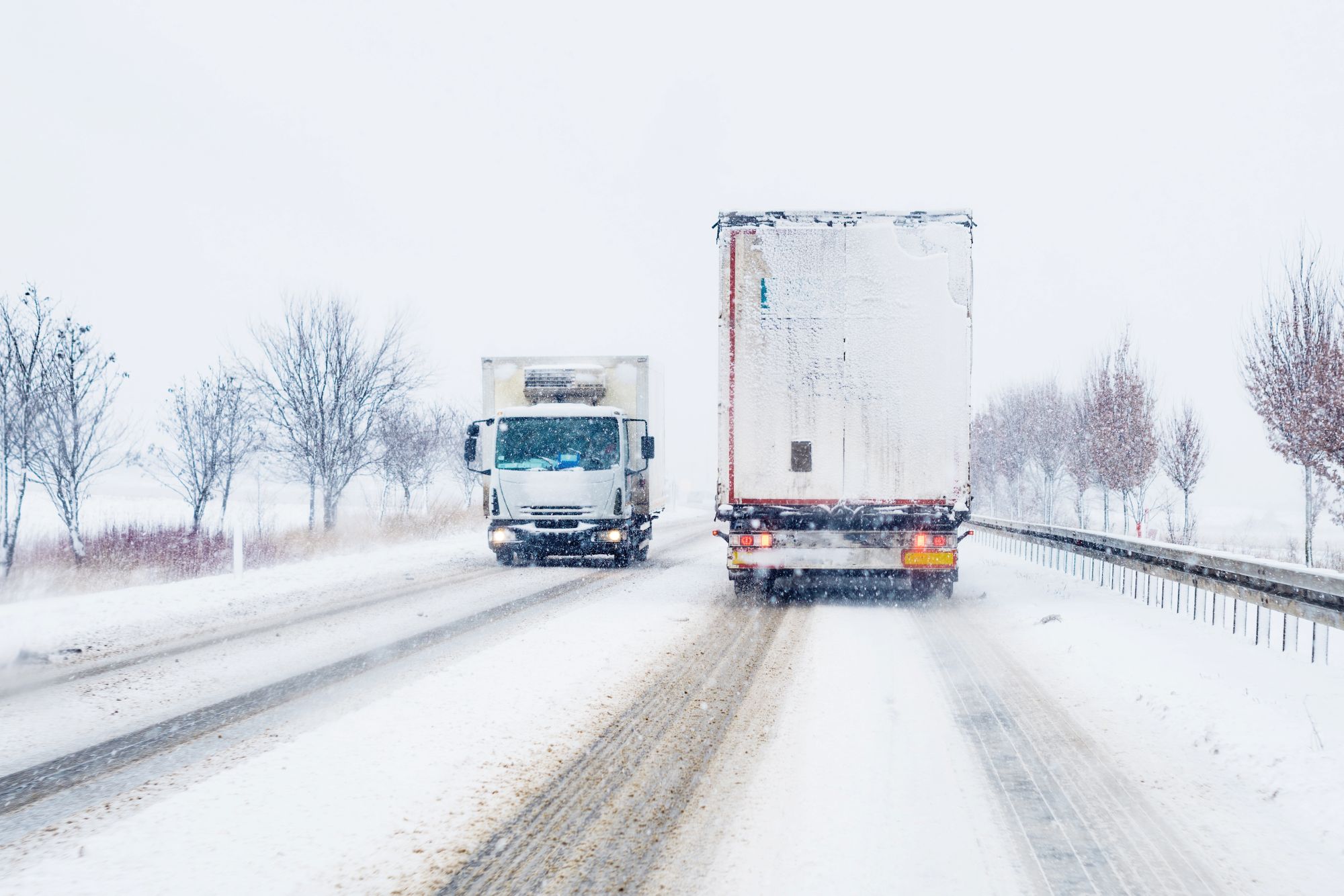
Холодні температури, ожеледиця та зменшення денного світла збільшують механічні та дорожні ризики для комерційних автомобілів, підвищуючи ймовірність ослаблення акумуляторів, зниження зчеплення шин з дорогою та погіршення видимості. Британські стандарти придатності до експлуатації підкреслюють важливість більш ретельного зимового технічного обслуговування гальм, освітлення, рідин і шин, оскільки умови погіршуються, що ще раз підтверджує, чому готовність до зими має важливе значення для безперебійної роботи автопарку. Навіть помірний мороз [може знизити продуктивність двигуна і гідравліки] (https://ascoeq.com/blog/cold-weather-prep-winterizing-your-construction-fleet/), що робить проактивне зимове технічне обслуговування вкрай важливим.
Робочий процес і виклики для водіїв

Окрім навантаження на транспортні засоби, сезон відпусток і зимові умови також створюють тиск на водіїв і робочі процеси. Збільшення трафіку, непередбачувана погода та стислі терміни доставки можуть призвести до втоми, стресу та підвищеного ризику нещасних випадків. Ретельне планування, чітка комунікація та проактивна підтримка водіїв мають важливе значення для підтримання безпеки та забезпечення ефективної роботи вашого автопарку в умовах сезонного тиску.

Стратегії для забезпечення безперебійної роботи вашого автопарку

Підтримка безперебійної роботи під час святкового ажіотажу вимагає більше, ніж реактивного вирішення проблем. Це вимагає ретельного планування технічного обслуговування транспортних засобів, готовності водіїв, використання технологій та операційної координації. Ці раціональні стратегії допоможуть вам випередити збої в зимовий сезон і підтримувати стабільну роботу автопарку протягом усіх свят.

1. визначайте пріоритети профілактичного обслуговування

Сезонний попит часто вимагає, щоб транспортні засоби працювали в суворих умовах довше, тому технічне обслуговування навантажувачів з фронтальним завантаженням є одним з найефективніших способів запобігти сезонним поломкам. У будівництві простої можуть коштувати [до $760 на машину] (https://renovated.com/construction-fleet-management-software/), що підкреслює важливість проактивного технічного обслуговування.

Зосередьтеся на критично важливих для зими системах, таких як акумулятори, гальма, системи обігріву та розморожування, шини та рівень рідини. Вирішення дрібних проблем до початку святкового ажіотажу гарантує, що ваші транспортні засоби розпочнуть сезон у найкращому стані та зменшить ризик незапланованих простоїв у період максимального завантаження.

2. Підвищення готовності водіїв

У святковий період водії стикаються з більшим тиском - від перевантажених доріг до непередбачуваної погоди. Їх завчасна підготовка допомагає знизити ризики та забезпечити надійність перевезень. Поширюйте оновлені протоколи водіння взимку, впроваджуйте кращі практики управління втомою і переконайтеся, що кожен транспортний засіб має необхідне обладнання для роботи в холодну погоду. Добре підготовлений водій може ефективніше адаптуватися до сезонних небезпек і забезпечити безпеку перевезень.

3. Удоскональте свою стратегію забезпечення запчастинами та ремонтом

Доступ до запчастин та ремонтної підтримки стає складнішим під час свят через сплески попиту та уповільнення роботи постачальників. Забезпечення ключових компонентів заздалегідь і підтвердження доступності ремонтної майстерні гарантує, що ви зможете швидко реагувати на проблеми в середині сезону. Ці кроки зменшують ймовірність тривалих затримок і дозволяють тримати більше транспортних засобів на дорозі під час пікових навантажень.

Використовуйте телематику та дані в реальному часі

Точна інформація в режимі реального часу стає ще більш цінною, коли погодні та дорожні умови можуть швидко змінюватися. Телематичні системи [допомагають відстежувати поведінку водія] (https://www.eubusinessnews.com/investing-in-fleet-telematics-what-you-need-to-know/), виявляти проблеми, що виникають з транспортним засобом, і проактивно адаптувати маршрути. Використання даних для прийняття рішень в той же день - чи то про зміну маршруту, перенесення термінів або збільшення обсягу технічного обслуговування - допомагає вашому автопарку залишатися оперативним протягом усього святкового періоду.

5. Покращення комунікації та планування

Сезонні піки вимагають більш тісного узгодження між диспетчерами, водіями, командами технічного обслуговування та клієнтами. Чітка комунікація зменшує невизначеність і полегшує коригування графіків при зміні умов. Регулярно повідомляйте про погодні умови, зміни маршрутів, вікна доставки та доступність транспортних засобів, щоб усі працювали злагоджено і могли швидко реагувати.

6. Створіть плани на випадок непередбачуваних ситуацій

Навіть за умови ретельної підготовки, зима вносить свої корективи, які жоден автопарк не може повністю контролювати. Створення планів на випадок непередбачуваних ситуацій забезпечить вашу команду структурованим реагуванням у разі виникнення інцидентів. Створіть резервні маршрути, визначте альтернативних постачальників і майстерні, а також, де це можливо, використовуйте стратегію резервних автомобілів. Планування на випадок збоїв гарантує, що несподівані проблеми не зупинять роботу повністю.

Контрольний список готовності вашого святкового автопарку

Скористайтеся цим чек-листом, щоб переконатися, що ваша команда, транспортні засоби та робочі процеси готові до найнапруженішого періоду року:

Оптимізуйте планування маршруту: Переглядайте історичні дані про трафік та очікувані затори на свята, щоб побудувати більш ефективний маршрут. Інструменти, які відстежують і повідомляють про умови в реальному часі, допомагають зменшити затримки і витрати пального.

Підтвердіть підготовку автомобіля до зими: Перевірте акумулятори, рідини, шини, склоочисники та системи опалення, щоб запобігти поломкам у холодну погоду та підвищити безпеку водія.

Підвищення готовності водіїв:** Проводьте короткі тренінги з техніки водіння взимку, управління втомою та протоколів дій в екстрених ситуаціях. Це сприяє як безпеці, так і продуктивності.

Збільште частоту профілактичного обслуговування:** Святкові пробіги та низькі температури можуть прискорити знос. Більш жорсткий графік технічного обслуговування допомагає виявити проблеми до того, як вони призведуть до простою.

Підтвердіть надійність відстеження та Інтернету речей: Переконайтеся, що трекери та датчики активів повністю функціонують для отримання точних даних про місцезнаходження та стан під час пікового попиту.

Перевірте постачальника та наявність деталей: Багато постачальників працюють за скороченим графіком під час свят. Щоб уникнути затримок з ремонтом, придбайте деталі та витратні матеріали заздалегідь.

Будьте на крок попереду сезонного тиску

Святкові та зимові умови посилюють будь-яку дрібну неефективність. Завчасна підготовка допомагає запобігти простоям, яких можна було б уникнути, підвищити безпеку водіїв і забезпечити безперебійну роботу в найскладнішу пору року. Завдяки точному плануванню, надійним інструментам і проактивному ритму технічного обслуговування, автопарки можуть перетворити сезонні проблеми на можливості для підвищення продуктивності та задоволеності клієнтів.

Дізнайтеся більше з [Журнал "Реновація"] (https://renovated.com/).
Поділіться на

Читайте також...

Header Image

вівторок 25 листопада 2025 • Новини та оновлення

ПОЛЬЩА ПРИСКОРЮЄ ПЕРЕХІД ДО ПЕРЕВЕЗЕНЬ З НУЛЬОВИМ РІВНЕМ ВИКИДІВ

Guest

Poland’s transportation sector is undergoing a major transformation. In recent months, the government has introduced a series of high-value funding programmes aimed at decarbonising the country’s road network and logistics operations. Much of this activity focuses on infrastructure related to heavy-duty vehicles – a sign that the transition to cleaner freight is being embraced across Europe.The scale of investment – and the speed at which it's happening – will be important for operators, managers and infrastructure planners right across Europe. To understand why, it helps to look at both the wider European context and the specific funding available in Poland.The move towards lowand zero-emission transport has been gathering pace across Europe for several years. The EU’s package and to cut emissions from heavy-duty vehicles by 45% by 2030 and by 90% by 2040. The (AFIR) also states that there must be high-power charging points for heavy vehicles every 60 kilometres along the Trans-European Transport Network (TEN-T) – a system of European roads, railways, ports and airports that forms the backbone of continental freight – by 2030. Hydrogen refuelling stations must be available every 200 kilometres.The UK is following a similar path. Z are being used to test electric and hydrogen HGVs on long-haul routes, while funding is being allocated to depot charging and refuelling infrastructure.Against this backdrop, Poland’s programme shows that Central and Eastern Europe are ready to take a leading role in building cleaner, better-connected transportation.In March 2025, Poland’s (NFOŚiGW) launched two major funding calls worth a combined PLN 2 billion. The first will cover the construction and expansion of power grids that supply high-capacity charging stations, especially those on the TEN-T. It covers both grid expansion and the installation of new connections. This will mean that the network can deliver the energy needed for rapid truck charging. Energy and grid operators can apply for grants if their projects meet minimum power thresholds. The second funding call supports the construction of heavy-vehicle charging stations themselves. The aim is to create 550 publicly accessible points across the country, serving both electric and hydrogen trucks. A final programme, which launched in Q2 2025, gives grants and loans to businesses so they can buy or lease zero-emission trucks in categories N2 and N3. Category N2 covers vehicles with a gross weight between 3.5 and 12 tonnes, while N3 applies to trucks over 12 tonnes. Funding levels range from 30 to 60 per cent, depending on company size. Upper limits of PLN 400,000 apply to N2 vehicles and PLN 750,000 to N3 models. Applications will be , so operators can plan their transition to zero-emission vehicles. These investments sit alongside Poland’s existing programme, which subsidises electric car purchases for individuals and companies, further extending the country’s sustainable transport strategy beyond passenger vehicles.According to the , Poland transports more goods by road than any other EU country. It is a natural gateway between Western Europe and the Baltic States, Ukraine and the Balkans, which means a reliable zero-emission infrastructure in Poland will have a Europe-wide impact.By setting clear power requirements and aligning projects with the TEN-T corridors, the government is ensuring a coordinated approach rather than isolated projects. The goal is a dependable network where electric and hydrogen trucks can move freely along key trade routes. The Deputy Minister for Climate and Environment described the programme as a way to strengthen “the competitiveness of Polish freight operators” while cutting emissions from one of the country’s largest economic sectors.Poland’s domestic network is also part of the wider . A total of nine EU countries – including Poland – committed in September 2025 to accelerate charging infrastructure deployment along key freight routes, such as the North Sea-Baltic and Scandinavian-Mediterranean corridors of the TEN-T.For fleets that operate across Europe, the initiative means charging infrastructure will become more standardised and predictable between countries. This will help drivers plan cross-border routes with greater confidence while supporting the shift towards zero-emission freight.For fleet operators, the timing is encouraging. Zero-emission trucks are rapidly , with sales of nearly 2,000 zero-emission heavy-duty electric trucks registered in the first half of 2025 across the EU. There are challenges, however. Adding high-power charging capacity will mean that grid operators, local authorities and logistics centres have to cooperate. It will also take time to hire technicians with the skills to install and maintain high-voltage equipment.In addition, vehicle costs and operational factors could also slow progress. Even with generous subsidies, businesses must weigh the cost of electric vehicle ownership, route patterns and depot readiness.For the road transport community, Poland’s programme is a significant milestone. Once complete, its charging and refuelling network will connect eastern and western Europe, supporting cleaner and more efficient freight movement.“This is a turning point for heavy transport,” says Nick Renton, Head of European Strategy and Business Development at SNAP. “Poland’s actions show that zero-emission freight is becoming part of daily life, rather than a long-term vision. As charging and refuelling points multiply, operators will be able to schedule cleaner journeys with confidence.”As the situation develops, we will continue to support fleets across Europe with technology, insight and practical tools for drivers. Our helps identify and book rest stops, refuelling points and secure parking, with more zero-emission facilities being added as new sites open. For operators looking to stay ahead of infrastructure changes, it provides a clear view of how the road network is evolving – and where new opportunities are emerging.

Header Image

четвер 30 жовтня 2025 • Новини та оновлення

ОПТИМІЗАЦІЯ РОБОТИ АВТОПАРКУ: КОРОТКА ІСТОРІЯ FET LOGISTICS

Susie Jones

Located in Colnbrook, Berkshire, is a family-owned and family-run company specialising in the transportation of pharmaceutical products.The company originated from humble beginnings in 1984 when Frederick Woolley produced a service that was second to none in the secure logistics industry his very own tracking system, the best on the market, which left companies knocking on his door to transport their goods safely throughout Europe. In 1999, FET entered the world of pharmaceutical transportation, with Frederick taking on a partner, his son-in-law, Harry Hughes. From there, the business has gone from strength to strength, becoming one of the best pharmaceutical logistics companies in the UK. We sit down with Managing Director, Harry, to discuss what it's like running a fleet across Europe and how SNAP has helped ease processes."We focus on transporting high-value, high-consequence goods, white glove deliveries, and hospital deliveries. We're often in mainland Europe pretty much every day, from Northern Ireland all the way down to Spain, Italy, and even Greece."Transporting high-value goods comes with the added pressure to ensure your drivers park in safe and secure areas. For Harry, his drivers must have access to a wide network of truck stops across Europe, complete with details regarding security features something SNAP can deliver through its and Transporting high-consequence goods also brings additional challenges, as Harry explains:"We have the same challenges as everyone else in the supply chain, but you're adding temperature as well. That's another critical requirement. Whether it be a dry ice box that's got a life of 72 hours, or you need to keep that van completely at the right temperature throughout its journey. If the truck or van has to park up overnight, we need to ensure that the temperature is being monitored through the night as well."TAPA EMEA's TSR regulations have been developed by the industry, for the industry. The standard protects products transported by road and aims to ensure the safety of drivers, vehicles, and cargo. As TAPA UK Lead, Harry knows the importance and the benefits of transporting goods under TAPA TSR."We outsource to an external monitoring company for some of the delicate loads being transported under TSR. This means they will monitor the load for the route and geofence it if it deviates. They're checking in with the driver and also checking that it's parked at the right location from the route risk assessment we've uploaded to the monitoring company."These standards give drivers, fleet operators, and customers peace of mind that their cargo will be transported safely. And Harry has peace of mind when these journeys utilise SNAP's vast network of truck stops across Europe."You know that if you go to a SNAP site, you're going to get a decent site."Driver welfare remains a critical topic within the mobility industry, and for fleets like Harry's, ensuring their drivers are looked after while on the road remains vital. We asked Harry what offerings truck stops must provide to those on the road regularly:"I think the drivers just want some decent facilities. If they've got a shower, toilet, and a hot meal, they're generally happy." He also notes that it's not a one-size-fits-all, "they've all got different requirements. Some of them want to go to sites with a fancy restaurant, and some of them are just happy with a burger and chips. I think if the basics are there of clean facilities, hot and cold food, and showers, that's the main thing."Truck stops are already in high demand, and the most popular ones, offering the right facilities and security requirements, tend to fill up early in the evening. This often forces drivers to park in unsafe areas, a challenge that's expected to grow even more significant when SNAP not only simplifies life for fleet managers but also delivers a seamless parking experience for drivers. This leads to increased convenience and satisfaction on the road, while enhancing efficiency and streamlining operations across the company."It's the simplicity for the drivers. They don't have to worry about anything. They just pull in, and the parking payment method is already done for them. The drivers love it since we've implemented it," Harry states. SNAP's growing network of truck wash sites is something that hasn't gone unnoticed by FET Logistics, especially when the weather takes a turn for the worse:"More truck washes are coming onto the network, which helps us especially through winter. Nobody wants to see a dirty truck turn up if you're loading pharmaceuticals into it."Inspired by what you've just read? Catch the full interview with

Header Image

вівторок 28 жовтня 2025 • Новини та оновлення

РОЗУМНІ ТАХОГРАФИ ДРУГОГО ПОКОЛІННЯ: ЩО ПОТРІБНО ЗНАТИ КЕРІВНИКАМ АВТОПАРКІВ

Guest

The road transport industry in Europe is undergoing a significant change with the rollout of the second-generation smart tachograph (Smart Tachograph Version 2, or G2V2). These new devices have been introduced under the to improve road safety, to ensure fair competition and to protect drivers' rights.For fleet managers across the EU – and in the UK for those operating internationally – it’s crucial to understand what the new smart tachograph v2 entails, the timelines for its implementation and how it will impact daily operations. This article provides a practical overview of G2V2 features, regulatory deadlines and the operational implications for fleets. The second-generation smart tachograph is an upgraded digital tachograph unit with enhanced capabilities, designed to boost compliance with driving rules and streamline enforcement. Building on the first smart tachographs introduced in 2019, the new smart tachograph adds several important features: G2V2 devices use satellite positioning (Galileo GNSS) to record a vehicle’s position when crossing national borders. This helps enforce rules on cabotage and driver posting by providing precise records of when a truck enters a new country. The new tachograph enables enforcement officers to retrieve data wirelessly via Dedicated Short-Range Communication (DSRC). Roadside inspectors can remotely receive recent driving time, last stop or potential violations as a truck approaches. In essence, enforcers can access key tachograph data from G2V2 without stopping the vehicle, which facilitates smarter and more unified enforcement of driver-hours rules.This ‘remote check’ capability allows authorities to pre-select vehicles that may need a closer inspection, reducing unnecessary stops for compliant drivers. G2V2 includes a mandatory ITS interface with Bluetooth connectivity for secure data exchange with third-party systems. This means fleet telematics platforms can pair with the tachograph to access data, such as vehicle location, speed, driver activity and even vehicle events (for example, brake usage) in real time. For fleet managers, this integration offers the possibility of richer data streams for compliance monitoring and route management, seamlessly connecting tachograph information to their existing fleet management software. The new G2V2 tachographs record more information and retain it for longer. Driver activity logs now cover 56 days instead of 28, extending the control period for enforcement and helping operators with data retention and audits. In addition, new data fields provide a fuller picture of each journey. The devices log loading and unloading locations, record whether the vehicle is carrying passengers or goods, and capture configuration and calibration events in greater detail. Together, these updates support both compliance and logistics planning. Drivers will, however, need training to make the new manual entries for load and unload points, as these coordinates are stored for later verification. The second-gen units come with improved security to detect and resist tampering. They also have updatable software to allow future enhancements. Additionally, new driver cards (G2V2 driver cards) have been introduced with larger memory to accommodate the extra data. There is no immediate legal requirement for drivers to replace existing digital tachograph cards if they are still valid, but as cards expire, they’ll be replaced with the updated ones to fully use G2V2 features.Most major tachograph deadlines have already passed. All heavy vehicles operating internationally within the EU or entering from the UK are now required to have the second-generation smart tachograph (G2V2) fitted.The only remaining milestone is 1 July 2026, when the rule will be extended to light commercial vehicles between 2.5 and 3.5 tonnes used for international transport. Historically, vans were exempt from EU drivers’ hours and tachograph rules, but from July 2026, operators carrying goods across borders will need to comply.This change aims to close long-standing loopholes and ensure that drivers of smaller commercial vehicles follow the same rest-time rules as HGV operators. Fleet managers running pan-European van fleets should start planning installations now, integrating the upgrade with routine servicing or fleet renewal cycles to minimise disruption.Fleet managers with international operations need to understand that compliance with these tachograph upgrades is now a prerequisite for cross-border road transport in Europe. If your trucks travel between EU countries – or from the UK into the EU – failing to equip the right tachograph can stop your business at the border. Here are key points on how different fleets are affected:As noted above, since August 2025, any heavy goods vehicle conducting international trips within the EU must have the second-gen tachograph. This applies regardless of where in the EU the truck is registered. Enforcement is carried out during roadside checks or at borders. Non-compliant vehicles can be taken off the road until a proper tachograph is installed. British fleets running international journeys into or within the EU are subject to the same tachograph requirements if they are operating goods vehicles. This is because the rules are incorporated into the AETR treaty, which governs road transport between EU and non-EU European countries. The UK Department for Transport has aligned domestic regulations to mirror the EU timeline for international journeys. Failing to upgrade doesn’t just mean a fine – it can mean your truck is stopped at a checkpoint and cannot complete its delivery. Authorities in countries like France have imposed and even jail time for serious tachograph compliance breaches. Other nations like Germany, Spain and Italy have their own stiff penalties. In addition, non-compliance can tarnish a company’s reputation.On the positive side, compliant fleets stand to benefit from smoother enforcement. Trucks with up-to-date devices, for instance, may be stopped less frequently, thanks to remote pre-checks, allowing law-abiding drivers to keep moving.One of the core aims of the new tachograph legislation and the wider EU Mobility Package is to improve working conditions. By automating record-keeping tasks such as border entries and limiting illegal overscheduling, the system helps ensure drivers get proper rest. This is expected to reduce fatigue-related incidents and make enforcement fairer, giving drivers confidence that competitors are following the same rules.Remote enforcement also means compliant drivers face fewer roadside delays, allowing them to complete journeys with less stress.Drivers will need some training to adapt. While the basics remain the same, new features require manual input of load and unload locations and consent for data sharing with connected systems. Understanding these prompts – and how to respond if a fault occurs – will make operation straightforward.From a fleet perspective, G2V2 devices store twice as much data (56 days), so downloads will be larger and contain more history. Operators should check that their tachograph software and storage systems can handle this increased volume.Finally, with Bluetooth and online connectivity, data privacy has become a talking point. Enforcement authorities can access tachograph data for compliance, but when sharing with telematics or management systems, drivers must first give consent. Fleet managers should reassure drivers that all data is handled securely and used only for legitimate, GDPR-compliant purposes.Second-generation smart tachographs touch every part of fleet operations, from compliance and route planning to driver welfare. Taking a proactive approach will help you stay compliant – and make the most of the new technology. Keep up with updates from the European Commission’s Mobility and Transport division, as well as industry bodies. Regulations can be complex, but official summaries and FAQs are a good starting point. Run toolbox talks or refresher sessions for drivers and transport managers, focusing on new functions like remote enforcement and manual entries. Live data can help you monitor remaining driving hours, adjust dispatch plans and identify routes that frequently approach limits. Encourage your teams to view tachograph compliance as part of good fleet management, not just a regulatory obligation. Recognise milestones like zero infringements, invest in driver training, and make sure everyone understands how accurate data benefits safety and efficiency.The rollout of G2V2 brings challenges, but also clear benefits: stronger enforcement, better data and fairer working conditions for drivers. For fleets that embrace the change, the reward is smoother operations, improved safety and a more connected, compliant future on Europe’s roads.At SNAP, we’re supporting fleets across the continent through this next stage of digital transformation. Through the intruck app, drivers can pre-book secure parking along their routes – while the SNAP Portal lets fleet managers plan and reserve rest stops in advance, ensuring compliance and protecting driver welfare.