
Guest
Nachrichten und Updates • 4 min lesen

Sorgen Sie für einen reibungslosen Betrieb Ihres Fuhrparks während der Urlaubszeit

Erstellt: 04.12.2025

Aktualisiert: 04.12.2025

Mit dem Herannahen der Ferienzeit bereiten Sie sich wahrscheinlich auf einen Anstieg der Liefernachfrage und komplexere Betriebsbedingungen vor. Dieser saisonale Druck überschneidet sich mit den Herausforderungen des Winterwetters und schafft ein einzigartiges Risikoumfeld für Fuhrparks im Vereinigten Königreich.

Wie die Winterferien Ihren Fuhrpark unter Druck setzen

Die Weihnachtszeit bedeutet zusätzlichen Stress für Ihre Fahrzeuge und Ihren Betrieb. Vom verbraucherbedingten Anstieg der Kilometerleistung bis hin zu den Auswirkungen des kalten Wetters auf die Fahrzeugleistung kommen mehrere saisonale Faktoren gleichzeitig zum Tragen. Wenn Sie diese Belastungen im Voraus verstehen, können Sie sich proaktiv vorbereiten und Störungen in Ihrem Fuhrpark minimieren.

Erhöhte Nachfrage und begrenzte Zeitfenster

Die Verbraucheraktivität steigt [in der Regel während der Ferienzeit] (https://www.ioscm.com/blog/christmas-in-the-supply-chain-navigating-peak-season/), wodurch das Liefervolumen steigt, die Zeitpläne sich verdichten und die Erwartungen an den Service steigen. Dieser Anstieg bedeutet, dass selbst kleinere Störungen schnell eskalieren können, da die Flotten weniger Flexibilität haben, um Verspätungen aufzufangen. Da mehr Fahrten geplant sind und die Übergabezeiten immer kürzer werden, werden die Ausfallzeiten der Fahrzeuge immer kostspieliger. Eine verpasste Inspektion oder eine verspätete Reparatur kann sich viel stärker auf den Betrieb auswirken als zu anderen Zeiten des Jahres.

Die kombinierte Wirkung von Urlaubsnachfrage und Wintergefahren

Wenn sich die Hauptreisezeit mit gefährlichen Wetterbedingungen überschneidet, steigt das Risiko für Flotten. Verkehrsstaus nehmen zu, der Straßenzustand verschlechtert sich, und kleinere mechanische Probleme können leichter zu ernsthaften Zwischenfällen eskalieren. Um diese Probleme zu bekämpfen, müssen Sie die vorbeugende Wartung verstärken, die Zeitpläne anpassen und die Echtzeitüberwachung verbessern, um vermeidbare Pannen oder Verspätungen zu verhindern.

Winterbedingungen und ihre Auswirkungen auf den Betrieb

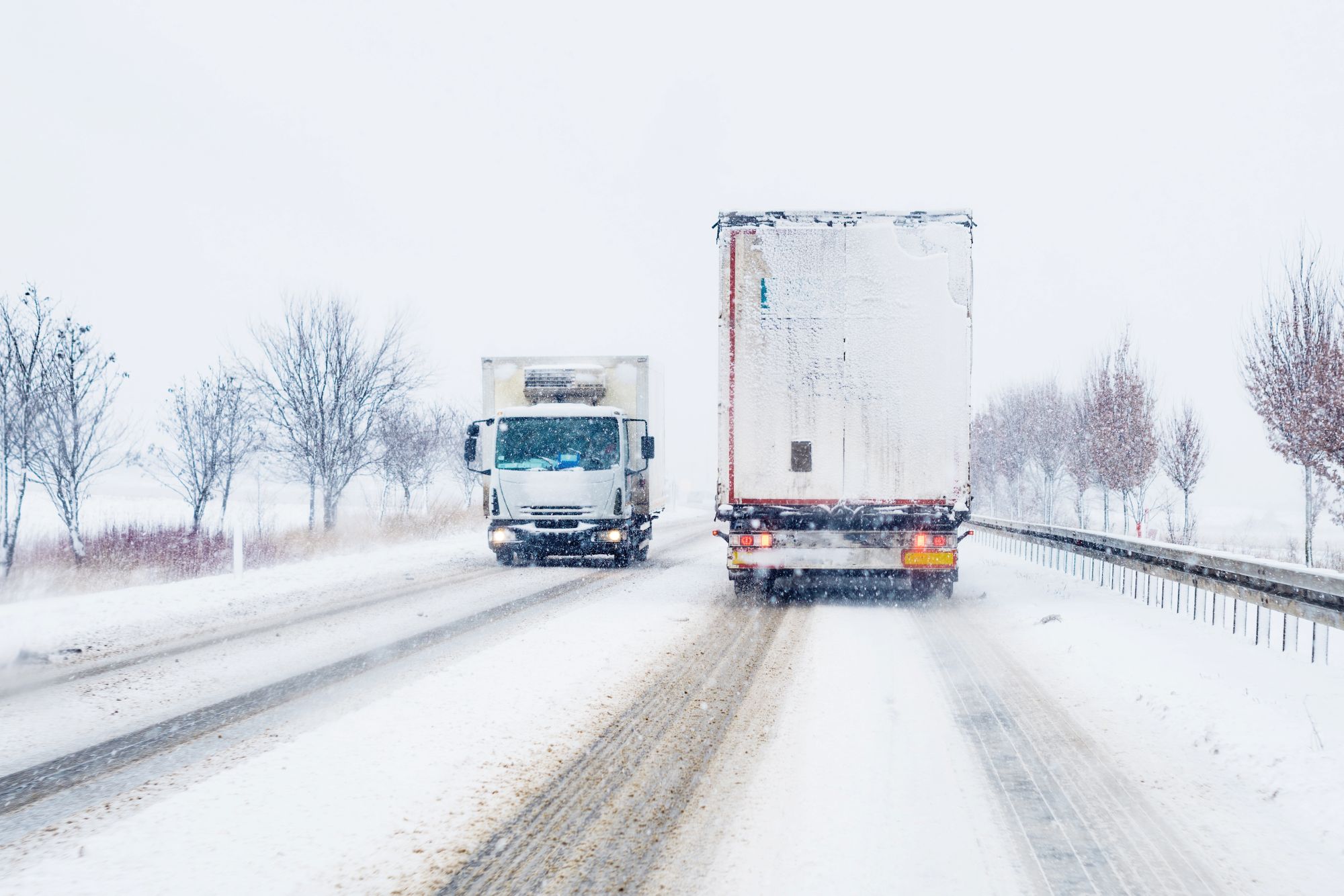
Kalte Temperaturen, vereiste Oberflächen und weniger Tageslicht erhöhen die mechanischen Risiken und die Risiken auf der Straße für Nutzfahrzeuge und erhöhen die Wahrscheinlichkeit, dass die Batterien geschwächt werden, die Traktion der Reifen abnimmt und die Sicht beeinträchtigt wird. Die britischen Normen für die Straßentauglichkeit betonen die Bedeutung einer robusteren Winterwartung für Bremsen, Beleuchtung, Flüssigkeiten und Reifen, wenn sich die Bedingungen verschlechtern, und unterstreichen, warum die Winterbereitschaft für einen ununterbrochenen Flottenbetrieb unerlässlich ist. Selbst milde Kälte [kann die Motor- und Hydraulikleistung verringern] (https://ascoeq.com/blog/cold-weather-prep-winterizing-your-construction-fleet/), weshalb eine proaktive Winterwartung von entscheidender Bedeutung ist.
Herausforderungen für Arbeitsabläufe und Fahrer

Abgesehen von der Belastung der Fahrzeuge setzen die Weihnachtszeit und die winterlichen Bedingungen auch die Fahrer und die betrieblichen Abläufe unter Druck. Ein erhöhtes Verkehrsaufkommen, unvorhersehbares Wetter und engere Zeitfenster für die Auslieferung können zu Ermüdung, Stress und einem erhöhten Unfallrisiko führen. Eine sorgfältige Planung, klare Kommunikation und proaktive Unterstützung der Fahrer sind unerlässlich, um die Sicherheit aufrechtzuerhalten und sicherzustellen, dass Ihr Fuhrpark auch unter diesem saisonalen Druck effizient arbeitet.

Strategien für einen reibungslosen Betrieb Ihrer Flotte

Die Aufrechterhaltung eines reibungslosen Betriebs während der Festtage erfordert mehr als nur reaktive Problemlösungen. Es erfordert eine durchdachte Planung in Bezug auf die Fahrzeugwartung, die Bereitschaft der Fahrer, den Einsatz von Technologien und die betriebliche Koordination. Diese optimierten Strategien helfen Ihnen, den Störungen der Wintersaison zuvorzukommen und die Leistung Ihres Fuhrparks während der Feiertage konstant zu halten.

1. präventive Wartung priorisieren

Die saisonbedingte Nachfrage erfordert häufig, dass die Fahrzeuge unter härteren Bedingungen und über längere Zeiträume hinweg eingesetzt werden, so dass eine frühzeitige Wartung eine der wirksamsten Möglichkeiten ist, um Ausfälle während der Saison zu verhindern. Im Baugewerbe können Ausfallzeiten [bis zu 760 $ pro Fahrzeug] kosten (https://renovated.com/construction-fleet-management-software/), was die Bedeutung einer proaktiven Wartung unterstreicht.

Konzentrieren Sie sich auf winterkritische Systeme wie Batterien, Bremsen, Heizungs- und Enteisungssysteme, Reifen und Flüssigkeitsstände. Die Behebung kleinerer Probleme vor der Urlaubszeit stellt sicher, dass Ihre Fahrzeuge die Saison in bestem Zustand beginnen und verringert das Risiko ungeplanter Ausfallzeiten, wenn die Kapazitäten am knappsten sind.

2. die Bereitschaft der Fahrer stärken

Während der Feiertage sind die Fahrer einem größeren Druck ausgesetzt, von verstopften Straßen bis hin zu unvorhersehbarem Wetter. Eine frühzeitige Vorbereitung hilft, das Risiko zu verringern und die Zuverlässigkeit der Dienste aufrechtzuerhalten. Geben Sie aktualisierte Winterfahrprotokolle weiter, verstärken Sie den Umgang mit Müdigkeit und stellen Sie sicher, dass jedes Fahrzeug über die notwendige Ausrüstung für die kalte Jahreszeit verfügt. Ein gut vorbereiteter Fahrer kann sich besser auf die saisonalen Gefahren einstellen und die Fahrten sicher durchführen.

3.Verbessern Sie Ihre Ersatzteil- und Reparaturstrategie

Während der Feiertage wird der Zugang zu Ersatzteilen und Reparaturunterstützung aufgrund von Nachfragespitzen und Lieferengpässen schwieriger. Wenn Sie sich wichtige Komponenten im Voraus sichern und die Verfügbarkeit einer Reparaturwerkstatt bestätigen, können Sie schnell auf Probleme in der Mitte der Saison reagieren. Diese Schritte verringern die Wahrscheinlichkeit langwieriger Verzögerungen und sorgen dafür, dass in Spitzenzeiten mehr Ihrer Fahrzeuge auf der Straße sind.

4. telematische Daten und Echtzeitdaten nutzen

Genaue Erkenntnisse in Echtzeit sind umso wertvoller, wenn sich die Wetter- und Verkehrsbedingungen schnell ändern können. Telematiksysteme[ helfen Ihnen, das Fahrerverhalten zu überwachen] (https://www.eubusinessnews.com/investing-in-fleet-telematics-what-you-need-to-know/), aufkommende Fahrzeugprobleme zu erkennen und Routen proaktiv anzupassen. Die Nutzung von Daten für Entscheidungen am selben Tag - ob Umleitung, Neuplanung oder Eskalation von Wartungsarbeiten - hilft Ihrer Flotte, während der gesamten Urlaubszeit reaktionsfähig zu bleiben.

5. Verbesserung der Kommunikation und Planung

Saisonale Spitzenzeiten erfordern eine engere Abstimmung zwischen Disponenten, Fahrern, Wartungsteams und Kunden. Eine klare Kommunikation verringert die Unsicherheit und erleichtert die Anpassung von Zeitplänen, wenn sich die Bedingungen ändern. Informieren Sie regelmäßig über Wetterwarnungen, Routenänderungen, Lieferfenster und die Verfügbarkeit von Fahrzeugen, damit alle Beteiligten koordiniert bleiben und schnell reagieren können.

6. Notfallpläne erstellen

Selbst bei guter Vorbereitung bringt der Winter Variablen mit sich, die keine Flotte vollständig kontrollieren kann. Die Erstellung von Notfallplänen ermöglicht Ihrem Team eine strukturierte Reaktion im Falle von Zwischenfällen. Legen Sie Ausweichrouten fest, ermitteln Sie alternative Lieferanten und Werkstätten, und halten Sie nach Möglichkeit eine Strategie für Reservefahrzeuge bereit. Die Planung von Unterbrechungen stellt sicher, dass unerwartete Probleme den Betrieb nicht völlig zum Erliegen bringen.

Checkliste für die Bereitschaft Ihres Fuhrparks für die Feiertage

Nutzen Sie diese Checkliste, um sicherzustellen, dass Ihr Team, Ihre Fahrzeuge und Ihre Arbeitsabläufe für die arbeitsreichste Zeit des Jahres gerüstet sind:

Optimierung der Routenplanung: Überprüfen Sie historische Verkehrsdaten und erwartete Staus in den Ferien, um eine effizientere Routenplanung zu erstellen. Tools, die die Bedingungen in Echtzeit überwachen und melden, helfen, Verspätungen und Kraftstoffverschwendung zu reduzieren.

Überprüfen Sie die Wintertauglichkeit Ihres Fahrzeugs: Überprüfen Sie Batterien, Flüssigkeiten, Reifen, Scheibenwischer und Heizungssysteme, um Pannen bei kaltem Wetter zu vermeiden und die Sicherheit des Fahrers zu erhöhen.

Stärkung der Bereitschaft der Fahrer: Führen Sie kurze Auffrischungskurse zu Winterfahrtechniken, Müdigkeitsmanagement und Notfallprotokollen durch. Dies dient sowohl der Sicherheit als auch der Produktivität.

Erhöhen Sie die Häufigkeit der vorbeugenden Wartung:** Urlaubsfahrten und kalte Temperaturen können den Verschleiß beschleunigen. Ein strafferer Wartungsplan hilft, Probleme zu erkennen, bevor sie zu Ausfallzeiten führen.

Validierung von Tracking und IoT-Zuverlässigkeit: Stellen Sie sicher, dass Asset-Tracker und Sensoren voll funktionsfähig sind, um genaue Standort- und Zustandsdaten bei Spitzenbedarf zu erhalten.

Überprüfen Sie die Verfügbarkeit von Lieferanten und Teilen: Viele Lieferanten arbeiten während der Feiertage zu reduzierten Zeiten. Sichern Sie Teile und Verbrauchsmaterialien im Voraus, um Reparaturverzögerungen zu vermeiden.

Dem saisonalen Druck voraus sein

Feiertags- und Winterbedingungen verstärken jede noch so kleine Ineffizienz. Eine frühzeitige Vorbereitung hilft, vermeidbare Ausfallzeiten zu verhindern, die Sicherheit der Fahrer zu erhöhen und den Betrieb auch in der schwierigsten Zeit des Jahres aufrechtzuerhalten. Mit präziser Planung, zuverlässigen Werkzeugen und einem proaktiven Wartungsrhythmus können Fuhrparks saisonale Herausforderungen in Chancen für bessere Leistung und Kundenzufriedenheit verwandeln.

Entdecken Sie mehr von [Renovated Magazine] (https://renovated.com/)
Teilen mit

Andere lesen auch...

Header Image

Freitag 19 Dezember 2025 • Nachrichten und Updates

IST IHR FUHRPARK EIN ZIEL? VORRANG FÜR SICHERHEIT IN EINER TECHNIKBEGEISTERTEN WELT

Guest

Cybersecurity readiness must be a top priority for fleet owners and managers in the United Kingdom. The rapid digital transformation in the transportation and logistics industry has made fleets attractive targets for hackers. Learn about the cybersecurity trends fleet operators must be aware of and strategies you should adopt to lower your susceptibility to attacks.The advent of connected vehicles, push for fleet electrification, integration of Internet of Things (IoT) devices and reliance on automation have expanded the attack surface opportunistic cybercriminals can exploit to infiltrate your network.Vulnerable telematics back-end systems, insecure over-the-air firmware updates and buggy APIs are common entry points for phishers, data thieves, business saboteurs and ransomware attackers. Threat actors are also increasingly leveraging artificial intelligence to launch more believable scams.Falling victim to a cyberattack can cause more than extended, unscheduled downtime. A high-profile security incident can inflict severe reputational damage on your organisation and harm your business in the long term.Although your cyber insurance coverage may compensate you millions for losses, the financial impact can lead to insolvency — as happened to KNP Logistics in June 2025. An Akira ransomware attack exacerbated this major logistics group’s preexisting financial struggles, and let go of 730 employees.Every business is at risk from cyberattacks, but these strategies can help make your fleet management software and vehicles less vulnerable.A robust threat intelligence platform strengthens cybersecurity, as it allows you to proactively defend your assets from malicious actors and minimise your losses if they target you. Here are the primary ways to use threat intel to improve your security posture:Contextualisation enables your team to identify the perpetrators behind specific attacks, understand their motives and capabilities, determine what they want from your organisation, and comprehend their methods. Context transforms raw threat data into actionable intelligence, enabling you to inform your decision-making.Attackers evolve, so learning how they operated in the past is not enough to accurately anticipate their future actions. A threat intelligence platform can help you keep pace with known malicious actors and familiarise your team with relatively unknown ones. Some organisations use deception technologies to lure cybercriminals and watch them in action in a controlled environment.A software solution that can integrate into your company’s existing tools breaks down silos and allows threat intelligence to flow freely across teams. Cross-departmental collaboration is the key to implementing an organisation-wide cybersecurity strategy effectively.A threat intelligence platform can monitor your network activity and sense attack patterns early enough to notify your Security Operations Centre or IT professionals immediately. Early detection is vital to count threats before they infiltrate deeply into your system and cause more harm.Responding to urgent incidents involves less manual work with a threat intelligence platform. This software solution can orchestrate essential tasks to mitigate breaches, enabling your in-house cybersecurity professionals to focus on activities where human input is more impactful.Regulatory frameworks and data privacy standards are becoming more stringent over time. A threat intelligence platform aids compliance by ensuring that your team handles sensitive data responsibly and generates detailed reports to document your best practices.Zero trust minimises the likelihood of unauthorised access to fleet management systems by continuously verifying every user and device and enforcing identity-centric access control.This approach acknowledges that threats can come from within the organisation. Assuming that each request may come from a malicious actor reflects the level of vigilance you must exercise to protect your operation from sophisticated attacks and help your team adapt to complex, dynamic environments involving remote users, IoT devices and cloud services.After verification, zero trust gives users and devices just enough access to perform specific tasks. The principle of least privilege enables effective threat containment if a cybercriminal gets in.According to Cybersecurity Insiders’ 2024 Insider Threat Report, insider threat attacks have spiked. In October 2024, 51% of the 413 respondents in IT and cybersecurity reportedly over the past year. 29% reported spending over $1 million on remediation.The adoption of new technologies is a primary driver behind the rise in these cyberattacks. Investing in employee training is crucial for preventing team members from becoming insider threats.Provide target users with sufficient resources to familiarise themselves with the technologies. Highlight the ways they may inadvertently leak sensitive information or compromise the system. Tell them the red flags to watch out for to identify malicious schemes and teach them safe, responsible ways to deal with cybercriminals.Tight physical security can safeguard your assets from digital hijackers. Effective physical protection often involves a layered approach, which includes perimeter fencing, strategic placement of surveillance equipment and tamper-evident vehicle electronics casings. Additionally, limiting visibility with opaque doors , thereby adding an extra layer of protection to your physical security. Blending physical safeguards with digital solutions can restrict what hackers can do, even if they manage to gain control over fleet vehicles. In 2022, a group of hacktivists attacked the Russian ride-hailing service Yandex Taxi and directed in the same place in western Moscow. The incident should serve as a wake-up call to embrace measures to immobilise your assets if criminals remotely take control of the driver’s seat.Your company is only as strong as the weakest link in your supply chain. The positive impact of impregnable internal cybersecurity diminishes when third-party vendors make it easy for lawbreakers to steal your data from elsewhere. For instance, temporarily could jeopardise your cybersecurity if your lessor has outdated software.Working with supply chain partners that are as particular about cybersecurity reduces your risk exposure. Integrating your suppliers’ systems into your threat intelligence platform ensures better coordination during data breaches. Close collaboration with critical external parties promotes cybersecurity readiness and helps everyone prepare for potential attacks.Contending with online threat actors is inevitable in modern fleet management. Prioritise proactive strategies to stay ahead of hackers. By implementing a multi-layered defence that combines technology, employee training and strategic partnerships, you can build a resilient operation. This stance protects your current assets and secures your company’s future in an increasingly connected world.Discover more from

Header Image

Montag 08 Dezember 2025 • Nachrichten und Updates

TRUCK TRENDS: VORHERSAGEN FÜR 2026

Guest

Major changes are coming for the mobility sector.The next 12 months will bring some of the most significant regulatory and technological shifts European transport has seen in years. New emissions rules, driver-monitoring systems, hydrogen trials and autonomous pilots will reshape how fleets operate across the UK and EU.For operators and professional drivers, understanding these changes now will make the difference between adapting confidently and struggling to keep up. come into force in 2026, introducing new requirements for fleets. Nitrogen oxide and carbon monoxide limits will tighten further, with the permitted particle size dropping from 23 nanometres to 10. In addition, for the first time.Every new truck sold will need to comply with Euro VII. While vehicle pricing is likely to be affected, the bigger impact will fall on procurement timelines, fleet renewal cycles and long-term decarbonisation.. These monitor eye and head movement to identify early signs of fatigue or inattention, enabling safer interventions and supporting accident-reduction goals across Europe. By 2029, new cab designs must minimise blind spots through improved glass visibility rather than camera reliance. This will particularly influence urban operations, vulnerable road user safety and future vehicle specification.. After years of exemption, this change effectively brings smaller commercial vehicles under full drivers’ hours enforcement.For operators with mixed fleets, this means introducing:● new driver cards● regular data downloads● updated monitoring processes● revised routing and rest-time planningThousands of vehicles that previously operated freely will need compliance systems in place almost immediately. requires companies with more than 250 employees or €40 million revenue to collect and report verified CO₂ emissions – including Scope 3 transport activity.This will cascade through supply chains. Smaller hauliers without reliable emissions reporting risk losing access to larger contracts, accelerating the push toward better data systems and standardised reporting.Electric HGV production will rise rapidly in 2026. are all expanding manufacturing capacity.To support this, electric charging is also expanding. , as part of HyHAUL's M4 corridor project. Three refuelling stations, each supplying up to two tonnes of hydrogen daily, support the pilot. If successful, the project aims for 30 trucks on the road by the end of 2026 and 300 by 2030. Alongside this, . Five more will follow by 2027.Vehicle manufacturers are taking different approaches to developing hydrogen-fuelled trucks: ● and DAF are planning similar systems. ● will introduce its next-generation hydrogen fuel cell stack in 2026 with improved durability and lower operating costs.Hydrotreated Vegetable Oil (HVO) is emerging as a notable transitional fuel for haulage in 2026, thanks to two factors: stricter biofuel mandates in north-western Europe and its compatibility with existing diesel engines. Reports by confirm that HVO is a “drop-in” fuel: it can be used in many existing heavy-duty vehicles without engine or infrastructure changes, which gives operators a practical pathway to immediate CO₂ reductions. Meanwhile, forecast that HVO consumption could reach record highs in 2026. Germany alone may need an additional 1.5 million tonnes – almost four times 2025 levels – to meet demand. Although uptake remains modest when compared with battery-electric or hydrogen alternatives, the current regulatory push and infrastructure compatibility mean HVO is likely to gain traction in 2026.From spring 2026, in controlled zones – a full year ahead of plans. Enabled by the , this transition supports an industry expected to contribute £42 billion to the UK economy by 2035 and create an estimated 38,000 jobs. Germany is close behind. , supported by €20 million in seed funding. Across northern Europe, autonomous freight along the 1,200-km Rotterdam-Oslo corridor. The programme runs until March 2026 and examines how autonomous vehicles perform across borders, terrain types and logistics hubs.In Sweden, already move goods between warehouses, processing five million data points per second. Their controlled deployments demonstrate the potential for automation in predictable, repeatable routes.Despite this progress, humans will continue to play a central role. . So while automation will support specific functions, such as port operations, depot shuttles and fixed urban routes, long-haul and complex international transport will remain human-led.The scale and speed of change arriving in 2026 is unlike any previous year for European road transport. Multiple regulatory, technological and sustainability shifts will land simultaneously, reshaping how fleets operate across borders."The operators who succeed in 2026 won't be those who resist change but those who prepare for it systematically," says Nick Long, European Strategic Partnership and Development Manager at SNAP. "We're working with fleets across Europe to build the infrastructure that tomorrow's industry needs. Secure parking. Integrated payments for new toll structures. The building blocks of success are available now for those ready to use them."SNAP helps fleets prepare for the future with integrated solutions for parking, payments and fleet management across Europe. Visit snapacc.com to discover how we can support your transition to 2026 and beyond.

Header Image

Dienstag 25 November 2025 • Nachrichten und Updates

POLEN BESCHLEUNIGT DIE UMSTELLUNG AUF EINEN EMISSIONSFREIEN VERKEHR

Guest

Poland’s transportation sector is undergoing a major transformation. In recent months, the government has introduced a series of high-value funding programmes aimed at decarbonising the country’s road network and logistics operations. Much of this activity focuses on infrastructure related to heavy-duty vehicles – a sign that the transition to cleaner freight is being embraced across Europe.The scale of investment – and the speed at which it's happening – will be important for operators, managers and infrastructure planners right across Europe. To understand why, it helps to look at both the wider European context and the specific funding available in Poland.The move towards lowand zero-emission transport has been gathering pace across Europe for several years. The EU’s package and to cut emissions from heavy-duty vehicles by 45% by 2030 and by 90% by 2040. The (AFIR) also states that there must be high-power charging points for heavy vehicles every 60 kilometres along the Trans-European Transport Network (TEN-T) – a system of European roads, railways, ports and airports that forms the backbone of continental freight – by 2030. Hydrogen refuelling stations must be available every 200 kilometres.The UK is following a similar path. Z are being used to test electric and hydrogen HGVs on long-haul routes, while funding is being allocated to depot charging and refuelling infrastructure.Against this backdrop, Poland’s programme shows that Central and Eastern Europe are ready to take a leading role in building cleaner, better-connected transportation.In March 2025, Poland’s (NFOŚiGW) launched two major funding calls worth a combined PLN 2 billion. The first will cover the construction and expansion of power grids that supply high-capacity charging stations, especially those on the TEN-T. It covers both grid expansion and the installation of new connections. This will mean that the network can deliver the energy needed for rapid truck charging. Energy and grid operators can apply for grants if their projects meet minimum power thresholds. The second funding call supports the construction of heavy-vehicle charging stations themselves. The aim is to create 550 publicly accessible points across the country, serving both electric and hydrogen trucks. A final programme, which launched in Q2 2025, gives grants and loans to businesses so they can buy or lease zero-emission trucks in categories N2 and N3. Category N2 covers vehicles with a gross weight between 3.5 and 12 tonnes, while N3 applies to trucks over 12 tonnes. Funding levels range from 30 to 60 per cent, depending on company size. Upper limits of PLN 400,000 apply to N2 vehicles and PLN 750,000 to N3 models. Applications will be , so operators can plan their transition to zero-emission vehicles. These investments sit alongside Poland’s existing programme, which subsidises electric car purchases for individuals and companies, further extending the country’s sustainable transport strategy beyond passenger vehicles.According to the , Poland transports more goods by road than any other EU country. It is a natural gateway between Western Europe and the Baltic States, Ukraine and the Balkans, which means a reliable zero-emission infrastructure in Poland will have a Europe-wide impact.By setting clear power requirements and aligning projects with the TEN-T corridors, the government is ensuring a coordinated approach rather than isolated projects. The goal is a dependable network where electric and hydrogen trucks can move freely along key trade routes. The Deputy Minister for Climate and Environment described the programme as a way to strengthen “the competitiveness of Polish freight operators” while cutting emissions from one of the country’s largest economic sectors.Poland’s domestic network is also part of the wider . A total of nine EU countries – including Poland – committed in September 2025 to accelerate charging infrastructure deployment along key freight routes, such as the North Sea-Baltic and Scandinavian-Mediterranean corridors of the TEN-T.For fleets that operate across Europe, the initiative means charging infrastructure will become more standardised and predictable between countries. This will help drivers plan cross-border routes with greater confidence while supporting the shift towards zero-emission freight.For fleet operators, the timing is encouraging. Zero-emission trucks are rapidly , with sales of nearly 2,000 zero-emission heavy-duty electric trucks registered in the first half of 2025 across the EU. There are challenges, however. Adding high-power charging capacity will mean that grid operators, local authorities and logistics centres have to cooperate. It will also take time to hire technicians with the skills to install and maintain high-voltage equipment.In addition, vehicle costs and operational factors could also slow progress. Even with generous subsidies, businesses must weigh the cost of electric vehicle ownership, route patterns and depot readiness.For the road transport community, Poland’s programme is a significant milestone. Once complete, its charging and refuelling network will connect eastern and western Europe, supporting cleaner and more efficient freight movement.“This is a turning point for heavy transport,” says Nick Renton, Head of European Strategy and Business Development at SNAP. “Poland’s actions show that zero-emission freight is becoming part of daily life, rather than a long-term vision. As charging and refuelling points multiply, operators will be able to schedule cleaner journeys with confidence.”As the situation develops, we will continue to support fleets across Europe with technology, insight and practical tools for drivers. Our helps identify and book rest stops, refuelling points and secure parking, with more zero-emission facilities being added as new sites open. For operators looking to stay ahead of infrastructure changes, it provides a clear view of how the road network is evolving – and where new opportunities are emerging.