Guest
Новости и обновления • 4 мин. чтения

Разбивка систем взимания платы за проезд по всей Европе

Создано: 19.01.2026

Обновлено: 19.01.2026

Для многих автопарков, работающих по всей Европе, плата за проезд незаметно превратилась в один из самых сложных и наименее предсказуемых видов расходов. То, что когда-то было относительно простым вопросом платы за проезд по автомагистралям, превратилось в целую сеть национальных систем, технологий и моделей ценообразования, которые теперь отражают уровень выбросов, массу автомобиля, количество осей, географию и даже время суток.

По мере приближения к 2026 году толлинг перестает быть просто платой за пользование инфраструктурой. Он все чаще становится политическим рычагом, используемым правительствами для финансирования дорог, борьбы с заторами и ускорения перехода на транспорт с низким уровнем выбросов. Для операторов автопарков этот переход имеет реальные финансовые последствия.

В этой статье рассказывается о том, как работает толлинг в Европе, сколько на самом деле платят автопарки сегодня и какие изменения грядут в будущем.

Почему толлинг имеет значение

Маржа в автомобильном транспорте невелика. В последние годы резко возросли расходы на топливо, рабочую силу, страхование и соблюдение нормативных требований. На этом фоне плата за проезд становится все более значимой, особенно для операторов междугородних и трансграничных перевозок.

В таких странах, как Германия и Австрия, стоимость проезда за километр на некоторых маршрутах может сравняться с расходами на топливо. В Центральной и Восточной Европе плата за проезд остается ниже, но быстрый рост и расширение сети сокращают этот разрыв. В то же время введение платы за проезд на основе CO₂ означает, что два одинаковых автомобиля могут столкнуться с совершенно разными счетами за проезд в зависимости от уровня выбросов.

Для автопарков, работающих на международном рынке, плата за проезд является одним из факторов, влияющих на планирование маршрутов, закупку транспортных средств и ценообразование.

Как работает система взимания дорожных сборов в Европе

В Европе не существует единой системы взимания автодорожных сборов. Вместо этого автопарки должны ориентироваться на сочетание национальных подходов, которые в целом делятся на три категории.

Плата за проезд на основе расстояния взимается с каждого пройденного километра. В настоящее время они являются доминирующей моделью для большегрузных автомобилей и используются в таких странах, как Германия, Австрия, Польша, Венгрия и Бельгия.

Временные виньетки позволяют транспортным средствам пользоваться дорожной сетью в течение определенного периода времени, например, дня, недели или года. Традиционно они представляли собой пропуск, вывешиваемый на лобовом стекле, но все чаще используются цифровые технологии.

Гибридные системы сочетают платные дороги с бесплатными альтернативами. Во Франции, Италии и Испании действуют модели, в которых плата за проезд взимается только на определенных маршрутах.

Во всех трех моделях пересмотренная директива ЕС о евровиньетках подталкивает страны к введению тарифов, основанных на расстоянии и привязанных к выбросам. Это неуклонно снижает роль виньеток с фиксированным тарифом и увеличивает расходы автопарков с большим пробегом.

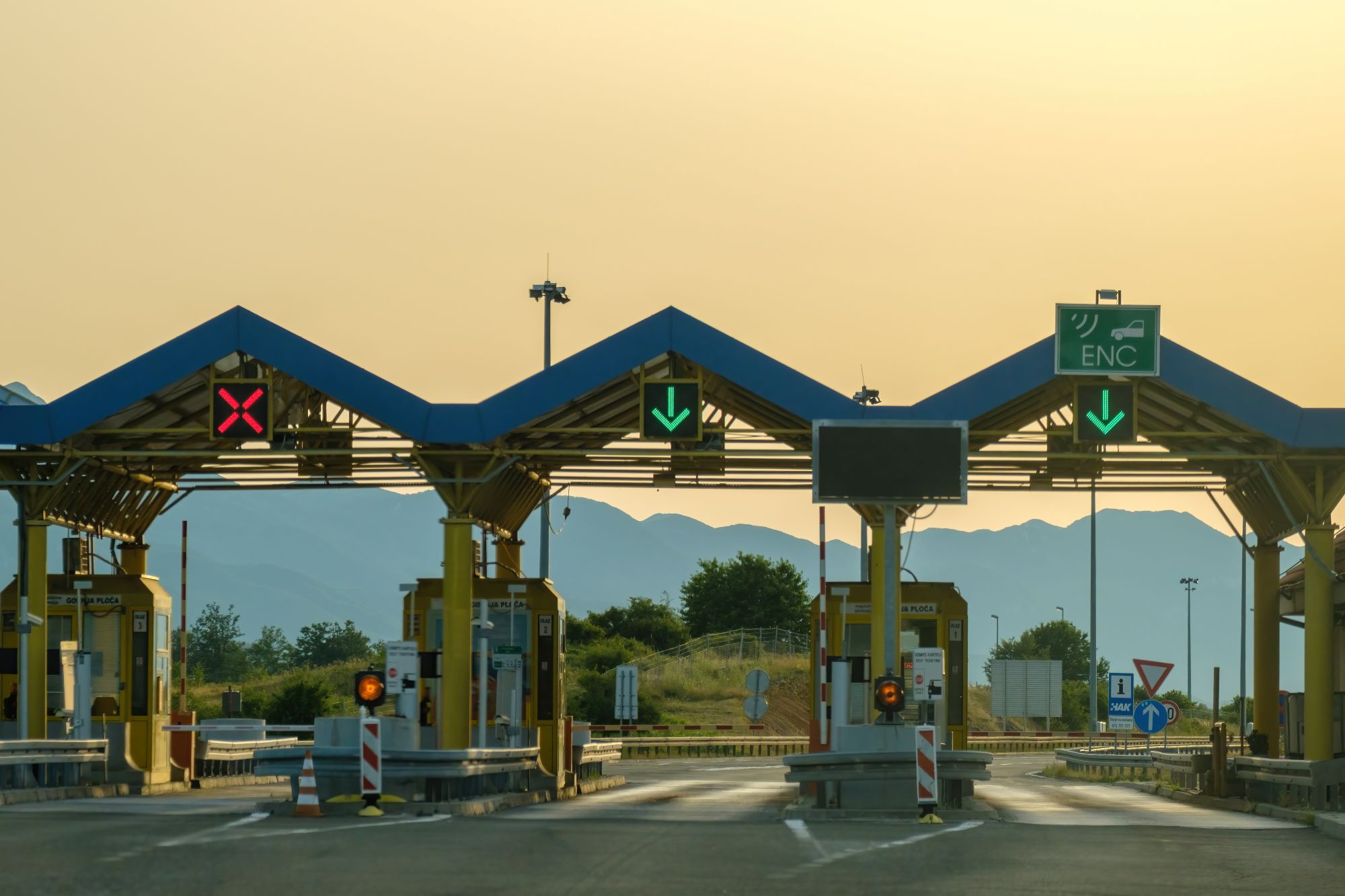
Технология толлинга

В операционном плане система взимания платы становится все более цифровой. Большинство систем, основанных на дистанционном управлении, опираются на GNSS или GPS-слежение с помощью бортовых устройств (OBU), поддерживаемых придорожными порталами, кабинками оплаты и камерами наблюдения.

Для автопарков это означает большую зависимость от бортовых технологий, ужесточение требований к соблюдению правил и меньшую терпимость к административным ошибкам. Пропущенные платежи на дорогах со свободным движением (где нет пунктов взимания платы и не нужно останавливаться) могут быстро обернуться штрафами, особенно для иностранных водителей, не знакомых с местными правилами.

Взаимозаменяемые услуги по взиманию платы за проезд в рамках Европейской электронной службы взимания платы (EETS) становятся все более важными для трансграничных операторов. Вместо того чтобы оснащать автомобили бортовыми устройствами, предназначенными для разных стран, автопарки могут использовать единое утвержденное устройство для оплаты дорожных сборов в нескольких европейских сетях. Это упрощает администрирование, снижает затраты на установку и обслуживание, а также уменьшает риск несоблюдения требований при перемещении транспортных средств между различными режимами взимания платы.
Разбивка по странам

Страны с высокой стоимостью проезда

В Германии действует одна из самых обширных в Европе систем взимания автодорожных сборов. LKW-Maut применяется ко всем грузовикам массой более 3,5 тонны на автобанах и федеральных дорогах. С декабря 2023 года плата за проезд включает в себя сбор за выбросы CO₂, что увеличило расходы на дизельные автомобили. Официальные данные опубликованы Toll Collect..

Австрийская система GO-Maut является одной из самых дорогих в Европе в расчете на километр. В 2025 году сочлененный грузовик стандарта Евро VI будет платить за проезд по автомагистралям около 0,50-0,53 евро за километр. Система включает в себя компоненты, связанные с инфраструктурой, шумом, загрязнением воздуха и выбросами CO₂. Электрические грузовики пользуются более низкими тарифами. ASFINAG предоставляет полные таблицы тарифов онлайн.

В Бельгии действует плата за проезд грузовиков по километражу во Фландрии, Валлонии и Брюсселе. Тарифы зависят от региона, веса и класса евро и ежегодно повышаются. С 2026 года транспортные средства с нулевым уровнем выбросов больше не будут полностью освобождаться от платы, но по-прежнему будут оплачивать льготные инфраструктурные сборы. Официальная информация доступна по адресу Viapass.

Рынки платных дорог средней стоимости

Во Франции используется модель концессии автомагистралей. Плата за проезд по трассам, управляемым частными компаниями, взимается на пунктах взимания платы или электронным способом. Ежегодное повышение платы за проезд является умеренным и регулируется. Более подробную информацию публикует [Association des Sociétés Françaises d'Autoroutes] (https://www.autoroutes.fr/index.htm).

В Италии применяется аналогичный подход, основанный на концессии. Грузовые автомобили платят [около 0,10 евро за километр] (https://trans.info/en/europe-s-priciest-routes-444305) на сети Autostrade. Правительство работает над тем, чтобы к 2026 году сделать плату за проезд более динамичной, потенциально увязав ее с загруженностью дорог и уровнем выбросов. Autostrade per l'Italia объясняет расчеты платы за проезд

Система HU-GO в Венгрии применяется к грузовикам массой более 3,5 тонн на автомагистралях и основных дорогах. Вследствие высокой инфляции тарифы на проезд резко возросли. Официальные обновления публикуются на сайте hu-go.hu.

Более дешевые и переходные рынки

Система e-TOLL в Польше взимает плату за километр пути с использованием GNSS (спутниковой) технологии. Тарифы выросли в 2025 году и снова вырастут в 2026 году, в то время как сеть платных дорог продолжает расширяться. Официальная платформа - etoll.gov.pl.

Испания необычна тем, что многие крупные автомагистрали стали платными после истечения срока действия концессий. Некоторые платные трассы остаются, и стоимость проезда по ним для грузовых автомобилей варьируется в зависимости от километража. Позиция испанского правительства изложена через [Министерство транспорта] (https://www.transportes.gob.es/movilidad-sostenible/actuaciones-prtr).

В настоящее время в Румынии действует система виньеток для грузовиков: семидневный пропуск стоит около [€71, а годовой - €1 425] (https://www.taxeauto.ro/ro/rovinieta) для самых тяжелых транспортных средств. Ситуация изменится в июле 2026 года, когда Румыния введет систему взимания платы за проезд на основе расстояния под названием TollRo. Ожидается, что первоначальные тарифы будут низкими, но со временем они, скорее всего, вырастут. Текущие тарифы на виньетку можно найти в Интернете.
Изменения к 2026 году

Несколько событий делают 2026 год поворотным для европейского толлинга.

С 1 июля в Нидерландах будет введена плата за проезд грузовиков по километражу, которая заменит евровиньетку. Ожидается, что средний тариф составит около 0,19 евро за километр, со скидками для автомобилей с низким уровнем выбросов. Официальная информация доступна на сайте www.vrachtwagenheffing.nl.

Как уже говорилось, Румыния перейдет от виньеток к дистанционной тарификации, что приведет ее в соответствие с соседними странами.

По всей Европе дифференциация на основе CO₂ станет стандартной, с уменьшением льгот и ужесточением контроля. Электрические грузовики по-прежнему будут пользоваться преимуществами, но полные льготы постепенно заменяются сниженными тарифами, а не нулевыми пошлинами.

Для автопарков это означает увеличение расходов, зависящих от пробега, и повышение стимулов для инвестиций в более чистые автомобили и более совершенные инструменты планирования.

Как плата за проезд формирует поведение автопарка

Операторы теперь оценивают маршруты, чтобы сбалансировать стоимость платы за проезд с расходом топлива и временем в пути. Инвестиции в автомобили стандарта Евро VI и автомобили с нулевым уровнем выбросов все чаще оправдываются не только экономией топлива, но и снижением платы за проезд. Кроме того, надбавки за проезд становятся все более явными в контрактах с клиентами, а цифровые инструменты оптимизации маршрутов играют все большую роль в повседневной работе.

Поэтому автопаркам необходимо точное прогнозирование, актуальные данные о транспортных средствах и четкое представление о размере платы за проезд по маршрутам и клиентам. При принятии решений о закупке транспортных средств следует учитывать классы оплаты наряду с топливной эффективностью. Трансграничные операторы должны уделять первостепенное внимание совместимости решений по взиманию платы за проезд и убедиться, что водители понимают местные правила оплаты, особенно на дорогах со свободным движением.

Самое главное, что расходы на оплату проезда должны быть прозрачно отражены в ценообразовании. Поскольку взимание платы за проезд становится все более зависимым от уровня выбросов, автопарки, которые планируют все заранее, будут иметь больше возможностей для защиты прибыли и сохранения конкурентоспособности.

Для автопарков вопрос больше не в том, будут ли расти дорожные сборы, а в том, насколько хорошо они подготовлены к управлению ими. В ближайшие годы речь будет идти не только о том, как далеко проезжает автомобиль, но и о том, насколько чисто, где и при какой системе.

Поскольку плата за проезд все теснее увязывается с уровнем выбросов, пробегом и типом транспортного средства, понимание того, сколько и где вы платите, становится как никогда важным. SNAP помогает руководителям автопарков и операторам управлять платежами и обеспечивать водителям доступ к безопасным, хорошо оборудованным стоянкам для грузовиков. Зарегистрируйтесь бесплатно сегодня.
Поделиться с

Другие тоже читают...

Header Image

понедельник 26 января 2026 • Новости и обновления

ПОДГОТОВКА БЮДЖЕТА АВТОПАРКА НА 2026 ГОД К (НЕ)ОЖИДАЕМОМУ

Guest

Preparing your fleet budget goes beyond simple financial exercises. As a manager, you need strategic oversight to navigate economic headwinds and an evolving regulatory framework. It is essential to prepare your company for unexpected events, as these instances define operational stability and success. Here’s how to build a responsive budget and get ready for future challenges. Being a fleet manager means foreseeing both the predictable trends and significant uncertainties. The following seven strategies are designed to absorb shocks, adapt to change and build resilience. Your budget may have a fixed monetary amount each year. While simple, it could be too static when anticipating unexpected events. Make your financial planning more dynamic by allocating a specific percentage rather than a fixed amount. For instance, your emergency fund could be 5% of the total budget instead of $100,000 annually. Using a percentage is wise because it hedges against inflation. A fixed amount loses purchasing power over the years, whereas a percentage-based fund grows with the budget. You get automatic protection from marketwide surges. Consumer prices in the U.K. , though they can quickly fluctuate due to market conditions. Fleet managers used to determine their budgets based on acquisition prices. Now, they are focusing on budget stability and long-term strategies. Make your process more holistic by managing the total cost of ownership (TCO) and the cost per vehicle over their lifetimes. This approach makes you more meticulous and your budget more dynamic. Mastering TCO involves centralising your data and using dedicated fleet management software. This technology helps your business by and recommending conservation strategies. TCO also enables you to forecast the year for each vehicle based on historical information. Use this to make more informed acquisitions and save money. A volatile economic climate means you need to contain costs. Leverage your company’s position by reviewing supplier contracts and considering renegotiations before renewal. This strategy converts unpredictable expenses into more manageable line items. Your business partner may raise prices on essential goods, so your meetings should lock in prices for tyres and oil. Narrow your negotiation to key areas, such as pricing structure. Your primary focus should be fixed-price agreements for high-volume items and standard labour rates. Savvy fleet managers leverage their spending from the previous year to earn volume discounts and capped increases. These properly managed contracts insulate your business and transfer risk to suppliers. Risk management for your fleet budget also includes insurance optimisation. Managers should turn this annual exercise into an opportunity to protect their business from financial debilitation. The right policy is crucial because it protects against shocks that can result in third-party damage or injury. It also increases predictability by turning repair bills into known variables. Insurance optimisation requires a thoughtful, data-driven process. Give your broker a risk management portfolio to showcase positive trends, such as fewer speeding incidents or less harsh braking. If you have policy excess, ask your insurer to model the premium savings for a higher deductible. Therefore, you can save money on your monthly payment. Maintenance and repairs can be unpredictable and expensive. One breakdown on the M6 could require costly engine work or a transmission replacement. Be proactive by implementing structured service schedules. Beyond the manufacturer's guidelines, you should create detailed plans for each vehicle based on its usage and age. You can dive deeper by including motorway driving and city travel. Your maintenance schedule should also include daily tasks. For example, experts to prevent condensation formation. If the tank is close to empty, sediment buildup and pump damage may occur. Cleaning is another nonnegotiable daily chore, especially when driving over road salts and chemicals. Rinse off dirt and other contaminants before storing vehicles. Accidents are among the most unexpected parts of your fleet budget. Besides the crash, managers must also and solicitor fees. However, proper driver training can mitigate this cost by reducing its frequency. Targeted coaching helps operators understand defensive driving, hazard perception and the specific dynamics of their jobs. Investing in driver training is one element of risk control. Human driving can be unpredictable, but education transforms it into a more consistent variable. By improving your drivers, you also help your insurance premiums. An accident can raise rates, so proper training is one way to control costs. A decrease in incidents can be used as leverage in insurance negotiations. Fleets are becoming more connected as they transform into data hubs. Your vehicles can generate and store vast amounts of information, which is essential for management. However, the connectivity exposes the modern automobile to liabilities. Budget for cybersecurity to protect your assets from digital threats and prepare for the unexpected. Managing this part of your fleet budget involves protecting vehicle systems. You could invest in hardware and software solutions to create firewalls around your GPS and V2X communications. This strategy helps keep your software up to date and protected from external threats. Secure data transmission is another part of preparing for the unexpected. Forward-thinking managers invest in fleet management systems with end-to-end encryption. Before building a resilient operation, it is essential to understand why. You should budget for unexpected events to ensure continuity. If a vehicle breaks down, it could halt operations and delay services. However, planning for these incidents provides a buffer and safeguards your bottom line. All vehicles are subject to failure, so you are preparing for the physical reality. This strategy is also essential for the bigger picture. For instance, economic volatility is a factor outside your control. Sudden inflation, interest rate hikes and price increases are detrimental to static budgets. However, planning for unexpected costs helps absorb them. By accurately forecasting expenses, you build financial discipline and credibility with stakeholders.Building a dynamic budget demonstrates strategic leadership more than defensive measures. As you incorporate wise approaches, you fundamentally shift your organisation’s mindset and promote proactive control. The modern economic climate requires fleet managers to absorb shocks and mitigate asset failure. A strong budgetary framework lets you protect profit margins and guarantee continuity.Discover more from

Header Image

среда 14 января 2026 • Новости и обновления

САМЫЕ НАПРЯЖЕННЫЕ ДЛЯ ПАРКОВКИ И ВОЖДЕНИЯ ГОРОДА ЕВРОПЫ

Josh Cousens

Driving and parking in Europe’s cities can be a daily headache for HGV drivers — and high stress levels don’t just affect wellbeing; they impact fleet efficiency too. For logistics managers, knowing where these challenges are greatest is crucial for route planning, driver safety, and operational performance.Using social listening to analyse millions of geotagged posts across 150 European cities, our research identifies the places drivers find most stressful. Liverpool tops the list (60.5% of posts show driving-related stress), followed by Prague (59.2%) and Dublin (58.5%). Liverpool also ranks 2nd for most stressful city for parking in the UK. Congestion, scarce parking, and tricky road conditions are the main pain points highlighted by drivers across Europe.This study maps Europe’s HGV stress hotspots using real-world driver sentiment, showing how city conditions affect wellbeing. It is not about ranking countries, but giving fleet and logistics managers clear, actionable insights to support drivers, plan smarter routes, and reduce urban driving pressures.Our research analysed over 14 million geotagged social media posts from 150 European cities, covering driving-related topics such as parking, traffic, and road conditions. Posts were assessed for stress by tracking keywords and phrases linked to negative emotions in English and local languages. Each city was scored based on the percentage of posts expressing stress, providing a clear picture of driver pressure across Europe. Data was collected across major social media platform X (formerly Twitter) throughout 2025.“Stress” covers the pressures fleet drivers face on the road, including traffic, parking, road conditions, general driving, and conflicts with other drivers. Understanding these factors helps support driver wellbeing and performance.As of 2025 for most stressful cities for driving:1. . 60.5% of stressed social posts about parking the highest proportion of stress-related driving posts in Europe. . 59.2% of stressed social posts about parking likely due to dense traffic, historic street design, and limited space for larger vehicles navigating the city. . 58.5% of stressed social posts about parking – Driver stress is strongly linked to congestion delays, parking shortages, and busy commuter routes impacting daily driving conditions.The top 3 most stressful UK cities for parking in 2025:1. . Commonly shortened to as “Newcastle” and located in the county, Tyne and Wear, this city has a staggering 65.3% of stressed social posts about parking, making it the most stressful UK city for parking in 2025. . In Merseyside, 64.4% of social posts about parking in Liverpool express stress. . 63.9% of stressed social posts about parking in this city of North Yorkshire.Scotland also shows elevated parking stress, with ) and ranking among the UK’s most challenging cities to park in. Additionally, (57.9 of stressed social posts about parking. Contributing factors could include narrow streets, dense urban layouts, high demand for limited parking space, and city-centre restrictions, which may increase pressure on drivers.Using millions of geotagged social media posts, we scored each city was by the share of stress-related posts, revealing Europe’s top driving, parking hotspots, and highlighting the urban conditions that challenge drivers most. Our infographic map shows the top cities for driving and parking pressure, revealing key urban hotspots and the challenges faced by drivers in each market.Cities can increase driver stress due to congestion, narrow streets, and complex road layouts. (ranked 1st), (4th), and (5th) all feature among the most stressful cities to drive in England, with between and . Congestion hotspots and bottlenecks — such as and heavily congested routes like .— are key contributors to these elevated stress levels. and is one of Europe’s most congested cities, with due to heavy traffic, highlighting persistent congestion pressures on urban roads. Further social listening focused specifically on Irish motorists revealed that the counties of and recorded notably high parking stress levels, with scores ranging from to These high figures highlight persistent challenges for drivers in these areas, largely driven by heavy car dependency — , . Additionally, Leitrim has local reports of sparse road infrastructure and that contributes driver stress in this Irish county. (ranked 7th) – while not one of the most congested Polish cities overall, , with drivers spending notable time in traffic and major roadways such as the S86 and A4 seeing heavy daily traffic volumes that can contribute to the stress score of 53.6%. Similarly, (ranked 13th) has drivers spending approximately , contributing to its stress score of 50.3% in 2025. (ranked 8th) faces notorious congestion as one of Europe’s most crowded cities, with drivers spending significantly more time in gridlock and due to slow traffic. Spain’s capital; (15th) suffers from heavy congestion, with a . Narrow streets and persistent traffic, especially in areas like make every day driving slow and stressful. Similarly, in Bilbao, in Spain (ranked 20th) on key routes like the A‑8 and BI‑30, causing extended queues and slow movement, which contributes to stressful driving conditions.Parking also contributes to driver and fleet management stress, as limited availability, high demand, and restrictive regulations across Europe’s cities which can delay journeys, increase frustration, and complicate route planning.Also, through social listening, we have collected data on the cities where drivers experience the across Europe, specifically in Romania, Poland, Spain, and the UK. Paying attention to these areas is important for fleet operators, as limited parking availability, high demand, and urban congestion can disrupt schedules, increase delays, and affect driver wellbeing.Our research shows the highest parking stress in Europe is in (83.3%) and (80%) facing issues like limited urban parking spaces and high vehicle density. Similarly, in the UK, (65.3%), (64.4%), and (63.9%) are the cities with the most parking stress for motorists. These located struggle with restricted city‑centre spaces, , congestion and contribute to driver frustration. Romanian cities and , along with the Spanish cities of and , recorded the within their respective countries. However, compared with the UK and Poland, their stress scores are lower — ranging from to — suggesting more manageable parking conditions, fewer bottlenecks, and relatively less pressure on drivers in these urban areas.HGV drivers face pressures that differ from regular car drivers. Limited parking for large vehicles, navigating narrow or congested streets, and high traffic volumes can make urban driving more challenging and stressful, turning routine journeys into time‑pressured, high‑stress experiences.Let us dive deeper into the factors causing stress for HGV drivers:. Scarce lorry bays and high demand make it hard to find safe places to stop, especially in urban centres. The reports an estimated creating significant stress for HGV drivers who struggle to find safe and legal places to park., creating significant stress for HGV drivers who struggle to find safe and legal places to park. . Tight roads and historic city centres require careful navigation, increasing stress and risk of delays in cities like Prague, Dublin, and Liverpool. Heavy commuter and freight traffic slows journeys, increases travel times, and heightens frustration particularly in busier cities like London, Birmingham, Bucharest, and Madrid. Restrictions on vehicle access, extra charges, and rerouting requirements can complicate planning and add pressure. For example, require some HGVs to seek alternate routes. Height and weight limits, prohibited turns, and time-specific delivery windows force drivers onto longer or less convenient routes. Long urban journeys without access to rest areas, fuelling, or amenities can increase fatigue and mental strain for HGV drivers.Stressful cities create challenges for HGV drivers. Congestion, limited parking, and complex urban layouts can lead to lost time, missed deliveries, increased fatigue, and a higher risk of minor collisions or near-misses.Drivers can manage stress by planning routes carefully, taking scheduled breaks, and using technology to anticipate delays or help with . SNAP supports drivers with tools like the intruck app, helping them locate available parking, plan efficient routes, and stay informed about congestion, reducing stress and making and more manageable.Stressful cities do not just affect drivers — they impact fleet performance too. Congestion and limited parking can lead to delayed deliveries, higher fuel and operating costs, reduced driver wellbeing, and increased risk of fines or penalties. These pressures can eat into margins and complicate scheduling, , and customer satisfaction.Fleet operators can overcome these challenges by adopting and support systems: using real‑time traffic and parking insights, building flexible schedules, and . Available at over 850 service partners across Europe, SNAP’s fleet payment solution is used every 12 seconds across the continent to pay for truck services — without cash or a card.Understanding driving and parking stress hotspots across Europe helps fleets operate more safely and efficiently. By using these insights for route planning, driver training, tech adoption, and risk reduction, operators can reduce delays, improve wellbeing, and protect their drivers. SNAP supports this mission for the haulage fleets, offering secure parking, seamless payments, and tools that make daily operations calmer and safer.

Header Image

четверг 08 января 2026 • Новости и обновления

АВТОСТОЯНКА САТТЕРТОН: ПОВЫШЕНИЕ СТАНДАРТОВ КОМФОРТА И БЕЗОПАСНОСТИ ВОДИТЕЛЕЙ

Susie Jones

Situated on the A17 and a short drive from Boston is , a haven for truck drivers transporting goods along this stretch of road. The location provides not only a truck stop with the usual amenities one would expect clean showers, toilets, shop, and refuelling options but it also presents drivers with the choice to dine at the Roadside Diner, providing visitors with an American-themed restaurant with a variety of meals. We sat down with Director James Townsend to discuss improvements to the site, driver welfare, site security, and their long-standing relationship with SNAP. explains James. The site has undergone a major refurbishment, prioritising the needs of truck drivers. Nestled inside the truck stop is the new roadside diner. James and the team have recently taken back ownership of this and refurbished it. James says. He goes on to explain that it was more than upgrading existing facilities, but providing drivers with the right facilities to make the site a home away from home. SNAP asked truck drivers parking at Sutterton what they thought of the new facilities on offer. One driver commented:When it came to the design of the truck park, the site worked closely with SNAP to maximise the site’s potential:Driver welfare still remains a huge priority for those working in the industry, with investment into truck parking lacking, something James is all too aware of after working with the DFT. he explains. While investment is valuable, directing it into the right facilities for truck drivers is also imperative. James states. James and the rest of the team work closely with SNAP’s UK Network Team as well as , providing them with a single, clear point of contact should any issues arise. explains James. Having the support in place for complaints and technical issues is a major advantage for a truck stop like Sutterton, which often manages competing demands. Working with SNAP has delivered additional benefits as well, as James goes on to say:To ensure truck drivers get a good night’s rest, ensuring the site is as safe and secure as possible was vital for Sutterton Truck Stop. Working with SNAP Access & Security from the outset has allowed James and the team to do exactly that. says James. The site is a firm believer in training its staff to deal with incidents if they occur. Inspired by what you’ve just read? Catch the full interview with