Guest
Новини галузі • 4 хв читання

9 способів, як AI-детектор трансформує автотранспортну галузь

Створено: 03.11.2025

Оновлено: 04.11.2025

Штучний інтелект (ШІ) змінив підхід фахівців автопарків до щоденних операцій. Сучасні технології дозволяють менеджерам помітно покращити технічне обслуговування, безпеку та дотримання нормативних вимог для своїх транспортних засобів. У міру посилення регуляторного тиску знання, отримані завдяки штучному інтелекту, стануть вирішальними для отримання вирішальної переваги. Ось дев'ять способів, як штучний інтелект трансформує автотранспортну галузь.

1. Моніторинг поведінки водія

Передові алгоритми телематики та машинного навчання (ML) допомагають виявляти ШІ в автопарках, відстежуючи поведінку водія. Ці пристрої аналізують шаблони в реальному часі та відзначають ризиковану поведінку водія, наприклад, перевищення швидкості та різке гальмування. Моделі ML миттєво обробляють дані з автомобільних датчиків і виявляють відхилення від норм безпечного водіння та політики компанії.

Водії отримують негайний зворотний зв'язок у транспортному засобі, а менеджери автопарку - детальні звіти про тенденції. Велика кількість інформації допомагає керівникам персоналізувати тренінги та знаходити конкретні напрямки вдосконалення. Телематичні рішення мають вирішальне значення для автопарків по всій країні, оскільки [вони зменшують аварійність і травматизм] (https://www.crowncommercial.gov.uk/agreements/RM6315) завдяки покращенню поведінки та навчальним програмам.

2. Оптимізація маршрутів

Алгоритми штучного інтелекту необхідні для аналізу даних про дорожній рух у реальному часі, таких як перекриття доріг і погодні умови. Затори можуть бути значними, особливо якщо ваші маршрути пролягають через Лондон. У звіті Inrix за 2024 рік говориться, що водії [зазнали 101 годину затримок] (https://inrix.com/scorecard/) під час руху в столиці. Моделі ML можуть швидко визначити вузькі місця і несприятливі погодні умови, щоб дотриматись критично важливих термінів доставки.

Менеджери автопарку отримують вигоду від того, що їхні водії можуть покращити показники вчасності. Оптимізація маршрутів означає, що доставка вантажу з більшою ймовірністю буде здійснена в запланований час. Це також покращує поведінку водіїв, оскільки вони менше простоюють на холостому ходу та долають менші відстані. Сучасні технології штучного інтелекту швидко виявляють перекриття доріг і несподівані погодні зміни, щоб мінімізувати перебої в роботі.

3. Автоматизація комплаєнс-звітності

Звітування про нещасні випадки раніше включало ручне заповнення журналів і документацію. Однак штучний інтелект може зменшити потребу в робочій силі, автоматично виявляючи та надсилаючи звіти про інциденти. Ці технології можуть розпізнавати потенційні інциденти - від зіткнень до промахів. Датчики збирають відповідну інформацію під час події, щоб надати більше контексту. Незвичайні обставини, такі як спрацювання подушок безпеки, також можуть бути частиною автоматичної звітності.

Після завершення виявлення ШІ система збирає інформацію в стандартний звіт. Ручне ведення журналів може створювати трудомісткі завдання, тому ШІ може автоматизувати ці процеси і вивільнити персонал. Менеджери автопарків і страховики отримують звіт, забезпечуючи таким чином відповідність вимогам і точну комунікацію. Передові технології збирають релевантні дані та використовують узгоджене форматування, тому всі сторони отримують важливі деталі.

4. Покращення профілактичного обслуговування

Несподівані поломки транспортних засобів можуть порушити графік і затримати доставку. Штучний інтелект допомагає менеджерам автопарку виявляти ці проблеми до того, як вони стануть серйозними. Від температури двигуна до тиску масла - всі характеристики відстежуються в режимі реального часу. Вдосконалені алгоритми виявляють ледь помітні аномалії та попереджають операторів, коли компонент наближається до виходу з ладу.

Хоча фіксовані інтервали обслуговування можуть бути корисними, штучний інтелект дає змогу діяти на випередження і точно планувати технічне обслуговування. Датчики тиску в шинах - чудовий приклад, особливо для будівельних і комунальних компаній. Експерти кажуть, що повітряні компресори повинні видавати на 25% більше CFM, ніж потрібно для підтримки найкращих практик. Ці датчики постійно контролюють продуктивність і виявляють поступове падіння, сигналізуючи про ранні ознаки витоків.
5. Аналіз витрат палива

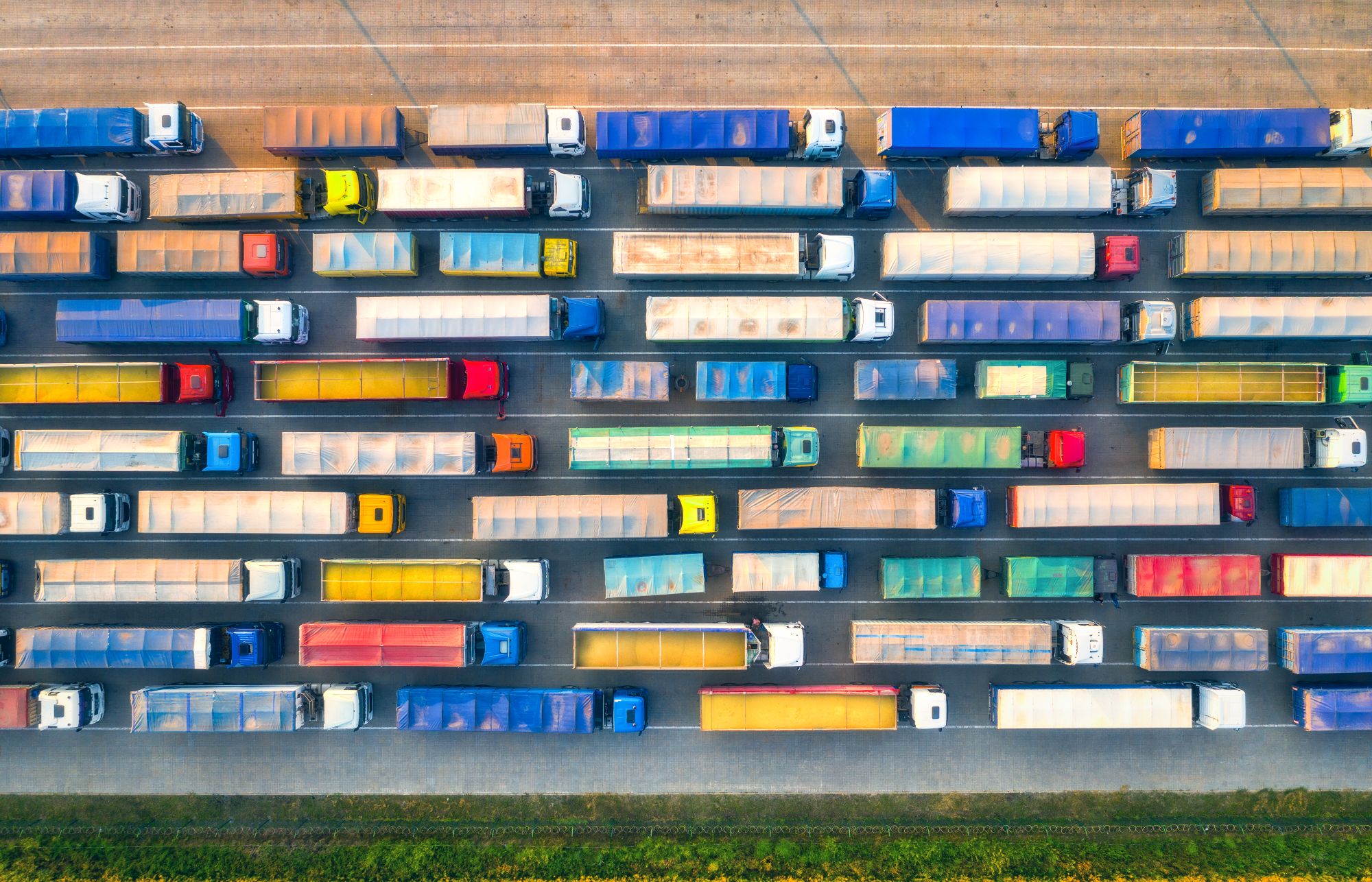
Виявлення ШІ в автопарках виходить за рамки вивчення поведінки водія. Телематика і датчики аналізують швидкість і прискорення, щоб краще зрозуміти споживання палива. Системи відстежують транспортні засоби на предмет надмірного холостого ходу та неефективних маршрутів, які збільшують витрату бензину або дизельного палива. ШІ може адаптувати рекомендації для водіїв, пропонуючи оптимізовані діапазони швидкості або потреби в технічному обслуговуванні.

Менеджери автопарків отримують вигоду, отримуючи зведені дані про споживання пального та витрати. Ця інформація допомагає їм приймати більш обґрунтовані рішення про закупівлю транспортних засобів та планування маршрутів. Якщо старі транспортні засоби демонструють неефективність, можливо, настав час оновити автопарк. Фахівці з логістики повинні порівнювати окремі транспортні засоби з галузевими стандартами, щоб побачити відхилення від них.

6. Зменшення викидів

Екологічні цілі Великобританії [включають досягнення нульового рівня викидів] (https://commonslibrary.parliament.uk/research-briefings/cbp-9888/) до 2050 року. Тому керівники автопарків повинні бути більш обізнаними про посилення стандартів і ризик штрафів. ШІ-розпізнавання допомагає транспортним засобам за допомогою датчиків і бортових систем діагностики, які збирають дані під час роботи. Алгоритми ML виявляють закономірності та аномалії в інформації і повідомляють про надмірні викиди.

ШІ може сповіщати менеджерів автопарку та забезпечувати проактивне обслуговування, якщо транспортний засіб перевищує порогові показники викидів. Поки люди вживають заходів для скорочення викидів парникових газів, штучний інтелект допомагає транспортній галузі. У дослідженні 2025 року говориться, що [глибоке навчання з підкріпленням максимізує скорочення викидів] (https://news.mit.edu/2025/eco-driving-measures-could-significantly-reduce-vehicle-emissions-0807) за рахунок адаптації можливостей екологічного водіння. Американські дослідники стверджують, що впровадження цієї технології на 10% транспортних засобів дозволить скоротити викиди вуглецю до 50%.

7. Перехід на електромобілі

Ще один спосіб, яким менеджери автопарків можуть зменшити викиди, - це перехід на електромобілі (EV). Кількість електромобілів зростає на національному рівні завдяки приватним водіям і власникам автопарків, згідно зі звітом за 2025 рік [показав зростання на 38,9% порівняно з 2023 роком] (https://www.smmt.co.uk/more-than-a-million-evs-on-uk-roads-as-vehicle-ownership-reaches-new-high/). Штучний інтелект може допомогти професіоналам у сфері логістики в процесі переходу, рекомендуючи, коли, де і як електрифікувати свої автопарки.

Власникам електромобілів, які вперше купують електромобілі, може знадобитися допомога з місцями для зарядки та інфраструктурними потребами. Системи на основі штучного інтелекту визначають, коли і де електромобілі можуть природним чином під'їхати до зарядних вікон. Наприклад, вони можуть рекомендувати найкращий час для зарядки, щоб зменшити збої в графіку. Дехто може подумувати про перехід на електромобілі, тому логістичні менеджери можуть використовувати ШІ для порівняння даних про витрати між електромобілями та бензиновими автомобілями.

8. Зменшення витрат

Хоча інвестиції в ШІ можуть бути бар'єром, вони можуть бути фінансово вигідними в довгостроковій перспективі. Ці програмні опції [знижують витрати, мінімізуючи час простою] (https://renovated.com/construction-fleet-management-software/), який уповільнює щоденні операції. Раннє виявлення проблем може призвести до більш якісного обслуговування автопарку, що збільшує час безвідмовної роботи і прибутковість. Менеджери автопарку також можуть заощаджувати гроші завдяки оптимізації маршрутів та управлінню паливом.

Виявлення ШІ в автопарках має важливе значення для оптимізації адміністративних процесів. Ці технології можуть автоматично виконувати перевірки відповідності та документування інцидентів, таким чином зменшуючи потребу в ручному оформленні документів. Ваші оператори можуть більше зосередитися на загальній картині і менше на адміністративних накладних витратах. Якщо моніторинг допоможе вашим водіям, це може зменшити витрати на ремонт транспортних засобів і судові позови.

9. Відстеження активів

Кількість крадіжок транспортних засобів і вантажів у Великій Британії [неухильно знижується] (https://www.ons.gov.uk/peoplepopulationandcommunity/crimeandjustice/datasets/crimeinenglandandwalesappendixtables), хоча вони залишаються серйозною проблемою. Виявлення крадіжок за допомогою штучного інтелекту пропонує додаткові рівні безпеки, зменшуючи вікно можливостей для злодіїв. Функції відстеження активів поєднують GPS і телематичні можливості для моніторингу місцезнаходження в реальному часі, що дуже важливо для компаній, які перевозять цінні активи.

Менеджери автопарків отримують вигоду від функцій геофіксації, що дозволяють їм встановлювати віртуальні межі. Якщо вантажівка або фургон виходить за межі цих зон, системи на основі штучного інтелекту автоматично позначають цю подію і повідомляють фахівців з логістики. Алгоритм достатньо розумний, щоб розуміти аномалії та протоколи безпеки. Аномалії можуть викликати заходи безпеки, наприклад, дистанційне відключення.

Використання штучного інтелекту для зниження витрат і забезпечення відповідності

Штучний інтелект - це практичний інструмент, що змінює правила гри для менеджерів автопарків. Розширена аналітика та моніторинг у режимі реального часу дають можливість фахівцям з логістики підвищити рівень безпеки та продуктивності. Поки технології розвиваються, майбутнє вже настало. Ваш бізнес повинен бути готовий інвестувати в рішення на основі штучного інтелекту, щоб знизити витрати і мінімізувати ризики.

Дізнайтеся більше з Renovated Magazine.

Поділіться на

Читайте також...

Header Image

вівторок 16 грудня 2025 • Новини галузі

ЩО ОЗНАЧАЄ ОБОВ'ЯЗКОВИЙ ЦИФРОВИЙ ОБЛІК В ІСПАНІЇ ДЛЯ АВТОПАРКІВ, ЩО ПРАЦЮЮТЬ В ЄВРОПІ

Guest

Spain is preparing for one of the most significant transport reforms in its recent history. The Sustainable Mobility Law (Ley de Movilidad Sostenible), which received final approval in November 2025, will introduce mandatory digital records for road freight control documentation, creating a more transparent, enforceable and efficient system for domestic and international carriers. Although this is a major national change, it forms part of a wider trend. Across Europe, governments and operators are moving towards a fully digital freight environment as the EU prepares to implement the (eFTI).For fleets working in and out of Spain, this is the start of an important transition. It signals a future in which paper documentation becomes the exception rather than the rule and in which digital processes support faster checks, smoother operations and greater consistency across borders.While the Sustainable Mobility Law addresses wide-ranging transport reforms – from urban mobility to domestic flight restrictions – the provisions most relevant to international freight operators centre on digital documentation. A central section of the law introduces a mandatory digital “control document” for road freight. This includes the use of approved digital formats, such as the electronic consignment note (eCMR), which Spain has already ratified and treats as legally equivalent to the paper CMR note. The law aims to reduce administrative burdens, eliminate inconsistencies in paperwork and shorten the time required for checks and inspections. Rather than relying on handwritten notes or physical documents that can be misplaced, carriers will store, share and verify transport information digitally. For operators, this should mean fewer disputes over documentation, less ambiguity around compliance requirements and greater certainty when preparing for audits or regulatory reviews.In practice, the obligation focuses first on the digital control document used for roadside and regulatory checks, but it is expected to accelerate wider use of eCMR and other digital freight documents across the supply chain.The timeline for implementation will begin once the law is published in Spain's Official State Gazette. Carriers should expect the digital control document obligation to take effect roughly ten months after publication, making 2026 the likely year when full compliance will be required.The Mobility Law applies to road transport operations that fall under Spanish control rules on Spanish territory, not just Spanish-registered companies. Carriers will need to ensure their systems can produce and transmit digital records in compliant formats. Any delay in adopting digital documentation could slow down inspections or disrupt customer schedules.This means that foreign operators running international loads into, out of or through Spain should plan on being able to provide the required control document in digital form when requested by Spanish authorities.The Spanish reforms align closely with the EU’s eFTI Regulation, which will require Member States to accept digital freight documentation once the technical and certification rules are in place (from mid-2027). eFTI sets a unified framework for how information is structured, transmitted and verified. While it obliges authorities to accept digital records, it does not require operators to use them. Spain’s Mobility Law therefore goes further, making digital control documents mandatory for road freight.Under eFTI, carriers will be able to provide freight information electronically through certified platforms. Enforcement authorities will receive that information through secure digital channels. This should reduce administrative friction across the EU’s busiest freight routes.Spain is not alone in taking early steps. Several EU countries have already moved towards paperless freight systems and their experience demonstrates what a fully digital environment could look like.● The Netherlands has been one of the earliest adopters of eCMR and has trialled end-to-end digital workflows across different modes of transport. ● France also moved early, supporting digital documentation and faster roadside checks following its ratification of the eCMR protocol. ● In the Benelux region, Belgium, Luxembourg and the Netherlands are running a joint eCMR pilot and digital logistics corridor, illustrating how interoperable documentation can work across national boundaries.● Denmark and Sweden have operated national e-freight trials designed to simplify the sharing of transport information. Taken together, these examples show that Spain’s Mobility Law is part of a broader European transition. Rather than standing apart, Spain is moving in step with a continental shift towards digital documentation that aims to make road freight faster, more transparent and more consistent across borders.The move to digital records brings several practical advantages. Digital documents reduce the time drivers and enforcement officers spend handling paperwork and shorten inspections during roadside checks. This mirrors the benefits seen with the introduction of , which have reduced unnecessary stops for compliant drivers and improved the consistency of enforcement across Europe.Digital documentation also removes the errors that can arise from handwritten notes or damaged paper notes. Fleet managers can instantly retrieve records, resolve errors more easily and maintain clearer oversight of documentation across multiple routes. For operators managing complex schedules, this increased predictability supports better planning and stronger customer service.Drivers are likely to benefit too. A shift to digital records reduces administrative pressure and helps avoid disagreement at delivery points. With all documents stored digitally, drivers have a single source of truth that is accepted across the supply chain.Fleets may need to invest in updated transport management systems or integrate new tools that support digital documentation. Operators may require additional support and training to shift from paper-based processes to new digital workflows.There will also be a period of adjustment in which paper and digital systems may operate side by side. As eFTI becomes established across Europe, some countries will move faster than others. Operators travelling across different borders may encounter varying expectations, particularly in the early years.Throughout this transition, driver welfare should remain a priority. The administrative load associated with new processes often falls on drivers. Clear training and straightforward systems will be essential.Spain’s Mobility Law marks an important moment in the evolution of European freight. It reflects a sector that is modernising at speed and preparing for a future built on digital workflows rather than manual paperwork. Operators that begin preparing now will be in a strong position as Spain’s digital control document requirements take effect and eFTI comes into force across Europe.At SNAP, we support fleets across Spain and the wider continent with tools that make daily operations simpler and more predictable. The intruck app helps drivers locate and book secure parking along their route, which is particularly valuable as compliance processes evolve. If your fleet is preparing for Spain’s new requirements or the broader digital transition across Europe, SNAP is here to support every step of the journey.

Header Image

середа 10 грудня 2025 • Новини галузі

БЮДЖЕТ ВЕЛИКОБРИТАНІЇ НА 2025 РІК: ЩО ЦЕ ОЗНАЧАЄ ДЛЯ ВАНТАЖОПЕРЕВЕЗЕНЬ

Guest

The arrives at a difficult moment for the road transport sector. Operators are working against rising wages and operating costs, tight margins, ageing infrastructure and ongoing pressures around recruitment. At the same time, the shift towards cleaner mobility is accelerating, creating new expectations and increasing the need for long-term investment.The following article outlines what the Budget means for infrastructure, investment, workforce costs and the wider operating environment for haulage.For many years, fleets have been affected by deteriorating roads, weight restrictions on ageing bridges and the growing unpredictability of journey times. Government and industry data makes this clear. More than one in every ten miles of network in England and Wales is likely to require maintenance within the next year, according to reporting, and the backlogs for resurfacing work continue to rise. These issues lead to vehicle damage, driver fatigue, higher insurance costs and disrupted schedules. They also place additional pressure on operators already dealing with narrow margins.The new Budget acknowledges these concerns. One positive step is the substantial funding for strategic national projects, including almost £900 million allocated to the , which should reduce congestion, provide more reliable journey times and a safer driving environment for HGVs.Local authorities will also receive a share of and address the growing number of potholes. This could make a noticeable difference for fleets. Local roads carry the majority of domestic freight and serve as the first and last mile of nearly every delivery. Improving them should reduce wear and tear on vehicles as well as operational strain. These commitments will not fix decades of underinvestment immediately, but they represent an important shift towards a road network that is more resilient and better suited to the realities of modern logistics.The Budget also places more focus on skills. for under-25s working in small and medium-sized businesses could help attract new entrants into a profession that urgently needs them. The driver shortage is well documented. The UK must recruit around in order to stabilise supply chains, and across Europe the average age of professional drivers continues to climb. Only a small proportion of drivers are under 25, and training costs have been a barrier for many younger candidates.Providing funded apprenticeships makes logistics more accessible at a critical time. It also supports smaller operators, who often struggle to invest in training despite needing to expand their teams. The Budget introduces further support for investment, particularly around fleet renewal. Operators installing charging infrastructure can take advantage of a 100% first-year allowance until March 2027. This will help offset the upfront cost of electric HGVs and depot charging equipment.From January 2026, a new 40% first-year allowance will be available on many main-rate assets, including trucks – particularly useful where full expensing or the Annual Investment Allowance don’t apply, such as some leased fleets and unincorporated operators.While the Autumn Budget contains several positive measures, operators will also need to plan for increasing costs. Fuel duty will rise in stages between the end of August 2026 and March 2027. Fuel is already one of the largest expenses for operators, and the planned rises are likely to increase the emphasis on fuel efficiency, telematics, consolidated routing and fleet renewal.Vehicle Excise Duty (Road Tax) will be uprated in line with inflation from April 2026, including for HGVs. From April 2028, a new Electric Vehicle Excise Duty (eVED) will also apply a mileage-based charge to battery-electric and plug-in hybrid cars, on top of existing VED. Although eVED initially excludes electric vans and trucks, it signals a longer-term shift toward distance-based taxation that fleets will need to factor into future planning.The HGV Levy will also return to rising with inflation. Vehicles over twelve tonnes must pay the levy before using A roads or motorways, and the revised rate will add another cost that fleets must factor into forward planning.Larger, higher‑value properties are also likely to feel more pressure from business rates changes. The Budget confirms permanently lower business rates for retail, hospitality and leisure, funded in part by higher charges on the most expensive commercial premises. These include big warehouses and distribution centres, so operators with large sites can expect proportionately higher bills over time than smaller depots or high‑street locations.In addition, the Budget introduces several measures that directly affect the financial landscape for operators and the people who run or work within haulage businesses. Labour already represents one of the sector’s highest costs, and these changes will shape payroll planning, staff retention and the personal finances of many owner-operators.Minimum wage increases mean that employers will face higher staffing costs across warehousing, last-mile logistics and support roles. Many operators have already tackled wage rises in recent years, and this further uplift will add pressure at a time when margins remain narrow. For fleets that rely on overtime, night work or seasonal peaks, the impact will be even more noticeable.The Budget continues the government’s move toward greater digitalisation of tax and reporting. Compliance expectations will grow over the coming years, with stricter penalties for late VAT and Self Assessment returns and an expanded Making Tax Digital framework from 2027. Mandatory electronic invoicing will follow in 2029. Parcel carriers and mixed load operators will also be affected by changes to customs duty for low-value imports, which will apply to items worth less than £135 by March 2029 at the latest. While the aim is to even the playing field for UK manufacturers, it is likely to increase administrative pressure on haulage firms. These changes may eventually improve efficiency, but they will require investment in systems and staff training. Smaller fleets without dedicated administrative teams are likely to feel the adjustment most sharply.Although operators will face higher costs and increased administrative complexity, the 2025 Budget also provides some of the most significant commitments to the road network and skills pipeline seen in recent years. Taken together, these measures signal a Budget that attempts to balance fiscal constraints with long-term needs. The road ahead will still require careful planning and strategic investment, but there are genuine opportunities to strengthen the sector’s foundations and support a more resilient future for haulage.SNAP gives fleets practical tools to manage this shifting landscape, from parking access to data that supports compliance and operational decision-making. to discover how SNAP can help strengthen your fleet’s resilience in the months ahead.

Header Image

четвер 28 серпня 2025 • Новини галузі

ЧИ ПЕРЕХОДЯТЬ АВТОПАРКИ НА ІНТЕГРАЦІЮ АВТОНОМНИХ ТРАНСПОРТНИХ ЗАСОБІВ?

Guest

The buzz around self-driving cars isn’t as loud as it used to be, but it remains a constant noise in fleet managers’ ears. The United Kingdom government has moved autonomous vehicle integration pilot plans to 2026, renewing interest in the technology. Will decision-makers ignore the noise or embrace early adoption?Autonomous vehicle integration involves embedding self-driving technologies like artificial intelligence, light detection and ranging (LiDAR), and high-definition cameras into commercial fleets. On a broader scale, it entails introducing self-driving cars into existing public transportation systems.Driver assistance systems include collision avoidance, automatic speed adjustment, lane-centring, adaptive cruise control and intelligent ride-hailing. Partial and conditional automation leverage more advanced technologies to enable hands-free operation under certain circumstances.Level 4 and 5 automation are top priorities for automakers but challenging to implement in practice because engineers must account for countless edge cases. Even with advanced AI, perfecting parking and preventing collisions can be difficult. What if the pavement markings are barely visible or a child runs into the road? Adoption hinges on the car’s reaction.According to the Centre for Connected & Autonomous Vehicles, transport secretary Heidi Alexander confirmed the U.K. government will accelerate self-driving commercial pilot plans and aim for Spring 2026. The move could and add £42 billion to the U.K. economy by 2035.The country’s new automated vehicle legislation is among the most robust worldwide, laying the groundwork for widespread commercial adoption. Technological maturity is the only remaining hurdle.In an interview with McKinsey & Company, Sascha Meyer — the CEO of German automotive technology company MOIA — said predicting autonomous vehicle integration timelines has been challenging. In 2016, her enterprise MOIA throughout Europe by 2021.Since then, Meyer has realised adoption entails designing an entire ecosystem, not just driving functions. The new timeline sees self-driving cars in European cities by 2030 at the earliest. The engineers at MOIA are designing the prototype to exceed mandated redundancies. This way, they will be ready to operate commercially once the relevant legislation passes.Delivery, taxi, utility, and commercial fleets are seeing an uptick in driver assistance systems and intelligent automation. However, the penetration rate remains relatively low, especially considering how long the technology has existed. What are their plans for autonomy?Increased efficiency is among the main reasons fleet managers are embracing automation. Unlike humans, driverless vans can operate around the clock. With telematics systems, they can optimise driving and minimise idle time to improve fuel efficiency and expedite trips.AI is immune to human error, eliminating harsh braking and distracted driving. It cannot become fatigued and does not have blind spots. These improvements could help reduce road collisions and car accidents, which can mitigate costly workers’ compensation claims and potentially lower insurance costs.Cost savings are another contributing factor. At Level 4 and 5, owners can optimise labour expenses and compensate for driver shortages. Moreover, electric driverless cars with vehicle-to-grid capacity can over 30 years, helping offset the upfront investment.Aside from waiting for driverless technology to mature, fleet owners are delaying adoption due to high upfront costs. Embedding LiDAR, AI and telematics into every truck is expensive. Buying new instead of retrofitting is equally pricey. Even if cost savings could be found, technology is moving quickly — their investment may quickly become outdated.Safety is another concern. Photo-eye sensors garage doors. They stop the door from closing on objects, cars or people, and are used throughout the industry in car washes and automotive assembly lines. While some automakers utilise camera-only systems, engineers have had to pioneer new solutions. Today, many use LiDAR, global navigation satellite systems and ultrasonic sensors.However, even the most advanced systems are fallible. It is not enough to make automated cars perform as well as people — they must succeed where human drivers fail.Sensors have existed for years, but engineers have not perfected them yet. They may fail in edge cases or unfamiliar scenarios. Level 3 cars only work on premapped, divided highways in clear weather. Given that the U.K. in 2021, they may be too unreliable for adoption at scale.Autonomous vehicle integration may be moving slowly, but it is on track to reach its destination within the next decade. According to Goldman Sachs research, sold worldwide could be Level 3 vehicles by 2030. It forecasts that Level 2 — those requiring driver supervision — will increase from 20% of sales in 2025 to 30% in 2027.Managers should consider the scope and cost of autonomous fleet integration to determine whether early adoption is right for them. It will likely result in long-term savings, but waiting may be more rewarding because it allows time for technological advancement. If the cost-benefit analysis is unconvincing, they should consider incrementally upgrading as cars fail.Those who proceed with adoption must develop operation, storage, security and upgrades policies. These rules should vary depending on the automation level. For instance, drivers of Level 3 lorries should be required to pay full attention to the road to take control if necessary.Educating employees on their role is essential for successful implementation. Volkswagen Financial Services research found consider themselves better drivers than autonomous vehicles, so they are unlikely to overestimate the driverless system’s capabilities. However, they should still receive explicit training on best practices and habits to avoid.Self-driving machines are hard at work in ports and warehouses across Europe. Automating highway vehicles is more challenging because they are not on a fixed track. Also, they must account for variables like weather and other motorists. Geofencing, telematics and AI are accelerating adoption by making the unpredictable predictable. At the very least, these solutions enhance response times and mitigate human error, demonstrating that these previously unproven technologies are just as capable as human motorists.For now, full automation that eliminates the need for human attention remains theoretical. However, hands-free driving is a reality, and driverless systems could soon become standard issue in commercial fleets. As automakers perfect driving functions, fleet owners should prioritise route mapping, driver management and maintenance scheduling.Discover more from .