Guest
Nyheder og opdateringer • 4 min læsning

Hold din flåde kørende i feriesæsonen

Oprettet: 04.12.2025

Opdateret: 04.12.2025

Når feriesæsonen nærmer sig, forbereder du dig sandsynligvis på en stigning i efterspørgslen efter leverancer og mere komplekse driftsforhold. Dette sæsonbestemte pres overlapper med vintervejrets udfordringer, hvilket skaber et unikt risikomiljø for flåder i hele Storbritannien.

Hvordan vinterferien sætter din flåde under pres

Juleperioden medfører ekstra stress for dine køretøjer og din drift. Fra forbrugerdrevne stigninger i antallet af kørte kilometer til det kolde vejrs indvirkning på køretøjernes ydeevne er der flere sæsonbestemte faktorer, der spiller sammen på én gang. Hvis du forstår dette pres på forhånd, kan du forberede dig proaktivt og minimere forstyrrelser i hele din flåde.

Øget efterspørgsel og begrænsede vinduer

Forbrugeraktiviteten [stiger typisk i feriesæsonen] (https://www.ioscm.com/blog/christmas-in-the-supply-chain-navigating-peak-season/), hvilket øger leveringsmængderne, komprimerer tidsplanerne og øger serviceforventningerne. Denne stigning betyder, at selv mindre forstyrrelser hurtigt kan eskalere, da flåderne har mindre fleksibilitet til at absorbere forsinkelser. Med flere planlagte rejser og strammere overdragelsestider bliver køretøjets nedetid dyrere. Et overset eftersyn eller en forsinket reparation kan have en meget større indvirkning på driften end i andre dele af året.

Den kombinerede effekt af ferieefterspørgsel og vinterfarer

Når høj forbrugeraktivitet overlapper med farligt vejr, oplever flåderne en forstærket risiko. Trafiktætheden øges, vejforholdene forværres, og mindre mekaniske problemer kan lettere eskalere til alvorlige hændelser. For at bekæmpe disse problemer skal du styrke den forebyggende vedligeholdelse, justere tidsplaner og forbedre overvågningen i realtid for at forhindre undgåelige nedbrud eller forsinkelser.

Vinterforhold og deres indvirkning på driften

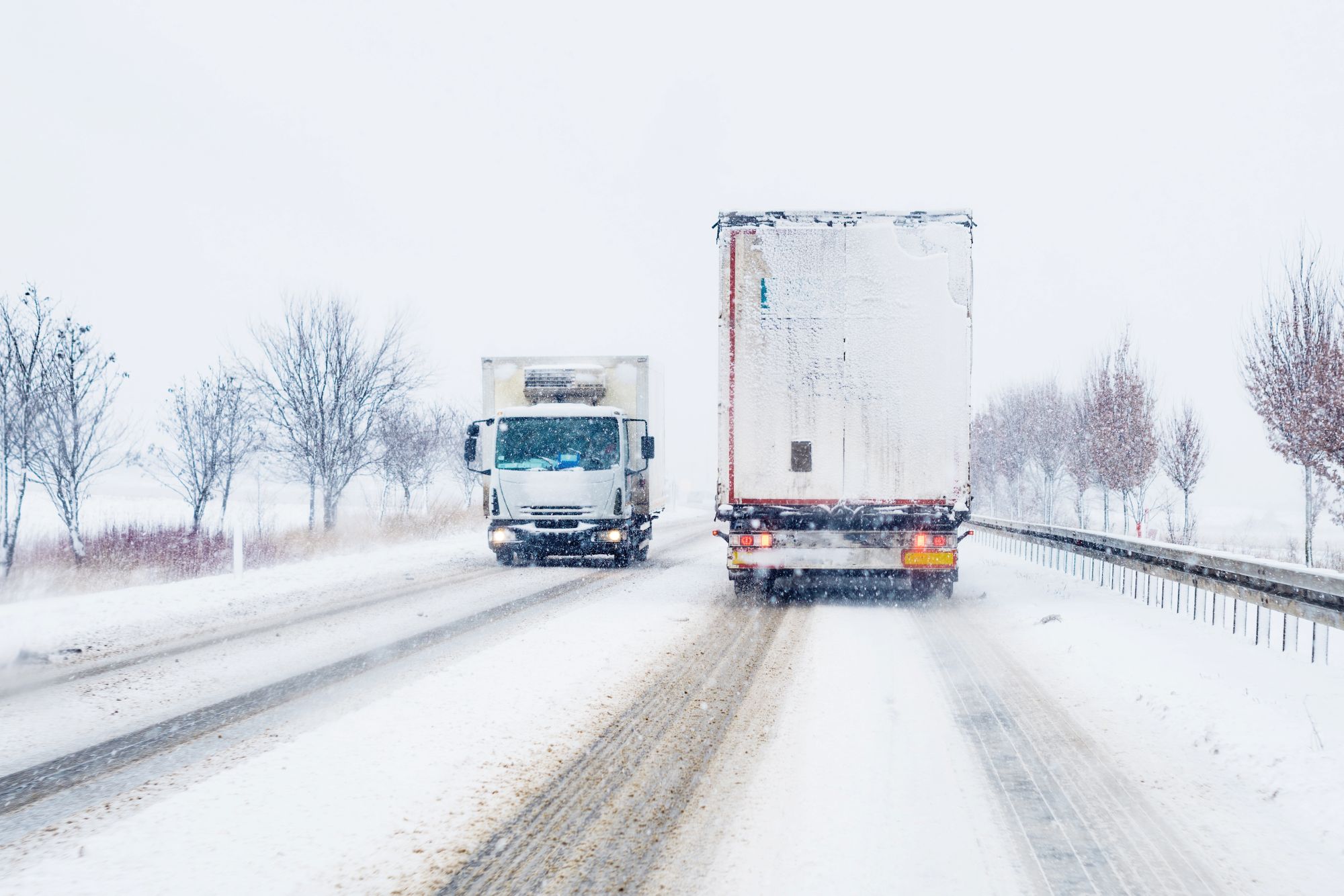
Kolde temperaturer, isglatte overflader og mindre dagslys øger alle de mekaniske risici og risici på vejen for erhvervskøretøjer, hvilket øger sandsynligheden for svækkede batterier, reduceret dæktrækkraft og problemer med udsynet. De britiske trafiksikkerhedsstandarder understreger vigtigheden af mere robust vintervedligeholdelse af bremser, belysning, væsker og dæk, når forholdene forværres, hvilket understreger, hvorfor vinterberedskab er afgørende for uafbrudt flådedrift. Selv mild kulde [kan reducere motorens og hydraulikkens ydeevne] (https://ascoeq.com/blog/cold-weather-prep-winterizing-your-construction-fleet/), hvilket gør proaktiv vintervedligeholdelse afgørende.
Arbejdsgange og chaufførudfordringer

Ud over belastningen af køretøjerne lægger feriesæsonen og vinterforholdene også pres på chaufførerne og de operationelle arbejdsgange. Øget trafik, uforudsigeligt vejr og snævrere leveringsvinduer kan føre til træthed, stress og en øget risiko for ulykker. Omhyggelig planlægning, klar kommunikation og proaktiv støtte til chaufførerne er afgørende for at opretholde sikkerheden og sikre, at din flåde fortsætter med at fungere effektivt under dette sæsonbestemte pres.

Strategier til at holde din flåde kørende

At opretholde en stabil drift i juletravlheden kræver mere end reaktiv problemløsning. Det kræver bevidst planlægning på tværs af køretøjsvedligeholdelse, chaufførberedskab, teknologiudnyttelse og driftskoordinering. Disse strømlinede strategier vil hjælpe dig med at være på forkant med vintersæsonens forstyrrelser og opretholde en ensartet flådeydelse gennem hele ferien.

1.Prioriter forebyggende vedligeholdelse

Sæsonbestemt efterspørgsel kræver ofte, at køretøjerne arbejder under hårdere forhold i længere tid, så fremrykket vedligeholdelse er en af de mest effektive måder at forhindre nedbrud i sæsonen på. I byggebranchen kan nedetid koste [op til $760 pr. køretøj] (https://renovated.com/construction-fleet-management-software/), hvilket understreger vigtigheden af proaktiv vedligeholdelse.

Fokuser på vinterkritiske systemer som batterier, bremser, varme- og afrimningssystemer, dæk og væskeniveauer. Ved at tage fat på mindre problemer før ferieræset sikrer du, at dine køretøjer starter sæsonen i topform og reducerer risikoen for uplanlagt nedetid, når kapaciteten er på sit højeste.

2.Styrk chaufførernes beredskab

Chaufførerne står over for et større pres i juletiden, fra overfyldte veje til uforudsigeligt vejr. At forberede dem tidligt hjælper med at reducere risikoen og opretholde pålideligheden af servicen. Del opdaterede protokoller for vinterkørsel, styrk bedste praksis for træthedshåndtering, og sørg for, at alle køretøjer har vigtigt udstyr til koldt vejr. En velforberedt chauffør kan tilpasse sig sæsonens farer mere effektivt og sørge for, at rejserne forløber sikkert.

3. Forbedr din strategi for reservedele og reparationer

Adgang til reservedele og reparationssupport bliver mere udfordrende i løbet af ferien på grund af efterspørgselsstigninger og leverandørnedgang. Hvis du sikrer dig nøglekomponenter på forhånd og bekræfter, at et værksted er tilgængeligt, sikrer du, at du kan reagere hurtigt på problemer midt i sæsonen. Disse trin reducerer sandsynligheden for lange forsinkelser og holder flere af dine køretøjer på vejen under spidsbelastninger.

4. Udnyt telematik og data i realtid

Præcis indsigt i realtid bliver endnu mere værdifuld, når vejr- og trafikforhold kan ændre sig hurtigt. Telematiksystemer hjælper dig med at overvåge førerens adfærd, identificere nye problemer med køretøjerne og tilpasse ruterne proaktivt. Brug af data til at træffe beslutninger samme dag - uanset om det drejer sig om omdirigering, omlægning eller eskalering af vedligeholdelse - hjælper din flåde med at være lydhør i hele ferieperioden.

5. Forbedre kommunikation og planlægning

Sæsonbestemte spidsbelastninger kræver en tættere tilpasning på tværs af disponenter, chauffører, vedligeholdelsesteams og kunder. Klar kommunikation reducerer usikkerheden og gør det lettere at justere tidsplanerne, når forholdene ændrer sig. Del regelmæssige opdateringer om vejrvarsler, ruteændringer, leveringsvinduer og køretøjers tilgængelighed, så alle forbliver koordinerede og i stand til at reagere hurtigt.

6.Lav beredskabsplaner

Selv med god forberedelse introducerer vinteren variabler, som ingen flåde kan kontrollere fuldt ud. Ved at lave beredskabsplaner får dit team et struktureret svar i tilfælde af hændelser. Etabler backup-ruter, identificer alternative leverandører og værksteder, og oprethold en strategi med reservekøretøjer, hvor det er muligt. Planlægning af forstyrrelser sikrer, at uventede problemer ikke sætter driften helt i stå.

Din tjekliste til ferieflåden

Brug denne tjekliste til at sikre, at dit team, dine køretøjer og dine arbejdsgange er klar til årets travleste periode:

Optimer ruteplanlægningen: Gennemgå historiske trafikdata og forventet trængsel i ferien for at skabe en mere effektiv rute. Værktøjer, der overvåger og rapporterer om forholdene i realtid, hjælper med at reducere forsinkelser og brændstofspild.

Tjek batterier, væsker, dæk, vinduesviskere og varmesystemer for at forhindre nedbrud i koldt vejr og forbedre førerens sikkerhed.

Styrk chaufførernes parathed: Gennemfør korte genopfriskningssessioner om vinterkøreteknikker, træthedshåndtering og nødprotokoller. Det fremmer både sikkerhed og produktivitet.

Øg hyppigheden af forebyggende vedligeholdelse: Feriekørsel og kolde temperaturer kan fremskynde slid. En strammere vedligeholdelsesplan hjælper med at fange problemer, før de resulterer i nedetid.

Validering af sporing og IoT-pålidelighed: Sørg for, at aktivsporere og sensorer er fuldt funktionsdygtige, så du får nøjagtige data om placering og tilstand under spidsbelastning.

Undersøg leverandørers og deles tilgængelighed: Mange leverandører arbejder på nedsat tid i ferien. Sørg for dele og forbrugsvarer på forhånd for at undgå forsinkelser i reparationen.

Vær på forkant med sæsonbestemt pres

Ferie- og vinterforhold forstærker enhver lille ineffektivitet. Tidlig forberedelse hjælper med at forhindre undgåelig nedetid, styrker chaufførernes sikkerhed og holder din virksomhed kørende gennem årets hårdeste tid. Med præcis planlægning, pålidelige værktøjer og en proaktiv vedligeholdelsesrytme kan flåderne forvandle sæsonmæssige udfordringer til muligheder for bedre præstationer og kundetilfredshed.

Se mere fra [Renovated Magazine] (https://renovated.com/)

Del til

Andre læser også...

Header Image

fredag 19 december 2025 • Nyheder og opdateringer

ER DIN FLÅDE ET MÅL? PRIORITERING AF SIKKERHED I EN TEKNOLOGIKYNDIG VERDEN

Guest

Cybersecurity readiness must be a top priority for fleet owners and managers in the United Kingdom. The rapid digital transformation in the transportation and logistics industry has made fleets attractive targets for hackers. Learn about the cybersecurity trends fleet operators must be aware of and strategies you should adopt to lower your susceptibility to attacks.The advent of connected vehicles, push for fleet electrification, integration of Internet of Things (IoT) devices and reliance on automation have expanded the attack surface opportunistic cybercriminals can exploit to infiltrate your network.Vulnerable telematics back-end systems, insecure over-the-air firmware updates and buggy APIs are common entry points for phishers, data thieves, business saboteurs and ransomware attackers. Threat actors are also increasingly leveraging artificial intelligence to launch more believable scams.Falling victim to a cyberattack can cause more than extended, unscheduled downtime. A high-profile security incident can inflict severe reputational damage on your organisation and harm your business in the long term.Although your cyber insurance coverage may compensate you millions for losses, the financial impact can lead to insolvency — as happened to KNP Logistics in June 2025. An Akira ransomware attack exacerbated this major logistics group’s preexisting financial struggles, and let go of 730 employees.Every business is at risk from cyberattacks, but these strategies can help make your fleet management software and vehicles less vulnerable.A robust threat intelligence platform strengthens cybersecurity, as it allows you to proactively defend your assets from malicious actors and minimise your losses if they target you. Here are the primary ways to use threat intel to improve your security posture:Contextualisation enables your team to identify the perpetrators behind specific attacks, understand their motives and capabilities, determine what they want from your organisation, and comprehend their methods. Context transforms raw threat data into actionable intelligence, enabling you to inform your decision-making.Attackers evolve, so learning how they operated in the past is not enough to accurately anticipate their future actions. A threat intelligence platform can help you keep pace with known malicious actors and familiarise your team with relatively unknown ones. Some organisations use deception technologies to lure cybercriminals and watch them in action in a controlled environment.A software solution that can integrate into your company’s existing tools breaks down silos and allows threat intelligence to flow freely across teams. Cross-departmental collaboration is the key to implementing an organisation-wide cybersecurity strategy effectively.A threat intelligence platform can monitor your network activity and sense attack patterns early enough to notify your Security Operations Centre or IT professionals immediately. Early detection is vital to count threats before they infiltrate deeply into your system and cause more harm.Responding to urgent incidents involves less manual work with a threat intelligence platform. This software solution can orchestrate essential tasks to mitigate breaches, enabling your in-house cybersecurity professionals to focus on activities where human input is more impactful.Regulatory frameworks and data privacy standards are becoming more stringent over time. A threat intelligence platform aids compliance by ensuring that your team handles sensitive data responsibly and generates detailed reports to document your best practices.Zero trust minimises the likelihood of unauthorised access to fleet management systems by continuously verifying every user and device and enforcing identity-centric access control.This approach acknowledges that threats can come from within the organisation. Assuming that each request may come from a malicious actor reflects the level of vigilance you must exercise to protect your operation from sophisticated attacks and help your team adapt to complex, dynamic environments involving remote users, IoT devices and cloud services.After verification, zero trust gives users and devices just enough access to perform specific tasks. The principle of least privilege enables effective threat containment if a cybercriminal gets in.According to Cybersecurity Insiders’ 2024 Insider Threat Report, insider threat attacks have spiked. In October 2024, 51% of the 413 respondents in IT and cybersecurity reportedly over the past year. 29% reported spending over $1 million on remediation.The adoption of new technologies is a primary driver behind the rise in these cyberattacks. Investing in employee training is crucial for preventing team members from becoming insider threats.Provide target users with sufficient resources to familiarise themselves with the technologies. Highlight the ways they may inadvertently leak sensitive information or compromise the system. Tell them the red flags to watch out for to identify malicious schemes and teach them safe, responsible ways to deal with cybercriminals.Tight physical security can safeguard your assets from digital hijackers. Effective physical protection often involves a layered approach, which includes perimeter fencing, strategic placement of surveillance equipment and tamper-evident vehicle electronics casings. Additionally, limiting visibility with opaque doors , thereby adding an extra layer of protection to your physical security. Blending physical safeguards with digital solutions can restrict what hackers can do, even if they manage to gain control over fleet vehicles. In 2022, a group of hacktivists attacked the Russian ride-hailing service Yandex Taxi and directed in the same place in western Moscow. The incident should serve as a wake-up call to embrace measures to immobilise your assets if criminals remotely take control of the driver’s seat.Your company is only as strong as the weakest link in your supply chain. The positive impact of impregnable internal cybersecurity diminishes when third-party vendors make it easy for lawbreakers to steal your data from elsewhere. For instance, temporarily could jeopardise your cybersecurity if your lessor has outdated software.Working with supply chain partners that are as particular about cybersecurity reduces your risk exposure. Integrating your suppliers’ systems into your threat intelligence platform ensures better coordination during data breaches. Close collaboration with critical external parties promotes cybersecurity readiness and helps everyone prepare for potential attacks.Contending with online threat actors is inevitable in modern fleet management. Prioritise proactive strategies to stay ahead of hackers. By implementing a multi-layered defence that combines technology, employee training and strategic partnerships, you can build a resilient operation. This stance protects your current assets and secures your company’s future in an increasingly connected world.Discover more from

Header Image

mandag 08 december 2025 • Nyheder og opdateringer

TRUCK TRENDS: FORUDSIGELSER FOR 2026

Guest

Major changes are coming for the mobility sector.The next 12 months will bring some of the most significant regulatory and technological shifts European transport has seen in years. New emissions rules, driver-monitoring systems, hydrogen trials and autonomous pilots will reshape how fleets operate across the UK and EU.For operators and professional drivers, understanding these changes now will make the difference between adapting confidently and struggling to keep up. come into force in 2026, introducing new requirements for fleets. Nitrogen oxide and carbon monoxide limits will tighten further, with the permitted particle size dropping from 23 nanometres to 10. In addition, for the first time.Every new truck sold will need to comply with Euro VII. While vehicle pricing is likely to be affected, the bigger impact will fall on procurement timelines, fleet renewal cycles and long-term decarbonisation.. These monitor eye and head movement to identify early signs of fatigue or inattention, enabling safer interventions and supporting accident-reduction goals across Europe. By 2029, new cab designs must minimise blind spots through improved glass visibility rather than camera reliance. This will particularly influence urban operations, vulnerable road user safety and future vehicle specification.. After years of exemption, this change effectively brings smaller commercial vehicles under full drivers’ hours enforcement.For operators with mixed fleets, this means introducing:● new driver cards● regular data downloads● updated monitoring processes● revised routing and rest-time planningThousands of vehicles that previously operated freely will need compliance systems in place almost immediately. requires companies with more than 250 employees or €40 million revenue to collect and report verified CO₂ emissions – including Scope 3 transport activity.This will cascade through supply chains. Smaller hauliers without reliable emissions reporting risk losing access to larger contracts, accelerating the push toward better data systems and standardised reporting.Electric HGV production will rise rapidly in 2026. are all expanding manufacturing capacity.To support this, electric charging is also expanding. , as part of HyHAUL's M4 corridor project. Three refuelling stations, each supplying up to two tonnes of hydrogen daily, support the pilot. If successful, the project aims for 30 trucks on the road by the end of 2026 and 300 by 2030. Alongside this, . Five more will follow by 2027.Vehicle manufacturers are taking different approaches to developing hydrogen-fuelled trucks: ● and DAF are planning similar systems. ● will introduce its next-generation hydrogen fuel cell stack in 2026 with improved durability and lower operating costs.Hydrotreated Vegetable Oil (HVO) is emerging as a notable transitional fuel for haulage in 2026, thanks to two factors: stricter biofuel mandates in north-western Europe and its compatibility with existing diesel engines. Reports by confirm that HVO is a “drop-in” fuel: it can be used in many existing heavy-duty vehicles without engine or infrastructure changes, which gives operators a practical pathway to immediate CO₂ reductions. Meanwhile, forecast that HVO consumption could reach record highs in 2026. Germany alone may need an additional 1.5 million tonnes – almost four times 2025 levels – to meet demand. Although uptake remains modest when compared with battery-electric or hydrogen alternatives, the current regulatory push and infrastructure compatibility mean HVO is likely to gain traction in 2026.From spring 2026, in controlled zones – a full year ahead of plans. Enabled by the , this transition supports an industry expected to contribute £42 billion to the UK economy by 2035 and create an estimated 38,000 jobs. Germany is close behind. , supported by €20 million in seed funding. Across northern Europe, autonomous freight along the 1,200-km Rotterdam-Oslo corridor. The programme runs until March 2026 and examines how autonomous vehicles perform across borders, terrain types and logistics hubs.In Sweden, already move goods between warehouses, processing five million data points per second. Their controlled deployments demonstrate the potential for automation in predictable, repeatable routes.Despite this progress, humans will continue to play a central role. . So while automation will support specific functions, such as port operations, depot shuttles and fixed urban routes, long-haul and complex international transport will remain human-led.The scale and speed of change arriving in 2026 is unlike any previous year for European road transport. Multiple regulatory, technological and sustainability shifts will land simultaneously, reshaping how fleets operate across borders."The operators who succeed in 2026 won't be those who resist change but those who prepare for it systematically," says Nick Long, European Strategic Partnership and Development Manager at SNAP. "We're working with fleets across Europe to build the infrastructure that tomorrow's industry needs. Secure parking. Integrated payments for new toll structures. The building blocks of success are available now for those ready to use them."SNAP helps fleets prepare for the future with integrated solutions for parking, payments and fleet management across Europe. Visit snapacc.com to discover how we can support your transition to 2026 and beyond.

Header Image

tirsdag 25 november 2025 • Nyheder og opdateringer

POLEN FREMSKYNDER SKIFTET TIL EMISSIONSFRI TRANSPORT

Guest

Poland’s transportation sector is undergoing a major transformation. In recent months, the government has introduced a series of high-value funding programmes aimed at decarbonising the country’s road network and logistics operations. Much of this activity focuses on infrastructure related to heavy-duty vehicles – a sign that the transition to cleaner freight is being embraced across Europe.The scale of investment – and the speed at which it's happening – will be important for operators, managers and infrastructure planners right across Europe. To understand why, it helps to look at both the wider European context and the specific funding available in Poland.The move towards lowand zero-emission transport has been gathering pace across Europe for several years. The EU’s package and to cut emissions from heavy-duty vehicles by 45% by 2030 and by 90% by 2040. The (AFIR) also states that there must be high-power charging points for heavy vehicles every 60 kilometres along the Trans-European Transport Network (TEN-T) – a system of European roads, railways, ports and airports that forms the backbone of continental freight – by 2030. Hydrogen refuelling stations must be available every 200 kilometres.The UK is following a similar path. Z are being used to test electric and hydrogen HGVs on long-haul routes, while funding is being allocated to depot charging and refuelling infrastructure.Against this backdrop, Poland’s programme shows that Central and Eastern Europe are ready to take a leading role in building cleaner, better-connected transportation.In March 2025, Poland’s (NFOŚiGW) launched two major funding calls worth a combined PLN 2 billion. The first will cover the construction and expansion of power grids that supply high-capacity charging stations, especially those on the TEN-T. It covers both grid expansion and the installation of new connections. This will mean that the network can deliver the energy needed for rapid truck charging. Energy and grid operators can apply for grants if their projects meet minimum power thresholds. The second funding call supports the construction of heavy-vehicle charging stations themselves. The aim is to create 550 publicly accessible points across the country, serving both electric and hydrogen trucks. A final programme, which launched in Q2 2025, gives grants and loans to businesses so they can buy or lease zero-emission trucks in categories N2 and N3. Category N2 covers vehicles with a gross weight between 3.5 and 12 tonnes, while N3 applies to trucks over 12 tonnes. Funding levels range from 30 to 60 per cent, depending on company size. Upper limits of PLN 400,000 apply to N2 vehicles and PLN 750,000 to N3 models. Applications will be , so operators can plan their transition to zero-emission vehicles. These investments sit alongside Poland’s existing programme, which subsidises electric car purchases for individuals and companies, further extending the country’s sustainable transport strategy beyond passenger vehicles.According to the , Poland transports more goods by road than any other EU country. It is a natural gateway between Western Europe and the Baltic States, Ukraine and the Balkans, which means a reliable zero-emission infrastructure in Poland will have a Europe-wide impact.By setting clear power requirements and aligning projects with the TEN-T corridors, the government is ensuring a coordinated approach rather than isolated projects. The goal is a dependable network where electric and hydrogen trucks can move freely along key trade routes. The Deputy Minister for Climate and Environment described the programme as a way to strengthen “the competitiveness of Polish freight operators” while cutting emissions from one of the country’s largest economic sectors.Poland’s domestic network is also part of the wider . A total of nine EU countries – including Poland – committed in September 2025 to accelerate charging infrastructure deployment along key freight routes, such as the North Sea-Baltic and Scandinavian-Mediterranean corridors of the TEN-T.For fleets that operate across Europe, the initiative means charging infrastructure will become more standardised and predictable between countries. This will help drivers plan cross-border routes with greater confidence while supporting the shift towards zero-emission freight.For fleet operators, the timing is encouraging. Zero-emission trucks are rapidly , with sales of nearly 2,000 zero-emission heavy-duty electric trucks registered in the first half of 2025 across the EU. There are challenges, however. Adding high-power charging capacity will mean that grid operators, local authorities and logistics centres have to cooperate. It will also take time to hire technicians with the skills to install and maintain high-voltage equipment.In addition, vehicle costs and operational factors could also slow progress. Even with generous subsidies, businesses must weigh the cost of electric vehicle ownership, route patterns and depot readiness.For the road transport community, Poland’s programme is a significant milestone. Once complete, its charging and refuelling network will connect eastern and western Europe, supporting cleaner and more efficient freight movement.“This is a turning point for heavy transport,” says Nick Renton, Head of European Strategy and Business Development at SNAP. “Poland’s actions show that zero-emission freight is becoming part of daily life, rather than a long-term vision. As charging and refuelling points multiply, operators will be able to schedule cleaner journeys with confidence.”As the situation develops, we will continue to support fleets across Europe with technology, insight and practical tools for drivers. Our helps identify and book rest stops, refuelling points and secure parking, with more zero-emission facilities being added as new sites open. For operators looking to stay ahead of infrastructure changes, it provides a clear view of how the road network is evolving – and where new opportunities are emerging.