Guest
Industrie-Nachrichten • 4 min lesen

Frachtdiebstahl in Europa: Warum der Diebstahl zunimmt und wie Flotten das Risiko verringern können

Erstellt: 15.04.2026

Aktualisiert: 15.04.2026

Frachtdiebstahl ist eine wachsende Bedrohung in ganz Europa. Was früher als gelegentliche Störung angesehen wurde, ist heute ein beständiges und organisiertes Risiko für den Straßenverkehr, das Flotten, Fahrer und die gesamte Lieferkette betrifft.

Die gemeldeten Verluste und Vorfälle haben stark zugenommen, wobei eine weithin zitierte Branchenzahl auf einen 438%igen Anstieg in Europa in den letzten Jahren hinweist. Allein im Dezember 2025 wurden 557 Frachtdelikte in 38 Ländern im TAPA EMEA Intelligence System erfasst, und obwohl bei weniger als einem von fünf Vorfällen der Wert angegeben wurde, beliefen sich diese 100 Fälle auf insgesamt mehr als 43 Millionen Euro.

In diesem Artikel gehen wir auf die aktuellen Trends ein und erläutern, was Flottenmanager und Betreiber tun können, um ihre Risiken zu minimieren.

Worauf es Kriminelle abgesehen haben

Lebensmittel- und Getränkesendungen gehören in Europa zu den am häufigsten ins Visier genommenen Kategorien und machen 10 % der Diebstahlsfälle aus. Elektronik, Metalle und Alkohol stehen ebenfalls hoch im Kurs. Diese Waren sind attraktiv, weil sie leicht zu transportieren und zu verkaufen sind und sich oft nur schwer zurückverfolgen lassen, sobald sie auf Sekundärmärkte gelangen.

Der jüngste [Diebstahl einer 12 Tonnen schweren Lieferung von KitKat-Riegeln] (https://www.cbsnews.com/news/nestle-kitkat-shipment-heist-stolen-europe/) auf dem Weg von Italien nach Polen ist ein gutes Beispiel dafür. Nestlé gab an, dass die fehlende Ladung etwa 413.793 Riegel umfasste, was zeigt, wie schnell eine Lieferung für den Normalverbraucher zum Ziel werden kann, wenn sie grenzüberschreitend unterwegs ist.

Diese Sendungen sind ein attraktives Ziel für organisierte Gruppen, da sie schnell entladen werden können, was zu einem schnellen Gewinn führt.

Wo und wie Ladungsdiebstahl geschieht

Entführung und Diebstahl während des Transports

Frachtkriminalität findet häufig während des Transports statt. [Der Bericht von Munich Re aus dem Jahr 2025 (https://www.munichre.com/specialty/global-markets-ireland/en/news-and-insights/cargo-theft-tactics-and-trends-report-2025.hsb.html) ergab, dass Entführungen 21 % der Vorfälle ausmachten, während 41 % der Diebstähle während des Transports stattfanden. Das erinnert daran, dass das Risiko nicht erst dann beginnt, wenn ein Lkw für die Nacht geparkt wird. Es kann schon lange vor dem nächtlichen Stillstand eines Fahrzeugs beginnen, insbesondere auf exponierten Korridoren oder Routen, auf denen die Sichtbarkeit der Ladung und die Sicherheitskontrollen schwächer sind.

Angriffe auf geparkte Fahrzeuge

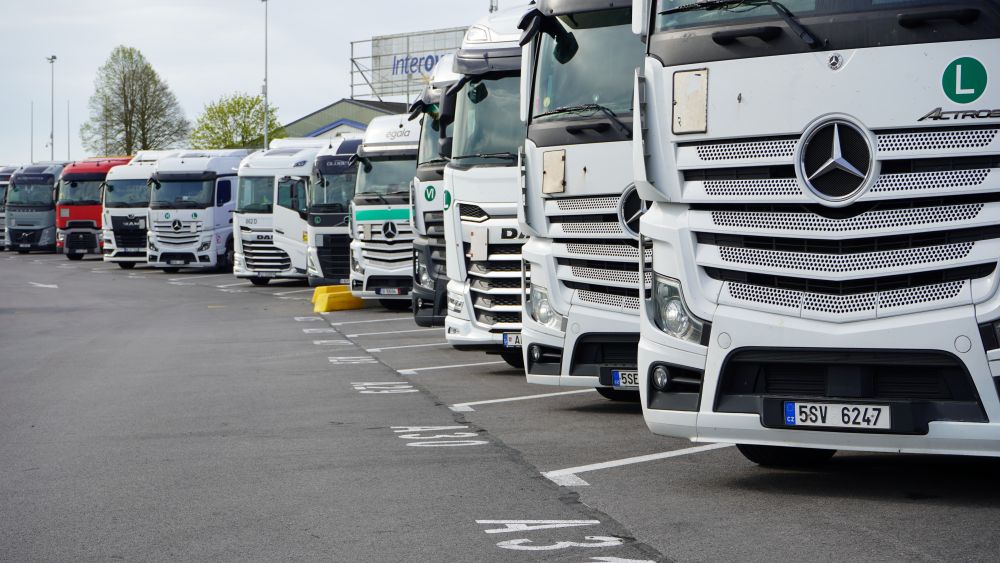
Geparkte Fahrzeuge stellen nach wie vor eine große Schwachstelle dar. In Großbritannien berichtet Munich Re, dass fast die Hälfte aller Diebstähle auf ungesicherten Park- und Rastplätzen am Straßenrand verübt werden. In ganz Europa sind ungesicherte Parkplätze und Rastplätze nach wie vor ein Schwerpunkt in der Berichterstattung über Ladungskriminalität, vor allem dort, wo die Fahrer nur begrenzte Alternativen haben und gesicherte Plätze voll sind.

Organisierte Gruppenangriffe

Einige der besorgniserregendsten Vorfälle zeigen die Koordination. [Risk Intelligence] (https://www.riskintelligence.eu/background-and-guides/cargo-theft-the-threat-posed-by-organised-criminal-groups) dokumentierte kürzlich Angriffe in Deutschland, bei denen in einer einzigen Nacht Dutzende von Lastwagen entlang der A1 angegriffen wurden. Bei einem Vorfall im November 2023 wurden die Anhänger von 67 Lkw auf Raststätten wie Ostetal Süd und Grundbergsee Süd aufgeschlitzt. Ähnliche Angriffe hatten bereits Monate zuvor auf der gleichen Strecke stattgefunden.

Europäische Hotspots für Frachtkriminalität

Deutschland ist nach wie vor einer der größten Hotspots, was vor allem auf das hohe Frachtaufkommen im Land zurückzuführen ist. Die Analyse ergab, dass [Deutschland im Jahr 2023 2.498 Frachtdiebstähle] (https://imbema.com/en_US/blog/item/cargo-theft-2023-the-year-of-conflicting-trends-875/) verzeichnete, mehr als doppelt so viele wie Frankreich auf dem zweiten Platz. Andere wiederkehrende Hotspots sind Frankreich, Italien, Spanien und das Vereinigte Königreich.

Dieses Muster spiegelt die Realität des europäischen Güterverkehrs wider. Dichte Logistiknetze, große Güterverkehrsknotenpunkte und stark befahrene Autobahnen bieten mehr Möglichkeiten für organisierte Kriminelle, insbesondere wenn die Kapazität sicherer Parkplätze nicht mit der Nachfrage Schritt hält.

Die Rolle der Technologie beim modernen Frachtdiebstahl

Munich Re warnt davor, dass Frachtdiebe immer raffiniertere Methoden anwenden, darunter Identitätsbetrug, cybergestützte Betrügereien und andere Taktiken, mit denen herkömmliche Kontrollen umgangen werden. Eine breitere [Branchenberichterstattung] (https://trans.info/en/cargo-theft-costs-429738) weist darauf hin, dass GPS-Störungen, die Manipulation von Papieren und die Umleitung von Sendungen Teil dieser Entwicklung sind.

Eine gestohlene Ladung kann nun mit kompromittierten Daten, einem betrügerischen Spediteur, einem umgeleiteten Auftrag oder einem Fahrzeug, dessen Bewegungen nicht mehr richtig verfolgt werden können, beginnen. Für Flotten bedeutet dies, dass Diebstahlprävention heute mehr als nur physische Sicherheit umfasst. Sie erfordert auch straffere Abfertigungsprozesse, eine bessere Kontrolle der Sendungsdaten und eine klarere Sichtbarkeit in Echtzeit.
Die Auswirkungen für Flotten und Fahrer

Die offensichtlichste Auswirkung ist finanzieller Art. Gestohlene Waren führen zu Warenverlusten, Versicherungsansprüchen und Störungen. Aber der direkte Wert der fehlenden Ladung ist nur ein Teil des Problems. Verspätete Lieferungen, Fahrzeugschäden, verpasste Zeitfenster und die Unzufriedenheit der Kunden können die tatsächlichen Kosten noch viel höher treiben.

Es gibt auch einen menschlichen Preis. Die Fahrer sind möglicherweise Einschüchterungen, Konfrontationen oder dem Schock ausgesetzt, wenn sie feststellen müssen, dass an ihrem Fahrzeug herumgepfuscht wurde, während sie geruht haben. Selbst wenn es nicht zu direkter Gewalt kommt, führen unsichere Straßenkontrollen zu Stress, Müdigkeit und einem Gefühl der Verletzlichkeit, das sich auf das Wohlbefinden und die Motivation der Fahrer auswirken kann.

Die Auswirkungen auf das operative Geschäft breiten sich schnell in der gesamten Lieferkette aus. Ein einziger Diebstahl kann zu verpassten Lieferterminen, umgeleiteten Fahrzeugen, Lagerknappheit und zusätzlichem Druck auf die bereits überlasteten Teams führen. Bei temperaturempfindlichen, zeitkritischen oder hochwertigen Ladungen können sich die Folgen schnell vervielfachen.

Wie man das Risiko eines Ladungsdiebstahls verringert

Es gibt keine Patentlösung, aber Flotten können das Risiko durch einen strukturierteren Ansatz bei Planung, Parken und Sicherheit verringern.

Sichere Parkplätze nutzen, wo immer möglich

Sicheres Parken ist nach wie vor einer der Bereiche mit dem größten Verbesserungspotenzial. Der TAPA-Rahmen für Sicherheitsanforderungen an Parkplätze bietet einen international anerkannten Maßstab für sichere Lkw-Parkplätze und hilft den Betreibern bei der Beurteilung, welche Standorte einen besseren Schutz für Fahrzeuge, Ladung und Fahrer bieten. Durch die Wahl anerkannter Standorte lässt sich Ladungsdiebstahl zwar nicht ausschließen, aber die Gelegenheit für organisierte Kriminelle, zuzuschlagen, kann dadurch erheblich verringert werden.

In der Praxis kann das bedeuten, dass man früher als geplant anhält, um einen sichereren Ort zu erreichen, anstatt auf einen ungesicherten Rastplatz weiterzufahren. Das kann sich zwar im Moment weniger effizient anfühlen, ist aber oft die robustere Entscheidung.

Für Fuhrparks besteht die Herausforderung nicht nur darin, sichere Parkplätze zu kennen, sondern auch, diese leicht zu finden. SNAP hilft dabei, diese Lücke zu schließen, indem es Fahrern und Betreibern einen besseren Überblick über vertrauenswürdige Parkmöglichkeiten in ganz Großbritannien und Europa verschafft und so die Planung und Reservierung von sicheren Parkplätzen von Anfang an vereinfacht.

Lesen Sie mehr: [Lkw-Parken in Europa: Die Regeln, die Lücken, die Risiken] (https://snapacc.com/newsroom/truck-parking-in-europe-the-rules-the-gaps-the-risks/)

Technologie und Cyber-Kontrollen verstärken

Die Cybersicherheit ist heute neben der physischen Sicherheit ein wichtiger Bestandteil jeder ernsthaften Strategie zur Diebstahlprävention. Tracking, Geofencing und Störungsschutz können helfen, aber nur, wenn sie durch klare Prozesse unterstützt werden. Flotten sollten überprüfen, wie Sendungsdaten weitergegeben werden, wer Routenanweisungen ändern kann, wie Lieferpapiere überprüft werden und was passiert, wenn ein Fahrzeug plötzlich aus dem Blickfeld verschwindet.

Treiber unterstützen

Die Fahrer sind oft die letzte Verteidigungslinie, aber sie sollten die Last nicht allein tragen. Klare Eskalationsverfahren, regelmäßige Kontrollen, sichere Pausenplanung und Schulungen zu verdächtigen Aktivitäten sind wichtig.

Ausweitung sicherer Parkplätze in ganz Europa

Eines der größten strukturellen Probleme bei Frachtdiebstählen ist der Mangel an sicheren Lkw-Parkplätzen. Wenn die Fahrer keine geschützten Stellplätze mit angemessener Beleuchtung, Zugangskontrolle und Sozialeinrichtungen finden, landen sie mit größerer Wahrscheinlichkeit genau dort, wo die Diebe es bereits versuchen.

SNAP verfügt über geschulte [Parking Safety Requirement Level 3 qualifizierte Auditoren] (https://tapaemea.org/standards-trainings/parking-facility-security-requirements/), die daran arbeiten, mehr Parkplätze im Vereinigten Königreich und auf dem europäischen Festland zu akkreditieren, um die Verfügbarkeit von sicheren Lkw-Parkplätzen zu erhöhen und die Möglichkeiten für organisierten Diebstahl zu verringern.

Buchen Sie noch heute sichere Rastplätze

Für Fuhrparks besteht die Herausforderung nicht nur darin, das Risiko zu verstehen, sondern auch sichere Rastplätze in den täglichen Betrieb zu integrieren. SNAP hilft Fahrern und Betreibern, vertrauenswürdige Parkmöglichkeiten in ganz Großbritannien und Europa zu finden und erleichtert so die Routenplanung unter Berücksichtigung der Sicherheit und des Wohlergehens der Fahrer. Registrieren Sie sich noch heute

Teilen mit

Andere lesen auch...

Header Image

Donnerstag 30 April 2026 • Industrie-Nachrichten

REKRUTIERUNG DER NÄCHSTEN GENERATION: ANWERBUNG JUNGER TALENTE FÜR DIE LKW-BRANCHE

Evelyn Long

The UK driver shortage is a familiar headline, but the real story is more complex than the numbers. It’s a fundamental shift in the workforce that requires a new mindset. While it’s a crisis, it’s also an opportunity for forward-thinking fleets to innovate and gain an edge over the competition. The companies that successfully attract the next generation of drivers will thrive in the coming decades. Here is a quick look at the forces fueling the disparity between retiring heavy goods vehicle (HGV) drivers and new apprentices. National unemployment figures are rising. In 2025, it climbed to leading up to December, the highest rate in nearly five years. At the same time, there is a severe shortage of professional drivers.The UK’s driver shortage is not a simple labor deficit. It is a skills shortage. Many barriers prevent the general unemployed population from filling the role, such as: ● High cost and time commitment for obtaining an HGV license● The requirement for a certificate of professional competence● The unique lifestyle demands that do not align with a standard 9-to-5 jobThe paradox of high unemployment and significant driver shortage is why industry bodies are not passively waiting for the job market to fix the problem. The government implemented , from enhancing the current supply chain’s efficiency to improving conditions to attract more drivers to the sector. The shortage is not solely due to a lack of new drivers. The industry is actively losing experienced professionals. While the proportion of businesses reporting vacancies has , the issue lies in the persistent hiring gap. Many are leaving for better pay or benefits elsewhere. Drivers may choose a warehouse job that offers a similar salary to their current one but provides predictable shifts and more social interactions. The physical and mental toll of long hours, social isolation and poor quality of roadside facilities are also push factors. Retirement is normal in any industry. The problem is that retiring drivers in the trucking sector are not being replaced at a comparable rate. This is a growing trend in many industrial industries, potentially pointing towards a larger societal shift towards these careers.The number of HGV drivers under the age of 35 between the third quarters of 2023 and 2024. Despite that, over 53% of the labor force across the industry is aged 50 years and older. Similarly, are 55 years or older. For industrial industries, this figure means a massive impending loss of experience, a shrinking pool of reliable talent and the risk of institutional knowledge walking out the door. The industry’s image is as significant a barrier as any practical challenge. The goal is to shift the narrative from the outdated “lonely trucker” stereotype to that of a “skilled logistics professional.” The first step to rebranding is to define what the job entails in the 21st century. Essentially, HGV professionals drive vehicles with a gross combined weight of , ensuring the safe and efficient delivery of products at the right time, location and condition. To attract young talent, fleet managers must acknowledge that most are seeking career paths and a sense of meaning. Recruiters can map out a visible career ladder to show that the role is not a “dead-end” job. For example, a path can look like a progression from lead driver to new apprentice mentor to transport planner to fleet manager. Connecting the job to a larger purpose is a sound strategy, as many of the younger generations want to make an impact. Link the driver's daily tasks to the bigger picture. Instead of stating how the job involves moving products, recruiters can highlight how the work ensures families have fresh food on their tables. Here are some changes fleet managers can adopt to become more effective employers.Ensure the apprenticeship program provides a modern, engaging and supportive experience. Pair apprentices with experienced drivers who are willing and trained to be mentors. Leverage technology in training. For example, programs can include high-fidelity driving simulators to allow apprentices to practice responding to hazardous conditions. The training must cover more than just passing the driving test. Include modules on customer service, financial literacy for potential owner-operators, in-cab technology and health and wellness courses for those on the road. Flexibility and predictability in scheduling are key attractors. Consider alternative models, such as: ● Hub-and-spoke: Drivers operate out of a local depot, handling the first and last leg of a journey and returning home daily. ● Relay systems: One driver takes a load from point A to a handover point B, where a second driver takes it to point C and so on. ● Fixed rotations: Implement schedules like “four days on, four days off” to provide solid, predictable blocks. Invest in the drivers’ comfort and safety to show them they are valued. There is a shortage of , which adds to the daily stress of drivers, wasted hours searching for safe parking and the risk of cargo theft. Fleet managers must ensure their depots are places professionals want to be, with clean, modern break rooms, showers and kitchens. Another impactful investment is to foster a culture of respect. Ensure dispatchers are supportive partners who help solve problems. Provide training for positive, respectful communication between drivers and the office to improve workforce satisfaction and retention.The shortage is a catalyst for necessary evolution. The fleets that will win the war for talent will be those that adapt their approach to modern drivers' expectations. Strategically rebranding the profession’s perception, modernizing practices and investing in real resources for driver welfare can set apart forward-thinking companies. The need for changes is challenging, but it’s also an exciting opportunity to build a stronger, more resilient workforce that will carry the UK haulage industry into the future. Discover more from

Header Image

Dienstag 28 April 2026 • Industrie-Nachrichten

WIE SICH DIE SPANNUNGEN UM DEN IRAN AUF DIE EUROPÄISCHE LOGISTIK AUSWIRKEN KÖNNTEN

Lucy Mowatt

Geopolitical conflict rarely stays confined to the region where it began. In global logistics, disruption in one part of the world can quickly ripple through supply chains thousands of kilometres away.That is the reality as tensions escalate around Iran and the Strait of Hormuz – a narrow shipping channel between Iran and Oman that serves as one of the world’s most important transport corridors.Roughly passes through the strait, alongside large volumes of liquefied natural gas and other commodities. When shipping through this corridor slows or stops, the consequences are felt around the world.For transport operators in Europe, the effects are already beginning to emerge through rising fuel costs, rerouted shipping traffic and growing uncertainty in global supply chains. have already begun avoiding routes close to the Strait of Hormuz due to that transit is not allowed and that the area is unsafe. Vessels passing through or caught up in military action. Instead, they are diverting vessels via the at the southern tip of Africa. Although this avoids high-risk zones, it also adds thousands of miles to many journeys.For global supply chains, the effects are clear: Longer transit times Increased fuel consumption for vessels Higher freight costs for cargo ownersWhat begins as a maritime disruption often ends up affecting inland logistics once delayed cargo finally reaches European ports. This creates a “feast or famine” effect: periods with little cargo to move followed by sudden surges when multiple vessels arrive at once.Energy markets have been shaken by activity in the Strait of Hormuz.Because the waterway handles such a large share of global oil exports, any disruption immediately affects expectations about future supply. Even short-term interruptions can cause price volatility across international markets.For road transport, the implications are immediate. Diesel remains the primary fuel for most commercial fleets across Europe; sudden price increases can quickly affect operating margins.Early signals of this shift are already visible. According to, Spain’s carrier federation Fenadismer reports that in the 10 days following the outbreak of the conflict in Iran, diesel prices in Spain rose by more than 30%, reaching about €1.80 per litre.For haulage operators, this kind of volatility creates difficult planning conditions. Fuel often represents one of the largest operational costs for a fleet, and sudden increases can affect everything from freight rates to contract negotiations.Insurance markets respond quickly when geopolitical risks escalate.When tensions rise in maritime corridors, insurers may or otherwise alter policy wording. Ships travelling through or near those areas face higher premiums or additional surcharges for each voyage.These costs rarely remain confined to the shipping sector. Instead, they are passed through the logistics chain in the form of higher freight rates and increased transportation costs.Another, less visible consequence of shipping disruption is the impact on container availability.Global shipping depends on the circulation of containers between ports. When vessels are rerouted onto longer journeys, and take more time to return to export hubs.Over time, this can create imbalances across the global container system.Ports receiving delayed or diverted vessels may also experience when ships arrive, while exporters in other regions may struggle to secure empty containers for outbound cargo.For European freight operators, these disruptions can translate into irregular cargo volumes and more unpredictable container collection schedules.The disruption around the Strait of Hormuz comes at a time when global shipping routes are already under pressure.Since late 2023, instability in the Red Sea corridor – particularly around the Bab el-Mandeb Strait and the southern entrance to the Suez Canal – has forced many shipping companies to divert vessels away from the region.In response, numerous carriers began rerouting ships around the Cape of Good Hope, adding significant time to journeys between Asia and Europe.Now, with tensions affecting traffic near the Strait of Hormuz as well, the pressure on international shipping routes is intensifying.The combined disruption of the Strait of Hormuz and the Red Sea illustrates how dependent global logistics remains on a small number of maritime chokepoints. The Strait of Hormuz is critical for the global flow of oil and energy products. The Red Sea and Suez Canal corridor, meanwhile, is the primary maritime gateway for containerised goods moving between Asia and Europe.When instability affects either corridor individually, shipping networks can usually adapt by adjusting schedules or rerouting vessels.With the Red Sea still heavily disrupted and traffic through the Strait of Hormuz now sharply reduced, the system becomes far less flexible.With fewer safe passages available, containers on affected services remain in transit for longer period, tightening availability on some trade lanes.Although these disruptions start at sea, their consequences are ultimately felt on Europe’s roads.Fleet operators may encounter:Energy market instability can drive rapid changes in diesel prices.Delayed cargo arrivals can put pressure on logistics providers to move goods more quickly once shipments reach port.Insurance premiums, longer shipping routes, rising fuel prices and surcharges all contribute to increased transportation costs.Events around the Strait of Hormuz and the Red Sea highlight a growing reality for global logistics: supply chains now operate in an environment where geopolitical risk can quickly reshape trade routes.“Global logistics has always been interconnected, but events like these show just how disruption can reshape logistics networks,” says Nick Renton, Head of European Strategy & Business Development at SNAP. “Even when the initial crisis occurs thousands of miles away, the effects soon reach European supply chains through fuel prices, shipping delays and tighter delivery windows.“The fleets that adapt most effectively are those that plan for uncertainty – with flexible routes, better information and and rest when schedules change.”With access to reliable information and trusted truck parking across Europe, SNAP helps fleets and drivers stay flexible, plan ahead and keep journeys moving.

Header Image

Mittwoch 11 März 2026 • Industrie-Nachrichten

LKW-PARKEN IN EUROPA: DIE REGELN, DIE LÜCKEN, DIE RISIKEN

Guest

Ask most fleet operators what makes life harder than it needs to be and you’ll hear the same answer across Europe: truck parking.Drivers have to stop. Hours rules and rest requirements make that non-negotiable. But on many of Europe’s busiest transport corridors, finding a safe, legal place to park is still uncertain. Capacity is low, security varies widely and most urban hubs aren’t built with HGVs in mind.That pressure has consequences. When designated areas are full, drivers are pushed towards places that were never intended for HGV parking: slip roads, access ramps and industrial estates. Compliance becomes a choice between two risks: stop where you shouldn’t, or keep driving when you shouldn’t.When truck parking overflows into unsuitable places, the environment becomes dangerous: poor visibility, high speeds, unpredictable manoeuvres and limited escape routes. starkly in February 2026, reporting fatal crashes in Germany and Belgium involving stationary lorries. The article challenges the easy explanation of “illegal parking” and points back to the underlying cause: drivers were out of driving time and the spaces were gone.In addition, a shortage of truck parking in Europe doesn’t just mean “no space”; it often means the only available space is poorly lit, unmonitored and isolated. That elevates the risk of theft and driver harm, which can have a knock-on effect for supply chain reliability.Poor parking provision also affects workforce sustainability. When drivers face uncertainty around legal, safe stopping, it makes the role harder and less attractive – compounding .For a long time, the conversation about truck parking focused on enforcement: where you can’t park and the penalties that follow. Increasingly, the focus is moving towards provision: where drivers can stop safely, reliably and legally. Under revised Trans-European Transport Network (TEN-T) rules, EU Member States must ensure the development of certified secure parking . The same requirement sets expectations for the location of truck parking. It must be immediately on the network or within 3km of an exit, which will have benefits for route planning. Alongside this shift, the European Commission positions safe and secure truck parking as a priority within its Intelligent Transport Systems work, including the need for to help drivers locate suitable sites.But the EU isn’t just asking Member States to add more truck parking spaces. It’s also defining what “safe and secure” means. In April 2022, the European Commission adopted EU standards for , categorising sites into four security levels: bronze, silver, gold and platinum. The intention is to create transparency for drivers and fleets, and to support investment by giving operators a clear target to design and audit against.This sits against a significant capacity gap. A European Commission study estimates a across the bloc, with the gap potentially rising towards half a million by 2040 if the network does not scale at the pace freight demand requires.Looking at more practical aspects of the situation, what are HGV parking rules and regulations in Europe?At first glance, HGV parking rules across Europe look consistent: Motorways are not designed to absorb overflow parking. Hard shoulders exist for emergencies and safety buffers. Access ramps are not for planned stopping.Urban areas add a layer of complexity. Local restrictions and enforcement are common because HGV parking competes with residents, retail and public space – and because badly parked vehicles create safety risks.Rules around HGV parking in the UK are clear. Trucks should use designated areas such as motorway services, truckstops and lorry parks. Conversely, drivers must avoid parking in locations that create risks, such as pavements, verges and central reservations. Restrictions around parking in residential areas vary by local authority, so it’s vital to check if this is unavoidable. The major constraint is supply. The RHA’s estimate of an , with very high utilisation on key routes, helps explain why informal and unsafe parking persists even where drivers know it isn’t ideal. In 2022, the Department for Transport across England, aimed at better rest areas and more secure parking, framed as part of a broader programme to improve roadside facilities.In Germany, motorway stopping rules are anchored in the (StVO), which makes clear that stopping on the autobahn – including the hard shoulder – is prohibited except in emergencies. That means running out of driving time is not treated as justification. Fines increase if obstruction or danger is caused, and enforcement is active on heavily used corridors. Poland follows the familiar motorway rule that hard shoulders are reserved for breakdowns and emergencies. The nuance appears within cities, where tonnage-based entry restrictions and are common. Overnight HGV parking in urban areas can require municipal approval and enforcement varies between municipalities. For cross-border fleets, that means treating urban stopping as permission-led rather than assumed.France reinforces the same principle through the . Articles R417-9 and R417-10 classify dangerous or obstructive parking offences, and stopping on autoroute carriageways or shoulders is prohibited except in cases of absolute necessity. Penalties can include fines and licence points.However, publishes dedicated information for secure truck parking on its network, reflecting how motorway operators guide HGV stopping into appropriate locations.Spain’s prohibits stopping on motorway shoulders except in emergencies, aligning with broader European practice. Additional complexity lies at municipal level. Many cities operate local overnight bans or restrict HGV parking to designated industrial zones, with enforcement handled by local police rather than motorway authorities. That creates a layered compliance environment: legal on the motorway network does not automatically mean legal in urban areas.To highlight positive developments, that a truck parking facility in La Jonquera became the first in Spain to receive TAPA certification, describing measures such as controlled access, fencing, lighting and continuous monitoring.Italy distinguishes clearly between motorway carriageways, ramps and designated service areas. Stopping on access or exit ramps is explicitly prohibited, and enforcement around motorway infrastructure is consistent. Importantly, Italy differentiates between aree di servizio (full service areas with facilities) and simpler rest or parking lay-bys, which may not support overnight welfare needs. However, Italy is also seeing new secure truck parking developments focused on welfare and security, reflecting the wider European momentum towards better provision.Across Europe, an additional regulatory layer now shapes truck parking decisions: Low Emission Zones (LEZs) and restricted urban traffic zones. Cities in France (Crit’Air), Germany (Umweltzonen), Spain (Zonas de Bajas Emisiones) and Italy (ZTL areas) impose vehicle-class or permit requirements that can apply even to stationary vehicles within the zone. A driver who parks overnight in a restricted area without the correct classification or registration risks fines – even if the stop itself is otherwise legal. Across Europe in 2026, the rules are clear. The constraint is capacity, especially near urban hubs and on high-volume corridors. For fleets, this has a practical impact: European truck parking can’t be left to chance at the end of a shift. It needs to be planned with the same seriousness as , routing, driver hours and security – because when the network fails to provide legal space, every other compliance system gets squeezed.SNAP can help. .