Guest
Industrie-Nachrichten • 4 min lesen

Frauen im Transportgewerbe: Ungenutzte Talente freisetzen

Erstellt: 26.02.2026

Aktualisiert: 26.02.2026

Im gesamten Vereinigten Königreich halten rund [315.000 Lkw-Fahrer das Land in Bewegung] (https://www.smeweb.com/hvgs-need-more-women-behind-the-wheel-say-experts/). Sie transportieren Lebensmittel zu den Supermärkten, Materialien zu den Baustellen und Waren zu den Häfen und Vertriebszentren. Sie untermauern das tägliche Leben und die wirtschaftliche Stabilität und sind ein wichtiger Teil der nationalen Infrastruktur des Vereinigten Königreichs.

Doch nur etwa 2.200 dieser Fahrer sind Frauen. Das entspricht etwa einem Prozent der britischen Lkw-Beschäftigten, wie aus einem Bericht von SME Web hervorgeht. Für eine Branche, die seit langem unter Personalmangel leidet, wirft diese Zahl wichtige Fragen darüber auf, woher künftige Talente kommen werden und wie sich der Sektor potenziellen Berufsanfängern gegenüber präsentiert.

Es gibt jedoch Anzeichen für Fortschritte. Der Prozentsatz der bestandenen Lkw-Prüfungen durch Frauen stieg von 6,7 % im Jahr 2011/12 auf 9,7 % bis 2021/22. In den letzten zehn Jahren stieg die Zahl der Frauen, die einen Führerschein der Klassen C und C+E erwerben, laut SME Web um 144 %. Es entscheiden sich eindeutig mehr Frauen für eine Ausbildung und Qualifizierung. Die Pipeline wird breiter, aber der Anteil der Frauen hinter dem Steuer bleibt marginal.

Eine lange Geschichte

Frauen waren im Straßenverkehr nicht völlig abwesend. Eine der ersten weiblichen Lkw-Fahrerinnen war [[Luella Bates]] (https://www.realwomenintrucking.org/post/herstory-luella-bates-and-lillian-drennan), die 1918 in den Vereinigten Staaten mit dem Fahren schwerer Fahrzeuge begann. In Kriegszeiten übernahmen Frauen sowohl in den USA als auch im Vereinigten Königreich aus der Not heraus Aufgaben im Transportwesen. In den 1960er Jahren wurde Rita Jane Oakes die erste britische Fernfahrerin, die oft 100 Stunden pro Woche arbeitete.

Abgesehen von außergewöhnlichen Umständen ist der Güterkraftverkehr jedoch traditionell eine Männerdomäne. Kulturelle Wahrnehmungen, physikalische Annahmen über die Arbeit und der mit dem Fernverkehr verbundene Lebensstil haben alle eine Rolle gespielt. Erst in den letzten Jahrzehnten hat sich die Beteiligung nachhaltig verändert.

Warum die Repräsentation immer noch zu wünschen übrig lässt

Die Gründe für die geringe Beteiligung von Frauen sind nicht nur auf das Bewusstsein beschränkt. Es bestehen weiterhin strukturelle und praktische Hindernisse.

Einrichtungen sind ein wichtiges Anliegen. Berufskraftfahrer sind auf sichere Parkplätze, saubere Rastplätze und angemessene Sozialeinrichtungen angewiesen. Seit vielen Jahren hat die straßenseitige Infrastruktur damit zu kämpfen, die Nachfrage in allen Bereichen zu befriedigen. Wenn Rastplätze unzureichend sind, schlecht beleuchtet sind, sich unsicher anfühlen oder keine Privatsphäre bieten, kann dies Frauen davon abhalten, in diesem Sektor zu arbeiten.

Auch die Arbeitszeiten spielen eine Rolle. Langstreckenfahrten können mit Übernachtungen und Abwesenheit von zu Hause verbunden sein. Während viele Fahrerinnen und Fahrer die Unabhängigkeit schätzen, die mit ihrer Tätigkeit einhergeht, kann die Vorstellung von der Vereinbarkeit von Beruf und Familie einige Frauen abschrecken, insbesondere diejenigen mit Betreuungspflichten.

Es gibt auch das Problem der Sichtbarkeit. Wenn nur ein Prozent der Fahrer Frauen sind, kann es für potenzielle Bewerberinnen schwierig sein, sich in diesem Sektor zu sehen.

Darüber hinaus können Wechseljahrsbeschwerden wie Müdigkeit, Schlafstörungen, Hitzewallungen und Angstzustände in Berufen mit langen Arbeitszeiten, begrenztem Zugang zu privaten Einrichtungen und Abwesenheit von zu Hause schwer zu bewältigen sein. In Sektoren, in denen die Sozialfürsorge bereits unter Druck steht, kann ein Mangel an Verständnis oder praktischer Unterstützung dazu führen, dass erfahrene Fahrer aus dem Berufsleben ausscheiden.

Für das Transportgewerbe ist dies keine nebensächliche Frage. Die Bindung erfahrener Fahrer ist ebenso wichtig wie die Gewinnung neuer Mitarbeiter.
Momentum jenseits des Führerhauses

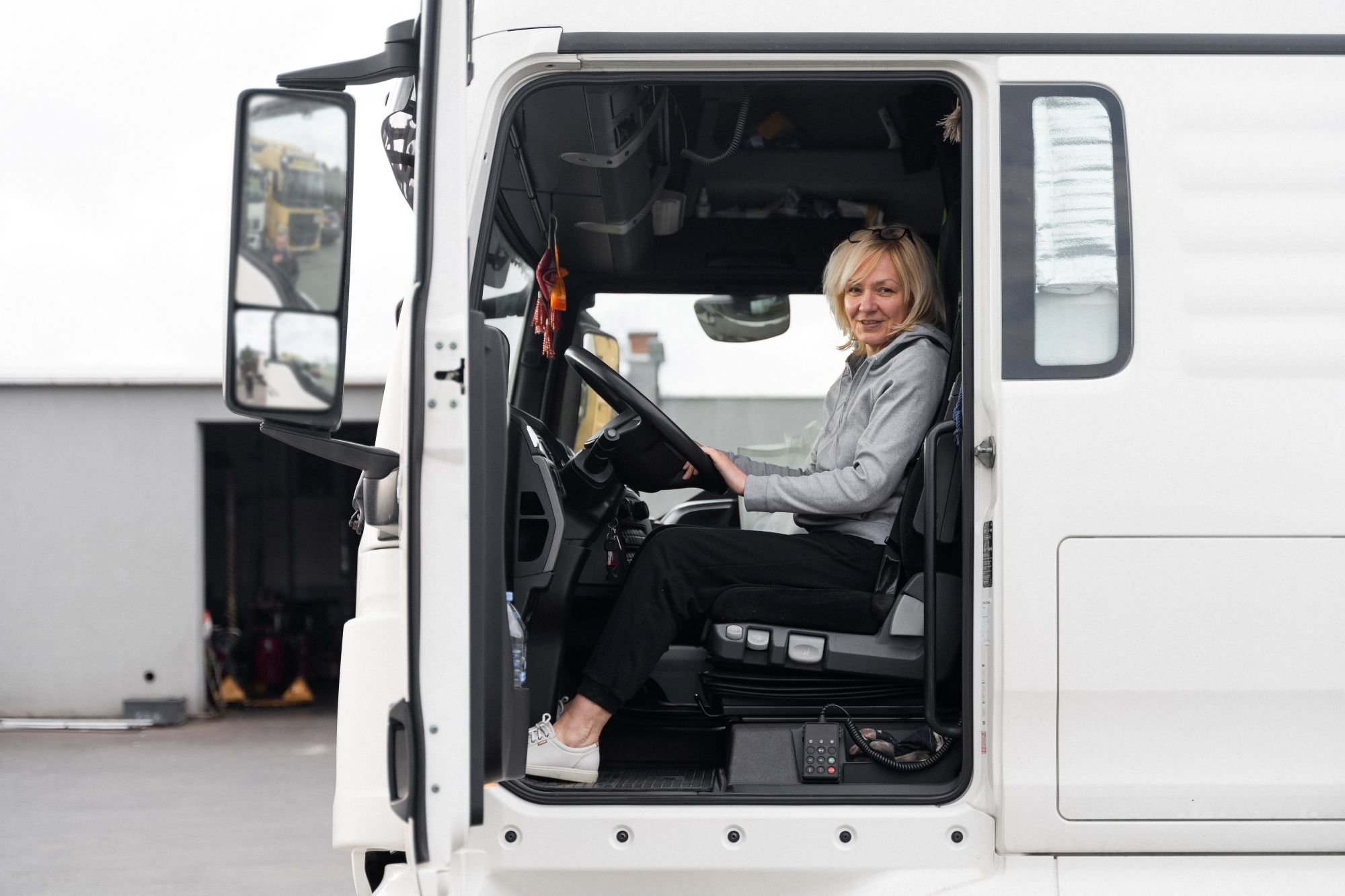
Der Wandel beschränkt sich nicht auf die Rolle des Fahrers. Im gesamten Transport- und Logistiksystem sind Frauen zunehmend in Management-, Planungs- und Politikfunktionen zu finden.

Der von Women in Transport veröffentlichte [Equity Index] (https://imageline.co.uk/wp-content/uploads/2025/07/WIT-Report-2025.pdf) zeigt, dass die Vertretung von Frauen in Führungspositionen in den letzten Jahren von 26 % auf 36 % gestiegen ist. Ein Großteil dieses Anstiegs fand jedoch außerhalb der betrieblichen Kernfunktionen statt. Die Vertretung von Frauen in leitenden Positionen an vorderster Front im Verkehrswesen ist nach wie vor vergleichsweise gering.

Mehrere Branchenorganisationen befassen sich mit dieser Lücke. Women in Transport bietet Mentoring-Möglichkeiten an, während Everywoman mit den Transport and Logistics Awards herausragende Leistungen anerkennt und das Profil weiblicher Fachkräfte in der gesamten Branche schärft. Das Chartered Institute of Logistics and Transport hat außerdem eine neue Women in Supply Chain and Transport event for 2026, die darauf abzielen, das berufliche Fortkommen und berufliche Netzwerke zu unterstützen.

Darüber hinaus zeigen Gemeinschaftsinitiativen wie GirlTorque, dass das Interesse und das Engagement wachsen. Die Road Haulage Association hat ebenfalls Beiträge veröffentlicht, in denen Fahrerinnen und Angestellte ins Rampenlicht gerückt werden, was die Sichtbarkeit weiter erhöht. Insgesamt tragen diese Plattformen dazu bei, überholte Vorstellungen in Frage zu stellen, und bieten praktische Unterstützung für Frauen, die in die Branche einsteigen oder dort aufsteigen wollen.

Das wirtschaftliche Argument für die Integration

Für das britische Speditionsgewerbe ist dies nicht nur eine Frage der Vielfalt. Es ist eine strategische Frage.

Frühere Berichte der Branche haben das Ausmaß des Einstellungsdrucks in der gesamten Logistik deutlich gemacht. Die Road Haulage Association hat gewarnt, dass in den kommenden Jahren Zehntausende neuer Fahrer benötigt werden, um die Lieferkette stabil zu halten. Gleichzeitig altert die bestehende Belegschaft.

Mit einem Frauenanteil von nur einem Prozent ist ein erheblicher Teil des potenziellen Arbeitsmarktes nach wie vor unterrepräsentiert. Wenn sich die Erwerbsquoten der Gesamtbevölkerung annähern würden, könnte dies erhebliche Auswirkungen auf die Personalbeschaffung haben.

Es gibt auch Hinweise darauf, dass eine integrative Kultur zu einer besseren Mitarbeiterbindung und einem höheren Engagement beiträgt. Ein Sektor, der sichtbare Aufstiegsmöglichkeiten, einen fairen Zugang zur Ausbildung und angemessene Sozialleistungen bietet, ist wahrscheinlich für alle Bevölkerungsschichten attraktiver.

Vorgeschlagene nächste Schritte

Fortschritte lassen sich nicht allein durch Sensibilisierung erzielen. Es sind strukturelle Veränderungen erforderlich.

Investitionen in sichere, gut gewartete Einrichtungen am Straßenrand sind von grundlegender Bedeutung. Sichere Parkplätze, angemessene Beleuchtung und saubere Sozialeinrichtungen kommen allen Autofahrern zugute und beseitigen vermeidbare Hindernisse für den Zugang.

Flexible Arbeitsmodelle können, wenn sie betrieblich machbar sind, die Attraktivität erhöhen. Dazu können eine regionale Routenplanung, Jobsharing-Vereinbarungen oder klarere Aufstiegsmöglichkeiten von Lager- und Planungsfunktionen zu Fahrerpositionen gehören.

Finanzielle Hindernisse können auch durch finanzierte Ausbildungswege und Lehrstellen abgebaut werden. Wie bereits erwähnt, können die Kosten für die Ausbildung erheblich sein. Gezielte Finanzierungsinitiativen, die auf unterrepräsentierte Gruppen abzielen, können eine ausgewogenere Aufnahme unterstützen.

Schließlich ist auch die Transparenz von Personaldaten wichtig. Die Veröffentlichung geschlechtsspezifischer Aufschlüsselungen, die Überwachung der Aufstiegsquoten und die Festlegung messbarer Ziele signalisieren, dass die Integration ernst genommen wird.

Ein Sektor am Wendepunkt

Der Internationale Frauentag bietet die Gelegenheit, darüber nachzudenken, wie weit das britische Transportgewerbe gekommen ist und wie weit es noch gehen muss. Die steigende Zahl von Frauen, die einen Führerschein erwerben und die Prüfung bestehen, zeigt, dass Interesse besteht. Die Vertretung in Führungspositionen verbessert sich in einigen Bereichen und die Unterstützungsnetze werden ausgebaut. Das Ausmaß der Unterrepräsentation ist jedoch nach wie vor eklatant.

Der Güterverkehr ist für die Widerstandsfähigkeit des Landes von zentraler Bedeutung. Er sorgt dafür, dass die Regale gefüllt, die Infrastrukturprojekte versorgt werden und der Handel fließt. Es ist nicht nur eine Frage der Gerechtigkeit, dafür zu sorgen, dass diese Arbeitskräfte die ganze Bandbreite der verfügbaren Talente widerspiegeln. Es ist eine Frage der langfristigen Nachhaltigkeit.

Die Förderung von Frauen im Güterkraftverkehr bedeutet auch, dass der Alltag auf der Straße verbessert werden muss. Der Zugang zu sicheren Parkplätzen, gut beleuchteten Rastplätzen und angemessenen Einrichtungen ist für alle Fahrer von grundlegender Bedeutung, um ihre Arbeitskraft zu erhalten und sich wohlzufühlen. Die intruck-App von SNAP hilft allen Fahrern, vertrauenswürdige Raststätten in ganz Großbritannien und Europa zu finden und zu buchen, was den Fuhrparks mehr Transparenz und den Fahrern mehr Vertrauen verschafft, egal wohin ihre Route sie führt. Heute herunterladen.

Teilen mit

Andere lesen auch...

Header Image

Dienstag 03 Februar 2026 • Industrie-Nachrichten

DER AUFSTIEG DER INTEGRIERTEN LOGISTIKKORRIDORE: WARUM SIE FÜR SPEDITEURE WICHTIG SIND

Guest

For decades, European haulage has been built around road networks. Although rail, inland waterways and ports have always played a role, most freight journeys relied on HGVs to bridge the gaps. That model is now being reshaped.Across the EU, governments and infrastructure bodies are investing in integrated logistics corridors – long-distance, multimodal routes designed to move goods more efficiently across borders while reducing congestion, emissions and pressure on roads. For hauliers, these corridors are not an abstract policy concept. They are already influencing where trucks can travel, how journeys are planned and the technologies that fleets must adopt.Understanding how these corridors work – and what they mean in practice – is becoming essential for operators covering international routes.In Europe, integrated logistics corridors sit alongside the EU’s Trans-European Transport Network (TEN-T). This long-term programme is designed to connect member states through coordinated road, rail, port and inland waterway infrastructure.At the core of this system are : Baltic-Adriatic North Sea-Baltic Mediterranean Orient-East Med Scandinavian-Mediterranean Rhine-Alpine Atlantic North Sea-Mediterranean Rhine-DanubeRather than treating road, rail and ports as separate systems, these corridors aim to integrate them. As such, there are aligned infrastructure standards, digital systems and operational rules, allowing freight to move more smoothly from origin to destination.In short, they prioritise multimodal freight. That might mean containers transferred seamlessly between ship, rail and truck, or trailers loaded onto trains for part of a journey before returning to the road network.One example is the use of , where entire HGVs are transported on low-floor rail wagons. Drivers often travel with their vehicles, resuming road journeys at the other end. Although they are typically associated with Alpine regions, Spain is investing heavily in to improve transport links. To make this coordination possible, logistics corridors rely heavily on digital infrastructure, including: Multimodal traffic management systems that coordinate rail slots, terminal capacity and road access. Digital freight documents to reduce paperwork at borders and terminals. and GNSS positioning to support compliance and monitoring. Real-time data sharing between infrastructure operators, logistics hubs and enforcement bodies.The goal is not to remove road haulage from the equation, but to make it part of a wider, more controlled system.Key European road routes are subject to high volumes of traffic, resulting in congestion and bottlenecks. Integrated corridors aim to relieve pressure by shifting some freight to rail or waterways where possible.In addition, recent data suggests that road transport accounts for . Integrated corridors support EU climate targets by encouraging use of other forms of transport, which will improve traffic flow and reduce stop-start congestion.For operators, the benefits of integrated logistics corridors are tangible, if not immediate. One of the most significant advantages is more predictable cross-border movement. Over time, this reduces uncertainty around journey times and improves scheduling for international routes.Corridors also expand options when road-only transport becomes constrained. Rolling highways and intermodal terminals can provide practical alternatives during periods of congestion, severe weather or regulatory restriction. At the same time, integrated digital systems improve visibility across journeys, giving fleet managers better data to plan rest breaks, terminal access and driving hours with greater accuracy and confidence.There are commercial implications too. By shifting long-haul legs to rail and reserving road transport for firstand last-mile delivery, some operators may limit their exposure to low-emission zones and urban access restrictions. In addition, trucks tied up on long-distance international routes are freed up for shorter, higher-frequency routes linked to logistics hubs and terminals. In parallel, removing the most expensive kilometres from a journey – those affected by , congestion or restrictions – can reduce operating costs. For hauliers that adapt their operating model, profitability becomes less about distance travelled and more about efficiency, reliability and the ability to deliver consistent service within tighter, more controlled time windows.Despite the advantages, integrated logistics corridors also introduce new complexity for hauliers. In several parts of Europe, restrictions on HGV movements are already in force, including night bans and quota-based access. As corridor strategies expand and environmental pressures increase, these measures could become more widespread and tightly enforced, adding constraints to route planning and scheduling.Progress across corridors is also uneven. While some routes benefit from modern terminals and upgraded rail links, others, such as the Rhine-Alpine corridor suffer from limited rail capacity, congested hubs and infrastructure gaps. In these areas, the promised efficiency gains can be undermined by delays and bottlenecks rather than resolved by them. This challenge is compounded by the complications of multimodal transport. Rail and terminal slots often involve advance booking and fixed timetables, reducing the flexibility that road-only operations have traditionally relied on to absorb disruption.Digital integration brings its own demands. Although shared data systems, smart tachographs and electronic documentation offer long-term efficiency, upfront investment in compatible fleet management tools is needed, alongside driver training and process change. For some operators this transition can be resource-intensive.Perhaps the most significant challenge, however, lies in competition. Integrated corridors tend to favour operators that can move freight predictably, digitally and across modes. Smaller or road-only operators may find themselves under pressure from larger fleets, intermodal specialists or logistics integrators offering bundled, end-to-end corridor solutions.For international hauliers, integrated corridors affect planning. Route choice is no longer just about distance and tolls. It involves:Assessing where road access may be limited. Identifying intermodal alternatives. Managing driver welfare across longer, more complex journeys. Ensuring compliance across multiple systems and jurisdictions.Fleets that understand how these corridors function and plan accordingly will be best placed to adapt as rules tighten and expectations rise.Integrated logistics corridors are reshaping how transport moves across Europe. They bring opportunities for greater efficiency and resilience, but also introduce new layers of operational and regulatory complexity for hauliers. As road transport becomes more tightly integrated with rail, ports and digital systems, driver welfare, planning certainty and access to reliable infrastructure matter more than ever. Fleet managers need clear visibility and control over costs, alongside confidence that drivers can stop and rest safely.Through our network of safe, reliable truck stops, paired with integrated payment solutions, we make life on the road simpler for both drivers and operators.

Header Image

Dienstag 16 Dezember 2025 • Industrie-Nachrichten

WAS SPANIENS VERPFLICHTENDE DIGITALE AUFZEICHNUNGEN FÜR IN EUROPA TÄTIGE FLOTTEN BEDEUTEN

Guest

Spain is preparing for one of the most significant transport reforms in its recent history. The Sustainable Mobility Law (Ley de Movilidad Sostenible), which received final approval in November 2025, will introduce mandatory digital records for road freight control documentation, creating a more transparent, enforceable and efficient system for domestic and international carriers. Although this is a major national change, it forms part of a wider trend. Across Europe, governments and operators are moving towards a fully digital freight environment as the EU prepares to implement the (eFTI).For fleets working in and out of Spain, this is the start of an important transition. It signals a future in which paper documentation becomes the exception rather than the rule and in which digital processes support faster checks, smoother operations and greater consistency across borders.While the Sustainable Mobility Law addresses wide-ranging transport reforms – from urban mobility to domestic flight restrictions – the provisions most relevant to international freight operators centre on digital documentation. A central section of the law introduces a mandatory digital “control document” for road freight. This includes the use of approved digital formats, such as the electronic consignment note (eCMR), which Spain has already ratified and treats as legally equivalent to the paper CMR note. The law aims to reduce administrative burdens, eliminate inconsistencies in paperwork and shorten the time required for checks and inspections. Rather than relying on handwritten notes or physical documents that can be misplaced, carriers will store, share and verify transport information digitally. For operators, this should mean fewer disputes over documentation, less ambiguity around compliance requirements and greater certainty when preparing for audits or regulatory reviews.In practice, the obligation focuses first on the digital control document used for roadside and regulatory checks, but it is expected to accelerate wider use of eCMR and other digital freight documents across the supply chain.The timeline for implementation will begin once the law is published in Spain's Official State Gazette. Carriers should expect the digital control document obligation to take effect roughly ten months after publication, making 2026 the likely year when full compliance will be required.The Mobility Law applies to road transport operations that fall under Spanish control rules on Spanish territory, not just Spanish-registered companies. Carriers will need to ensure their systems can produce and transmit digital records in compliant formats. Any delay in adopting digital documentation could slow down inspections or disrupt customer schedules.This means that foreign operators running international loads into, out of or through Spain should plan on being able to provide the required control document in digital form when requested by Spanish authorities.The Spanish reforms align closely with the EU’s eFTI Regulation, which will require Member States to accept digital freight documentation once the technical and certification rules are in place (from mid-2027). eFTI sets a unified framework for how information is structured, transmitted and verified. While it obliges authorities to accept digital records, it does not require operators to use them. Spain’s Mobility Law therefore goes further, making digital control documents mandatory for road freight.Under eFTI, carriers will be able to provide freight information electronically through certified platforms. Enforcement authorities will receive that information through secure digital channels. This should reduce administrative friction across the EU’s busiest freight routes.Spain is not alone in taking early steps. Several EU countries have already moved towards paperless freight systems and their experience demonstrates what a fully digital environment could look like.● The Netherlands has been one of the earliest adopters of eCMR and has trialled end-to-end digital workflows across different modes of transport. ● France also moved early, supporting digital documentation and faster roadside checks following its ratification of the eCMR protocol. ● In the Benelux region, Belgium, Luxembourg and the Netherlands are running a joint eCMR pilot and digital logistics corridor, illustrating how interoperable documentation can work across national boundaries.● Denmark and Sweden have operated national e-freight trials designed to simplify the sharing of transport information. Taken together, these examples show that Spain’s Mobility Law is part of a broader European transition. Rather than standing apart, Spain is moving in step with a continental shift towards digital documentation that aims to make road freight faster, more transparent and more consistent across borders.The move to digital records brings several practical advantages. Digital documents reduce the time drivers and enforcement officers spend handling paperwork and shorten inspections during roadside checks. This mirrors the benefits seen with the introduction of , which have reduced unnecessary stops for compliant drivers and improved the consistency of enforcement across Europe.Digital documentation also removes the errors that can arise from handwritten notes or damaged paper notes. Fleet managers can instantly retrieve records, resolve errors more easily and maintain clearer oversight of documentation across multiple routes. For operators managing complex schedules, this increased predictability supports better planning and stronger customer service.Drivers are likely to benefit too. A shift to digital records reduces administrative pressure and helps avoid disagreement at delivery points. With all documents stored digitally, drivers have a single source of truth that is accepted across the supply chain.Fleets may need to invest in updated transport management systems or integrate new tools that support digital documentation. Operators may require additional support and training to shift from paper-based processes to new digital workflows.There will also be a period of adjustment in which paper and digital systems may operate side by side. As eFTI becomes established across Europe, some countries will move faster than others. Operators travelling across different borders may encounter varying expectations, particularly in the early years.Throughout this transition, driver welfare should remain a priority. The administrative load associated with new processes often falls on drivers. Clear training and straightforward systems will be essential.Spain’s Mobility Law marks an important moment in the evolution of European freight. It reflects a sector that is modernising at speed and preparing for a future built on digital workflows rather than manual paperwork. Operators that begin preparing now will be in a strong position as Spain’s digital control document requirements take effect and eFTI comes into force across Europe.At SNAP, we support fleets across Spain and the wider continent with tools that make daily operations simpler and more predictable. The intruck app helps drivers locate and book secure parking along their route, which is particularly valuable as compliance processes evolve. If your fleet is preparing for Spain’s new requirements or the broader digital transition across Europe, SNAP is here to support every step of the journey.

Header Image

Mittwoch 10 Dezember 2025 • Industrie-Nachrichten

DER BRITISCHE HAUSHALT 2025: WAS ER FÜR DAS TRANSPORTGEWERBE BEDEUTET

Guest

The arrives at a difficult moment for the road transport sector. Operators are working against rising wages and operating costs, tight margins, ageing infrastructure and ongoing pressures around recruitment. At the same time, the shift towards cleaner mobility is accelerating, creating new expectations and increasing the need for long-term investment.The following article outlines what the Budget means for infrastructure, investment, workforce costs and the wider operating environment for haulage.For many years, fleets have been affected by deteriorating roads, weight restrictions on ageing bridges and the growing unpredictability of journey times. Government and industry data makes this clear. More than one in every ten miles of network in England and Wales is likely to require maintenance within the next year, according to reporting, and the backlogs for resurfacing work continue to rise. These issues lead to vehicle damage, driver fatigue, higher insurance costs and disrupted schedules. They also place additional pressure on operators already dealing with narrow margins.The new Budget acknowledges these concerns. One positive step is the substantial funding for strategic national projects, including almost £900 million allocated to the , which should reduce congestion, provide more reliable journey times and a safer driving environment for HGVs.Local authorities will also receive a share of and address the growing number of potholes. This could make a noticeable difference for fleets. Local roads carry the majority of domestic freight and serve as the first and last mile of nearly every delivery. Improving them should reduce wear and tear on vehicles as well as operational strain. These commitments will not fix decades of underinvestment immediately, but they represent an important shift towards a road network that is more resilient and better suited to the realities of modern logistics.The Budget also places more focus on skills. for under-25s working in small and medium-sized businesses could help attract new entrants into a profession that urgently needs them. The driver shortage is well documented. The UK must recruit around in order to stabilise supply chains, and across Europe the average age of professional drivers continues to climb. Only a small proportion of drivers are under 25, and training costs have been a barrier for many younger candidates.Providing funded apprenticeships makes logistics more accessible at a critical time. It also supports smaller operators, who often struggle to invest in training despite needing to expand their teams. The Budget introduces further support for investment, particularly around fleet renewal. Operators installing charging infrastructure can take advantage of a 100% first-year allowance until March 2027. This will help offset the upfront cost of electric HGVs and depot charging equipment.From January 2026, a new 40% first-year allowance will be available on many main-rate assets, including trucks – particularly useful where full expensing or the Annual Investment Allowance don’t apply, such as some leased fleets and unincorporated operators.While the Autumn Budget contains several positive measures, operators will also need to plan for increasing costs. Fuel duty will rise in stages between the end of August 2026 and March 2027. Fuel is already one of the largest expenses for operators, and the planned rises are likely to increase the emphasis on fuel efficiency, telematics, consolidated routing and fleet renewal.Vehicle Excise Duty (Road Tax) will be uprated in line with inflation from April 2026, including for HGVs. From April 2028, a new Electric Vehicle Excise Duty (eVED) will also apply a mileage-based charge to battery-electric and plug-in hybrid cars, on top of existing VED. Although eVED initially excludes electric vans and trucks, it signals a longer-term shift toward distance-based taxation that fleets will need to factor into future planning.The HGV Levy will also return to rising with inflation. Vehicles over twelve tonnes must pay the levy before using A roads or motorways, and the revised rate will add another cost that fleets must factor into forward planning.Larger, higher‑value properties are also likely to feel more pressure from business rates changes. The Budget confirms permanently lower business rates for retail, hospitality and leisure, funded in part by higher charges on the most expensive commercial premises. These include big warehouses and distribution centres, so operators with large sites can expect proportionately higher bills over time than smaller depots or high‑street locations.In addition, the Budget introduces several measures that directly affect the financial landscape for operators and the people who run or work within haulage businesses. Labour already represents one of the sector’s highest costs, and these changes will shape payroll planning, staff retention and the personal finances of many owner-operators.Minimum wage increases mean that employers will face higher staffing costs across warehousing, last-mile logistics and support roles. Many operators have already tackled wage rises in recent years, and this further uplift will add pressure at a time when margins remain narrow. For fleets that rely on overtime, night work or seasonal peaks, the impact will be even more noticeable.The Budget continues the government’s move toward greater digitalisation of tax and reporting. Compliance expectations will grow over the coming years, with stricter penalties for late VAT and Self Assessment returns and an expanded Making Tax Digital framework from 2027. Mandatory electronic invoicing will follow in 2029. Parcel carriers and mixed load operators will also be affected by changes to customs duty for low-value imports, which will apply to items worth less than £135 by March 2029 at the latest. While the aim is to even the playing field for UK manufacturers, it is likely to increase administrative pressure on haulage firms. These changes may eventually improve efficiency, but they will require investment in systems and staff training. Smaller fleets without dedicated administrative teams are likely to feel the adjustment most sharply.Although operators will face higher costs and increased administrative complexity, the 2025 Budget also provides some of the most significant commitments to the road network and skills pipeline seen in recent years. Taken together, these measures signal a Budget that attempts to balance fiscal constraints with long-term needs. The road ahead will still require careful planning and strategic investment, but there are genuine opportunities to strengthen the sector’s foundations and support a more resilient future for haulage.SNAP gives fleets practical tools to manage this shifting landscape, from parking access to data that supports compliance and operational decision-making. to discover how SNAP can help strengthen your fleet’s resilience in the months ahead.