Guest
Știri din industrie • 4 min citește

Femeile în transporturi: Descoperirea talentelor neexploatate

Creat: 26.02.2026

Actualizat: 27.02.2026

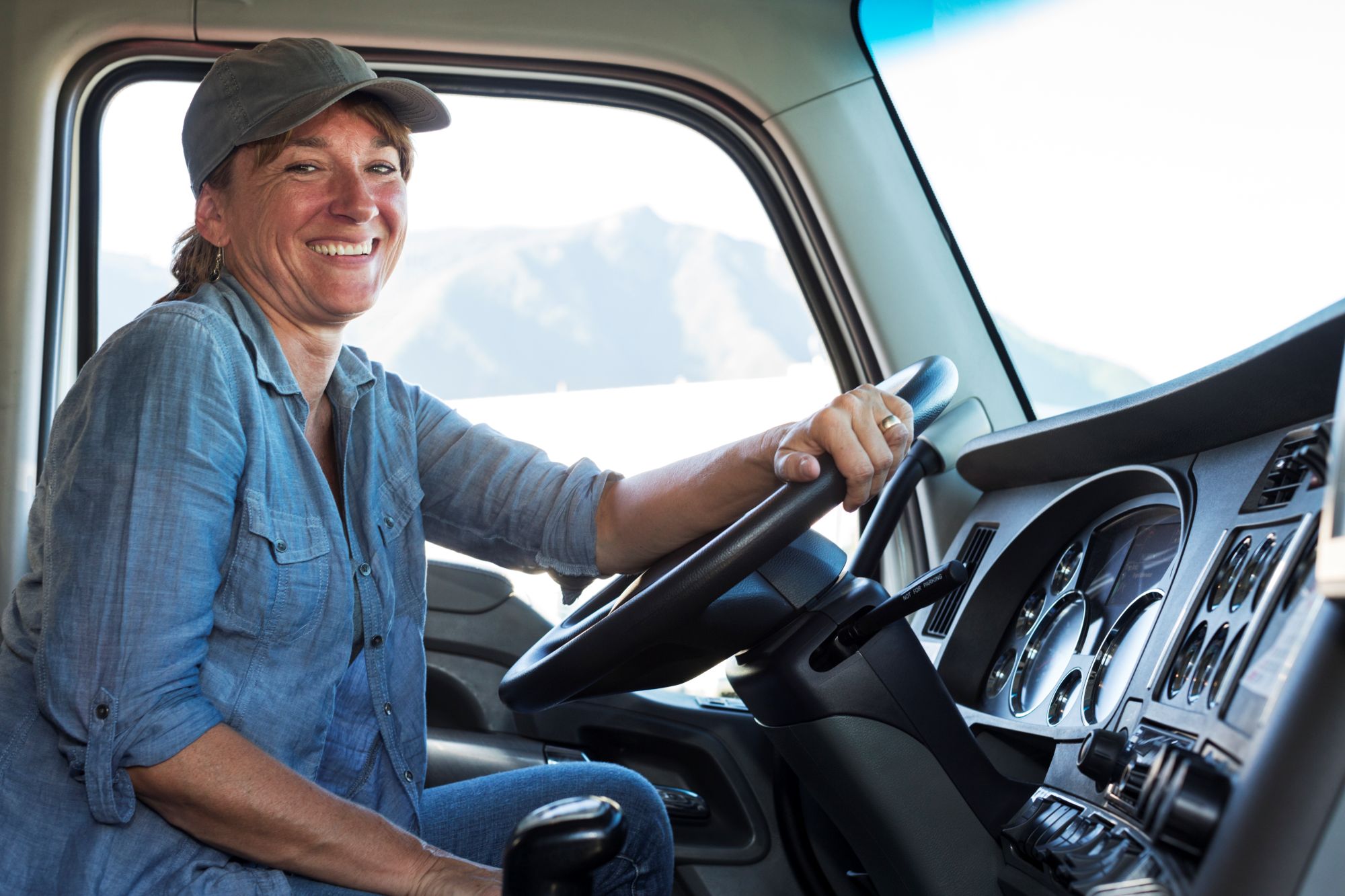
În Regatul Unit, în jur de [315 000 de șoferi de vehicule grele de transport mențin țara în mișcare] (https://www.smeweb.com/hvgs-need-more-women-behind-the-wheel-say-experts/). Ei transportă alimente către supermarketuri, materiale către șantierele de construcții și mărfuri către porturi și centre de distribuție. Ei susțin viața de zi cu zi și stabilitatea economică, constituind o parte esențială a infrastructurii naționale a Regatului Unit.

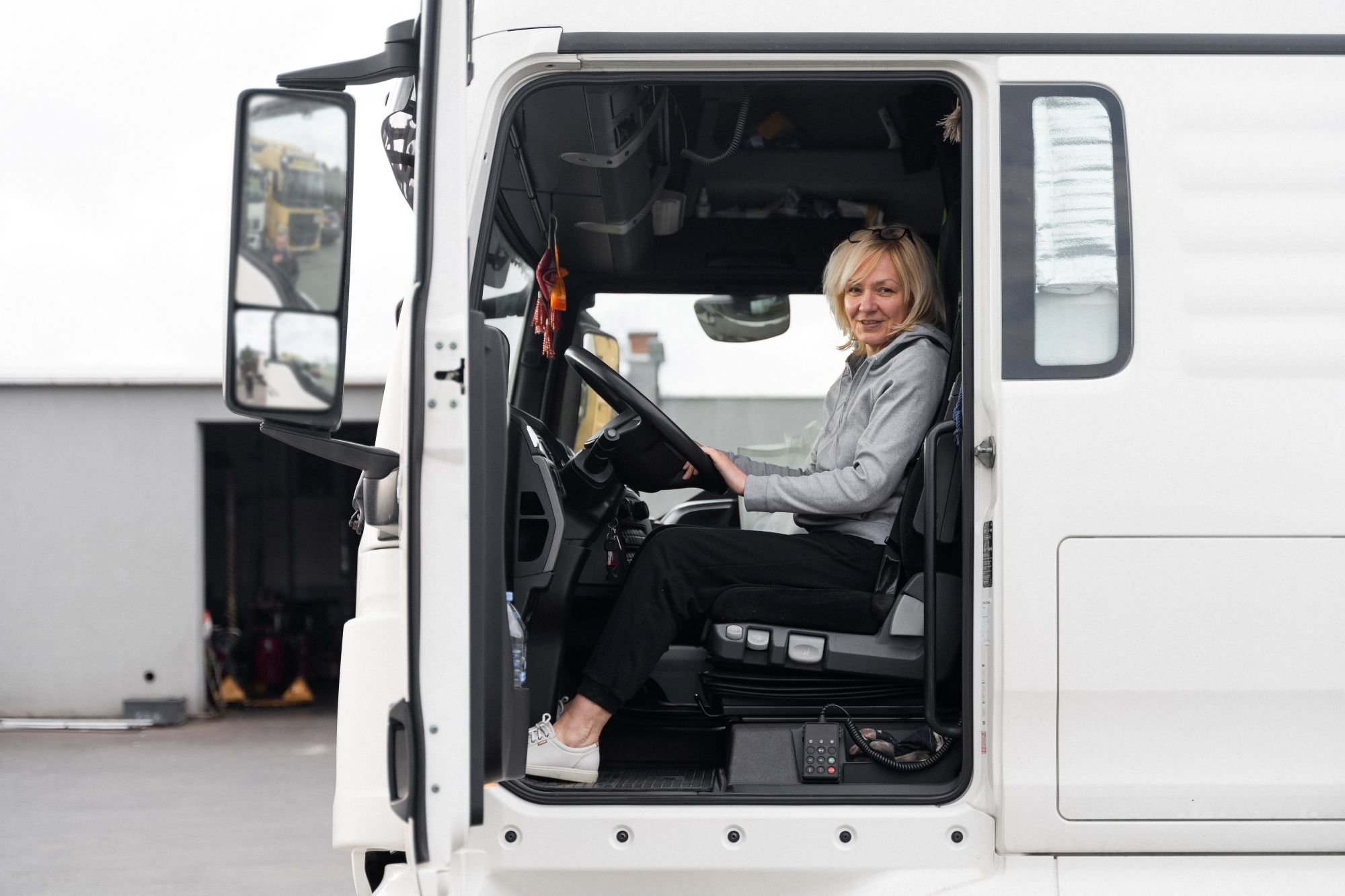
Cu toate acestea, doar aproximativ 2.200 dintre acești șoferi sunt femei. Conform raportului SME Web, această cifră se ridică la aproximativ 1% din forța de muncă din sectorul vehiculelor grele de transport din Regatul Unit. Pentru o industrie care se confruntă cu presiuni de recrutare pe termen lung, această cifră ridică întrebări importante cu privire la proveniența viitoarelor talente și la modul în care sectorul se prezintă în fața potențialilor intrați.

Cu toate acestea, există semne de progres. Procentul de femei care au promovat testele HGV a crescut de la 6,7% în 2011/12 la 9,7% până în 2021/22. În ultimul deceniu, numărul femeilor care au obținut permise de categoria C și C+E a crescut cu 144%, conform SME Web. Este clar că tot mai multe femei aleg să se formeze și să se califice. Numărul de candidați se mărește, dar proporția femeilor la volan rămâne marginală.

O lungă istorie

Femeile nu au fost complet absente din transportul rutier. Una dintre primele femei șoferițe de camion înregistrate a fost Luella Bates, care a început să conducă vehicule grele în Statele Unite în 1918. În timpul perioadelor de război, atât în SUA, cât și în Regatul Unit, femeile au intrat în rolurile de transport din necesitate. Apoi, în anii 1960, Rita Jane Oakes a devenit prima șoferiță de camion pe distanțe lungi din Regatul Unit, lucrând adesea 100 de ore pe săptămână.

Cu toate acestea, în afara unor circumstanțe excepționale, transporturile au fost în mod tradițional dominate de bărbați. Percepțiile culturale, presupunerile fizice cu privire la muncă și stilul de viață asociat cu condusul pe distanțe lungi au jucat un rol important. Numai în ultimele decenii participarea a început să se schimbe într-un mod mai susținut.

De ce reprezentarea este încă slabă

Motivele participării reduse a femeilor nu se limitează la sensibilizare. Barierele structurale și practice persistă.

Facilitățile sunt o preocupare majoră. Șoferii profesioniști depind de parcări sigure, de zone de odihnă curate și de condiții de bunăstare adecvate. Timp de mulți ani, infrastructura rutieră a avut dificultăți în a satisface cererea generală. Atunci când locurile de odihnă sunt inadecvate, slab iluminate, nesigure sau lipsite de intimitate, acest lucru poate descuraja femeile să se alăture sectorului.

Tiparele de lucru joacă, de asemenea, un rol important. Călătoriile pe distanțe lungi pot implica înnoptări și timp petrecut departe de casă. În timp ce mulți șoferi apreciază independența care vine odată cu acest rol, percepția echilibrului dintre viața profesională și cea privată poate descuraja unele femei, în special pe cele cu responsabilități de îngrijire.

Există și problema vizibilității. În condițiile în care doar 1% dintre șoferi sunt femei, candidații potențiali ar putea avea dificultăți în a se vedea în acest sector.

În plus, simptomele menopauzei, cum ar fi oboseala, tulburările de somn, bufeurile și anxietatea pot fi dificil de gestionat în roluri care implică ore lungi, acces limitat la facilități private și timp petrecut departe de casă. În sectoarele în care asistența socială este deja sub presiune, lipsa de înțelegere sau de sprijin practic poate duce la părăsirea forței de muncă de către șoferii cu experiență.

Pentru transporturile de mărfuri, aceasta nu este o problemă secundară. Păstrarea șoferilor experimentați este la fel de importantă ca și atragerea de noi concurenți.
Momentum dincolo de cabină

Schimbarea nu se limitează la funcțiile de conducere. În ecosistemul mai larg al transporturilor și logisticii, femeile sunt din ce în ce mai vizibile în funcții de conducere, planificare și politică.

Indicele [Equity Index publicat de Women in Transport] (https://imageline.co.uk/wp-content/uploads/2025/07/WIT-Report-2025.pdf) arată că reprezentarea femeilor în funcții de conducere a crescut de la 26% la 36% în ultimii ani. Cu toate acestea, o mare parte din această creștere a avut loc în afara funcțiilor operaționale de bază. Reprezentarea la nivel înalt în cadrul funcțiilor de transport de primă linie rămâne relativ limitată.

Mai multe organizații din sector abordează acest decalaj. Women in Transport oferă oportunități de mentorat, în timp ce everywoman recunoaște excelența prin Premiile pentru transport și logistică, sporind profilul femeilor profesioniste din sector. Chartered Institute of Logistics and Transport a anunțat, de asemenea, un nou eveniment Women in Supply Chain and Transport event for 2026, menite să sprijine progresul în carieră și rețelele profesionale.

Pe lângă aceasta, inițiative comunitare precum GirlTorque demonstrează că interesul și implicarea sunt în creștere. Asociația Road Haulage Association a publicat, de asemenea, articole în care sunt evidențiate șoferițe și angajate, sporind și mai mult vizibilitatea. În mod colectiv, aceste platforme contribuie la combaterea percepțiilor învechite și oferă sprijin practic femeilor care intră sau avansează în cadrul industriei.

Argumentul comercial pentru incluziune

Pentru sectorul transportului rutier din Regatul Unit, aceasta nu este doar o discuție despre diversitate. Este una strategică.

Rapoartele anterioare ale industriei au evidențiat amploarea presiunii de recrutare în domeniul logisticii. [Road Haulage Association a avertizat] (https://www.rha.uk.net/news/news/detail/rha-report-200-000-hgv-drivers-needed-in-next-5-years) că zeci de mii de șoferi noi vor fi necesari în următorii ani pentru a menține stabilitatea lanțului de aprovizionare. În același timp, forța de muncă existentă îmbătrânește.

Având în vedere că doar 1% dintre șoferi sunt în prezent femei, o proporție semnificativă a pieței forței de muncă potențiale rămâne subreprezentată. Dacă ratele de participare s-ar apropia de paritatea cu ansamblul forței de muncă, impactul asupra recrutării ar putea fi substanțial.

Există, de asemenea, dovezi conform cărora culturile incluzive contribuie la o mai bună retenție și implicare. Un sector care demonstrează că are căi de progres vizibile, acces echitabil la formare și dispoziții adecvate în materie de protecție socială este susceptibil să atragă mai multe categorii demografice.

Etapele următoare sugerate

Progresul nu se va accelera doar prin conștientizare. Sunt necesare schimbări structurale.

Investiția în facilități rutiere sigure și bine întreținute este fundamentală. Parcarea sigură, iluminatul adecvat și facilitățile de bunăstare curate sunt în beneficiul tuturor conducătorilor auto și elimină barierele evitabile la intrare.

Modelele de lucru flexibile, atunci când sunt fezabile din punct de vedere operațional, pot spori atractivitatea. Acestea pot include proiectarea rutelor regionale, acorduri de partajare a locurilor de muncă sau căi de progres mai clare de la funcțiile de depozit și planificare la cele de șofer.

Cursurile de licență finanțate și uceniciile pot reduce, de asemenea, barierele financiare. După cum s-a subliniat anterior, costul formării poate fi semnificativ. Inițiativele de finanțare orientate către grupurile subreprezentate pot sprijini o recrutare mai echilibrată.

În cele din urmă, transparența datelor privind forța de muncă este importantă. Publicarea defalcărilor pe sexe, monitorizarea ratelor de progres și stabilirea unor obiective măsurabile arată că incluziunea este luată în serios.

Un sector aflat la un punct de cotitură

Ziua Internațională a Femeii oferă ocazia de a reflecta la cât de departe a ajuns industria britanică a transporturilor și cât de departe mai are de mers. Creșterea ratei de obținere a permisului de conducere de către femei și a ratei de promovare a testelor demonstrează că există interes. Reprezentarea la conducere se îmbunătățește în unele domenii, iar rețelele de sprijin se extind. Cu toate acestea, amploarea subreprezentării rămâne dramatică.

Transportul de mărfuri este esențial pentru reziliența națională. Acesta asigură aprovizionarea rafturilor, aprovizionarea proiectelor de infrastructură și fluidizarea comerțului. Asigurarea faptului că această forță de muncă reflectă întreaga gamă de talente disponibile nu este doar o chestiune de echitate. Este o chestiune de durabilitate pe termen lung.

Sprijinirea femeilor în transporturi înseamnă, de asemenea, îmbunătățirea realităților de zi cu zi ale vieții pe șosea. Accesul la o parcare sigură, la zone de odihnă bine iluminate și la facilități adecvate este fundamental pentru menținerea și bunăstarea tuturor șoferilor. Aplicația intruck a SNAP ajută toți șoferii să localizeze și să rezerve stații de camioane de încredere în Regatul Unit și Europa, oferind flotelor o mai mare vizibilitate și șoferilor o mai mare încredere, indiferent unde îi duce traseul lor. [Descărcați-o astăzi] (https://intruckapp.com/).
Share to

Alții citesc de asemenea...

Header Image

marți 28 aprilie 2026 • Știri din industrie

MODUL ÎN CARE TENSIUNILE DIN JURUL IRANULUI AR PUTEA AFECTA LOGISTICA EUROPEANĂ

Lucy Mowatt

Geopolitical conflict rarely stays confined to the region where it began. In global logistics, disruption in one part of the world can quickly ripple through supply chains thousands of kilometres away.That is the reality as tensions escalate around Iran and the Strait of Hormuz – a narrow shipping channel between Iran and Oman that serves as one of the world’s most important transport corridors.Roughly passes through the strait, alongside large volumes of liquefied natural gas and other commodities. When shipping through this corridor slows or stops, the consequences are felt around the world.For transport operators in Europe, the effects are already beginning to emerge through rising fuel costs, rerouted shipping traffic and growing uncertainty in global supply chains. have already begun avoiding routes close to the Strait of Hormuz due to that transit is not allowed and that the area is unsafe. Vessels passing through or caught up in military action. Instead, they are diverting vessels via the at the southern tip of Africa. Although this avoids high-risk zones, it also adds thousands of miles to many journeys.For global supply chains, the effects are clear: Longer transit times Increased fuel consumption for vessels Higher freight costs for cargo ownersWhat begins as a maritime disruption often ends up affecting inland logistics once delayed cargo finally reaches European ports. This creates a “feast or famine” effect: periods with little cargo to move followed by sudden surges when multiple vessels arrive at once.Energy markets have been shaken by activity in the Strait of Hormuz.Because the waterway handles such a large share of global oil exports, any disruption immediately affects expectations about future supply. Even short-term interruptions can cause price volatility across international markets.For road transport, the implications are immediate. Diesel remains the primary fuel for most commercial fleets across Europe; sudden price increases can quickly affect operating margins.Early signals of this shift are already visible. According to, Spain’s carrier federation Fenadismer reports that in the 10 days following the outbreak of the conflict in Iran, diesel prices in Spain rose by more than 30%, reaching about €1.80 per litre.For haulage operators, this kind of volatility creates difficult planning conditions. Fuel often represents one of the largest operational costs for a fleet, and sudden increases can affect everything from freight rates to contract negotiations.Insurance markets respond quickly when geopolitical risks escalate.When tensions rise in maritime corridors, insurers may or otherwise alter policy wording. Ships travelling through or near those areas face higher premiums or additional surcharges for each voyage.These costs rarely remain confined to the shipping sector. Instead, they are passed through the logistics chain in the form of higher freight rates and increased transportation costs.Another, less visible consequence of shipping disruption is the impact on container availability.Global shipping depends on the circulation of containers between ports. When vessels are rerouted onto longer journeys, and take more time to return to export hubs.Over time, this can create imbalances across the global container system.Ports receiving delayed or diverted vessels may also experience when ships arrive, while exporters in other regions may struggle to secure empty containers for outbound cargo.For European freight operators, these disruptions can translate into irregular cargo volumes and more unpredictable container collection schedules.The disruption around the Strait of Hormuz comes at a time when global shipping routes are already under pressure.Since late 2023, instability in the Red Sea corridor – particularly around the Bab el-Mandeb Strait and the southern entrance to the Suez Canal – has forced many shipping companies to divert vessels away from the region.In response, numerous carriers began rerouting ships around the Cape of Good Hope, adding significant time to journeys between Asia and Europe.Now, with tensions affecting traffic near the Strait of Hormuz as well, the pressure on international shipping routes is intensifying.The combined disruption of the Strait of Hormuz and the Red Sea illustrates how dependent global logistics remains on a small number of maritime chokepoints. The Strait of Hormuz is critical for the global flow of oil and energy products. The Red Sea and Suez Canal corridor, meanwhile, is the primary maritime gateway for containerised goods moving between Asia and Europe.When instability affects either corridor individually, shipping networks can usually adapt by adjusting schedules or rerouting vessels.With the Red Sea still heavily disrupted and traffic through the Strait of Hormuz now sharply reduced, the system becomes far less flexible.With fewer safe passages available, containers on affected services remain in transit for longer period, tightening availability on some trade lanes.Although these disruptions start at sea, their consequences are ultimately felt on Europe’s roads.Fleet operators may encounter:Energy market instability can drive rapid changes in diesel prices.Delayed cargo arrivals can put pressure on logistics providers to move goods more quickly once shipments reach port.Insurance premiums, longer shipping routes, rising fuel prices and surcharges all contribute to increased transportation costs.Events around the Strait of Hormuz and the Red Sea highlight a growing reality for global logistics: supply chains now operate in an environment where geopolitical risk can quickly reshape trade routes.“Global logistics has always been interconnected, but events like these show just how disruption can reshape logistics networks,” says Nick Renton, Head of European Strategy & Business Development at SNAP. “Even when the initial crisis occurs thousands of miles away, the effects soon reach European supply chains through fuel prices, shipping delays and tighter delivery windows.“The fleets that adapt most effectively are those that plan for uncertainty – with flexible routes, better information and and rest when schedules change.”With access to reliable information and trusted truck parking across Europe, SNAP helps fleets and drivers stay flexible, plan ahead and keep journeys moving.

Header Image

miercuri 15 aprilie 2026 • Știri din industrie

FURTUL DE MARFĂ ÎN EUROPA: DE CE ESTE ÎN CREȘTERE ȘI CUM POT REDUCE FLOTELE RISCUL

Guest

Cargo theft is a growing threat across Europe. What was once seen as an occasional disruption is now a more persistent and organised risk to road transport, affecting fleets, drivers and the wider supply chain. Reported losses and incidents have risen sharply, with one widely cited industry figure pointing to a in recent years. In alone, 557 cargo crimes were recorded across 38 countries in the TAPA EMEA Intelligence System, and even though values were disclosed for fewer than one in five incidents, those 100 cases still totalled more than €43 million.In this article, we explore the current trends and what fleet managers and operators can do to minimise their risks.Food and beverage shipments are among the most commonly targeted categories in Europe, accounting for . also rank highly. These goods are attractive because they are easy to move, easy to sell and often difficult to trace once they enter secondary markets.The recent on its way from Italy to Poland is a useful example. Nestlé said the missing load amounted to roughly 413,793 bars, showing how quickly a mainstream consumer shipment can become a target when moving across borders.These shipments are attractive targets for organised groups because they can be offloaded quickly, resulting in rapid returns. Cargo crime often happens while loads are moving. report found that hijackings accounted for 21% of incidents, while 41% of thefts happened in transit. That is a reminder that risk does not begin when a truck parks for the night. It can begin long before a vehicle stops for the night, particularly on exposed corridors or routes where load visibility and security controls are weaker.Parked vehicles remain a major point of vulnerability. In the UK, Munich Re reported that nearly half of all thefts take place at unsecured roadside parking and rest areas. Across Europe, unsecured roadside locations and rest areas continue to feature prominently in cargo crime reporting, especially where drivers have limited alternatives and secure sites are full.Some of the most concerning incidents show coordination. recently documented attacks in Germany in which dozens of trucks were targeted in a single night along the A1 corridor. In one November 2023 incident, 67 trucks had trailers slashed at service and rest areas including Ostetal South and Grundbergsee South. Similar attacks had already taken place on the same route months earlier.Germany remains one of the clearest hotspots, largely because of the scale of freight passing through the country. Analysis showed that in 2023, more than double France in second place. Other recurring hotspots include France, Italy, Spain and the United Kingdom. That pattern reflects the reality of European freight movement. Dense logistics networks, major freight hubs and heavily used motorways create more opportunities for organised criminals, especially when secure parking capacity fails to keep pace with demand.Munich Re warns that cargo thieves are increasingly using more sophisticated methods, including identity deception, cyber-enabled scams and other tactics that bypass traditional controls. Wider points to GPS jamming, paperwork manipulation and shipment diversion as part of that shift.A stolen load may now begin with compromised data, a fraudulent carrier, a diverted instruction or a vehicle whose movements can no longer be tracked properly. For fleets, that means theft prevention now involves more than physical security. It also requires tighter dispatch processes, better control over shipment data and clearer real-time visibility.The most obvious impact is financial. Stolen goods lead to lost goods, insurance claims and disruption. But the direct value of the missing load is only part of the problem. Delayed deliveries, vehicle damage, missed slots and customer dissatisfaction can all push the true cost much higher. There is also a human cost. Drivers may face intimidation, confrontation or the shock of discovering that their vehicle has been tampered with while they were resting. Even where there is no direct violence, exposure to insecure roadside stops creates stress, fatigue and a sense of vulnerability that can affect driver welfare and retention. Operationally, the knock-on effects spread quickly through the supply chain. A single theft can mean missed delivery windows, rerouted vehicles, stock shortages and added pressure on already stretched teams. For temperature-sensitive, time-critical or high-value loads, the consequences can multiply fast.There is no single fix, but fleets can reduce exposure with a more structured approach to planning, parking and security.Secure parking remains one of the clearest areas for improvement. TAPA’s Parking Security Requirements framework provides an internationally recognised benchmark for secure truck parking, helping operators assess which locations offer stronger protection for vehicles, loads and drivers. Choosing accredited sites will not eliminate cargo theft, but it can significantly reduce the opportunity for organised criminals to strike.In practice, that may mean stopping earlier than planned to reach a safer site rather than pushing on to an unsecured lay-by. While that can feel less efficient in the moment, it is often the more resilient choice.For fleets, the challenge is not just knowing secure parking matters but being able to access it easily. SNAP helps bridge that gap by giving drivers and operators better visibility of trusted parking options across the UK and Europe, making it simpler to plan and reserve safer stops from the outset.Read more: Cybersecurity now sits alongside physical security in any serious theft-prevention strategy. Tracking, geofencing and anti-jamming tools can all help, but only if they are backed by clear processes. Fleets should review how shipment data is shared, who can alter route instructions, how delivery paperwork is verified and what happens if a vehicle suddenly disappears from view. Drivers are often the last line of defence, but they should not carry the burden alone. Clear escalation procedures, regular check-ins, secure rest planning and training on suspicious activity all matter. One of the biggest structural issues behind cargo theft is the shortage of secure truck parking. When drivers cannot find protected sites with proper lighting, access control and welfare facilities, they are more likely to end up in the very locations thieves are already targeting. SNAP has trained working to accredit more parking sites across the UK and continental Europe, helping expand the availability of secure truck parking and reduce opportunities for organised theft.For fleets, the challenge is not just understanding risk, but building safer stopping decisions into everyday operations. At SNAP, we help drivers and operators identify trusted parking options across the UK and Europe, making it easier to plan routes with security and driver welfare in mind.

Header Image

miercuri 11 martie 2026 • Știri din industrie

PARCAREA CAMIOANELOR ÎN EUROPA: REGULI, LACUNE, RISCURI

Guest

Ask most fleet operators what makes life harder than it needs to be and you’ll hear the same answer across Europe: truck parking.Drivers have to stop. Hours rules and rest requirements make that non-negotiable. But on many of Europe’s busiest transport corridors, finding a safe, legal place to park is still uncertain. Capacity is low, security varies widely and most urban hubs aren’t built with HGVs in mind.That pressure has consequences. When designated areas are full, drivers are pushed towards places that were never intended for HGV parking: slip roads, access ramps and industrial estates. Compliance becomes a choice between two risks: stop where you shouldn’t, or keep driving when you shouldn’t.When truck parking overflows into unsuitable places, the environment becomes dangerous: poor visibility, high speeds, unpredictable manoeuvres and limited escape routes. starkly in February 2026, reporting fatal crashes in Germany and Belgium involving stationary lorries. The article challenges the easy explanation of “illegal parking” and points back to the underlying cause: drivers were out of driving time and the spaces were gone.In addition, a shortage of truck parking in Europe doesn’t just mean “no space”; it often means the only available space is poorly lit, unmonitored and isolated. That elevates the risk of theft and driver harm, which can have a knock-on effect for supply chain reliability.Poor parking provision also affects workforce sustainability. When drivers face uncertainty around legal, safe stopping, it makes the role harder and less attractive – compounding .For a long time, the conversation about truck parking focused on enforcement: where you can’t park and the penalties that follow. Increasingly, the focus is moving towards provision: where drivers can stop safely, reliably and legally. Under revised Trans-European Transport Network (TEN-T) rules, EU Member States must ensure the development of certified secure parking . The same requirement sets expectations for the location of truck parking. It must be immediately on the network or within 3km of an exit, which will have benefits for route planning. Alongside this shift, the European Commission positions safe and secure truck parking as a priority within its Intelligent Transport Systems work, including the need for to help drivers locate suitable sites.But the EU isn’t just asking Member States to add more truck parking spaces. It’s also defining what “safe and secure” means. In April 2022, the European Commission adopted EU standards for , categorising sites into four security levels: bronze, silver, gold and platinum. The intention is to create transparency for drivers and fleets, and to support investment by giving operators a clear target to design and audit against.This sits against a significant capacity gap. A European Commission study estimates a across the bloc, with the gap potentially rising towards half a million by 2040 if the network does not scale at the pace freight demand requires.Looking at more practical aspects of the situation, what are HGV parking rules and regulations in Europe?At first glance, HGV parking rules across Europe look consistent: Motorways are not designed to absorb overflow parking. Hard shoulders exist for emergencies and safety buffers. Access ramps are not for planned stopping.Urban areas add a layer of complexity. Local restrictions and enforcement are common because HGV parking competes with residents, retail and public space – and because badly parked vehicles create safety risks.Rules around HGV parking in the UK are clear. Trucks should use designated areas such as motorway services, truckstops and lorry parks. Conversely, drivers must avoid parking in locations that create risks, such as pavements, verges and central reservations. Restrictions around parking in residential areas vary by local authority, so it’s vital to check if this is unavoidable. The major constraint is supply. The RHA’s estimate of an , with very high utilisation on key routes, helps explain why informal and unsafe parking persists even where drivers know it isn’t ideal. In 2022, the Department for Transport across England, aimed at better rest areas and more secure parking, framed as part of a broader programme to improve roadside facilities.In Germany, motorway stopping rules are anchored in the (StVO), which makes clear that stopping on the autobahn – including the hard shoulder – is prohibited except in emergencies. That means running out of driving time is not treated as justification. Fines increase if obstruction or danger is caused, and enforcement is active on heavily used corridors. Poland follows the familiar motorway rule that hard shoulders are reserved for breakdowns and emergencies. The nuance appears within cities, where tonnage-based entry restrictions and are common. Overnight HGV parking in urban areas can require municipal approval and enforcement varies between municipalities. For cross-border fleets, that means treating urban stopping as permission-led rather than assumed.France reinforces the same principle through the . Articles R417-9 and R417-10 classify dangerous or obstructive parking offences, and stopping on autoroute carriageways or shoulders is prohibited except in cases of absolute necessity. Penalties can include fines and licence points.However, publishes dedicated information for secure truck parking on its network, reflecting how motorway operators guide HGV stopping into appropriate locations.Spain’s prohibits stopping on motorway shoulders except in emergencies, aligning with broader European practice. Additional complexity lies at municipal level. Many cities operate local overnight bans or restrict HGV parking to designated industrial zones, with enforcement handled by local police rather than motorway authorities. That creates a layered compliance environment: legal on the motorway network does not automatically mean legal in urban areas.To highlight positive developments, that a truck parking facility in La Jonquera became the first in Spain to receive TAPA certification, describing measures such as controlled access, fencing, lighting and continuous monitoring.Italy distinguishes clearly between motorway carriageways, ramps and designated service areas. Stopping on access or exit ramps is explicitly prohibited, and enforcement around motorway infrastructure is consistent. Importantly, Italy differentiates between aree di servizio (full service areas with facilities) and simpler rest or parking lay-bys, which may not support overnight welfare needs. However, Italy is also seeing new secure truck parking developments focused on welfare and security, reflecting the wider European momentum towards better provision.Across Europe, an additional regulatory layer now shapes truck parking decisions: Low Emission Zones (LEZs) and restricted urban traffic zones. Cities in France (Crit’Air), Germany (Umweltzonen), Spain (Zonas de Bajas Emisiones) and Italy (ZTL areas) impose vehicle-class or permit requirements that can apply even to stationary vehicles within the zone. A driver who parks overnight in a restricted area without the correct classification or registration risks fines – even if the stop itself is otherwise legal. Across Europe in 2026, the rules are clear. The constraint is capacity, especially near urban hubs and on high-volume corridors. For fleets, this has a practical impact: European truck parking can’t be left to chance at the end of a shift. It needs to be planned with the same seriousness as , routing, driver hours and security – because when the network fails to provide legal space, every other compliance system gets squeezed.SNAP can help. .