Guest
Новини галузі • 4 хв читання

Поява інтегрованих логістичних коридорів: Чому вони важливі для перевізників

Створено: 03.02.2026

Оновлено: 03.02.2026

Десятиліттями європейські перевезення будувалися навколо автомобільних мереж. Хоча залізниця, внутрішні водні шляхи і порти завжди відігравали певну роль, більшість вантажних перевезень покладалися на вантажні автомобілі, які заповнювали ці прогалини. Зараз ця модель змінюється.

По всьому ЄС уряди та органи інфраструктури інвестують в інтегровані логістичні коридори - мультимодальні маршрути на великі відстані, призначені для більш ефективного переміщення товарів через кордони, одночасно зменшуючи затори, викиди та навантаження на дороги. Для перевізників ці коридори не є абстрактною політичною концепцією. Вони вже впливають на те, куди можуть їздити вантажівки, як планувати поїздки і які технології повинні використовувати автопарки.

Розуміння того, як працюють ці коридори і що вони означають на практиці, стає важливим для операторів, які обслуговують міжнародні маршрути.

Що таке інтегровані логістичні коридори?

В Європі інтегровані логістичні коридори існують поряд з Транс'європейською транспортною мережею ЄС (TEN-T). Ця довгострокова програма покликана з'єднати країни-члени за допомогою скоординованої автомобільної, залізничної, портової та внутрішньої водної інфраструктури.

В основі цієї системи лежать [дев'ять основних мережевих коридорів] (https:/transport.ec.europa.eu/other-pages/transport-basic-page/corridorsen__.YzJlOmNlcnRhc2VuZXJneXVrMTpjOm86ZDgyYTZmYThhZDFjMWVjMDJjMjJhMGM4NzBlZWM1OWQ6NzplYThjOjdmZDcwZTJiMmE1YzQ3NzQ4N2IzMjM4ZDI2ZjliMGM4MTI4Yzc0ZGI1NWE3Y2JhMDM4ZGJmNWJkN2Q3NzJhYWY6cDpUOkY): 1. балтійсько-адріатичний 2. північно-морсько-балтійський 3. середземноморський 4. східно-середземноморський 5. скандинавсько-середземноморська 6. рейнсько-альпійський 7. атлантичний 8. північно-морсько-середземноморський 9. рейнсько-дунайський

Замість того, щоб розглядати автомобільний, залізничний та портовий транспорт як окремі системи, ці коридори мають на меті їх інтеграцію. Таким чином, існують узгоджені стандарти інфраструктури, цифрові системи та операційні правила, що дозволяє вантажам безперешкодно рухатися від місця відправлення до місця призначення.

Як працюють інтегровані коридори

Якщо коротко, то вони надають пріоритет мультимодальним перевезенням. Це може означати, що контейнери безперешкодно переміщуються між кораблем, залізницею та вантажівкою, або причепи завантажуються на поїзди на частину шляху, а потім повертаються в дорожню мережу.

Одним із прикладів є використання [рухомих магістралей] (https://en.wikipedia.org/wiki/Rolling_highway), коли цілі автопоїзди перевозять у залізничних вагонах з низькою підлогою. Водії часто подорожують разом зі своїми транспортними засобами, продовжуючи подорож дорогою на іншому кінці. Хоча вони зазвичай асоціюються з альпійськими регіонами, Іспанія інвестує значні кошти в розвиток нових рухомих магістралей для покращення транспортного сполучення.

Щоб зробити таку координацію можливою, логістичні коридори значною мірою покладаються на цифрову інфраструктуру, зокрема * Системи управління мультимодальними перевезеннями, які координують залізничні колії, пропускну спроможність терміналів і доступ до доріг. * Цифрові вантажні документи для зменшення паперового документообігу на кордонах і терміналах. * [Розумні тахографи] (https://snapacc.com/newsroom/second-generation-smart-tachographs-what-fleet-managers-need-to-know/) і позиціонування за допомогою GNSS для підтримки дотримання вимог і моніторингу. * Обмін даними в режимі реального часу між операторами інфраструктури, логістичними центрами та правоохоронними органами.

Мета полягає не в тому, щоб вилучити автомобільні перевезення з рівняння, а в тому, щоб зробити їх частиною ширшої, більш контрольованої системи.

Навіщо запроваджено логістичні коридори

Ключові європейські автомобільні маршрути характеризуються високим рівнем інтенсивності руху, що призводить до заторів та вузьких місць. Інтегровані коридори мають на меті зменшити тиск шляхом переміщення частини вантажів на залізничні або водні шляхи, де це можливо.

Крім того, останні дані свідчать, що на автомобільний транспорт припадає [73% викидів парникових газів в Європі] (https://www.eea.europa.eu/en/analysis/indicators/greenhouse-gas-emissions-from-transport). Інтегровані коридори сприяють досягненню кліматичних цілей ЄС, заохочуючи використання інших видів транспорту, що покращить транспортний потік і зменшить затори на зупинках і стартах.
Переваги для перевізників

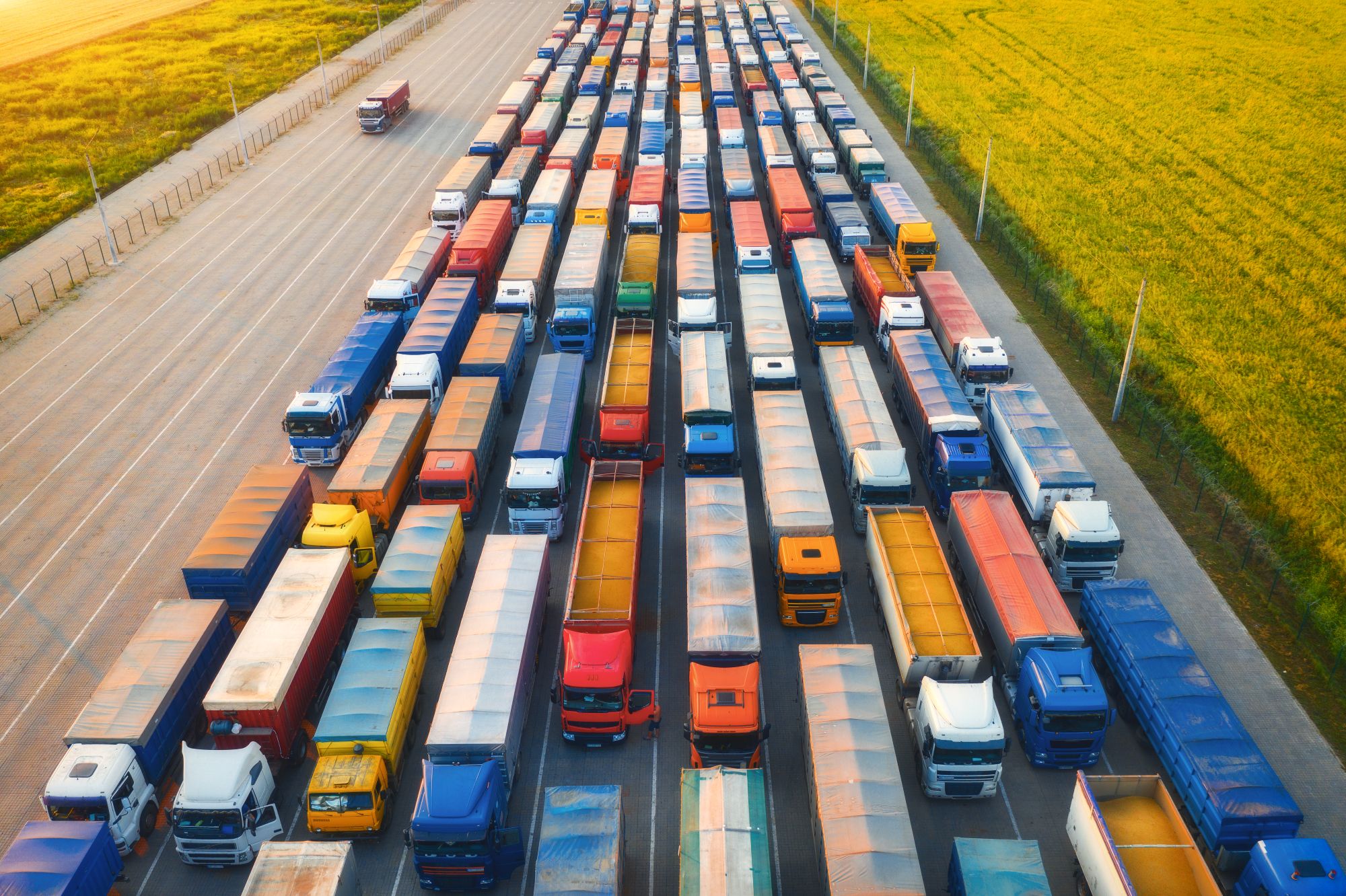
Для операторів переваги інтегрованих логістичних коридорів є відчутними, якщо не негайними. Однією з найважливіших переваг є більш передбачуваний транскордонний рух. З часом це зменшує невизначеність щодо часу в дорозі та покращує планування міжнародних маршрутів.

Коридори також розширюють можливості, коли рух лише автомобільним транспортом стає обмеженим. Рухомі автомагістралі та інтермодальні термінали можуть стати практичною альтернативою в періоди заторів, несприятливих погодних умов або регуляторних обмежень.

У той же час, інтегровані цифрові системи покращують прозорість поїздок, надаючи менеджерам автопарку кращі дані для планування перерв на відпочинок, доступу до терміналів і годин водіння з більшою точністю і впевненістю.

Існують і комерційні наслідки. Перекладаючи перевезення на далекі відстані на залізницю і резервуючи автомобільний транспорт для доставки "першої та останньої милі", деякі оператори можуть обмежити свій вплив на зони з низьким рівнем викидів і обмеження доступу до міст. Крім того, вантажівки, зайняті на далеких міжнародних маршрутах, вивільняються для коротших, більш частотних маршрутів, пов'язаних з логістичними вузлами і терміналами.

Паралельно з цим, вилучення з маршруту найдорожчих кілометрів - тих, на які впливають плата за проїзд, затори або обмеження, - може знизити операційні витрати. Для перевізників, які адаптують свою операційну модель, прибутковість залежить не стільки від пройденої відстані, скільки від ефективності, надійності та здатності надавати стабільні послуги в більш стислі, більш контрольовані часові рамки.

Виклики для перевізників

Незважаючи на переваги, інтегровані логістичні коридори також створюють нові складнощі для перевізників. У деяких частинах Європи вже діють обмеження на рух вантажних автомобілів, включаючи нічні заборони та доступ на основі квот. З розширенням стратегій коридорів і посиленням екологічного тиску ці заходи можуть стати більш поширеними і жорсткими, що призведе до ускладнення планування маршрутів і складання розкладів руху.

Прогрес у різних коридорах також є нерівномірним. У той час як деякі маршрути виграють від сучасних терміналів і модернізованих залізничних сполучень, інші, такі як Рейнсько-Альпійський коридор, страждають від обмеженої пропускної спроможності залізниць, перевантажених вузлів і прогалин в інфраструктурі. На цих напрямках обіцяне підвищення ефективності може бути підірване затримками і вузькими місцями, а не вирішене за рахунок них.

Цей виклик ускладнюється складнощами мультимодальних перевезень. Залізничні та термінальні слоти часто передбачають попереднє бронювання та фіксований розклад, що зменшує гнучкість, на яку традиційно покладалися лише автомобільні перевезення, щоб компенсувати перебої.

Цифрова інтеграція висуває свої вимоги. Хоча спільні системи даних, інтелектуальні тахографи та електронна документація забезпечують довгострокову ефективність, необхідні попередні інвестиції в сумісні інструменти управління автопарком, а також навчання водіїв і зміна процесів. Для деяких операторів цей перехід може бути ресурсоємним.

Однак, мабуть, найсерйознішим викликом є конкуренція. Інтегровані коридори, як правило, надають перевагу операторам, які можуть переміщувати вантажі передбачувано, в цифровому форматі та різними видами транспорту. Менші оператори або оператори, що працюють лише на автомобільному транспорті, можуть опинитися під тиском більших автопарків, інтермодальних спеціалістів або логістичних інтеграторів, які пропонують комплексні рішення для коридорів.

Що це означає для планування автопарку

Для міжнародних перевізників інтегровані коридори впливають на планування. Вибір маршруту більше не залежить лише від відстані та плати за проїзд. Він включає в себе

  • Оцінка місць, де доступ до доріг може бути обмеженим.
  • Визначення інтермодальних альтернатив.
  • Управління добробутом водіїв під час довших і складніших поїздок.
  • Забезпечення дотримання вимог у різних системах та юрисдикціях.

Флоти, які розуміють, як функціонують ці коридори, і планують відповідно до цього, матимуть кращі можливості для адаптації в умовах посилення правил і зростання очікувань.

Де SNAP може допомогти

Інтегровані логістичні коридори змінюють те, як транспорт рухається Європою. Вони відкривають можливості для більшої ефективності та стійкості, але також створюють нові рівні операційної та регуляторної складності для перевізників. Оскільки автомобільний транспорт стає все більш тісно інтегрованим із залізницею, портами та цифровими системами, добробут водіїв, визначеність у плануванні та доступ до надійної інфраструктури мають більше значення, ніж будь-коли. Менеджери автопарків потребують чіткої видимості і контролю над витратами, а також впевненості в тому, що водії можуть безпечно зупинитися і відпочити.

Завдяки нашій мережі безпечних, надійних стоянок для вантажівок у поєднанні з інтегрованими платіжними рішеннями ми спрощуємо життя на дорозі як для водіїв, так і для операторів. [Підпишіться сьогодні.] (https://snapacc.com/sign-up/)

Поділіться на

Читайте також...

Header Image

середа 11 березня 2026 • Новини галузі

ПАРКУВАННЯ ВАНТАЖІВОК У ЄВРОПІ: ПРАВИЛА, ПРОГАЛИНИ, РИЗИКИ

Guest

Ask most fleet operators what makes life harder than it needs to be and you’ll hear the same answer across Europe: truck parking.Drivers have to stop. Hours rules and rest requirements make that non-negotiable. But on many of Europe’s busiest transport corridors, finding a safe, legal place to park is still uncertain. Capacity is low, security varies widely and most urban hubs aren’t built with HGVs in mind.That pressure has consequences. When designated areas are full, drivers are pushed towards places that were never intended for HGV parking: slip roads, access ramps and industrial estates. Compliance becomes a choice between two risks: stop where you shouldn’t, or keep driving when you shouldn’t.When truck parking overflows into unsuitable places, the environment becomes dangerous: poor visibility, high speeds, unpredictable manoeuvres and limited escape routes. starkly in February 2026, reporting fatal crashes in Germany and Belgium involving stationary lorries. The article challenges the easy explanation of “illegal parking” and points back to the underlying cause: drivers were out of driving time and the spaces were gone.In addition, a shortage of truck parking in Europe doesn’t just mean “no space”; it often means the only available space is poorly lit, unmonitored and isolated. That elevates the risk of theft and driver harm, which can have a knock-on effect for supply chain reliability.Poor parking provision also affects workforce sustainability. When drivers face uncertainty around legal, safe stopping, it makes the role harder and less attractive – compounding .For a long time, the conversation about truck parking focused on enforcement: where you can’t park and the penalties that follow. Increasingly, the focus is moving towards provision: where drivers can stop safely, reliably and legally. Under revised Trans-European Transport Network (TEN-T) rules, EU Member States must ensure the development of certified secure parking . The same requirement sets expectations for the location of truck parking. It must be immediately on the network or within 3km of an exit, which will have benefits for route planning. Alongside this shift, the European Commission positions safe and secure truck parking as a priority within its Intelligent Transport Systems work, including the need for to help drivers locate suitable sites.But the EU isn’t just asking Member States to add more truck parking spaces. It’s also defining what “safe and secure” means. In April 2022, the European Commission adopted EU standards for , categorising sites into four security levels: bronze, silver, gold and platinum. The intention is to create transparency for drivers and fleets, and to support investment by giving operators a clear target to design and audit against.This sits against a significant capacity gap. A European Commission study estimates a across the bloc, with the gap potentially rising towards half a million by 2040 if the network does not scale at the pace freight demand requires.Looking at more practical aspects of the situation, what are HGV parking rules and regulations in Europe?At first glance, HGV parking rules across Europe look consistent: Motorways are not designed to absorb overflow parking. Hard shoulders exist for emergencies and safety buffers. Access ramps are not for planned stopping.Urban areas add a layer of complexity. Local restrictions and enforcement are common because HGV parking competes with residents, retail and public space – and because badly parked vehicles create safety risks.Rules around HGV parking in the UK are clear. Trucks should use designated areas such as motorway services, truckstops and lorry parks. Conversely, drivers must avoid parking in locations that create risks, such as pavements, verges and central reservations. Restrictions around parking in residential areas vary by local authority, so it’s vital to check if this is unavoidable. The major constraint is supply. The RHA’s estimate of an , with very high utilisation on key routes, helps explain why informal and unsafe parking persists even where drivers know it isn’t ideal. In 2022, the Department for Transport across England, aimed at better rest areas and more secure parking, framed as part of a broader programme to improve roadside facilities.In Germany, motorway stopping rules are anchored in the (StVO), which makes clear that stopping on the autobahn – including the hard shoulder – is prohibited except in emergencies. That means running out of driving time is not treated as justification. Fines increase if obstruction or danger is caused, and enforcement is active on heavily used corridors. Poland follows the familiar motorway rule that hard shoulders are reserved for breakdowns and emergencies. The nuance appears within cities, where tonnage-based entry restrictions and are common. Overnight HGV parking in urban areas can require municipal approval and enforcement varies between municipalities. For cross-border fleets, that means treating urban stopping as permission-led rather than assumed.France reinforces the same principle through the . Articles R417-9 and R417-10 classify dangerous or obstructive parking offences, and stopping on autoroute carriageways or shoulders is prohibited except in cases of absolute necessity. Penalties can include fines and licence points.However, publishes dedicated information for secure truck parking on its network, reflecting how motorway operators guide HGV stopping into appropriate locations.Spain’s prohibits stopping on motorway shoulders except in emergencies, aligning with broader European practice. Additional complexity lies at municipal level. Many cities operate local overnight bans or restrict HGV parking to designated industrial zones, with enforcement handled by local police rather than motorway authorities. That creates a layered compliance environment: legal on the motorway network does not automatically mean legal in urban areas.To highlight positive developments, that a truck parking facility in La Jonquera became the first in Spain to receive TAPA certification, describing measures such as controlled access, fencing, lighting and continuous monitoring.Italy distinguishes clearly between motorway carriageways, ramps and designated service areas. Stopping on access or exit ramps is explicitly prohibited, and enforcement around motorway infrastructure is consistent. Importantly, Italy differentiates between aree di servizio (full service areas with facilities) and simpler rest or parking lay-bys, which may not support overnight welfare needs. However, Italy is also seeing new secure truck parking developments focused on welfare and security, reflecting the wider European momentum towards better provision.Across Europe, an additional regulatory layer now shapes truck parking decisions: Low Emission Zones (LEZs) and restricted urban traffic zones. Cities in France (Crit’Air), Germany (Umweltzonen), Spain (Zonas de Bajas Emisiones) and Italy (ZTL areas) impose vehicle-class or permit requirements that can apply even to stationary vehicles within the zone. A driver who parks overnight in a restricted area without the correct classification or registration risks fines – even if the stop itself is otherwise legal. Across Europe in 2026, the rules are clear. The constraint is capacity, especially near urban hubs and on high-volume corridors. For fleets, this has a practical impact: European truck parking can’t be left to chance at the end of a shift. It needs to be planned with the same seriousness as , routing, driver hours and security – because when the network fails to provide legal space, every other compliance system gets squeezed.SNAP can help. .

Header Image

четвер 26 лютого 2026 • Новини галузі

ЖІНКИ У СФЕРІ ВАНТАЖОПЕРЕВЕЗЕНЬ: РОЗКРИТТЯ НЕВИКОРИСТАНИХ ТАЛАНТІВ

Guest

Across the UK, around . They transport food to supermarkets, materials to construction sites and goods to ports and distribution centres. They underpin daily life and economic stability, forming a critical part of the UK’s national infrastructure.Yet only around . That amounts to roughly one per cent of the UK HGV workforce, according to reporting by . For an industry facing long-term recruitment pressure, that figure raises important questions about where future talent will come from and how the sector presents itself to potential entrants.There are signs of progress, however. The percentage of from 6.7% in 2011/12 to 9.7% by 2021/22. Over the past decade, women securing Category C and C+E licences increased by 144%, according to SME Web. More women are clearly choosing to train and qualify. The pipeline is widening, but the proportion of women behind the wheel remains marginal.Women have not been entirely absent from road transport. One of the earliest recorded female truck drivers was, who began driving heavy vehicles in the United States in 1918. During wartime periods in both the US and the UK, women stepped into transport roles out of necessity. Then, in the 1960s, became the UK’s first long-distance lorry driver, often working 100-hour weeks.However, outside exceptional circumstances, haulage has traditionally been male dominated. Cultural perceptions, physical assumptions about the work and the lifestyle associated with long distance driving have all played a part. Only in recent decades has participation begun to shift in a more sustained way.The reasons for low female participation are not limited to awareness. Structural and practical barriers remain.Facilities are a big concern. Professional drivers depend on secure parking, clean rest areas and appropriate welfare provision. For many years, roadside infrastructure has struggled to meet demand across the board. When rest stops are inadequate, poorly lit, feel unsafe or lack privacy, this can discourage women from joining the sector.Working patterns also play a role. Long-haul journeys can involve overnight stays and time away from home. While many drivers value the independence that comes with the role, the perception of work-life balance may deter some women, especially those with caring responsibilities. There is also the issue of visibility. When only one per cent of drivers are women, prospective candidates may struggle to see themselves in the sector. In addition, menopause symptoms such as fatigue, sleep disruption, hot flushes and anxiety can be difficult to manage in roles that involve long hours, limited access to private facilities and time away from home. In sectors where welfare provision is already under pressure, a lack of understanding or practical support can lead to experienced drivers leaving the workforce.For haulage, this is not a peripheral issue. Retaining experienced drivers is as important as attracting new entrants. Change is not confined to driving roles. Across the broader transport and logistics ecosystem, women are increasingly visible in management, planning and policy functions.The shows that leadership representation by women has increased from 26% to 36% in recent years. However, much of this growth has taken place outside core operational functions. Senior representation within frontline transport roles remains comparatively limited.Several industry organisations are addressing this gap. Women in Transport offers mentorship opportunities, while everywoman recognises excellence through its , raising the profile of female professionals across the sector. The Chartered Institute of Logistics and Transport has also announced a new , aimed at supporting career progression and professional networks.Alongside this, community initiatives such as demonstrate that interest and engagement are growing. The spotlighting female drivers and employees, further increasing visibility. Collectively, these platforms help challenge outdated perceptions and provide practical support for women entering or advancing within the industry.For the UK haulage sector, this is not just a diversity conversation. It is a strategic one.Previous industry reporting has highlighted the scale of recruitment pressure across logistics. The that tens of thousands of new drivers will be required in the coming years to maintain supply chain stability. At the same time, the existing workforce is ageing.With only one per cent of drivers currently women, a significant proportion of the potential labour market remains underrepresented. If participation rates were to move closer to parity with the wider workforce, the impact on recruitment could be substantial.There is also evidence that inclusive cultures contribute to improved retention and engagement. A sector that demonstrates visible progression pathways, fair access to training and appropriate welfare provision is likely to appeal more broadly across demographics.Progress will not accelerate through awareness alone. Structural changes are needed.Investment in safe, well maintained roadside facilities is fundamental. Secure parking, adequate lighting and clean welfare amenities benefit all drivers and remove avoidable barriers to entry.Flexible working models, where operationally feasible, can broaden appeal. This may include regional route design, job sharing arrangements or clearer progression pathways from warehouse and planning roles into driving positions.Funded licence pathways and apprenticeships can also reduce financial barriers. As previously outlined, the cost of training can be significant. Targeted funding initiatives aimed at underrepresented groups can support a more balanced intake.Finally, transparency around workforce data matters. Publishing gender breakdowns, monitoring progression rates and setting measurable objectives signal that inclusion is being taken seriously.International Women’s Day provides an opportunity to reflect on how far the UK haulage industry has come and how far it still has to go. The rise in female licence acquisition and test pass rates demonstrates that interest exists. Leadership representation is improving in some areas and support networks are expanding. However, the scale of underrepresentation remains stark.Haulage is central to national resilience. It keeps shelves stocked, infrastructure projects supplied and trade flowing. Ensuring that this workforce reflects the full breadth of available talent is not simply a question of equity. It is a matter of long term sustainability.Supporting women in haulage also means improving the day-to-day realities of life on the road. Access to secure parking, well-lit rest areas and appropriate facilities is fundamental to retention and wellbeing for all drivers. SNAP’s intruck app helps all drivers locate and book trusted truck stops across the UK and Europe, giving fleets greater visibility and drivers greater confidence wherever their route takes them. .

Header Image

вівторок 16 грудня 2025 • Новини галузі

ЩО ОЗНАЧАЄ ОБОВ'ЯЗКОВИЙ ЦИФРОВИЙ ОБЛІК В ІСПАНІЇ ДЛЯ АВТОПАРКІВ, ЩО ПРАЦЮЮТЬ В ЄВРОПІ

Guest

Spain is preparing for one of the most significant transport reforms in its recent history. The Sustainable Mobility Law (Ley de Movilidad Sostenible), which received final approval in November 2025, will introduce mandatory digital records for road freight control documentation, creating a more transparent, enforceable and efficient system for domestic and international carriers. Although this is a major national change, it forms part of a wider trend. Across Europe, governments and operators are moving towards a fully digital freight environment as the EU prepares to implement the (eFTI).For fleets working in and out of Spain, this is the start of an important transition. It signals a future in which paper documentation becomes the exception rather than the rule and in which digital processes support faster checks, smoother operations and greater consistency across borders.While the Sustainable Mobility Law addresses wide-ranging transport reforms – from urban mobility to domestic flight restrictions – the provisions most relevant to international freight operators centre on digital documentation. A central section of the law introduces a mandatory digital “control document” for road freight. This includes the use of approved digital formats, such as the electronic consignment note (eCMR), which Spain has already ratified and treats as legally equivalent to the paper CMR note. The law aims to reduce administrative burdens, eliminate inconsistencies in paperwork and shorten the time required for checks and inspections. Rather than relying on handwritten notes or physical documents that can be misplaced, carriers will store, share and verify transport information digitally. For operators, this should mean fewer disputes over documentation, less ambiguity around compliance requirements and greater certainty when preparing for audits or regulatory reviews.In practice, the obligation focuses first on the digital control document used for roadside and regulatory checks, but it is expected to accelerate wider use of eCMR and other digital freight documents across the supply chain.The timeline for implementation will begin once the law is published in Spain's Official State Gazette. Carriers should expect the digital control document obligation to take effect roughly ten months after publication, making 2026 the likely year when full compliance will be required.The Mobility Law applies to road transport operations that fall under Spanish control rules on Spanish territory, not just Spanish-registered companies. Carriers will need to ensure their systems can produce and transmit digital records in compliant formats. Any delay in adopting digital documentation could slow down inspections or disrupt customer schedules.This means that foreign operators running international loads into, out of or through Spain should plan on being able to provide the required control document in digital form when requested by Spanish authorities.The Spanish reforms align closely with the EU’s eFTI Regulation, which will require Member States to accept digital freight documentation once the technical and certification rules are in place (from mid-2027). eFTI sets a unified framework for how information is structured, transmitted and verified. While it obliges authorities to accept digital records, it does not require operators to use them. Spain’s Mobility Law therefore goes further, making digital control documents mandatory for road freight.Under eFTI, carriers will be able to provide freight information electronically through certified platforms. Enforcement authorities will receive that information through secure digital channels. This should reduce administrative friction across the EU’s busiest freight routes.Spain is not alone in taking early steps. Several EU countries have already moved towards paperless freight systems and their experience demonstrates what a fully digital environment could look like.● The Netherlands has been one of the earliest adopters of eCMR and has trialled end-to-end digital workflows across different modes of transport. ● France also moved early, supporting digital documentation and faster roadside checks following its ratification of the eCMR protocol. ● In the Benelux region, Belgium, Luxembourg and the Netherlands are running a joint eCMR pilot and digital logistics corridor, illustrating how interoperable documentation can work across national boundaries.● Denmark and Sweden have operated national e-freight trials designed to simplify the sharing of transport information. Taken together, these examples show that Spain’s Mobility Law is part of a broader European transition. Rather than standing apart, Spain is moving in step with a continental shift towards digital documentation that aims to make road freight faster, more transparent and more consistent across borders.The move to digital records brings several practical advantages. Digital documents reduce the time drivers and enforcement officers spend handling paperwork and shorten inspections during roadside checks. This mirrors the benefits seen with the introduction of , which have reduced unnecessary stops for compliant drivers and improved the consistency of enforcement across Europe.Digital documentation also removes the errors that can arise from handwritten notes or damaged paper notes. Fleet managers can instantly retrieve records, resolve errors more easily and maintain clearer oversight of documentation across multiple routes. For operators managing complex schedules, this increased predictability supports better planning and stronger customer service.Drivers are likely to benefit too. A shift to digital records reduces administrative pressure and helps avoid disagreement at delivery points. With all documents stored digitally, drivers have a single source of truth that is accepted across the supply chain.Fleets may need to invest in updated transport management systems or integrate new tools that support digital documentation. Operators may require additional support and training to shift from paper-based processes to new digital workflows.There will also be a period of adjustment in which paper and digital systems may operate side by side. As eFTI becomes established across Europe, some countries will move faster than others. Operators travelling across different borders may encounter varying expectations, particularly in the early years.Throughout this transition, driver welfare should remain a priority. The administrative load associated with new processes often falls on drivers. Clear training and straightforward systems will be essential.Spain’s Mobility Law marks an important moment in the evolution of European freight. It reflects a sector that is modernising at speed and preparing for a future built on digital workflows rather than manual paperwork. Operators that begin preparing now will be in a strong position as Spain’s digital control document requirements take effect and eFTI comes into force across Europe.At SNAP, we support fleets across Spain and the wider continent with tools that make daily operations simpler and more predictable. The intruck app helps drivers locate and book secure parking along their route, which is particularly valuable as compliance processes evolve. If your fleet is preparing for Spain’s new requirements or the broader digital transition across Europe, SNAP is here to support every step of the journey.