Susie Jones
Conseils aux conducteurs • 4 min lire

Vous vous ennuyez sur la route ?

Créée: 27/08/2024

Mise à jour : 27/08/2024

Le conducteur de camion moyen passe environ 12 heures au volant chaque jour. Passer un temps infini sur la route peut sembler attrayant, mais la réalité est tout autre. Les innombrables stations-service et aires de repos, ainsi que les longues heures de travail, peuvent devenir fastidieuses. Les camionneurs passent souvent leur temps libre loin de chez eux et il peut être difficile d'éviter l'ennui.

Selon une récente enquête de Convoy, l'ennui est l'un des principaux défis auxquels sont confrontés les chauffeurs routiers. Quel est l'effet de l'ennui sur le bien-être des conducteurs ? Et comment les routiers peuvent-ils se divertir ?

Comment l'ennui affecte le bien-être des conducteurs

La fatigue, l'isolement, la solitude et le manque de stimulation mentale sont des préoccupations communes aux conducteurs. Certains d'entre eux peuvent faire face à ces problèmes par des mécanismes d'adaptation malsains, tels que la suralimentation, le tabagisme ou la consommation excessive de caféine. Au fil du temps, ces habitudes peuvent avoir un impact négatif sur la santé mentale.

Toutefois, à mesure que l'on parle de santé mentale, de plus en plus de chauffeurs adoptent une approche différente pour lutter contre ce phénomène. Nous avons demandé à des chauffeurs routiers sur Facebook ce qu'ils font lorsque l'ennui les gagne.

"Livres audio, principalement sur la psychologie. La musique, les conversations avec mes proches ou la radio. Ou bien j'éteins tout et je mène une existence paisible avec mes propres pensées", explique Nigel.

D'autres ont indiqué que le fait de parler à leurs proches par téléphone les avait aidés. Ashleigh déclare :

"Parler à mes amis dans un groupe de discussion. Honnêtement, si je ne les avais pas eus, j'aurais arrêté depuis longtemps. La route est semée d'embûches et sans parler à de très bons amis, je n'aurais jamais survécu.

De même, Karl estime qu'une "discussion de groupe avec des amis est indispensable".
Prévenir l'ennui au volant

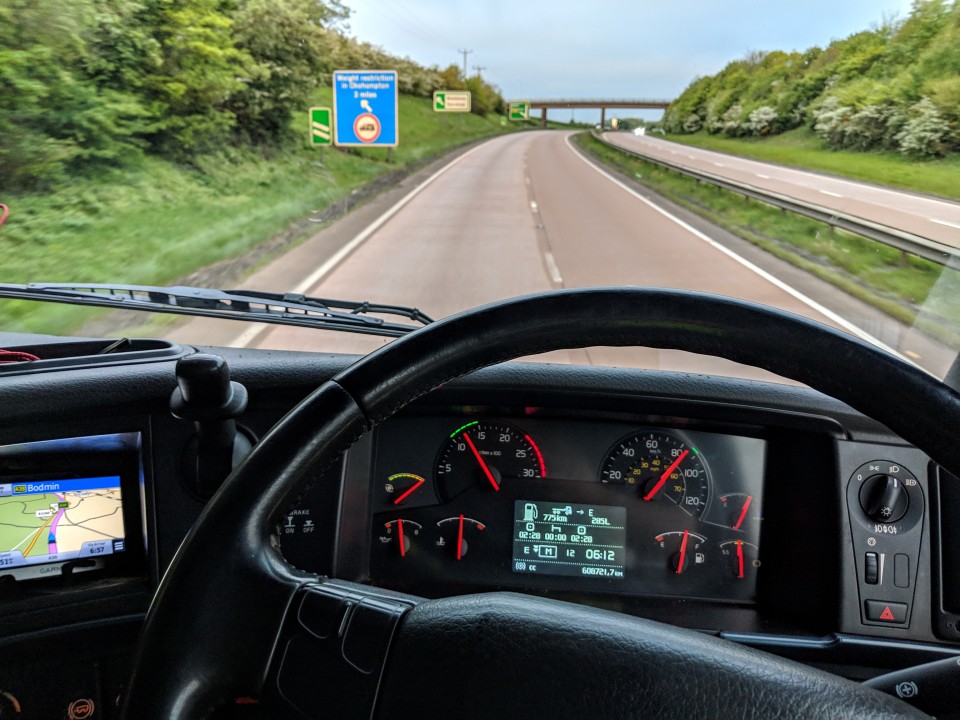
Contrairement aux idées reçues, le transport routier est une activité physique : les conducteurs ont besoin de coordination et de concentration pour éviter les accidents. Malgré cela, le fait d'être au volant pendant de longues périodes peut entraîner de la fatigue. Le risque de se reposer sur ses lauriers peut survenir, surtout si le conducteur connaît bien son itinéraire. Comment les conducteurs peuvent-ils gérer la complaisance au volant ?

Qu'il s'agisse d'écouter un podcast ou une chanson entraînante, les conducteurs doivent choisir quelque chose qui leur permette de garder l'esprit alerte. Nous avons dressé une liste de choses à faire pour éviter de s'ennuyer au volant.

  • Podcasts : Marty, chauffeur routier, écoute "des dizaines de podcasts" pendant qu'il conduit. Les podcasts sont un excellent moyen de changer les choses et d'apprendre quelque chose de nouveau. Consultez cette [liste utile de podcasts sur le transport routier] (https://www.alltruckjobs.com/blog/trucking-podcasts-better-radio/)

  • Musique : "De la musique, de la musique et encore de la musique", c'est la devise de Richard pour lutter contre l'ennui. Qu'il s'agisse d'écouter la radio ou de chanter sur une playlist, la musique est un excellent moyen de garder l'esprit alerte

  • Faites une pause : Bien que les conducteurs soient soumis à des délais stricts et aux réglementations du tachygraphe, sortir de la cabine lorsque l'ennui se fait sentir permet de se recentrer.

Ennui pendant les temps morts

Les camionneurs sont confrontés à des défis supplémentaires pour se divertir après leur travail. Il est impératif d'adopter une approche proactive pour éviter l'ennui pendant cette période. Nous avons compilé une liste de moyens de passer les heures.

  • Emplacement : Les relais routiers qui offrent une vaste gamme d'installations et une ambiance communautaire sont un excellent moyen d'atténuer l'ennui. Certaines font office de centre social où les camionneurs peuvent partager des expériences similaires. Rendez-vous sur notre [page des emplacements] (https://www.snapacc.com/locations/?lang=EN) pour découvrir les installations proposées par nos partenaires de service SNAP.

  • Faire de l'exercice : Faire une promenade quotidienne ou faire preuve de créativité dans vos entraînements permet d'éviter l'ennui et de rester en forme et en bonne santé. Consultez nos conseils pour rester en bonne santé sur la route

  • Services de streaming : Rattraper la dernière émission de télévision ou parcourir les médias sociaux. Steve, chauffeur routier, aime "faire défiler et commenter Facebook et regarder Netflix" pour passer le temps.

  • Passe-temps : Les possibilités sont infinies. Apprendre un instrument, une langue étrangère, dessiner, écrire, etc. S'adonner à un passe-temps est un moyen efficace d'éviter l'ennui

  • La cuisine : Cuisiner dans la cabine présente de nombreux avantages. Non seulement cela évite de s'ennuyer, mais cela permet aussi d'économiser de l'argent et d'être plus sain

  • Restez en contact avec vos proches : Le temps d'arrêt d'un camionneur est l'occasion idéale de contacter ses proches. Les appels vidéo sont un moyen efficace de se rapprocher de sa famille et de ses amis

  • Détendez-vous : les camionneurs peuvent être confrontés à des situations stressantes. Se détendre pleinement après une journée de travail peut améliorer le bien-être du conducteur. Les techniques de relaxation telles que les exercices de respiration profonde et la méditation réduisent le stress.

Bien que certains conducteurs apprécient la solitude et l'indépendance qu'offre la route, lutter contre l'ennui reste un défi pour beaucoup d'entre eux. En raison de la nature de leur travail, les routiers connaissent souvent de longues périodes d'ennui. Cependant, pour améliorer leur bien-être, leur satisfaction au travail et la sécurité routière, ils doivent trouver des moyens de l'atténuer. Qu'il s'agisse de se concentrer sur la tâche à accomplir, d'écouter la radio ou de discuter avec des amis ou des membres de la famille, la plupart des camionneurs peuvent trouver une solution qui leur convient.

Où dorment les chauffeurs routiers ?

La plupart des conducteurs dorment dans leur cabine, car elle est bien équipée pour une nuit de sommeil confortable. Une cabine couchette de base comprend un lit, des rangements, des lumières et des prises électriques, ce qui en fait un véritable foyer.

En raison de la pénurie actuelle de places de stationnement en Europe, de nombreux automobilistes se garent sur des aires de stationnement. Cette pratique est jugée dangereuse et rend le conducteur vulnérable au vol. Depuis novembre 2017, les conducteurs de poids lourds au Royaume-Uni doivent prendre des pauses hebdomadaires régulières dans des aires de repos appropriées (comme les aires de service et les relais routiers).

Le système [SNAP's Depot Parking] (https://snapacc.com/depot-parking) permet aux flottes d'offrir leurs places de parking pour camions au réseau, ce qui atténue la pénurie et aide les chauffeurs à éviter les situations vulnérables. En outre, SNAP met à la disposition des conducteurs plus de 450 partenaires de service dans toute l'Europe. Rendez-vous sur notre [page des cartes] (https://snapacc.com/map/) pour en savoir plus.

Pourquoi les chauffeurs de camion laissent-ils les portes de leur remorque ouvertes ?

Si vous avez déjà conduit sur une route principale la nuit, vous avez peut-être remarqué des camions garés avec la porte de leur remorque ouverte. De nombreux conducteurs agissent ainsi pour dissuader les voleurs, partant du principe que si la porte de la remorque est ouverte, il n'y a rien à voler. Cette pratique est surtout utilisée sur les remorques à rideaux, car elle empêche les voleurs de couper le rideau pour voir ce qu'il y a à l'intérieur.
Partager avec

D'autres lisent également...

Header Image

vendredi 29 mai 2026 • Conseils aux conducteurs

DE LA LUTTE À LA FORCE : COMMENT DARREN WRIGHT AIDE LES VÉTÉRANS À RECONSTRUIRE LEUR VIE GRÂCE À LA LOGISTIQUE

Ellie Aldous

For many veterans, leaving the armed forces can mean losing far more than a career. It can mean losing structure, identity, purpose and community.For Darren Wright, founder of Veterans into Logistics, that transition was deeply personal.After serving nearly six years in the British Army, including a tour of Afghanistan as an air defence gunner, Darren struggled following his own transition into civilian life. He experienced homelessness, mental health challenges, the breakdown of his marriage and eventually served a custodial sentence.Rather than defining him, those experiences became the driving force behind a mission that is now changing lives across the UK.“I rebuilt my life through HGV driving,” Darren explains. “And I realised that if it could help me rebuild my life, it could help other veterans rebuild theirs too.”Founded in 2020, Veterans Into Logistics supports ex-service personnel into sustainable careers within the logistics industry by helping them gain HGV licences, training and employment opportunities.The organisation was inspired in part by the loss of Darren’s friend Jamie Doyle, a former Royal Artillery soldier who tragically died less than six months after leaving the military.“Jamie had served 22 years and was heavily decorated,” Darren says. “But like many veterans, he struggled with the transition. Losing that structure, purpose and identity can hit people incredibly hard.” That loss became the catalyst for action.Creating Opportunities Through LogisticsDarren recognised that logistics offered something many veterans desperately needed: a fast, accessible route into stable employment. “In six weeks, someone can go from having a car licence to becoming an HGV driver earning a strong salary,” he explains. “For many people, especially those who aren’t academic, that can completely change their future.” Veterans Into Logistics now works with veterans, ex-offenders and people from disadvantaged backgrounds to help them access training, employment and long-term career opportunities. The programme focuses not only on skills training, but also on restoring confidence and hope.“When someone comes to us at rock bottom, the first thing we do is give them hope,” Darren says. “Booking that first medical appointment may seem small, but it gives someone belief that something is finally changing.” The results have been transformative.Darren shared the story of one veteran he met sleeping rough in Manchester. After engaging with Veterans Into Logistics, the veteran gained his HGV licence, secured employment and later proudly returned to show Darren the car he had been able to buy through his hard work.Another veteran who had repeatedly cycled in and out of prison after leaving the military was supported into training and employment. He has since rebuilt his life and has not reoffended. “These are people who simply needed the right tools and the right opportunity,” Darren says. “I always say I’d rather give someone a fishing rod than a fish.”Challenging Perceptions of the IndustryDarren is also passionate about changing perceptions around logistics careers.“There’s this misconception that every driving role means being away Monday to Friday sleeping in a truck,” he says. “That’s not true. There are so many different types of driving jobs — local council work, airport operations, supermarket deliveries, highways maintenance, Formula One logistics and more.”Through his growing online platform, Manc on a Mission, Darren is using social media to educate people about the opportunities available in the logistics sector.His TikTok videos, which showcase real drivers and real careers, quickly gained millions of views and have inspired many people outside the military community to explore careers in transport and logistics. “I want to show young people and people from deprived areas that this is a real career path,” Darren explains. “You can build a stable life through this industry.” Driving Change Nationally Darren’s work has also led to national policy change. After discovering that military resettlement funding could not be used for HGV driver training because it was classified below Level 3 education, Darren challenged the rules directly with government ministers.Following his campaign, the policy was changed, allowing service leavers to use Enhanced Learning Credits for HGV driver training.“It was about making sure less academic service leavers weren’t excluded from opportunities,” Darren says.What’s next for Veterans into LogisticsToday, Veterans into Logistics continues to expand its impact through partnerships with logistics companies, prisons, colleges and employers across the UK. Looking ahead, Darren hopes to continue opening doors for veterans and others who may otherwise struggle to access meaningful employment. “If we keep changing lives, that’s success,” he says.If this story resonates with you or someone you know within the industry please reach out to Darren at the Team at Veterans for Logistics.‍Watch the full Interview:

Header Image

vendredi 29 mai 2026 • Conseils aux conducteurs

PARLER AVANT QUE LE RÉSERVOIR NE SOIT VIDE - ROMPRE LA STIGMATISATION ET LE SILENCE DANS LE SECTEUR DU TRANSPORT ROUTIER.

Ellie Aldous

Extended periods away from home, long driving hours and tight delivery schedules are all part of a life in the logistics and haulage industry. But behind the movement of goods that keeps the world moving, there is a growing conversation about something far less visible, the mental health of drivers.With limited to no social interaction during their working week, isolation has become one of the biggest challenges among drivers. This is compounded by pressures on the road, such as finding secure parking for their cargo, managing delivery deadlines, navigating traffic, and maintaining concentration while dealing with mental fatigue.For some, the stresses continue past the steering wheel with some struggling with financial worries, physical wellbeing and difficulty maintaining relationships given they are spending a vast amount of time away from loved ones. What makes the issue even more concerning is that 98% of drivers are male, a group that is often less likely to speak openly about mental health. A UK survey by Priory found that 40% of men have never spoken to anyone about their mental health, with many citing embarrassment, stigma, or fear of appearing weak. Experts say this silence can leave drivers feeling even more disconnected and therefore the cycle continues. So, the big question is how can fleet managers help break the cycle? We have provided some top tips from mental health advocates!Regular check in calls with your drivers Recognise and Reward good work Support healthy rest breaks Offering a confidential support services such as wellbeing apps & counselling services Monthly team catch ups. Here are the top 5 tips to give to your driversMove when you can! A 10-minute walk & stretch can boost energy and improve circulation. Stay Hydrated. Dehydration can lead to fatigue! Keep in touch with others – Regular calls and facetime with family and friends can help you feel more connected Eat Balanced Meals – Choosing a healthy alternative helps maintain your energy. Listen to something positive – Pick a podcast or audio book, something interesting to support the long journey.At SNAP, were more than just a payment solution, we’re committed to driving meaningful, positive change across the industry by supporting not only our service partners, but also the hardworking drivers that keep the world moving.Sources: Men's Mental Health: Why 40% of men won't talk about it Priory Office for National Statistics https://www.nomisweb.co.uk/datasets/aps218/reports/employment-by-occupation?compare=K02000001

Header Image

mardi 26 mai 2026 • Conseils aux conducteurs

DES PROCÉDURES DE CHARGEMENT ET DE DÉCHARGEMENT SÛRES POUR PRÉVENIR LES LÉSIONS MUSCULO-SQUELETTIQUES

Evelyn Long

Musculoskeletal injuries are one of the most persistent challenges facing the fleet industry today. Drivers and warehouse staff face constant physical demands during loading and unloading operations. Implementing proper procedures protects your workforce from chronic pain and career-ending injuries while maintaining the efficiency that keeps your business competitive in demanding markets.Musculoskeletal injuries affect individual workers while draining business resources through lost productivity and increased insurance premiums.When an employee sustains an injury, the financial consequences go beyond the immediate medical expenses. Fleet managers must account for sick leave costs, temporary worker expenses and potential compensation claims.In 2023 to 2024, the total costs of workplace ill health and injury , with injury accounting for 28% or £6.5 billion. These figures demonstrate how injuries translate into economic burdens that affect profit margins.Lost productivity compounds these direct costs. When experienced drivers or warehouse staff take extended leave, operations slow down and remaining team members face increased workloads. The ripple effects touch every aspect of fleet operations, from delayed deliveries to strained client relationships.Drivers who develop musculoskeletal disorders face a difficult reality. Chronic back pain, shoulder injuries and repetitive strain can make basic job functions excruciating. Many drivers report that persistent pain affects their ability to focus during long routes, creating additional safety concerns.Musculoskeletal disorders rank among the in Great Britain. These conditions force experienced professionals out of an industry where they've built years of expertise.UK law requires employers to take specific steps to prevent manual handling injuries. Risk assessment forms the foundation of compliance and serves as the first line of defense against workplace strain.Employers must follow the Manual Handling Operations Regulations from the Health and Safety Executive, which establish a clear hierarchy. First, wherever reasonably practicable. Second, assess any hazardous operations that cannot be avoided. Third, reduce the risk of injury from those operations to the lowest level reasonably practicable.This framework pushes businesses to eliminate manual handling risks entirely. Mechanical equipment must be used whenever possible for moving loads. Any unavoidable manual handling requires proper assessment and mandatory control measures.A suitable and sufficient risk assessment examines four key factors in logistics operations:1. Task: The task itself matters, including whether it involves twisting, stooping or repetitive movements. Load: Load characteristics, such as weight, size and stability, play a role. Environment: Environmental conditions, including space constraints, floor surfaces and temperature extremes, affect safety outcomes. Individual: Individual capabilities vary among workers, who bring different strengths and physical limitations to each job. Effective should lead to concrete improvements. Document your findings and share them with your team.When manual handling becomes inescapable, proper technique can reduce injury risk. Training the workforce in correct lifting methods protects them during daily operations.The feet should be , positioned close to the load. Bending at the knees while maintaining a straight back allows you to grip the load firmly with both hands. Leg muscles should power the lift as you rise smoothly. Keeping the load close to the body throughout the movement prevents strain, as does avoiding any twisting motion during the lift or carry.If you need to strain or jerk to move an object, it requires mechanical assistance or team lifting. Never rush a lift to save time. Taking a few extra seconds to position yourself correctly prevents injuries that could sideline you for weeks.Team lifts require clear communication and planning before anyone touches the load. Designate one person as the lift coordinator who will call out instructions. All team members must understand the lift plan, including grip points, the path of movement and where the load will be placed.The coordinator should count down before the lift begins so everyone moves at the same time. Team members must maintain communication throughout, calling out if they need to pause or adjust.Technology offers powerful tools to reduce or eliminate manual handling risks in fleet operations, while equipment investments protect workers, often improving efficiency and throughput.Mechanical equipment, such as pallet jacks, forklifts and conveyors, eliminates many manual handling injuries. Workers' backs and joints no longer bear the physical strain when machines handle the load. Motorizing the effort required to move heavy loads, battery-electric pallet jacks . These machines can handle significantly more weight than manual versions while requiring minimal physical exertion from operators.Forklifts excel at transporting and lifting materials in warehouse and loading dock environments. Operators control heavy loads from a protected position, eliminating back strain and repetitive-motion injuries associated with manual handling.Data-driven scheduling through predictive systems can and potential delay points across your routes. Fleet managers can use these insights to adjust schedules, allocate additional resources during peak periods and give drivers realistic time frames.When drivers feel rushed, they are more likely to cut corners on safety procedures. Proper scheduling eliminates this pressure. Workers have time to use mechanical equipment properly, conduct team lifts when needed and follow correct manual handling techniques.Emerging wearable devices monitor workers' movements and posture throughout their shifts. These devices use to analyze lifting techniques and provide real-time feedback when workers adopt unsafe postures.Similar technology appears in driver safety applications. A telematics app program helped among young drivers by providing real-time feedback. The same principle applies to physical work, where immediate alerts about improper lifting form can prevent cumulative strain injuries.Fleet operations can use prevention through design (PtD) to eliminate hazards during planning. Vehicle specifications that minimize manual handling requirements, warehouse layouts that facilitate safe movement and procurement decisions that prioritize ergonomics all fall under this proactive approach.Vehicle design choices directly impact daily injury risk. Lower load bed heights reduce the distance workers must lift heavy items, while side-loading configurations ease the strain on workers' backs compared to rear-loading designs. Warehouse layout decisions matter as well, with adequate space around loading docks allowing workers to position themselves correctly and use equipment without awkward maneuvering.Equipment provision alone doesn't guarantee safety. Research shows that while 62.2% of construction workers might work at heights requiring protection, equipment. This gap highlights why PtD matters. When you design operations so that the safe method is also the easiest, compliance becomes natural.Preventing musculoskeletal injuries necessitates ongoing attention. Investing in proper equipment, training and operational design protects your workforce while strengthening your business's reputation and future prospects.Discover more from