Susie Jones
Consigli per i conducenti • 4 leggere

Come essere un camionista sano

Creato: 27/08/2024

Aggiornato: 27/08/2024

In quanto professione impegnativa, la guida di camion comporta spesso orari prolungati, uno stile di vita sedentario e lunghi periodi di assenza da casa, che spesso possono avere ripercussioni sulla salute di molti conducenti.

Abitudini poco salutari come il consumo di fast food, la mancanza di attività fisica e un sonno disturbato possono portare a potenziali complicazioni per la salute in futuro. Ma come si fa a rimanere in forma come camionista? È più facile a dirsi che a farsi, ma abbiamo stilato un elenco di consigli che vi aiuteranno a mantenervi in forma durante il viaggio.

Sei consigli per mantenersi in salute in viaggio

1.Idratazione

Un consiglio semplice e un bene che spesso diamo per scontato, ma la maggior parte dei problemi di salute deriva dalla disidratazione. Sorseggiare regolarmente acqua o spremute nel corso della giornata consente di espellere le scorie metaboliche e le tossine dall'organismo e di mantenersi più energici e vigili. Tenere con sé una bottiglia d'acqua ricaricabile non solo vi ricorderà di mantenervi idratati, ma sarà anche più utile per l'ambiente.

2.Dieta

La tentazione di mangiare al fast food dopo una lunga giornata è qualcosa che tutti possiamo capire, tuttavia, proprio come il mantenimento dell'idratazione, la dieta gioca un ruolo importante per la vostra salute e per come vi sentirete durante la giornata.

Si consiglia agli autisti di camion di mangiare tre o quattro volte al giorno, due pasti e due spuntini o due pasti e uno spuntino. Cercate di mantenere un piano di pasti e spuntini ad alto contenuto di omega-3, ferro e vitamina C, come verdure a foglia verde, pesce e frutta. Evitate di consumare frequentemente cibi e bevande come pasta, pane, bevande dolci e stimolanti come caffè e bevande energetiche.

Date un'occhiata al nostro elenco di spuntini sani da tenere in cabina:

  • Barrette di granola

  • Barrette energetiche

  • Popcorn

  • Noci

  • Frutta secca

  • Cioccolato fondente

Oltre ad acquistare cibi sani mentre si è in viaggio, a volte può essere più sano ed economico preparare i pasti. Frieghtech ha una fantastica selezione di ricette per aiutarvi a mantenere una dieta sana durante il lavoro.

3.Sleep

A causa della natura del lavoro, dormire a sufficienza può essere difficile per un camionista e può portare a risultati devastanti per tutti coloro che si trovano sulla strada.

Semplici consigli e trucchi, come quelli che seguono, possono aiutarvi a riposare bene la notte:

  • Create in cabina un ambiente che vi faccia sentire a casa. Consultate il nostro post su come trasformare la cabina del vostro camion in una casa

  • Mantenere la zona notte buia

  • Una doccia calda: Utilizzate la nostra pagina mappe per scoprire quali aree di sosta per camion offrono questo servizio.

  • Provate alcune applicazioni per aiutarvi a dormire

  • Trovate il posto ideale per parcheggiare con poco rumore e poco disturbo. La nostra app intruck offre 5.000 punti di parcheggio per mezzi pesanti in tutta Europa tra cui scegliere, mentre il nostro team SNAP Access and Security è in grado di fornire soluzioni di sicurezza su misura, consentendovi di dormire sonni più tranquilli sapendo che voi e il vostro camion siete al sicuro.

4.Esercizio fisico

Uno dei consigli più difficili da seguire quando si è in viaggio, ma comunque importante. Stare seduti per molte ore al giorno può portare a una postura scorretta, a dolori alla schiena e a potenziali complicazioni per la salute. Dopo una lunga giornata al volante, si può essere tentati di sedersi e rilassarsi, ma 15 minuti di attività, come camminare o fare stretching, possono farvi sentire ringiovaniti e meno stressati.

HMD Trucking propone alcuni esercizi utili per gli autisti di camion, se volete incorporare diversi tipi di esercizio fisico nella vostra routine.

5.Vitamine

Essere in viaggio a tempo pieno può rendere difficile l'assunzione di tutte le vitamine necessarie. L'assunzione di un multivitaminico al giorno può rafforzare il sistema immunitario e aiutare a mantenersi in salute.

6.Salute mentale

Sappiamo che prendersi cura della propria salute fisica sulla strada è importante, ma quanto tempo dedicano i camionisti alla propria salute mentale?
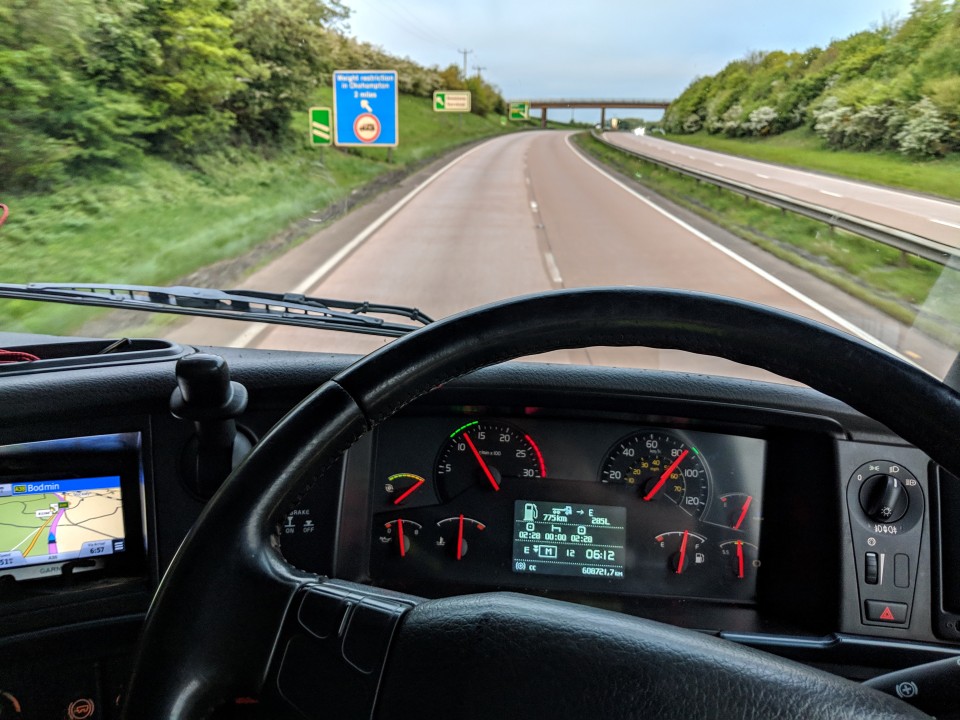
L'associazione di beneficenza per la salute mentale Mind ha pubblicato delle statistiche che rivelano che il 30% delle malattie professionali autodenunciate nel settore dei trasporti e della logistica sono dovute ad ansia, solitudine, stress e depressione. L'associazione ha anche affermato che questo numero potrebbe essere più alto, poiché la maggior parte delle persone non cerca l'aiuto di cui ha bisogno. Inoltre, il 95% delle persone che si assentano dal lavoro per malattia non fornisce il vero motivo dell'assenza dal lavoro se si tratta di salute mentale.

Seguire i suggerimenti e i trucchi di cui sopra può avere un effetto positivo sulla vostra salute mentale. Inoltre, è importante avere conversazioni aperte e oneste con altri camionisti, supervisori o spedizionieri.

L'esercizio fisico può migliorare la guida?

Non solo uno stile di vita sano porta a una migliore salute mentale, ma è dimostrato che può anche rendere i conducenti migliori. Uno studio ha dimostrato che i conducenti a cui è stato chiesto di fare attività fisica quotidianamente hanno mostrato una maggiore facilità nel girare la testa, sono stati in grado di ruotare maggiormente il corpo e sono riusciti a salire in macchina più rapidamente.

Qual è la parte più difficile dell'essere un camionista?

Le lunghe ore di lavoro sembrano essere uno degli aspetti più difficili della guida dei camion. I camionisti devono spesso affrontare lunghi chilometri da percorrere e orari antisociali. Questi lunghi chilometri e gli orari antisociali possono portare a uno stile di vita non sano.

Quanto è malsano essere un camionista?

A causa dello stile di vita di molti camionisti, è statisticamente più probabile che essi abbiano problemi di salute rispetto a chi svolge altre professioni. I camionisti devono spesso affrontare alcuni ostacoli come spazi di lavoro angusti, situazioni di stress, schemi di sonno insoliti e mancanza di cibo nutriente che hanno tutti un'influenza sulla loro salute.

Mantenere uno stile di vita sano come camionista richiede uno sforzo consapevole, ma i benefici che ne derivano ne valgono la pena. I consigli di cui sopra vi permetteranno di prendere il controllo della vostra salute e di migliorare il vostro benessere. Tenete d'occhio altri suggerimenti e trucchi da parte di SNAP.
Condividi con

Anche altri leggono...

Header Image

venerdì 29 maggio 2026 • Consigli per i conducenti

DALLA LOTTA ALLA FORZA: COME DARREN WRIGHT AIUTA I VETERANI A RICOSTRUIRSI UNA VITA ATTRAVERSO LA LOGISTICA

Ellie Aldous

For many veterans, leaving the armed forces can mean losing far more than a career. It can mean losing structure, identity, purpose and community.For Darren Wright, founder of Veterans into Logistics, that transition was deeply personal.After serving nearly six years in the British Army, including a tour of Afghanistan as an air defence gunner, Darren struggled following his own transition into civilian life. He experienced homelessness, mental health challenges, the breakdown of his marriage and eventually served a custodial sentence.Rather than defining him, those experiences became the driving force behind a mission that is now changing lives across the UK.“I rebuilt my life through HGV driving,” Darren explains. “And I realised that if it could help me rebuild my life, it could help other veterans rebuild theirs too.”Founded in 2020, Veterans Into Logistics supports ex-service personnel into sustainable careers within the logistics industry by helping them gain HGV licences, training and employment opportunities.The organisation was inspired in part by the loss of Darren’s friend Jamie Doyle, a former Royal Artillery soldier who tragically died less than six months after leaving the military.“Jamie had served 22 years and was heavily decorated,” Darren says. “But like many veterans, he struggled with the transition. Losing that structure, purpose and identity can hit people incredibly hard.” That loss became the catalyst for action.Creating Opportunities Through LogisticsDarren recognised that logistics offered something many veterans desperately needed: a fast, accessible route into stable employment. “In six weeks, someone can go from having a car licence to becoming an HGV driver earning a strong salary,” he explains. “For many people, especially those who aren’t academic, that can completely change their future.” Veterans Into Logistics now works with veterans, ex-offenders and people from disadvantaged backgrounds to help them access training, employment and long-term career opportunities. The programme focuses not only on skills training, but also on restoring confidence and hope.“When someone comes to us at rock bottom, the first thing we do is give them hope,” Darren says. “Booking that first medical appointment may seem small, but it gives someone belief that something is finally changing.” The results have been transformative.Darren shared the story of one veteran he met sleeping rough in Manchester. After engaging with Veterans Into Logistics, the veteran gained his HGV licence, secured employment and later proudly returned to show Darren the car he had been able to buy through his hard work.Another veteran who had repeatedly cycled in and out of prison after leaving the military was supported into training and employment. He has since rebuilt his life and has not reoffended. “These are people who simply needed the right tools and the right opportunity,” Darren says. “I always say I’d rather give someone a fishing rod than a fish.”Challenging Perceptions of the IndustryDarren is also passionate about changing perceptions around logistics careers.“There’s this misconception that every driving role means being away Monday to Friday sleeping in a truck,” he says. “That’s not true. There are so many different types of driving jobs — local council work, airport operations, supermarket deliveries, highways maintenance, Formula One logistics and more.”Through his growing online platform, Manc on a Mission, Darren is using social media to educate people about the opportunities available in the logistics sector.His TikTok videos, which showcase real drivers and real careers, quickly gained millions of views and have inspired many people outside the military community to explore careers in transport and logistics. “I want to show young people and people from deprived areas that this is a real career path,” Darren explains. “You can build a stable life through this industry.” Driving Change Nationally Darren’s work has also led to national policy change. After discovering that military resettlement funding could not be used for HGV driver training because it was classified below Level 3 education, Darren challenged the rules directly with government ministers.Following his campaign, the policy was changed, allowing service leavers to use Enhanced Learning Credits for HGV driver training.“It was about making sure less academic service leavers weren’t excluded from opportunities,” Darren says.What’s next for Veterans into LogisticsToday, Veterans into Logistics continues to expand its impact through partnerships with logistics companies, prisons, colleges and employers across the UK. Looking ahead, Darren hopes to continue opening doors for veterans and others who may otherwise struggle to access meaningful employment. “If we keep changing lives, that’s success,” he says.If this story resonates with you or someone you know within the industry please reach out to Darren at the Team at Veterans for Logistics.‍Watch the full Interview:

Header Image

venerdì 29 maggio 2026 • Consigli per i conducenti

PARLARE PRIMA CHE IL SERBATOIO SIA VUOTO - ROMPERE LO STIGMA E IL SILENZIO NEL SETTORE DEL TRASPORTO.

Ellie Aldous

Extended periods away from home, long driving hours and tight delivery schedules are all part of a life in the logistics and haulage industry. But behind the movement of goods that keeps the world moving, there is a growing conversation about something far less visible, the mental health of drivers.With limited to no social interaction during their working week, isolation has become one of the biggest challenges among drivers. This is compounded by pressures on the road, such as finding secure parking for their cargo, managing delivery deadlines, navigating traffic, and maintaining concentration while dealing with mental fatigue.For some, the stresses continue past the steering wheel with some struggling with financial worries, physical wellbeing and difficulty maintaining relationships given they are spending a vast amount of time away from loved ones. What makes the issue even more concerning is that 98% of drivers are male, a group that is often less likely to speak openly about mental health. A UK survey by Priory found that 40% of men have never spoken to anyone about their mental health, with many citing embarrassment, stigma, or fear of appearing weak. Experts say this silence can leave drivers feeling even more disconnected and therefore the cycle continues. So, the big question is how can fleet managers help break the cycle? We have provided some top tips from mental health advocates!Regular check in calls with your drivers Recognise and Reward good work Support healthy rest breaks Offering a confidential support services such as wellbeing apps & counselling services Monthly team catch ups. Here are the top 5 tips to give to your driversMove when you can! A 10-minute walk & stretch can boost energy and improve circulation. Stay Hydrated. Dehydration can lead to fatigue! Keep in touch with others – Regular calls and facetime with family and friends can help you feel more connected Eat Balanced Meals – Choosing a healthy alternative helps maintain your energy. Listen to something positive – Pick a podcast or audio book, something interesting to support the long journey.At SNAP, were more than just a payment solution, we’re committed to driving meaningful, positive change across the industry by supporting not only our service partners, but also the hardworking drivers that keep the world moving.Sources: Men's Mental Health: Why 40% of men won't talk about it Priory Office for National Statistics https://www.nomisweb.co.uk/datasets/aps218/reports/employment-by-occupation?compare=K02000001

Header Image

martedì 26 maggio 2026 • Consigli per i conducenti

PROCEDURE DI CARICO E SCARICO SICURE PER PREVENIRE LE LESIONI MUSCOLO-SCHELETRICHE

Evelyn Long

Musculoskeletal injuries are one of the most persistent challenges facing the fleet industry today. Drivers and warehouse staff face constant physical demands during loading and unloading operations. Implementing proper procedures protects your workforce from chronic pain and career-ending injuries while maintaining the efficiency that keeps your business competitive in demanding markets.Musculoskeletal injuries affect individual workers while draining business resources through lost productivity and increased insurance premiums.When an employee sustains an injury, the financial consequences go beyond the immediate medical expenses. Fleet managers must account for sick leave costs, temporary worker expenses and potential compensation claims.In 2023 to 2024, the total costs of workplace ill health and injury , with injury accounting for 28% or £6.5 billion. These figures demonstrate how injuries translate into economic burdens that affect profit margins.Lost productivity compounds these direct costs. When experienced drivers or warehouse staff take extended leave, operations slow down and remaining team members face increased workloads. The ripple effects touch every aspect of fleet operations, from delayed deliveries to strained client relationships.Drivers who develop musculoskeletal disorders face a difficult reality. Chronic back pain, shoulder injuries and repetitive strain can make basic job functions excruciating. Many drivers report that persistent pain affects their ability to focus during long routes, creating additional safety concerns.Musculoskeletal disorders rank among the in Great Britain. These conditions force experienced professionals out of an industry where they've built years of expertise.UK law requires employers to take specific steps to prevent manual handling injuries. Risk assessment forms the foundation of compliance and serves as the first line of defense against workplace strain.Employers must follow the Manual Handling Operations Regulations from the Health and Safety Executive, which establish a clear hierarchy. First, wherever reasonably practicable. Second, assess any hazardous operations that cannot be avoided. Third, reduce the risk of injury from those operations to the lowest level reasonably practicable.This framework pushes businesses to eliminate manual handling risks entirely. Mechanical equipment must be used whenever possible for moving loads. Any unavoidable manual handling requires proper assessment and mandatory control measures.A suitable and sufficient risk assessment examines four key factors in logistics operations:1. Task: The task itself matters, including whether it involves twisting, stooping or repetitive movements. Load: Load characteristics, such as weight, size and stability, play a role. Environment: Environmental conditions, including space constraints, floor surfaces and temperature extremes, affect safety outcomes. Individual: Individual capabilities vary among workers, who bring different strengths and physical limitations to each job. Effective should lead to concrete improvements. Document your findings and share them with your team.When manual handling becomes inescapable, proper technique can reduce injury risk. Training the workforce in correct lifting methods protects them during daily operations.The feet should be , positioned close to the load. Bending at the knees while maintaining a straight back allows you to grip the load firmly with both hands. Leg muscles should power the lift as you rise smoothly. Keeping the load close to the body throughout the movement prevents strain, as does avoiding any twisting motion during the lift or carry.If you need to strain or jerk to move an object, it requires mechanical assistance or team lifting. Never rush a lift to save time. Taking a few extra seconds to position yourself correctly prevents injuries that could sideline you for weeks.Team lifts require clear communication and planning before anyone touches the load. Designate one person as the lift coordinator who will call out instructions. All team members must understand the lift plan, including grip points, the path of movement and where the load will be placed.The coordinator should count down before the lift begins so everyone moves at the same time. Team members must maintain communication throughout, calling out if they need to pause or adjust.Technology offers powerful tools to reduce or eliminate manual handling risks in fleet operations, while equipment investments protect workers, often improving efficiency and throughput.Mechanical equipment, such as pallet jacks, forklifts and conveyors, eliminates many manual handling injuries. Workers' backs and joints no longer bear the physical strain when machines handle the load. Motorizing the effort required to move heavy loads, battery-electric pallet jacks . These machines can handle significantly more weight than manual versions while requiring minimal physical exertion from operators.Forklifts excel at transporting and lifting materials in warehouse and loading dock environments. Operators control heavy loads from a protected position, eliminating back strain and repetitive-motion injuries associated with manual handling.Data-driven scheduling through predictive systems can and potential delay points across your routes. Fleet managers can use these insights to adjust schedules, allocate additional resources during peak periods and give drivers realistic time frames.When drivers feel rushed, they are more likely to cut corners on safety procedures. Proper scheduling eliminates this pressure. Workers have time to use mechanical equipment properly, conduct team lifts when needed and follow correct manual handling techniques.Emerging wearable devices monitor workers' movements and posture throughout their shifts. These devices use to analyze lifting techniques and provide real-time feedback when workers adopt unsafe postures.Similar technology appears in driver safety applications. A telematics app program helped among young drivers by providing real-time feedback. The same principle applies to physical work, where immediate alerts about improper lifting form can prevent cumulative strain injuries.Fleet operations can use prevention through design (PtD) to eliminate hazards during planning. Vehicle specifications that minimize manual handling requirements, warehouse layouts that facilitate safe movement and procurement decisions that prioritize ergonomics all fall under this proactive approach.Vehicle design choices directly impact daily injury risk. Lower load bed heights reduce the distance workers must lift heavy items, while side-loading configurations ease the strain on workers' backs compared to rear-loading designs. Warehouse layout decisions matter as well, with adequate space around loading docks allowing workers to position themselves correctly and use equipment without awkward maneuvering.Equipment provision alone doesn't guarantee safety. Research shows that while 62.2% of construction workers might work at heights requiring protection, equipment. This gap highlights why PtD matters. When you design operations so that the safe method is also the easiest, compliance becomes natural.Preventing musculoskeletal injuries necessitates ongoing attention. Investing in proper equipment, training and operational design protects your workforce while strengthening your business's reputation and future prospects.Discover more from