Guest
Notícias do sector • 4 min ler

As frotas estão a mudar para a integração de veículos autónomos?

Criado: 28/08/2025

Atualizado: 28/08/2025

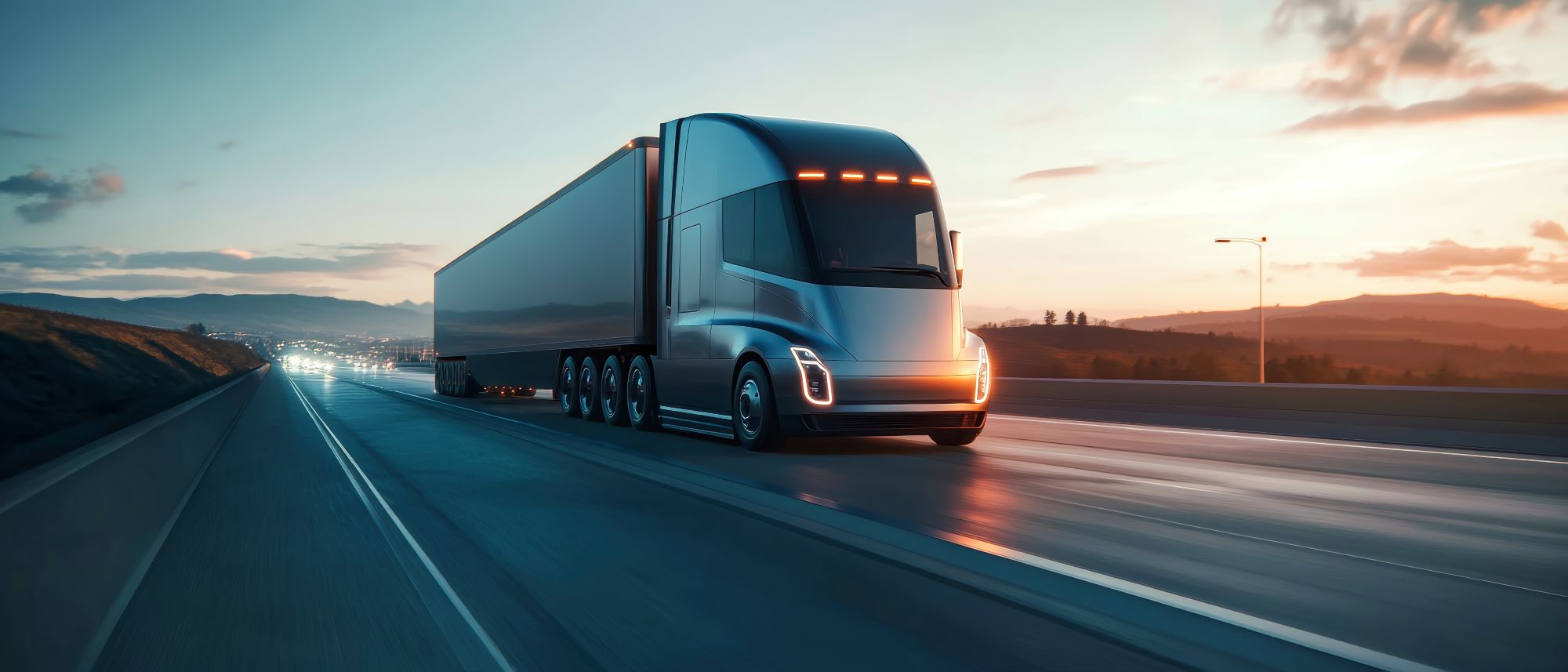
O burburinho em torno dos veículos autónomos já não é tão intenso como antes, mas continua a ser um ruído constante nos ouvidos dos gestores de frotas. O governo do Reino Unido transferiu os planos-piloto de integração de veículos autónomos para 2026, renovando o interesse pela tecnologia. Será que os decisores vão ignorar o ruído ou adotar rapidamente a tecnologia?

O que implica a integração de veículos autónomos?

A integração de veículos autónomos envolve a incorporação de tecnologias de condução autónoma como a inteligência artificial, a deteção de luz e alcance (LiDAR) e câmaras de alta definição em frotas comerciais. Numa escala mais alargada, implica a introdução de carros autónomos nos sistemas de transportes públicos existentes.

Os sistemas de assistência ao condutor incluem a prevenção de colisões, o ajustamento automático da velocidade, a concentração na faixa de rodagem, o controlo de velocidade de cruzeiro adaptativo e o transporte inteligente de passageiros. A automatização parcial e condicional utiliza tecnologias mais avançadas para permitir o funcionamento em modo mãos-livres em determinadas circunstâncias.

A automação de nível 4 e 5 é uma das principais prioridades dos fabricantes de automóveis, mas é difícil de implementar na prática porque os engenheiros têm de ter em conta inúmeros casos extremos. Mesmo com IA avançada, pode ser difícil aperfeiçoar o estacionamento e evitar colisões. E se as marcações no pavimento forem pouco visíveis ou se uma criança correr para a estrada? A adoção depende da reação do automóvel.

As frotas estão a mudar para a integração de veículos autónomos?

De acordo com o Centro de Veículos Conectados e Autónomos, a secretária dos transportes, Heidi Alexander, confirmou que o governo do Reino Unido vai acelerar os planos-piloto comerciais de condução autónoma e apontar para a primavera de 2026. Esta medida poderá [criar cerca de 40 000 postos de trabalho] (https://www.gov.uk/government/news/driving-innovation-38000-jobs-on-the-horizon-as-pilots-of-self-driving-vehicles-fast-tracked) e acrescentar 42 mil milhões de libras à economia do Reino Unido até 2035.

A nova legislação sobre veículos automatizados do país é uma das mais sólidas a nível mundial, lançando as bases para uma adoção comercial generalizada. A maturidade tecnológica é o único obstáculo que resta.

Numa entrevista à McKinsey & Company, Sascha Meyer - CEO da empresa alemã de tecnologia automóvel MOIA - afirmou que a previsão dos prazos de integração dos veículos autónomos tem sido um desafio. Em 2016, a sua empresa MOIA [acreditava que os veículos sem condutor iriam proliferar] (https://www.mckinsey.com/industries/automotive-and-assembly/our-insights/autonomous-vehicles-the-future-of-european-transport) em toda a Europa até 2021.

Desde então, Meyer compreendeu que a adoção implica a conceção de todo um ecossistema e não apenas das funções de condução. De acordo com o novo calendário, os automóveis autónomos estarão presentes nas cidades europeias, na melhor das hipóteses, em 2030. Os engenheiros do MOIA estão a conceber o protótipo para exceder as redundâncias obrigatórias. Desta forma, estarão prontos para operar comercialmente assim que a legislação relevante for aprovada.

Factores que impulsionam a adoção de veículos sem condutor

As frotas de entregas, táxis, serviços públicos e comerciais estão a assistir a um aumento dos sistemas de assistência ao condutor e da automatização inteligente. No entanto, a taxa de penetração permanece relativamente baixa, especialmente considerando o tempo de existência da tecnologia. Quais são os seus planos para a autonomia?

O aumento da eficiência é uma das principais razões pelas quais os gestores de frotas estão a adotar a automatização. Ao contrário dos humanos, as carrinhas sem condutor podem funcionar 24 horas por dia. Com os sistemas telemáticos, podem otimizar a condução e minimizar o tempo de inatividade para melhorar a eficiência do combustível e acelerar as viagens.

A IA é imune ao erro humano, eliminando a travagem brusca e a condução distraída. Não pode ficar fatigada e não tem ângulos mortos. Estas melhorias podem ajudar a reduzir as colisões rodoviárias e os acidentes de viação, o que pode atenuar os dispendiosos pedidos de indemnização dos trabalhadores e reduzir potencialmente os custos dos seguros.

A poupança de custos é outro fator que contribui para isso. Nos níveis 4 e 5, os proprietários podem otimizar as despesas de mão de obra e compensar a falta de condutores. Além disso, os veículos eléctricos sem condutor com capacidade de ligação à rede podem [reduzir os custos de funcionamento em quase 20%] (https://www.sciencedirect.com/science/article/abs/pii/S0306261921008850) ao longo de 30 anos, ajudando a compensar o investimento inicial.

Factores que atrasam a adoção de veículos sem condutor

Para além de esperarem pela maturidade da tecnologia sem condutor, os proprietários de frotas estão a atrasar a adoção devido aos elevados custos iniciais. Incorporar LiDAR, IA e telemática em cada camião é dispendioso. Comprar um novo em vez de o reequipar é igualmente dispendioso. Mesmo que fosse possível encontrar poupanças de custos, a tecnologia está a evoluir rapidamente - o seu investimento pode ficar rapidamente desatualizado.

A segurança é outra preocupação. Os sensores foto-olho são um equipamento de série na maioria das portas de garagem modernas. Impedem que a porta se feche sobre objectos, carros ou pessoas e são utilizados em toda a indústria em lavagens de automóveis e linhas de montagem de automóveis. Embora alguns fabricantes de automóveis utilizem apenas sistemas de câmara, os engenheiros tiveram de ser pioneiros em novas soluções. Atualmente, muitos utilizam LiDAR, sistemas globais de navegação por satélite e sensores ultra-sónicos.

No entanto, mesmo os sistemas mais avançados são falíveis. Não basta que os automóveis automatizados tenham um desempenho tão bom como o das pessoas - têm de ser bem sucedidos onde os condutores humanos falham.

Os sensores existem há anos, mas os engenheiros ainda não os aperfeiçoaram. Podem falhar em casos extremos ou em cenários desconhecidos. Os automóveis de nível 3 só funcionam em auto-estradas divididas, pré-mapeadas e com tempo limpo. Dado que o Reino Unido [registou 150 dias de precipitação] (https://renovated.com/best-net-zero-energy-building-examples-from-around-the-globe/) em 2021, podem ser demasiado pouco fiáveis para serem adoptados em grande escala.

Como pode o Reino Unido preparar-se para os veículos autónomos

A integração dos veículos autónomos pode estar a avançar lentamente, mas está no bom caminho para chegar ao seu destino na próxima década. De acordo com uma pesquisa da Goldman Sachs, até 10% dos carros novos vendidos em todo o mundo poderão ser veículos de Nível 3 até 2030. Prevê-se que o Nível 2 - os que exigem supervisão do condutor - aumente de 20% das vendas em 2025 para 30% em 2027.

Os gestores devem considerar o âmbito e o custo da integração da frota autónoma para determinar se a adoção antecipada é a melhor opção para eles. É provável que resulte em poupanças a longo prazo, mas esperar pode ser mais compensador porque dá tempo para o avanço tecnológico. Se a análise de custo-benefício não for convincente, devem considerar uma atualização gradual à medida que os carros avariam.

Aqueles que avançam com a adoção devem desenvolver políticas de funcionamento, armazenamento, segurança e actualizações. Estas regras devem variar consoante o nível de automatização. Por exemplo, os condutores de camiões de nível 3 devem ter de prestar toda a atenção à estrada para poderem assumir o controlo, se necessário.

Educar os funcionários sobre o seu papel é essencial para uma implementação bem sucedida. Um estudo da Volkswagen Financial Services concluiu que seis em cada 10 pessoas se consideram melhores condutores do que os veículos autónomos, pelo que é pouco provável que sobrestimem as capacidades do sistema sem condutor. No entanto, devem receber formação explícita sobre as melhores práticas e os hábitos a evitar.

O futuro da integração de frotas autónomas no Reino Unido

As máquinas de condução autónoma estão a trabalhar arduamente em portos e armazéns em toda a Europa. Automatizar os veículos nas auto-estradas é mais difícil porque não estão numa via fixa. Além disso, têm de ter em conta variáveis como as condições meteorológicas e outros condutores. A delimitação geográfica, a telemática e a IA estão a acelerar a adoção, tornando previsível o imprevisível. No mínimo, estas soluções melhoram os tempos de resposta e atenuam os erros humanos, demonstrando que estas tecnologias anteriormente não comprovadas são tão capazes como os condutores humanos.

Para já, a automatização total que elimina a necessidade de atenção humana continua a ser teórica. No entanto, a condução mãos-livres é uma realidade e os sistemas sem condutor poderão em breve tornar-se um equipamento de série nas frotas comerciais. À medida que os fabricantes de automóveis aperfeiçoam as funções de condução, os proprietários de frotas devem dar prioridade ao mapeamento de rotas, à gestão dos condutores e à programação da manutenção.

Descubra mais em [Renovated Magazine] (https://renovated.com/).

Partilhar para

Outros também lêem...

Header Image

quarta-feira 15 abril 2026 • Notícias do sector

ROUBO DE CARGA NA EUROPA: PORQUE ESTÁ A AUMENTAR E COMO AS FROTAS PODEM REDUZIR O RISCO

Guest

Cargo theft is a growing threat across Europe. What was once seen as an occasional disruption is now a more persistent and organised risk to road transport, affecting fleets, drivers and the wider supply chain. Reported losses and incidents have risen sharply, with one widely cited industry figure pointing to a in recent years. In alone, 557 cargo crimes were recorded across 38 countries in the TAPA EMEA Intelligence System, and even though values were disclosed for fewer than one in five incidents, those 100 cases still totalled more than €43 million.In this article, we explore the current trends and what fleet managers and operators can do to minimise their risks.Food and beverage shipments are among the most commonly targeted categories in Europe, accounting for . also rank highly. These goods are attractive because they are easy to move, easy to sell and often difficult to trace once they enter secondary markets.The recent on its way from Italy to Poland is a useful example. Nestlé said the missing load amounted to roughly 413,793 bars, showing how quickly a mainstream consumer shipment can become a target when moving across borders.These shipments are attractive targets for organised groups because they can be offloaded quickly, resulting in rapid returns. Cargo crime often happens while loads are moving. report found that hijackings accounted for 21% of incidents, while 41% of thefts happened in transit. That is a reminder that risk does not begin when a truck parks for the night. It can begin long before a vehicle stops for the night, particularly on exposed corridors or routes where load visibility and security controls are weaker.Parked vehicles remain a major point of vulnerability. In the UK, Munich Re reported that nearly half of all thefts take place at unsecured roadside parking and rest areas. Across Europe, unsecured roadside locations and rest areas continue to feature prominently in cargo crime reporting, especially where drivers have limited alternatives and secure sites are full.Some of the most concerning incidents show coordination. recently documented attacks in Germany in which dozens of trucks were targeted in a single night along the A1 corridor. In one November 2023 incident, 67 trucks had trailers slashed at service and rest areas including Ostetal South and Grundbergsee South. Similar attacks had already taken place on the same route months earlier.Germany remains one of the clearest hotspots, largely because of the scale of freight passing through the country. Analysis showed that in 2023, more than double France in second place. Other recurring hotspots include France, Italy, Spain and the United Kingdom. That pattern reflects the reality of European freight movement. Dense logistics networks, major freight hubs and heavily used motorways create more opportunities for organised criminals, especially when secure parking capacity fails to keep pace with demand.Munich Re warns that cargo thieves are increasingly using more sophisticated methods, including identity deception, cyber-enabled scams and other tactics that bypass traditional controls. Wider points to GPS jamming, paperwork manipulation and shipment diversion as part of that shift.A stolen load may now begin with compromised data, a fraudulent carrier, a diverted instruction or a vehicle whose movements can no longer be tracked properly. For fleets, that means theft prevention now involves more than physical security. It also requires tighter dispatch processes, better control over shipment data and clearer real-time visibility.The most obvious impact is financial. Stolen goods lead to lost goods, insurance claims and disruption. But the direct value of the missing load is only part of the problem. Delayed deliveries, vehicle damage, missed slots and customer dissatisfaction can all push the true cost much higher. There is also a human cost. Drivers may face intimidation, confrontation or the shock of discovering that their vehicle has been tampered with while they were resting. Even where there is no direct violence, exposure to insecure roadside stops creates stress, fatigue and a sense of vulnerability that can affect driver welfare and retention. Operationally, the knock-on effects spread quickly through the supply chain. A single theft can mean missed delivery windows, rerouted vehicles, stock shortages and added pressure on already stretched teams. For temperature-sensitive, time-critical or high-value loads, the consequences can multiply fast.There is no single fix, but fleets can reduce exposure with a more structured approach to planning, parking and security.Secure parking remains one of the clearest areas for improvement. TAPA’s Parking Security Requirements framework provides an internationally recognised benchmark for secure truck parking, helping operators assess which locations offer stronger protection for vehicles, loads and drivers. Choosing accredited sites will not eliminate cargo theft, but it can significantly reduce the opportunity for organised criminals to strike.In practice, that may mean stopping earlier than planned to reach a safer site rather than pushing on to an unsecured lay-by. While that can feel less efficient in the moment, it is often the more resilient choice.For fleets, the challenge is not just knowing secure parking matters but being able to access it easily. SNAP helps bridge that gap by giving drivers and operators better visibility of trusted parking options across the UK and Europe, making it simpler to plan and reserve safer stops from the outset.Read more: Cybersecurity now sits alongside physical security in any serious theft-prevention strategy. Tracking, geofencing and anti-jamming tools can all help, but only if they are backed by clear processes. Fleets should review how shipment data is shared, who can alter route instructions, how delivery paperwork is verified and what happens if a vehicle suddenly disappears from view. Drivers are often the last line of defence, but they should not carry the burden alone. Clear escalation procedures, regular check-ins, secure rest planning and training on suspicious activity all matter. One of the biggest structural issues behind cargo theft is the shortage of secure truck parking. When drivers cannot find protected sites with proper lighting, access control and welfare facilities, they are more likely to end up in the very locations thieves are already targeting. SNAP has trained working to accredit more parking sites across the UK and continental Europe, helping expand the availability of secure truck parking and reduce opportunities for organised theft.For fleets, the challenge is not just understanding risk, but building safer stopping decisions into everyday operations. At SNAP, we help drivers and operators identify trusted parking options across the UK and Europe, making it easier to plan routes with security and driver welfare in mind.

Header Image

quarta-feira 11 março 2026 • Notícias do sector

ESTACIONAMENTO DE CAMIÕES NA EUROPA: AS REGRAS, AS LACUNAS, OS RISCOS

Guest

Ask most fleet operators what makes life harder than it needs to be and you’ll hear the same answer across Europe: truck parking.Drivers have to stop. Hours rules and rest requirements make that non-negotiable. But on many of Europe’s busiest transport corridors, finding a safe, legal place to park is still uncertain. Capacity is low, security varies widely and most urban hubs aren’t built with HGVs in mind.That pressure has consequences. When designated areas are full, drivers are pushed towards places that were never intended for HGV parking: slip roads, access ramps and industrial estates. Compliance becomes a choice between two risks: stop where you shouldn’t, or keep driving when you shouldn’t.When truck parking overflows into unsuitable places, the environment becomes dangerous: poor visibility, high speeds, unpredictable manoeuvres and limited escape routes. starkly in February 2026, reporting fatal crashes in Germany and Belgium involving stationary lorries. The article challenges the easy explanation of “illegal parking” and points back to the underlying cause: drivers were out of driving time and the spaces were gone.In addition, a shortage of truck parking in Europe doesn’t just mean “no space”; it often means the only available space is poorly lit, unmonitored and isolated. That elevates the risk of theft and driver harm, which can have a knock-on effect for supply chain reliability.Poor parking provision also affects workforce sustainability. When drivers face uncertainty around legal, safe stopping, it makes the role harder and less attractive – compounding .For a long time, the conversation about truck parking focused on enforcement: where you can’t park and the penalties that follow. Increasingly, the focus is moving towards provision: where drivers can stop safely, reliably and legally. Under revised Trans-European Transport Network (TEN-T) rules, EU Member States must ensure the development of certified secure parking . The same requirement sets expectations for the location of truck parking. It must be immediately on the network or within 3km of an exit, which will have benefits for route planning. Alongside this shift, the European Commission positions safe and secure truck parking as a priority within its Intelligent Transport Systems work, including the need for to help drivers locate suitable sites.But the EU isn’t just asking Member States to add more truck parking spaces. It’s also defining what “safe and secure” means. In April 2022, the European Commission adopted EU standards for , categorising sites into four security levels: bronze, silver, gold and platinum. The intention is to create transparency for drivers and fleets, and to support investment by giving operators a clear target to design and audit against.This sits against a significant capacity gap. A European Commission study estimates a across the bloc, with the gap potentially rising towards half a million by 2040 if the network does not scale at the pace freight demand requires.Looking at more practical aspects of the situation, what are HGV parking rules and regulations in Europe?At first glance, HGV parking rules across Europe look consistent: Motorways are not designed to absorb overflow parking. Hard shoulders exist for emergencies and safety buffers. Access ramps are not for planned stopping.Urban areas add a layer of complexity. Local restrictions and enforcement are common because HGV parking competes with residents, retail and public space – and because badly parked vehicles create safety risks.Rules around HGV parking in the UK are clear. Trucks should use designated areas such as motorway services, truckstops and lorry parks. Conversely, drivers must avoid parking in locations that create risks, such as pavements, verges and central reservations. Restrictions around parking in residential areas vary by local authority, so it’s vital to check if this is unavoidable. The major constraint is supply. The RHA’s estimate of an , with very high utilisation on key routes, helps explain why informal and unsafe parking persists even where drivers know it isn’t ideal. In 2022, the Department for Transport across England, aimed at better rest areas and more secure parking, framed as part of a broader programme to improve roadside facilities.In Germany, motorway stopping rules are anchored in the (StVO), which makes clear that stopping on the autobahn – including the hard shoulder – is prohibited except in emergencies. That means running out of driving time is not treated as justification. Fines increase if obstruction or danger is caused, and enforcement is active on heavily used corridors. Poland follows the familiar motorway rule that hard shoulders are reserved for breakdowns and emergencies. The nuance appears within cities, where tonnage-based entry restrictions and are common. Overnight HGV parking in urban areas can require municipal approval and enforcement varies between municipalities. For cross-border fleets, that means treating urban stopping as permission-led rather than assumed.France reinforces the same principle through the . Articles R417-9 and R417-10 classify dangerous or obstructive parking offences, and stopping on autoroute carriageways or shoulders is prohibited except in cases of absolute necessity. Penalties can include fines and licence points.However, publishes dedicated information for secure truck parking on its network, reflecting how motorway operators guide HGV stopping into appropriate locations.Spain’s prohibits stopping on motorway shoulders except in emergencies, aligning with broader European practice. Additional complexity lies at municipal level. Many cities operate local overnight bans or restrict HGV parking to designated industrial zones, with enforcement handled by local police rather than motorway authorities. That creates a layered compliance environment: legal on the motorway network does not automatically mean legal in urban areas.To highlight positive developments, that a truck parking facility in La Jonquera became the first in Spain to receive TAPA certification, describing measures such as controlled access, fencing, lighting and continuous monitoring.Italy distinguishes clearly between motorway carriageways, ramps and designated service areas. Stopping on access or exit ramps is explicitly prohibited, and enforcement around motorway infrastructure is consistent. Importantly, Italy differentiates between aree di servizio (full service areas with facilities) and simpler rest or parking lay-bys, which may not support overnight welfare needs. However, Italy is also seeing new secure truck parking developments focused on welfare and security, reflecting the wider European momentum towards better provision.Across Europe, an additional regulatory layer now shapes truck parking decisions: Low Emission Zones (LEZs) and restricted urban traffic zones. Cities in France (Crit’Air), Germany (Umweltzonen), Spain (Zonas de Bajas Emisiones) and Italy (ZTL areas) impose vehicle-class or permit requirements that can apply even to stationary vehicles within the zone. A driver who parks overnight in a restricted area without the correct classification or registration risks fines – even if the stop itself is otherwise legal. Across Europe in 2026, the rules are clear. The constraint is capacity, especially near urban hubs and on high-volume corridors. For fleets, this has a practical impact: European truck parking can’t be left to chance at the end of a shift. It needs to be planned with the same seriousness as , routing, driver hours and security – because when the network fails to provide legal space, every other compliance system gets squeezed.SNAP can help. .

Header Image

quinta-feira 26 fevereiro 2026 • Notícias do sector

MULHERES NO SECTOR DOS TRANSPORTES: DESBLOQUEAR TALENTOS INEXPLORADOS

Guest

Across the UK, around . They transport food to supermarkets, materials to construction sites and goods to ports and distribution centres. They underpin daily life and economic stability, forming a critical part of the UK’s national infrastructure.Yet only around . That amounts to roughly one per cent of the UK HGV workforce, according to reporting by . For an industry facing long-term recruitment pressure, that figure raises important questions about where future talent will come from and how the sector presents itself to potential entrants.There are signs of progress, however. The percentage of from 6.7% in 2011/12 to 9.7% by 2021/22. Over the past decade, women securing Category C and C+E licences increased by 144%, according to SME Web. More women are clearly choosing to train and qualify. The pipeline is widening, but the proportion of women behind the wheel remains marginal.Women have not been entirely absent from road transport. One of the earliest recorded female truck drivers was, who began driving heavy vehicles in the United States in 1918. During wartime periods in both the US and the UK, women stepped into transport roles out of necessity. Then, in the 1960s, became the UK’s first long-distance lorry driver, often working 100-hour weeks.However, outside exceptional circumstances, haulage has traditionally been male dominated. Cultural perceptions, physical assumptions about the work and the lifestyle associated with long distance driving have all played a part. Only in recent decades has participation begun to shift in a more sustained way.The reasons for low female participation are not limited to awareness. Structural and practical barriers remain.Facilities are a big concern. Professional drivers depend on secure parking, clean rest areas and appropriate welfare provision. For many years, roadside infrastructure has struggled to meet demand across the board. When rest stops are inadequate, poorly lit, feel unsafe or lack privacy, this can discourage women from joining the sector.Working patterns also play a role. Long-haul journeys can involve overnight stays and time away from home. While many drivers value the independence that comes with the role, the perception of work-life balance may deter some women, especially those with caring responsibilities. There is also the issue of visibility. When only one per cent of drivers are women, prospective candidates may struggle to see themselves in the sector. In addition, menopause symptoms such as fatigue, sleep disruption, hot flushes and anxiety can be difficult to manage in roles that involve long hours, limited access to private facilities and time away from home. In sectors where welfare provision is already under pressure, a lack of understanding or practical support can lead to experienced drivers leaving the workforce.For haulage, this is not a peripheral issue. Retaining experienced drivers is as important as attracting new entrants. Change is not confined to driving roles. Across the broader transport and logistics ecosystem, women are increasingly visible in management, planning and policy functions.The shows that leadership representation by women has increased from 26% to 36% in recent years. However, much of this growth has taken place outside core operational functions. Senior representation within frontline transport roles remains comparatively limited.Several industry organisations are addressing this gap. Women in Transport offers mentorship opportunities, while everywoman recognises excellence through its , raising the profile of female professionals across the sector. The Chartered Institute of Logistics and Transport has also announced a new , aimed at supporting career progression and professional networks.Alongside this, community initiatives such as demonstrate that interest and engagement are growing. The spotlighting female drivers and employees, further increasing visibility. Collectively, these platforms help challenge outdated perceptions and provide practical support for women entering or advancing within the industry.For the UK haulage sector, this is not just a diversity conversation. It is a strategic one.Previous industry reporting has highlighted the scale of recruitment pressure across logistics. The that tens of thousands of new drivers will be required in the coming years to maintain supply chain stability. At the same time, the existing workforce is ageing.With only one per cent of drivers currently women, a significant proportion of the potential labour market remains underrepresented. If participation rates were to move closer to parity with the wider workforce, the impact on recruitment could be substantial.There is also evidence that inclusive cultures contribute to improved retention and engagement. A sector that demonstrates visible progression pathways, fair access to training and appropriate welfare provision is likely to appeal more broadly across demographics.Progress will not accelerate through awareness alone. Structural changes are needed.Investment in safe, well maintained roadside facilities is fundamental. Secure parking, adequate lighting and clean welfare amenities benefit all drivers and remove avoidable barriers to entry.Flexible working models, where operationally feasible, can broaden appeal. This may include regional route design, job sharing arrangements or clearer progression pathways from warehouse and planning roles into driving positions.Funded licence pathways and apprenticeships can also reduce financial barriers. As previously outlined, the cost of training can be significant. Targeted funding initiatives aimed at underrepresented groups can support a more balanced intake.Finally, transparency around workforce data matters. Publishing gender breakdowns, monitoring progression rates and setting measurable objectives signal that inclusion is being taken seriously.International Women’s Day provides an opportunity to reflect on how far the UK haulage industry has come and how far it still has to go. The rise in female licence acquisition and test pass rates demonstrates that interest exists. Leadership representation is improving in some areas and support networks are expanding. However, the scale of underrepresentation remains stark.Haulage is central to national resilience. It keeps shelves stocked, infrastructure projects supplied and trade flowing. Ensuring that this workforce reflects the full breadth of available talent is not simply a question of equity. It is a matter of long term sustainability.Supporting women in haulage also means improving the day-to-day realities of life on the road. Access to secure parking, well-lit rest areas and appropriate facilities is fundamental to retention and wellbeing for all drivers. SNAP’s intruck app helps all drivers locate and book trusted truck stops across the UK and Europe, giving fleets greater visibility and drivers greater confidence wherever their route takes them. .