Guest
Sfaturi pentru șoferi • 4 min citește

Cum să devii șofer HGV

Creat: 16.08.2024

Actualizat: 10.10.2024

O slujbă de șofer de TIR poate fi o carieră atractivă, dar necesită un anumit set de abilități - atât pe șosea, cât și atunci când cauți oferte. Cum se poate deveni șofer de TIR? Ce documente sunt necesare și cât durează obținerea unui permis de conducere pentru vehicule grele? Continuați să citiți pentru a afla totul despre locurile de muncă pentru șoferi HGV, atât pentru șoferii nou calificați, cât și pentru automobiliștii experimentați.

Locuri de muncă HGV - deficitul de șoferi afectează în continuare sectorul transporturilor

Înainte de a învăța cum să devii șofer HGV, este important să aruncăm o privire la piață în ansamblu. Ultimii ani au fost o perioadă dificilă pentru industria transporturilor din Regatul Unit - în special 2021, când efectele Brexit și COVID au afectat puternic disponibilitatea locurilor de muncă. De atunci, salariile au crescut constant, fiind în prezent cu 30% mai mari în medie decât în 2021. Această schimbare este considerată o parte majoră a efortului de a combate deficitul de șoferi și de a face ca locurile de muncă în domeniul vehiculelor grele să fie mai atractive pentru șoferii interesați.

În prezent, numărul total de șoferi de camioane din Regatul Unit este puțin peste 300 000, revenind la nivelurile de dinainte de pandemie. Cu toate acestea, deficitul de șoferi este încă vizibil - în ciuda faptului că noile angajări umplu din nou încet piața, peste 40 % din companiile cu flote sunt încă afectate. Deși este o situație dificilă pentru întreprinderi, acest lucru creează, de asemenea, noi oportunități de angajare pentru șoferii potențiali, cu experiență și nou calificați deopotrivă.
De ce sunt importante locurile de muncă în domeniul vehiculelor grele de transport?

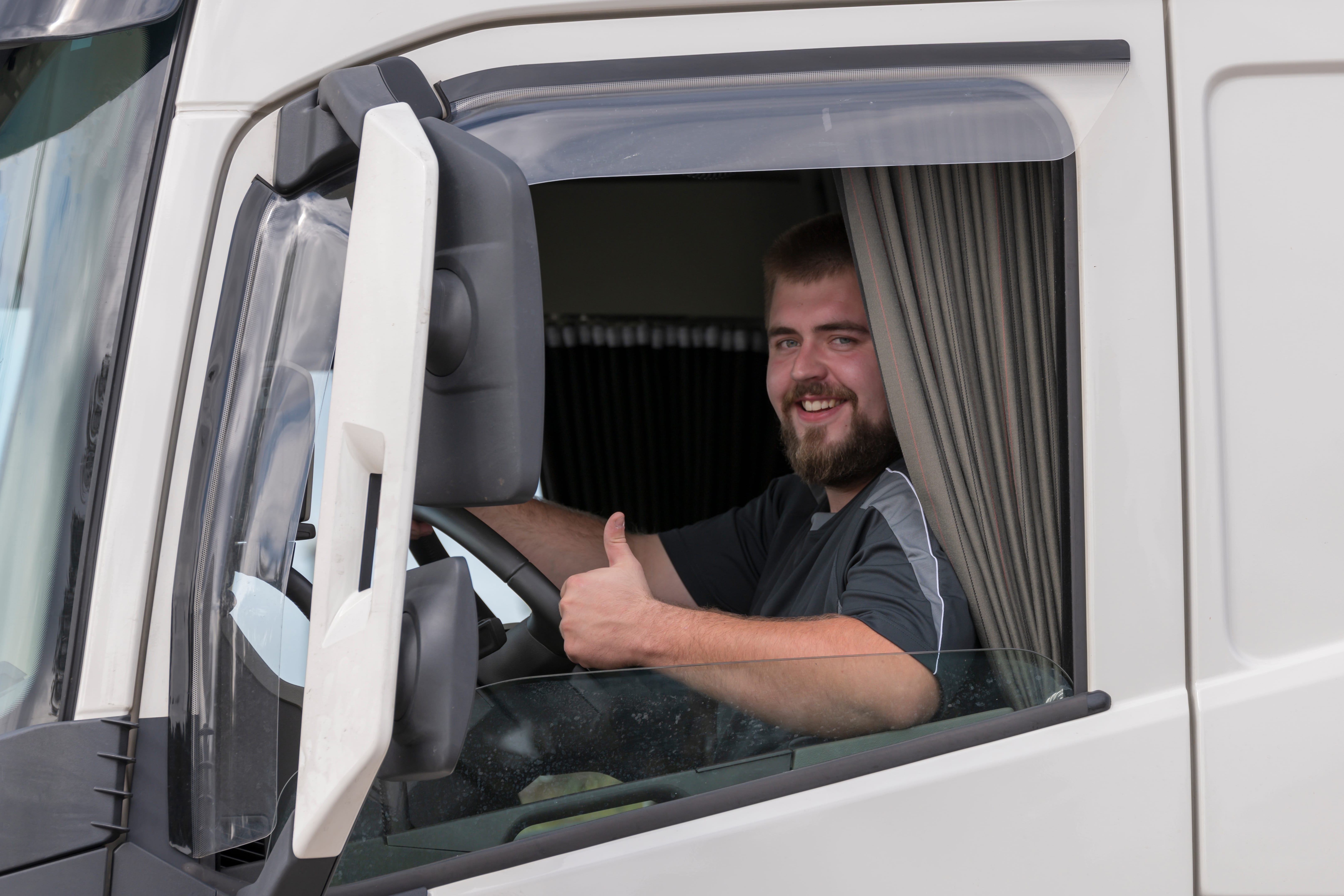
În ciuda faptului că modurile alternative de transport devin din ce în ce mai populare în rândul companiilor, transportul rutier de mărfuri ocupă în continuare primul loc în transportul de mărfuri în Regatul Unit și în Europa. Chiar în Regatul Unit, peste 65% din mărfuri sunt transportate pe cale rutieră. Acest lucru este vizibil în special în anumite sectoare care necesită flexibilitate și posibilitatea de a ajunge în locuri inaccesibile pe cale aeriană sau maritimă, cum ar fi transportul de alimente și produse agricole. În acest domeniu, ponderea transportului rutier se ridică la 98% - statistici similare sunt vizibile în cazul transportului de utilaje. În plus, locurile de muncă în domeniul transportului de marfă nu vor dispărea prea curând; chiar și în condițiile în care conducerea autonomă este destul de avansată în fazele de testare, șoferii buni vor continua să fie un atu important în toate sectoarele.

Ce face atractive locurile de muncă în domeniul vehiculelor grele?

Locurile de muncă în domeniul transportului rutier de marfă sunt însoțite de multe provocări, dar, în același timp, pot fi foarte interesante și atractive. Deoarece este nevoie de șoferi în multe domenii, lucrătorii cu competențele necesare pot găsi cu ușurință locuri de muncă stabile și bine plătite. Este o carieră care oferă o mare flexibilitate și vă permite să vizitați multe locuri interesante. În plus, este un loc de muncă cu autosupraveghere, ceea ce îl face perfect pentru persoanele cărora le place să lucreze mai mult singure. Este, de asemenea, o carieră în care puteți simți cu adevărat un sens al scopului - fără șoferii de camioane, ar fi mult mai dificil să obținem tot ceea ce mâncăm, bem, purtăm și folosim zilnic. Șoferii experimentați pot câștiga mai mult de 45 000 de lire sterline pe an, în timp ce rata de pornire este de obicei de aproximativ 25 000 de lire sterline. Ceea ce merită, de asemenea, subliniat este faptul că, de obicei, nu există cerințe educaționale în industria vehiculelor grele de transport, ceea ce facilitează intrarea pe piață chiar și la o vârstă fragedă.
Cum pot deveni șofer de TIR?

Dacă sunteți în căutarea unei cariere stabile, interesante, cu o remunerație foarte bună, probabil vă întrebați cum puteți deveni șofer de TIR. Cu excepția cazului în care sunteți deja calificat, va trebui să obțineți permisul corect înainte de a începe să lucrați. Unele companii ar putea oferi programe de sprijin pentru a-i ajuta pe viitorii șoferi să obțină atestatele necesare. Cum se poate deveni șofer HGV? În primul rând, va trebui să îndepliniți aceste trei cerințe:

  • Să aveți peste 18 ani.
  • Să dețină un permis auto complet.
  • Să promovați examenul Driver CPC (Certificate of Professional Competency) și să vă obțineți certificatul.

În plus, permisele de conducere a camioanelor sunt disponibile în mai multe clase, care dictează ce tip de vehicul puteți conduce. Iată structura de bază:

  • C1 (clasa 3 sau 7,5 tone) - cele mai mici vehicule utilizate în transportul rutier, cântărind între 3.500 și 7.500 kg.
  • C1+E (7,5 tone plus remorcă) - vehicule care aparțin categoriei C1 împreună cu remorci care cântăresc mai mult de 750 kg.
  • C (clasa 2 sau "rigid") - vehicule de peste 7,5 tone, cu caroserii rigide.
  • C+E (clasa 1 sau "artic") - orice combinație de vehicule grele și remorcă, până la o greutate de 44 de tone.

Deoarece clasele superioare de permis au mai multe cerințe, și remunerația este mai mare - cele mai bine plătite locuri de muncă pot fi găsite pentru șoferii cu certificare C+E.

Cum să devin șofer clasa 1?

Pentru a vă confirma calificările, trebuie să treceți prin câteva zile de formare și să susțineți un test. În primul rând, însă, va trebui să învățați cum să deveniți șofer de clasa 2, deoarece permisul C+E este disponibil numai pentru șoferii care dețin permise pentru vehicule aparținând categoriei C. Procesul este aproximativ același, dar cerințele sunt mult mai reduse: formarea pentru clasa 2 este disponibilă pentru oricine deține un permis de conducere obișnuit cu vârsta de peste 18 ani.

Cum să devii șofer de TIR - pas cu pas

Rezumând informațiile despre permise, dacă doriți să deveniți șofer de TIR, va trebui să:

  1. Obțineți permisul de conducere obișnuit.
  2. Decideți care categorie vă interesează cel mai mult - merită subliniat faptul că deținerea unui permis C+E vă oferă cele mai multe oportunități, iar procesul de trecere de la C la C+E este destul de simplu.
  3. Înscrieți-vă la cursurile de formare C1, C1+E sau C.
  4. Finalizați formarea și susțineți testul necesar pentru a obține permisul C1, C1+E sau C.
  5. Dacă doriți să vă dezvoltați și mai mult cariera, înscrieți-vă pentru licența C+E. Procesul de formare este destul de scurt și vă permite să obțineți rapid permisele necesare.

Cât durează să deveniți șofer de TIR?

Fără a lua în considerare eventualele întârzieri, întregul proces nu durează de obicei mai mult de șase până la opt săptămâni. Partea de instruire practică durează doar cinci zile. Poate vă întrebați, de asemenea, cât costă să deveniți șofer de TIR - costul total, excluzând formarea, este de obicei cuprins între 250 și 300 de lire sterline (luând în considerare costurile examinării medicale). Formarea este mult mai costisitoare și ajunge între 1 000 și 2 000 de lire sterline, în funcție de ofertele disponibile. În ultimii ani, a existat un program guvernamental pentru finanțarea formării șoferilor de camioane HGV, dar acesta s-a încheiat în 2023 - cu toate acestea, încă mai puteți găsi oferte similare în cadrul unor companii care caută șoferi.

Cum să devii șofer HGV. Pregătirea unui CV bun

În afară de cerințele privind permisul, va trebui, de asemenea, să vă prezentați companiilor care doresc să angajeze șoferi. Nu uitați să faceți documentul clar, lizibil și să includeți cât mai multe informații despre abilitățile și certificatele dumneavoastră. Păstrați informațiile concise și relevante, concentrându-vă asupra aspectelor importante pentru un loc de muncă de șofer de camion. Includeți datele de contact, profilul personal, experiența profesională și calificările HGV dacă ați trecut deja certificatele.

Unde și cum să aplicați pentru locuri de muncă în domeniul vehiculelor grele

Puteți căuta locuri de muncă în domeniul vehiculelor grele în multe locuri, inclusiv anunțuri locale, portaluri de locuri de muncă online și chiar grupuri de socializare. Companiile pot utiliza diverse metode de aplicare, dar procesul obișnuit constă în trimiterea CV-ului către recrutor și așteptarea apelului înapoi pentru a discuta despre post. Amintiți-vă că și cei mai buni candidați se confruntă cu eșecuri - este important să vă păstrați capul sus și să continuați să încercați, precum și să solicitați orice informații care vă pot îmbunătăți șansele pe viitor.

SNAP Account - asistență profesională pentru operatorii de camioane

Mulți operatori de flote utilizează diverse tipuri de software TMS (Transport Management System) pentru a eficientiza operațiunile zilnice. O astfel de soluție este SNAP, cu suport pentru găsirea parcărilor pentru camioane și a locurilor de parcare dedicate depozitelor, precum și pentru facilitarea spălării camioanelor și a plății taxelor de drum. În calitate de șofer, probabil că veți utiliza zilnic astfel de software - merită să vă informați cu privire la posibilități înainte de a începe să lucrați.
Share to

Alții citesc de asemenea...

Header Image

vineri 29 mai 2026 • Sfaturi pentru șoferi

DE LA LUPTĂ LA PUTERE: CUM ÎI AJUTĂ DARREN WRIGHT PE VETERANI SĂ ÎȘI REFACĂ VIAȚA PRIN LOGISTICĂ

Ellie Aldous

For many veterans, leaving the armed forces can mean losing far more than a career. It can mean losing structure, identity, purpose and community.For Darren Wright, founder of Veterans into Logistics, that transition was deeply personal.After serving nearly six years in the British Army, including a tour of Afghanistan as an air defence gunner, Darren struggled following his own transition into civilian life. He experienced homelessness, mental health challenges, the breakdown of his marriage and eventually served a custodial sentence.Rather than defining him, those experiences became the driving force behind a mission that is now changing lives across the UK.“I rebuilt my life through HGV driving,” Darren explains. “And I realised that if it could help me rebuild my life, it could help other veterans rebuild theirs too.”Founded in 2020, Veterans Into Logistics supports ex-service personnel into sustainable careers within the logistics industry by helping them gain HGV licences, training and employment opportunities.The organisation was inspired in part by the loss of Darren’s friend Jamie Doyle, a former Royal Artillery soldier who tragically died less than six months after leaving the military.“Jamie had served 22 years and was heavily decorated,” Darren says. “But like many veterans, he struggled with the transition. Losing that structure, purpose and identity can hit people incredibly hard.” That loss became the catalyst for action.Creating Opportunities Through LogisticsDarren recognised that logistics offered something many veterans desperately needed: a fast, accessible route into stable employment. “In six weeks, someone can go from having a car licence to becoming an HGV driver earning a strong salary,” he explains. “For many people, especially those who aren’t academic, that can completely change their future.” Veterans Into Logistics now works with veterans, ex-offenders and people from disadvantaged backgrounds to help them access training, employment and long-term career opportunities. The programme focuses not only on skills training, but also on restoring confidence and hope.“When someone comes to us at rock bottom, the first thing we do is give them hope,” Darren says. “Booking that first medical appointment may seem small, but it gives someone belief that something is finally changing.” The results have been transformative.Darren shared the story of one veteran he met sleeping rough in Manchester. After engaging with Veterans Into Logistics, the veteran gained his HGV licence, secured employment and later proudly returned to show Darren the car he had been able to buy through his hard work.Another veteran who had repeatedly cycled in and out of prison after leaving the military was supported into training and employment. He has since rebuilt his life and has not reoffended. “These are people who simply needed the right tools and the right opportunity,” Darren says. “I always say I’d rather give someone a fishing rod than a fish.”Challenging Perceptions of the IndustryDarren is also passionate about changing perceptions around logistics careers.“There’s this misconception that every driving role means being away Monday to Friday sleeping in a truck,” he says. “That’s not true. There are so many different types of driving jobs — local council work, airport operations, supermarket deliveries, highways maintenance, Formula One logistics and more.”Through his growing online platform, Manc on a Mission, Darren is using social media to educate people about the opportunities available in the logistics sector.His TikTok videos, which showcase real drivers and real careers, quickly gained millions of views and have inspired many people outside the military community to explore careers in transport and logistics. “I want to show young people and people from deprived areas that this is a real career path,” Darren explains. “You can build a stable life through this industry.” Driving Change Nationally Darren’s work has also led to national policy change. After discovering that military resettlement funding could not be used for HGV driver training because it was classified below Level 3 education, Darren challenged the rules directly with government ministers.Following his campaign, the policy was changed, allowing service leavers to use Enhanced Learning Credits for HGV driver training.“It was about making sure less academic service leavers weren’t excluded from opportunities,” Darren says.What’s next for Veterans into LogisticsToday, Veterans into Logistics continues to expand its impact through partnerships with logistics companies, prisons, colleges and employers across the UK. Looking ahead, Darren hopes to continue opening doors for veterans and others who may otherwise struggle to access meaningful employment. “If we keep changing lives, that’s success,” he says.If this story resonates with you or someone you know within the industry please reach out to Darren at the Team at Veterans for Logistics.‍Watch the full Interview:

Header Image

vineri 29 mai 2026 • Sfaturi pentru șoferi

VORBIȚI ÎNAINTE CA REZERVORUL SĂ FIE GOL - RUPEȚI STIGMATUL ȘI TĂCEREA DIN INDUSTRIA DE TRANSPORTURI.

Ellie Aldous

Extended periods away from home, long driving hours and tight delivery schedules are all part of a life in the logistics and haulage industry. But behind the movement of goods that keeps the world moving, there is a growing conversation about something far less visible, the mental health of drivers.With limited to no social interaction during their working week, isolation has become one of the biggest challenges among drivers. This is compounded by pressures on the road, such as finding secure parking for their cargo, managing delivery deadlines, navigating traffic, and maintaining concentration while dealing with mental fatigue.For some, the stresses continue past the steering wheel with some struggling with financial worries, physical wellbeing and difficulty maintaining relationships given they are spending a vast amount of time away from loved ones. What makes the issue even more concerning is that 98% of drivers are male, a group that is often less likely to speak openly about mental health. A UK survey by Priory found that 40% of men have never spoken to anyone about their mental health, with many citing embarrassment, stigma, or fear of appearing weak. Experts say this silence can leave drivers feeling even more disconnected and therefore the cycle continues. So, the big question is how can fleet managers help break the cycle? We have provided some top tips from mental health advocates!Regular check in calls with your drivers Recognise and Reward good work Support healthy rest breaks Offering a confidential support services such as wellbeing apps & counselling services Monthly team catch ups. Here are the top 5 tips to give to your driversMove when you can! A 10-minute walk & stretch can boost energy and improve circulation. Stay Hydrated. Dehydration can lead to fatigue! Keep in touch with others – Regular calls and facetime with family and friends can help you feel more connected Eat Balanced Meals – Choosing a healthy alternative helps maintain your energy. Listen to something positive – Pick a podcast or audio book, something interesting to support the long journey.At SNAP, were more than just a payment solution, we’re committed to driving meaningful, positive change across the industry by supporting not only our service partners, but also the hardworking drivers that keep the world moving.Sources: Men's Mental Health: Why 40% of men won't talk about it Priory Office for National Statistics https://www.nomisweb.co.uk/datasets/aps218/reports/employment-by-occupation?compare=K02000001

Header Image

marți 26 mai 2026 • Sfaturi pentru șoferi

PROCEDURI SIGURE DE ÎNCĂRCARE ȘI DESCĂRCARE PENTRU A PREVENI LEZIUNILE MUSCULO-SCHELETICE

Evelyn Long

Musculoskeletal injuries are one of the most persistent challenges facing the fleet industry today. Drivers and warehouse staff face constant physical demands during loading and unloading operations. Implementing proper procedures protects your workforce from chronic pain and career-ending injuries while maintaining the efficiency that keeps your business competitive in demanding markets.Musculoskeletal injuries affect individual workers while draining business resources through lost productivity and increased insurance premiums.When an employee sustains an injury, the financial consequences go beyond the immediate medical expenses. Fleet managers must account for sick leave costs, temporary worker expenses and potential compensation claims.In 2023 to 2024, the total costs of workplace ill health and injury , with injury accounting for 28% or £6.5 billion. These figures demonstrate how injuries translate into economic burdens that affect profit margins.Lost productivity compounds these direct costs. When experienced drivers or warehouse staff take extended leave, operations slow down and remaining team members face increased workloads. The ripple effects touch every aspect of fleet operations, from delayed deliveries to strained client relationships.Drivers who develop musculoskeletal disorders face a difficult reality. Chronic back pain, shoulder injuries and repetitive strain can make basic job functions excruciating. Many drivers report that persistent pain affects their ability to focus during long routes, creating additional safety concerns.Musculoskeletal disorders rank among the in Great Britain. These conditions force experienced professionals out of an industry where they've built years of expertise.UK law requires employers to take specific steps to prevent manual handling injuries. Risk assessment forms the foundation of compliance and serves as the first line of defense against workplace strain.Employers must follow the Manual Handling Operations Regulations from the Health and Safety Executive, which establish a clear hierarchy. First, wherever reasonably practicable. Second, assess any hazardous operations that cannot be avoided. Third, reduce the risk of injury from those operations to the lowest level reasonably practicable.This framework pushes businesses to eliminate manual handling risks entirely. Mechanical equipment must be used whenever possible for moving loads. Any unavoidable manual handling requires proper assessment and mandatory control measures.A suitable and sufficient risk assessment examines four key factors in logistics operations:1. Task: The task itself matters, including whether it involves twisting, stooping or repetitive movements. Load: Load characteristics, such as weight, size and stability, play a role. Environment: Environmental conditions, including space constraints, floor surfaces and temperature extremes, affect safety outcomes. Individual: Individual capabilities vary among workers, who bring different strengths and physical limitations to each job. Effective should lead to concrete improvements. Document your findings and share them with your team.When manual handling becomes inescapable, proper technique can reduce injury risk. Training the workforce in correct lifting methods protects them during daily operations.The feet should be , positioned close to the load. Bending at the knees while maintaining a straight back allows you to grip the load firmly with both hands. Leg muscles should power the lift as you rise smoothly. Keeping the load close to the body throughout the movement prevents strain, as does avoiding any twisting motion during the lift or carry.If you need to strain or jerk to move an object, it requires mechanical assistance or team lifting. Never rush a lift to save time. Taking a few extra seconds to position yourself correctly prevents injuries that could sideline you for weeks.Team lifts require clear communication and planning before anyone touches the load. Designate one person as the lift coordinator who will call out instructions. All team members must understand the lift plan, including grip points, the path of movement and where the load will be placed.The coordinator should count down before the lift begins so everyone moves at the same time. Team members must maintain communication throughout, calling out if they need to pause or adjust.Technology offers powerful tools to reduce or eliminate manual handling risks in fleet operations, while equipment investments protect workers, often improving efficiency and throughput.Mechanical equipment, such as pallet jacks, forklifts and conveyors, eliminates many manual handling injuries. Workers' backs and joints no longer bear the physical strain when machines handle the load. Motorizing the effort required to move heavy loads, battery-electric pallet jacks . These machines can handle significantly more weight than manual versions while requiring minimal physical exertion from operators.Forklifts excel at transporting and lifting materials in warehouse and loading dock environments. Operators control heavy loads from a protected position, eliminating back strain and repetitive-motion injuries associated with manual handling.Data-driven scheduling through predictive systems can and potential delay points across your routes. Fleet managers can use these insights to adjust schedules, allocate additional resources during peak periods and give drivers realistic time frames.When drivers feel rushed, they are more likely to cut corners on safety procedures. Proper scheduling eliminates this pressure. Workers have time to use mechanical equipment properly, conduct team lifts when needed and follow correct manual handling techniques.Emerging wearable devices monitor workers' movements and posture throughout their shifts. These devices use to analyze lifting techniques and provide real-time feedback when workers adopt unsafe postures.Similar technology appears in driver safety applications. A telematics app program helped among young drivers by providing real-time feedback. The same principle applies to physical work, where immediate alerts about improper lifting form can prevent cumulative strain injuries.Fleet operations can use prevention through design (PtD) to eliminate hazards during planning. Vehicle specifications that minimize manual handling requirements, warehouse layouts that facilitate safe movement and procurement decisions that prioritize ergonomics all fall under this proactive approach.Vehicle design choices directly impact daily injury risk. Lower load bed heights reduce the distance workers must lift heavy items, while side-loading configurations ease the strain on workers' backs compared to rear-loading designs. Warehouse layout decisions matter as well, with adequate space around loading docks allowing workers to position themselves correctly and use equipment without awkward maneuvering.Equipment provision alone doesn't guarantee safety. Research shows that while 62.2% of construction workers might work at heights requiring protection, equipment. This gap highlights why PtD matters. When you design operations so that the safe method is also the easiest, compliance becomes natural.Preventing musculoskeletal injuries necessitates ongoing attention. Investing in proper equipment, training and operational design protects your workforce while strengthening your business's reputation and future prospects.Discover more from