Josh Cousens
Новости и обновления • 5 мин. чтения

Самые напряженные для парковки и вождения города Европы

Создано: 14.01.2026

Обновлено: 14.01.2026

Вождение и парковка в европейских городах могут стать ежедневной головной болью для водителей грузовых автомобилей, а высокий уровень стресса влияет не только на самочувствие, но и на эффективность работы автопарка. Для менеджеров по логистике знание мест, где эти проблемы наиболее актуальны, имеет решающее значение для планирования маршрутов, безопасности водителей и эффективности работы.

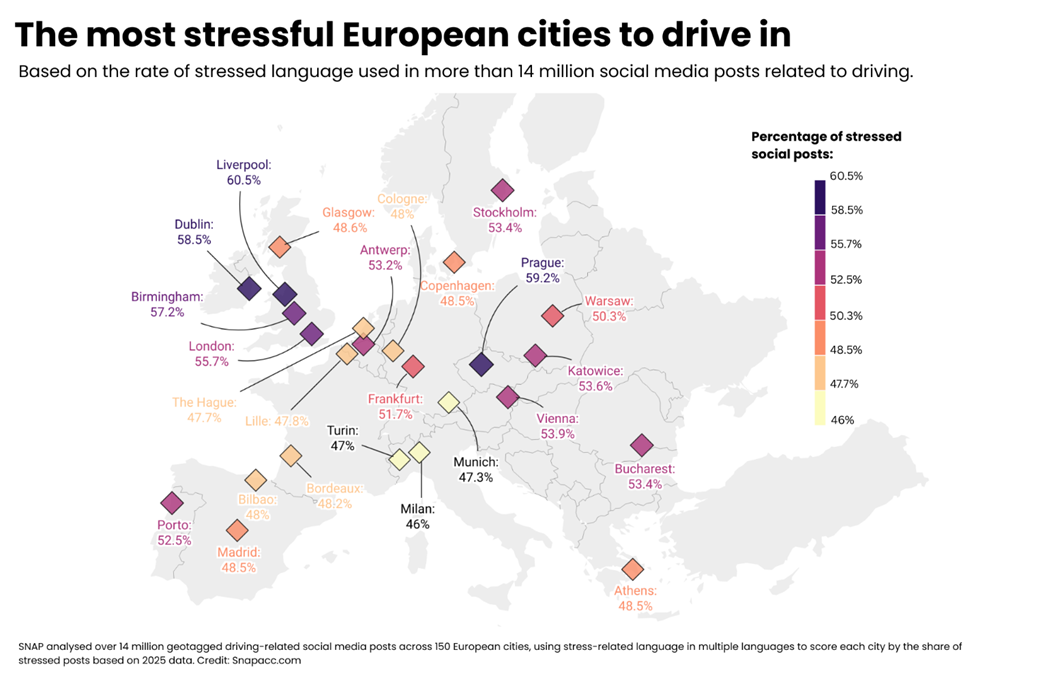
Используя социальное прослушивание для анализа миллионов постов с геотегами в 150 европейских городах, мы определили места, которые вызывают у водителей наибольший стресс. Ливерпуль возглавляет список (60,5 % сообщений о стрессе, связанном с вождением), за ним следуют Прага (59,2 %) и Дублин (58,5 %). Ливерпуль также занимает 2-е место в рейтинге самых стрессовых городов для парковки в Великобритании. Пробки, нехватка парковок и сложные дорожные условия - вот основные проблемы, которые отмечают водители по всей Европе.

В этом исследовании на основе реальных данных о настроениях водителей составлена карта "горячих точек" стресса в Европе, показывающая, как условия города влияют на самочувствие. Это не рейтинг стран, а четкие и практические выводы, которые помогут руководителям автопарков и логистических компаний поддержать водителей, спланировать более разумные маршруты и снизить нагрузку на водителей в городах.

Прислушивание к опыту водителей

В нашем исследовании было проанализировано более 14 миллионов сообщений в социальных сетях из 150 европейских городов с геометками, в которых затрагивались такие темы, как парковка, движение и состояние дорог. Сообщения оценивались на предмет стресса путем отслеживания ключевых слов и фраз, связанных с негативными эмоциями, на английском и местных языках. Каждый город оценивался по проценту сообщений, выражающих стресс, что позволило получить четкую картину давления на водителей по всей Европе. Данные собирались в основных социальных сетях X (бывший Twitter) в течение 2025 года.

Под "стрессом" понимается давление, с которым сталкиваются водители автопарков на дороге, включая движение, парковку, дорожные условия, общее вождение и конфликты с другими водителями. Понимание этих факторов помогает операторам автопарков поддерживать хорошее самочувствие и работоспособность водителей.

*Знание того, в каких городах водители грузовых автомобилей испытывают наибольший стресс, позволяет SNAP разрабатывать решения, повышающие безопасность и эффективность".

МЭТТЬЮ БЕЛЛАМИ, УПРАВЛЯЮЩИЙ ДИРЕКТОР, SNAP

Стрессовые города ЕС: Основные выводы

По состоянию на 2025 год для самых напряженных в плане вождения городов:

  1. Ливерпуль, Великобритания. 60,5 % стрессовых социальных постов о парковке - самая высокая доля стрессовых постов о вождении в Европе.
  2. Прага, Чехия. 59,2 % социальных постов о парковке, вероятно, из-за плотного движения, исторического дизайна улиц и ограниченного пространства для больших автомобилей в городе.
  3. Дублин, Ирландия. 58,5 % социальных сообщений о парковке - Стресс водителей сильно связан с задержками в пробках, нехваткой парковок и загруженностью пригородных маршрутов, влияющих на ежедневную езду.

Топ-3 самых напряженных для парковки городов Великобритании в 2025 году:

  1. Ньюкасл-на-Тайне. В этом городе, расположенном в графстве Тайн и Уэр, 65,3 % постов в социальных сетях посвящены парковке, что делает его самым напряженным городом Великобритании в плане парковки в 2025 году.
  2. Ливерпуль. В Мерсисайде 64,4 % социальных постов о парковке в Ливерпуле выражают стресс.
  3. Мидлсбро. 63,9 % социальных постов о парковке в этом городе Северного Йоркшира выражают стресс.

Шотландия также демонстрирует повышенный уровень стресса, связанного с парковкой: Эдинбург (61,6 % социальных сообщений о парковке) и Глазго (61,4 % социальных сообщений о парковке) входят в число самых сложных для парковки городов Великобритании. Кроме того, Лондон занимает 17-е место в рейтинге самых стрессовых мест для парковки (57,9 стрессовых социальных сообщений о парковке. Способствующими факторами могут быть узкие улицы, плотная городская планировка, высокий спрос на ограниченное парковочное пространство и ограничения в центре города, которые могут увеличивать нагрузку на водителей.

Горячие точки стресса для европейских водителей

Используя миллионы сообщений в социальных сетях с геометками, мы оценили каждый город по доле сообщений, связанных со стрессом, выявив лучшие в Европе места для вождения и парковки, а также указав городские условия, которые больше всего мешают водителям.

На нашей инфографической карте показаны города, в которых больше всего проблем с вождением и парковкой, выявлены основные "горячие точки" и проблемы, с которыми сталкиваются водители на каждом рынке.
Самые напряженные города для вождения

Города могут увеличить нагрузку на водителя из-за пробок, узких улиц и сложной планировки дорог.
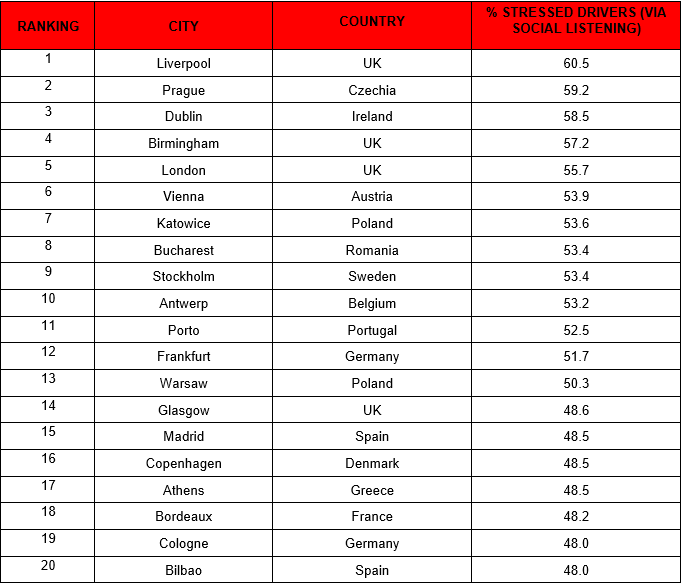
Ливерпуль (1-е место), Бирмингем* (4-е место) и Лондон* (5-е место) - все эти города входят в список наиболее напряженных для вождения городов Англии, с показателями от 55,7% до 60,5%. Ключевую роль в повышении уровня стресса играют пробки и узкие места - такие как [Ливерпульские туннели Мерси] (https://www.liverpoolworld.uk/news/mersey-tunnels-chaos-40-minute-delays-4974204) и сильно перегруженные трассы, например [Лондонская орбитальная автомагистраль (M25)] (https://news.sky.com/story/londons-roads-ranked-most-congested-in-europe-according-to-new-report-13284374).

Дублин занимает 3-е место и является одним из самых перегруженных городов Европы, в котором [водители ежегодно задерживаются в среднем на 81 час] (https://www.irishtimes.com/transport/2025/01/06/dublin-ranks-as-europes-third-most-congested-city-after-london-and-paris/) из-за интенсивного движения, что свидетельствует о постоянных перегрузках на городских дорогах.

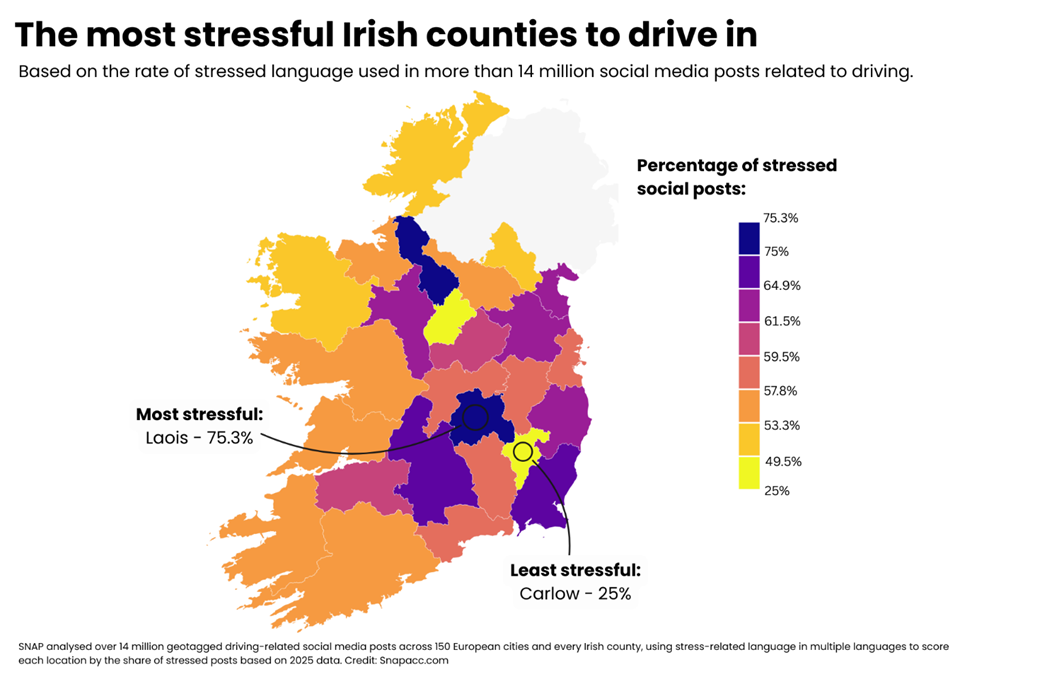
Дальнейшее социальное прослушивание, сфокусированное на ирландских автомобилистах, показало, что в графствах Лаос и Лейтрим отмечен очень высокий уровень стресса, связанного с парковкой, - от 75 % до 75 %.** Эти высокие показатели свидетельствуют о постоянных проблемах для водителей в этих регионах, в основном обусловленных сильной зависимостью от автомобилей - [73 % жителей Лаоса добираются на работу на личном автомобиле], согласно официальной статистике (стр. 118). Кроме того, из Лейтрима поступают сообщения о неразвитой дорожной инфраструктуре и конфликтах между доставкой и парковкой в таких городах, как Драмшанбо, что способствует стрессу водителей в этом ирландском графстве.
Катовице, Польша (7-е место) - хотя Катовице и не является одним из самых перегруженных польских городов, в нем все еще наблюдаются задержки пригородных поездов и пробки](https://www.tomtom.com/traffic-index/katowice-traffic/). Водители проводят значительное время в пробках, а на основных дорогах, таких как S86 и A4, ежедневно наблюдается интенсивное движение, что может привести к стрессу на уровне 53,6 %. Аналогичным образом, в Варшаве в Польше (13-е место) водители проводят в пробках около 70 часов в год, что приведет к стрессу в 50,3 % в 2025 году.

Бухарест в Румынии (8-е место) пользуется дурной славой одного из самых переполненных городов Европы: водители проводят значительно больше времени в пробках и [теряют до 12 рабочих дней в году] (https://www.romania-insider.com/bucharest-driver-loses-days-annually-traffic-sept-2025) из-за медленного движения.

Столица Испании, Мадрид (15-е место), страдает от сильных пробок: поездка на расстояние 10 км занимает около 24 минут (https://www.tomtom.com/traffic-index/madrid-traffic/). Узкие улицы и постоянные пробки, особенно в таких районах, как Пуэнте-де-Вальекас, делают ежедневную езду медленной и напряженной. Аналогичным образом, сообщения об авариях и интенсивном движении в Бильбао, Испания (20-е место), на таких ключевых трассах, как A-8 и BI-30, вызывают длинные очереди и медленное движение, что способствует стрессовым условиям вождения.

Самые напряженные города для парковки

Парковки также способствуют стрессу водителей и руководства автопарков, поскольку ограниченное количество мест, высокий спрос и ограничительные правила в европейских городах могут задерживать поездки, усиливать разочарование и усложнять планирование маршрута.

Кроме того, с помощью социального мониторинга мы собрали данные о городах, где водители испытывают больший стресс при парковке по всей Европе, в частности в Румынии, Польше, Испании и Великобритании. Обратить внимание на эти районы важно для операторов автопарков, поскольку ограниченное количество парковок, высокий спрос и городские пробки могут нарушить график, увеличить задержки и повлиять на самочувствие водителей.

Согласно нашим исследованиям, самый высокий уровень парковок в Европе наблюдается в Польше, где Подляшье (83,3 %) и Ольштын (80 %) сталкиваются с такими проблемами, как нехватка парковочных мест и высокая плотность автотранспорта.

Аналогично, в Великобритании Ньюкасл-на-Тайне (65,3 %), Ливерпуль (64,4 %) и Мидлсбро (63,9 %) являются городами, в которых автомобилисты испытывают наибольший стресс от парковки. В этих городах ограниченное количество мест в центре города, плата за парковку на улицах, пробки и строгие правила парковки приводят к разочарованию водителей.

Румынские города Сибиу и Клюй-Напока, а также испанские города Малага и Бильбао зафиксировали самый высокий уровень стресса от парковки в своих странах. Однако, по сравнению с Великобританией и Польшей, их показатели стресса ниже - от 55,6 % до 52,4 % - что говорит о более благоприятных условиях парковки, меньшем количестве узких мест и относительно меньшей нагрузке на водителей в этих городских районах.

"Наша цель в SNAP проста: уменьшить стресс, связанный с парковкой, для профессионалов грузоперевозок. Предоставляя информацию в режиме реального времени и более разумные варианты маршрутов, мы помогаем водителям найти безопасную и доступную парковку, делая их поездки менее напряженными и более эффективными".

МЭТТЬЮ БЕЛЛАМИ, УПРАВЛЯЮЩИЙ ДИРЕКТОР, SNAP

Почему водители грузовых автомобилей испытывают наибольший стресс в этих городах?

Водители грузовых автомобилей сталкиваются с трудностями, которые отличаются от проблем обычных водителей. Ограниченная парковка для крупногабаритных автомобилей, узкие или перегруженные улицы, высокая интенсивность движения могут сделать городское вождение более сложным и стрессовым, превращая обычные поездки в испытание, требующее много времени и сил.

Давайте подробнее рассмотрим факторы, вызывающие стресс у водителей грузовых автомобилей:

  • Limited parking for large vehicles. Scarce lorry bays and high demand make it hard to find safe places to stop, especially in urban centres. The RHA’s Roadside Facilities campaign reports an estimated shortage of 11,000 lorry parking spaces in the UK, creating significant stress for HGV drivers who struggle to find safe and legal places to park., creating significant stress for HGV drivers who struggle to find safe and legal places to park.
  • Narrow streets and complex urban layouts. Tight roads and historic city centres require careful navigation, increasing stress and risk of delays in cities like Prague, Dublin, and Liverpool.
  • High traffic volumes and congestion. Heavy commuter and freight traffic slows journeys, increases travel times, and heightens frustration particularly in busier cities like London, Birmingham, Bucharest, and Madrid.
  • Low-emission or Clean Air Zones. Restrictions on vehicle access, extra charges, and rerouting requirements can complicate planning and add pressure. For example, low emission zones in Spain require some HGVs to seek alternate routes.
  • Route restrictions and delivery schedule. Height and weight limits, prohibited turns, and time-specific delivery windows force drivers onto longer or less convenient routes.
  • Isolation and limited facilities. Long urban journeys without access to rest areas, fuelling, or amenities can increase fatigue and mental strain for HGV drivers.

Что означают стрессовые города для водителей грузовиков?

Напряженные города создают проблемы для водителей грузовых автомобилей. Пробки, ограниченные парковки и сложные городские планировки могут привести к потере времени, пропуску доставки, повышенной утомляемости и повышенному риску мелких столкновений и аварий.

Водители могут справиться со стрессом, тщательно планируя маршруты, делая перерывы по расписанию и используя технологии для прогнозирования задержек или помощи в составлении бюджета. SNAP поддерживает водителей с помощью таких инструментов, как приложение intruck, помогая им находить свободные парковки, планировать эффективные маршруты и быть в курсе пробок, снижая стресс и делая поездки на грузовиках более безопасными и управляемыми.

Что означают "стрессовые" города для операторов автопарков грузовых автомобилей?

Стрессовые города влияют не только на водителей, но и на работу автопарка. Пробки и ограниченные парковки могут привести к задержкам поставок, повышению топливных и эксплуатационных расходов, снижению благосостояния водителей и увеличению риска штрафов или взысканий. Эти проблемы могут снизить маржу и усложнить составление графиков, [удержание или нехватка водителей] (https://snapacc.com/newsroom/uk-driver-shortage-are-numbers-improving/) и удовлетворенность клиентов.

Операторы автопарков могут преодолеть эти трудности, внедрив более разумные стратегии и системы поддержки: использование информации о дорожном движении и парковках в режиме реального времени, составление гибких графиков и приоритет отдыха и хорошего самочувствия водителей.

Решение SNAP для оплаты услуг автопарков, доступное более чем 850 сервисным партнерам по всей Европе, используется каждые 12 секунд на континенте для оплаты услуг грузовиков - без наличных или карты.

Сделать города Европы менее напряженными для водителей грузовых автомобилей

Понимание стрессовых ситуаций, связанных с вождением и парковкой в Европе, помогает автопаркам работать более безопасно и эффективно. Используя эти данные для планирования маршрутов, обучения водителей, внедрения технологий и снижения рисков, операторы могут сократить количество задержек, улучшить самочувствие и защитить своих водителей. SNAP поддерживает эту миссию для автопарков, предлагая безопасные парковки, бесперебойные платежи и инструменты, которые делают ежедневные операции спокойнее и безопаснее.
ЗАРЕГИСТРИРУЙТЕСЬ СЕГОДНЯ

Поделиться с

Другие тоже читают...

Header Image

четверг 08 января 2026 • Новости и обновления

АВТОСТОЯНКА САТТЕРТОН: ПОВЫШЕНИЕ СТАНДАРТОВ КОМФОРТА И БЕЗОПАСНОСТИ ВОДИТЕЛЕЙ

Susie Jones

Situated on the A17 and a short drive from Boston is , a haven for truck drivers transporting goods along this stretch of road. The location provides not only a truck stop with the usual amenities one would expect clean showers, toilets, shop, and refuelling options but it also presents drivers with the choice to dine at the Roadside Diner, providing visitors with an American-themed restaurant with a variety of meals. We sat down with Director James Townsend to discuss improvements to the site, driver welfare, site security, and their long-standing relationship with SNAP. explains James. The site has undergone a major refurbishment, prioritising the needs of truck drivers. Nestled inside the truck stop is the new roadside diner. James and the team have recently taken back ownership of this and refurbished it. James says. He goes on to explain that it was more than upgrading existing facilities, but providing drivers with the right facilities to make the site a home away from home. SNAP asked truck drivers parking at Sutterton what they thought of the new facilities on offer. One driver commented:When it came to the design of the truck park, the site worked closely with SNAP to maximise the site’s potential:Driver welfare still remains a huge priority for those working in the industry, with investment into truck parking lacking, something James is all too aware of after working with the DFT. he explains. While investment is valuable, directing it into the right facilities for truck drivers is also imperative. James states. James and the rest of the team work closely with SNAP’s UK Network Team as well as , providing them with a single, clear point of contact should any issues arise. explains James. Having the support in place for complaints and technical issues is a major advantage for a truck stop like Sutterton, which often manages competing demands. Working with SNAP has delivered additional benefits as well, as James goes on to say:To ensure truck drivers get a good night’s rest, ensuring the site is as safe and secure as possible was vital for Sutterton Truck Stop. Working with SNAP Access & Security from the outset has allowed James and the team to do exactly that. says James. The site is a firm believer in training its staff to deal with incidents if they occur. Inspired by what you’ve just read? Catch the full interview with

Header Image

пятница 19 декабря 2025 • Новости и обновления

ЯВЛЯЕТСЯ ЛИ ВАШ АВТОПАРК МИШЕНЬЮ? ПРИОРИТЕТ БЕЗОПАСНОСТИ В ТЕХНОЛОГИЧЕСКИ ПОДКОВАННОМ МИРЕ

Guest

Cybersecurity readiness must be a top priority for fleet owners and managers in the United Kingdom. The rapid digital transformation in the transportation and logistics industry has made fleets attractive targets for hackers. Learn about the cybersecurity trends fleet operators must be aware of and strategies you should adopt to lower your susceptibility to attacks.The advent of connected vehicles, push for fleet electrification, integration of Internet of Things (IoT) devices and reliance on automation have expanded the attack surface opportunistic cybercriminals can exploit to infiltrate your network.Vulnerable telematics back-end systems, insecure over-the-air firmware updates and buggy APIs are common entry points for phishers, data thieves, business saboteurs and ransomware attackers. Threat actors are also increasingly leveraging artificial intelligence to launch more believable scams.Falling victim to a cyberattack can cause more than extended, unscheduled downtime. A high-profile security incident can inflict severe reputational damage on your organisation and harm your business in the long term.Although your cyber insurance coverage may compensate you millions for losses, the financial impact can lead to insolvency — as happened to KNP Logistics in June 2025. An Akira ransomware attack exacerbated this major logistics group’s preexisting financial struggles, and let go of 730 employees.Every business is at risk from cyberattacks, but these strategies can help make your fleet management software and vehicles less vulnerable.A robust threat intelligence platform strengthens cybersecurity, as it allows you to proactively defend your assets from malicious actors and minimise your losses if they target you. Here are the primary ways to use threat intel to improve your security posture:Contextualisation enables your team to identify the perpetrators behind specific attacks, understand their motives and capabilities, determine what they want from your organisation, and comprehend their methods. Context transforms raw threat data into actionable intelligence, enabling you to inform your decision-making.Attackers evolve, so learning how they operated in the past is not enough to accurately anticipate their future actions. A threat intelligence platform can help you keep pace with known malicious actors and familiarise your team with relatively unknown ones. Some organisations use deception technologies to lure cybercriminals and watch them in action in a controlled environment.A software solution that can integrate into your company’s existing tools breaks down silos and allows threat intelligence to flow freely across teams. Cross-departmental collaboration is the key to implementing an organisation-wide cybersecurity strategy effectively.A threat intelligence platform can monitor your network activity and sense attack patterns early enough to notify your Security Operations Centre or IT professionals immediately. Early detection is vital to count threats before they infiltrate deeply into your system and cause more harm.Responding to urgent incidents involves less manual work with a threat intelligence platform. This software solution can orchestrate essential tasks to mitigate breaches, enabling your in-house cybersecurity professionals to focus on activities where human input is more impactful.Regulatory frameworks and data privacy standards are becoming more stringent over time. A threat intelligence platform aids compliance by ensuring that your team handles sensitive data responsibly and generates detailed reports to document your best practices.Zero trust minimises the likelihood of unauthorised access to fleet management systems by continuously verifying every user and device and enforcing identity-centric access control.This approach acknowledges that threats can come from within the organisation. Assuming that each request may come from a malicious actor reflects the level of vigilance you must exercise to protect your operation from sophisticated attacks and help your team adapt to complex, dynamic environments involving remote users, IoT devices and cloud services.After verification, zero trust gives users and devices just enough access to perform specific tasks. The principle of least privilege enables effective threat containment if a cybercriminal gets in.According to Cybersecurity Insiders’ 2024 Insider Threat Report, insider threat attacks have spiked. In October 2024, 51% of the 413 respondents in IT and cybersecurity reportedly over the past year. 29% reported spending over $1 million on remediation.The adoption of new technologies is a primary driver behind the rise in these cyberattacks. Investing in employee training is crucial for preventing team members from becoming insider threats.Provide target users with sufficient resources to familiarise themselves with the technologies. Highlight the ways they may inadvertently leak sensitive information or compromise the system. Tell them the red flags to watch out for to identify malicious schemes and teach them safe, responsible ways to deal with cybercriminals.Tight physical security can safeguard your assets from digital hijackers. Effective physical protection often involves a layered approach, which includes perimeter fencing, strategic placement of surveillance equipment and tamper-evident vehicle electronics casings. Additionally, limiting visibility with opaque doors , thereby adding an extra layer of protection to your physical security. Blending physical safeguards with digital solutions can restrict what hackers can do, even if they manage to gain control over fleet vehicles. In 2022, a group of hacktivists attacked the Russian ride-hailing service Yandex Taxi and directed in the same place in western Moscow. The incident should serve as a wake-up call to embrace measures to immobilise your assets if criminals remotely take control of the driver’s seat.Your company is only as strong as the weakest link in your supply chain. The positive impact of impregnable internal cybersecurity diminishes when third-party vendors make it easy for lawbreakers to steal your data from elsewhere. For instance, temporarily could jeopardise your cybersecurity if your lessor has outdated software.Working with supply chain partners that are as particular about cybersecurity reduces your risk exposure. Integrating your suppliers’ systems into your threat intelligence platform ensures better coordination during data breaches. Close collaboration with critical external parties promotes cybersecurity readiness and helps everyone prepare for potential attacks.Contending with online threat actors is inevitable in modern fleet management. Prioritise proactive strategies to stay ahead of hackers. By implementing a multi-layered defence that combines technology, employee training and strategic partnerships, you can build a resilient operation. This stance protects your current assets and secures your company’s future in an increasingly connected world.Discover more from

Header Image

понедельник 08 декабря 2025 • Новости и обновления

ТРЕНДЫ ГРУЗОВИКОВ: ПРОГНОЗЫ НА 2026 ГОД

Guest

Major changes are coming for the mobility sector.The next 12 months will bring some of the most significant regulatory and technological shifts European transport has seen in years. New emissions rules, driver-monitoring systems, hydrogen trials and autonomous pilots will reshape how fleets operate across the UK and EU.For operators and professional drivers, understanding these changes now will make the difference between adapting confidently and struggling to keep up. come into force in 2026, introducing new requirements for fleets. Nitrogen oxide and carbon monoxide limits will tighten further, with the permitted particle size dropping from 23 nanometres to 10. In addition, for the first time.Every new truck sold will need to comply with Euro VII. While vehicle pricing is likely to be affected, the bigger impact will fall on procurement timelines, fleet renewal cycles and long-term decarbonisation.. These monitor eye and head movement to identify early signs of fatigue or inattention, enabling safer interventions and supporting accident-reduction goals across Europe. By 2029, new cab designs must minimise blind spots through improved glass visibility rather than camera reliance. This will particularly influence urban operations, vulnerable road user safety and future vehicle specification.. After years of exemption, this change effectively brings smaller commercial vehicles under full drivers’ hours enforcement.For operators with mixed fleets, this means introducing:● new driver cards● regular data downloads● updated monitoring processes● revised routing and rest-time planningThousands of vehicles that previously operated freely will need compliance systems in place almost immediately. requires companies with more than 250 employees or €40 million revenue to collect and report verified CO₂ emissions – including Scope 3 transport activity.This will cascade through supply chains. Smaller hauliers without reliable emissions reporting risk losing access to larger contracts, accelerating the push toward better data systems and standardised reporting.Electric HGV production will rise rapidly in 2026. are all expanding manufacturing capacity.To support this, electric charging is also expanding. , as part of HyHAUL's M4 corridor project. Three refuelling stations, each supplying up to two tonnes of hydrogen daily, support the pilot. If successful, the project aims for 30 trucks on the road by the end of 2026 and 300 by 2030. Alongside this, . Five more will follow by 2027.Vehicle manufacturers are taking different approaches to developing hydrogen-fuelled trucks: ● and DAF are planning similar systems. ● will introduce its next-generation hydrogen fuel cell stack in 2026 with improved durability and lower operating costs.Hydrotreated Vegetable Oil (HVO) is emerging as a notable transitional fuel for haulage in 2026, thanks to two factors: stricter biofuel mandates in north-western Europe and its compatibility with existing diesel engines. Reports by confirm that HVO is a “drop-in” fuel: it can be used in many existing heavy-duty vehicles without engine or infrastructure changes, which gives operators a practical pathway to immediate CO₂ reductions. Meanwhile, forecast that HVO consumption could reach record highs in 2026. Germany alone may need an additional 1.5 million tonnes – almost four times 2025 levels – to meet demand. Although uptake remains modest when compared with battery-electric or hydrogen alternatives, the current regulatory push and infrastructure compatibility mean HVO is likely to gain traction in 2026.From spring 2026, in controlled zones – a full year ahead of plans. Enabled by the , this transition supports an industry expected to contribute £42 billion to the UK economy by 2035 and create an estimated 38,000 jobs. Germany is close behind. , supported by €20 million in seed funding. Across northern Europe, autonomous freight along the 1,200-km Rotterdam-Oslo corridor. The programme runs until March 2026 and examines how autonomous vehicles perform across borders, terrain types and logistics hubs.In Sweden, already move goods between warehouses, processing five million data points per second. Their controlled deployments demonstrate the potential for automation in predictable, repeatable routes.Despite this progress, humans will continue to play a central role. . So while automation will support specific functions, such as port operations, depot shuttles and fixed urban routes, long-haul and complex international transport will remain human-led.The scale and speed of change arriving in 2026 is unlike any previous year for European road transport. Multiple regulatory, technological and sustainability shifts will land simultaneously, reshaping how fleets operate across borders."The operators who succeed in 2026 won't be those who resist change but those who prepare for it systematically," says Nick Long, European Strategic Partnership and Development Manager at SNAP. "We're working with fleets across Europe to build the infrastructure that tomorrow's industry needs. Secure parking. Integrated payments for new toll structures. The building blocks of success are available now for those ready to use them."SNAP helps fleets prepare for the future with integrated solutions for parking, payments and fleet management across Europe. Visit snapacc.com to discover how we can support your transition to 2026 and beyond.