Susie Jones
Poradenstvo pre vodičov • 4 min čítania

Päť najlepších tipov, ako si z kabíny nákladného auta urobiť domov

Vytvorené: 22. 08. 2024

Aktualizované: 22. 08. 2024

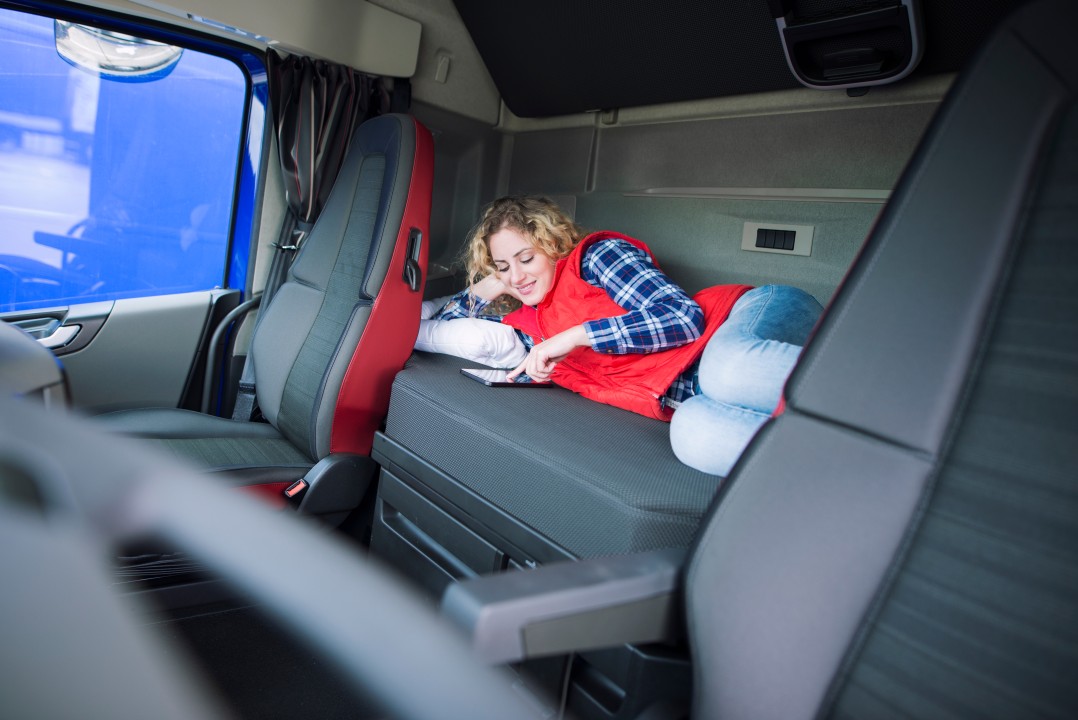
Ako vodič nákladného vozidla trávite na cestách dlhé hodiny, ktoré môžu byť často únavné a monotónne, takže prirodzene chcete, aby ste sa vo svojom prostredí, v oblasti, kde ste najdlhšie, cítili ako vo svojom druhom domove. Preto má mnoho vodičov tendenciu prispôsobovať a zdobiť svoje kabíny, ale aké sú najlepšie spôsoby, ako dosiahnuť, aby sa vaša spacia kabína cítila ako domov mimo domova? Zostavili sme päť najlepších tipov, ktoré vám pomôžu na tejto ceste.

Dekorácia

Jedným z najlepších spôsobov, ako si prispôsobiť kabínu, je pridať dekorácie, ktoré vám pripomínajú domov. Dekorácie vám tiež umožnia pridať štýl a farbu.

  • Posteľná bielizeň a vankúše - Pridajte posteľnej bielizni a vankúšom osobný nádych a vyberte si také, ktoré majú farbu alebo vzor, ktorý sa vám páči. Vďaka tomu sa vaša kabína bude cítiť útulnejšie a menej stagnujúco.

  • Poťahy sedadiel - poťahy sedadiel sa často vyrábajú v rôznych farbách, vzoroch a materiáloch, ktoré oživia vašu kabínu. Nielenže vďaka nim bude kabína pôsobiť prívetivejšie, ale tiež ochránia interiér pred opotrebovaním, znečistením a rozliatím. Amazon má zvyčajne k dispozícii veľký výber farieb.

  • Koberčeky, závesy a tienidlá - Výberom koberčekov a závesov môžete zmeniť interiér kabíny. Záclony nielenže dodajú estetickú hodnotu, ale pomôžu vám aj poriadne sa vyspať.

  • Fotografie, plagáty a umelecké diela - Tieto predmety nezaberajú v kabíne veľa miesta a môžu jej okamžite dodať pocit domova. Na inštaláciu bez poškodenia použite príkazové háčiky.

  • Zábava: Na konci dňa si oddýchnite ako doma pri sledovaní televízie, DVD alebo streamovaní na notebooku. Pred streamovaním budete potrebovať Wi-Fi, nezabudnite si pozrieť našu stránku mapy, aby ste zistili, ktoré zastávky túto službu ponúkajú.

Prípadne si vytvorte hotspot v smartfóne, ktorý bude na streamovanie využívať dáta z telefónu. Knihy a časopisy sú ďalším skvelým spôsobom, ako sa zabaviť po dlhom dni jazdy. Niekedy vás môže uvoľniť aj jednoduchý videohovor s priateľmi alebo rodinou, vďaka ktorému sa budete cítiť ako doma.
Comfort

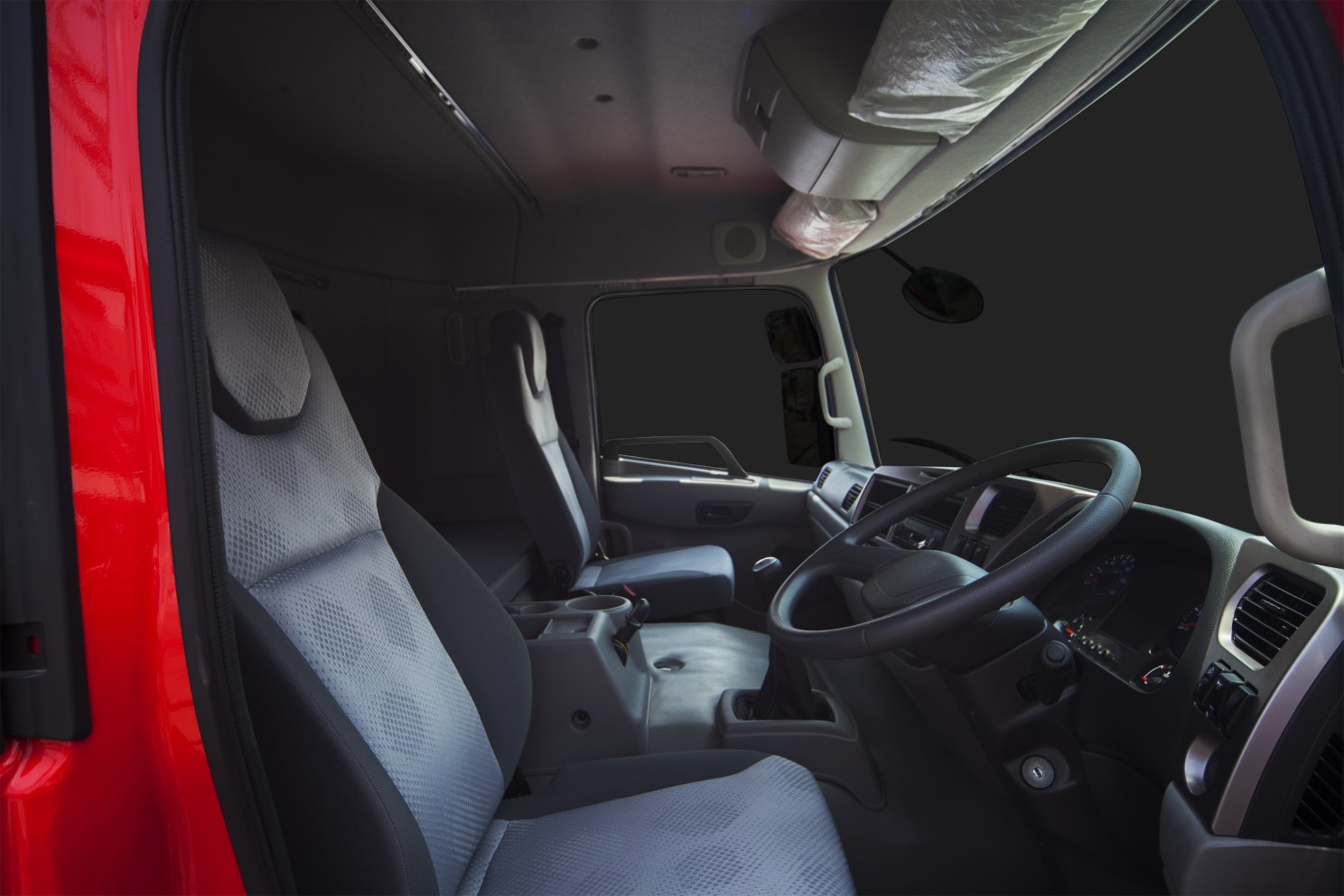
V kabíne trávite veľa času, preto je dôležité, aby ste nerobili kompromisy v oblasti pohodlia. Prečo neinvestovať do nasledujúcich vecí:

  • Vrchný matrac - dôstojný spánok je veľmi dôležitý pre vašu bezpečnosť a bezpečnosť ostatných. Investícia do kvalitného vrchného matraca vám zabezpečí pohodlný spánok.

  • Ergonomické sedadlo vodiča - Väčšinu času strávite na sedadle vodiča, preto je dôležité, aby bolo čo najpohodlnejšie a najopretejšie. Investujte do ergonomického sedadla vodiča alebo vankúša, ktorý vám počas dlhých hodín podporí chrbticu.

  • Vankúše a prikrývky navyše - Ako už bolo uvedené vyššie, ak si kúpite posteľnú bielizeň a vankúše vo farbe alebo so vzorom, ktorý sa vám páči, budete sa v kabíne cítiť ako doma. Zvážte kúpu ďalších vankúšov a prikrývok, aby ste kabíne dodali ešte osobnejší nádych a maximálne pohodlie.

Kuchynská časť/spotrebiče

Pridanie minichladničky alebo mikrovlnnej rúry do kabíny vám umožní pripravovať jedlo ako doma, takže sa nebudete musieť spoliehať na zastávky kamiónov a stravovanie vonku. Odporúčame premyslieť si, aké položky by ste v tejto oblasti potrebovali, napríklad ak radi pijete kávu, skúste si zaobstarať malý kávovar. Využívanie kuchynského priestoru a spotrebičov vás nielenže ochráni pred míňaním peňazí na stravovanie vonku, ale ovplyvní aj vaše celkové zdravie k lepšiemu.

Udržujte veci čisté a upratané

Bývanie v malom priestore sa môže veľmi rýchlo stať neporiadkom. Investovanie času a úsilia do pravidelného upratovania môže urobiť zázraky pre vaše duševné zdravie a umožniť vám pracovať efektívnejšie a účinnejšie. Pomôže vám pri tom, ak si na svoje veci vyhradíte osobitné priestory, a ProDrivers má niekoľko vynikajúcich tipov, ako si všetko zorganizovať.

Ako sa vodiči kamiónov vyrovnávajú s nudou?

Nuda má vplyv nielen na spokojnosť s prácou, ale môže ovplyvniť aj bezpečnosť práce. Existuje mnoho spôsobov, ako sa môžu vodiči nákladných vozidiel počas jazdy zabaviť.

  • Hudba a podcasty: Hudba je skvelý spôsob, ako zabaviť vodičov počas dlhých jázd. Vytvorením zoznamu obľúbených skladieb na počúvanie môžete okamžite znížiť nudu. Podcasty sú skvelým spestrením, mnohé z nich môžu ponúknuť rady, pomôcť pri učení sa nových zručností alebo jednoducho pobaviť.

  • Natiahnite si nohy: Zastavenie a vystúpenie z kabíny na pretiahnutie nôh môže okamžite zahnať nudu. Pravidelné zastávky vám tiež môžu dodať energiu.

Kde spia vodiči nákladných vozidiel?

Od 1. novembra musia vodiči nákladných vozidiel v Spojenom kráľovstve, ktorí si robia pravidelné týždenné prestávky v kabíne, tieto prestávky absolvovať na riadnych odpočívadlách. Vzhľadom na to, že ich je málo, niektorí vodiči odpočívali na odpočívadlách, ktoré sú často nebezpečné. Preto je veľmi dôležité nájsť bezpečné a tiché miesto na zaparkovanie, aby ste si mohli dobre oddýchnuť alebo si odpočinúť. Pomocou našej aplikácie intruck alebo na našej stránke mapy môžete nájsť parkovisko pre nákladné vozidlá vo vašom okolí a prezrieť si ponuku zariadení.

Ako sa vodiči nákladných vozidiel vyrovnávajú s osamelosťou?

Aj keď má práca vodiča nákladného vozidla mnoho výhod, jednou z nevýhod tohto odvetvia môže byť osamelosť. Môže to byť problém pre mnohých vodičov, ktorí sa kvôli povahe svojej práce cítia izolovaní. Plánovanie kontaktov s priateľmi a rodinou môže vodičom na cestách dodať silu. Fóra pre nákladnú dopravu, skupiny na Facebooku a chatové miestnosti sú skvelé, ak sa chcete stať súčasťou komunity nákladnej dopravy. Na stránke All Trucking nájdete niekoľko fantastických tipov, ktoré vám pomôžu v boji proti osamelosti vodiča nákladného vozidla na cestách.

Vytvoriť si v kabíne nákladného auta pocit domova si vyžaduje trochu úsilia a kreativity, ale výhody takéhoto riešenia vám uľahčia dlhé cesty. Je dôležité mať na pamäti, že aj malé detaily môžu výrazne zmeniť váš životný priestor a pomocou uvedených tipov ho môžete urobiť pohodlným a príjemným. Ako sa vo vašej kabíne cítite ako doma ďaleko od domova?
Zdieľať na

Ostatní tiež čítajú...

Header Image

utorok 26 mája 2026 • Poradenstvo pre vodičov

BEZPEČNÉ POSTUPY NAKLADANIA A VYKLADANIA S CIEĽOM PREDCHÁDZAŤ PORANENIAM POHYBOVÉHO APARÁTU

Evelyn Long

Musculoskeletal injuries are one of the most persistent challenges facing the fleet industry today. Drivers and warehouse staff face constant physical demands during loading and unloading operations. Implementing proper procedures protects your workforce from chronic pain and career-ending injuries while maintaining the efficiency that keeps your business competitive in demanding markets.Musculoskeletal injuries affect individual workers while draining business resources through lost productivity and increased insurance premiums.When an employee sustains an injury, the financial consequences go beyond the immediate medical expenses. Fleet managers must account for sick leave costs, temporary worker expenses and potential compensation claims.In 2023 to 2024, the total costs of workplace ill health and injury , with injury accounting for 28% or £6.5 billion. These figures demonstrate how injuries translate into economic burdens that affect profit margins.Lost productivity compounds these direct costs. When experienced drivers or warehouse staff take extended leave, operations slow down and remaining team members face increased workloads. The ripple effects touch every aspect of fleet operations, from delayed deliveries to strained client relationships.Drivers who develop musculoskeletal disorders face a difficult reality. Chronic back pain, shoulder injuries and repetitive strain can make basic job functions excruciating. Many drivers report that persistent pain affects their ability to focus during long routes, creating additional safety concerns.Musculoskeletal disorders rank among the in Great Britain. These conditions force experienced professionals out of an industry where they've built years of expertise.UK law requires employers to take specific steps to prevent manual handling injuries. Risk assessment forms the foundation of compliance and serves as the first line of defense against workplace strain.Employers must follow the Manual Handling Operations Regulations from the Health and Safety Executive, which establish a clear hierarchy. First, wherever reasonably practicable. Second, assess any hazardous operations that cannot be avoided. Third, reduce the risk of injury from those operations to the lowest level reasonably practicable.This framework pushes businesses to eliminate manual handling risks entirely. Mechanical equipment must be used whenever possible for moving loads. Any unavoidable manual handling requires proper assessment and mandatory control measures.A suitable and sufficient risk assessment examines four key factors in logistics operations:1. Task: The task itself matters, including whether it involves twisting, stooping or repetitive movements. Load: Load characteristics, such as weight, size and stability, play a role. Environment: Environmental conditions, including space constraints, floor surfaces and temperature extremes, affect safety outcomes. Individual: Individual capabilities vary among workers, who bring different strengths and physical limitations to each job. Effective should lead to concrete improvements. Document your findings and share them with your team.When manual handling becomes inescapable, proper technique can reduce injury risk. Training the workforce in correct lifting methods protects them during daily operations.The feet should be , positioned close to the load. Bending at the knees while maintaining a straight back allows you to grip the load firmly with both hands. Leg muscles should power the lift as you rise smoothly. Keeping the load close to the body throughout the movement prevents strain, as does avoiding any twisting motion during the lift or carry.If you need to strain or jerk to move an object, it requires mechanical assistance or team lifting. Never rush a lift to save time. Taking a few extra seconds to position yourself correctly prevents injuries that could sideline you for weeks.Team lifts require clear communication and planning before anyone touches the load. Designate one person as the lift coordinator who will call out instructions. All team members must understand the lift plan, including grip points, the path of movement and where the load will be placed.The coordinator should count down before the lift begins so everyone moves at the same time. Team members must maintain communication throughout, calling out if they need to pause or adjust.Technology offers powerful tools to reduce or eliminate manual handling risks in fleet operations, while equipment investments protect workers, often improving efficiency and throughput.Mechanical equipment, such as pallet jacks, forklifts and conveyors, eliminates many manual handling injuries. Workers' backs and joints no longer bear the physical strain when machines handle the load. Motorizing the effort required to move heavy loads, battery-electric pallet jacks . These machines can handle significantly more weight than manual versions while requiring minimal physical exertion from operators.Forklifts excel at transporting and lifting materials in warehouse and loading dock environments. Operators control heavy loads from a protected position, eliminating back strain and repetitive-motion injuries associated with manual handling.Data-driven scheduling through predictive systems can and potential delay points across your routes. Fleet managers can use these insights to adjust schedules, allocate additional resources during peak periods and give drivers realistic time frames.When drivers feel rushed, they are more likely to cut corners on safety procedures. Proper scheduling eliminates this pressure. Workers have time to use mechanical equipment properly, conduct team lifts when needed and follow correct manual handling techniques.Emerging wearable devices monitor workers' movements and posture throughout their shifts. These devices use to analyze lifting techniques and provide real-time feedback when workers adopt unsafe postures.Similar technology appears in driver safety applications. A telematics app program helped among young drivers by providing real-time feedback. The same principle applies to physical work, where immediate alerts about improper lifting form can prevent cumulative strain injuries.Fleet operations can use prevention through design (PtD) to eliminate hazards during planning. Vehicle specifications that minimize manual handling requirements, warehouse layouts that facilitate safe movement and procurement decisions that prioritize ergonomics all fall under this proactive approach.Vehicle design choices directly impact daily injury risk. Lower load bed heights reduce the distance workers must lift heavy items, while side-loading configurations ease the strain on workers' backs compared to rear-loading designs. Warehouse layout decisions matter as well, with adequate space around loading docks allowing workers to position themselves correctly and use equipment without awkward maneuvering.Equipment provision alone doesn't guarantee safety. Research shows that while 62.2% of construction workers might work at heights requiring protection, equipment. This gap highlights why PtD matters. When you design operations so that the safe method is also the easiest, compliance becomes natural.Preventing musculoskeletal injuries necessitates ongoing attention. Investing in proper equipment, training and operational design protects your workforce while strengthening your business's reputation and future prospects.Discover more from

Header Image

štvrtok 03 apríla 2025 • Poradenstvo pre vodičov

PREDPISY O PARKOVANÍ VOZIDIEL HGV VO VEĽKEJ BRITÁNII: ČO BY MAL VEDIEŤ KAŽDÝ VODIČ

Susie Jones

For many truck drivers, it can be challenging trying to navigate the number of regulations surrounding overnight truck parking in the UK. After a long day behind the wheel, they must adhere to several rules before they can even think about parking up for the night. We'll delve into these regulations and provide you with everything you need to know. Before we look at parking regulations, it's vital to understand UK and EU laws regarding rest periods. We've collated all you need to know about . However, in a nutshell, if your vehicle exceeds three and a half tonnes, you must have a tachograph fitted. A tachograph will record the number of breaks a driver takes. Truck drivers must adhere to the following:• Drivers must take 11 continuous hours of rest. This can be reduced to nine. • Truck drivers are required to take at least 45 hours of rest. • Driving time can be no longer than four-and-a-half hours before a break. A break must be at least 45 minutes.To comply with parking laws and ensure safety, truck drivers must follow strict regulations regarding where and when they can park overnight:• Many local authorities do not allow truck drivers to park in residential areas doing so may result in a fine or penalty.• If the maximum loaded weight of the vehicle is more than 7.5 tonnes (including any trailer), you must not park on a verge, pavement, or any land between carriageways unless there is police permission. • Truck drivers can use these for overnight parking. However, they provide less security and no amenities. Parking overnight in a lay-by is often the most straightforward and economical option but can pose a greater security risk.Failure to follow HGV parking regulations can result in fines, vehicle clamping, or impounding. These penalties are in place to encourage drivers to comply with the law and ensure road safety.Suitable parking locations include: Specifically designed for HGVs and include facilities such as fuel, food, showers, toilets, and security options. Many motorway service areas (MSAs) will provide areas for HGV parking. Most offer similar facilities as truck stops. SNAP provides drivers with a network of over across Europe. • Downloading a truck parking app can help drivers find locations near them to park up for the night. enables truck drivers to find parking & washing spots across Europe, allowing drivers to book SNAP sites through the app.• Search for a spot that offers essential amenities like food, toilets, and showers for a more comfortable stay. • Most truck stops and MSAs will have security features. Using the or, drivers can check a site's security features, including fencing, CCTV, night watchmen, and TAPA accreditations. Truck drivers can park on verges or pavements if the parking is for essential loading and unloading. There are a few exceptions they must consider before loading and unloading:• Drivers must not park where yellow markings are on the curb, and upright signs advise restrictions. • The vehicle must not be left unattended.• On red routes, drivers should look out for specially marked and signposted bays showing when and where loading and unloading is permitted. • Councils and private estates may have different regulations. Truck drivers are restricted to using lanes one and two. On a four-lane motorway, drivers can use lane three. However, HGVs are not permitted to use the furthest right lane.A road may be marked unsuitable for heavy goods vehicles for the following reasons: These pose a challenge for many HGVs, especially long or articulated trucks. Ascending a steep incline for an HGV is a difficult task due to its heavy load, leading to reduced traction and wheel spin. Roads with limited width can feature sharp bends or walls on either side and are unsuitable for trucks. Due to their turning radius of HGVs, they require more space to maneuver. Roads with walls on either side leave little room for error and increase the risk of an HGV becoming stuck or causing damage.

Header Image

pondelok 02 decembra 2024 • Poradenstvo pre vodičov

VŠETKO, ČO POTREBUJETE VEDIEŤ O ZMENÁCH V SYSTÉME CPC PRE VODIČOV

Susie Jones

On the 3rd of December 2024, changes to the Driver Certificate of Professional Competence (CPC) will come into full effect. The new CPC aims to offer better flexibility to drivers returning to the profession and those undertaking mandatory training. We delve into the upcoming changes and how they will impact drivers. Introduced in 2007, the CPC is a mandatory qualification for professional drivers in the UK and EU wanting to drive a range of heavy vehicles, such as HGVs, LGVs, buses, and coaches. Drivers must pass four tests: • Theory• Case study• Practical• Vehicle safety demonstration. Once passed, the CPC lasts for five years and must be renewed by taking 35 hours of periodic training within the five years.The UK government wanted to understand the effectiveness of the Driver CPC. They did this by asking drivers, trainers, and other parties to take a poll. The government focused on two main areas: improving driver choice and attracting more drivers into the industry for example, making it easier for drivers with foreign qualifications to obtain a licence in the UK. The changes to the Driver CPC are categorised into the following:The international Driver CPC is the new name for how the previous Driver CPC worked. The following applies:• Drivers must take 35 hours of CPC training every five years.• The courses must be at least seven hours long. • If splitting a course over a day, a driver must complete it on two consecutive days.• Drivers are allowed to do a total of 12 hours of e-learning.The National Driver CPC provides more flexibility for those wanting to drive in the UK. Drivers can take either:• 35 hours of training every five years.• A combination of 35 hours of National Driver CPC and International Driver CPC training every five years.The flexibility means that:• Training must be at least 3 hours 30 minutes long training providers can offer longer courses. • It does not need to be completed on two consecutive days if it's a split course course providers can set their time limits.• Training can be e-learning.• Drivers can do 12 hours of e-learning towards their overall 35 hours.From the 3rd of December, 2024, drivers will be able to stay qualified by choosing either:1. International Driver CPC National Driver CPCDrivers wanting to return to the profession must take 35 hours of training before returning. However, this will change from the 1st of February, 2025.Drivers with an expired CPC will have new pathways to make returning to driving easier.Drivers have four options:• Undertake 35 hours of International Driver CPC training.• Regain qualification to drive in the UK and EU.• Complete 35 hours of National Driver CPC training.• Regain qualification to drive in the UK only.• Take a seven-hour "return to driving" module.• Regain UK driving qualification instantly.• To drive in the EU, complete 28 additional hours of training within 12 months.• As part of the National Driver CPC training, complete a seven-hour "return to driving" module.• Regain UK driving qualification instantly.• Take 28 additional hours of training (National or International Driver CPC) within 12 months.Drivers must take 35 hours of training (International or National).The rules surrounding Driver CPC cards remain the same drivers must carry their cards when operating vehicles professionally. However, the type of card differs based on qualification:• Identical to the current design.• The design will include "Domestic UK use only."If a driver is qualified for both categories, they may hold two cards.Fleet managers can prepare for the changes by ensuring the following:• Find out whether their drivers need an International or National CPC.• Training deadlines aren't missed to avoid fines.You are exempt from needing a Driver CPC if you're using the vehicle for:• Non-commercial carriage• Carrying materials you use for your job driving must be less than 30% of your rolling monthly work.• Driving for someone you work for or your own agriculture, horticulture, forestry, farming, or fisheries business driving must be less than 30% of your rolling monthly work. • Driving within 62 miles of your base driving a HGV, bus, or coach must not be your main job.• Driving to or from pre-booked appointments to test centres.• Lessons for anyone wanting to get a driving licence or a Driver CPC.• Maintain public order.Full guidance is on the website.Drivers with grandfather rights don't need to hold the actual qualification as part of their licence. However, they must complete 35 hours of training every five years.