Ellie Aldous
Nasveti za voznike • 3 min branja

Od boja do moči: kako Darren Wright z logistiko pomaga veteranom pri ponovni izgradnji življenja

Ustvarjeno: 29. 05. 2026

Posodobljeno: 29. 05. 2026

Za mnoge veterane lahko odhod iz oboroženih sil pomeni veliko več kot le izgubo kariere. Lahko pomeni izgubo strukture, identitete, namena in skupnosti.

Za Darrena Wrighta, ustanovitelja podjetja Veterani v logistiko, je bil ta prehod zelo oseben.

Po skoraj šestih letih služenja v britanski vojski, med katerimi je bil tudi v Afganistanu kot strelec zračne obrambe, se je Darren težko preusmeril v civilno življenje. Izkusil je brezdomstvo, težave v duševnem zdravju, razpad zakona in nazadnje prestajal zaporno kazen.

Te izkušnje so postale gonilna sila poslanstva, ki zdaj spreminja življenja po vsem Združenem kraljestvu, namesto da bi ga zaznamovale.

"Z vožnjo tovornih vozil sem si na novo zgradil življenje," pojasnjuje Darren. "In spoznal sem, da če je to pomagalo meni, bi lahko pomagalo tudi drugim veteranom, da si ponovno zgradijo svoje življenje."

Leta 2020 ustanovljeno podjetje Veterans Into Logistics podpira nekdanje vojaške uslužbence pri trajnostni karieri v logistični industriji, saj jim pomaga pri pridobivanju licenc za tovorna vozila, usposabljanju in zaposlitvi.

Organizacijo je delno navdihnila izguba Darrenovega prijatelja Jamieja Doyla, nekdanjega vojaka kraljeve artilerije, ki je tragično umrl manj kot šest mesecev po odhodu iz vojske.

"Jamie je služil 22 let in bil zelo odlikovan," pravi Darren. "Vendar se je tako kot mnogi veterani spopadal s težavami pri prehodu. Izguba strukture, namena in identitete lahko ljudi zelo prizadene." Ta izguba je postala katalizator za ukrepanje.

Ustvarjanje priložnosti z logistiko

Darren je spoznal, da logistika ponuja nekaj, kar številni veterani nujno potrebujejo: hitro in dostopno pot do stabilne zaposlitve. "V šestih tednih lahko nekdo od vozniškega dovoljenja postane voznik tovornega vozila z visoko plačo," pojasnjuje. "Za mnoge ljudi, zlasti tiste, ki niso akademiki, lahko to popolnoma spremeni njihovo prihodnost." Podjetje Veterans Into Logistics zdaj sodeluje z veterani, nekdanjimi prestopniki in ljudmi iz prikrajšanih okolij ter jim pomaga pri dostopu do usposabljanja, zaposlitve in dolgoročnih poklicnih priložnosti. Program se ne osredotoča le na usposabljanje za pridobivanje spretnosti, temveč tudi na povrnitev samozavesti in upanja.

"Ko k nam pride nekdo, ki je na dnu, mu najprej damo upanje," pravi Darren. "Rezervacija prvega obiska pri zdravniku se morda zdi nepomembna, vendar daje nekomu vero, da se nekaj končno spreminja." Rezultati so se spremenili.

Darren je povedal zgodbo veterana, ki ga je srečal, ko je spal na prostem v Manchestru. Po sodelovanju z organizacijo Veterans Into Logistics je veteran pridobil vozniško dovoljenje za tovorna vozila, se zaposlil in pozneje Darrenu ponosno pokazal avto, ki ga je lahko kupil s svojim trdim delom.

Drugemu veteranu, ki je po odhodu iz vojske večkrat prišel v zapor in nazaj, so pomagali pri usposabljanju in zaposlitvi. Od takrat si je ponovno zgradil življenje in ni več storil kaznivega dejanja. "To so ljudje, ki so preprosto potrebovali pravo orodje in priložnost," pravi Darren. "Vedno pravim, da bi nekomu raje dal ribiško palico kot ribo."

Izpodbijanje dojemanja panoge

Darren se zavzema tudi za spreminjanje dojemanja poklicne poti v logistiki.

"Obstaja napačno prepričanje, da vsaka vloga voznika pomeni, da od ponedeljka do petka spiš v tovornjaku," pravi. "To ni res. Obstaja veliko različnih vrst vozniških poklicev - delo v lokalnem svetu, na letališčih, v supermarketih, pri vzdrževanju avtocest, v logistiki formule 1 in še marsikje drugje."

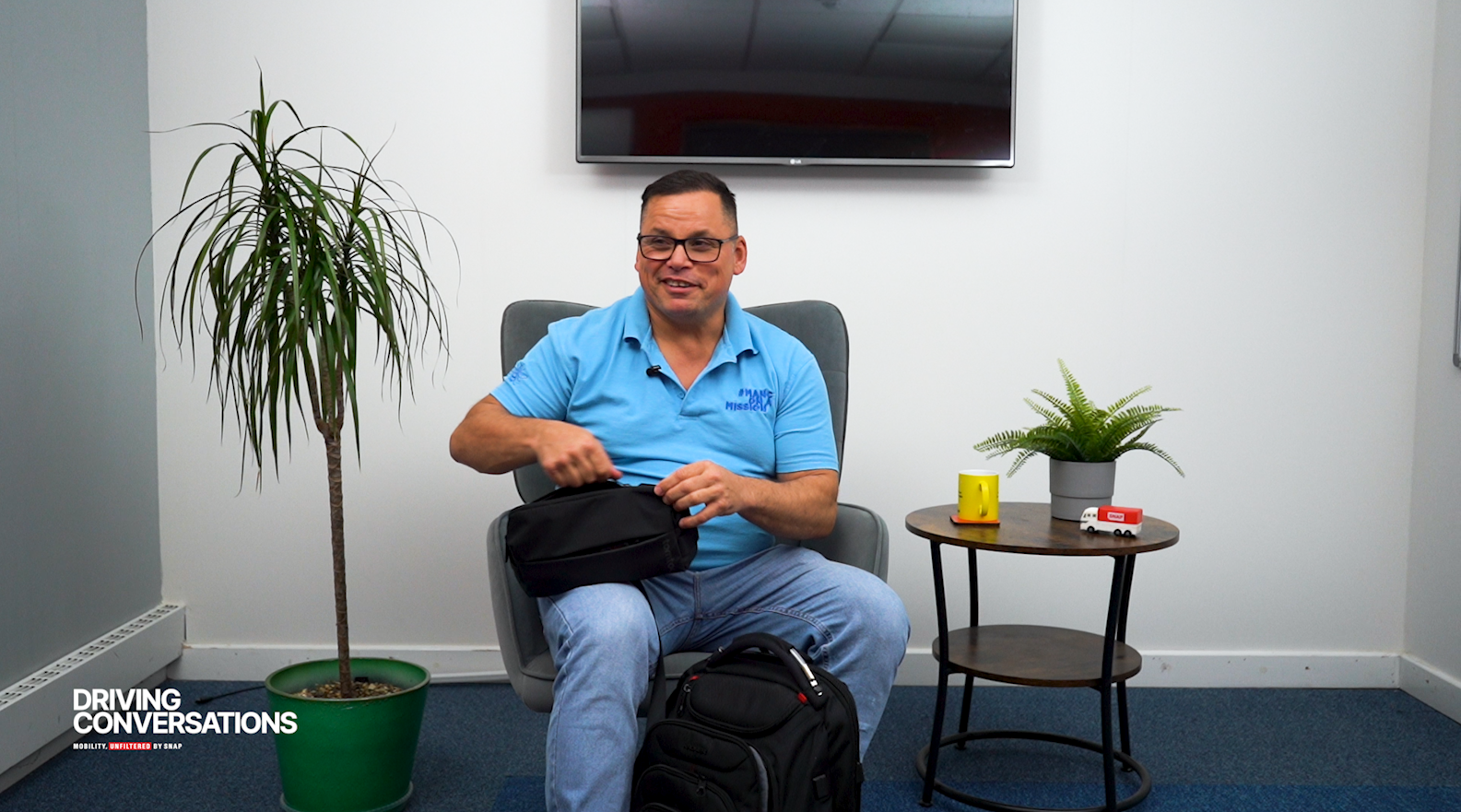
Darren s svojo rastočo spletno platformo Manc on a Mission uporablja družbene medije za izobraževanje ljudi o priložnostih, ki so na voljo v logističnem sektorju.

Njegovi videoposnetki TikTok, ki prikazujejo resnične voznike in resnične poklice, so hitro pridobili na milijone ogledov in so navdihnili številne ljudi zunaj vojaške skupnosti, da se odločijo za poklicno pot v transportu in logistiki. "Mladim in ljudem iz prikrajšanih območij želim pokazati, da je to prava poklicna pot," pojasnjuje Darren. "V tej panogi si lahko ustvarite stabilno življenje." Spodbujanje sprememb na nacionalni ravni Darrenovo delo je pripeljalo tudi do sprememb v nacionalni politiki. Ko je ugotovil, da sredstev za vojaško preselitev ni mogoče uporabiti za usposabljanje voznikov tovornih vozil, ker je razvrščeno pod stopnjo 3, je Darren pravila izpodbijal neposredno pri vladnih ministrih.

Po njegovi kampanji je bila politika spremenjena in je omogočila, da lahko osebe, ki so zapustile službo, izkoristijo dodatne učne točke za usposabljanje za voznike tovornih vozil.

"Šlo je za to, da manj akademski izobraženci ne bi bili izključeni iz priložnosti," pravi Darren.

Kaj sledi za veterane v logistiki

Danes projekt Veterani v logistiki še naprej širi svoj vpliv s partnerstvi z logističnimi podjetji, zapori, kolidži in delodajalci po vsem Združenem kraljestvu. V prihodnosti Darren upa, da bo še naprej odpiral vrata veteranom in drugim, ki bi sicer težko prišli do smiselne zaposlitve. "Če bomo še naprej spreminjali življenja, bo to uspeh," pravi.

Če se ta zgodba nanaša na vas ali koga, ki ga poznate v panogi, se obrnite na Darrena iz ekipe Veterani za logistiko.

info@veteransintologistics.org.uk

Oglejte si celoten intervju: https://www.youtube.com/watch?v=5sID0TswhGI
Delite z

Tudi drugi berejo...

Header Image

petek 29 maj 2026 • Nasveti za voznike

GOVORITI, PREDEN JE REZERVOAR PRAZEN - RAZBIJANJE STIGME IN MOLKA V PREVOZNIŠTVU.

Ellie Aldous

Extended periods away from home, long driving hours and tight delivery schedules are all part of a life in the logistics and haulage industry. But behind the movement of goods that keeps the world moving, there is a growing conversation about something far less visible, the mental health of drivers.With limited to no social interaction during their working week, isolation has become one of the biggest challenges among drivers. This is compounded by pressures on the road, such as finding secure parking for their cargo, managing delivery deadlines, navigating traffic, and maintaining concentration while dealing with mental fatigue.For some, the stresses continue past the steering wheel with some struggling with financial worries, physical wellbeing and difficulty maintaining relationships given they are spending a vast amount of time away from loved ones. What makes the issue even more concerning is that 98% of drivers are male, a group that is often less likely to speak openly about mental health. A UK survey by Priory found that 40% of men have never spoken to anyone about their mental health, with many citing embarrassment, stigma, or fear of appearing weak. Experts say this silence can leave drivers feeling even more disconnected and therefore the cycle continues. So, the big question is how can fleet managers help break the cycle? We have provided some top tips from mental health advocates!Regular check in calls with your drivers Recognise and Reward good work Support healthy rest breaks Offering a confidential support services such as wellbeing apps & counselling services Monthly team catch ups. Here are the top 5 tips to give to your driversMove when you can! A 10-minute walk & stretch can boost energy and improve circulation. Stay Hydrated. Dehydration can lead to fatigue! Keep in touch with others – Regular calls and facetime with family and friends can help you feel more connected Eat Balanced Meals – Choosing a healthy alternative helps maintain your energy. Listen to something positive – Pick a podcast or audio book, something interesting to support the long journey.At SNAP, were more than just a payment solution, we’re committed to driving meaningful, positive change across the industry by supporting not only our service partners, but also the hardworking drivers that keep the world moving.Sources: Men's Mental Health: Why 40% of men won't talk about it Priory Office for National Statistics https://www.nomisweb.co.uk/datasets/aps218/reports/employment-by-occupation?compare=K02000001

Header Image

torek 26 maj 2026 • Nasveti za voznike

POSTOPKI VARNEGA NAKLADANJA IN RAZKLADANJA ZA PREPREČEVANJE KOSTNO-MIŠIČNIH POŠKODB.

Evelyn Long

Musculoskeletal injuries are one of the most persistent challenges facing the fleet industry today. Drivers and warehouse staff face constant physical demands during loading and unloading operations. Implementing proper procedures protects your workforce from chronic pain and career-ending injuries while maintaining the efficiency that keeps your business competitive in demanding markets.Musculoskeletal injuries affect individual workers while draining business resources through lost productivity and increased insurance premiums.When an employee sustains an injury, the financial consequences go beyond the immediate medical expenses. Fleet managers must account for sick leave costs, temporary worker expenses and potential compensation claims.In 2023 to 2024, the total costs of workplace ill health and injury , with injury accounting for 28% or £6.5 billion. These figures demonstrate how injuries translate into economic burdens that affect profit margins.Lost productivity compounds these direct costs. When experienced drivers or warehouse staff take extended leave, operations slow down and remaining team members face increased workloads. The ripple effects touch every aspect of fleet operations, from delayed deliveries to strained client relationships.Drivers who develop musculoskeletal disorders face a difficult reality. Chronic back pain, shoulder injuries and repetitive strain can make basic job functions excruciating. Many drivers report that persistent pain affects their ability to focus during long routes, creating additional safety concerns.Musculoskeletal disorders rank among the in Great Britain. These conditions force experienced professionals out of an industry where they've built years of expertise.UK law requires employers to take specific steps to prevent manual handling injuries. Risk assessment forms the foundation of compliance and serves as the first line of defense against workplace strain.Employers must follow the Manual Handling Operations Regulations from the Health and Safety Executive, which establish a clear hierarchy. First, wherever reasonably practicable. Second, assess any hazardous operations that cannot be avoided. Third, reduce the risk of injury from those operations to the lowest level reasonably practicable.This framework pushes businesses to eliminate manual handling risks entirely. Mechanical equipment must be used whenever possible for moving loads. Any unavoidable manual handling requires proper assessment and mandatory control measures.A suitable and sufficient risk assessment examines four key factors in logistics operations:1. Task: The task itself matters, including whether it involves twisting, stooping or repetitive movements. Load: Load characteristics, such as weight, size and stability, play a role. Environment: Environmental conditions, including space constraints, floor surfaces and temperature extremes, affect safety outcomes. Individual: Individual capabilities vary among workers, who bring different strengths and physical limitations to each job. Effective should lead to concrete improvements. Document your findings and share them with your team.When manual handling becomes inescapable, proper technique can reduce injury risk. Training the workforce in correct lifting methods protects them during daily operations.The feet should be , positioned close to the load. Bending at the knees while maintaining a straight back allows you to grip the load firmly with both hands. Leg muscles should power the lift as you rise smoothly. Keeping the load close to the body throughout the movement prevents strain, as does avoiding any twisting motion during the lift or carry.If you need to strain or jerk to move an object, it requires mechanical assistance or team lifting. Never rush a lift to save time. Taking a few extra seconds to position yourself correctly prevents injuries that could sideline you for weeks.Team lifts require clear communication and planning before anyone touches the load. Designate one person as the lift coordinator who will call out instructions. All team members must understand the lift plan, including grip points, the path of movement and where the load will be placed.The coordinator should count down before the lift begins so everyone moves at the same time. Team members must maintain communication throughout, calling out if they need to pause or adjust.Technology offers powerful tools to reduce or eliminate manual handling risks in fleet operations, while equipment investments protect workers, often improving efficiency and throughput.Mechanical equipment, such as pallet jacks, forklifts and conveyors, eliminates many manual handling injuries. Workers' backs and joints no longer bear the physical strain when machines handle the load. Motorizing the effort required to move heavy loads, battery-electric pallet jacks . These machines can handle significantly more weight than manual versions while requiring minimal physical exertion from operators.Forklifts excel at transporting and lifting materials in warehouse and loading dock environments. Operators control heavy loads from a protected position, eliminating back strain and repetitive-motion injuries associated with manual handling.Data-driven scheduling through predictive systems can and potential delay points across your routes. Fleet managers can use these insights to adjust schedules, allocate additional resources during peak periods and give drivers realistic time frames.When drivers feel rushed, they are more likely to cut corners on safety procedures. Proper scheduling eliminates this pressure. Workers have time to use mechanical equipment properly, conduct team lifts when needed and follow correct manual handling techniques.Emerging wearable devices monitor workers' movements and posture throughout their shifts. These devices use to analyze lifting techniques and provide real-time feedback when workers adopt unsafe postures.Similar technology appears in driver safety applications. A telematics app program helped among young drivers by providing real-time feedback. The same principle applies to physical work, where immediate alerts about improper lifting form can prevent cumulative strain injuries.Fleet operations can use prevention through design (PtD) to eliminate hazards during planning. Vehicle specifications that minimize manual handling requirements, warehouse layouts that facilitate safe movement and procurement decisions that prioritize ergonomics all fall under this proactive approach.Vehicle design choices directly impact daily injury risk. Lower load bed heights reduce the distance workers must lift heavy items, while side-loading configurations ease the strain on workers' backs compared to rear-loading designs. Warehouse layout decisions matter as well, with adequate space around loading docks allowing workers to position themselves correctly and use equipment without awkward maneuvering.Equipment provision alone doesn't guarantee safety. Research shows that while 62.2% of construction workers might work at heights requiring protection, equipment. This gap highlights why PtD matters. When you design operations so that the safe method is also the easiest, compliance becomes natural.Preventing musculoskeletal injuries necessitates ongoing attention. Investing in proper equipment, training and operational design protects your workforce while strengthening your business's reputation and future prospects.Discover more from

Header Image

četrtek 03 april 2025 • Nasveti za voznike

PARKIRNI PREDPISI ZA VOZILA HGV V ZDRUŽENEM KRALJESTVU: KAJ BI MORAL VEDETI VSAK VOZNIK

Susie Jones

For many truck drivers, it can be challenging trying to navigate the number of regulations surrounding overnight truck parking in the UK. After a long day behind the wheel, they must adhere to several rules before they can even think about parking up for the night. We'll delve into these regulations and provide you with everything you need to know. Before we look at parking regulations, it's vital to understand UK and EU laws regarding rest periods. We've collated all you need to know about . However, in a nutshell, if your vehicle exceeds three and a half tonnes, you must have a tachograph fitted. A tachograph will record the number of breaks a driver takes. Truck drivers must adhere to the following:• Drivers must take 11 continuous hours of rest. This can be reduced to nine. • Truck drivers are required to take at least 45 hours of rest. • Driving time can be no longer than four-and-a-half hours before a break. A break must be at least 45 minutes.To comply with parking laws and ensure safety, truck drivers must follow strict regulations regarding where and when they can park overnight:• Many local authorities do not allow truck drivers to park in residential areas doing so may result in a fine or penalty.• If the maximum loaded weight of the vehicle is more than 7.5 tonnes (including any trailer), you must not park on a verge, pavement, or any land between carriageways unless there is police permission. • Truck drivers can use these for overnight parking. However, they provide less security and no amenities. Parking overnight in a lay-by is often the most straightforward and economical option but can pose a greater security risk.Failure to follow HGV parking regulations can result in fines, vehicle clamping, or impounding. These penalties are in place to encourage drivers to comply with the law and ensure road safety.Suitable parking locations include: Specifically designed for HGVs and include facilities such as fuel, food, showers, toilets, and security options. Many motorway service areas (MSAs) will provide areas for HGV parking. Most offer similar facilities as truck stops. SNAP provides drivers with a network of over across Europe. • Downloading a truck parking app can help drivers find locations near them to park up for the night. enables truck drivers to find parking & washing spots across Europe, allowing drivers to book SNAP sites through the app.• Search for a spot that offers essential amenities like food, toilets, and showers for a more comfortable stay. • Most truck stops and MSAs will have security features. Using the or, drivers can check a site's security features, including fencing, CCTV, night watchmen, and TAPA accreditations. Truck drivers can park on verges or pavements if the parking is for essential loading and unloading. There are a few exceptions they must consider before loading and unloading:• Drivers must not park where yellow markings are on the curb, and upright signs advise restrictions. • The vehicle must not be left unattended.• On red routes, drivers should look out for specially marked and signposted bays showing when and where loading and unloading is permitted. • Councils and private estates may have different regulations. Truck drivers are restricted to using lanes one and two. On a four-lane motorway, drivers can use lane three. However, HGVs are not permitted to use the furthest right lane.A road may be marked unsuitable for heavy goods vehicles for the following reasons: These pose a challenge for many HGVs, especially long or articulated trucks. Ascending a steep incline for an HGV is a difficult task due to its heavy load, leading to reduced traction and wheel spin. Roads with limited width can feature sharp bends or walls on either side and are unsuitable for trucks. Due to their turning radius of HGVs, they require more space to maneuver. Roads with walls on either side leave little room for error and increase the risk of an HGV becoming stuck or causing damage.