Ellie Aldous
Advies voor bestuurders • 3 min lezen

Van strijd naar kracht: hoe Darren Wright veteranen helpt hun leven weer op te bouwen door middel van logistiek

Gemaakt: 29-05-2026

Bijgewerkt: 29-05-2026

Voor veel veteranen betekent het verlaten van het leger veel meer dan het verliezen van een carrière. Het kan betekenen dat ze structuur, identiteit, doel en gemeenschap verliezen.

Voor Darren Wright, oprichter van Veterans into Logistics, was die overgang zeer persoonlijk.

Na bijna zes jaar in het Britse leger te hebben gediend, waaronder een tour door Afghanistan als luchtverdedigingsschutter, worstelde Darren met zijn eigen overgang naar het burgerleven. Hij had te maken met dakloosheid, psychische problemen, het stuklopen van zijn huwelijk en uiteindelijk zat hij een gevangenisstraf uit.

In plaats van hem te definiëren, werden deze ervaringen de drijvende kracht achter een missie die nu levens in heel Groot-Brittannië verandert.

"Ik heb mijn leven weer opgebouwd door vrachtwagenchauffeur te worden," legt Darren uit. "En ik realiseerde me dat als het mij kon helpen mijn leven weer op te bouwen, het ook andere veteranen kon helpen hun leven weer op te bouwen."

Veterans Into Logistics is opgericht in 2020 en ondersteunt ex-servicemedewerkers bij het vinden van een duurzame carrière in de logistieke sector door hen te helpen bij het behalen van vrachtwagenrijbewijzen, opleidingen en werkgelegenheid.

De organisatie werd deels geïnspireerd door het verlies van Darrens vriend Jamie Doyle, een voormalig soldaat van de Royal Artillery die minder dan zes maanden na zijn vertrek uit het leger op tragische wijze overleed.

"Jamie had 22 jaar gediend en was zwaar gedecoreerd," zegt Darren. "Maar zoals veel veteranen worstelde hij met de overgang. Het verliezen van die structuur, dat doel en die identiteit kan mensen ongelooflijk hard raken." Dat verlies werd de katalysator voor actie.

Kansen creëren via logistiek

Darren zag in dat logistiek iets bood wat veel veteranen hard nodig hadden: een snelle, toegankelijke route naar vast werk. "In zes weken kan iemand van een autorijbewijs een vrachtwagenchauffeur worden die een goed salaris verdient," legt hij uit. "Voor veel mensen, vooral degenen die geen academische opleiding hebben genoten, kan dat hun toekomst volledig veranderen." Veterans Into Logistics werkt nu met veteranen, ex-gedetineerden en mensen uit kansarme milieus om hen te helpen toegang te krijgen tot training, werk en carrièremogelijkheden op de lange termijn. Het programma richt zich niet alleen op vaardigheidstraining, maar ook op het herstellen van vertrouwen en hoop.

"Als iemand op het dieptepunt van zijn leven bij ons komt, is het eerste wat we doen hem hoop geven", zegt Darren. "Het boeken van die eerste medische afspraak lijkt misschien klein, maar het geeft iemand het geloof dat er eindelijk iets verandert." De resultaten zijn transformerend geweest.

Darren vertelde het verhaal van een veteraan die hij ontmoette toen hij op straat sliep in Manchester. Nadat hij in contact was gekomen met Veterans Into Logistics, behaalde de veteraan zijn vrachtwagenrijbewijs, kreeg hij een baan en later kwam hij trots terug om Darren de auto te laten zien die hij dankzij zijn harde werk had kunnen kopen.

Een andere veteraan die na zijn vertrek uit het leger herhaaldelijk de gevangenis in en uit was gefietst, werd ondersteund bij het volgen van een opleiding en het vinden van een baan. Sindsdien heeft hij zijn leven weer opgebouwd en is hij niet meer in overtreding geweest. "Dit zijn mensen die gewoon de juiste hulpmiddelen en de juiste kans nodig hadden," zegt Darren. "Ik zeg altijd dat ik iemand liever een hengel geef dan een vis.

Percepties van de sector uitdagen

Darren is ook gepassioneerd over het veranderen van percepties rond logistieke carrières.

"Er bestaat een misvatting dat elke functie als chauffeur betekent dat je van maandag tot vrijdag in een vrachtwagen moet slapen," zegt hij. "Dat is niet waar. Er zijn zoveel verschillende soorten banen als chauffeur - gemeentewerk, luchthavenwerkzaamheden, supermarktleveringen, wegenonderhoud, Formule 1-logistiek en nog veel meer."

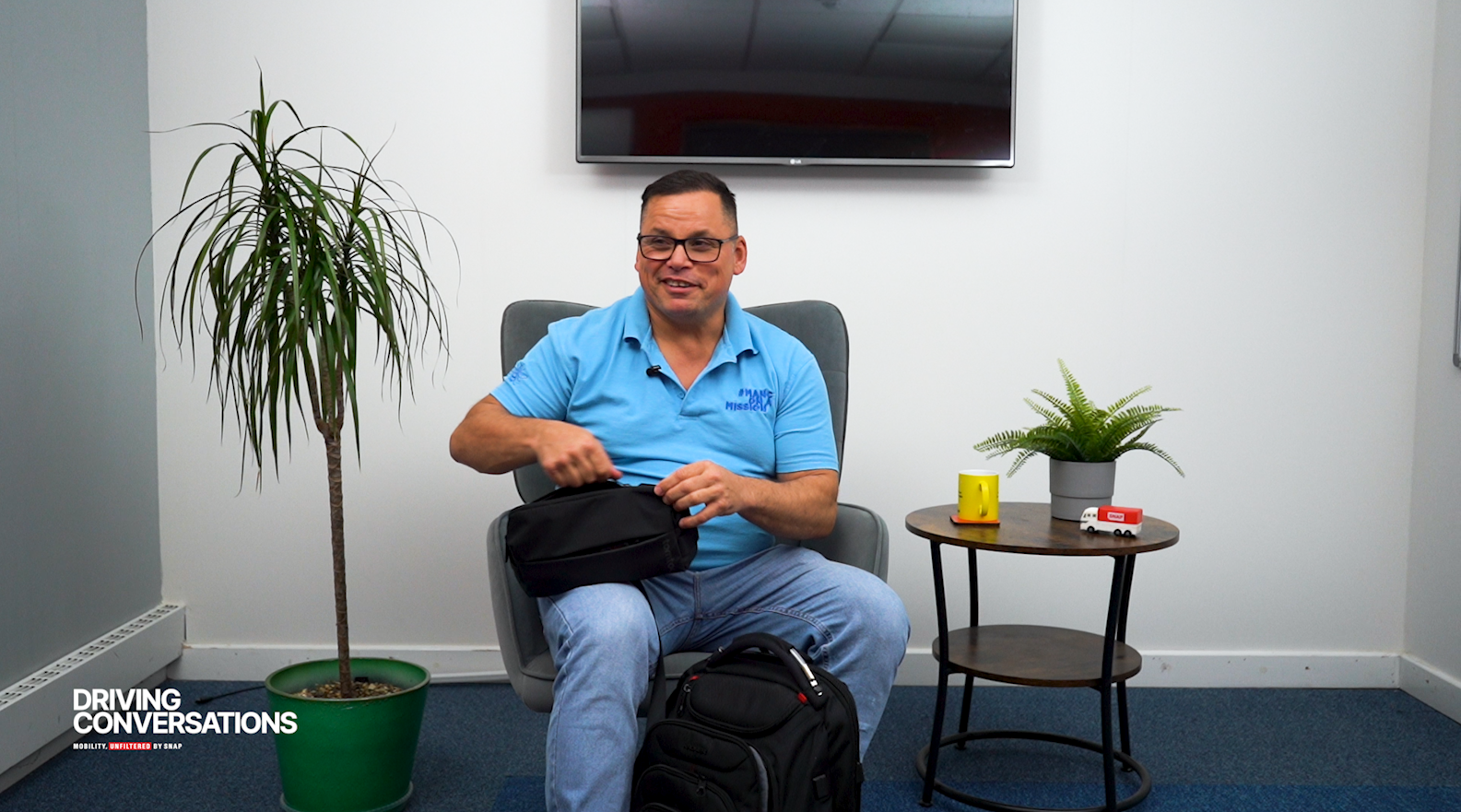
Via zijn groeiende online platform, Manc on a Mission, gebruikt Darren sociale media om mensen te informeren over de mogelijkheden in de logistieke sector.

Zijn TikTok-video's, die echte chauffeurs en echte carrières laten zien, werden al snel miljoenen keren bekeken en hebben veel mensen buiten de militaire gemeenschap geïnspireerd om een carrière in transport en logistiek te verkennen. "Ik wil jongeren en mensen uit achterstandswijken laten zien dat dit een echt carrièrepad is," legt Darren uit. "In deze sector kun je een stabiel leven opbouwen." Nationaal aanzetten tot verandering Darrens werk heeft ook geleid tot nationale beleidsveranderingen. Nadat Darren ontdekte dat financiering voor militaire hervestiging niet gebruikt kon worden voor vrachtwagenchauffeursopleidingen omdat het onder niveau 3 onderwijs viel, heeft hij de regels direct aangevochten bij ministers.

Na zijn campagne werd het beleid gewijzigd, waardoor dienstverlaters Enhanced Learning Credits konden gebruiken voor de opleiding tot vrachtwagenchauffeur.

"Het ging erom ervoor te zorgen dat minder academische dienstverlaters niet werden uitgesloten van kansen," zegt Darren.

Wat is de volgende stap voor veteranen in de logistiek?

Vandaag de dag blijft Veterans into Logistics zijn invloed uitbreiden door middel van partnerschappen met logistieke bedrijven, gevangenissen, hogescholen en werkgevers in het hele Verenigd Koninkrijk. Vooruitkijkend hoopt Darren deuren te blijven openen voor veteranen en anderen die anders moeite zouden hebben om toegang te krijgen tot zinvol werk. "Als we levens blijven veranderen, is dat een succes", zegt hij.

Als dit verhaal jou of iemand die je kent binnen de sector aanspreekt, neem dan contact op met Darren van het team van Veterans for Logistics.

info@veteransintologistics.org.uk

Bekijk het volledige interview: https://www.youtube.com/watch?v=5sID0TswhGI
Deel naar

Anderen lezen ook...

Header Image

vrijdag 29 mei 2026 • Advies voor bestuurders

PRAAT VOORDAT DE TANK LEEG IS - DOORBREEK HET STIGMA EN DE STILTE IN DE TRANSPORTSECTOR.

Ellie Aldous

Extended periods away from home, long driving hours and tight delivery schedules are all part of a life in the logistics and haulage industry. But behind the movement of goods that keeps the world moving, there is a growing conversation about something far less visible, the mental health of drivers.With limited to no social interaction during their working week, isolation has become one of the biggest challenges among drivers. This is compounded by pressures on the road, such as finding secure parking for their cargo, managing delivery deadlines, navigating traffic, and maintaining concentration while dealing with mental fatigue.For some, the stresses continue past the steering wheel with some struggling with financial worries, physical wellbeing and difficulty maintaining relationships given they are spending a vast amount of time away from loved ones. What makes the issue even more concerning is that 98% of drivers are male, a group that is often less likely to speak openly about mental health. A UK survey by Priory found that 40% of men have never spoken to anyone about their mental health, with many citing embarrassment, stigma, or fear of appearing weak. Experts say this silence can leave drivers feeling even more disconnected and therefore the cycle continues. So, the big question is how can fleet managers help break the cycle? We have provided some top tips from mental health advocates!Regular check in calls with your drivers Recognise and Reward good work Support healthy rest breaks Offering a confidential support services such as wellbeing apps & counselling services Monthly team catch ups. Here are the top 5 tips to give to your driversMove when you can! A 10-minute walk & stretch can boost energy and improve circulation. Stay Hydrated. Dehydration can lead to fatigue! Keep in touch with others – Regular calls and facetime with family and friends can help you feel more connected Eat Balanced Meals – Choosing a healthy alternative helps maintain your energy. Listen to something positive – Pick a podcast or audio book, something interesting to support the long journey.At SNAP, were more than just a payment solution, we’re committed to driving meaningful, positive change across the industry by supporting not only our service partners, but also the hardworking drivers that keep the world moving.Sources: Men's Mental Health: Why 40% of men won't talk about it Priory Office for National Statistics https://www.nomisweb.co.uk/datasets/aps218/reports/employment-by-occupation?compare=K02000001

Header Image

dinsdag 26 mei 2026 • Advies voor bestuurders

VEILIGE LAAD- EN LOSPROCEDURES OM LETSEL AAN HET BEWEGINGSAPPARAAT TE VOORKOMEN

Evelyn Long

Musculoskeletal injuries are one of the most persistent challenges facing the fleet industry today. Drivers and warehouse staff face constant physical demands during loading and unloading operations. Implementing proper procedures protects your workforce from chronic pain and career-ending injuries while maintaining the efficiency that keeps your business competitive in demanding markets.Musculoskeletal injuries affect individual workers while draining business resources through lost productivity and increased insurance premiums.When an employee sustains an injury, the financial consequences go beyond the immediate medical expenses. Fleet managers must account for sick leave costs, temporary worker expenses and potential compensation claims.In 2023 to 2024, the total costs of workplace ill health and injury , with injury accounting for 28% or £6.5 billion. These figures demonstrate how injuries translate into economic burdens that affect profit margins.Lost productivity compounds these direct costs. When experienced drivers or warehouse staff take extended leave, operations slow down and remaining team members face increased workloads. The ripple effects touch every aspect of fleet operations, from delayed deliveries to strained client relationships.Drivers who develop musculoskeletal disorders face a difficult reality. Chronic back pain, shoulder injuries and repetitive strain can make basic job functions excruciating. Many drivers report that persistent pain affects their ability to focus during long routes, creating additional safety concerns.Musculoskeletal disorders rank among the in Great Britain. These conditions force experienced professionals out of an industry where they've built years of expertise.UK law requires employers to take specific steps to prevent manual handling injuries. Risk assessment forms the foundation of compliance and serves as the first line of defense against workplace strain.Employers must follow the Manual Handling Operations Regulations from the Health and Safety Executive, which establish a clear hierarchy. First, wherever reasonably practicable. Second, assess any hazardous operations that cannot be avoided. Third, reduce the risk of injury from those operations to the lowest level reasonably practicable.This framework pushes businesses to eliminate manual handling risks entirely. Mechanical equipment must be used whenever possible for moving loads. Any unavoidable manual handling requires proper assessment and mandatory control measures.A suitable and sufficient risk assessment examines four key factors in logistics operations:1. Task: The task itself matters, including whether it involves twisting, stooping or repetitive movements. Load: Load characteristics, such as weight, size and stability, play a role. Environment: Environmental conditions, including space constraints, floor surfaces and temperature extremes, affect safety outcomes. Individual: Individual capabilities vary among workers, who bring different strengths and physical limitations to each job. Effective should lead to concrete improvements. Document your findings and share them with your team.When manual handling becomes inescapable, proper technique can reduce injury risk. Training the workforce in correct lifting methods protects them during daily operations.The feet should be , positioned close to the load. Bending at the knees while maintaining a straight back allows you to grip the load firmly with both hands. Leg muscles should power the lift as you rise smoothly. Keeping the load close to the body throughout the movement prevents strain, as does avoiding any twisting motion during the lift or carry.If you need to strain or jerk to move an object, it requires mechanical assistance or team lifting. Never rush a lift to save time. Taking a few extra seconds to position yourself correctly prevents injuries that could sideline you for weeks.Team lifts require clear communication and planning before anyone touches the load. Designate one person as the lift coordinator who will call out instructions. All team members must understand the lift plan, including grip points, the path of movement and where the load will be placed.The coordinator should count down before the lift begins so everyone moves at the same time. Team members must maintain communication throughout, calling out if they need to pause or adjust.Technology offers powerful tools to reduce or eliminate manual handling risks in fleet operations, while equipment investments protect workers, often improving efficiency and throughput.Mechanical equipment, such as pallet jacks, forklifts and conveyors, eliminates many manual handling injuries. Workers' backs and joints no longer bear the physical strain when machines handle the load. Motorizing the effort required to move heavy loads, battery-electric pallet jacks . These machines can handle significantly more weight than manual versions while requiring minimal physical exertion from operators.Forklifts excel at transporting and lifting materials in warehouse and loading dock environments. Operators control heavy loads from a protected position, eliminating back strain and repetitive-motion injuries associated with manual handling.Data-driven scheduling through predictive systems can and potential delay points across your routes. Fleet managers can use these insights to adjust schedules, allocate additional resources during peak periods and give drivers realistic time frames.When drivers feel rushed, they are more likely to cut corners on safety procedures. Proper scheduling eliminates this pressure. Workers have time to use mechanical equipment properly, conduct team lifts when needed and follow correct manual handling techniques.Emerging wearable devices monitor workers' movements and posture throughout their shifts. These devices use to analyze lifting techniques and provide real-time feedback when workers adopt unsafe postures.Similar technology appears in driver safety applications. A telematics app program helped among young drivers by providing real-time feedback. The same principle applies to physical work, where immediate alerts about improper lifting form can prevent cumulative strain injuries.Fleet operations can use prevention through design (PtD) to eliminate hazards during planning. Vehicle specifications that minimize manual handling requirements, warehouse layouts that facilitate safe movement and procurement decisions that prioritize ergonomics all fall under this proactive approach.Vehicle design choices directly impact daily injury risk. Lower load bed heights reduce the distance workers must lift heavy items, while side-loading configurations ease the strain on workers' backs compared to rear-loading designs. Warehouse layout decisions matter as well, with adequate space around loading docks allowing workers to position themselves correctly and use equipment without awkward maneuvering.Equipment provision alone doesn't guarantee safety. Research shows that while 62.2% of construction workers might work at heights requiring protection, equipment. This gap highlights why PtD matters. When you design operations so that the safe method is also the easiest, compliance becomes natural.Preventing musculoskeletal injuries necessitates ongoing attention. Investing in proper equipment, training and operational design protects your workforce while strengthening your business's reputation and future prospects.Discover more from

Header Image

donderdag 03 april 2025 • Advies voor bestuurders

HGV-PARKEERREGELS IN HET VERENIGD KONINKRIJK: WAT ELKE BESTUURDER MOET WETEN

Susie Jones

For many truck drivers, it can be challenging trying to navigate the number of regulations surrounding overnight truck parking in the UK. After a long day behind the wheel, they must adhere to several rules before they can even think about parking up for the night. We'll delve into these regulations and provide you with everything you need to know. Before we look at parking regulations, it's vital to understand UK and EU laws regarding rest periods. We've collated all you need to know about . However, in a nutshell, if your vehicle exceeds three and a half tonnes, you must have a tachograph fitted. A tachograph will record the number of breaks a driver takes. Truck drivers must adhere to the following:• Drivers must take 11 continuous hours of rest. This can be reduced to nine. • Truck drivers are required to take at least 45 hours of rest. • Driving time can be no longer than four-and-a-half hours before a break. A break must be at least 45 minutes.To comply with parking laws and ensure safety, truck drivers must follow strict regulations regarding where and when they can park overnight:• Many local authorities do not allow truck drivers to park in residential areas doing so may result in a fine or penalty.• If the maximum loaded weight of the vehicle is more than 7.5 tonnes (including any trailer), you must not park on a verge, pavement, or any land between carriageways unless there is police permission. • Truck drivers can use these for overnight parking. However, they provide less security and no amenities. Parking overnight in a lay-by is often the most straightforward and economical option but can pose a greater security risk.Failure to follow HGV parking regulations can result in fines, vehicle clamping, or impounding. These penalties are in place to encourage drivers to comply with the law and ensure road safety.Suitable parking locations include: Specifically designed for HGVs and include facilities such as fuel, food, showers, toilets, and security options. Many motorway service areas (MSAs) will provide areas for HGV parking. Most offer similar facilities as truck stops. SNAP provides drivers with a network of over across Europe. • Downloading a truck parking app can help drivers find locations near them to park up for the night. enables truck drivers to find parking & washing spots across Europe, allowing drivers to book SNAP sites through the app.• Search for a spot that offers essential amenities like food, toilets, and showers for a more comfortable stay. • Most truck stops and MSAs will have security features. Using the or, drivers can check a site's security features, including fencing, CCTV, night watchmen, and TAPA accreditations. Truck drivers can park on verges or pavements if the parking is for essential loading and unloading. There are a few exceptions they must consider before loading and unloading:• Drivers must not park where yellow markings are on the curb, and upright signs advise restrictions. • The vehicle must not be left unattended.• On red routes, drivers should look out for specially marked and signposted bays showing when and where loading and unloading is permitted. • Councils and private estates may have different regulations. Truck drivers are restricted to using lanes one and two. On a four-lane motorway, drivers can use lane three. However, HGVs are not permitted to use the furthest right lane.A road may be marked unsuitable for heavy goods vehicles for the following reasons: These pose a challenge for many HGVs, especially long or articulated trucks. Ascending a steep incline for an HGV is a difficult task due to its heavy load, leading to reduced traction and wheel spin. Roads with limited width can feature sharp bends or walls on either side and are unsuitable for trucks. Due to their turning radius of HGVs, they require more space to maneuver. Roads with walls on either side leave little room for error and increase the risk of an HGV becoming stuck or causing damage.