Guest
Naujienos ir atnaujinimai • 4 min perskaityti

Užtikrinkite sklandų savo automobilių parko veikimą atostogų sezono metu

Sukurta: 04-12-2025

Atnaujinta: 04-12-2025

Artėjant atostogų sezonui tikriausiai ruošiatės padidėjusiai pristatymo paklausai ir sudėtingesnėms darbo sąlygoms. Šis sezoninis spaudimas sutampa su žiemos orų iššūkiais, todėl automobilių parkams visoje Jungtinėje Karalystėje susidaro unikali rizikos aplinka.

Kaip žiemos šventės apsunkina jūsų transporto priemonių parką

Šventiniu laikotarpiu jūsų transporto priemonėms ir veiklai tenka papildomas krūvis. Vienu metu susikaupia keli sezoniniai veiksniai - nuo vartotojų nuvažiuotų kilometrų skaičiaus padidėjimo iki šalto oro poveikio transporto priemonių eksploatacinėms savybėms. Jei iš anksto suprasite šį spaudimą, galėsite iš anksto pasiruošti ir iki minimumo sumažinti parko veiklos sutrikimus.

Padidėjusi paklausa ir ribotas langų skaičius

Vartotojų aktyvumas paprastai išauga per atostogų sezoną, dėl kurio padidėja pristatymo apimtys, sutrumpėja tvarkaraščiai ir išauga paslaugų lūkesčiai. Šis šuolis reiškia, kad net nedideli sutrikimai gali greitai išaugti, nes transporto parkai turi mažiau galimybių prisitaikyti prie vėlavimų. Kai suplanuojama daugiau reisų ir trumpesnis perdavimo laikas, transporto priemonių prastovos kainuoja brangiau. Neatlikta patikra ar vėluojantis remontas gali turėti daug didesnį poveikį veiklai nei kitais metų laikais.

Bendras atostogų paklausos ir žiemos pavojų poveikis

Kai vartotojų aktyvumo pikas sutampa su pavojingomis oro sąlygomis, transporto priemonių parkai patiria didesnę riziką. Padidėja eismo spūstys, pablogėja kelių būklė, o nedidelės mechaninės problemos gali lengviau peraugti į rimtus incidentus. Norėdami kovoti su šiomis problemomis, turite sustiprinti prevencinę techninę priežiūrą, koreguoti tvarkaraščius ir pagerinti stebėjimą realiuoju laiku, kad išvengtumėte gedimų ar vėlavimų, kurių galima išvengti.

Žiemos sąlygos ir jų poveikis veiklai

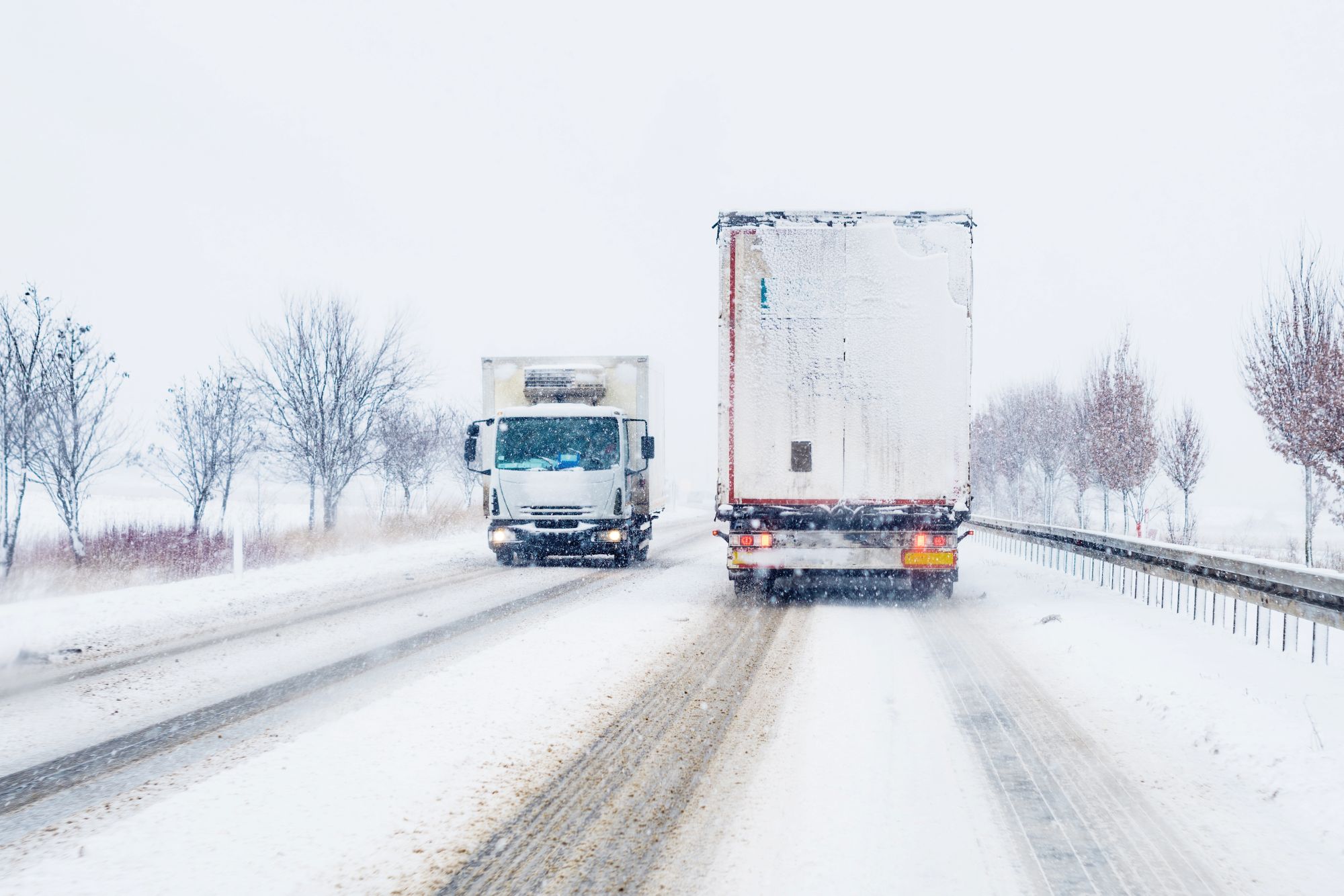
Dėl žemos temperatūros, apledėjusios dangos ir sumažėjusio dienos apšvietimo padidėja mechaninė ir kelių transporto priemonių rizika, padidėja silpstančių akumuliatorių, sumažėjusio padangų sukibimo ir matomumo problemų tikimybė. Jungtinės Karalystės techninės apžiūros standartuose pabrėžiama, kad, pablogėjus sąlygoms, žiemą reikia atlikti griežtesnę stabdžių, apšvietimo, skysčių ir padangų techninę priežiūrą, todėl dar labiau sustiprėja svarba, kodėl pasirengimas žiemos sezonui yra labai svarbus siekiant užtikrinti nepertraukiamą transporto priemonių parko veiklą. Net ir nedidelis šaltis gali sumažinti variklio ir hidraulikos našumą, todėl aktyvi žiemos techninė priežiūra yra labai svarbi.
Darbo eigos ir vairuotojo iššūkiai

Šventinis sezonas ir žiemos sąlygos kelia ne tik transporto priemonių apkrovą, bet ir spaudimą vairuotojams bei darbo procesams. Padidėjęs eismas, nenuspėjami orai ir trumpesni pristatymo terminai gali lemti nuovargį, stresą ir didesnę nelaimingų atsitikimų riziką. Norint užtikrinti saugą ir užtikrinti, kad jūsų transporto priemonių parkas ir toliau efektyviai dirbtų esant tokiam sezoniniam spaudimui, labai svarbu kruopščiai planuoti darbus, aiškiai bendrauti ir aktyviai padėti vairuotojams.

Strategijos, kaip užtikrinti, kad jūsų transporto priemonių parkas veiktų sklandžiai

Norint išlaikyti stabilų darbą per šventinį skubėjimą, reikia ne tik reaguoti į problemas. Reikia apgalvotai planuoti transporto priemonių techninę priežiūrą, vairuotojų pasirengimą, technologijų naudojimą ir veiklos koordinavimą. Šios supaprastintos strategijos padės jums aplenkti žiemos sezono trikdžius ir išlaikyti pastovų transporto priemonių parko našumą per šventes.

1.Nustatykite prevencinės techninės priežiūros prioritetus

Sezoninė paklausa dažnai reikalauja, kad transporto priemonės ilgesnį laiką dirbtų sudėtingesnėmis sąlygomis, todėl prevencinė techninė priežiūra yra vienas veiksmingiausių būdų užkirsti kelią gedimams sezono metu. Statybose prastovos gali kainuoti iki 760 JAV dolerių vienai transporto priemonei, todėl išryškėja aktyvios priežiūros svarba.

Daugiausia dėmesio skirkite žiemą svarbiausioms sistemoms, pavyzdžiui, akumuliatoriams, stabdžiams, šildymo ir atitirpinimo sistemoms, padangoms ir skysčių lygiui. Spręsdami smulkias problemas prieš šventinį piką, užtikrinkite, kad jūsų transporto priemonės sezoną pradės geriausios būklės, ir sumažinkite neplanuotų prastovų riziką, kai pajėgumai yra mažiausi.

2.Stiprinti vairuotojų pasirengimą

Šventiniu laikotarpiu vairuotojai susiduria su didesniu spaudimu - nuo spūsčių keliuose iki nenuspėjamų oro sąlygų. Ankstyvas jų parengimas padeda sumažinti riziką ir išlaikyti paslaugų patikimumą. Dalinkitės atnaujintais vairavimo žiemą protokolais, sustiprinkite geriausią nuovargio valdymo praktiką ir užtikrinkite, kad kiekvienoje transporto priemonėje būtų būtiniausia įranga šaltuoju metų laiku. Gerai pasirengęs vairuotojas gali veiksmingiau prisitaikyti prie sezoninių pavojų ir saugiai tęsti keliones.

3.Patobulinkite savo dalių ir remonto strategiją

Per šventes dėl padidėjusios paklausos ir tiekėjų veiklos sulėtėjimo tampa sunkiau gauti dalių ir remonto pagalbą. Iš anksto užsitikrindami pagrindinius komponentus ir patvirtindami remonto dirbtuvių prieinamumą, galite greitai reaguoti į sezono viduryje kylančias problemas. Šie veiksmai sumažina ilgo vėlavimo tikimybę ir leidžia išlaikyti daugiau jūsų transporto priemonių kelyje didžiausio darbo krūvio metu.

4.Telematikos ir realaus laiko duomenų panaudojimas

Tikslios įžvalgos realiuoju laiku tampa dar vertingesnės, kai oro ir eismo sąlygos gali greitai keistis. Telematikos sistemos padeda stebėti vairuotojų elgesį, nustatyti kylančias transporto priemonių problemas ir aktyviai pritaikyti maršrutus. Duomenų naudojimas priimant sprendimus tą pačią dieną, t. y. keičiant maršrutus, tvarkaraščius ar techninės priežiūros darbus, padeda jūsų automobilių parkui išlikti operatyviam per visas šventes.

5.Stiprinti bendravimą ir planavimą

Sezoninių pikų metu reikia glaudžiau suderinti dispečerių, vairuotojų, techninės priežiūros komandų ir klientų veiksmus. Aiškus bendravimas sumažina neapibrėžtumą ir palengvina tvarkaraščių koregavimą pasikeitus sąlygoms. Reguliariai dalinkitės naujausia informacija apie orų perspėjimus, maršrutų pakeitimus, pristatymo langus ir transporto priemonių prieinamumą, kad visi išliktų koordinuoti ir galėtų greitai reaguoti.

6.Sukurkite nenumatytų atvejų planus

Net ir gerai pasiruošus, žiemą atsiranda kintamųjų, kurių nė vienas laivynas negali visiškai kontroliuoti. Sukurti nenumatytų atvejų planai suteikia jūsų komandai struktūrizuotą atsaką įvykus incidentams. Nustatykite atsarginius maršrutus, nurodykite alternatyvius tiekėjus ir dirbtuves ir, jei įmanoma, laikykitės atsarginių transporto priemonių strategijos. Planuojant trikdžius užtikrinama, kad netikėtos problemos visiškai nesustabdys veiklos.

Jūsų atostogų parko pasirengimo kontrolinis sąrašas

Naudodamiesi šiuo kontroliniu sąrašu įsitikinkite, kad jūsų komanda, transporto priemonės ir darbo procesai yra pasirengę darbingiausiam metų etapui:

Optimizuoti maršruto planavimą: Peržiūrėkite istorinius eismo duomenis ir numatomą šventinę spūstį, kad sudarytumėte efektyvesnius maršrutus. Realiuoju laiku stebimos ir pranešamos sąlygos padeda sumažinti vėlavimus ir degalų švaistymą.

Patikrinkite, ar transporto priemonė tinkama žiemai: Patikrinkite akumuliatorius, skysčius, padangas, valytuvus ir šildymo sistemas, kad išvengtumėte gedimų šaltuoju metų laiku ir padidintumėte vairuotojo saugumą.

Sustiprinkite vairuotojų pasirengimą: surenkite trumpus žinių atnaujinimo kursus apie vairavimo žiemą techniką, nuovargio valdymą ir avarinių situacijų protokolus. Tai padeda užtikrinti ir saugą, ir produktyvumą.

Padidinkite profilaktinės techninės priežiūros dažnumą: Atostogų metu nuvažiuota rida ir šaltos temperatūros gali pagreitinti nusidėvėjimą. Griežtesnis techninės priežiūros grafikas padeda užfiksuoti problemas, kol jos nesukėlė prastovų.

Patikrinkite sekimo ir daiktų interneto patikimumą: Užtikrinkite, kad turto sekimo įrenginiai ir jutikliai visiškai veiktų ir užtikrintų tikslius buvimo vietos ir būklės duomenis didžiausios paklausos metu.

Peržiūrėkite tiekėjų ir dalių prieinamumą: daugelis tiekėjų švenčių metu dirba sutrumpintomis valandomis. Iš anksto pasirūpinkite dalimis ir eksploatacinėmis medžiagomis, kad išvengtumėte remonto vėlavimo.

Aplenkite sezoninį spaudimą

Šventinės ir žiemos sąlygos sustiprina kiekvieną nedidelį neveiksmingumą. Ankstyvas pasiruošimas padeda išvengti prastovų, kurių galima išvengti, stiprina vairuotojų saugumą ir užtikrina, kad jūsų veikla vyktų sunkiausiu metų laiku. Tiksliai planuodami, naudodami patikimas priemones ir aktyvų techninės priežiūros ritmą, automobilių parkai gali sezoninius iššūkius paversti galimybėmis siekti geresnių rezultatų ir klientų pasitenkinimo.

Sužinokite daugiau iš [Renovated Magazine] (https://renovated.com/)
Dalytis su

Kiti taip pat skaito...

Header Image

penktadienis 19 gruodžio 2025 • Naujienos ir atnaujinimai

AR JŪSŲ LAIVYNAS YRA TAIKINYS? SAUGUMO PRIORITETŲ NUSTATYMAS TECHNOLOGIJŲ PASAULYJE

Guest

Cybersecurity readiness must be a top priority for fleet owners and managers in the United Kingdom. The rapid digital transformation in the transportation and logistics industry has made fleets attractive targets for hackers. Learn about the cybersecurity trends fleet operators must be aware of and strategies you should adopt to lower your susceptibility to attacks.The advent of connected vehicles, push for fleet electrification, integration of Internet of Things (IoT) devices and reliance on automation have expanded the attack surface opportunistic cybercriminals can exploit to infiltrate your network.Vulnerable telematics back-end systems, insecure over-the-air firmware updates and buggy APIs are common entry points for phishers, data thieves, business saboteurs and ransomware attackers. Threat actors are also increasingly leveraging artificial intelligence to launch more believable scams.Falling victim to a cyberattack can cause more than extended, unscheduled downtime. A high-profile security incident can inflict severe reputational damage on your organisation and harm your business in the long term.Although your cyber insurance coverage may compensate you millions for losses, the financial impact can lead to insolvency — as happened to KNP Logistics in June 2025. An Akira ransomware attack exacerbated this major logistics group’s preexisting financial struggles, and let go of 730 employees.Every business is at risk from cyberattacks, but these strategies can help make your fleet management software and vehicles less vulnerable.A robust threat intelligence platform strengthens cybersecurity, as it allows you to proactively defend your assets from malicious actors and minimise your losses if they target you. Here are the primary ways to use threat intel to improve your security posture:Contextualisation enables your team to identify the perpetrators behind specific attacks, understand their motives and capabilities, determine what they want from your organisation, and comprehend their methods. Context transforms raw threat data into actionable intelligence, enabling you to inform your decision-making.Attackers evolve, so learning how they operated in the past is not enough to accurately anticipate their future actions. A threat intelligence platform can help you keep pace with known malicious actors and familiarise your team with relatively unknown ones. Some organisations use deception technologies to lure cybercriminals and watch them in action in a controlled environment.A software solution that can integrate into your company’s existing tools breaks down silos and allows threat intelligence to flow freely across teams. Cross-departmental collaboration is the key to implementing an organisation-wide cybersecurity strategy effectively.A threat intelligence platform can monitor your network activity and sense attack patterns early enough to notify your Security Operations Centre or IT professionals immediately. Early detection is vital to count threats before they infiltrate deeply into your system and cause more harm.Responding to urgent incidents involves less manual work with a threat intelligence platform. This software solution can orchestrate essential tasks to mitigate breaches, enabling your in-house cybersecurity professionals to focus on activities where human input is more impactful.Regulatory frameworks and data privacy standards are becoming more stringent over time. A threat intelligence platform aids compliance by ensuring that your team handles sensitive data responsibly and generates detailed reports to document your best practices.Zero trust minimises the likelihood of unauthorised access to fleet management systems by continuously verifying every user and device and enforcing identity-centric access control.This approach acknowledges that threats can come from within the organisation. Assuming that each request may come from a malicious actor reflects the level of vigilance you must exercise to protect your operation from sophisticated attacks and help your team adapt to complex, dynamic environments involving remote users, IoT devices and cloud services.After verification, zero trust gives users and devices just enough access to perform specific tasks. The principle of least privilege enables effective threat containment if a cybercriminal gets in.According to Cybersecurity Insiders’ 2024 Insider Threat Report, insider threat attacks have spiked. In October 2024, 51% of the 413 respondents in IT and cybersecurity reportedly over the past year. 29% reported spending over $1 million on remediation.The adoption of new technologies is a primary driver behind the rise in these cyberattacks. Investing in employee training is crucial for preventing team members from becoming insider threats.Provide target users with sufficient resources to familiarise themselves with the technologies. Highlight the ways they may inadvertently leak sensitive information or compromise the system. Tell them the red flags to watch out for to identify malicious schemes and teach them safe, responsible ways to deal with cybercriminals.Tight physical security can safeguard your assets from digital hijackers. Effective physical protection often involves a layered approach, which includes perimeter fencing, strategic placement of surveillance equipment and tamper-evident vehicle electronics casings. Additionally, limiting visibility with opaque doors , thereby adding an extra layer of protection to your physical security. Blending physical safeguards with digital solutions can restrict what hackers can do, even if they manage to gain control over fleet vehicles. In 2022, a group of hacktivists attacked the Russian ride-hailing service Yandex Taxi and directed in the same place in western Moscow. The incident should serve as a wake-up call to embrace measures to immobilise your assets if criminals remotely take control of the driver’s seat.Your company is only as strong as the weakest link in your supply chain. The positive impact of impregnable internal cybersecurity diminishes when third-party vendors make it easy for lawbreakers to steal your data from elsewhere. For instance, temporarily could jeopardise your cybersecurity if your lessor has outdated software.Working with supply chain partners that are as particular about cybersecurity reduces your risk exposure. Integrating your suppliers’ systems into your threat intelligence platform ensures better coordination during data breaches. Close collaboration with critical external parties promotes cybersecurity readiness and helps everyone prepare for potential attacks.Contending with online threat actors is inevitable in modern fleet management. Prioritise proactive strategies to stay ahead of hackers. By implementing a multi-layered defence that combines technology, employee training and strategic partnerships, you can build a resilient operation. This stance protects your current assets and secures your company’s future in an increasingly connected world.Discover more from

Header Image

pirmadienis 08 gruodžio 2025 • Naujienos ir atnaujinimai

SUNKVEŽIMIŲ TENDENCIJOS: 2026 M. PROGNOZĖS

Guest

Major changes are coming for the mobility sector.The next 12 months will bring some of the most significant regulatory and technological shifts European transport has seen in years. New emissions rules, driver-monitoring systems, hydrogen trials and autonomous pilots will reshape how fleets operate across the UK and EU.For operators and professional drivers, understanding these changes now will make the difference between adapting confidently and struggling to keep up. come into force in 2026, introducing new requirements for fleets. Nitrogen oxide and carbon monoxide limits will tighten further, with the permitted particle size dropping from 23 nanometres to 10. In addition, for the first time.Every new truck sold will need to comply with Euro VII. While vehicle pricing is likely to be affected, the bigger impact will fall on procurement timelines, fleet renewal cycles and long-term decarbonisation.. These monitor eye and head movement to identify early signs of fatigue or inattention, enabling safer interventions and supporting accident-reduction goals across Europe. By 2029, new cab designs must minimise blind spots through improved glass visibility rather than camera reliance. This will particularly influence urban operations, vulnerable road user safety and future vehicle specification.. After years of exemption, this change effectively brings smaller commercial vehicles under full drivers’ hours enforcement.For operators with mixed fleets, this means introducing:● new driver cards● regular data downloads● updated monitoring processes● revised routing and rest-time planningThousands of vehicles that previously operated freely will need compliance systems in place almost immediately. requires companies with more than 250 employees or €40 million revenue to collect and report verified CO₂ emissions – including Scope 3 transport activity.This will cascade through supply chains. Smaller hauliers without reliable emissions reporting risk losing access to larger contracts, accelerating the push toward better data systems and standardised reporting.Electric HGV production will rise rapidly in 2026. are all expanding manufacturing capacity.To support this, electric charging is also expanding. , as part of HyHAUL's M4 corridor project. Three refuelling stations, each supplying up to two tonnes of hydrogen daily, support the pilot. If successful, the project aims for 30 trucks on the road by the end of 2026 and 300 by 2030. Alongside this, . Five more will follow by 2027.Vehicle manufacturers are taking different approaches to developing hydrogen-fuelled trucks: ● and DAF are planning similar systems. ● will introduce its next-generation hydrogen fuel cell stack in 2026 with improved durability and lower operating costs.Hydrotreated Vegetable Oil (HVO) is emerging as a notable transitional fuel for haulage in 2026, thanks to two factors: stricter biofuel mandates in north-western Europe and its compatibility with existing diesel engines. Reports by confirm that HVO is a “drop-in” fuel: it can be used in many existing heavy-duty vehicles without engine or infrastructure changes, which gives operators a practical pathway to immediate CO₂ reductions. Meanwhile, forecast that HVO consumption could reach record highs in 2026. Germany alone may need an additional 1.5 million tonnes – almost four times 2025 levels – to meet demand. Although uptake remains modest when compared with battery-electric or hydrogen alternatives, the current regulatory push and infrastructure compatibility mean HVO is likely to gain traction in 2026.From spring 2026, in controlled zones – a full year ahead of plans. Enabled by the , this transition supports an industry expected to contribute £42 billion to the UK economy by 2035 and create an estimated 38,000 jobs. Germany is close behind. , supported by €20 million in seed funding. Across northern Europe, autonomous freight along the 1,200-km Rotterdam-Oslo corridor. The programme runs until March 2026 and examines how autonomous vehicles perform across borders, terrain types and logistics hubs.In Sweden, already move goods between warehouses, processing five million data points per second. Their controlled deployments demonstrate the potential for automation in predictable, repeatable routes.Despite this progress, humans will continue to play a central role. . So while automation will support specific functions, such as port operations, depot shuttles and fixed urban routes, long-haul and complex international transport will remain human-led.The scale and speed of change arriving in 2026 is unlike any previous year for European road transport. Multiple regulatory, technological and sustainability shifts will land simultaneously, reshaping how fleets operate across borders."The operators who succeed in 2026 won't be those who resist change but those who prepare for it systematically," says Nick Long, European Strategic Partnership and Development Manager at SNAP. "We're working with fleets across Europe to build the infrastructure that tomorrow's industry needs. Secure parking. Integrated payments for new toll structures. The building blocks of success are available now for those ready to use them."SNAP helps fleets prepare for the future with integrated solutions for parking, payments and fleet management across Europe. Visit snapacc.com to discover how we can support your transition to 2026 and beyond.

Header Image

antradienis 25 lapkričio 2025 • Naujienos ir atnaujinimai

LENKIJA SPARČIAU PEREINA PRIE NULINĖS TARŠOS KROVINIŲ VEŽIMO

Guest

Poland’s transportation sector is undergoing a major transformation. In recent months, the government has introduced a series of high-value funding programmes aimed at decarbonising the country’s road network and logistics operations. Much of this activity focuses on infrastructure related to heavy-duty vehicles – a sign that the transition to cleaner freight is being embraced across Europe.The scale of investment – and the speed at which it's happening – will be important for operators, managers and infrastructure planners right across Europe. To understand why, it helps to look at both the wider European context and the specific funding available in Poland.The move towards lowand zero-emission transport has been gathering pace across Europe for several years. The EU’s package and to cut emissions from heavy-duty vehicles by 45% by 2030 and by 90% by 2040. The (AFIR) also states that there must be high-power charging points for heavy vehicles every 60 kilometres along the Trans-European Transport Network (TEN-T) – a system of European roads, railways, ports and airports that forms the backbone of continental freight – by 2030. Hydrogen refuelling stations must be available every 200 kilometres.The UK is following a similar path. Z are being used to test electric and hydrogen HGVs on long-haul routes, while funding is being allocated to depot charging and refuelling infrastructure.Against this backdrop, Poland’s programme shows that Central and Eastern Europe are ready to take a leading role in building cleaner, better-connected transportation.In March 2025, Poland’s (NFOŚiGW) launched two major funding calls worth a combined PLN 2 billion. The first will cover the construction and expansion of power grids that supply high-capacity charging stations, especially those on the TEN-T. It covers both grid expansion and the installation of new connections. This will mean that the network can deliver the energy needed for rapid truck charging. Energy and grid operators can apply for grants if their projects meet minimum power thresholds. The second funding call supports the construction of heavy-vehicle charging stations themselves. The aim is to create 550 publicly accessible points across the country, serving both electric and hydrogen trucks. A final programme, which launched in Q2 2025, gives grants and loans to businesses so they can buy or lease zero-emission trucks in categories N2 and N3. Category N2 covers vehicles with a gross weight between 3.5 and 12 tonnes, while N3 applies to trucks over 12 tonnes. Funding levels range from 30 to 60 per cent, depending on company size. Upper limits of PLN 400,000 apply to N2 vehicles and PLN 750,000 to N3 models. Applications will be , so operators can plan their transition to zero-emission vehicles. These investments sit alongside Poland’s existing programme, which subsidises electric car purchases for individuals and companies, further extending the country’s sustainable transport strategy beyond passenger vehicles.According to the , Poland transports more goods by road than any other EU country. It is a natural gateway between Western Europe and the Baltic States, Ukraine and the Balkans, which means a reliable zero-emission infrastructure in Poland will have a Europe-wide impact.By setting clear power requirements and aligning projects with the TEN-T corridors, the government is ensuring a coordinated approach rather than isolated projects. The goal is a dependable network where electric and hydrogen trucks can move freely along key trade routes. The Deputy Minister for Climate and Environment described the programme as a way to strengthen “the competitiveness of Polish freight operators” while cutting emissions from one of the country’s largest economic sectors.Poland’s domestic network is also part of the wider . A total of nine EU countries – including Poland – committed in September 2025 to accelerate charging infrastructure deployment along key freight routes, such as the North Sea-Baltic and Scandinavian-Mediterranean corridors of the TEN-T.For fleets that operate across Europe, the initiative means charging infrastructure will become more standardised and predictable between countries. This will help drivers plan cross-border routes with greater confidence while supporting the shift towards zero-emission freight.For fleet operators, the timing is encouraging. Zero-emission trucks are rapidly , with sales of nearly 2,000 zero-emission heavy-duty electric trucks registered in the first half of 2025 across the EU. There are challenges, however. Adding high-power charging capacity will mean that grid operators, local authorities and logistics centres have to cooperate. It will also take time to hire technicians with the skills to install and maintain high-voltage equipment.In addition, vehicle costs and operational factors could also slow progress. Even with generous subsidies, businesses must weigh the cost of electric vehicle ownership, route patterns and depot readiness.For the road transport community, Poland’s programme is a significant milestone. Once complete, its charging and refuelling network will connect eastern and western Europe, supporting cleaner and more efficient freight movement.“This is a turning point for heavy transport,” says Nick Renton, Head of European Strategy and Business Development at SNAP. “Poland’s actions show that zero-emission freight is becoming part of daily life, rather than a long-term vision. As charging and refuelling points multiply, operators will be able to schedule cleaner journeys with confidence.”As the situation develops, we will continue to support fleets across Europe with technology, insight and practical tools for drivers. Our helps identify and book rest stops, refuelling points and secure parking, with more zero-emission facilities being added as new sites open. For operators looking to stay ahead of infrastructure changes, it provides a clear view of how the road network is evolving – and where new opportunities are emerging.