Guest
Nieuws en updates • 4 min lezen

Zorg dat uw wagenpark soepel blijft draaien tijdens de feestdagen

Gemaakt: 04-12-2025

Bijgewerkt: 04-12-2025

Nu de feestdagen naderen, bereidt u zich waarschijnlijk voor op een toename van de vraag naar leveringen en complexere bedrijfsomstandigheden. Deze seizoensdrukte overlapt met de uitdagingen van het winterweer, wat een unieke risico-omgeving creëert voor wagenparken in het Verenigd Koninkrijk.

Hoe de wintervakantie uw wagenpark onder druk zet

De feestdagen brengen extra stress met zich mee voor uw voertuigen en activiteiten. Van door de consument veroorzaakte pieken in het aantal afgelegde kilometers tot de impact van koud weer op de prestaties van voertuigen, verschillende seizoensfactoren komen tegelijkertijd samen. Als u deze druk van tevoren begrijpt, kunt u zich proactief voorbereiden en verstoringen in uw wagenpark tot een minimum beperken.

Toegenomen vraag en beperkte vensters

Consumentenactiviteit piekt meestal tijdens het vakantieseizoen, waardoor de leveringsvolumes toenemen, de schema's korter worden en de serviceverwachtingen stijgen. Deze piek betekent dat zelfs kleine verstoringen snel kunnen escaleren, omdat wagenparken minder flexibiliteit hebben om vertragingen op te vangen. Met meer geplande ritten en strakkere overdrachtstijden wordt stilstand van voertuigen duurder. Een gemiste inspectie of vertraagde reparatie kan een veel grotere operationele impact hebben dan tijdens andere delen van het jaar.

Het gecombineerde effect van vakantievraag en wintergevaren

Wanneer de piekactiviteit van consumenten samenvalt met gevaarlijk weer, lopen wagenparken een groter risico. De verkeersopstoppingen nemen toe, de wegomstandigheden verslechteren en kleine mechanische problemen kunnen gemakkelijker escaleren tot ernstige incidenten. Om deze problemen aan te pakken, moet u preventief onderhoud versterken, schema's aanpassen en real-time monitoring verbeteren om vermijdbare storingen of vertragingen te voorkomen.

Winterse omstandigheden en hun operationele impact

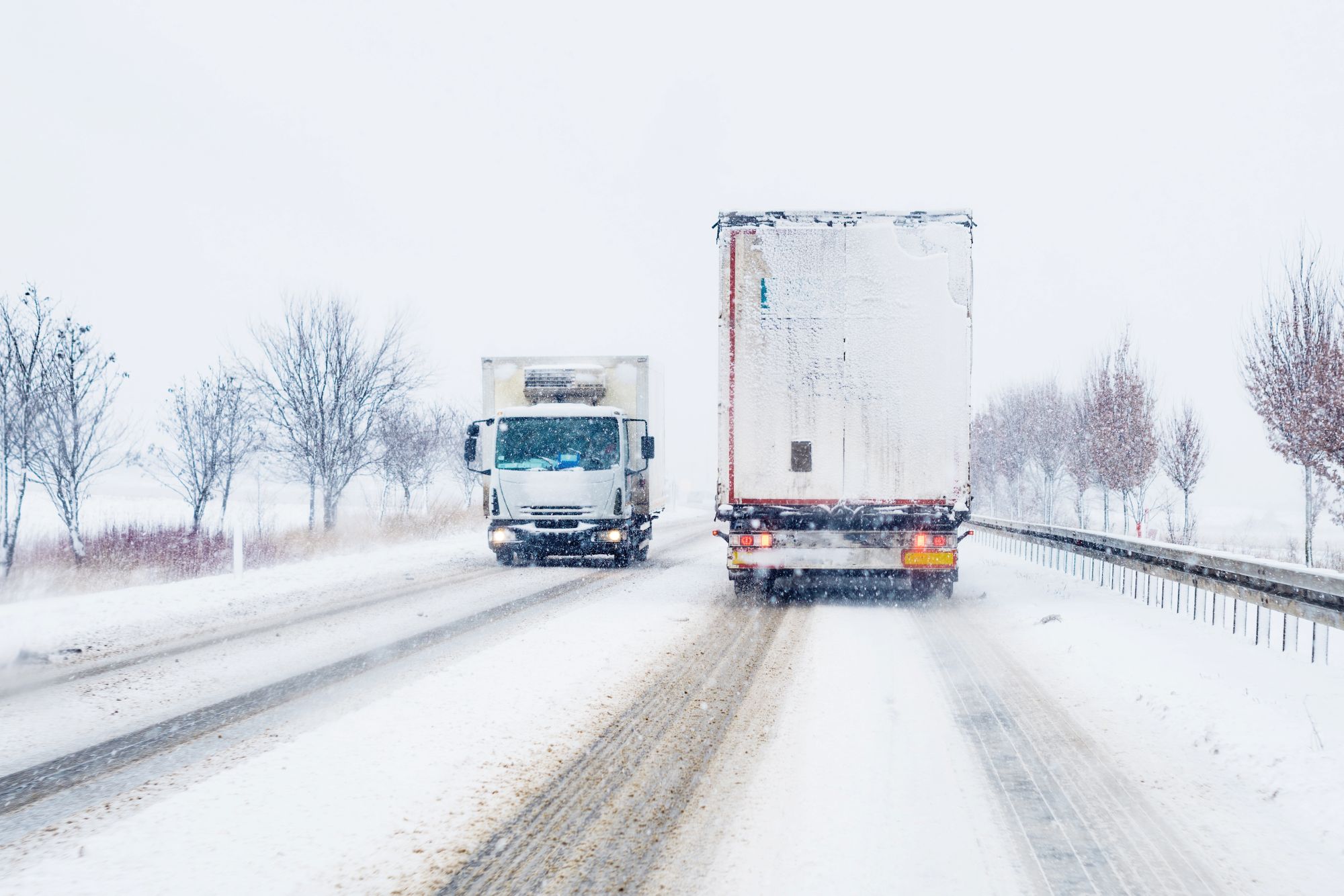
Koude temperaturen, ijzige oppervlakken en minder daglicht verhogen de mechanische risico's en de risico's op de weg voor commerciële voertuigen, waardoor de kans op verzwakte accu's, verminderde tractie van de banden en zichtbaarheidsproblemen toeneemt. Britse technische normen benadrukken het belang van robuuster winteronderhoud voor remmen, verlichting, vloeistoffen en banden naarmate de omstandigheden verslechteren, wat nog eens onderstreept waarom winterklaarheid essentieel is voor ononderbroken wagenparkactiviteiten. Zelfs milde kou kan de prestaties van motoren en hydraulische systemen verminderen, waardoor proactief winteronderhoud van cruciaal belang is.
Uitdagingen voor workflow en chauffeurs

De feestdagen en winterse omstandigheden zetten niet alleen de voertuigen onder druk, maar ook de chauffeurs en de operationele workflows. Meer verkeer, onvoorspelbaar weer en kortere leveringstijden kunnen leiden tot vermoeidheid, stress en een verhoogd risico op ongevallen. Zorgvuldige planning, duidelijke communicatie en proactieve ondersteuning voor chauffeurs zijn essentieel om de veiligheid te handhaven en ervoor te zorgen dat uw vloot efficiënt blijft werken onder deze seizoensgebonden druk.

Strategieën om uw wagenpark soepel te laten draaien

Om de activiteiten tijdens de feestelijke drukte in goede banen te leiden, is meer nodig dan het reactief oplossen van problemen. Er is een weloverwogen planning nodig voor het onderhoud van voertuigen, de paraatheid van chauffeurs, het gebruik van technologie en operationele coördinatie. Deze gestroomlijnde strategieën helpen u om de verstoringen van het winterseizoen voor te blijven en de prestaties van uw wagenpark tijdens de feestdagen constant te houden.

1. Prioriteit geven aan preventief onderhoud

Daarom is preventief onderhoud een van de meest effectieve manieren om defecten tijdens het seizoen te voorkomen. In de bouw kan stilstand [tot 760 dollar per voertuig] kosten (https://renovated.com/construction-fleet-management-software/), wat het belang van proactief onderhoud benadrukt.

Richt je op winterkritische systemen zoals accu's, remmen, verwarmings- en ontdooisystemen, banden en vloeistofniveaus. Door kleine problemen aan te pakken vóór de vakantiedrukte, beginnen je voertuigen het seizoen in topconditie en verklein je het risico op ongeplande stilstand wanneer de capaciteit het kleinst is.

2. De voorbereiding van chauffeurs verbeteren

Chauffeurs staan tijdens de feestperiode onder grotere druk, van overvolle wegen tot onvoorspelbaar weer. Door hen vroeg voor te bereiden, kunnen risico's worden beperkt en kan de betrouwbaarheid van de dienstverlening worden gehandhaafd. Deel bijgewerkte rijprotocollen voor de winter, versterk de beste praktijken voor vermoeidheidsbeheer en zorg ervoor dat elk voertuig essentiële uitrusting voor koud weer aan boord heeft. Een goed voorbereide chauffeur kan zich beter aanpassen aan de seizoensgevaren en de ritten veilig laten verlopen.

3. Verbeter uw onderdelen- en reparatiestrategie

Toegang tot onderdelen en reparatieondersteuning wordt moeilijker tijdens de feestdagen als gevolg van pieken in de vraag en vertragingen bij leveranciers. Als u belangrijke onderdelen van tevoren zeker stelt en de beschikbaarheid van een reparatiewerkplaats bevestigt, kunt u snel reageren op problemen halverwege het seizoen. Deze stappen verkleinen de kans op langdurige vertragingen en houden meer van je voertuigen op de weg tijdens piekbelastingen.

4. Telematica en real-time gegevens benutten

Nauwkeurige, realtime inzichten worden nog waardevoller wanneer weers- en verkeersomstandigheden snel kunnen veranderen. Telematicasystemen[ helpen u bij het monitoren van het rijgedrag] (https://www.eubusinessnews.com/investing-in-fleet-telematics-what-you-need-to-know/), het identificeren van nieuwe voertuigproblemen en het proactief aanpassen van routes. Door gegevens te gebruiken om op dezelfde dag beslissingen te nemen - of het nu gaat om het omleiden van routes, het herschikken van de planning of het laten uitvoeren van onderhoud - blijft uw wagenpark tijdens de hele vakantieperiode alert.

5. Communicatie en planning verbeteren

Seizoenspieken vereisen een betere afstemming tussen planners, chauffeurs, onderhoudsteams en klanten. Duidelijke communicatie vermindert onzekerheid en maakt het gemakkelijker om planningen aan te passen als de omstandigheden veranderen. Deel regelmatig updates over weeralarmen, routewijzigingen, leveringsvensters en beschikbaarheid van voertuigen zodat iedereen gecoördineerd blijft en snel kan reageren.

6.Noodplannen opstellen

Zelfs met een goede voorbereiding introduceert de winter variabelen die geen enkele vloot volledig onder controle heeft. Het opstellen van noodplannen biedt uw team een gestructureerde respons in het geval van incidenten. Stel reserveroutes op, identificeer alternatieve leveranciers en werkplaatsen en behoud waar mogelijk een reservevoertuigstrategie. Plannen voor onderbrekingen zorgt ervoor dat onverwachte problemen de activiteiten niet volledig stilleggen.

Checklist voor de gereedheid van uw wagenpark voor de feestdagen

Gebruik deze checklist om ervoor te zorgen dat je team, voertuigen en workflows klaar zijn voor de drukste periode van het jaar:

  • Routeplanning optimaliseren: Bekijk historische verkeersgegevens en de verwachte drukte op vakantie om efficiëntere routes op te stellen. Tools die real-time omstandigheden monitoren en rapporteren helpen vertragingen en brandstofverspilling te verminderen.

Controleer accu's, vloeistoffen, banden, ruitenwissers en verwarmingssystemen om pech bij koud weer te voorkomen en de veiligheid van de bestuurder te verbeteren.

De rijvaardigheid van chauffeurs verbeteren: Korte opfriscursussen geven over rijtechnieken in de winter, omgaan met vermoeidheid en noodprotocollen. Dit ondersteunt zowel de veiligheid als de productiviteit.

Verhoog de frequentie van preventief onderhoud: Het rijden van vakantiekilometers en koude temperaturen kunnen de slijtage versnellen. Een strakker onderhoudsschema helpt problemen op te sporen voordat ze leiden tot stilstand.

Validate tracking and IoT reliability:sure that asset trackers and sensors are fully functional for accurate location and condition data during peak demand.

Beschikbaarheid van leveranciers en onderdelen controleren: Veel leveranciers werken tijdens de feestdagen op minder uren. Verzeker u van tevoren van onderdelen en verbruiksartikelen om vertragingen bij reparaties te voorkomen.

Blijf de seizoensdrukte voor

Vakantie- en winteromstandigheden versterken elke kleine inefficiëntie. Een tijdige voorbereiding helpt vermijdbare stilstand te voorkomen, verhoogt de veiligheid van de chauffeurs en houdt uw activiteiten draaiende tijdens de moeilijkste periode van het jaar. Met een nauwkeurige planning, betrouwbare tools en een proactief onderhoudsritme kunnen vloten seizoensgebonden uitdagingen omzetten in kansen voor betere prestaties en klanttevredenheid.

Ontdek meer van Renovated Magazine.
Deel naar

Anderen lezen ook...

Header Image

dinsdag 25 november 2025 • Nieuws en updates

POLEN VERSNELT DE OVERSTAP NAAR EMISSIEVRIJ VERVOER

Guest

Poland’s transportation sector is undergoing a major transformation. In recent months, the government has introduced a series of high-value funding programmes aimed at decarbonising the country’s road network and logistics operations. Much of this activity focuses on infrastructure related to heavy-duty vehicles – a sign that the transition to cleaner freight is being embraced across Europe.The scale of investment – and the speed at which it's happening – will be important for operators, managers and infrastructure planners right across Europe. To understand why, it helps to look at both the wider European context and the specific funding available in Poland.The move towards lowand zero-emission transport has been gathering pace across Europe for several years. The EU’s package and to cut emissions from heavy-duty vehicles by 45% by 2030 and by 90% by 2040. The (AFIR) also states that there must be high-power charging points for heavy vehicles every 60 kilometres along the Trans-European Transport Network (TEN-T) – a system of European roads, railways, ports and airports that forms the backbone of continental freight – by 2030. Hydrogen refuelling stations must be available every 200 kilometres.The UK is following a similar path. Z are being used to test electric and hydrogen HGVs on long-haul routes, while funding is being allocated to depot charging and refuelling infrastructure.Against this backdrop, Poland’s programme shows that Central and Eastern Europe are ready to take a leading role in building cleaner, better-connected transportation.In March 2025, Poland’s (NFOŚiGW) launched two major funding calls worth a combined PLN 2 billion. The first will cover the construction and expansion of power grids that supply high-capacity charging stations, especially those on the TEN-T. It covers both grid expansion and the installation of new connections. This will mean that the network can deliver the energy needed for rapid truck charging. Energy and grid operators can apply for grants if their projects meet minimum power thresholds. The second funding call supports the construction of heavy-vehicle charging stations themselves. The aim is to create 550 publicly accessible points across the country, serving both electric and hydrogen trucks. A final programme, which launched in Q2 2025, gives grants and loans to businesses so they can buy or lease zero-emission trucks in categories N2 and N3. Category N2 covers vehicles with a gross weight between 3.5 and 12 tonnes, while N3 applies to trucks over 12 tonnes. Funding levels range from 30 to 60 per cent, depending on company size. Upper limits of PLN 400,000 apply to N2 vehicles and PLN 750,000 to N3 models. Applications will be , so operators can plan their transition to zero-emission vehicles. These investments sit alongside Poland’s existing programme, which subsidises electric car purchases for individuals and companies, further extending the country’s sustainable transport strategy beyond passenger vehicles.According to the , Poland transports more goods by road than any other EU country. It is a natural gateway between Western Europe and the Baltic States, Ukraine and the Balkans, which means a reliable zero-emission infrastructure in Poland will have a Europe-wide impact.By setting clear power requirements and aligning projects with the TEN-T corridors, the government is ensuring a coordinated approach rather than isolated projects. The goal is a dependable network where electric and hydrogen trucks can move freely along key trade routes. The Deputy Minister for Climate and Environment described the programme as a way to strengthen “the competitiveness of Polish freight operators” while cutting emissions from one of the country’s largest economic sectors.Poland’s domestic network is also part of the wider . A total of nine EU countries – including Poland – committed in September 2025 to accelerate charging infrastructure deployment along key freight routes, such as the North Sea-Baltic and Scandinavian-Mediterranean corridors of the TEN-T.For fleets that operate across Europe, the initiative means charging infrastructure will become more standardised and predictable between countries. This will help drivers plan cross-border routes with greater confidence while supporting the shift towards zero-emission freight.For fleet operators, the timing is encouraging. Zero-emission trucks are rapidly , with sales of nearly 2,000 zero-emission heavy-duty electric trucks registered in the first half of 2025 across the EU. There are challenges, however. Adding high-power charging capacity will mean that grid operators, local authorities and logistics centres have to cooperate. It will also take time to hire technicians with the skills to install and maintain high-voltage equipment.In addition, vehicle costs and operational factors could also slow progress. Even with generous subsidies, businesses must weigh the cost of electric vehicle ownership, route patterns and depot readiness.For the road transport community, Poland’s programme is a significant milestone. Once complete, its charging and refuelling network will connect eastern and western Europe, supporting cleaner and more efficient freight movement.“This is a turning point for heavy transport,” says Nick Renton, Head of European Strategy and Business Development at SNAP. “Poland’s actions show that zero-emission freight is becoming part of daily life, rather than a long-term vision. As charging and refuelling points multiply, operators will be able to schedule cleaner journeys with confidence.”As the situation develops, we will continue to support fleets across Europe with technology, insight and practical tools for drivers. Our helps identify and book rest stops, refuelling points and secure parking, with more zero-emission facilities being added as new sites open. For operators looking to stay ahead of infrastructure changes, it provides a clear view of how the road network is evolving – and where new opportunities are emerging.

Header Image

donderdag 30 oktober 2025 • Nieuws en updates

VLOOTBEHEER STROOMLIJNEN: FET LOGISTICS' SNAP STORY

Susie Jones

Located in Colnbrook, Berkshire, is a family-owned and family-run company specialising in the transportation of pharmaceutical products.The company originated from humble beginnings in 1984 when Frederick Woolley produced a service that was second to none in the secure logistics industry his very own tracking system, the best on the market, which left companies knocking on his door to transport their goods safely throughout Europe. In 1999, FET entered the world of pharmaceutical transportation, with Frederick taking on a partner, his son-in-law, Harry Hughes. From there, the business has gone from strength to strength, becoming one of the best pharmaceutical logistics companies in the UK. We sit down with Managing Director, Harry, to discuss what it's like running a fleet across Europe and how SNAP has helped ease processes."We focus on transporting high-value, high-consequence goods, white glove deliveries, and hospital deliveries. We're often in mainland Europe pretty much every day, from Northern Ireland all the way down to Spain, Italy, and even Greece."Transporting high-value goods comes with the added pressure to ensure your drivers park in safe and secure areas. For Harry, his drivers must have access to a wide network of truck stops across Europe, complete with details regarding security features something SNAP can deliver through its and Transporting high-consequence goods also brings additional challenges, as Harry explains:"We have the same challenges as everyone else in the supply chain, but you're adding temperature as well. That's another critical requirement. Whether it be a dry ice box that's got a life of 72 hours, or you need to keep that van completely at the right temperature throughout its journey. If the truck or van has to park up overnight, we need to ensure that the temperature is being monitored through the night as well."TAPA EMEA's TSR regulations have been developed by the industry, for the industry. The standard protects products transported by road and aims to ensure the safety of drivers, vehicles, and cargo. As TAPA UK Lead, Harry knows the importance and the benefits of transporting goods under TAPA TSR."We outsource to an external monitoring company for some of the delicate loads being transported under TSR. This means they will monitor the load for the route and geofence it if it deviates. They're checking in with the driver and also checking that it's parked at the right location from the route risk assessment we've uploaded to the monitoring company."These standards give drivers, fleet operators, and customers peace of mind that their cargo will be transported safely. And Harry has peace of mind when these journeys utilise SNAP's vast network of truck stops across Europe."You know that if you go to a SNAP site, you're going to get a decent site."Driver welfare remains a critical topic within the mobility industry, and for fleets like Harry's, ensuring their drivers are looked after while on the road remains vital. We asked Harry what offerings truck stops must provide to those on the road regularly:"I think the drivers just want some decent facilities. If they've got a shower, toilet, and a hot meal, they're generally happy." He also notes that it's not a one-size-fits-all, "they've all got different requirements. Some of them want to go to sites with a fancy restaurant, and some of them are just happy with a burger and chips. I think if the basics are there of clean facilities, hot and cold food, and showers, that's the main thing."Truck stops are already in high demand, and the most popular ones, offering the right facilities and security requirements, tend to fill up early in the evening. This often forces drivers to park in unsafe areas, a challenge that's expected to grow even more significant when SNAP not only simplifies life for fleet managers but also delivers a seamless parking experience for drivers. This leads to increased convenience and satisfaction on the road, while enhancing efficiency and streamlining operations across the company."It's the simplicity for the drivers. They don't have to worry about anything. They just pull in, and the parking payment method is already done for them. The drivers love it since we've implemented it," Harry states. SNAP's growing network of truck wash sites is something that hasn't gone unnoticed by FET Logistics, especially when the weather takes a turn for the worse:"More truck washes are coming onto the network, which helps us especially through winter. Nobody wants to see a dirty truck turn up if you're loading pharmaceuticals into it."Inspired by what you've just read? Catch the full interview with

Header Image

dinsdag 28 oktober 2025 • Nieuws en updates

DE TWEEDE GENERATIE SLIMME TACHOGRAFEN: WAT WAGENPARKBEHEERDERS MOETEN WETEN

Guest

The road transport industry in Europe is undergoing a significant change with the rollout of the second-generation smart tachograph (Smart Tachograph Version 2, or G2V2). These new devices have been introduced under the to improve road safety, to ensure fair competition and to protect drivers' rights.For fleet managers across the EU – and in the UK for those operating internationally – it’s crucial to understand what the new smart tachograph v2 entails, the timelines for its implementation and how it will impact daily operations. This article provides a practical overview of G2V2 features, regulatory deadlines and the operational implications for fleets. The second-generation smart tachograph is an upgraded digital tachograph unit with enhanced capabilities, designed to boost compliance with driving rules and streamline enforcement. Building on the first smart tachographs introduced in 2019, the new smart tachograph adds several important features: G2V2 devices use satellite positioning (Galileo GNSS) to record a vehicle’s position when crossing national borders. This helps enforce rules on cabotage and driver posting by providing precise records of when a truck enters a new country. The new tachograph enables enforcement officers to retrieve data wirelessly via Dedicated Short-Range Communication (DSRC). Roadside inspectors can remotely receive recent driving time, last stop or potential violations as a truck approaches. In essence, enforcers can access key tachograph data from G2V2 without stopping the vehicle, which facilitates smarter and more unified enforcement of driver-hours rules.This ‘remote check’ capability allows authorities to pre-select vehicles that may need a closer inspection, reducing unnecessary stops for compliant drivers. G2V2 includes a mandatory ITS interface with Bluetooth connectivity for secure data exchange with third-party systems. This means fleet telematics platforms can pair with the tachograph to access data, such as vehicle location, speed, driver activity and even vehicle events (for example, brake usage) in real time. For fleet managers, this integration offers the possibility of richer data streams for compliance monitoring and route management, seamlessly connecting tachograph information to their existing fleet management software. The new G2V2 tachographs record more information and retain it for longer. Driver activity logs now cover 56 days instead of 28, extending the control period for enforcement and helping operators with data retention and audits. In addition, new data fields provide a fuller picture of each journey. The devices log loading and unloading locations, record whether the vehicle is carrying passengers or goods, and capture configuration and calibration events in greater detail. Together, these updates support both compliance and logistics planning. Drivers will, however, need training to make the new manual entries for load and unload points, as these coordinates are stored for later verification. The second-gen units come with improved security to detect and resist tampering. They also have updatable software to allow future enhancements. Additionally, new driver cards (G2V2 driver cards) have been introduced with larger memory to accommodate the extra data. There is no immediate legal requirement for drivers to replace existing digital tachograph cards if they are still valid, but as cards expire, they’ll be replaced with the updated ones to fully use G2V2 features.Most major tachograph deadlines have already passed. All heavy vehicles operating internationally within the EU or entering from the UK are now required to have the second-generation smart tachograph (G2V2) fitted.The only remaining milestone is 1 July 2026, when the rule will be extended to light commercial vehicles between 2.5 and 3.5 tonnes used for international transport. Historically, vans were exempt from EU drivers’ hours and tachograph rules, but from July 2026, operators carrying goods across borders will need to comply.This change aims to close long-standing loopholes and ensure that drivers of smaller commercial vehicles follow the same rest-time rules as HGV operators. Fleet managers running pan-European van fleets should start planning installations now, integrating the upgrade with routine servicing or fleet renewal cycles to minimise disruption.Fleet managers with international operations need to understand that compliance with these tachograph upgrades is now a prerequisite for cross-border road transport in Europe. If your trucks travel between EU countries – or from the UK into the EU – failing to equip the right tachograph can stop your business at the border. Here are key points on how different fleets are affected:As noted above, since August 2025, any heavy goods vehicle conducting international trips within the EU must have the second-gen tachograph. This applies regardless of where in the EU the truck is registered. Enforcement is carried out during roadside checks or at borders. Non-compliant vehicles can be taken off the road until a proper tachograph is installed. British fleets running international journeys into or within the EU are subject to the same tachograph requirements if they are operating goods vehicles. This is because the rules are incorporated into the AETR treaty, which governs road transport between EU and non-EU European countries. The UK Department for Transport has aligned domestic regulations to mirror the EU timeline for international journeys. Failing to upgrade doesn’t just mean a fine – it can mean your truck is stopped at a checkpoint and cannot complete its delivery. Authorities in countries like France have imposed and even jail time for serious tachograph compliance breaches. Other nations like Germany, Spain and Italy have their own stiff penalties. In addition, non-compliance can tarnish a company’s reputation.On the positive side, compliant fleets stand to benefit from smoother enforcement. Trucks with up-to-date devices, for instance, may be stopped less frequently, thanks to remote pre-checks, allowing law-abiding drivers to keep moving.One of the core aims of the new tachograph legislation and the wider EU Mobility Package is to improve working conditions. By automating record-keeping tasks such as border entries and limiting illegal overscheduling, the system helps ensure drivers get proper rest. This is expected to reduce fatigue-related incidents and make enforcement fairer, giving drivers confidence that competitors are following the same rules.Remote enforcement also means compliant drivers face fewer roadside delays, allowing them to complete journeys with less stress.Drivers will need some training to adapt. While the basics remain the same, new features require manual input of load and unload locations and consent for data sharing with connected systems. Understanding these prompts – and how to respond if a fault occurs – will make operation straightforward.From a fleet perspective, G2V2 devices store twice as much data (56 days), so downloads will be larger and contain more history. Operators should check that their tachograph software and storage systems can handle this increased volume.Finally, with Bluetooth and online connectivity, data privacy has become a talking point. Enforcement authorities can access tachograph data for compliance, but when sharing with telematics or management systems, drivers must first give consent. Fleet managers should reassure drivers that all data is handled securely and used only for legitimate, GDPR-compliant purposes.Second-generation smart tachographs touch every part of fleet operations, from compliance and route planning to driver welfare. Taking a proactive approach will help you stay compliant – and make the most of the new technology. Keep up with updates from the European Commission’s Mobility and Transport division, as well as industry bodies. Regulations can be complex, but official summaries and FAQs are a good starting point. Run toolbox talks or refresher sessions for drivers and transport managers, focusing on new functions like remote enforcement and manual entries. Live data can help you monitor remaining driving hours, adjust dispatch plans and identify routes that frequently approach limits. Encourage your teams to view tachograph compliance as part of good fleet management, not just a regulatory obligation. Recognise milestones like zero infringements, invest in driver training, and make sure everyone understands how accurate data benefits safety and efficiency.The rollout of G2V2 brings challenges, but also clear benefits: stronger enforcement, better data and fairer working conditions for drivers. For fleets that embrace the change, the reward is smoother operations, improved safety and a more connected, compliant future on Europe’s roads.At SNAP, we’re supporting fleets across the continent through this next stage of digital transformation. Through the intruck app, drivers can pre-book secure parking along their routes – while the SNAP Portal lets fleet managers plan and reserve rest stops in advance, ensuring compliance and protecting driver welfare.