Susie Jones
Industrie Nieuws • 3 min lezen

Lopende wegtransportprojecten in heel Europa

Gemaakt: 12-03-2025

Bijgewerkt: 12-03-2025

In 2023 werd 83,4% van het EU-wegvervoer in tonkilometers vervoerd door vrachtwagens - met een maximaal toegestaan totaalgewicht van meer dan 30 ton.

De wegtransportsector in Europa ondergaat een grote transformatie, gedreven door technologische vooruitgang en duurzaamheidsdoelstellingen. Voor de transportsector kunnen deze veranderingen essentieel zijn om concurrerend te blijven in een snel evoluerende industrie. We zullen een aantal van de veranderingen die dit jaar van kracht worden en toekomstige ontwikkelingen onderzoeken.

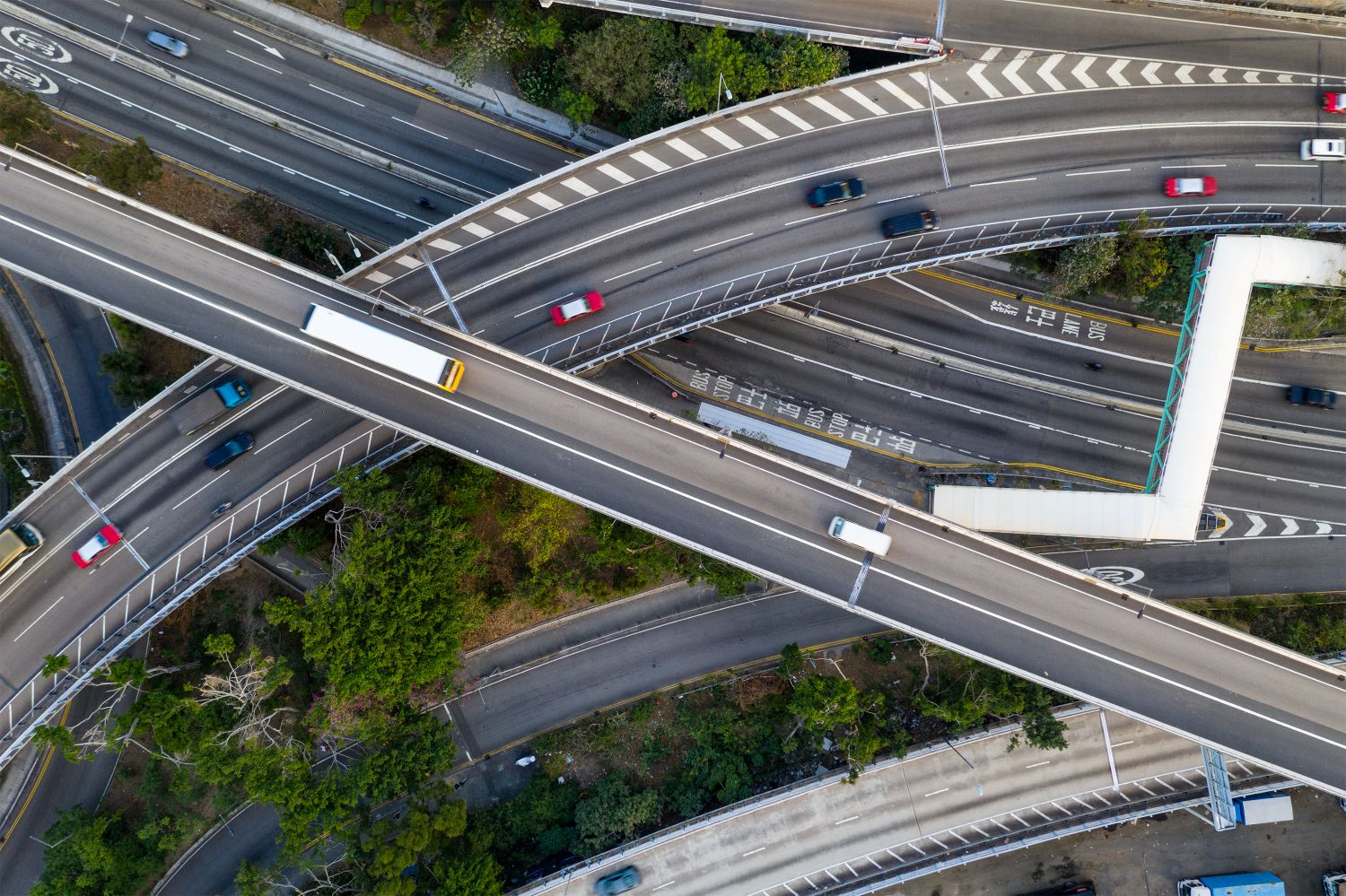
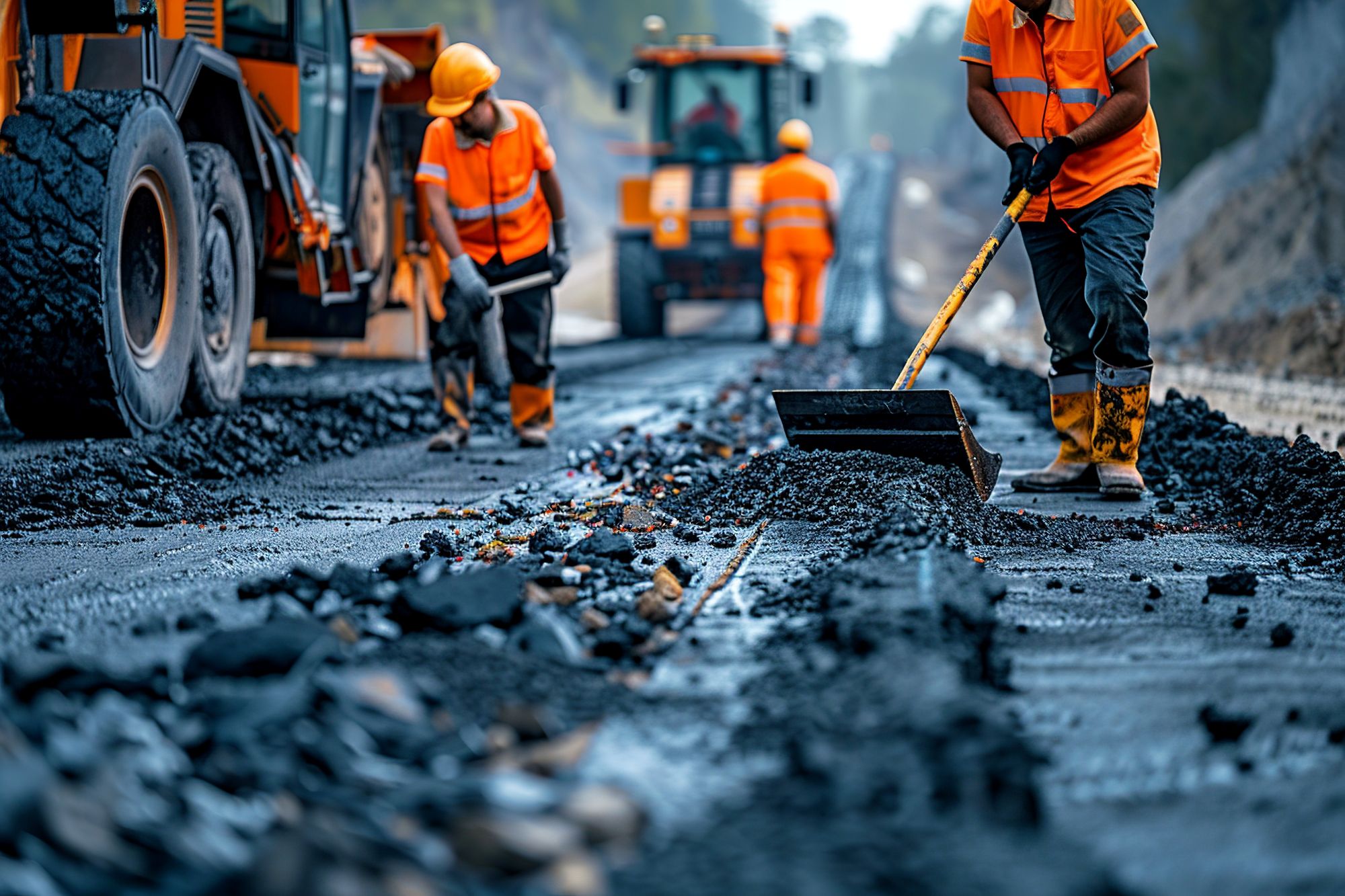
Bouwprojecten wegeninfrastructuur.

Ontwikkeling snelweg A-7 Crevillente naar Alhama de Murcia

De aanleg van een snelweg tussen Crevillente en Alhama in Murcia is gestart in het vierde kwartaal van 2024 en de voltooiing wordt verwacht in 2030. Het project zal zorgen voor ultramoderne infrastructuur voor wegvervoer, waardoor de dienstverlening en het langeafstandsverkeer tussen de gebieden zullen verbeteren.

Voordelen voor de transportsector:

Betere verkeersdoorstroming, minder files en kortere reistijden. Wagenparkbeheerders zullen profiteren van lagere brandstof- en onderhoudskosten en een verbeterde logistieke efficiëntie.

Snelweg D11: Trutnov tot Poolse grens

Dit project gaat in Q4 2024 van start en bestaat uit een 21,17 km lange vierbaansweg van Trutnov naar de Poolse grens in de regio Hradec Kralove. Het project maakt deel uit van de snelweg D11 die Praha, Hradec, Králové en Trutnov verbindt met de Poolse grensovergang.

Voordelen voor de transportsector:

Betere grensoverschrijdende connectiviteit en kortere reistijden en files. Een vierbaansweg verlaagt de brandstofkosten, verbetert de verkeersveiligheid en biedt een betrouwbare en snellere route.

Ontwikkeling A5-tunnel

De ontwikkeling van de A5-tunnel in Madrid, die in 2027 klaar moet zijn, heeft als doel de verkeersopstoppingen te verminderen en de mensen in de regio een moderne transportinfrastructuur te bieden. Het project zal de luchtkwaliteit, geluidsoverlast en mobiliteit verbeteren.

Voordelen voor de transportsector:

Betere verkeersdoorstroming, minder opstoppingen en een snellere, betrouwbaardere route voor vrachtvervoer.

Ringweg van Praag: Gedeelte Bechovice - D1 snelweg

Er worden zes rijstroken aangelegd op 12,6 km weg tussen Bechovice en de D1 snelweg in Praha - voltooiing voor Q4 2027. Dit project is een van de resterende secties die de Ringweg rond Praag zal voltooien.

Voordelen voor de transportsector:

Soepelere en snellere verplaatsing van vrachtvoertuigen - verbetering van de transportefficiëntie.

A47 Noord-Tuddenham tot Easton verbreding

Tussen North Tuddenham en Easton in Norfolk, Verenigd Koninkrijk, zijn plannen om de bestaande 9 km lange A47 met één rijstrook op te waarderen tot een tweebaansweg. De voltooiing is gepland voor het vierde kwartaal van 2026.

Voordelen voor de transportsector:

Het verdubbelen van dit traject zorgt voor consistentere reistijden, minder vertragingen en lagere brandstofkosten.

Technologische veranderingen.

Elektrische laadinfrastructuur

Tegen 2030 zal de Europese markt voor elektrische vrachtwagens naar verwachting 15% bereiken - wat het belang van de uitbreiding en de verschuiving naar duurzaam transport onderstreept. Naar verwachting zal er 15 miljard euro worden geïnvesteerd in de oplaadinfrastructuur voor elektrische vrachtwagens in Europa.

Truckpark 2049 bekijkt waar de industrie zal staan met betrekking tot de infrastructuur die nodig is voor elektrisch opladen bij truckstops. Elektrische voertuigen zullen in 2049 wereldwijd alomtegenwoordig zijn - wagenparken zullen de onmiddellijke financiële voordelen merken en de vruchten plukken van efficiënt voertuigbeheer.

Drone in Italië om verkeer te monitoren

Italië heeft drones geïntroduceerd om de toestand van de weg te monitoren, schermen en hekken geluiddicht te maken en files, stilstaande voertuigen en andere obstakels te detecteren. De drones stijgen tot 120 meter en bestrijken beide richtingen van de snelweg A35. De opnames worden naar het Control Center gestuurd, wat het interventiebeheer verbetert en een snelle reactie op eventuele problemen op de route mogelijk maakt.

Het Drone Asset and Traffic Monitoring Project bestaat uit drie operationele fasen:

  • Fase 1: Deze fase begon in oktober 2024 en omvatte tests met drones die werden bestuurd door specialisten en de implementatie van een platform voor het beheer van realtime videotransmissie in het Brebemi Control Center.

  • Fase twee: Introductie van afstandsbediening van drones via het controlecentrum, dat geavanceerde sensoren gebruikt om gegevens en beelden door te sturen.

  • Fase drie: In de huidige fase zullen drones volledig autonoom opereren.

Gratis snelwegen in Spanje vanaf 2029

Het ministerie van Transport en Duurzame Mobiliteit heeft aangekondigd de mogelijkheid te onderzoeken om drie belangrijke snelwegen - AP-6, AP-51 en AP-61 - aan te passen zodat ze zonder tol kunnen rijden nadat de overeenkomst in november 2029 afloopt. Na deze datum zullen deze wegen worden beheerd door het ministerie en kunnen ze worden gebruikt zonder tolheffing.

Welk Europees land heeft de beste wegeninfrastructuur?

Uit een enquête blijkt dat West-Europa een betere wegeninfrastructuur heeft dan Oost-Europa, waar de kwaliteit van de wegen in de landen over het algemeen somber is.

Nederland staat bovenaan als het gaat om de kwaliteit van wegen in Europa, gevolgd door Zwitserland, Oostenrijk, Portugal, Spanje en Kroatië.

Deel naar

Anderen lezen ook...

Header Image

woensdag 11 maart 2026 • Industrie Nieuws

VRACHTWAGENPARKEREN IN EUROPA: DE REGELS, DE GATEN, DE RISICO'S

Guest

Ask most fleet operators what makes life harder than it needs to be and you’ll hear the same answer across Europe: truck parking.Drivers have to stop. Hours rules and rest requirements make that non-negotiable. But on many of Europe’s busiest transport corridors, finding a safe, legal place to park is still uncertain. Capacity is low, security varies widely and most urban hubs aren’t built with HGVs in mind.That pressure has consequences. When designated areas are full, drivers are pushed towards places that were never intended for HGV parking: slip roads, access ramps and industrial estates. Compliance becomes a choice between two risks: stop where you shouldn’t, or keep driving when you shouldn’t.When truck parking overflows into unsuitable places, the environment becomes dangerous: poor visibility, high speeds, unpredictable manoeuvres and limited escape routes. starkly in February 2026, reporting fatal crashes in Germany and Belgium involving stationary lorries. The article challenges the easy explanation of “illegal parking” and points back to the underlying cause: drivers were out of driving time and the spaces were gone.In addition, a shortage of truck parking in Europe doesn’t just mean “no space”; it often means the only available space is poorly lit, unmonitored and isolated. That elevates the risk of theft and driver harm, which can have a knock-on effect for supply chain reliability.Poor parking provision also affects workforce sustainability. When drivers face uncertainty around legal, safe stopping, it makes the role harder and less attractive – compounding .For a long time, the conversation about truck parking focused on enforcement: where you can’t park and the penalties that follow. Increasingly, the focus is moving towards provision: where drivers can stop safely, reliably and legally. Under revised Trans-European Transport Network (TEN-T) rules, EU Member States must ensure the development of certified secure parking . The same requirement sets expectations for the location of truck parking. It must be immediately on the network or within 3km of an exit, which will have benefits for route planning. Alongside this shift, the European Commission positions safe and secure truck parking as a priority within its Intelligent Transport Systems work, including the need for to help drivers locate suitable sites.But the EU isn’t just asking Member States to add more truck parking spaces. It’s also defining what “safe and secure” means. In April 2022, the European Commission adopted EU standards for , categorising sites into four security levels: bronze, silver, gold and platinum. The intention is to create transparency for drivers and fleets, and to support investment by giving operators a clear target to design and audit against.This sits against a significant capacity gap. A European Commission study estimates a across the bloc, with the gap potentially rising towards half a million by 2040 if the network does not scale at the pace freight demand requires.Looking at more practical aspects of the situation, what are HGV parking rules and regulations in Europe?At first glance, HGV parking rules across Europe look consistent: Motorways are not designed to absorb overflow parking. Hard shoulders exist for emergencies and safety buffers. Access ramps are not for planned stopping.Urban areas add a layer of complexity. Local restrictions and enforcement are common because HGV parking competes with residents, retail and public space – and because badly parked vehicles create safety risks.Rules around HGV parking in the UK are clear. Trucks should use designated areas such as motorway services, truckstops and lorry parks. Conversely, drivers must avoid parking in locations that create risks, such as pavements, verges and central reservations. Restrictions around parking in residential areas vary by local authority, so it’s vital to check if this is unavoidable. The major constraint is supply. The RHA’s estimate of an , with very high utilisation on key routes, helps explain why informal and unsafe parking persists even where drivers know it isn’t ideal. In 2022, the Department for Transport across England, aimed at better rest areas and more secure parking, framed as part of a broader programme to improve roadside facilities.In Germany, motorway stopping rules are anchored in the (StVO), which makes clear that stopping on the autobahn – including the hard shoulder – is prohibited except in emergencies. That means running out of driving time is not treated as justification. Fines increase if obstruction or danger is caused, and enforcement is active on heavily used corridors. Poland follows the familiar motorway rule that hard shoulders are reserved for breakdowns and emergencies. The nuance appears within cities, where tonnage-based entry restrictions and are common. Overnight HGV parking in urban areas can require municipal approval and enforcement varies between municipalities. For cross-border fleets, that means treating urban stopping as permission-led rather than assumed.France reinforces the same principle through the . Articles R417-9 and R417-10 classify dangerous or obstructive parking offences, and stopping on autoroute carriageways or shoulders is prohibited except in cases of absolute necessity. Penalties can include fines and licence points.However, publishes dedicated information for secure truck parking on its network, reflecting how motorway operators guide HGV stopping into appropriate locations.Spain’s prohibits stopping on motorway shoulders except in emergencies, aligning with broader European practice. Additional complexity lies at municipal level. Many cities operate local overnight bans or restrict HGV parking to designated industrial zones, with enforcement handled by local police rather than motorway authorities. That creates a layered compliance environment: legal on the motorway network does not automatically mean legal in urban areas.To highlight positive developments, that a truck parking facility in La Jonquera became the first in Spain to receive TAPA certification, describing measures such as controlled access, fencing, lighting and continuous monitoring.Italy distinguishes clearly between motorway carriageways, ramps and designated service areas. Stopping on access or exit ramps is explicitly prohibited, and enforcement around motorway infrastructure is consistent. Importantly, Italy differentiates between aree di servizio (full service areas with facilities) and simpler rest or parking lay-bys, which may not support overnight welfare needs. However, Italy is also seeing new secure truck parking developments focused on welfare and security, reflecting the wider European momentum towards better provision.Across Europe, an additional regulatory layer now shapes truck parking decisions: Low Emission Zones (LEZs) and restricted urban traffic zones. Cities in France (Crit’Air), Germany (Umweltzonen), Spain (Zonas de Bajas Emisiones) and Italy (ZTL areas) impose vehicle-class or permit requirements that can apply even to stationary vehicles within the zone. A driver who parks overnight in a restricted area without the correct classification or registration risks fines – even if the stop itself is otherwise legal. Across Europe in 2026, the rules are clear. The constraint is capacity, especially near urban hubs and on high-volume corridors. For fleets, this has a practical impact: European truck parking can’t be left to chance at the end of a shift. It needs to be planned with the same seriousness as , routing, driver hours and security – because when the network fails to provide legal space, every other compliance system gets squeezed.SNAP can help. .

Header Image

donderdag 26 februari 2026 • Industrie Nieuws

VROUWEN IN DE TRANSPORTSECTOR: ONBENUT TALENT ONTSLUITEN

Guest

Across the UK, around . They transport food to supermarkets, materials to construction sites and goods to ports and distribution centres. They underpin daily life and economic stability, forming a critical part of the UK’s national infrastructure.Yet only around . That amounts to roughly one per cent of the UK HGV workforce, according to reporting by . For an industry facing long-term recruitment pressure, that figure raises important questions about where future talent will come from and how the sector presents itself to potential entrants.There are signs of progress, however. The percentage of from 6.7% in 2011/12 to 9.7% by 2021/22. Over the past decade, women securing Category C and C+E licences increased by 144%, according to SME Web. More women are clearly choosing to train and qualify. The pipeline is widening, but the proportion of women behind the wheel remains marginal.Women have not been entirely absent from road transport. One of the earliest recorded female truck drivers was, who began driving heavy vehicles in the United States in 1918. During wartime periods in both the US and the UK, women stepped into transport roles out of necessity. Then, in the 1960s, became the UK’s first long-distance lorry driver, often working 100-hour weeks.However, outside exceptional circumstances, haulage has traditionally been male dominated. Cultural perceptions, physical assumptions about the work and the lifestyle associated with long distance driving have all played a part. Only in recent decades has participation begun to shift in a more sustained way.The reasons for low female participation are not limited to awareness. Structural and practical barriers remain.Facilities are a big concern. Professional drivers depend on secure parking, clean rest areas and appropriate welfare provision. For many years, roadside infrastructure has struggled to meet demand across the board. When rest stops are inadequate, poorly lit, feel unsafe or lack privacy, this can discourage women from joining the sector.Working patterns also play a role. Long-haul journeys can involve overnight stays and time away from home. While many drivers value the independence that comes with the role, the perception of work-life balance may deter some women, especially those with caring responsibilities. There is also the issue of visibility. When only one per cent of drivers are women, prospective candidates may struggle to see themselves in the sector. In addition, menopause symptoms such as fatigue, sleep disruption, hot flushes and anxiety can be difficult to manage in roles that involve long hours, limited access to private facilities and time away from home. In sectors where welfare provision is already under pressure, a lack of understanding or practical support can lead to experienced drivers leaving the workforce.For haulage, this is not a peripheral issue. Retaining experienced drivers is as important as attracting new entrants. Change is not confined to driving roles. Across the broader transport and logistics ecosystem, women are increasingly visible in management, planning and policy functions.The shows that leadership representation by women has increased from 26% to 36% in recent years. However, much of this growth has taken place outside core operational functions. Senior representation within frontline transport roles remains comparatively limited.Several industry organisations are addressing this gap. Women in Transport offers mentorship opportunities, while everywoman recognises excellence through its , raising the profile of female professionals across the sector. The Chartered Institute of Logistics and Transport has also announced a new , aimed at supporting career progression and professional networks.Alongside this, community initiatives such as demonstrate that interest and engagement are growing. The spotlighting female drivers and employees, further increasing visibility. Collectively, these platforms help challenge outdated perceptions and provide practical support for women entering or advancing within the industry.For the UK haulage sector, this is not just a diversity conversation. It is a strategic one.Previous industry reporting has highlighted the scale of recruitment pressure across logistics. The that tens of thousands of new drivers will be required in the coming years to maintain supply chain stability. At the same time, the existing workforce is ageing.With only one per cent of drivers currently women, a significant proportion of the potential labour market remains underrepresented. If participation rates were to move closer to parity with the wider workforce, the impact on recruitment could be substantial.There is also evidence that inclusive cultures contribute to improved retention and engagement. A sector that demonstrates visible progression pathways, fair access to training and appropriate welfare provision is likely to appeal more broadly across demographics.Progress will not accelerate through awareness alone. Structural changes are needed.Investment in safe, well maintained roadside facilities is fundamental. Secure parking, adequate lighting and clean welfare amenities benefit all drivers and remove avoidable barriers to entry.Flexible working models, where operationally feasible, can broaden appeal. This may include regional route design, job sharing arrangements or clearer progression pathways from warehouse and planning roles into driving positions.Funded licence pathways and apprenticeships can also reduce financial barriers. As previously outlined, the cost of training can be significant. Targeted funding initiatives aimed at underrepresented groups can support a more balanced intake.Finally, transparency around workforce data matters. Publishing gender breakdowns, monitoring progression rates and setting measurable objectives signal that inclusion is being taken seriously.International Women’s Day provides an opportunity to reflect on how far the UK haulage industry has come and how far it still has to go. The rise in female licence acquisition and test pass rates demonstrates that interest exists. Leadership representation is improving in some areas and support networks are expanding. However, the scale of underrepresentation remains stark.Haulage is central to national resilience. It keeps shelves stocked, infrastructure projects supplied and trade flowing. Ensuring that this workforce reflects the full breadth of available talent is not simply a question of equity. It is a matter of long term sustainability.Supporting women in haulage also means improving the day-to-day realities of life on the road. Access to secure parking, well-lit rest areas and appropriate facilities is fundamental to retention and wellbeing for all drivers. SNAP’s intruck app helps all drivers locate and book trusted truck stops across the UK and Europe, giving fleets greater visibility and drivers greater confidence wherever their route takes them. .

Header Image

dinsdag 03 februari 2026 • Industrie Nieuws

DE OPKOMST VAN GEÏNTEGREERDE LOGISTIEKE CORRIDORS: WAAROM ZE BELANGRIJK ZIJN VOOR VERVOERDERS

Guest

For decades, European haulage has been built around road networks. Although rail, inland waterways and ports have always played a role, most freight journeys relied on HGVs to bridge the gaps. That model is now being reshaped.Across the EU, governments and infrastructure bodies are investing in integrated logistics corridors – long-distance, multimodal routes designed to move goods more efficiently across borders while reducing congestion, emissions and pressure on roads. For hauliers, these corridors are not an abstract policy concept. They are already influencing where trucks can travel, how journeys are planned and the technologies that fleets must adopt.Understanding how these corridors work – and what they mean in practice – is becoming essential for operators covering international routes.In Europe, integrated logistics corridors sit alongside the EU’s Trans-European Transport Network (TEN-T). This long-term programme is designed to connect member states through coordinated road, rail, port and inland waterway infrastructure.At the core of this system are : Baltic-Adriatic North Sea-Baltic Mediterranean Orient-East Med Scandinavian-Mediterranean Rhine-Alpine Atlantic North Sea-Mediterranean Rhine-DanubeRather than treating road, rail and ports as separate systems, these corridors aim to integrate them. As such, there are aligned infrastructure standards, digital systems and operational rules, allowing freight to move more smoothly from origin to destination.In short, they prioritise multimodal freight. That might mean containers transferred seamlessly between ship, rail and truck, or trailers loaded onto trains for part of a journey before returning to the road network.One example is the use of , where entire HGVs are transported on low-floor rail wagons. Drivers often travel with their vehicles, resuming road journeys at the other end. Although they are typically associated with Alpine regions, Spain is investing heavily in to improve transport links. To make this coordination possible, logistics corridors rely heavily on digital infrastructure, including: Multimodal traffic management systems that coordinate rail slots, terminal capacity and road access. Digital freight documents to reduce paperwork at borders and terminals. and GNSS positioning to support compliance and monitoring. Real-time data sharing between infrastructure operators, logistics hubs and enforcement bodies.The goal is not to remove road haulage from the equation, but to make it part of a wider, more controlled system.Key European road routes are subject to high volumes of traffic, resulting in congestion and bottlenecks. Integrated corridors aim to relieve pressure by shifting some freight to rail or waterways where possible.In addition, recent data suggests that road transport accounts for . Integrated corridors support EU climate targets by encouraging use of other forms of transport, which will improve traffic flow and reduce stop-start congestion.For operators, the benefits of integrated logistics corridors are tangible, if not immediate. One of the most significant advantages is more predictable cross-border movement. Over time, this reduces uncertainty around journey times and improves scheduling for international routes.Corridors also expand options when road-only transport becomes constrained. Rolling highways and intermodal terminals can provide practical alternatives during periods of congestion, severe weather or regulatory restriction. At the same time, integrated digital systems improve visibility across journeys, giving fleet managers better data to plan rest breaks, terminal access and driving hours with greater accuracy and confidence.There are commercial implications too. By shifting long-haul legs to rail and reserving road transport for firstand last-mile delivery, some operators may limit their exposure to low-emission zones and urban access restrictions. In addition, trucks tied up on long-distance international routes are freed up for shorter, higher-frequency routes linked to logistics hubs and terminals. In parallel, removing the most expensive kilometres from a journey – those affected by , congestion or restrictions – can reduce operating costs. For hauliers that adapt their operating model, profitability becomes less about distance travelled and more about efficiency, reliability and the ability to deliver consistent service within tighter, more controlled time windows.Despite the advantages, integrated logistics corridors also introduce new complexity for hauliers. In several parts of Europe, restrictions on HGV movements are already in force, including night bans and quota-based access. As corridor strategies expand and environmental pressures increase, these measures could become more widespread and tightly enforced, adding constraints to route planning and scheduling.Progress across corridors is also uneven. While some routes benefit from modern terminals and upgraded rail links, others, such as the Rhine-Alpine corridor suffer from limited rail capacity, congested hubs and infrastructure gaps. In these areas, the promised efficiency gains can be undermined by delays and bottlenecks rather than resolved by them. This challenge is compounded by the complications of multimodal transport. Rail and terminal slots often involve advance booking and fixed timetables, reducing the flexibility that road-only operations have traditionally relied on to absorb disruption.Digital integration brings its own demands. Although shared data systems, smart tachographs and electronic documentation offer long-term efficiency, upfront investment in compatible fleet management tools is needed, alongside driver training and process change. For some operators this transition can be resource-intensive.Perhaps the most significant challenge, however, lies in competition. Integrated corridors tend to favour operators that can move freight predictably, digitally and across modes. Smaller or road-only operators may find themselves under pressure from larger fleets, intermodal specialists or logistics integrators offering bundled, end-to-end corridor solutions.For international hauliers, integrated corridors affect planning. Route choice is no longer just about distance and tolls. It involves:Assessing where road access may be limited. Identifying intermodal alternatives. Managing driver welfare across longer, more complex journeys. Ensuring compliance across multiple systems and jurisdictions.Fleets that understand how these corridors function and plan accordingly will be best placed to adapt as rules tighten and expectations rise.Integrated logistics corridors are reshaping how transport moves across Europe. They bring opportunities for greater efficiency and resilience, but also introduce new layers of operational and regulatory complexity for hauliers. As road transport becomes more tightly integrated with rail, ports and digital systems, driver welfare, planning certainty and access to reliable infrastructure matter more than ever. Fleet managers need clear visibility and control over costs, alongside confidence that drivers can stop and rest safely.Through our network of safe, reliable truck stops, paired with integrated payment solutions, we make life on the road simpler for both drivers and operators.