
Guest
Notícias e actualizações • 4 min ler

Mantenha a sua frota a funcionar sem problemas durante a época festiva

Criado: 04/12/2025

Atualizado: 04/12/2025

Com a aproximação da época festiva, é provável que se esteja a preparar para um aumento da procura de entregas e para condições de funcionamento mais complexas. Esta pressão sazonal sobrepõe-se aos desafios climáticos do inverno, criando um ambiente de risco único para as frotas de todo o Reino Unido.

Como as férias de inverno colocam a sua frota sob pressão

O período festivo traz um stress extra aos seus veículos e operações. Desde os aumentos de quilometragem impulsionados pelos consumidores até ao impacto do tempo frio no desempenho dos veículos, vários factores sazonais convergem ao mesmo tempo. Compreender estas pressões antecipadamente ajuda-o a preparar-se de forma proactiva e a minimizar as perturbações na sua frota.

Aumento da procura e janelas limitadas

A atividade dos consumidores [normalmente aumenta durante a época festiva] (https://www.ioscm.com/blog/christmas-in-the-supply-chain-navigating-peak-season/), o que aumenta os volumes de entrega, comprime os horários e aumenta as expectativas de serviço. Este aumento significa que mesmo as pequenas interrupções podem agravar-se rapidamente, uma vez que as frotas têm menos flexibilidade para absorver atrasos. Com mais viagens programadas e tempos de entrega mais apertados, o tempo de inatividade dos veículos torna-se mais dispendioso. Uma inspeção falhada ou uma reparação atrasada podem ter um impacto operacional muito maior do que noutras alturas do ano.

O efeito combinado da procura de férias e dos perigos do inverno

Quando o pico de atividade dos consumidores se sobrepõe a condições meteorológicas adversas, as frotas sofrem um risco acrescido. O congestionamento do tráfego aumenta, as condições das estradas deterioram-se e os pequenos problemas mecânicos podem transformar-se mais facilmente em incidentes graves. Para combater estes problemas, é necessário reforçar a manutenção preventiva, ajustar os horários e melhorar a monitorização em tempo real para evitar avarias ou atrasos evitáveis.

As condições de inverno e o seu impacto operacional

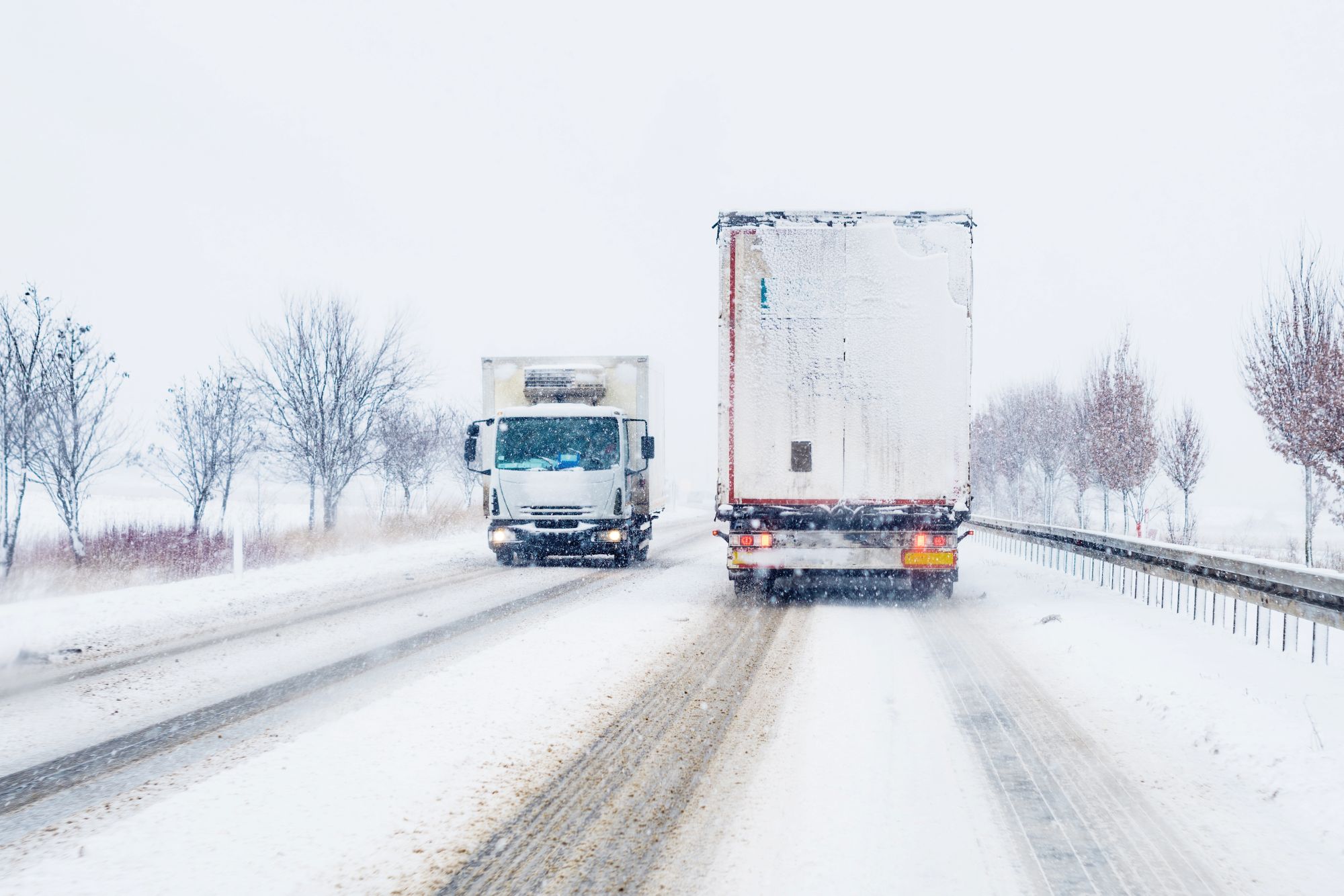
As temperaturas frias, as superfícies geladas e a luz do dia reduzida aumentam os riscos mecânicos e na estrada para os veículos comerciais, aumentando a probabilidade de enfraquecimento das baterias, redução da tração dos pneus e problemas de visibilidade. As normas de controlo técnico do Reino Unido sublinham a importância de uma manutenção de inverno mais robusta dos travões, da iluminação, dos fluidos e dos pneus à medida que as condições se deterioram, reforçando a razão pela qual a preparação para o inverno é essencial para as operações ininterruptas da frota. Mesmo um frio moderado [pode reduzir o desempenho do motor e do sistema hidráulico] (https://ascoeq.com/blog/cold-weather-prep-winterizing-your-construction-fleet/), o que torna crucial uma manutenção proactiva no inverno.
Fluxo de trabalho e desafios para os condutores

Para além do esforço dos veículos, a época festiva e as condições de inverno também exercem pressão sobre os condutores e os fluxos de trabalho operacionais. O aumento do tráfego, as condições meteorológicas imprevisíveis e os prazos de entrega mais apertados podem provocar fadiga, stress e um risco acrescido de acidentes. Uma programação cuidadosa, uma comunicação clara e um apoio proactivo aos condutores são essenciais para manter a segurança e garantir que a sua frota continua a funcionar eficientemente sob estas pressões sazonais.

Estratégias para manter a sua frota a funcionar sem problemas

A manutenção de operações estáveis durante a época festiva exige mais do que a resolução reactiva de problemas. É necessário um planeamento deliberado da manutenção dos veículos, da prontidão dos condutores, da utilização da tecnologia e da coordenação operacional. Estas estratégias simplificadas ajudá-lo-ão a antecipar as perturbações da época de inverno e a manter um desempenho consistente da frota durante as férias.

Dar prioridade à manutenção preventiva

A procura sazonal exige frequentemente que os veículos trabalhem em condições mais adversas durante mais horas, pelo que a manutenção preventiva é uma das formas mais eficazes de evitar avarias durante a época. Na construção, o tempo de inatividade pode custar [até $760 por veículo] (https://renovated.com/construction-fleet-management-software/), o que realça a importância da manutenção proactiva.

Concentre-se nos sistemas críticos para o inverno, como as baterias, os travões, os sistemas de aquecimento e descongelamento, os pneus e os níveis de fluidos. A resolução de problemas menores antes da corrida das férias garante que os seus veículos começam a época em óptimas condições e reduz o risco de períodos de inatividade não programados quando a capacidade é mais reduzida.

Reforçar a preparação dos condutores

Os condutores enfrentam uma maior pressão durante o período festivo, desde estradas congestionadas a condições meteorológicas imprevisíveis. Prepará-los com antecedência ajuda a reduzir os riscos e a manter a fiabilidade do serviço. Partilhe protocolos actualizados de condução no inverno, reforce as melhores práticas de gestão da fadiga e assegure-se de que todos os veículos transportam equipamento essencial para as condições meteorológicas frias. Um condutor bem preparado pode adaptar-se mais eficazmente aos perigos sazonais e manter as viagens em segurança.

Melhore a sua estratégia de peças e reparação

O acesso a peças e apoio à reparação torna-se mais difícil durante as férias devido a picos de procura e abrandamentos dos fornecedores. Assegurar os principais componentes com antecedência e confirmar a disponibilidade de uma oficina de reparação garante-lhe uma resposta rápida a problemas a meio da época. Estas medidas reduzem a probabilidade de atrasos prolongados e mantêm mais veículos na estrada durante os picos de trabalho.

Tirar partido da telemática e dos dados em tempo real

As informações exactas e em tempo real tornam-se ainda mais valiosas quando as condições meteorológicas e de tráfego podem mudar rapidamente. Os sistemas telemáticos ajudam-no a monitorizar o comportamento dos condutores, a identificar problemas emergentes nos veículos e a adaptar os itinerários de forma proactiva. A utilização de dados para tomar decisões no próprio dia - quer se trate de reencaminhamento, reprogramação ou escalonamento da manutenção - ajuda a sua frota a manter-se reactiva durante o período de férias.

Melhorar a comunicação e a programação

Os picos sazonais exigem um alinhamento mais rigoroso entre expedidores, motoristas, equipas de manutenção e clientes. Uma comunicação clara reduz a incerteza e facilita o ajuste dos horários quando as condições mudam. Partilhe actualizações regulares sobre alertas meteorológicos, alterações de rotas, janelas de entrega e disponibilidade de veículos para que todos se mantenham coordenados e capazes de responder rapidamente.

Criar planos de contingência

Mesmo com uma forte preparação, o inverno introduz variáveis que nenhuma frota pode controlar totalmente. A criação de planos de contingência fornece à sua equipa uma resposta estruturada em caso de incidentes. Estabeleça rotas de reserva, identifique fornecedores e oficinas alternativas e mantenha uma estratégia de veículos de reserva sempre que possível. O planeamento de interrupções garante que problemas inesperados não interrompam totalmente as operações.

A sua lista de verificação de preparação da frota para as férias

Utilize esta lista de verificação para se certificar de que a sua equipa, veículos e fluxos de trabalho estão prontos para o período mais movimentado do ano:

Otimizar o planeamento de itinerários:** Rever os dados históricos de tráfego e o congestionamento previsto para as férias para criar itinerários mais eficientes. As ferramentas que monitorizam e comunicam as condições em tempo real ajudam a reduzir os atrasos e o desperdício de combustível.

Confirmar a preparação do veículo para o inverno:** Verificar as baterias, os fluidos, os pneus, os limpa para-brisas e os sistemas de aquecimento para evitar avarias com tempo frio e melhorar a segurança do condutor.

Reforçar a preparação dos condutores:** Realizar breves sessões de atualização sobre técnicas de condução no inverno, gestão da fadiga e protocolos de emergência. Isto contribui para a segurança e a produtividade.

Aumentar a frequência da manutenção preventiva:** Os quilómetros percorridos nas férias e as temperaturas frias podem acelerar o desgaste. Um calendário de manutenção mais rigoroso ajuda a detetar problemas antes que estes resultem em tempo de inatividade.

Validar a fiabilidade do rastreio e da IoT: Assegurar que os rastreadores e sensores de activos estão totalmente funcionais para obter dados precisos sobre a localização e o estado durante os picos de procura.

Verificar a disponibilidade do fornecedor e das peças: Muitos fornecedores funcionam em horário reduzido durante as férias. Garanta peças e consumíveis com antecedência para evitar atrasos na reparação.

Antecipe-se às pressões sazonais

As condições das férias e do inverno amplificam qualquer pequena ineficiência. A preparação atempada ajuda a evitar tempos de inatividade evitáveis, reforça a segurança dos condutores e mantém as suas operações em movimento durante a época mais difícil do ano. Com um planeamento preciso, ferramentas fiáveis e um ritmo de manutenção proactivo, as frotas podem transformar os desafios sazonais em oportunidades para um melhor desempenho e satisfação do cliente.

Descubra mais em [Renovated Magazine] (https://renovated.com/)
Partilhar para

Outros também lêem...

Header Image

sexta-feira 19 dezembro 2025 • Notícias e actualizações

A SUA FROTA É UM ALVO? DAR PRIORIDADE À SEGURANÇA NUM MUNDO TECNOLÓGICO

Guest

Cybersecurity readiness must be a top priority for fleet owners and managers in the United Kingdom. The rapid digital transformation in the transportation and logistics industry has made fleets attractive targets for hackers. Learn about the cybersecurity trends fleet operators must be aware of and strategies you should adopt to lower your susceptibility to attacks.The advent of connected vehicles, push for fleet electrification, integration of Internet of Things (IoT) devices and reliance on automation have expanded the attack surface opportunistic cybercriminals can exploit to infiltrate your network.Vulnerable telematics back-end systems, insecure over-the-air firmware updates and buggy APIs are common entry points for phishers, data thieves, business saboteurs and ransomware attackers. Threat actors are also increasingly leveraging artificial intelligence to launch more believable scams.Falling victim to a cyberattack can cause more than extended, unscheduled downtime. A high-profile security incident can inflict severe reputational damage on your organisation and harm your business in the long term.Although your cyber insurance coverage may compensate you millions for losses, the financial impact can lead to insolvency — as happened to KNP Logistics in June 2025. An Akira ransomware attack exacerbated this major logistics group’s preexisting financial struggles, and let go of 730 employees.Every business is at risk from cyberattacks, but these strategies can help make your fleet management software and vehicles less vulnerable.A robust threat intelligence platform strengthens cybersecurity, as it allows you to proactively defend your assets from malicious actors and minimise your losses if they target you. Here are the primary ways to use threat intel to improve your security posture:Contextualisation enables your team to identify the perpetrators behind specific attacks, understand their motives and capabilities, determine what they want from your organisation, and comprehend their methods. Context transforms raw threat data into actionable intelligence, enabling you to inform your decision-making.Attackers evolve, so learning how they operated in the past is not enough to accurately anticipate their future actions. A threat intelligence platform can help you keep pace with known malicious actors and familiarise your team with relatively unknown ones. Some organisations use deception technologies to lure cybercriminals and watch them in action in a controlled environment.A software solution that can integrate into your company’s existing tools breaks down silos and allows threat intelligence to flow freely across teams. Cross-departmental collaboration is the key to implementing an organisation-wide cybersecurity strategy effectively.A threat intelligence platform can monitor your network activity and sense attack patterns early enough to notify your Security Operations Centre or IT professionals immediately. Early detection is vital to count threats before they infiltrate deeply into your system and cause more harm.Responding to urgent incidents involves less manual work with a threat intelligence platform. This software solution can orchestrate essential tasks to mitigate breaches, enabling your in-house cybersecurity professionals to focus on activities where human input is more impactful.Regulatory frameworks and data privacy standards are becoming more stringent over time. A threat intelligence platform aids compliance by ensuring that your team handles sensitive data responsibly and generates detailed reports to document your best practices.Zero trust minimises the likelihood of unauthorised access to fleet management systems by continuously verifying every user and device and enforcing identity-centric access control.This approach acknowledges that threats can come from within the organisation. Assuming that each request may come from a malicious actor reflects the level of vigilance you must exercise to protect your operation from sophisticated attacks and help your team adapt to complex, dynamic environments involving remote users, IoT devices and cloud services.After verification, zero trust gives users and devices just enough access to perform specific tasks. The principle of least privilege enables effective threat containment if a cybercriminal gets in.According to Cybersecurity Insiders’ 2024 Insider Threat Report, insider threat attacks have spiked. In October 2024, 51% of the 413 respondents in IT and cybersecurity reportedly over the past year. 29% reported spending over $1 million on remediation.The adoption of new technologies is a primary driver behind the rise in these cyberattacks. Investing in employee training is crucial for preventing team members from becoming insider threats.Provide target users with sufficient resources to familiarise themselves with the technologies. Highlight the ways they may inadvertently leak sensitive information or compromise the system. Tell them the red flags to watch out for to identify malicious schemes and teach them safe, responsible ways to deal with cybercriminals.Tight physical security can safeguard your assets from digital hijackers. Effective physical protection often involves a layered approach, which includes perimeter fencing, strategic placement of surveillance equipment and tamper-evident vehicle electronics casings. Additionally, limiting visibility with opaque doors , thereby adding an extra layer of protection to your physical security. Blending physical safeguards with digital solutions can restrict what hackers can do, even if they manage to gain control over fleet vehicles. In 2022, a group of hacktivists attacked the Russian ride-hailing service Yandex Taxi and directed in the same place in western Moscow. The incident should serve as a wake-up call to embrace measures to immobilise your assets if criminals remotely take control of the driver’s seat.Your company is only as strong as the weakest link in your supply chain. The positive impact of impregnable internal cybersecurity diminishes when third-party vendors make it easy for lawbreakers to steal your data from elsewhere. For instance, temporarily could jeopardise your cybersecurity if your lessor has outdated software.Working with supply chain partners that are as particular about cybersecurity reduces your risk exposure. Integrating your suppliers’ systems into your threat intelligence platform ensures better coordination during data breaches. Close collaboration with critical external parties promotes cybersecurity readiness and helps everyone prepare for potential attacks.Contending with online threat actors is inevitable in modern fleet management. Prioritise proactive strategies to stay ahead of hackers. By implementing a multi-layered defence that combines technology, employee training and strategic partnerships, you can build a resilient operation. This stance protects your current assets and secures your company’s future in an increasingly connected world.Discover more from

Header Image

segunda-feira 08 dezembro 2025 • Notícias e actualizações

TENDÊNCIAS DOS CAMIÕES: PREVISÕES PARA 2026

Guest

Major changes are coming for the mobility sector.The next 12 months will bring some of the most significant regulatory and technological shifts European transport has seen in years. New emissions rules, driver-monitoring systems, hydrogen trials and autonomous pilots will reshape how fleets operate across the UK and EU.For operators and professional drivers, understanding these changes now will make the difference between adapting confidently and struggling to keep up. come into force in 2026, introducing new requirements for fleets. Nitrogen oxide and carbon monoxide limits will tighten further, with the permitted particle size dropping from 23 nanometres to 10. In addition, for the first time.Every new truck sold will need to comply with Euro VII. While vehicle pricing is likely to be affected, the bigger impact will fall on procurement timelines, fleet renewal cycles and long-term decarbonisation.. These monitor eye and head movement to identify early signs of fatigue or inattention, enabling safer interventions and supporting accident-reduction goals across Europe. By 2029, new cab designs must minimise blind spots through improved glass visibility rather than camera reliance. This will particularly influence urban operations, vulnerable road user safety and future vehicle specification.. After years of exemption, this change effectively brings smaller commercial vehicles under full drivers’ hours enforcement.For operators with mixed fleets, this means introducing:● new driver cards● regular data downloads● updated monitoring processes● revised routing and rest-time planningThousands of vehicles that previously operated freely will need compliance systems in place almost immediately. requires companies with more than 250 employees or €40 million revenue to collect and report verified CO₂ emissions – including Scope 3 transport activity.This will cascade through supply chains. Smaller hauliers without reliable emissions reporting risk losing access to larger contracts, accelerating the push toward better data systems and standardised reporting.Electric HGV production will rise rapidly in 2026. are all expanding manufacturing capacity.To support this, electric charging is also expanding. , as part of HyHAUL's M4 corridor project. Three refuelling stations, each supplying up to two tonnes of hydrogen daily, support the pilot. If successful, the project aims for 30 trucks on the road by the end of 2026 and 300 by 2030. Alongside this, . Five more will follow by 2027.Vehicle manufacturers are taking different approaches to developing hydrogen-fuelled trucks: ● and DAF are planning similar systems. ● will introduce its next-generation hydrogen fuel cell stack in 2026 with improved durability and lower operating costs.Hydrotreated Vegetable Oil (HVO) is emerging as a notable transitional fuel for haulage in 2026, thanks to two factors: stricter biofuel mandates in north-western Europe and its compatibility with existing diesel engines. Reports by confirm that HVO is a “drop-in” fuel: it can be used in many existing heavy-duty vehicles without engine or infrastructure changes, which gives operators a practical pathway to immediate CO₂ reductions. Meanwhile, forecast that HVO consumption could reach record highs in 2026. Germany alone may need an additional 1.5 million tonnes – almost four times 2025 levels – to meet demand. Although uptake remains modest when compared with battery-electric or hydrogen alternatives, the current regulatory push and infrastructure compatibility mean HVO is likely to gain traction in 2026.From spring 2026, in controlled zones – a full year ahead of plans. Enabled by the , this transition supports an industry expected to contribute £42 billion to the UK economy by 2035 and create an estimated 38,000 jobs. Germany is close behind. , supported by €20 million in seed funding. Across northern Europe, autonomous freight along the 1,200-km Rotterdam-Oslo corridor. The programme runs until March 2026 and examines how autonomous vehicles perform across borders, terrain types and logistics hubs.In Sweden, already move goods between warehouses, processing five million data points per second. Their controlled deployments demonstrate the potential for automation in predictable, repeatable routes.Despite this progress, humans will continue to play a central role. . So while automation will support specific functions, such as port operations, depot shuttles and fixed urban routes, long-haul and complex international transport will remain human-led.The scale and speed of change arriving in 2026 is unlike any previous year for European road transport. Multiple regulatory, technological and sustainability shifts will land simultaneously, reshaping how fleets operate across borders."The operators who succeed in 2026 won't be those who resist change but those who prepare for it systematically," says Nick Long, European Strategic Partnership and Development Manager at SNAP. "We're working with fleets across Europe to build the infrastructure that tomorrow's industry needs. Secure parking. Integrated payments for new toll structures. The building blocks of success are available now for those ready to use them."SNAP helps fleets prepare for the future with integrated solutions for parking, payments and fleet management across Europe. Visit snapacc.com to discover how we can support your transition to 2026 and beyond.

Header Image

terça-feira 25 novembro 2025 • Notícias e actualizações

A POLÓNIA ACELERA A TRANSIÇÃO PARA O TRANSPORTE COM EMISSÕES ZERO

Guest

Poland’s transportation sector is undergoing a major transformation. In recent months, the government has introduced a series of high-value funding programmes aimed at decarbonising the country’s road network and logistics operations. Much of this activity focuses on infrastructure related to heavy-duty vehicles – a sign that the transition to cleaner freight is being embraced across Europe.The scale of investment – and the speed at which it's happening – will be important for operators, managers and infrastructure planners right across Europe. To understand why, it helps to look at both the wider European context and the specific funding available in Poland.The move towards lowand zero-emission transport has been gathering pace across Europe for several years. The EU’s package and to cut emissions from heavy-duty vehicles by 45% by 2030 and by 90% by 2040. The (AFIR) also states that there must be high-power charging points for heavy vehicles every 60 kilometres along the Trans-European Transport Network (TEN-T) – a system of European roads, railways, ports and airports that forms the backbone of continental freight – by 2030. Hydrogen refuelling stations must be available every 200 kilometres.The UK is following a similar path. Z are being used to test electric and hydrogen HGVs on long-haul routes, while funding is being allocated to depot charging and refuelling infrastructure.Against this backdrop, Poland’s programme shows that Central and Eastern Europe are ready to take a leading role in building cleaner, better-connected transportation.In March 2025, Poland’s (NFOŚiGW) launched two major funding calls worth a combined PLN 2 billion. The first will cover the construction and expansion of power grids that supply high-capacity charging stations, especially those on the TEN-T. It covers both grid expansion and the installation of new connections. This will mean that the network can deliver the energy needed for rapid truck charging. Energy and grid operators can apply for grants if their projects meet minimum power thresholds. The second funding call supports the construction of heavy-vehicle charging stations themselves. The aim is to create 550 publicly accessible points across the country, serving both electric and hydrogen trucks. A final programme, which launched in Q2 2025, gives grants and loans to businesses so they can buy or lease zero-emission trucks in categories N2 and N3. Category N2 covers vehicles with a gross weight between 3.5 and 12 tonnes, while N3 applies to trucks over 12 tonnes. Funding levels range from 30 to 60 per cent, depending on company size. Upper limits of PLN 400,000 apply to N2 vehicles and PLN 750,000 to N3 models. Applications will be , so operators can plan their transition to zero-emission vehicles. These investments sit alongside Poland’s existing programme, which subsidises electric car purchases for individuals and companies, further extending the country’s sustainable transport strategy beyond passenger vehicles.According to the , Poland transports more goods by road than any other EU country. It is a natural gateway between Western Europe and the Baltic States, Ukraine and the Balkans, which means a reliable zero-emission infrastructure in Poland will have a Europe-wide impact.By setting clear power requirements and aligning projects with the TEN-T corridors, the government is ensuring a coordinated approach rather than isolated projects. The goal is a dependable network where electric and hydrogen trucks can move freely along key trade routes. The Deputy Minister for Climate and Environment described the programme as a way to strengthen “the competitiveness of Polish freight operators” while cutting emissions from one of the country’s largest economic sectors.Poland’s domestic network is also part of the wider . A total of nine EU countries – including Poland – committed in September 2025 to accelerate charging infrastructure deployment along key freight routes, such as the North Sea-Baltic and Scandinavian-Mediterranean corridors of the TEN-T.For fleets that operate across Europe, the initiative means charging infrastructure will become more standardised and predictable between countries. This will help drivers plan cross-border routes with greater confidence while supporting the shift towards zero-emission freight.For fleet operators, the timing is encouraging. Zero-emission trucks are rapidly , with sales of nearly 2,000 zero-emission heavy-duty electric trucks registered in the first half of 2025 across the EU. There are challenges, however. Adding high-power charging capacity will mean that grid operators, local authorities and logistics centres have to cooperate. It will also take time to hire technicians with the skills to install and maintain high-voltage equipment.In addition, vehicle costs and operational factors could also slow progress. Even with generous subsidies, businesses must weigh the cost of electric vehicle ownership, route patterns and depot readiness.For the road transport community, Poland’s programme is a significant milestone. Once complete, its charging and refuelling network will connect eastern and western Europe, supporting cleaner and more efficient freight movement.“This is a turning point for heavy transport,” says Nick Renton, Head of European Strategy and Business Development at SNAP. “Poland’s actions show that zero-emission freight is becoming part of daily life, rather than a long-term vision. As charging and refuelling points multiply, operators will be able to schedule cleaner journeys with confidence.”As the situation develops, we will continue to support fleets across Europe with technology, insight and practical tools for drivers. Our helps identify and book rest stops, refuelling points and secure parking, with more zero-emission facilities being added as new sites open. For operators looking to stay ahead of infrastructure changes, it provides a clear view of how the road network is evolving – and where new opportunities are emerging.