Guest
Nasveti za voznike • 4 min branja

Nasveti za varčevanje z gorivom za voznike tovornjakov

Ustvarjeno: 16. 08. 2024

Posodobljeno: 10. 10. 2024

Ekonomičnost porabe goriva vozil je eden najpomembnejših vidikov, ki vplivajo na stroške prevoznih podjetij. Ključnega pomena je, da razumete, kako izboljšati učinkovitost porabe goriva, tako kot vodja kot voznik. V podjetju SNAP želimo zagotoviti strokovno podporo vsem, ki se ukvarjajo s tovornim prometom - zato smo pripravili seznam nasvetov, ki lahko pomagajo pri učinkoviti porabi goriva na cesti.

Zakaj je varčevanje z gorivom tako pomembno?

Da bi v celoti razumeli pomen učinkovitosti porabe goriva, je treba upoštevati vlogo, ki jo imajo stroški goriva v proračunih prevoznih podjetij. Po različnih poročilih lahko stroški goriva predstavljajo od 25 % do 35 % izdatkov upravljavcev voznih parkov. Z uporabo nasvetov za varčevanje z gorivom lahko znatno zmanjšate stroške, kar omogoča, da se večji del proračuna sprosti za druge naložbe.

Drugi vidik, zakaj se splača porabiti gorivo, je ekologija. Kljub temu da se električna vozila počasi uveljavljajo v tovornem prometu, večino voznih parkov še vedno sestavljajo tovornjaki z običajnimi motorji z notranjim izgorevanjem. Ker je promet odgovoren za eno petino svetovnih emisij onesnaževal, lahko nasveti za varčevanje z gorivom pomagajo ne le vam in vašemu podjetju, temveč tudi celotnemu planetu.

Nasveti družbe SNAP za varčevanje z gorivom za voznike v Združenem kraljestvu in Evropi

Da bi vam pomagali v boju proti naraščajočim stroškom in zmanjšali emisije onesnaževal, smo pripravili seznam nasvetov za doseganje optimalnega izkoristka goriva voznega parka. Ti temeljijo na dejanskih izkušnjah in priporočilih zaupanja vrednih partnerjev iz panoge - lahko ste prepričani, da bo izvajanje naših nasvetov pomembno vplivalo na vašo varčnost z gorivom.
1. Počasi in vztrajno zmaguje v dirki

Čeprav vas morda mika, da bi čim prej prišli na cilj, je pomembno, da med vožnjo upoštevate omejitve hitrosti. Trenutne omejitve veljajo od leta 2015 in določajo najvišjo hitrost na enosmernih in dvosmernih cestah na 50 oziroma 60 km/h, na avtocestah pa na 70 km/h. Pomembno je, da za vozila nad 7,5 tone (pri čemer se teža izračuna na podlagi mase tovornjaka in mase blaga) veljajo strožje omejitve hitrosti, vključno s 60 km/h na avtocestah. Dokazano je, da umirjena vožnja in upoštevanje omejitev pripomoreta k varčni porabi goriva, poleg tega pa pomagata preprečiti kazni za prekoračitev hitrosti in močno zmanjšata tveganje za nesreče.

2. Preberite več o varčni porabi goriva

Če želite v celoti razumeti vpliv svojega načina vožnje na stroške prevoza, morate poznati zapletene vidike varčevanja z gorivom. MPG je najpogostejša enota, ki se uporablja za merjenje porabe goriva voznega parka. Izračun je dokaj preprost, vendar so enote lahko zmedene, saj večina bencinskih črpalk v Združenem kraljestvu in Evropi prodaja gorivo v litrih. En britanski galon je enak 4,546 litra. Večina sedanjih vozil zagotavlja statistične podatke o porabi goriva na poti, zato lahko med vožnjo preprosto spremljate porabo goriva.

3. Manj zavirajte in vozite z enakomerno hitrostjo

Umirjen način vožnje lahko naredi čudeže pri varčni porabi goriva tovornjaka. Uporabljajte zaviranje z motorjem, kjer je to mogoče, vzdržujte varno razdaljo med vami in drugimi vozili, predvsem pa - na cesti uporabljajte zdravo pamet. Bodite pozorni in hitro prepoznajte vse situacije, zaradi katerih bi morali zmanjšati hitrost, ter ustrezno prilagodite hitrost, da ohranite varnost in hkrati zmanjšate porabo goriva.

4. Vozite v višjih prestavah, kadar je to mogoče

Še en vidik, ki ga morate upoštevati, je delovanje motorja - višje prestave pomenijo manj vrtljajev na minuto, zaradi česar je motor manj obremenjen. Če se ne spuščate po klancu navzdol ali zmanjšujete prestavo zaradi prehitevanja, poskušajte ostati v najvišji prestavi, kadar koli je to mogoče. To je ena najpomembnejših tehnik vožnje za varčevanje z gorivom.
5. Skrbite za svoj tovornjak

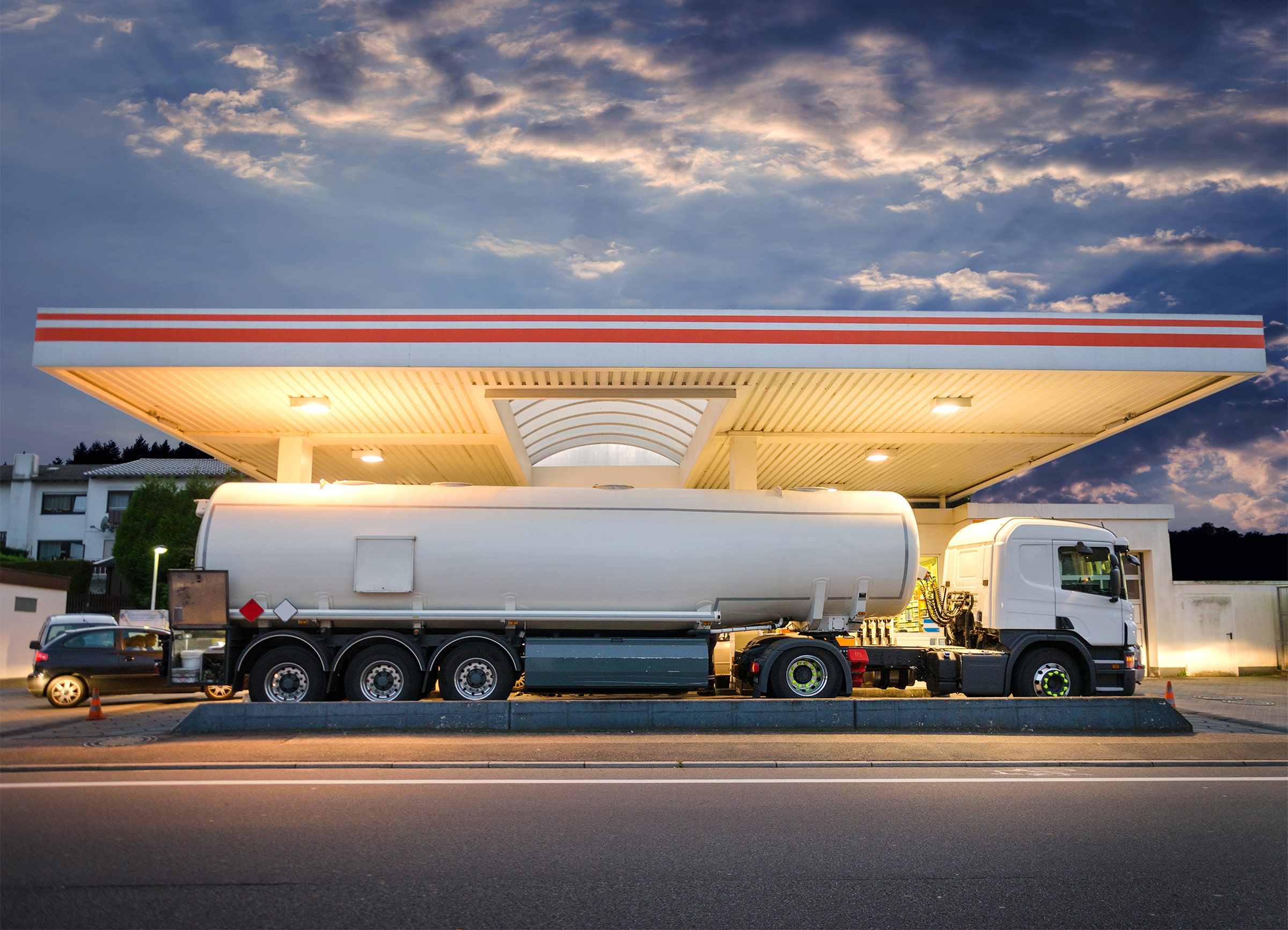
Skrbite za svoje vozilo in tudi ono bo skrbelo za vas. Redno vzdržujte svoje vozilo, pazite na nivo olja in tlak v pnevmatikah ter nadzorujte učinkovitost motorja. S temi nasveti za varčevanje z gorivom lahko veliko naredite in odložite popravila in druga vzdrževalna dela. Pogosto spregledan vidik varčevanja z gorivom v voznem parku so pravilno napolnjene pnevmatike, ki lahko zmanjšajo porabo goriva za kar 2 odstotka.

6. Načrtujte svojo pot in bodite obveščeni o razmerah na cesti

Z vnaprejšnjim načrtovanjem poti se lahko izognete napačnim zavojem in nepotrebnim kilometrom. To pogosto samodejno opravi vaša satelitska navigacijska naprava, vendar morate biti obveščeni tudi o morebitnih obvozih in slabih razmerah na cesti, da še bolj optimizirate svojo pot.

7. Upoštevajte aerodinamiko

Pri dajanju nasvetov za varčevanje z gorivom pogosto spregledamo vpliv zračnega upora na porabo goriva. Pri višjih hitrostih lahko že odprta okna škodujejo varčevanju z gorivom. Aerodinamične izgube lahko povečajo porabo goriva tudi za 20 % - to točko je med vožnjo vsekakor vredno upoštevati.

8. Uporabljajte tovornjake, ki so najbolj varčni z gorivom

Ta nasvet je bolj namenjen upravljavcem voznih parkov, vendar si ga je pametno zapomniti tudi kot voznik. Čeprav je težko izbrati en sam najbolj varčen tovornjak, na trgu vsekakor ne manjka tovornjakov z nizko porabo goriva - zlasti med novejšimi modeli. Tovornjaki z dobrim izkoristkom goriva so pomembna prednost vsakega prevoznega podjetja. Čeprav so v nekaterih primerih začetni stroški tovornjakov z najboljšo porabo goriva MPG morda višji kot pri alternativi, ki porabi več goriva, se prihranki pokažejo v daljšem časovnem obdobju.

9. Izklopite motor v prostem teku

Zlasti ko zapuščate avtocesto in prihajate do končnega cilja, ki je lahko v mestu, se lahko pogosto znajdete v situaciji, ko se ustavite v prometu, tudi za dlje časa. V takšnih primerih se splača za nekaj časa ugasniti motor. Tudi pri najbolj varčnih tovornjakih je to še vedno koristno - hkrati lahko zmanjšate emisije in raven hrupa.

10. Uporabite zaupanja vredne rešitve, ki vam bodo pomagale na poti

Iskanje parkirnega mesta ali primernega mesta za polnjenje rezervoarja za gorivo lahko vaši poti doda veliko nepotrebnih kilometrov. Za pospešitev postopka lahko uporabite programsko opremo TMS (Transport Management System) - platforma SNAP je na voljo tako upravljavcem voznih parkov kot voznikom. Med razpoložljivimi funkcijami je modul SNAP Parking, ki vam omogoča iskanje postajališč za tovornjake in parkirišč v skladiščih - s tem prihranite čas in gorivo.
Če povzamemo - vozite umirjeno, upoštevajte aerodinamiko, uporabite pravo vozilo in izkoristite funkcije računa SNAP.

Kako dosežete optimalno varčnost vozila z gorivom? Obstaja veliko načinov za zmanjšanje porabe goriva - od umirjenega in enakomernega načina vožnje, prek uporabe najučinkovitejših razpoložljivih tovornjakov do skrbi za aerodinamiko in vzdrževanje tovornjakov. Odlične rezultate lahko dosežete tudi z uporabo funkcij, ki so na voljo v platformi SNAP Account, kot sta SNAP Fuel in SNAP Parking.

Naše rešitve trenutno pomagajo več kot 185.000 voznikom po vsej Evropi in več kot 8.500 voznim parkom pomagajo prihraniti pri stroških goriva. Izdatki za gorivo lahko predstavljajo 25-35 % stroškov prevoznega podjetja - poleg ekonomskih prednosti je učinkovita poraba goriva pomembna tudi za planet, saj pomaga zmanjšati emisije.
Delite z

Tudi drugi berejo...

Header Image

petek 29 maj 2026 • Nasveti za voznike

OD BOJA DO MOČI: KAKO DARREN WRIGHT Z LOGISTIKO POMAGA VETERANOM PRI PONOVNI IZGRADNJI ŽIVLJENJA

Ellie Aldous

For many veterans, leaving the armed forces can mean losing far more than a career. It can mean losing structure, identity, purpose and community.For Darren Wright, founder of Veterans into Logistics, that transition was deeply personal.After serving nearly six years in the British Army, including a tour of Afghanistan as an air defence gunner, Darren struggled following his own transition into civilian life. He experienced homelessness, mental health challenges, the breakdown of his marriage and eventually served a custodial sentence.Rather than defining him, those experiences became the driving force behind a mission that is now changing lives across the UK.“I rebuilt my life through HGV driving,” Darren explains. “And I realised that if it could help me rebuild my life, it could help other veterans rebuild theirs too.”Founded in 2020, Veterans Into Logistics supports ex-service personnel into sustainable careers within the logistics industry by helping them gain HGV licences, training and employment opportunities.The organisation was inspired in part by the loss of Darren’s friend Jamie Doyle, a former Royal Artillery soldier who tragically died less than six months after leaving the military.“Jamie had served 22 years and was heavily decorated,” Darren says. “But like many veterans, he struggled with the transition. Losing that structure, purpose and identity can hit people incredibly hard.” That loss became the catalyst for action.Creating Opportunities Through LogisticsDarren recognised that logistics offered something many veterans desperately needed: a fast, accessible route into stable employment. “In six weeks, someone can go from having a car licence to becoming an HGV driver earning a strong salary,” he explains. “For many people, especially those who aren’t academic, that can completely change their future.” Veterans Into Logistics now works with veterans, ex-offenders and people from disadvantaged backgrounds to help them access training, employment and long-term career opportunities. The programme focuses not only on skills training, but also on restoring confidence and hope.“When someone comes to us at rock bottom, the first thing we do is give them hope,” Darren says. “Booking that first medical appointment may seem small, but it gives someone belief that something is finally changing.” The results have been transformative.Darren shared the story of one veteran he met sleeping rough in Manchester. After engaging with Veterans Into Logistics, the veteran gained his HGV licence, secured employment and later proudly returned to show Darren the car he had been able to buy through his hard work.Another veteran who had repeatedly cycled in and out of prison after leaving the military was supported into training and employment. He has since rebuilt his life and has not reoffended. “These are people who simply needed the right tools and the right opportunity,” Darren says. “I always say I’d rather give someone a fishing rod than a fish.”Challenging Perceptions of the IndustryDarren is also passionate about changing perceptions around logistics careers.“There’s this misconception that every driving role means being away Monday to Friday sleeping in a truck,” he says. “That’s not true. There are so many different types of driving jobs — local council work, airport operations, supermarket deliveries, highways maintenance, Formula One logistics and more.”Through his growing online platform, Manc on a Mission, Darren is using social media to educate people about the opportunities available in the logistics sector.His TikTok videos, which showcase real drivers and real careers, quickly gained millions of views and have inspired many people outside the military community to explore careers in transport and logistics. “I want to show young people and people from deprived areas that this is a real career path,” Darren explains. “You can build a stable life through this industry.” Driving Change Nationally Darren’s work has also led to national policy change. After discovering that military resettlement funding could not be used for HGV driver training because it was classified below Level 3 education, Darren challenged the rules directly with government ministers.Following his campaign, the policy was changed, allowing service leavers to use Enhanced Learning Credits for HGV driver training.“It was about making sure less academic service leavers weren’t excluded from opportunities,” Darren says.What’s next for Veterans into LogisticsToday, Veterans into Logistics continues to expand its impact through partnerships with logistics companies, prisons, colleges and employers across the UK. Looking ahead, Darren hopes to continue opening doors for veterans and others who may otherwise struggle to access meaningful employment. “If we keep changing lives, that’s success,” he says.If this story resonates with you or someone you know within the industry please reach out to Darren at the Team at Veterans for Logistics.‍Watch the full Interview:

Header Image

petek 29 maj 2026 • Nasveti za voznike

GOVORITI, PREDEN JE REZERVOAR PRAZEN - RAZBIJANJE STIGME IN MOLKA V PREVOZNIŠTVU.

Ellie Aldous

Extended periods away from home, long driving hours and tight delivery schedules are all part of a life in the logistics and haulage industry. But behind the movement of goods that keeps the world moving, there is a growing conversation about something far less visible, the mental health of drivers.With limited to no social interaction during their working week, isolation has become one of the biggest challenges among drivers. This is compounded by pressures on the road, such as finding secure parking for their cargo, managing delivery deadlines, navigating traffic, and maintaining concentration while dealing with mental fatigue.For some, the stresses continue past the steering wheel with some struggling with financial worries, physical wellbeing and difficulty maintaining relationships given they are spending a vast amount of time away from loved ones. What makes the issue even more concerning is that 98% of drivers are male, a group that is often less likely to speak openly about mental health. A UK survey by Priory found that 40% of men have never spoken to anyone about their mental health, with many citing embarrassment, stigma, or fear of appearing weak. Experts say this silence can leave drivers feeling even more disconnected and therefore the cycle continues. So, the big question is how can fleet managers help break the cycle? We have provided some top tips from mental health advocates!Regular check in calls with your drivers Recognise and Reward good work Support healthy rest breaks Offering a confidential support services such as wellbeing apps & counselling services Monthly team catch ups. Here are the top 5 tips to give to your driversMove when you can! A 10-minute walk & stretch can boost energy and improve circulation. Stay Hydrated. Dehydration can lead to fatigue! Keep in touch with others – Regular calls and facetime with family and friends can help you feel more connected Eat Balanced Meals – Choosing a healthy alternative helps maintain your energy. Listen to something positive – Pick a podcast or audio book, something interesting to support the long journey.At SNAP, were more than just a payment solution, we’re committed to driving meaningful, positive change across the industry by supporting not only our service partners, but also the hardworking drivers that keep the world moving.Sources: Men's Mental Health: Why 40% of men won't talk about it Priory Office for National Statistics https://www.nomisweb.co.uk/datasets/aps218/reports/employment-by-occupation?compare=K02000001

Header Image

torek 26 maj 2026 • Nasveti za voznike

POSTOPKI VARNEGA NAKLADANJA IN RAZKLADANJA ZA PREPREČEVANJE KOSTNO-MIŠIČNIH POŠKODB.

Evelyn Long

Musculoskeletal injuries are one of the most persistent challenges facing the fleet industry today. Drivers and warehouse staff face constant physical demands during loading and unloading operations. Implementing proper procedures protects your workforce from chronic pain and career-ending injuries while maintaining the efficiency that keeps your business competitive in demanding markets.Musculoskeletal injuries affect individual workers while draining business resources through lost productivity and increased insurance premiums.When an employee sustains an injury, the financial consequences go beyond the immediate medical expenses. Fleet managers must account for sick leave costs, temporary worker expenses and potential compensation claims.In 2023 to 2024, the total costs of workplace ill health and injury , with injury accounting for 28% or £6.5 billion. These figures demonstrate how injuries translate into economic burdens that affect profit margins.Lost productivity compounds these direct costs. When experienced drivers or warehouse staff take extended leave, operations slow down and remaining team members face increased workloads. The ripple effects touch every aspect of fleet operations, from delayed deliveries to strained client relationships.Drivers who develop musculoskeletal disorders face a difficult reality. Chronic back pain, shoulder injuries and repetitive strain can make basic job functions excruciating. Many drivers report that persistent pain affects their ability to focus during long routes, creating additional safety concerns.Musculoskeletal disorders rank among the in Great Britain. These conditions force experienced professionals out of an industry where they've built years of expertise.UK law requires employers to take specific steps to prevent manual handling injuries. Risk assessment forms the foundation of compliance and serves as the first line of defense against workplace strain.Employers must follow the Manual Handling Operations Regulations from the Health and Safety Executive, which establish a clear hierarchy. First, wherever reasonably practicable. Second, assess any hazardous operations that cannot be avoided. Third, reduce the risk of injury from those operations to the lowest level reasonably practicable.This framework pushes businesses to eliminate manual handling risks entirely. Mechanical equipment must be used whenever possible for moving loads. Any unavoidable manual handling requires proper assessment and mandatory control measures.A suitable and sufficient risk assessment examines four key factors in logistics operations:1. Task: The task itself matters, including whether it involves twisting, stooping or repetitive movements. Load: Load characteristics, such as weight, size and stability, play a role. Environment: Environmental conditions, including space constraints, floor surfaces and temperature extremes, affect safety outcomes. Individual: Individual capabilities vary among workers, who bring different strengths and physical limitations to each job. Effective should lead to concrete improvements. Document your findings and share them with your team.When manual handling becomes inescapable, proper technique can reduce injury risk. Training the workforce in correct lifting methods protects them during daily operations.The feet should be , positioned close to the load. Bending at the knees while maintaining a straight back allows you to grip the load firmly with both hands. Leg muscles should power the lift as you rise smoothly. Keeping the load close to the body throughout the movement prevents strain, as does avoiding any twisting motion during the lift or carry.If you need to strain or jerk to move an object, it requires mechanical assistance or team lifting. Never rush a lift to save time. Taking a few extra seconds to position yourself correctly prevents injuries that could sideline you for weeks.Team lifts require clear communication and planning before anyone touches the load. Designate one person as the lift coordinator who will call out instructions. All team members must understand the lift plan, including grip points, the path of movement and where the load will be placed.The coordinator should count down before the lift begins so everyone moves at the same time. Team members must maintain communication throughout, calling out if they need to pause or adjust.Technology offers powerful tools to reduce or eliminate manual handling risks in fleet operations, while equipment investments protect workers, often improving efficiency and throughput.Mechanical equipment, such as pallet jacks, forklifts and conveyors, eliminates many manual handling injuries. Workers' backs and joints no longer bear the physical strain when machines handle the load. Motorizing the effort required to move heavy loads, battery-electric pallet jacks . These machines can handle significantly more weight than manual versions while requiring minimal physical exertion from operators.Forklifts excel at transporting and lifting materials in warehouse and loading dock environments. Operators control heavy loads from a protected position, eliminating back strain and repetitive-motion injuries associated with manual handling.Data-driven scheduling through predictive systems can and potential delay points across your routes. Fleet managers can use these insights to adjust schedules, allocate additional resources during peak periods and give drivers realistic time frames.When drivers feel rushed, they are more likely to cut corners on safety procedures. Proper scheduling eliminates this pressure. Workers have time to use mechanical equipment properly, conduct team lifts when needed and follow correct manual handling techniques.Emerging wearable devices monitor workers' movements and posture throughout their shifts. These devices use to analyze lifting techniques and provide real-time feedback when workers adopt unsafe postures.Similar technology appears in driver safety applications. A telematics app program helped among young drivers by providing real-time feedback. The same principle applies to physical work, where immediate alerts about improper lifting form can prevent cumulative strain injuries.Fleet operations can use prevention through design (PtD) to eliminate hazards during planning. Vehicle specifications that minimize manual handling requirements, warehouse layouts that facilitate safe movement and procurement decisions that prioritize ergonomics all fall under this proactive approach.Vehicle design choices directly impact daily injury risk. Lower load bed heights reduce the distance workers must lift heavy items, while side-loading configurations ease the strain on workers' backs compared to rear-loading designs. Warehouse layout decisions matter as well, with adequate space around loading docks allowing workers to position themselves correctly and use equipment without awkward maneuvering.Equipment provision alone doesn't guarantee safety. Research shows that while 62.2% of construction workers might work at heights requiring protection, equipment. This gap highlights why PtD matters. When you design operations so that the safe method is also the easiest, compliance becomes natural.Preventing musculoskeletal injuries necessitates ongoing attention. Investing in proper equipment, training and operational design protects your workforce while strengthening your business's reputation and future prospects.Discover more from