
Josh Cousens
Novinky a aktualizace • 5 min čtení

Nejstresovější města v Evropě, ve kterých je nutné zaparkovat a řídit.

Vytvořeno: 14.01.2026

Aktualizováno: 15.01.2026

Řízení a parkování v evropských městech může být pro řidiče nákladních vozidel každodenní bolestí hlavy - a vysoká úroveň stresu nemá vliv jen na pohodu, ale také na efektivitu vozového parku. Pro manažery logistiky je znalost míst, kde jsou tyto problémy největší, zásadní pro plánování tras, bezpečnost řidičů a provozní výkonnost.

Náš výzkum využívá sociální odposlech a analyzuje miliony geotagovaných příspěvků ve 150 evropských městech a zjišťuje, která místa jsou pro řidiče nejvíce stresující. Na prvním místě žebříčku je Liverpool (60,5 % příspěvků ukazuje stres spojený s řízením), následuje Praha (59,2 %) a Dublin (58,5 %). Liverpool se také umístil na 2. místě v žebříčku nejvíce stresujících měst pro parkování ve Velké Británii. Hlavními bolestmi, na které řidiči v Evropě upozorňují, jsou dopravní zácpy, nedostatek parkovacích míst a záludnosti na silnicích.

Tato studie mapuje evropská stresová ohniska těžkých nákladních vozidel na základě skutečných pocitů řidičů a ukazuje, jak podmínky ve městě ovlivňují pohodu. Nejde o sestavení žebříčku zemí, ale o to, aby manažeři vozových parků a logistiky získali jasné a použitelné poznatky, které jim pomohou podpořit řidiče, plánovat chytřejší trasy a snížit zátěž při řízení ve městech.

Naslouchání zkušenostem řidičů

Náš výzkum analyzoval více než 14 milionů geotagovaných příspěvků na sociálních sítích ze 150 evropských měst, které se týkaly témat souvisejících s řízením, jako je parkování, doprava a stav silnic. Příspěvky byly hodnoceny z hlediska stresu sledováním klíčových slov a frází spojených s negativními emocemi v angličtině a místních jazycích. Každé město bylo hodnoceno na základě procenta příspěvků vyjadřujících stres, což poskytlo jasný obraz o tlaku na řidiče v celé Evropě. Data byla shromažďována na hlavní platformě sociálních médií X (dříve Twitter) po celý rok 2025.

"Stres" zahrnuje tlaky, kterým řidiči vozového parku čelí na silnicích, včetně dopravy, parkování, stavu vozovky, obecného řízení a konfliktů s ostatními řidiči. Pochopení těchto faktorů pomáhá provozovatelům vozových parků podporovat pohodu a výkonnost řidičů.

"Znalost měst, která jsou pro řidiče nákladních vozidel nejvíce stresující, umožňuje SNAP zaměřit se na řešení, která zvyšují bezpečnost i efektivitu. "

MATTHEW BELLAMY, GENERÁLNÍ ŘEDITEL, SNAP

Města EU ve stresu: Klíčová zjištění

Od roku 2025 pro města, která jsou z hlediska řízení nejvíce zatížena stresem:

  1. Liverpool, Velká Británie. 60,5 % příspěvků na sociálních sítích týkajících se parkování, což je nejvyšší podíl příspěvků souvisejících se stresem při řízení v Evropě.
  2. Praha, Česko. 59,2 % stresujících příspěvků na sociálních sítích týkajících se parkování pravděpodobně kvůli hustému provozu, historickému uspořádání ulic a omezenému prostoru pro pohyb větších vozidel po městě.
  3. Dublin, Irsko. 58,5 % stresujících příspěvků na sociálních sítích týkajících se parkování - stres řidičů je silně spojen se zpožděním v dopravních zácpách, nedostatkem parkovacích míst a rušnými trasami dojíždění, které ovlivňují každodenní podmínky pro jízdu.

Tři nejzatíženější města ve Velké Británii z hlediska parkování v roce 2025:

  1. Newcastle upon Tyne. Toto město, kterému se běžně říká "Newcastle" a které se nachází v hrabství Tyne and Wear, má neuvěřitelných 65,3 % stresujících příspěvků na sociálních sítích týkajících se parkování, což z něj činí nejvíce stresující město ve Velké Británii z hlediska parkování v roce 2025.
  2. Liverpool. V Merseyside vyjadřuje 64,4 % sociálních příspěvků o parkování v Liverpoolu stres.
  3. Middlesbrough. V tomto městě v hrabství North Yorkshire vyjadřuje 63,9 % sociálních příspěvků o parkování stres.

Zvýšený stres z parkování vykazuje také Skotsko: Edinburgh (61,6 % příspěvků o parkování na sociálních sítích) a Glasgow (61,4 % příspěvků o parkování na sociálních sítích) patří mezi města, kde je parkování nejnáročnější. Kromě toho se Londýn umístil na 17. místě mezi městy, kde je parkování nejstresovější (57,9 stresujících příspěvků na sociálních sítích o parkování. Mezi faktory, které k tomu přispívají, mohou patřit úzké ulice, husté městské uspořádání, vysoká poptávka po omezeném parkovacím prostoru a omezení v centru města, která mohou zvyšovat tlak na řidiče.

Stresová místa pro evropské řidiče

Na základě milionů geotagovaných příspěvků na sociálních sítích jsme každé město hodnotili podle podílu příspěvků souvisejících se stresem, čímž jsme odhalili nejlepší místa v Evropě, kde se nejčastěji jezdí a parkuje, a upozornili jsme na městské podmínky, které jsou pro řidiče největším problémem.

Naše infografická mapa zobrazuje města s největším tlakem na řízení a parkování a odhaluje klíčové městské body a problémy, kterým řidiči na jednotlivých trzích čelí.
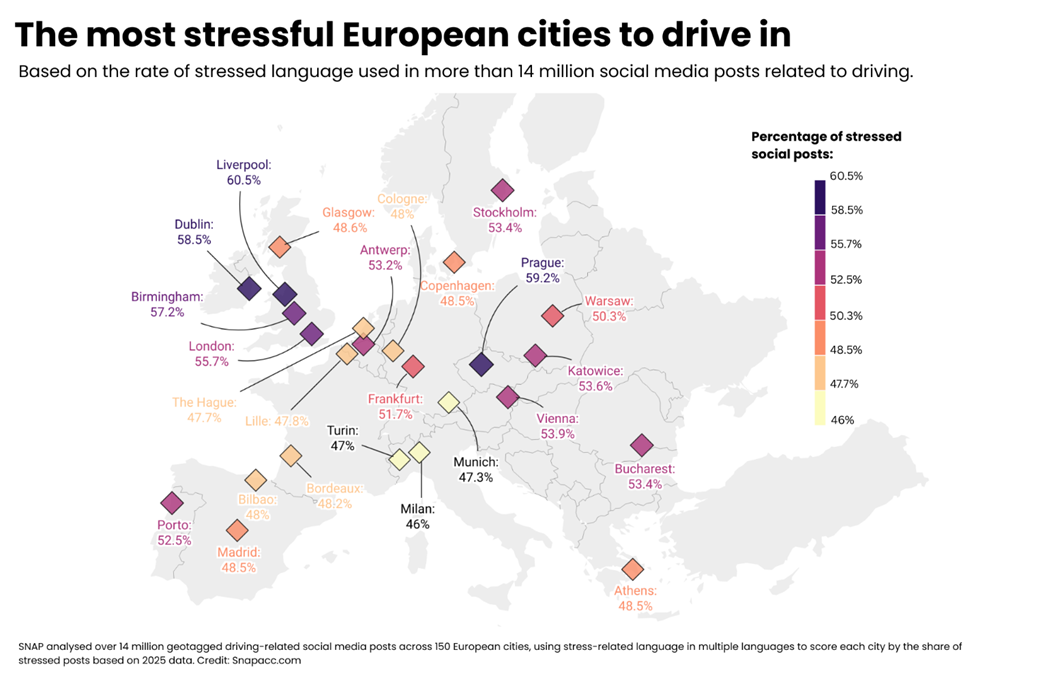
Nejstresovější města, ve kterých se jezdí autem

Města mohou zvyšovat stres řidičů kvůli dopravním zácpám, úzkým ulicím a složitému uspořádání silnic.
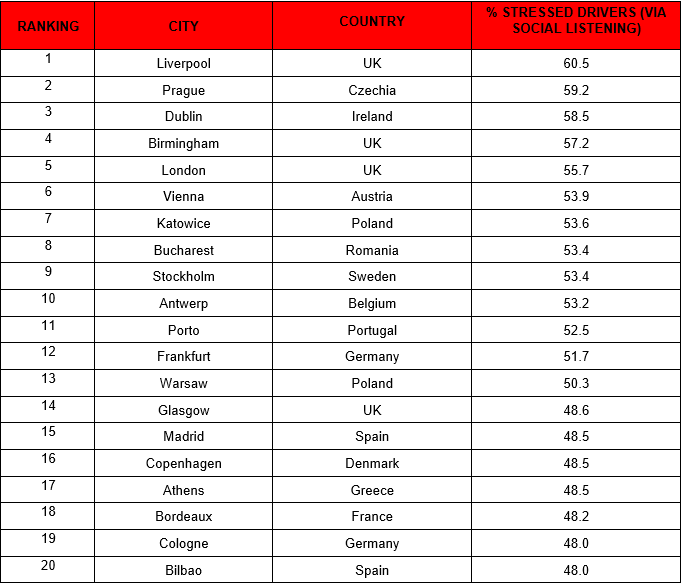
Liverpool (1. místo), Birmingham (4. místo) a Londýn (5. místo) patří mezi nejstresovější města v Anglii, kde se míra stresu pohybuje mezi 55,7 % a 60,5 %. K těmto zvýšeným úrovním stresu přispívají především místa s dopravními zácpami a úzká hrdla, jako jsou liverpoolské tunely Mersey a silně přetížené trasy, například londýnská dálnice M25 .

Dublin je na 3. místě a je jedním z nejpřetíženějších měst v Evropě, kde se řidiči kvůli husté dopravě zdrží v průměru 81 hodin ročně, což poukazuje na přetrvávající zácpy na městských silnicích.

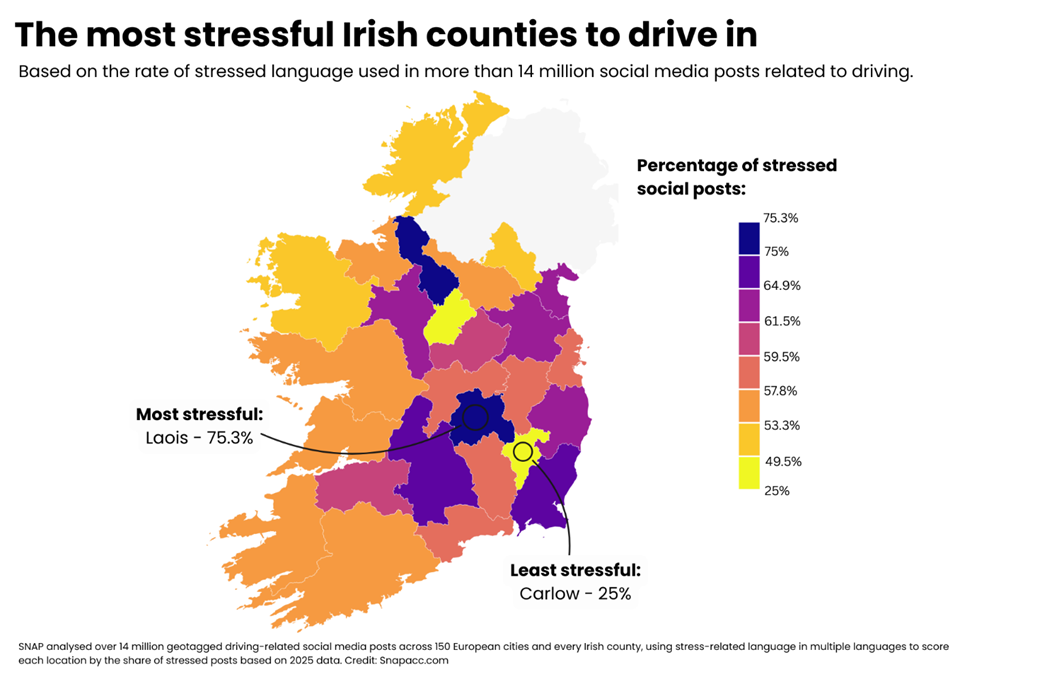
Další sociální šetření zaměřené konkrétně na irské motoristy ukázalo, že hrabství Laois a Leitrim zaznamenala obzvláště vysokou míru stresu z parkování, a to v rozmezí od 75 % do 75,3 %. Tato vysoká čísla poukazují na přetrvávající problémy řidičů v těchto oblastech, které jsou do značné míry způsobeny velkou závislostí na automobilu - [73 % dojíždějících do práce v Laois cestuje do práce osobním automobilem], podle oficiálních statistik (strana 118). V Leitrimu se navíc objevují místní zprávy o řídké silniční infrastruktuře a konfliktech při dodávkách a parkování ve městech jako Drumshanbo, které přispívají ke stresu řidičů v tomto irském hrabství.
Katowice, Polsko (7. místo) - ačkoli nepatří k nejpřetíženějším polským městům celkově, Katovice se stále potýkají se zpožděním a dopravní zátěží, přičemž řidiči tráví značný čas v dopravě a na hlavních silničních tazích, jako jsou S86 a A4, je denně hustý provoz, což může přispívat ke stresovému skóre 53,6 %. Podobně v polské Varšavě (13. místo) stráví řidiči v dopravě přibližně 70 hodin ročně, což přispívá ke skóre stresu 50,3 % v roce 2025.

Bukurešť v Rumunsku (8. místo) se jako jedno z nejpřeplněnějších evropských měst potýká s notoricky známými dopravními zácpami, přičemž řidiči tráví výrazně více času v zácpách a kvůli pomalé dopravě ztrácejí až 12 pracovních dní ročně.

Hlavní město Španělska, Madrid (15. místo), trpí velkými dopravními zácpami a cesta 10 km trvá přibližně 24 minut. Úzké ulice a přetrvávající doprava, zejména v oblastech jako Puente de Vallecas, způsobují, že každodenní jízda je pomalá a stresující. Podobně zprávy o nehodách a hustém provozu ve španělském Bilbau (20. místo) na klíčových trasách, jako jsou A-8 a BI-30, způsobují delší fronty a pomalý pohyb, což přispívá ke stresujícím podmínkám při řízení.

Nejstresovější města, kde se dá zaparkovat

Parkování také přispívá ke stresu řidičů a managementu vozového parku, protože omezená dostupnost, vysoká poptávka a restriktivní předpisy v evropských městech mohou zpožďovat cesty, zvyšovat frustraci a komplikovat plánování trasy.

Prostřednictvím sociálních sítí jsme také shromáždili údaje o městech, kde řidiči zažívají největší stres při parkování v celé Evropě, konkrétně v Rumunsku, Polsku, Španělsku a Velké Británii. Věnovat těmto oblastem pozornost je pro provozovatele vozových parků důležité, protože omezená dostupnost parkovacích míst, vysoká poptávka a městské zácpy mohou narušit harmonogramy, zvýšit zpoždění a ovlivnit pohodu řidičů.

Náš průzkum ukazuje, že nejvyšší zatížení parkovacími místy v Evropě je v Polsku, kde se Podlaží (83,3 %) a Olštýn (80 %) potýkají s problémy, jako je omezený počet parkovacích míst ve městech a vysoká hustota vozidel.

Podobně jsou ve Velké Británii města Newcastle upon Tyne (65,3 %), Liverpool (64,4 %) a Middlesbrough (63,9 %), kde jsou motoristé nejvíce zatíženi parkováním. Tyto lokality se potýkají s omezenými místy v centru města, k frustraci řidičů přispívají poplatky na ulici, dopravní zácpy a přísné předpisy o parkování.

Rumunská města Sibiu a Cluj-Napoca spolu se španělskými městy Malaga a Bilbao zaznamenala nejvyšší úroveň stresu z parkování ve svých zemích. Ve srovnání s Velkou Británií a Polskem je však jejich skóre stresu nižší - v rozmezí od 55,6 % do 52,4 % - což naznačuje, že podmínky parkování jsou v těchto městských oblastech lépe zvládnutelné, je zde méně úzkých míst a řidiči jsou relativně méně zatíženi.

"Náš cíl ve společnosti SNAP je jednoduchý: snížit stres spojený s parkováním u profesionálních dopravců. Poskytováním informací v reálném čase a chytřejších možností tras pomáháme řidičům najít bezpečné a dostupné parkování, díky čemuž jsou jejich cesty méně stresující a efektivnější. "

MATTHEW BELLAMY, GENERÁLNÍ ŘEDITEL, SNAP

Proč zažívají řidiči nákladních vozidel v těchto městech největší stres?

Řidiči nákladních vozidel čelí jiným tlakům než řidiči běžných automobilů. Omezené možnosti parkování pro velká vozidla, navigace v úzkých nebo přetížených ulicích a vysoká intenzita dopravy mohou způsobit, že řízení ve městech je náročnější a stresující, a z běžných cest se tak stávají časově náročné a stresující zážitky.

Pojďme se hlouběji seznámit s faktory, které způsobují stres řidičů nákladních vozidel:

  • Limited parking for large vehicles. Scarce lorry bays and high demand make it hard to find safe places to stop, especially in urban centres. The RHA’s Roadside Facilities campaign reports an estimated shortage of 11,000 lorry parking spaces in the UK, creating significant stress for HGV drivers who struggle to find safe and legal places to park., creating significant stress for HGV drivers who struggle to find safe and legal places to park.
  • Narrow streets and complex urban layouts. Tight roads and historic city centres require careful navigation, increasing stress and risk of delays in cities like Prague, Dublin, and Liverpool.
  • High traffic volumes and congestion. Heavy commuter and freight traffic slows journeys, increases travel times, and heightens frustration particularly in busier cities like London, Birmingham, Bucharest, and Madrid.
  • Low-emission or Clean Air Zones. Restrictions on vehicle access, extra charges, and rerouting requirements can complicate planning and add pressure. For example, low emission zones in Spain require some HGVs to seek alternate routes.
  • Route restrictions and delivery schedule. Height and weight limits, prohibited turns, and time-specific delivery windows force drivers onto longer or less convenient routes.
  • Isolation and limited facilities. Long urban journeys without access to rest areas, fuelling, or amenities can increase fatigue and mental strain for HGV drivers.

Co znamenají stresující města pro řidiče nákladních vozidel?

Stresující města představují pro řidiče nákladních vozidel výzvu. Dopravní zácpy, omezené možnosti parkování a složité městské uspořádání mohou vést ke ztrátám času, zmeškání dodávky, zvýšené únavě a vyššímu riziku drobných kolizí nebo téměř nehod.

Řidiči mohou zvládat stres pečlivým plánováním tras, plánovanými přestávkami a využíváním technologií, které jim umožní předvídat zpoždění nebo jim pomohou při sestavování rozpočtu. SNAP podporuje řidiče pomocí nástrojů, jako je aplikace intruck, která jim pomáhá vyhledávat dostupná parkoviště, plánovat efektivní trasy a být informováni o dopravních zácpách, čímž snižuje stres a činí cesty nákladních vozidel bezpečnějšími a lépe zvládnutelnými.

Co znamenají města plná stresu pro provozovatele vozového parku nákladních vozidel?

Stresující města nemají vliv jen na řidiče, ale také na výkonnost vozového parku. Dopravní zácpy a omezené možnosti parkování mohou vést ke zpoždění dodávek, vyšším nákladům na palivo a provoz, zhoršené pohodě řidičů a zvýšenému riziku pokut nebo sankcí. Tyto tlaky mohou snižovat marže a komplikovat plánování, udržení nebo nedostatek řidičů a spokojenost zákazníků.

Provozovatelé vozových parků mohou tyto problémy překonat přijetím chytřejších strategií a podpůrných systémů: využíváním informací o dopravě a parkování v reálném čase, vytvářením flexibilních rozvrhů a upřednostňováním odpočinku a pohody řidičů.

Řešení SNAP pro platby za vozový park, které je k dispozici u více než 850 servisních partnerů po celé Evropě, se na celém kontinentu používá každých 12 sekund k placení za služby nákladních vozidel - bez hotovosti nebo karty.

Ulehčení práce řidičů nákladních vozidel v evropských městech

Poznání míst, kde dochází k zátěži při řízení a parkování v Evropě, pomáhá vozovým parkům pracovat bezpečněji a efektivněji. Využitím těchto poznatků pro plánování tras, školení řidičů, zavádění technologií a snižování rizik mohou provozovatelé snížit zpoždění, zlepšit pohodu a chránit své řidiče. SNAP podporuje tuto misi dopravních flotil tím, že nabízí bezpečné parkování, bezproblémové platby a nástroje, díky nimž je každodenní provoz klidnější a bezpečnější.
PŘIHLASTE SE K ODBĚRU JEŠTĚ DNES

Sdílet na

Ostatní také čtou...

Header Image

středa 25 března 2026 • Novinky a aktualizace

JAK PREDIKTIVNÍ SYSTÉMY KROTÍ NEJISTOTU DODÁVEK

Evelyn Long

Delivery operations rarely unfold exactly as planned. Even the most carefully designed logistics schedules must contend with an unpredictable world. Travel congestion can add hours to a route, severe weather can delay entire regions and a single vehicle breakdown can disrupt dozens of deliveries scheduled throughout the day. When these disruptions occur, they often create a chain reaction that affects drivers, warehouses, customers and operational costs. For companies that operate fleets, whether they deliver packages, medical supplies, food or construction materials, this uncertainty can significantly impact business performance. Missed delivery windows frustrate customers and can damage brand reputation. Delays can also increase fuel costs, overtime pay and operational inefficiencies. In industries where margins are tight, even small disruptions can add up quickly.What makes delivery uncertainty especially challenging is how interconnected modern logistics networks have become. A delay at one point in the system can ripple outward, affecting multiple routes and schedules. Without the right tools to anticipate and manage these disruptions, businesses are often forced to react in real time, which can lead to rushed decisions and inefficient solutions.One of the key technologies helping organisations manage delivery uncertainty is the Internet of Things (IoT). IoT refers to networks of connected devices, such as sensors, GPS trackers and telematics systems, that connect and transmit real-time data from vehicles, equipment and infrastructure. In fleet operations, IoT devices can monitor a wide range of conditions. GPS tracking for vehicles on the road. Engine sensors can track vehicle performance and detect early signs of mechanical issues. Temperature sensors can ensure that sensitive cargo remains within required conditions during transit. Together, these data streams create a detailed picture of what’s happening across an entire delivery network. This level of visibility is essential for managing uncertainty. When managers can see where vehicles are, how they’re performing and whether any issues are developing, they can respond much faster. Instead of discovering a problem hours later, they can address it as soon as the warning signs appear. In many cases, this visibility also feeds into predictive systems that analyse the data and forecast potential disruptions before they occur. While IoT provides the data, AI offers the intelligence needed to interpret it. AI systems analyse large volumes of operational information, including traffic patterns, weather forecasts, vehicle performance metrics, delivery history and route efficiency. By identifying patterns in this data, to occur and recommend adjustments. For example, predictive algorithms can analyse historical traffic conditions along a delivery route and estimate when congestion is likely to occur during certain times of day. If the system detects that a particular route will likely experience delays, it can suggest an alternative path before the driver even leaves the depot. Similarly, AI-driven maintenance systems can analyse engine data and identify early warning signs of mechanical problems, allowing repairs to be scheduled before a breakdown occurs on the road. Predictive systems work best when they combine data from multiple sources and translate that information into actionable insights. In a fleet environment, this often means integrating vehicle telematics, weather data, delivery schedules and live traffic information into a single predictive platform. When all of this data is analysed together, the system early. For example, if a severe storm is forecasted along a delivery route, the network can recommend adjusting departure times or rerouting drivers to avoid affected areas. If sensors detect that a vehicle component is likely to fail soon, it can schedule maintenance during planned downtime rather than allowing a breakdown to disrupt deliveries. Over time, these predictive adjustments make delivery operations smoother and more efficient. Routes become more optimised because the system continually learns from previous trips. Maintenance becomes strategic because vehicles are rather than fixed schedules. Even warehouse operations can improve, since more accurate delivery predictions allow teams to better coordinate loading and unloading processes. Beyond preventing disruptions, predictive systems also help fleets operate more efficiently. Businesses that have access to reliable forecasts and operational insights can plan routes, staffing and vehicle usage with greater precision.For instance, predictive analytics can identify patterns in delivery demand, allowing companies to allocate resources where they’re most needed. If certain routes consistently experience delays during specific hours, schedules can be adjusted to avoid those peak periods. Fuel usage can also be optimised by identifying more efficient routes or driving patterns. Over time, these incremental improvements add up. Vehicles spend less time idling in traffic, drivers spend more time completing deliveries rather than waiting or rerouting, and customers receive more accurate delivery estimates, and satisfaction. Another key benefit of predictive technology is the ability to monitor and control systems remotely. As connected devices become more common, consumers and businesses expect this level of oversight and convenience. A survey found that smart garage door openers consider remote monitoring and control to be a crucial feature. While this statistic relates to residential technology, it highlights a broader shift in expectations. People increasingly value the ability to check on systems, receive alerts and manage operations from anywhere. The same mindset is becoming more important in professional logistics environments. Fleet managers want to see vehicle locations in real time, receive notifications about potential issues and make adjustments without needing to be physically present. Predictive systems support this capability by turning complex operational data into clear, actionable insights that can be assessed remotely. While predictive systems provide clear advantages, they also introduce new considerations that businesses must address. In 2024, the of suspected internet crime. As fleets become more connected and reliant on digital platforms, cybersecurity becomes increasingly important. IoT devices, cloud platforms and AI-driven systems all rely on network connectivity and data exchange. Systems that aren’t properly secured could become targets for cyberattacks. A compromised system could disrupt operations, expose sensitive data or interfere with fleet management tools.Delivery uncertainty may never disappear entirely, but predictive systems are making it far more manageable. By combining IoT connectivity with AI-driven analytics, fleet operators can gain deeper visibility into their operations and anticipate problems before they disrupt schedules. As these technologies continue to evolve, they will play an important role in helping fleet-based businesses reduce uncertainty, streamline operations and deliver a more consistent experience for their customers.Discover more from

Header Image

středa 11 března 2026 • Novinky a aktualizace

PROAKTIVNÍ TIPY PRO BEZPEČNOST A VÝKONNOST VOZOVÉHO PARKU V KAŽDÉM ROČNÍM OBDOBÍ

Guest

Fleet performance rarely unravels overnight. It slips through small oversights — a missed service interval, worn tread or a delayed depot repair. As a UK fleet manager, the cost of reacting late shows up in downtime, higher insurance premiums and risk to your reputation.Your proactive, seasonal strategy protects the vehicles, drivers and infrastructure before temperature-triggered issues escalate. Align maintenance cycles with weather patterns, operational peaks and compliance demands. Your fleet will be steadier, safer on the road and reduce unwelcome surprises.Reactive fleet management costs you more. Emergency repairs can disrupt tight schedules, strain budgets and frustrate even the best drivers. In contrast, effective forward planning can reduce unplanned downtime and extend vehicle life cycles.Predictive maintenance and seasonal checks are strategic in supporting compliance. The Driver and Vehicle Standards Agency can for roadworthiness at any time, not just during the annual inspection. A prevention-first culture demonstrates your team’s due diligence and strengthens your Operator Compliance Risk Score, without warning.Driver retention links closely to this mindset. Vehicles that are reliable in winter, maintain cabin comfort in summer and feel safe in poor weather send a clear message that your organisation values professionalism and safety.Longer daylight hours and increased road activity shift risk profiles. Construction zones expand, cyclists and pedestrians increase and higher temperatures stress mechanical systems.Introduce quarterly automobile network checks before weather changes set in.: Ensure all vehicles’ air conditioning systems operate efficiently. Comfortable drivers remain more alert and calm on long routes and in heavy traffic, while being hot and bothered behind the wheel fosters reckless driving. : Check radiators, coolant levels and hoses. Heat accelerates wear and can trigger overheating if systems run hot due to environmental factors. : Rising temperatures can affect tyre pressure. Confirm correct inflation and inspect for sidewall damage to reduce the risk of blowouts. Hot road surfaces also wear tyre tread more easily, affecting braking capacity. Reinforce safe driving techniques that consider sun glare, roadworks and higher traffic density. Consider installing tinted windshields when drivers face extreme light conditions.Heat amplifies even minor engine weaknesses. Address mechanical safety early, and you'll prevent mid-season breakdowns or disrupted delivery windows.Shorter days, heavy rain and icy surfaces demand that your team is on top of their game. Autumn brings leaves and debris that litter already-slick roadways, and winter compounds the challenge with frost and failing batteries. Prepare before these conditions set in to keep your mobile assets from deteriorating:: Inspect all headlights, brake lights and indicators. Replace worn wipers, top up the windshield washer reservoirs with de-icing chemicals rated for low-temperature use and add anti-freeze to radiators. : Confirm adequate grip depth on all wheels for additional safety on wet and icy roads and consider swapping to winter sets where routes justify the investment. This is also an ideal time to check your fleet’s tyre ages, as no commercial vehicle may be on the road in the UK with ago, which are considered unroadworthy. : Cold weather reduces battery efficiency. Test older units and replace those nearing the end of life. Trickle chargers help maintain truck batteries' charge when drivers must stop to meet their rest requirements. : Low light and adverse weather can trigger anyone's natural sleep instinct, so manage drivers' alertness levels. Review route planning and rest policies to reduce strain or assign two drivers on longer routes.Vehicle readiness supports road safety, yet infrastructure also plays a role. Poor depot lighting, icy yard surfaces or malfunctioning entry points can delay departures and create hazards before trucks even reach public roads.Mobile asset safety starts at the depot. Vehicles often sit for hours in storage yards or warehouses. A compromised facility exposes high-value assets to theft, weather damage and operational delay. Commercial lots or warehouses are vulnerable matter.Rolling doors and access points demand particular attention in the UK’s damp climate. Corrosion frequently begins at exterior door components, affecting guides and structural elements. Over time, degradation can trigger failures that halt departures or compromise security. Noncorrosive rolling doors made with , like stainless steel, provide safety for the fleet’s vehicles and secure valuable manifests at depots.Businesses operating in high-moisture or coastal environments should invest in corrosion-resistant products. Use cleaning agents and lubricants to prevent hinges and mechanisms from seizing up. Functional doors safeguard operations because a primary access door that fails during peak dispatch hours can result in vehicles missing slots and customer confidence slipping. Proactive facility maintenance reduces that risk.Broader property readiness matters, too. Seasonal inspections of drainage, roofing and external lighting strengthen operational continuity at all hours of the day. Thorough winter preparation should prevent structural and water-related damage. Treat your depot as part of the company's mobility ecosystem by securing doors and maintaining clean yard surfaces. Resilient infrastructure protects vehicles before they reach the road.Technology strengthens your seasonal planning. Telematics platforms provide a wealth of information, including identifying braking patterns, fuel efficiency shifts and early warning codes before faults escalate. Advanced driver-assistance systems add further safeguards, particularly in low-visibility conditions.Use AI to help you analyse data and create workflows that meet each season’s changing needs. Data-driven insights inform scheduling. Use analytics to identify recurring battery failures in cold-region trucks or cooling issues during summer peaks. Adjust the fleet's scheduled maintenance according to telematics guidance.Modern trucks with telematics can of data per minute from hundreds of sensors, which is only useful if you have the computing systems to extrapolate findings and trends that inform maintenance and performance schedules.Proactive company asset management evolves beyond checklists. It becomes a continuous improvement process informed by data, temperatures and infrastructure integrity.Seasonal transitions present predictable challenges from heat-stressing engines, cold-draining batteries and moisture corroding structural components. Increased traffic and vehicle use alter risk patterns.Address these variables before they disrupt your team’s operations. Align maintenance cycles with weather trends, reinforce driver training ahead of weather shifts and invest in resilient depot infrastructure.A fleet that anticipates change operates with confidence and performs consistently with improved safety metrics and decreased downtime. Those incremental advantages compound into measurable operational strength.

Header Image

pondělí 26 ledna 2026 • Novinky a aktualizace

PŘÍPRAVA ROZPOČTU VOZOVÉHO PARKU NA ROK 2026 NA (NE)OČEKÁVANOU SITUACI

Guest

Preparing your fleet budget goes beyond simple financial exercises. As a manager, you need strategic oversight to navigate economic headwinds and an evolving regulatory framework. It is essential to prepare your company for unexpected events, as these instances define operational stability and success. Here’s how to build a responsive budget and get ready for future challenges. Being a fleet manager means foreseeing both the predictable trends and significant uncertainties. The following seven strategies are designed to absorb shocks, adapt to change and build resilience. Your budget may have a fixed monetary amount each year. While simple, it could be too static when anticipating unexpected events. Make your financial planning more dynamic by allocating a specific percentage rather than a fixed amount. For instance, your emergency fund could be 5% of the total budget instead of $100,000 annually. Using a percentage is wise because it hedges against inflation. A fixed amount loses purchasing power over the years, whereas a percentage-based fund grows with the budget. You get automatic protection from marketwide surges. Consumer prices in the U.K. , though they can quickly fluctuate due to market conditions. Fleet managers used to determine their budgets based on acquisition prices. Now, they are focusing on budget stability and long-term strategies. Make your process more holistic by managing the total cost of ownership (TCO) and the cost per vehicle over their lifetimes. This approach makes you more meticulous and your budget more dynamic. Mastering TCO involves centralising your data and using dedicated fleet management software. This technology helps your business by and recommending conservation strategies. TCO also enables you to forecast the year for each vehicle based on historical information. Use this to make more informed acquisitions and save money. A volatile economic climate means you need to contain costs. Leverage your company’s position by reviewing supplier contracts and considering renegotiations before renewal. This strategy converts unpredictable expenses into more manageable line items. Your business partner may raise prices on essential goods, so your meetings should lock in prices for tyres and oil. Narrow your negotiation to key areas, such as pricing structure. Your primary focus should be fixed-price agreements for high-volume items and standard labour rates. Savvy fleet managers leverage their spending from the previous year to earn volume discounts and capped increases. These properly managed contracts insulate your business and transfer risk to suppliers. Risk management for your fleet budget also includes insurance optimisation. Managers should turn this annual exercise into an opportunity to protect their business from financial debilitation. The right policy is crucial because it protects against shocks that can result in third-party damage or injury. It also increases predictability by turning repair bills into known variables. Insurance optimisation requires a thoughtful, data-driven process. Give your broker a risk management portfolio to showcase positive trends, such as fewer speeding incidents or less harsh braking. If you have policy excess, ask your insurer to model the premium savings for a higher deductible. Therefore, you can save money on your monthly payment. Maintenance and repairs can be unpredictable and expensive. One breakdown on the M6 could require costly engine work or a transmission replacement. Be proactive by implementing structured service schedules. Beyond the manufacturer's guidelines, you should create detailed plans for each vehicle based on its usage and age. You can dive deeper by including motorway driving and city travel. Your maintenance schedule should also include daily tasks. For example, experts to prevent condensation formation. If the tank is close to empty, sediment buildup and pump damage may occur. Cleaning is another nonnegotiable daily chore, especially when driving over road salts and chemicals. Rinse off dirt and other contaminants before storing vehicles. Accidents are among the most unexpected parts of your fleet budget. Besides the crash, managers must also and solicitor fees. However, proper driver training can mitigate this cost by reducing its frequency. Targeted coaching helps operators understand defensive driving, hazard perception and the specific dynamics of their jobs. Investing in driver training is one element of risk control. Human driving can be unpredictable, but education transforms it into a more consistent variable. By improving your drivers, you also help your insurance premiums. An accident can raise rates, so proper training is one way to control costs. A decrease in incidents can be used as leverage in insurance negotiations. Fleets are becoming more connected as they transform into data hubs. Your vehicles can generate and store vast amounts of information, which is essential for management. However, the connectivity exposes the modern automobile to liabilities. Budget for cybersecurity to protect your assets from digital threats and prepare for the unexpected. Managing this part of your fleet budget involves protecting vehicle systems. You could invest in hardware and software solutions to create firewalls around your GPS and V2X communications. This strategy helps keep your software up to date and protected from external threats. Secure data transmission is another part of preparing for the unexpected. Forward-thinking managers invest in fleet management systems with end-to-end encryption. Before building a resilient operation, it is essential to understand why. You should budget for unexpected events to ensure continuity. If a vehicle breaks down, it could halt operations and delay services. However, planning for these incidents provides a buffer and safeguards your bottom line. All vehicles are subject to failure, so you are preparing for the physical reality. This strategy is also essential for the bigger picture. For instance, economic volatility is a factor outside your control. Sudden inflation, interest rate hikes and price increases are detrimental to static budgets. However, planning for unexpected costs helps absorb them. By accurately forecasting expenses, you build financial discipline and credibility with stakeholders.Building a dynamic budget demonstrates strategic leadership more than defensive measures. As you incorporate wise approaches, you fundamentally shift your organisation’s mindset and promote proactive control. The modern economic climate requires fleet managers to absorb shocks and mitigate asset failure. A strong budgetary framework lets you protect profit margins and guarantee continuity.Discover more from