Susie Jones
Rådgivning til chauffører • 3 min læsning

DVSA-kontrol af lastbiler forklaret

Oprettet: 08.08.2024

Opdateret: 08.08.2024

I løbet af din karriere som lastbilchauffør kan du blive stoppet af Driver and Vehicle Standards Agency (DVSA). For lastbilchauffører, der er nye i branchen, kan det være en skræmmende proces. Men hvis du forstår de vigtigste aspekter af DVSA's lastbilkontroller, kan du gøre processen mindre stressende.

Hvem er DVSA?

Ifølge Gov.uk er DVSA ansvarlig for at "udføre vejkontrol af erhvervschauffører og køretøjer for at sikre, at de følger sikkerhedsreglerne og holder deres køretøj sikkert at køre."

Fødevarestyrelsen kan foretage stikprøvekontrol af din lastbil og udstede forbud. Forbud forhindrer en lastbilchauffør i at køre, indtil problemet med deres køretøj er løst.

Politiet har også beføjelse til at stoppe en lastbilchauffør og foretage lignende kontroller.

Hvordan ser DVSA-eksaminatorer ud?

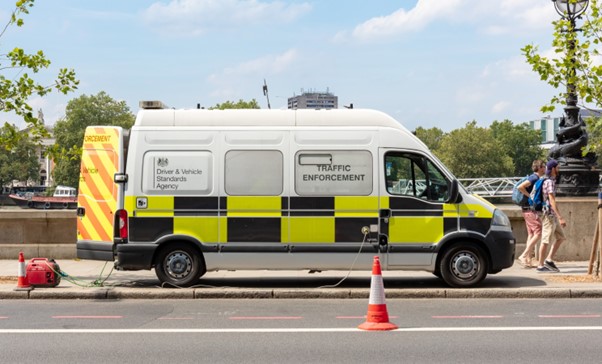
Der er et par måder at identificere en DVSA-eksaminator på. De bærer gule sikkerhedsveste med DVSA-logoet og har altid et warrant-kort. Deres køretøjer har et sort og gult tryk med Fødevarestyrelsens logo på motorhjelmen.
Hvad sker der, hvis du bliver stoppet?

Det er en lovovertrædelse ikke at standse, når en kontrollant beder om det. Hvis en kontrollant beder dig om at holde ind til siden, vil de foretage kontrollen i vejkanten eller på et særligt teststed. Det primære formål med disse stop er at holde usikre køretøjer væk fra vejen.

En eksaminator vil udføre følgende obligatoriske kontroller:

  • Kontrol af tilladt lastvægt og lasttype

  • Kontrol af mekaniske fejl og trafiksikkerhed

  • Sørg for, at dine fartskriveroptegnelser er korrekte

  • Sørg for, at du har et gyldigt kørekort.

Hvor lang tid tager en DVSA walkaround-kontrol?

I gennemsnit tager en DVSA walkaround-kontrol 15 minutter. Men i tilfælde, hvor lastbilen ikke opfylder sikkerhedskravene, kan det tage længere tid. Kontrolløren skal udføre de nødvendige kontroller, uanset tiden.

Sådan sikrer du, at dit køretøj er trafiksikkert

Det er chaufførens ansvar at sikre, at lastbilen er trafiksikker. Det anbefales at foretage en gennemgang før hver tur.

Tjek følgende punkter:

  • Lys

  • Indikatorer

  • Brændstof og olie

  • Dæk

  • Fastgørelse af hjul

  • Kropsarbejde

  • Anhængerkobling

  • Last og andet udstyr

  • Kontrol af køretøjet i kabinen (f.eks. sikkerhedsseler, horn, vinduesviskere, skiver, styring og højdeindikator).

Derudover er det lastbilchaufførens ansvar at rapportere eventuelle fejl skriftligt til sin organisation. Disse bør omfatte følgende:

  • Køretøjets registrerings- eller identifikationsmærke

  • Dato for inspektion

  • Detaljer om fejlene

  • Navn på den person, der rapporterer fejlene.

Operatørens ansvar

Køretøjsoperatører er ansvarlige for at sikre, at deres køretøjer er sikre, og skal udføre følgende:

  • Operatøren skal sikre, at alle erhvervskøretøjer gennemgår regelmæssige sikkerhedseftersyn.

  • De skal sikre, at deres chauffører forstår, hvilke kontroller der skal foretages.

Forbud i vejkanten

Hvis din lastbil ikke er trafiksikker, kan Fødevarestyrelsen udstede to forskellige forbud - et øjeblikkeligt eller et forsinket.

Meddelelse om øjeblikkeligt forbud:

  • Den kan træde i kraft med det samme

  • I de fleste tilfælde vil det resultere i, at køretøjet bliver immobiliseret.

  • Umiddelbare forbud kan føre til retsforfølgelse.

Forsinket meddelelse om forbud:

  • Operatøren har op til 10 dage til at løse problemerne.

  • Efter ti dage vil betjentene inspicere køretøjet igen.

  • Forbuddene skal fjernes, før lastbilen kan køre.

Forbud mod trafiksikkerhed

Hvis lastbilen har mekaniske problemer, eller hvis karosseriet og udstyret er af dårlig standard, udstedes der et kørselsforbud. For køretøjer uden for Storbritannien vil chaufføren få et øjeblikkeligt forbud. For britiske operatører vil typen af forbud afhænge af, hvor alvorlig fejlen er.

Mindre fejl:

  • Mindre fejl kan resultere i et forsinket forbud

  • Operatøren har op til ti dage til at afhjælpe eventuelle fejl.

  • Der vil blive foretaget en ny inspektion efter ti dage.

Alvorlige defekter:

  • Føreren vil få et 'S'-mærket forbud for en alvorlig defekt

  • Et 'S'-mærket forbud opstår, når der er et vedligeholdelsesproblem.

  • Hvis undersøgeren beslutter, at der ikke er nogen umiddelbar risiko, kan forbuddet udskydes.

  • Bilen vil blive spærret, og du kan blive retsforfulgt.

Et 'S'-mærket forbud vil ikke forekomme for følgende:

  • Hvis der opstod et problem under rejsen

  • Problemet kunne ikke opdages (f.eks. en defekt på undersiden).
Forbud mod overlæs

Hvis køretøjet er overbelastet, kan en kontrollant fra Fødevarestyrelsen spærre det. Alternativt kan kontrolløren dirigere lastbilen til et sted i nærheden, hvor lasten kan omfordeles eller fjernes. Føreren af køretøjet vil modtage en meddelelse.

Forbud mod chaufførtimer

Chauffører, der ikke har fulgt reglerne for fartskriver og chaufførtid, får et forbud. Det kan resultere i en bøde, en retsforfølgelse, eller køretøjet kan blive spærret.

Læs mere om [regler og bestemmelser for fartskrivere] (https://https://snapacc.com/newsroom/tachograph-rules-made-easy/)

Selv om DVSA-undersøgelser kan være en skræmmende udsigt for lastbilchauffører, er det unægtelig en positiv kraft for trafiksikkerheden. Hvis du sikrer dig, at du har de korrekte kontroller og følger de vigtigste regler og bestemmelser, vil det resultere i en problemfri DVSA-undersøgelse.

Hvor længe skal du opbevare lastbilens mangellister?

Implementering af et system til indberetning af fejl og mangler kan være din første forsvarslinje, når du skal bevise, at dine køretøjer er i trafiksikker stand. Udbedring af defekter skal rapporteres og opbevares i op til 15 måneder. Hvis der ikke er nogen fejl, skal virksomheden føre optegnelser for at sikre, at chaufførerne udfører deres kontroller.

Hvor ofte skal du til lægeundersøgelse for at beholde dit kørekort?

For at få og beholde et HGV-kørekort er det obligatorisk at tage en HGV-helbredsundersøgelse - uden denne vil du ikke få udstedt et kørekort.

For chauffører under 45 år gælder helbredsundersøgelsen indtil din 45-års fødselsdag. Men efter denne alder skal du bestå lægetesten hvert femte år, indtil du fylder 65 år. Chauffører på 65 år og derover skal bestå lægeundersøgelsen hvert år.
Del til

Andre læser også...

Header Image

fredag 29 maj 2026 • Rådgivning til chauffører

FRA KAMP TIL STYRKE: HVORDAN DARREN WRIGHT HJÆLPER VETERANER MED AT GENOPBYGGE DERES LIV GENNEM LOGISTIK

Ellie Aldous

For many veterans, leaving the armed forces can mean losing far more than a career. It can mean losing structure, identity, purpose and community.For Darren Wright, founder of Veterans into Logistics, that transition was deeply personal.After serving nearly six years in the British Army, including a tour of Afghanistan as an air defence gunner, Darren struggled following his own transition into civilian life. He experienced homelessness, mental health challenges, the breakdown of his marriage and eventually served a custodial sentence.Rather than defining him, those experiences became the driving force behind a mission that is now changing lives across the UK.“I rebuilt my life through HGV driving,” Darren explains. “And I realised that if it could help me rebuild my life, it could help other veterans rebuild theirs too.”Founded in 2020, Veterans Into Logistics supports ex-service personnel into sustainable careers within the logistics industry by helping them gain HGV licences, training and employment opportunities.The organisation was inspired in part by the loss of Darren’s friend Jamie Doyle, a former Royal Artillery soldier who tragically died less than six months after leaving the military.“Jamie had served 22 years and was heavily decorated,” Darren says. “But like many veterans, he struggled with the transition. Losing that structure, purpose and identity can hit people incredibly hard.” That loss became the catalyst for action.Creating Opportunities Through LogisticsDarren recognised that logistics offered something many veterans desperately needed: a fast, accessible route into stable employment. “In six weeks, someone can go from having a car licence to becoming an HGV driver earning a strong salary,” he explains. “For many people, especially those who aren’t academic, that can completely change their future.” Veterans Into Logistics now works with veterans, ex-offenders and people from disadvantaged backgrounds to help them access training, employment and long-term career opportunities. The programme focuses not only on skills training, but also on restoring confidence and hope.“When someone comes to us at rock bottom, the first thing we do is give them hope,” Darren says. “Booking that first medical appointment may seem small, but it gives someone belief that something is finally changing.” The results have been transformative.Darren shared the story of one veteran he met sleeping rough in Manchester. After engaging with Veterans Into Logistics, the veteran gained his HGV licence, secured employment and later proudly returned to show Darren the car he had been able to buy through his hard work.Another veteran who had repeatedly cycled in and out of prison after leaving the military was supported into training and employment. He has since rebuilt his life and has not reoffended. “These are people who simply needed the right tools and the right opportunity,” Darren says. “I always say I’d rather give someone a fishing rod than a fish.”Challenging Perceptions of the IndustryDarren is also passionate about changing perceptions around logistics careers.“There’s this misconception that every driving role means being away Monday to Friday sleeping in a truck,” he says. “That’s not true. There are so many different types of driving jobs — local council work, airport operations, supermarket deliveries, highways maintenance, Formula One logistics and more.”Through his growing online platform, Manc on a Mission, Darren is using social media to educate people about the opportunities available in the logistics sector.His TikTok videos, which showcase real drivers and real careers, quickly gained millions of views and have inspired many people outside the military community to explore careers in transport and logistics. “I want to show young people and people from deprived areas that this is a real career path,” Darren explains. “You can build a stable life through this industry.” Driving Change Nationally Darren’s work has also led to national policy change. After discovering that military resettlement funding could not be used for HGV driver training because it was classified below Level 3 education, Darren challenged the rules directly with government ministers.Following his campaign, the policy was changed, allowing service leavers to use Enhanced Learning Credits for HGV driver training.“It was about making sure less academic service leavers weren’t excluded from opportunities,” Darren says.What’s next for Veterans into LogisticsToday, Veterans into Logistics continues to expand its impact through partnerships with logistics companies, prisons, colleges and employers across the UK. Looking ahead, Darren hopes to continue opening doors for veterans and others who may otherwise struggle to access meaningful employment. “If we keep changing lives, that’s success,” he says.If this story resonates with you or someone you know within the industry please reach out to Darren at the Team at Veterans for Logistics.‍Watch the full Interview:

Header Image

fredag 29 maj 2026 • Rådgivning til chauffører

TAL FØR TANKEN ER TOM - BRYD STIGMATISERINGEN OG TAVSHEDEN I TRANSPORTBRANCHEN.

Ellie Aldous

Extended periods away from home, long driving hours and tight delivery schedules are all part of a life in the logistics and haulage industry. But behind the movement of goods that keeps the world moving, there is a growing conversation about something far less visible, the mental health of drivers.With limited to no social interaction during their working week, isolation has become one of the biggest challenges among drivers. This is compounded by pressures on the road, such as finding secure parking for their cargo, managing delivery deadlines, navigating traffic, and maintaining concentration while dealing with mental fatigue.For some, the stresses continue past the steering wheel with some struggling with financial worries, physical wellbeing and difficulty maintaining relationships given they are spending a vast amount of time away from loved ones. What makes the issue even more concerning is that 98% of drivers are male, a group that is often less likely to speak openly about mental health. A UK survey by Priory found that 40% of men have never spoken to anyone about their mental health, with many citing embarrassment, stigma, or fear of appearing weak. Experts say this silence can leave drivers feeling even more disconnected and therefore the cycle continues. So, the big question is how can fleet managers help break the cycle? We have provided some top tips from mental health advocates!Regular check in calls with your drivers Recognise and Reward good work Support healthy rest breaks Offering a confidential support services such as wellbeing apps & counselling services Monthly team catch ups. Here are the top 5 tips to give to your driversMove when you can! A 10-minute walk & stretch can boost energy and improve circulation. Stay Hydrated. Dehydration can lead to fatigue! Keep in touch with others – Regular calls and facetime with family and friends can help you feel more connected Eat Balanced Meals – Choosing a healthy alternative helps maintain your energy. Listen to something positive – Pick a podcast or audio book, something interesting to support the long journey.At SNAP, were more than just a payment solution, we’re committed to driving meaningful, positive change across the industry by supporting not only our service partners, but also the hardworking drivers that keep the world moving.Sources: Men's Mental Health: Why 40% of men won't talk about it Priory Office for National Statistics https://www.nomisweb.co.uk/datasets/aps218/reports/employment-by-occupation?compare=K02000001

Header Image

tirsdag 26 maj 2026 • Rådgivning til chauffører

SIKRE PÅ- OG AFLÆSNINGSPROCEDURER FOR AT FORHINDRE SKADER PÅ BEVÆGEAPPARATET

Evelyn Long

Musculoskeletal injuries are one of the most persistent challenges facing the fleet industry today. Drivers and warehouse staff face constant physical demands during loading and unloading operations. Implementing proper procedures protects your workforce from chronic pain and career-ending injuries while maintaining the efficiency that keeps your business competitive in demanding markets.Musculoskeletal injuries affect individual workers while draining business resources through lost productivity and increased insurance premiums.When an employee sustains an injury, the financial consequences go beyond the immediate medical expenses. Fleet managers must account for sick leave costs, temporary worker expenses and potential compensation claims.In 2023 to 2024, the total costs of workplace ill health and injury , with injury accounting for 28% or £6.5 billion. These figures demonstrate how injuries translate into economic burdens that affect profit margins.Lost productivity compounds these direct costs. When experienced drivers or warehouse staff take extended leave, operations slow down and remaining team members face increased workloads. The ripple effects touch every aspect of fleet operations, from delayed deliveries to strained client relationships.Drivers who develop musculoskeletal disorders face a difficult reality. Chronic back pain, shoulder injuries and repetitive strain can make basic job functions excruciating. Many drivers report that persistent pain affects their ability to focus during long routes, creating additional safety concerns.Musculoskeletal disorders rank among the in Great Britain. These conditions force experienced professionals out of an industry where they've built years of expertise.UK law requires employers to take specific steps to prevent manual handling injuries. Risk assessment forms the foundation of compliance and serves as the first line of defense against workplace strain.Employers must follow the Manual Handling Operations Regulations from the Health and Safety Executive, which establish a clear hierarchy. First, wherever reasonably practicable. Second, assess any hazardous operations that cannot be avoided. Third, reduce the risk of injury from those operations to the lowest level reasonably practicable.This framework pushes businesses to eliminate manual handling risks entirely. Mechanical equipment must be used whenever possible for moving loads. Any unavoidable manual handling requires proper assessment and mandatory control measures.A suitable and sufficient risk assessment examines four key factors in logistics operations:1. Task: The task itself matters, including whether it involves twisting, stooping or repetitive movements. Load: Load characteristics, such as weight, size and stability, play a role. Environment: Environmental conditions, including space constraints, floor surfaces and temperature extremes, affect safety outcomes. Individual: Individual capabilities vary among workers, who bring different strengths and physical limitations to each job. Effective should lead to concrete improvements. Document your findings and share them with your team.When manual handling becomes inescapable, proper technique can reduce injury risk. Training the workforce in correct lifting methods protects them during daily operations.The feet should be , positioned close to the load. Bending at the knees while maintaining a straight back allows you to grip the load firmly with both hands. Leg muscles should power the lift as you rise smoothly. Keeping the load close to the body throughout the movement prevents strain, as does avoiding any twisting motion during the lift or carry.If you need to strain or jerk to move an object, it requires mechanical assistance or team lifting. Never rush a lift to save time. Taking a few extra seconds to position yourself correctly prevents injuries that could sideline you for weeks.Team lifts require clear communication and planning before anyone touches the load. Designate one person as the lift coordinator who will call out instructions. All team members must understand the lift plan, including grip points, the path of movement and where the load will be placed.The coordinator should count down before the lift begins so everyone moves at the same time. Team members must maintain communication throughout, calling out if they need to pause or adjust.Technology offers powerful tools to reduce or eliminate manual handling risks in fleet operations, while equipment investments protect workers, often improving efficiency and throughput.Mechanical equipment, such as pallet jacks, forklifts and conveyors, eliminates many manual handling injuries. Workers' backs and joints no longer bear the physical strain when machines handle the load. Motorizing the effort required to move heavy loads, battery-electric pallet jacks . These machines can handle significantly more weight than manual versions while requiring minimal physical exertion from operators.Forklifts excel at transporting and lifting materials in warehouse and loading dock environments. Operators control heavy loads from a protected position, eliminating back strain and repetitive-motion injuries associated with manual handling.Data-driven scheduling through predictive systems can and potential delay points across your routes. Fleet managers can use these insights to adjust schedules, allocate additional resources during peak periods and give drivers realistic time frames.When drivers feel rushed, they are more likely to cut corners on safety procedures. Proper scheduling eliminates this pressure. Workers have time to use mechanical equipment properly, conduct team lifts when needed and follow correct manual handling techniques.Emerging wearable devices monitor workers' movements and posture throughout their shifts. These devices use to analyze lifting techniques and provide real-time feedback when workers adopt unsafe postures.Similar technology appears in driver safety applications. A telematics app program helped among young drivers by providing real-time feedback. The same principle applies to physical work, where immediate alerts about improper lifting form can prevent cumulative strain injuries.Fleet operations can use prevention through design (PtD) to eliminate hazards during planning. Vehicle specifications that minimize manual handling requirements, warehouse layouts that facilitate safe movement and procurement decisions that prioritize ergonomics all fall under this proactive approach.Vehicle design choices directly impact daily injury risk. Lower load bed heights reduce the distance workers must lift heavy items, while side-loading configurations ease the strain on workers' backs compared to rear-loading designs. Warehouse layout decisions matter as well, with adequate space around loading docks allowing workers to position themselves correctly and use equipment without awkward maneuvering.Equipment provision alone doesn't guarantee safety. Research shows that while 62.2% of construction workers might work at heights requiring protection, equipment. This gap highlights why PtD matters. When you design operations so that the safe method is also the easiest, compliance becomes natural.Preventing musculoskeletal injuries necessitates ongoing attention. Investing in proper equipment, training and operational design protects your workforce while strengthening your business's reputation and future prospects.Discover more from