Guest
Nyheder og opdateringer • 3 min læsning

Trends inden for lastbiler: Forudsigelser for 2026

Oprettet: 08.12.2025

Opdateret: 08.12.2025

Der er store forandringer på vej i mobilitetssektoren.

De næste 12 måneder vil byde på nogle af de mest markante lovgivningsmæssige og teknologiske ændringer, som europæisk transport har set i årevis. Nye emissionsregler, førerovervågningssystemer, brintforsøg og pilotprojekter med selvkørende biler vil omforme den måde, flåderne fungerer på i Storbritannien og EU.

For operatører og professionelle chauffører vil det at forstå disse ændringer nu gøre forskellen mellem at tilpasse sig med selvtillid og at kæmpe for at følge med.

Den lovgivningsmæssige revolution

Euro VII-emissionsstandarderne træder i kraft i 2026 og indfører nye krav til flåderne. Grænserne for kvælstofoxid og kulilte vil blive strammet yderligere, og den tilladte partikelstørrelse falder fra 23 nanometer til 10. Desuden vil reglerne dække emissioner fra dæk og bremser for første gang.

Alle nye lastbiler, der sælges, skal overholde Euro VII. Selv om priserne på køretøjerne sandsynligvis vil blive påvirket, vil den største effekt være på indkøbstidspunkter, flådefornyelsescyklusser og langsigtet dekarbonisering.

Den generelle sikkerhedsforordning (GSR)

[Senest i juli 2026 skal alle nye lastbiler være udstyret med distraktionsgenkendelsessystemer] (https://www.volvotrucks.com/en-en/news-stories/insights/articles/2022/may/the-eus-updated-general-safety-regulations.html). Disse overvåger øjen- og hovedbevægelser for at identificere tidlige tegn på træthed eller uopmærksomhed, hvilket muliggør sikrere indgreb og understøtter mål for reduktion af ulykker i hele Europa.

Direkte synsstandarder

[Direct Vision Standards (DVS) begyndte deres udrulning i 2025] (https://www.volvotrucks.com/en-en/news-stories/insights/articles/2022/may/the-eus-updated-general-safety-regulations.html). I 2029 skal nye førerhusdesigns minimere blinde vinkler ved hjælp af forbedret udsyn gennem glas i stedet for kameraer. Dette vil især påvirke bykørsel, bløde trafikanters sikkerhed og fremtidige køretøjsspecifikationer.

Ændringer af fartskrivere

[Fra 1. juli 2026 skal varebiler på mellem 2,5 og 3,5 ton, der udfører international transport, være udstyret med intelligente fartskrivere] (https://snapacc.com/newsroom/second-generation-smart-tachographs-what-fleet-managers-need-to-know/). Efter at have været undtaget i årevis, betyder denne ændring, at mindre erhvervskøretøjer nu er omfattet af den fulde håndhævelse af køre- og hviletidsbestemmelserne.

For operatører med blandede flåder betyder det, at de skal indføre:

● nye førerkort

● regelmæssige data-downloads

● opdaterede overvågningsprocesser

● revideret ruteplanlægning og planlægning af hviletid

Tusindvis af køretøjer, der tidligere kørte frit, skal have systemer til at overholde reglerne på plads næsten med det samme.

CSRD-datakrav

[Corporate Sustainability Reporting Directive] (https://www.mooveconnectedmobility.com/blog/navigating-regulation-what-fleet-managers-need-to-know-in-2025) kræver, at virksomheder med mere end 250 ansatte eller en omsætning på 40 millioner euro indsamler og rapporterer verificerede CO₂-udledninger - inklusive Scope 3-transportaktiviteter.

Det vil smitte af på forsyningskæderne. Mindre transportvirksomheder uden pålidelig emissionsrapportering risikerer at miste adgang til større kontrakter, hvilket fremskynder presset mod bedre datasystemer og standardiseret rapportering.
Overgangen til brændstof accelererer

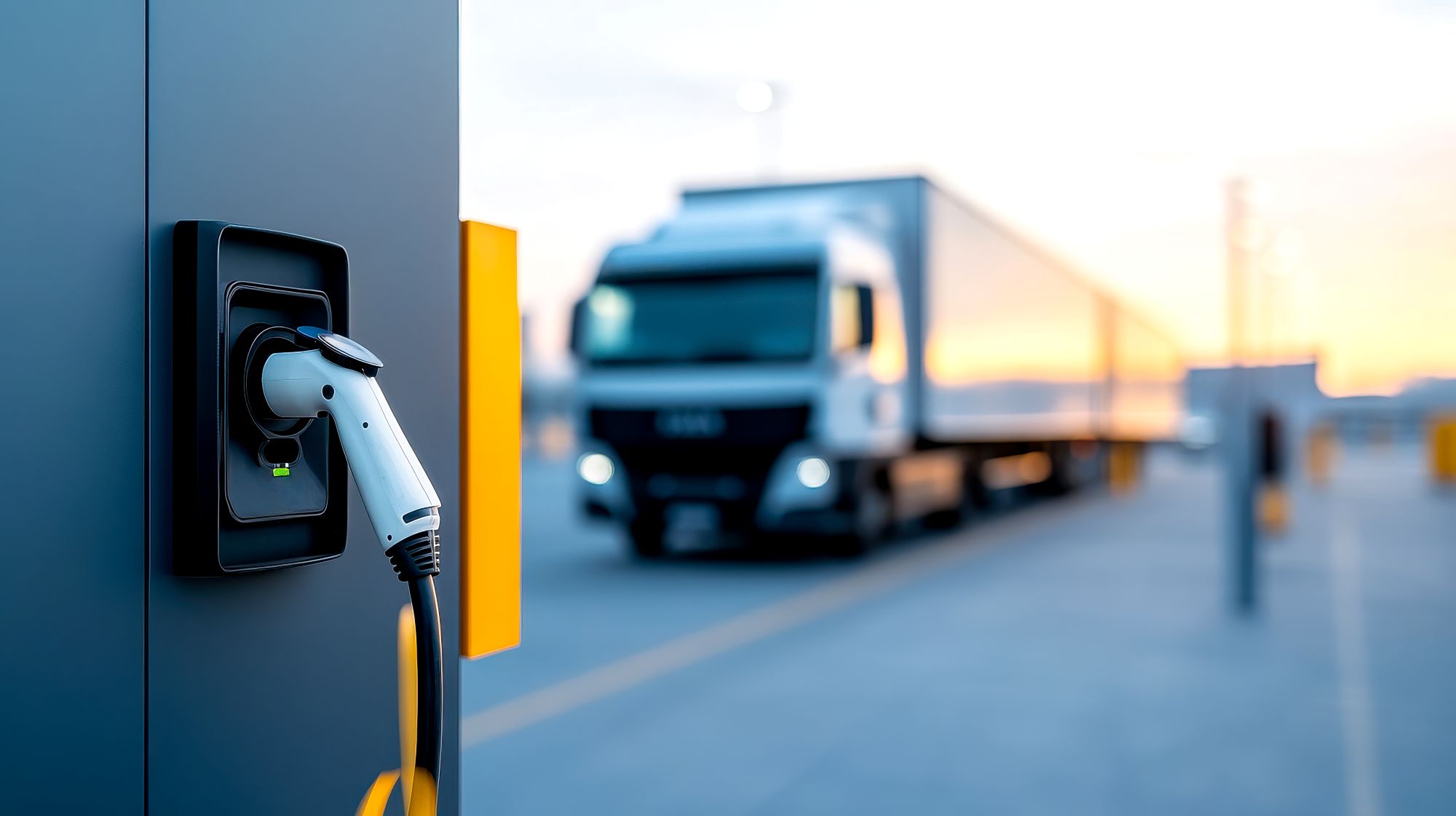
Elektriske lastbiler skaleres op

Produktionen af elektriske lastbiler vil stige hurtigt i 2026. [DAF, Mercedes, Scania og MAN (https://think.ing.com/articles/europes-market-for-e-trucks-set-to-accelerate-in-2025/) udvider alle deres produktionskapacitet.

For at understøtte dette udvides den elektriske opladning også. BP Pulse planlægger megawatt-opladere til tunge lastbiler i hele Europa med installationer fra 2026, mens Polen investerer kraftigt i nye opladningspunkter til tunge lastbiler langs TEN-T-netværket.

Udbredelsen af brint tager fart

[Storbritanniens første Scania-brintbrændselscellelastbil tages i brug i 1. kvartal 2026] (https://drivinghydrogen.com/2025/03/06/explore-plant-bags-first-scania-hydrogen-truck-for-uk-operations/) som en del af HyHAUL's M4-korridorprojekt. Tre tankstationer, der hver leverer op til to tons brint om dagen, understøtter pilotprojektet. Hvis projektet bliver en succes, vil der være 30 lastbiler på vejene ved udgangen af 2026 og 300 i 2030.

Sideløbende med dette åbner [Aegis Energys første britiske brintstation i begyndelsen af 2026] (https://hydrogen-central.com/hydrogen-vehicles-receive-huge-100-million-boost-amid-plans-to-develop-uk-wide-refuelling-network/). Fem mere vil følge inden 2027.

Køretøjsproducenterne har forskellige tilgange til udviklingen af brintdrevne lastbiler:

Volvo vil starte forsøg med brintforbrændingsmotorer i 2026 MAN og DAF planlægger lignende systemer.

● [Toyota] (https://newsroom.toyota.eu/toyota-hydrogen-factory-scaling-up-its-european-activities/) vil introducere sin næste generation af brintbrændselsceller i 2026 med forbedret holdbarhed og lavere driftsomkostninger.

Vækst i HVO

Hydrotreated Vegetable Oil (HVO) er på vej til at blive et vigtigt overgangsbrændstof til transport i 2026 takket være to faktorer: strengere krav til biobrændstoffer i Nordvesteuropa og dets kompatibilitet med eksisterende dieselmotorer.

Rapporter fra [Zemo Partnership] (https://www.zemo.org.uk/assets/reports/DecarbonisingHeavyDutyVehiclesandMachineryZemo_Nov2022.pdf) bekræfter, at HVO er et "drop-in"-brændstof: Det kan bruges i mange eksisterende tunge køretøjer uden ændringer i motor eller infrastruktur, hvilket giver operatørerne en praktisk vej til øjeblikkelige CO₂-reduktioner.

I mellemtiden forudser [analytikere hos Argus Media] (https://www.argusmedia.com/ja/news-and-insights/latest-market-news/2706126-hvo-demand-may-hit-record-as-eu-rules-tighten), at HVO-forbruget kan nå rekordhøjder i 2026. Tyskland alene kan få brug for yderligere 1,5 millioner tons - næsten fire gange 2025-niveauet - for at imødekomme efterspørgslen.

Selvom udbredelsen stadig er beskeden sammenlignet med batterielektriske eller brintbaserede alternativer, betyder det nuværende lovgivningsmæssige skub og infrastrukturens kompatibilitet, at HVO sandsynligvis vil vinde indpas i 2026.

Autonom teknologi ankommer

Fra foråret 2026 vil Storbritannien tillade piloter af selvkørende køretøjer uden sikkerhedschauffører i kontrollerede zoner - et helt år før planlagt. Denne overgang er muliggjort af UK's Automated Vehicles Act og understøtter en industri, der forventes at bidrage med 42 milliarder pund til den britiske økonomi i 2035 og skabe omkring 38.000 job.

Tyskland er tæt på. [Motor Ai sigter mod at indsætte førerløse køretøjer på vejene inden 2026] (https://www.iotworldtoday.com/transportation-logistics/driverless-cars-planned-for-european-roads-in-2026), støttet af 20 millioner euro i startkapital.

På tværs af Nordeuropa fortsætter MODI med at teste autonom fragt langs den 1.200 km lange Rotterdam-Oslo-korridor. Programmet løber frem til marts 2026 og undersøger, hvordan autonome køretøjer klarer sig på tværs af grænser, terræntyper og logistikknudepunkter.

I Sverige flytter [Einride autonome elektriske lastbiler] (https://projects.research-and-innovation.ec.europa.eu/en/horizon-magazine/self-driving-trucks-en-route-transform-europes-freight-sector) allerede varer mellem lagre og behandler fem millioner datapunkter i sekundet. Deres kontrollerede udrulning viser potentialet for automatisering i forudsigelige, gentagelige ruter.

På trods af disse fremskridt vil mennesker fortsat spille en central rolle. [Europa har stadig brug for at rekruttere 745.000 ekstra chauffører inden 2028] (https://www.innovationnewsnetwork.com/self-driving-trucks-en-route-to-transform-europes-freight-sector/58466/). Så mens automatisering vil understøtte specifikke funktioner, såsom havnedrift, depotbusser og faste byruter, vil langdistancetransport og kompleks international transport fortsat være menneskestyret.

2026 er på vej

Omfanget og hastigheden af de forandringer, der kommer i 2026, er ulig noget tidligere år for europæisk vejtransport. Flere lovgivningsmæssige, teknologiske og bæredygtige ændringer vil ske samtidig og omforme, hvordan flåder opererer på tværs af grænser.

"De operatører, der får succes i 2026, vil ikke være dem, der modstår forandringer, men dem, der systematisk forbereder sig på dem", siger Nick Long, European Strategic Partnership and Development Manager hos SNAP. "Vi arbejder sammen med flåder i hele Europa om at opbygge den infrastruktur, som morgendagens industri har brug for. Sikker parkering. Integrerede betalinger til nye betalingsanlæg. Byggestenene til succes er tilgængelige nu for dem, der er klar til at bruge dem."

SNAP hjælper flåder med at forberede sig på fremtiden med integrerede løsninger til parkering, betaling og flådestyring i hele Europa. Besøg snapacc.com for at finde ud af, hvordan vi kan støtte din overgang til 2026 og videre frem.
Del til

Andre læser også...

Header Image

torsdag 04 december 2025 • Nyheder og opdateringer

HOLD DIN FLÅDE KØRENDE I FERIESÆSONEN

Guest

As the holiday season approaches, you are likely preparing for a surge in delivery demand and more complex operating conditions. This seasonal pressure overlaps with winter weather challenges, creating a unique risk environment for fleets across the UK. The festive period brings extra stress to your vehicles and operations. From consumer-driven surges in mileage to the impact of cold weather on vehicle performance, several seasonal factors converge at once. Understanding these pressures up-front helps you prepare proactively and minimise disruptions across your fleet.Consumer activity , which increases delivery volumes, compresses schedules and raises service expectations. This surge means that even minor disruptions can escalate quickly, as fleets have less flexibility to absorb delays. With more journeys scheduled and tighter handover times, vehicle downtime becomes more costly. A missed inspection or delayed repair can have a much larger operational impact than during other parts of the year.When peak consumer activity overlaps with hazardous weather, fleets experience amplified risk. Traffic congestion increases, road conditions deteriorate and minor mechanical problems can escalate into serious incidents more easily. To combat these issues, you must strengthen preventive maintenance, adjust schedules, and improve real-time monitoring to prevent avoidable breakdowns or delays.Cold temperatures, icy surfaces and reduced daylight all increase mechanical and on-road risks for commercial vehicles, raising the likelihood of weakened batteries, reduced tyre traction and visibility issues. UK roadworthiness standards emphasise the importance of more robust winter maintenance for brakes, lighting, fluids and tyres as conditions deteriorate, reinforcing why winter readiness is essential for uninterrupted fleet operations. Even mild cold , making proactive winter maintenance crucial.Beyond vehicle strain, the holiday season and winter conditions also place pressure on drivers and operational workflows. Increased traffic, unpredictable weather and tighter delivery windows can lead to fatigue, stress and an increased risk of accidents. Careful scheduling, clear communication and proactive support for drivers are essential to maintain safety and ensure that your fleet continues to operate efficiently under these seasonal pressures.Maintaining steady operations during the festive rush requires more than reactive problem-solving. It necessitates deliberate planning across vehicle maintenance, driver readiness, technology utilisation and operational coordination. These streamlined strategies will help you stay ahead of winter season disruptions and maintain consistent fleet performance throughout the holidays.Seasonal demand often requires vehicles to operate in harsher conditions for longer hours, so front-loading maintenance is one of the most effective ways to prevent in-season breakdowns. In construction, downtime can cost , highlighting the importance of proactive upkeep. Focus on winter-critical systems such as batteries, brakes, heating and defrosting systems, tyres, and fluid levels. Addressing minor issues before the holiday rush ensures your vehicles start the season in top condition and reduces the risk of unscheduled downtime when capacity is at its tightest.Drivers face greater pressure during the festive period, from congested roads to unpredictable weather. Preparing them early helps reduce risk and maintain service reliability. Share updated winter driving protocols, reinforce fatigue management best practices and ensure every vehicle carries essential cold-weather equipment. A well-prepared driver can adapt more effectively to seasonal hazards and keep journeys running safely.Access to parts and repair support becomes more challenging during the holidays due to demand spikes and supplier slowdowns. Securing key components in advance and confirming the availability of a repair shop ensures you can respond quickly to mid-season issues. These steps reduce the likelihood of lengthy delays and keep more of your vehicles on the road during peak workloads.Accurate, real-time insights become even more valuable when weather and traffic conditions can change quickly. Telematics systems, identify emerging vehicle issues and adapt routes proactively. Using data to make same-day decisions — whether rerouting, rescheduling or escalating maintenance — helps your fleet stay responsive throughout the holiday period.Seasonal peaks require tighter alignment across dispatchers, drivers, maintenance teams and customers. Clear communication reduces uncertainty and makes it easier to adjust schedules when conditions shift. Share regular updates about weather alerts, route changes, delivery windows and vehicle availability so everyone stays coordinated and able to respond quickly.Even with strong preparation, winter introduces variables that no fleet can fully control. Creating contingency plans provides your team with a structured response in the event of incidents. Establish backup routes, identify alternative suppliers and workshops, and maintain a reserve vehicle strategy where possible. Planning for disruption ensures that unexpected issues don’t halt operations entirely.Use this checklist to make sure your team, vehicles and workflows are ready for the busiest stretch of the year:● Review historical traffic data and expected holiday congestion to build more efficient routing. Tools that monitor and report real-time conditions help reduce delays and fuel waste.● Check batteries, fluids, tyres, wipers and heating systems to prevent cold-weather breakdowns and improve driver safety.● Conduct brief refresher sessions on winter driving techniques, fatigue management and emergency protocols. This supports both safety and productivity.● Holiday mileage and cold temps can accelerate wear. A tighter maintenance schedule helps catch issues before they result in downtime.● Ensure that asset trackers and sensors are fully functional for accurate location and condition data during peak demand.● Many suppliers operate on reduced hours during the holidays. Secure parts and consumables in advance to avoid repair delays.Holiday and winter conditions amplify every small inefficiency. Preparing early helps prevent avoidable downtime, strengthens driver safety and keeps your operations moving through the toughest time of the year. With precise planning, reliable tools and a proactive maintenance rhythm, fleets can turn seasonal challenges into opportunities for better performance and customer satisfaction.Discover more from

Header Image

tirsdag 25 november 2025 • Nyheder og opdateringer

POLEN FREMSKYNDER SKIFTET TIL EMISSIONSFRI TRANSPORT

Guest

Poland’s transportation sector is undergoing a major transformation. In recent months, the government has introduced a series of high-value funding programmes aimed at decarbonising the country’s road network and logistics operations. Much of this activity focuses on infrastructure related to heavy-duty vehicles – a sign that the transition to cleaner freight is being embraced across Europe.The scale of investment – and the speed at which it's happening – will be important for operators, managers and infrastructure planners right across Europe. To understand why, it helps to look at both the wider European context and the specific funding available in Poland.The move towards lowand zero-emission transport has been gathering pace across Europe for several years. The EU’s package and to cut emissions from heavy-duty vehicles by 45% by 2030 and by 90% by 2040. The (AFIR) also states that there must be high-power charging points for heavy vehicles every 60 kilometres along the Trans-European Transport Network (TEN-T) – a system of European roads, railways, ports and airports that forms the backbone of continental freight – by 2030. Hydrogen refuelling stations must be available every 200 kilometres.The UK is following a similar path. Z are being used to test electric and hydrogen HGVs on long-haul routes, while funding is being allocated to depot charging and refuelling infrastructure.Against this backdrop, Poland’s programme shows that Central and Eastern Europe are ready to take a leading role in building cleaner, better-connected transportation.In March 2025, Poland’s (NFOŚiGW) launched two major funding calls worth a combined PLN 2 billion. The first will cover the construction and expansion of power grids that supply high-capacity charging stations, especially those on the TEN-T. It covers both grid expansion and the installation of new connections. This will mean that the network can deliver the energy needed for rapid truck charging. Energy and grid operators can apply for grants if their projects meet minimum power thresholds. The second funding call supports the construction of heavy-vehicle charging stations themselves. The aim is to create 550 publicly accessible points across the country, serving both electric and hydrogen trucks. A final programme, which launched in Q2 2025, gives grants and loans to businesses so they can buy or lease zero-emission trucks in categories N2 and N3. Category N2 covers vehicles with a gross weight between 3.5 and 12 tonnes, while N3 applies to trucks over 12 tonnes. Funding levels range from 30 to 60 per cent, depending on company size. Upper limits of PLN 400,000 apply to N2 vehicles and PLN 750,000 to N3 models. Applications will be , so operators can plan their transition to zero-emission vehicles. These investments sit alongside Poland’s existing programme, which subsidises electric car purchases for individuals and companies, further extending the country’s sustainable transport strategy beyond passenger vehicles.According to the , Poland transports more goods by road than any other EU country. It is a natural gateway between Western Europe and the Baltic States, Ukraine and the Balkans, which means a reliable zero-emission infrastructure in Poland will have a Europe-wide impact.By setting clear power requirements and aligning projects with the TEN-T corridors, the government is ensuring a coordinated approach rather than isolated projects. The goal is a dependable network where electric and hydrogen trucks can move freely along key trade routes. The Deputy Minister for Climate and Environment described the programme as a way to strengthen “the competitiveness of Polish freight operators” while cutting emissions from one of the country’s largest economic sectors.Poland’s domestic network is also part of the wider . A total of nine EU countries – including Poland – committed in September 2025 to accelerate charging infrastructure deployment along key freight routes, such as the North Sea-Baltic and Scandinavian-Mediterranean corridors of the TEN-T.For fleets that operate across Europe, the initiative means charging infrastructure will become more standardised and predictable between countries. This will help drivers plan cross-border routes with greater confidence while supporting the shift towards zero-emission freight.For fleet operators, the timing is encouraging. Zero-emission trucks are rapidly , with sales of nearly 2,000 zero-emission heavy-duty electric trucks registered in the first half of 2025 across the EU. There are challenges, however. Adding high-power charging capacity will mean that grid operators, local authorities and logistics centres have to cooperate. It will also take time to hire technicians with the skills to install and maintain high-voltage equipment.In addition, vehicle costs and operational factors could also slow progress. Even with generous subsidies, businesses must weigh the cost of electric vehicle ownership, route patterns and depot readiness.For the road transport community, Poland’s programme is a significant milestone. Once complete, its charging and refuelling network will connect eastern and western Europe, supporting cleaner and more efficient freight movement.“This is a turning point for heavy transport,” says Nick Renton, Head of European Strategy and Business Development at SNAP. “Poland’s actions show that zero-emission freight is becoming part of daily life, rather than a long-term vision. As charging and refuelling points multiply, operators will be able to schedule cleaner journeys with confidence.”As the situation develops, we will continue to support fleets across Europe with technology, insight and practical tools for drivers. Our helps identify and book rest stops, refuelling points and secure parking, with more zero-emission facilities being added as new sites open. For operators looking to stay ahead of infrastructure changes, it provides a clear view of how the road network is evolving – and where new opportunities are emerging.

Header Image

torsdag 30 oktober 2025 • Nyheder og opdateringer

STRØMLINING AF FLÅDEDRIFT: FET LOGISTICS' ØJEBLIKKELIGE HISTORIE

Susie Jones

Located in Colnbrook, Berkshire, is a family-owned and family-run company specialising in the transportation of pharmaceutical products.The company originated from humble beginnings in 1984 when Frederick Woolley produced a service that was second to none in the secure logistics industry his very own tracking system, the best on the market, which left companies knocking on his door to transport their goods safely throughout Europe. In 1999, FET entered the world of pharmaceutical transportation, with Frederick taking on a partner, his son-in-law, Harry Hughes. From there, the business has gone from strength to strength, becoming one of the best pharmaceutical logistics companies in the UK. We sit down with Managing Director, Harry, to discuss what it's like running a fleet across Europe and how SNAP has helped ease processes."We focus on transporting high-value, high-consequence goods, white glove deliveries, and hospital deliveries. We're often in mainland Europe pretty much every day, from Northern Ireland all the way down to Spain, Italy, and even Greece."Transporting high-value goods comes with the added pressure to ensure your drivers park in safe and secure areas. For Harry, his drivers must have access to a wide network of truck stops across Europe, complete with details regarding security features something SNAP can deliver through its and Transporting high-consequence goods also brings additional challenges, as Harry explains:"We have the same challenges as everyone else in the supply chain, but you're adding temperature as well. That's another critical requirement. Whether it be a dry ice box that's got a life of 72 hours, or you need to keep that van completely at the right temperature throughout its journey. If the truck or van has to park up overnight, we need to ensure that the temperature is being monitored through the night as well."TAPA EMEA's TSR regulations have been developed by the industry, for the industry. The standard protects products transported by road and aims to ensure the safety of drivers, vehicles, and cargo. As TAPA UK Lead, Harry knows the importance and the benefits of transporting goods under TAPA TSR."We outsource to an external monitoring company for some of the delicate loads being transported under TSR. This means they will monitor the load for the route and geofence it if it deviates. They're checking in with the driver and also checking that it's parked at the right location from the route risk assessment we've uploaded to the monitoring company."These standards give drivers, fleet operators, and customers peace of mind that their cargo will be transported safely. And Harry has peace of mind when these journeys utilise SNAP's vast network of truck stops across Europe."You know that if you go to a SNAP site, you're going to get a decent site."Driver welfare remains a critical topic within the mobility industry, and for fleets like Harry's, ensuring their drivers are looked after while on the road remains vital. We asked Harry what offerings truck stops must provide to those on the road regularly:"I think the drivers just want some decent facilities. If they've got a shower, toilet, and a hot meal, they're generally happy." He also notes that it's not a one-size-fits-all, "they've all got different requirements. Some of them want to go to sites with a fancy restaurant, and some of them are just happy with a burger and chips. I think if the basics are there of clean facilities, hot and cold food, and showers, that's the main thing."Truck stops are already in high demand, and the most popular ones, offering the right facilities and security requirements, tend to fill up early in the evening. This often forces drivers to park in unsafe areas, a challenge that's expected to grow even more significant when SNAP not only simplifies life for fleet managers but also delivers a seamless parking experience for drivers. This leads to increased convenience and satisfaction on the road, while enhancing efficiency and streamlining operations across the company."It's the simplicity for the drivers. They don't have to worry about anything. They just pull in, and the parking payment method is already done for them. The drivers love it since we've implemented it," Harry states. SNAP's growing network of truck wash sites is something that hasn't gone unnoticed by FET Logistics, especially when the weather takes a turn for the worse:"More truck washes are coming onto the network, which helps us especially through winter. Nobody wants to see a dirty truck turn up if you're loading pharmaceuticals into it."Inspired by what you've just read? Catch the full interview with