Guest
Noticias del sector • 4 min leer

El auge de los corredores logísticos integrados: Por qué son importantes para los transportistas

Creado: 03/02/2026

Actualizado: 03/02/2026

Durante décadas, el transporte europeo se ha construido en torno a las redes de carreteras. Aunque el ferrocarril, las vías navegables y los puertos siempre han desempeñado un papel importante, la mayoría de los transportes de mercancías dependían de los camiones para salvar las distancias. Este modelo está cambiando.

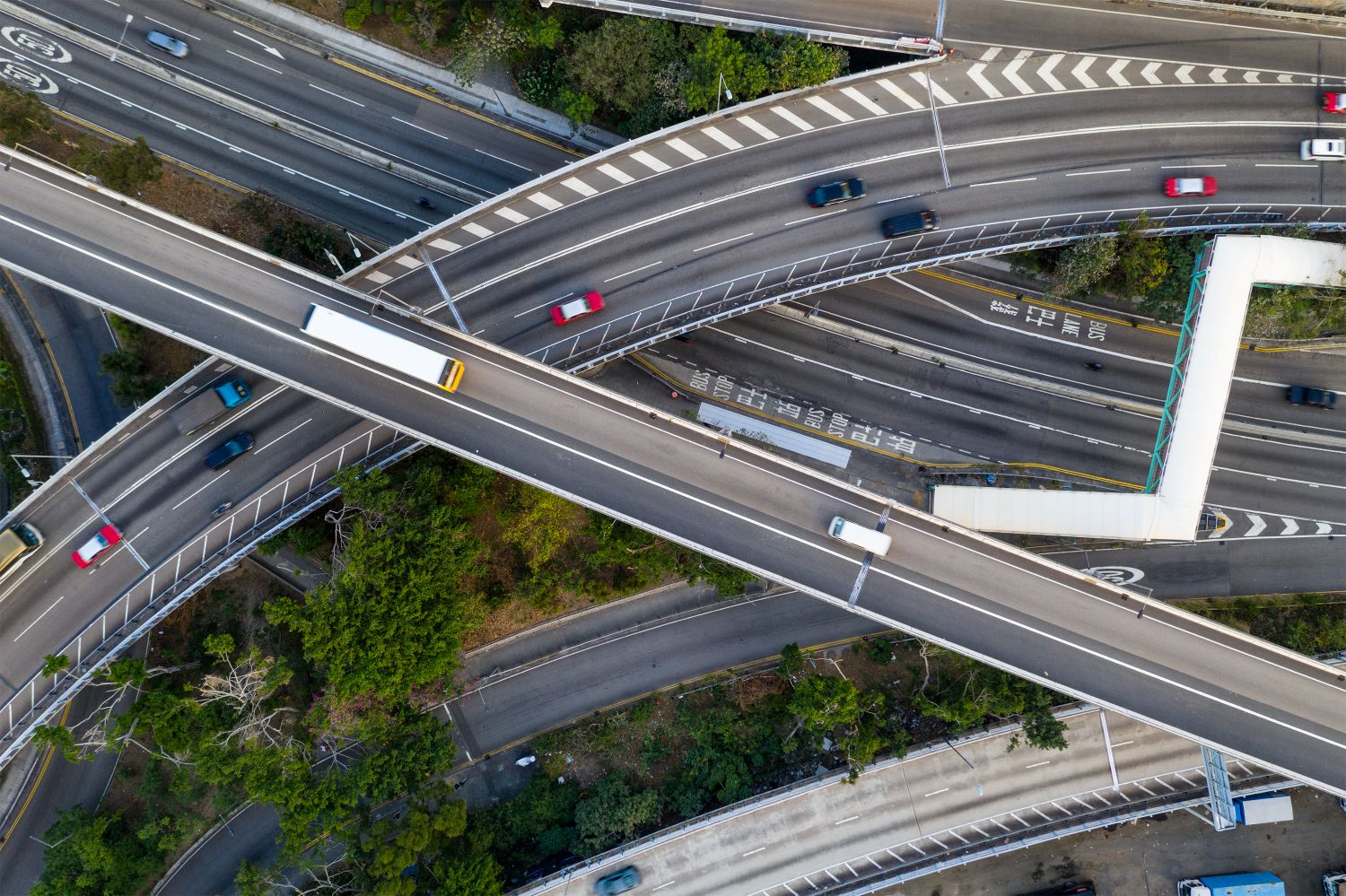
En toda la UE, gobiernos y organismos de infraestructuras están invirtiendo en corredores logísticos integrados: rutas multimodales de larga distancia diseñadas para transportar mercancías de forma más eficiente a través de las fronteras, reduciendo al mismo tiempo la congestión, las emisiones y la presión sobre las carreteras. Para los transportistas, estos corredores no son un concepto político abstracto. Ya están influyendo en dónde pueden viajar los camiones, cómo se planifican los viajes y las tecnologías que deben adoptar las flotas.

Entender cómo funcionan estos corredores -y lo que significan en la práctica- se está convirtiendo en algo esencial para los operadores que cubren rutas internacionales.

¿Qué son los corredores logísticos integrados?

En Europa, los corredores logísticos integrados se sitúan junto a la Red Transeuropea de Transporte (RTE-T) de la UE. Este programa a largo plazo está diseñado para conectar a los Estados miembros mediante infraestructuras coordinadas de carreteras, ferrocarriles, puertos y vías navegables.

En el núcleo de este sistema se encuentran nueve Corredores de la Red Básica: 1. Báltico-Adriático 2. Mar del Norte-Báltico 3. Mediterráneo 4. Oriente-Med Este 5. Escandinavo-Mediterráneo 6. Rin-Alpes 7. Atlántico 8. Mar del Norte-Mediterráneo 9. Rin-Danubio

En lugar de tratar la carretera, el ferrocarril y los puertos como sistemas separados, estos corredores pretenden integrarlos. De este modo, se alinean las normas de infraestructura, los sistemas digitales y las reglas operativas, lo que permite que las mercancías circulen con mayor fluidez desde su origen hasta su destino.

Cómo funcionan los corredores integrados

En resumen, dan prioridad al transporte multimodal de mercancías. Esto puede significar que los contenedores se transfieran sin problemas entre el barco, el ferrocarril y el camión, o que los remolques se carguen en los trenes durante parte del trayecto antes de volver a la red de carreteras.

Un ejemplo es el uso de autopistas rodantes, en las que vehículos pesados enteros se transportan en vagones de ferrocarril de piso bajo. Los conductores suelen viajar con sus vehículos, reanudando el viaje por carretera en el otro extremo. Aunque suelen asociarse a las regiones alpinas, España está invirtiendo mucho en desarrollar nuevas autopistas rodantes para mejorar las conexiones de transporte.

Para hacer posible esta coordinación, los corredores logísticos dependen en gran medida de la infraestructura digital, que incluye: * Sistemas de gestión del tráfico multimodal que coordinan las franjas horarias ferroviarias, la capacidad de las terminales y el acceso por carretera. * Documentos digitales de transporte de mercancías para reducir el papeleo en fronteras y terminales. * Tacógrafos inteligentes (https://snapacc.com/newsroom/second-generation-smart-tachographs-what-fleet-managers-need-to-know/) y posicionamiento GNSS para facilitar el cumplimiento y la supervisión. * Intercambio de datos en tiempo real entre operadores de infraestructuras, centros logísticos y organismos de control.

El objetivo no es eliminar el transporte por carretera de la ecuación, sino integrarlo en un sistema más amplio y controlado.

Por qué se han introducido los corredores logísticos

Las principales rutas europeas por carretera soportan grandes volúmenes de tráfico, lo que provoca atascos y embotellamientos. Los corredores integrados pretenden aliviar la presión trasladando parte del transporte de mercancías al ferrocarril o a las vías navegables cuando sea posible.

Además, datos recientes indican que el transporte por carretera es responsable del 73% de las emisiones de gases de efecto invernadero de Europa. Los corredores integrados apoyan los objetivos climáticos de la UE al fomentar el uso de otras formas de transporte, lo que mejorará la fluidez del tráfico y reducirá la congestión por paradas.
Beneficios para los transportistas

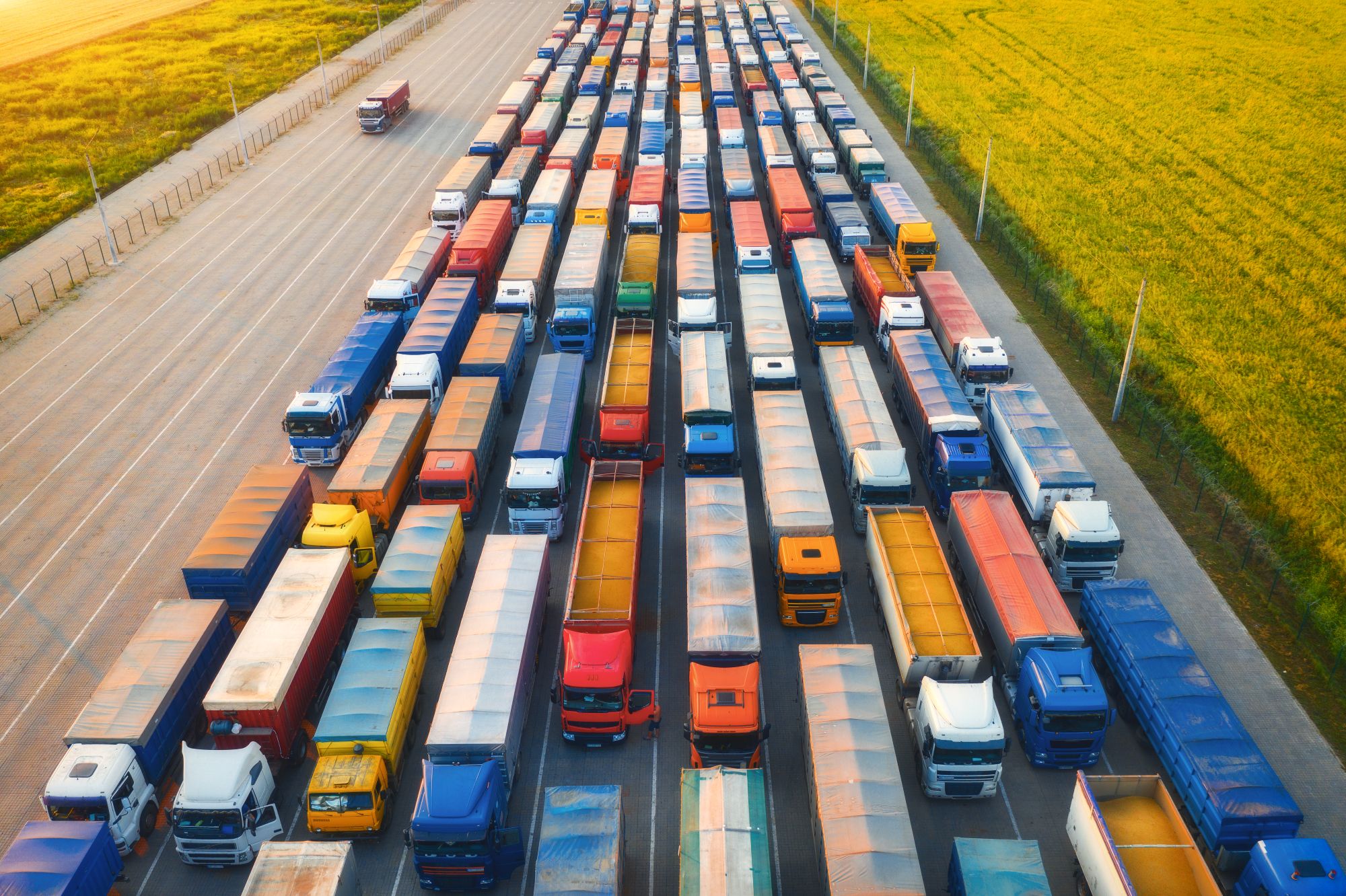
Para los operadores, los beneficios de los corredores logísticos integrados son tangibles, si no inmediatos. Una de las ventajas más significativas es la mayor previsibilidad de los movimientos transfronterizos. Con el tiempo, esto reduce la incertidumbre en torno a la duración de los trayectos y mejora la programación de las rutas internacionales.

Los corredores también amplían las opciones cuando el transporte exclusivamente por carretera se ve limitado. Las autopistas rodantes y las terminales intermodales pueden ofrecer alternativas prácticas en periodos de congestión, condiciones meteorológicas adversas o restricciones normativas.

Al mismo tiempo, los sistemas digitales integrados mejoran la visibilidad de los trayectos, ofreciendo a los gestores de flotas mejores datos para planificar las pausas de descanso, el acceso a las terminales y las horas de conducción con mayor precisión y confianza.

También hay implicaciones comerciales. Al trasladar los tramos de larga distancia al ferrocarril y reservar el transporte por carretera para las entregas de primera y última milla, algunos operadores pueden limitar su exposición a las zonas de bajas emisiones y a las restricciones de acceso urbano. Además, los camiones inmovilizados en rutas internacionales de larga distancia se liberan para rutas más cortas y de mayor frecuencia vinculadas a centros logísticos y terminales.

Paralelamente, eliminar los kilómetros más caros de un trayecto -los afectados por peajes, atascos o restricciones- puede reducir los costes de explotación. Para los transportistas que adapten su modelo operativo, la rentabilidad dependerá menos de la distancia recorrida y más de la eficiencia, la fiabilidad y la capacidad de ofrecer un servicio constante en plazos más ajustados y controlados.

Desafíos para los transportistas

A pesar de sus ventajas, los corredores logísticos integrados también introducen una nueva complejidad para los transportistas. En varias partes de Europa ya están en vigor restricciones a la circulación de vehículos pesados, como prohibiciones nocturnas y acceso basado en cuotas. A medida que se amplíen las estrategias de los corredores y aumenten las presiones medioambientales, estas medidas podrían generalizarse y aplicarse con mayor rigor, lo que añadiría limitaciones a la planificación y programación de las rutas.

Los avances en los distintos corredores también son desiguales. Mientras que algunas rutas se benefician de terminales modernas y enlaces ferroviarios mejorados, otras, como el corredor Rin-Alpes, adolecen de capacidad ferroviaria limitada, nudos congestionados y lagunas en las infraestructuras. En estas zonas, los aumentos de eficiencia prometidos pueden verse socavados por retrasos y cuellos de botella, en lugar de resolverse con ellos.

Este reto se ve agravado por las complicaciones del transporte multimodal. Las franjas horarias del ferrocarril y las terminales suelen implicar reservas anticipadas y horarios fijos, lo que reduce la flexibilidad de la que tradicionalmente han dependido las operaciones exclusivamente por carretera para absorber las perturbaciones.

La integración digital conlleva sus propias exigencias. Aunque los sistemas de datos compartidos, los tacógrafos inteligentes y la documentación electrónica ofrecen eficiencia a largo plazo, es necesaria una inversión inicial en herramientas de gestión de flotas compatibles, además de formación para los conductores y cambios en los procesos. Para algunos operadores, esta transición puede requerir muchos recursos.

Sin embargo, quizá el reto más importante radique en la competencia. Los corredores integrados tienden a favorecer a los operadores que pueden transportar mercancías de forma previsible, digital y multimodal. Los operadores más pequeños o que solo operan por carretera pueden verse presionados por flotas más grandes, especialistas intermodales o integradores logísticos que ofrecen soluciones de corredores integrales.

Lo que esto significa para la planificación de la flota

Para los transportistas internacionales, los corredores integrados afectan a la planificación. La elección de la ruta ya no depende sólo de la distancia y los peajes. Implica:

  • Evaluar dónde puede estar limitado el acceso por carretera.
  • Identificar alternativas intermodales.
  • Gestionar el bienestar de los conductores en trayectos más largos y complejos.
  • Garantizar el cumplimiento de múltiples sistemas y jurisdicciones.

Las flotas que entiendan cómo funcionan estos corredores y planifiquen en consecuencia estarán mejor situadas para adaptarse a medida que se endurezcan las normas y aumenten las expectativas.

Dónde puede ayudar SNAP

Los corredores logísticos integrados están cambiando la forma en que el transporte circula por Europa. Aportan oportunidades de mayor eficiencia y resistencia, pero también introducen nuevos niveles de complejidad operativa y normativa para los transportistas. A medida que el transporte por carretera se integra más estrechamente con el ferrocarril, los puertos y los sistemas digitales, el bienestar de los conductores, la seguridad de la planificación y el acceso a infraestructuras fiables son más importantes que nunca. Los gestores de flotas necesitan una visibilidad y un control claros de los costes, además de la confianza de que los conductores pueden parar y descansar con seguridad.

A través de nuestra red de paradas de camiones seguras y fiables, junto con soluciones de pago integradas, hacemos que la vida en la carretera sea más sencilla tanto para los conductores como para los operadores. Inscríbase hoy mismo

Compartir con

Otros también leen...

Header Image

miércoles 11 marzo 2026 • Noticias del sector

APARCAMIENTO DE CAMIONES EN EUROPA: NORMAS, LAGUNAS Y RIESGOS

Guest

Ask most fleet operators what makes life harder than it needs to be and you’ll hear the same answer across Europe: truck parking.Drivers have to stop. Hours rules and rest requirements make that non-negotiable. But on many of Europe’s busiest transport corridors, finding a safe, legal place to park is still uncertain. Capacity is low, security varies widely and most urban hubs aren’t built with HGVs in mind.That pressure has consequences. When designated areas are full, drivers are pushed towards places that were never intended for HGV parking: slip roads, access ramps and industrial estates. Compliance becomes a choice between two risks: stop where you shouldn’t, or keep driving when you shouldn’t.When truck parking overflows into unsuitable places, the environment becomes dangerous: poor visibility, high speeds, unpredictable manoeuvres and limited escape routes. starkly in February 2026, reporting fatal crashes in Germany and Belgium involving stationary lorries. The article challenges the easy explanation of “illegal parking” and points back to the underlying cause: drivers were out of driving time and the spaces were gone.In addition, a shortage of truck parking in Europe doesn’t just mean “no space”; it often means the only available space is poorly lit, unmonitored and isolated. That elevates the risk of theft and driver harm, which can have a knock-on effect for supply chain reliability.Poor parking provision also affects workforce sustainability. When drivers face uncertainty around legal, safe stopping, it makes the role harder and less attractive – compounding .For a long time, the conversation about truck parking focused on enforcement: where you can’t park and the penalties that follow. Increasingly, the focus is moving towards provision: where drivers can stop safely, reliably and legally. Under revised Trans-European Transport Network (TEN-T) rules, EU Member States must ensure the development of certified secure parking . The same requirement sets expectations for the location of truck parking. It must be immediately on the network or within 3km of an exit, which will have benefits for route planning. Alongside this shift, the European Commission positions safe and secure truck parking as a priority within its Intelligent Transport Systems work, including the need for to help drivers locate suitable sites.But the EU isn’t just asking Member States to add more truck parking spaces. It’s also defining what “safe and secure” means. In April 2022, the European Commission adopted EU standards for , categorising sites into four security levels: bronze, silver, gold and platinum. The intention is to create transparency for drivers and fleets, and to support investment by giving operators a clear target to design and audit against.This sits against a significant capacity gap. A European Commission study estimates a across the bloc, with the gap potentially rising towards half a million by 2040 if the network does not scale at the pace freight demand requires.Looking at more practical aspects of the situation, what are HGV parking rules and regulations in Europe?At first glance, HGV parking rules across Europe look consistent: Motorways are not designed to absorb overflow parking. Hard shoulders exist for emergencies and safety buffers. Access ramps are not for planned stopping.Urban areas add a layer of complexity. Local restrictions and enforcement are common because HGV parking competes with residents, retail and public space – and because badly parked vehicles create safety risks.Rules around HGV parking in the UK are clear. Trucks should use designated areas such as motorway services, truckstops and lorry parks. Conversely, drivers must avoid parking in locations that create risks, such as pavements, verges and central reservations. Restrictions around parking in residential areas vary by local authority, so it’s vital to check if this is unavoidable. The major constraint is supply. The RHA’s estimate of an , with very high utilisation on key routes, helps explain why informal and unsafe parking persists even where drivers know it isn’t ideal. In 2022, the Department for Transport across England, aimed at better rest areas and more secure parking, framed as part of a broader programme to improve roadside facilities.In Germany, motorway stopping rules are anchored in the (StVO), which makes clear that stopping on the autobahn – including the hard shoulder – is prohibited except in emergencies. That means running out of driving time is not treated as justification. Fines increase if obstruction or danger is caused, and enforcement is active on heavily used corridors. Poland follows the familiar motorway rule that hard shoulders are reserved for breakdowns and emergencies. The nuance appears within cities, where tonnage-based entry restrictions and are common. Overnight HGV parking in urban areas can require municipal approval and enforcement varies between municipalities. For cross-border fleets, that means treating urban stopping as permission-led rather than assumed.France reinforces the same principle through the . Articles R417-9 and R417-10 classify dangerous or obstructive parking offences, and stopping on autoroute carriageways or shoulders is prohibited except in cases of absolute necessity. Penalties can include fines and licence points.However, publishes dedicated information for secure truck parking on its network, reflecting how motorway operators guide HGV stopping into appropriate locations.Spain’s prohibits stopping on motorway shoulders except in emergencies, aligning with broader European practice. Additional complexity lies at municipal level. Many cities operate local overnight bans or restrict HGV parking to designated industrial zones, with enforcement handled by local police rather than motorway authorities. That creates a layered compliance environment: legal on the motorway network does not automatically mean legal in urban areas.To highlight positive developments, that a truck parking facility in La Jonquera became the first in Spain to receive TAPA certification, describing measures such as controlled access, fencing, lighting and continuous monitoring.Italy distinguishes clearly between motorway carriageways, ramps and designated service areas. Stopping on access or exit ramps is explicitly prohibited, and enforcement around motorway infrastructure is consistent. Importantly, Italy differentiates between aree di servizio (full service areas with facilities) and simpler rest or parking lay-bys, which may not support overnight welfare needs. However, Italy is also seeing new secure truck parking developments focused on welfare and security, reflecting the wider European momentum towards better provision.Across Europe, an additional regulatory layer now shapes truck parking decisions: Low Emission Zones (LEZs) and restricted urban traffic zones. Cities in France (Crit’Air), Germany (Umweltzonen), Spain (Zonas de Bajas Emisiones) and Italy (ZTL areas) impose vehicle-class or permit requirements that can apply even to stationary vehicles within the zone. A driver who parks overnight in a restricted area without the correct classification or registration risks fines – even if the stop itself is otherwise legal. Across Europe in 2026, the rules are clear. The constraint is capacity, especially near urban hubs and on high-volume corridors. For fleets, this has a practical impact: European truck parking can’t be left to chance at the end of a shift. It needs to be planned with the same seriousness as , routing, driver hours and security – because when the network fails to provide legal space, every other compliance system gets squeezed.SNAP can help. .

Header Image

jueves 26 febrero 2026 • Noticias del sector

LAS MUJERES EN EL TRANSPORTE: TALENTO SIN EXPLOTAR

Guest

Across the UK, around . They transport food to supermarkets, materials to construction sites and goods to ports and distribution centres. They underpin daily life and economic stability, forming a critical part of the UK’s national infrastructure.Yet only around . That amounts to roughly one per cent of the UK HGV workforce, according to reporting by . For an industry facing long-term recruitment pressure, that figure raises important questions about where future talent will come from and how the sector presents itself to potential entrants.There are signs of progress, however. The percentage of from 6.7% in 2011/12 to 9.7% by 2021/22. Over the past decade, women securing Category C and C+E licences increased by 144%, according to SME Web. More women are clearly choosing to train and qualify. The pipeline is widening, but the proportion of women behind the wheel remains marginal.Women have not been entirely absent from road transport. One of the earliest recorded female truck drivers was, who began driving heavy vehicles in the United States in 1918. During wartime periods in both the US and the UK, women stepped into transport roles out of necessity. Then, in the 1960s, became the UK’s first long-distance lorry driver, often working 100-hour weeks.However, outside exceptional circumstances, haulage has traditionally been male dominated. Cultural perceptions, physical assumptions about the work and the lifestyle associated with long distance driving have all played a part. Only in recent decades has participation begun to shift in a more sustained way.The reasons for low female participation are not limited to awareness. Structural and practical barriers remain.Facilities are a big concern. Professional drivers depend on secure parking, clean rest areas and appropriate welfare provision. For many years, roadside infrastructure has struggled to meet demand across the board. When rest stops are inadequate, poorly lit, feel unsafe or lack privacy, this can discourage women from joining the sector.Working patterns also play a role. Long-haul journeys can involve overnight stays and time away from home. While many drivers value the independence that comes with the role, the perception of work-life balance may deter some women, especially those with caring responsibilities. There is also the issue of visibility. When only one per cent of drivers are women, prospective candidates may struggle to see themselves in the sector. In addition, menopause symptoms such as fatigue, sleep disruption, hot flushes and anxiety can be difficult to manage in roles that involve long hours, limited access to private facilities and time away from home. In sectors where welfare provision is already under pressure, a lack of understanding or practical support can lead to experienced drivers leaving the workforce.For haulage, this is not a peripheral issue. Retaining experienced drivers is as important as attracting new entrants. Change is not confined to driving roles. Across the broader transport and logistics ecosystem, women are increasingly visible in management, planning and policy functions.The shows that leadership representation by women has increased from 26% to 36% in recent years. However, much of this growth has taken place outside core operational functions. Senior representation within frontline transport roles remains comparatively limited.Several industry organisations are addressing this gap. Women in Transport offers mentorship opportunities, while everywoman recognises excellence through its , raising the profile of female professionals across the sector. The Chartered Institute of Logistics and Transport has also announced a new , aimed at supporting career progression and professional networks.Alongside this, community initiatives such as demonstrate that interest and engagement are growing. The spotlighting female drivers and employees, further increasing visibility. Collectively, these platforms help challenge outdated perceptions and provide practical support for women entering or advancing within the industry.For the UK haulage sector, this is not just a diversity conversation. It is a strategic one.Previous industry reporting has highlighted the scale of recruitment pressure across logistics. The that tens of thousands of new drivers will be required in the coming years to maintain supply chain stability. At the same time, the existing workforce is ageing.With only one per cent of drivers currently women, a significant proportion of the potential labour market remains underrepresented. If participation rates were to move closer to parity with the wider workforce, the impact on recruitment could be substantial.There is also evidence that inclusive cultures contribute to improved retention and engagement. A sector that demonstrates visible progression pathways, fair access to training and appropriate welfare provision is likely to appeal more broadly across demographics.Progress will not accelerate through awareness alone. Structural changes are needed.Investment in safe, well maintained roadside facilities is fundamental. Secure parking, adequate lighting and clean welfare amenities benefit all drivers and remove avoidable barriers to entry.Flexible working models, where operationally feasible, can broaden appeal. This may include regional route design, job sharing arrangements or clearer progression pathways from warehouse and planning roles into driving positions.Funded licence pathways and apprenticeships can also reduce financial barriers. As previously outlined, the cost of training can be significant. Targeted funding initiatives aimed at underrepresented groups can support a more balanced intake.Finally, transparency around workforce data matters. Publishing gender breakdowns, monitoring progression rates and setting measurable objectives signal that inclusion is being taken seriously.International Women’s Day provides an opportunity to reflect on how far the UK haulage industry has come and how far it still has to go. The rise in female licence acquisition and test pass rates demonstrates that interest exists. Leadership representation is improving in some areas and support networks are expanding. However, the scale of underrepresentation remains stark.Haulage is central to national resilience. It keeps shelves stocked, infrastructure projects supplied and trade flowing. Ensuring that this workforce reflects the full breadth of available talent is not simply a question of equity. It is a matter of long term sustainability.Supporting women in haulage also means improving the day-to-day realities of life on the road. Access to secure parking, well-lit rest areas and appropriate facilities is fundamental to retention and wellbeing for all drivers. SNAP’s intruck app helps all drivers locate and book trusted truck stops across the UK and Europe, giving fleets greater visibility and drivers greater confidence wherever their route takes them. .

Header Image

martes 16 diciembre 2025 • Noticias del sector

QUÉ SIGNIFICA EL REGISTRO DIGITAL OBLIGATORIO EN ESPAÑA PARA LAS FLOTAS QUE OPERAN EN EUROPA

Guest

Spain is preparing for one of the most significant transport reforms in its recent history. The Sustainable Mobility Law (Ley de Movilidad Sostenible), which received final approval in November 2025, will introduce mandatory digital records for road freight control documentation, creating a more transparent, enforceable and efficient system for domestic and international carriers. Although this is a major national change, it forms part of a wider trend. Across Europe, governments and operators are moving towards a fully digital freight environment as the EU prepares to implement the (eFTI).For fleets working in and out of Spain, this is the start of an important transition. It signals a future in which paper documentation becomes the exception rather than the rule and in which digital processes support faster checks, smoother operations and greater consistency across borders.While the Sustainable Mobility Law addresses wide-ranging transport reforms – from urban mobility to domestic flight restrictions – the provisions most relevant to international freight operators centre on digital documentation. A central section of the law introduces a mandatory digital “control document” for road freight. This includes the use of approved digital formats, such as the electronic consignment note (eCMR), which Spain has already ratified and treats as legally equivalent to the paper CMR note. The law aims to reduce administrative burdens, eliminate inconsistencies in paperwork and shorten the time required for checks and inspections. Rather than relying on handwritten notes or physical documents that can be misplaced, carriers will store, share and verify transport information digitally. For operators, this should mean fewer disputes over documentation, less ambiguity around compliance requirements and greater certainty when preparing for audits or regulatory reviews.In practice, the obligation focuses first on the digital control document used for roadside and regulatory checks, but it is expected to accelerate wider use of eCMR and other digital freight documents across the supply chain.The timeline for implementation will begin once the law is published in Spain's Official State Gazette. Carriers should expect the digital control document obligation to take effect roughly ten months after publication, making 2026 the likely year when full compliance will be required.The Mobility Law applies to road transport operations that fall under Spanish control rules on Spanish territory, not just Spanish-registered companies. Carriers will need to ensure their systems can produce and transmit digital records in compliant formats. Any delay in adopting digital documentation could slow down inspections or disrupt customer schedules.This means that foreign operators running international loads into, out of or through Spain should plan on being able to provide the required control document in digital form when requested by Spanish authorities.The Spanish reforms align closely with the EU’s eFTI Regulation, which will require Member States to accept digital freight documentation once the technical and certification rules are in place (from mid-2027). eFTI sets a unified framework for how information is structured, transmitted and verified. While it obliges authorities to accept digital records, it does not require operators to use them. Spain’s Mobility Law therefore goes further, making digital control documents mandatory for road freight.Under eFTI, carriers will be able to provide freight information electronically through certified platforms. Enforcement authorities will receive that information through secure digital channels. This should reduce administrative friction across the EU’s busiest freight routes.Spain is not alone in taking early steps. Several EU countries have already moved towards paperless freight systems and their experience demonstrates what a fully digital environment could look like.● The Netherlands has been one of the earliest adopters of eCMR and has trialled end-to-end digital workflows across different modes of transport. ● France also moved early, supporting digital documentation and faster roadside checks following its ratification of the eCMR protocol. ● In the Benelux region, Belgium, Luxembourg and the Netherlands are running a joint eCMR pilot and digital logistics corridor, illustrating how interoperable documentation can work across national boundaries.● Denmark and Sweden have operated national e-freight trials designed to simplify the sharing of transport information. Taken together, these examples show that Spain’s Mobility Law is part of a broader European transition. Rather than standing apart, Spain is moving in step with a continental shift towards digital documentation that aims to make road freight faster, more transparent and more consistent across borders.The move to digital records brings several practical advantages. Digital documents reduce the time drivers and enforcement officers spend handling paperwork and shorten inspections during roadside checks. This mirrors the benefits seen with the introduction of , which have reduced unnecessary stops for compliant drivers and improved the consistency of enforcement across Europe.Digital documentation also removes the errors that can arise from handwritten notes or damaged paper notes. Fleet managers can instantly retrieve records, resolve errors more easily and maintain clearer oversight of documentation across multiple routes. For operators managing complex schedules, this increased predictability supports better planning and stronger customer service.Drivers are likely to benefit too. A shift to digital records reduces administrative pressure and helps avoid disagreement at delivery points. With all documents stored digitally, drivers have a single source of truth that is accepted across the supply chain.Fleets may need to invest in updated transport management systems or integrate new tools that support digital documentation. Operators may require additional support and training to shift from paper-based processes to new digital workflows.There will also be a period of adjustment in which paper and digital systems may operate side by side. As eFTI becomes established across Europe, some countries will move faster than others. Operators travelling across different borders may encounter varying expectations, particularly in the early years.Throughout this transition, driver welfare should remain a priority. The administrative load associated with new processes often falls on drivers. Clear training and straightforward systems will be essential.Spain’s Mobility Law marks an important moment in the evolution of European freight. It reflects a sector that is modernising at speed and preparing for a future built on digital workflows rather than manual paperwork. Operators that begin preparing now will be in a strong position as Spain’s digital control document requirements take effect and eFTI comes into force across Europe.At SNAP, we support fleets across Spain and the wider continent with tools that make daily operations simpler and more predictable. The intruck app helps drivers locate and book secure parking along their route, which is particularly valuable as compliance processes evolve. If your fleet is preparing for Spain’s new requirements or the broader digital transition across Europe, SNAP is here to support every step of the journey.