Susie Jones
Advies voor bestuurders • 3 min lezen

Parkeerregels voor vrachtwagens in het Verenigd Koninkrijk: Wat elke chauffeur moet weten

Gemaakt: 03-04-2025

Bijgewerkt: 04-04-2025

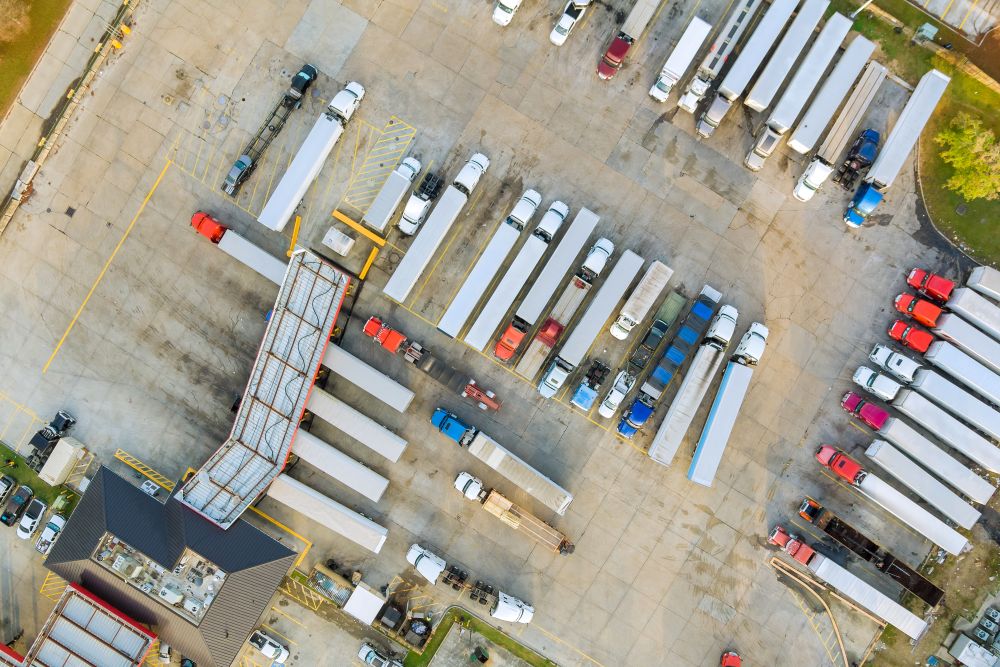
Voor veel vrachtwagenchauffeurs kan het een uitdaging zijn om zich een weg te banen door de vele regels rondom het 's nachts parkeren van vrachtwagens in het Verenigd Koninkrijk. Na een lange dag achter het stuur moeten ze zich aan verschillende regels houden voordat ze zelfs maar kunnen denken aan parkeren voor de nacht. We zullen ons in deze regels verdiepen en je alles vertellen wat je moet weten.

Werk- en rusttijden vrachtwagenchauffeurs.

Voordat we naar de parkeerregels kijken, is het van vitaal belang om de Britse en EU-wetgeving met betrekking tot rusttijden te begrijpen. We hebben alles verzameld wat je moet weten over tachograafregels. Kort samengevat moet je een tachograaf hebben als je voertuig zwaarder is dan drie en een halve ton. Een tachograaf registreert het aantal pauzes dat een chauffeur neemt. Vrachtwagenchauffeurs moeten zich aan het volgende houden:

  • Dagelijkse rusttijd: Chauffeurs moeten 11 uur aaneengesloten rust nemen. Dit kan worden teruggebracht tot negen.

  • Wekelijkse rust: Vrachtwagenchauffeurs moeten minstens 45 uur rust nemen.

  • Rijpauzes: De rijtijd mag niet langer zijn dan vier en een half uur voor een pauze. Een pauze moet minstens 45 minuten duren.

Wat zijn de Britse regels voor het 's nachts parkeren van vrachtwagens?

Om aan de parkeerwetten te voldoen en de veiligheid te garanderen, moeten vrachtwagenchauffeurs zich aan strikte regels houden met betrekking tot waar en wanneer ze 's nachts mogen parkeren:

  • Publieke gebieden en woonwijken: Veel lokale overheden staan niet toe dat vrachtwagenchauffeurs in woonwijken parkeren - als ze dat toch doen, kan dat leiden tot een boete of sanctie.

  • Bermen en trottoirs: Als het maximale beladen gewicht van het voertuig meer is dan 7,5 ton (inclusief aanhanger), mag u niet parkeren in een berm, trottoir of op een stuk land tussen rijbanen, tenzij er toestemming is van de politie.

  • Industriële terreinen en lay-bys: Vrachtwagenchauffeurs kunnen deze gebruiken om 's nachts te parkeren. Ze bieden echter minder veiligheid en geen voorzieningen. Overnachten op een uitwijkhaven is vaak de eenvoudigste en voordeligste optie, maar kan een groter veiligheidsrisico met zich meebrengen.

Boetes en kosten voor niet-naleving

Het niet naleven van de parkeerregels voor vrachtwagens kan leiden tot boetes, het klemmen van voertuigen of inbeslagname. Deze boetes zijn bedoeld om chauffeurs aan te moedigen zich aan de wet te houden en de verkeersveiligheid te waarborgen.

Waar kun je het beste overnachten?

Geschikte parkeerlocaties zijn onder andere:

- Truckstops: Speciaal ontworpen voor vrachtwagens en voorzien van faciliteiten zoals brandstof, eten, douches, toiletten en veiligheidsopties.

-Servicestations: Veel servicestations langs snelwegen bieden ruimte voor het parkeren van vrachtwagens. De meeste bieden vergelijkbare faciliteiten als truckstops.

SNAP biedt chauffeurs een netwerk van meer dan 600 truck service partners in heel Europa.

Tips voor het 's nachts parkeren van vrachtwagens.

  • Parkeerapps: Het downloaden van een vrachtwagenparkeerapp kan chauffeurs helpen om locaties bij hen in de buurt te vinden om te overnachten. intruck stelt vrachtwagenchauffeurs in staat om parkeer- en wasplekken in heel Europa te vinden, zodat chauffeurs SNAP-locaties kunnen reserveren via de app.

  • Controleer de faciliteiten bij de truckstop van je keuze: Zoek een plek met essentiële voorzieningen zoals eten, toiletten en douches voor een comfortabeler verblijf.

  • Beveiligingsvoorzieningen: De meeste truckstops en MSA's hebben beveiligingsvoorzieningen. Met behulp van de SNAP-kaart of intruck kunnen chauffeurs de veiligheidsvoorzieningen van een locatie controleren, zoals omheiningen, CCTV, nachtwakers en TAPA-accreditaties.

Regels voor kort parkeren.

Vrachtwagenchauffeurs mogen in bermen of op trottoirs parkeren als het parkeren bedoeld is om te laden en lossen. Er zijn een paar uitzonderingen waarmee ze rekening moeten houden voordat ze gaan laden en lossen:

  • Bestuurders mogen niet parkeren waar gele markeringen op de stoep staan en rechtopstaande borden geven beperkingen aan.

  • Het voertuig mag niet onbeheerd worden achtergelaten.

  • Op rode routes moeten chauffeurs letten op speciaal gemarkeerde en bewegwijzerde vakken die aangeven waar en wanneer laden en lossen is toegestaan.

  • Gemeenten en privédomeinen kunnen verschillende regels hebben.

Mogen vrachtwagens de buitenste rijstrook gebruiken?

Vrachtwagenchauffeurs mogen alleen rijstroken één en twee gebruiken. Op een vierbaanssnelweg mogen chauffeurs rijstrook drie gebruiken. Vrachtwagens mogen echter niet de meest rechter rijstrook gebruiken.

Wat maakt een weg ongeschikt voor vrachtwagens?

Een weg kan om de volgende redenen als ongeschikt voor vrachtwagens worden gemarkeerd:

- Steile hellingen: Deze vormen een uitdaging voor veel vrachtwagens, vooral voor lange of gelede vrachtwagens. Het beklimmen van een steile helling is voor een vrachtwagen een moeilijke taak vanwege de zware lading, wat leidt tot verminderde tractie en wielspin.

- Beperkte breedte: Wegen met beperkte breedte kunnen scherpe bochten of muren aan weerszijden hebben en zijn ongeschikt voor vrachtwagens. Vanwege hun draaicirkel hebben vrachtwagens meer ruimte nodig om te manoeuvreren. Wegen met muren aan weerszijden laten weinig ruimte voor fouten en verhogen het risico dat een vrachtwagen vast komt te zitten of schade veroorzaakt.

Deel naar

Anderen lezen ook...

Header Image

dinsdag 26 mei 2026 • Advies voor bestuurders

VEILIGE LAAD- EN LOSPROCEDURES OM LETSEL AAN HET BEWEGINGSAPPARAAT TE VOORKOMEN

Evelyn Long

Musculoskeletal injuries are one of the most persistent challenges facing the fleet industry today. Drivers and warehouse staff face constant physical demands during loading and unloading operations. Implementing proper procedures protects your workforce from chronic pain and career-ending injuries while maintaining the efficiency that keeps your business competitive in demanding markets.Musculoskeletal injuries affect individual workers while draining business resources through lost productivity and increased insurance premiums.When an employee sustains an injury, the financial consequences go beyond the immediate medical expenses. Fleet managers must account for sick leave costs, temporary worker expenses and potential compensation claims.In 2023 to 2024, the total costs of workplace ill health and injury , with injury accounting for 28% or £6.5 billion. These figures demonstrate how injuries translate into economic burdens that affect profit margins.Lost productivity compounds these direct costs. When experienced drivers or warehouse staff take extended leave, operations slow down and remaining team members face increased workloads. The ripple effects touch every aspect of fleet operations, from delayed deliveries to strained client relationships.Drivers who develop musculoskeletal disorders face a difficult reality. Chronic back pain, shoulder injuries and repetitive strain can make basic job functions excruciating. Many drivers report that persistent pain affects their ability to focus during long routes, creating additional safety concerns.Musculoskeletal disorders rank among the in Great Britain. These conditions force experienced professionals out of an industry where they've built years of expertise.UK law requires employers to take specific steps to prevent manual handling injuries. Risk assessment forms the foundation of compliance and serves as the first line of defense against workplace strain.Employers must follow the Manual Handling Operations Regulations from the Health and Safety Executive, which establish a clear hierarchy. First, wherever reasonably practicable. Second, assess any hazardous operations that cannot be avoided. Third, reduce the risk of injury from those operations to the lowest level reasonably practicable.This framework pushes businesses to eliminate manual handling risks entirely. Mechanical equipment must be used whenever possible for moving loads. Any unavoidable manual handling requires proper assessment and mandatory control measures.A suitable and sufficient risk assessment examines four key factors in logistics operations:1. Task: The task itself matters, including whether it involves twisting, stooping or repetitive movements. Load: Load characteristics, such as weight, size and stability, play a role. Environment: Environmental conditions, including space constraints, floor surfaces and temperature extremes, affect safety outcomes. Individual: Individual capabilities vary among workers, who bring different strengths and physical limitations to each job. Effective should lead to concrete improvements. Document your findings and share them with your team.When manual handling becomes inescapable, proper technique can reduce injury risk. Training the workforce in correct lifting methods protects them during daily operations.The feet should be , positioned close to the load. Bending at the knees while maintaining a straight back allows you to grip the load firmly with both hands. Leg muscles should power the lift as you rise smoothly. Keeping the load close to the body throughout the movement prevents strain, as does avoiding any twisting motion during the lift or carry.If you need to strain or jerk to move an object, it requires mechanical assistance or team lifting. Never rush a lift to save time. Taking a few extra seconds to position yourself correctly prevents injuries that could sideline you for weeks.Team lifts require clear communication and planning before anyone touches the load. Designate one person as the lift coordinator who will call out instructions. All team members must understand the lift plan, including grip points, the path of movement and where the load will be placed.The coordinator should count down before the lift begins so everyone moves at the same time. Team members must maintain communication throughout, calling out if they need to pause or adjust.Technology offers powerful tools to reduce or eliminate manual handling risks in fleet operations, while equipment investments protect workers, often improving efficiency and throughput.Mechanical equipment, such as pallet jacks, forklifts and conveyors, eliminates many manual handling injuries. Workers' backs and joints no longer bear the physical strain when machines handle the load. Motorizing the effort required to move heavy loads, battery-electric pallet jacks . These machines can handle significantly more weight than manual versions while requiring minimal physical exertion from operators.Forklifts excel at transporting and lifting materials in warehouse and loading dock environments. Operators control heavy loads from a protected position, eliminating back strain and repetitive-motion injuries associated with manual handling.Data-driven scheduling through predictive systems can and potential delay points across your routes. Fleet managers can use these insights to adjust schedules, allocate additional resources during peak periods and give drivers realistic time frames.When drivers feel rushed, they are more likely to cut corners on safety procedures. Proper scheduling eliminates this pressure. Workers have time to use mechanical equipment properly, conduct team lifts when needed and follow correct manual handling techniques.Emerging wearable devices monitor workers' movements and posture throughout their shifts. These devices use to analyze lifting techniques and provide real-time feedback when workers adopt unsafe postures.Similar technology appears in driver safety applications. A telematics app program helped among young drivers by providing real-time feedback. The same principle applies to physical work, where immediate alerts about improper lifting form can prevent cumulative strain injuries.Fleet operations can use prevention through design (PtD) to eliminate hazards during planning. Vehicle specifications that minimize manual handling requirements, warehouse layouts that facilitate safe movement and procurement decisions that prioritize ergonomics all fall under this proactive approach.Vehicle design choices directly impact daily injury risk. Lower load bed heights reduce the distance workers must lift heavy items, while side-loading configurations ease the strain on workers' backs compared to rear-loading designs. Warehouse layout decisions matter as well, with adequate space around loading docks allowing workers to position themselves correctly and use equipment without awkward maneuvering.Equipment provision alone doesn't guarantee safety. Research shows that while 62.2% of construction workers might work at heights requiring protection, equipment. This gap highlights why PtD matters. When you design operations so that the safe method is also the easiest, compliance becomes natural.Preventing musculoskeletal injuries necessitates ongoing attention. Investing in proper equipment, training and operational design protects your workforce while strengthening your business's reputation and future prospects.Discover more from

Header Image

maandag 02 december 2024 • Advies voor bestuurders

ALLES WAT JE MOET WETEN OVER DE WIJZIGINGEN IN DE CPC VOOR CHAUFFEURS

Susie Jones

On the 3rd of December 2024, changes to the Driver Certificate of Professional Competence (CPC) will come into full effect. The new CPC aims to offer better flexibility to drivers returning to the profession and those undertaking mandatory training. We delve into the upcoming changes and how they will impact drivers. Introduced in 2007, the CPC is a mandatory qualification for professional drivers in the UK and EU wanting to drive a range of heavy vehicles, such as HGVs, LGVs, buses, and coaches. Drivers must pass four tests: • Theory• Case study• Practical• Vehicle safety demonstration. Once passed, the CPC lasts for five years and must be renewed by taking 35 hours of periodic training within the five years.The UK government wanted to understand the effectiveness of the Driver CPC. They did this by asking drivers, trainers, and other parties to take a poll. The government focused on two main areas: improving driver choice and attracting more drivers into the industry for example, making it easier for drivers with foreign qualifications to obtain a licence in the UK. The changes to the Driver CPC are categorised into the following:The international Driver CPC is the new name for how the previous Driver CPC worked. The following applies:• Drivers must take 35 hours of CPC training every five years.• The courses must be at least seven hours long. • If splitting a course over a day, a driver must complete it on two consecutive days.• Drivers are allowed to do a total of 12 hours of e-learning.The National Driver CPC provides more flexibility for those wanting to drive in the UK. Drivers can take either:• 35 hours of training every five years.• A combination of 35 hours of National Driver CPC and International Driver CPC training every five years.The flexibility means that:• Training must be at least 3 hours 30 minutes long training providers can offer longer courses. • It does not need to be completed on two consecutive days if it's a split course course providers can set their time limits.• Training can be e-learning.• Drivers can do 12 hours of e-learning towards their overall 35 hours.From the 3rd of December, 2024, drivers will be able to stay qualified by choosing either:1. International Driver CPC National Driver CPCDrivers wanting to return to the profession must take 35 hours of training before returning. However, this will change from the 1st of February, 2025.Drivers with an expired CPC will have new pathways to make returning to driving easier.Drivers have four options:• Undertake 35 hours of International Driver CPC training.• Regain qualification to drive in the UK and EU.• Complete 35 hours of National Driver CPC training.• Regain qualification to drive in the UK only.• Take a seven-hour "return to driving" module.• Regain UK driving qualification instantly.• To drive in the EU, complete 28 additional hours of training within 12 months.• As part of the National Driver CPC training, complete a seven-hour "return to driving" module.• Regain UK driving qualification instantly.• Take 28 additional hours of training (National or International Driver CPC) within 12 months.Drivers must take 35 hours of training (International or National).The rules surrounding Driver CPC cards remain the same drivers must carry their cards when operating vehicles professionally. However, the type of card differs based on qualification:• Identical to the current design.• The design will include "Domestic UK use only."If a driver is qualified for both categories, they may hold two cards.Fleet managers can prepare for the changes by ensuring the following:• Find out whether their drivers need an International or National CPC.• Training deadlines aren't missed to avoid fines.You are exempt from needing a Driver CPC if you're using the vehicle for:• Non-commercial carriage• Carrying materials you use for your job driving must be less than 30% of your rolling monthly work.• Driving for someone you work for or your own agriculture, horticulture, forestry, farming, or fisheries business driving must be less than 30% of your rolling monthly work. • Driving within 62 miles of your base driving a HGV, bus, or coach must not be your main job.• Driving to or from pre-booked appointments to test centres.• Lessons for anyone wanting to get a driving licence or a Driver CPC.• Maintain public order.Full guidance is on the website.Drivers with grandfather rights don't need to hold the actual qualification as part of their licence. However, they must complete 35 hours of training every five years.

Header Image

woensdag 18 september 2024 • Advies voor bestuurders

HELDER ZICHT IN HET VERSCHIET: HET BELANG VAN OOGZORG VOOR VRACHTWAGENCHAUFFEURS

Susie Jones

takes place from the 23rd to the 29th of September, and as a truck driver, maintaining good vision is crucial to your job. Optical Express reported that road crashes involving drivers with poor vision accounted for roughly yearly casualties.Truck driving is a physically demanding role, but it is just as demanding visually requiring constant vigilance and the ability to quickly identify or react to changing road conditions. Poor vision can affect a driver's ability to judge distances, read signs, and detect other vehicles, reducing safety for the driver and other road users.Drivers must complete a t when applying for an HGV licence this occurs every five years after 45 and every year after the age of 65. As part of the medical, truck drivers must have a vision examination by a doctor, optician, or optometrist.To pass the examination, drivers require visual acuity of at least 0.8 (6/7.5) on the Snellen scale in their best eye and at least 0.1 (6/60) in the other.Group 2 HGV drivers need a horizontal visual field of at least 160 degrees with an extension of at least 70 degrees left and right and 30 degrees up and down. No defects should be present within a radius of the central 30 degrees.After 45 years old, drivers must complete their D4 Medical Assessment every five years and every year after 65. However, opticians recommend that every road user has an eye test at least every two years.If a driver experiences the following, they should get their eyes tested immediately:• Headaches• Eyestrain• Pressure behind the eyes• Double vision• Difficulty seeing during the night• Halos around lights.Under the law, employers must ensure their employees are fit to drive this could cover several things, but eyesight is one of them. Employers should test their driver's eyesight every six months by carrying out a number plate sight check 20 metres away.If an HGV driver requires glasses or contact lenses to reach the minimum vision requirement, they can't have a spectacle power greater than eightdioptres. For contact lenses, there is no restriction on contact lens power.The recommends the following to maintain good eye health:• Eat a well-balanced diet with foods that help your vision.• Exercise regularly to prevent diabetes and other conditions that can lead to vision problems.• Inform an optician if you notice any changes.• Wash your hands before putting them near your eyes or if you're handling contact lenses.• Protect your eyes when performing tasks that could damage them.• Wear sunglasses that block 99% or 100% of UVA and UVB radiation.• Follow the 20-20-20 rule every 20 minutes, look 20 feet away for 20 seconds.• Try not to smoke smoking is just as harmful to your eyes as it is to your body.The visual standards HGV drivers must meet are higher than those of other road users. In the UK, drivers must have a visual acuity of at least 0.5 (6/12) on the Snellen scale. In addition, drivers must be able to read a car number plate made after the 1st of September 2001 from 20 metres.The UK law on vision and driving falls below many European countries.By a number plate self-test from 20 metres. A visual acuity/visual field test is mandatory in other European countries.A driving test examiner performs the test in the UK, Cyprus, The Netherlands, and Norway. Several European countries require an Optometrist/Ophthalmologist/Doctor to carry out the test.• The UK, Austria, Belgium, Czech Republic, France, Germany, and Sweden require no further visual tests.• Algeria, Estonia, Hungary, Italy, Latvia, Spain, and Turkey require a visual assessment every ten years.• Algeria, Estonia, Finland, Greece, Hungary, Italy, Latvia, Portugal, Serbia, Spain, and Turkey require visual tests from 65 or younger.It's vital to inform the DVLA if you have any of the following eye conditions:• Blepharospasm• Cataracts• Diabetic retinopathy• Glaucoma• Eye loss• Macular degeneration• Monocular vision• Nyctalopia• Retinitis pigmentosa• Visual field defect.Drivers need to meet the following standards:• Can read a number plate 20 metres away• No double vision• Have a regular field of vision in at least one eye.If a driver is unsure whether they meet the visual standards for driving, they must get advice from a GP, optician, or eye specialist. of the information a driver receives comes from vision with most maneuvers made based on a sense of sight. Vision cannot be substituted or supplemented and is the most important physical factor behind the wheel.