Guest
Notícias do sector • 4 min ler

Estacionamento de camiões na Europa: As regras, as lacunas, os riscos

Criado: 11/03/2026

Atualizado: 11/03/2026

Pergunte à maioria dos operadores de frotas o que torna a vida mais difícil do que é necessário e ouvirá a mesma resposta em toda a Europa: o estacionamento de camiões.

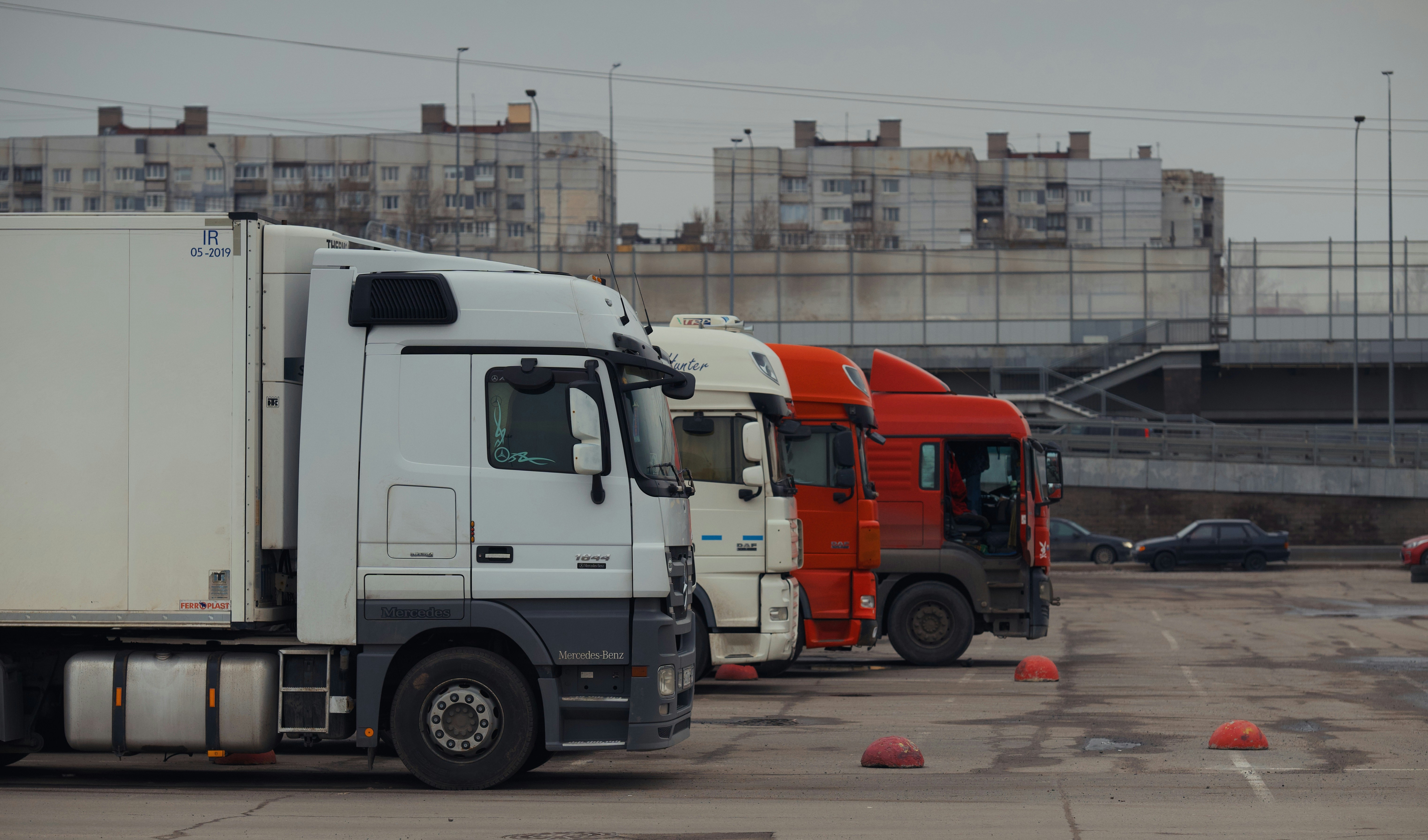
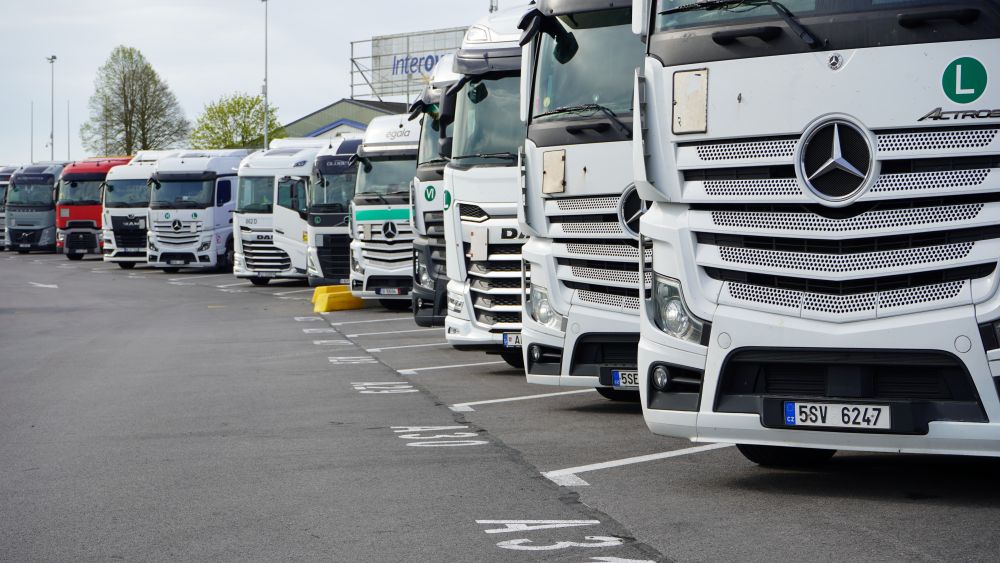
Os condutores têm de parar. As regras relativas ao horário de trabalho e aos requisitos de descanso tornam isso inegociável. Mas em muitos dos corredores de transporte mais movimentados da Europa, encontrar um lugar seguro e legal para estacionar ainda é incerto. A capacidade é reduzida, a segurança varia muito e a maioria dos centros urbanos não foi construída a pensar nos veículos pesados de mercadorias.

Essa pressão tem consequências. Quando as áreas designadas estão cheias, os condutores são empurrados para locais que nunca foram concebidos para o estacionamento de veículos pesados: vias de acesso, rampas de acesso e zonas industriais. O cumprimento torna-se uma escolha entre dois riscos: parar onde não se deve ou continuar a conduzir quando não se deve.

Impacto no mundo real

Quando o estacionamento de camiões transborda para locais inadequados, o ambiente torna-se perigoso: fraca visibilidade, velocidades elevadas, manobras imprevisíveis e rotas de fuga limitadas. A [Trans.INFO captou esta situação] (https://trans.info/en/fatal-crashes-truck-park-453958) de forma clara em fevereiro de 2026, relatando acidentes fatais na Alemanha e na Bélgica envolvendo camiões parados. O artigo desafia a explicação fácil de "estacionamento ilegal" e aponta para a causa subjacente: os condutores estavam sem tempo de condução e os espaços tinham desaparecido.

Além disso, a escassez de estacionamento para camiões na Europa não significa apenas "falta de espaço"; significa frequentemente que o único espaço disponível é mal iluminado, não monitorizado e isolado. Isto aumenta o risco de roubo e de lesões nos condutores, o que pode ter um efeito de arrastamento na fiabilidade da cadeia de abastecimento.

A má oferta de estacionamento também afecta a sustentabilidade da força de trabalho. Quando os condutores se deparam com a incerteza quanto à legalidade e à segurança da paragem, isso torna a função mais difícil e menos atractiva - agravando [as questões relacionadas com o recrutamento e a retenção de condutores] (https://snapacc.com/tipping-point/).

A direção da viagem

Durante muito tempo, a conversa sobre o estacionamento de camiões centrou-se na aplicação da lei: onde não se pode estacionar e as sanções que se seguem. Cada vez mais, o foco está a deslocar-se para a provisão: onde os condutores podem parar em segurança, de forma fiável e legal.

De acordo com as regras revistas da Rede Transeuropeia de Transportes (RTE-T), os Estados-Membros da UE devem garantir o desenvolvimento de estacionamento seguro certificado [a cada 150 km na rede principal até 31 de dezembro de 2040] (https://transport.ec.europa.eu/transport-themes/eu-mobility-transport-achievements-2019-2024/safe-secure-fair-mobility_en). O mesmo requisito estabelece expectativas para a localização do estacionamento de camiões. Deve estar imediatamente na rede ou a menos de 3 km de uma saída, o que terá benefícios para o planeamento de rotas.

A par desta mudança, a Comissão Europeia considera o estacionamento seguro e protegido de camiões uma prioridade no âmbito do seu trabalho sobre sistemas de transporte inteligentes, incluindo a necessidade de [informações fiáveis] (https://transport.ec.europa.eu/transport-themes/smart-mobility/road/its-directive-and-action-plan/safe-and-secure-truck-parking_en) para ajudar os condutores a localizar locais adequados.

Mas a UE não está apenas a pedir aos Estados-Membros que criem mais lugares de estacionamento para camiões. Está também a definir o significado de "seguro e protegido". Em abril de 2022, a Comissão Europeia adotou normas da UE para [Áreas de Estacionamento Seguras e Protegidas (SSPAs)] (https://esporg.eu/2026/02/05/eu-parking-standard-europes-legal-benchmark-for-secure-truck-parking-and-supply-chain-resilience/), categorizando os locais em quatro níveis de segurança: bronze, prata, ouro e platina. A intenção é criar transparência para os condutores e as frotas e apoiar o investimento, dando aos operadores um objetivo claro para a conceção e auditoria.

Este facto tem como pano de fundo um défice de capacidade significativo. Um estudo da Comissão Europeia estima uma [escassez de quase 390.000 lugares de estacionamento seguro para camiões] (https://transport.ec.europa.eu/news-events/news/more-safe-and-secure-parking-professional-drivers-needed-eu-study-reveals-2025-04-11_en) em todo o bloco, com a lacuna a aumentar potencialmente para meio milhão até 2040 se a rede não se expandir ao ritmo exigido pela procura de transporte de mercadorias.

Regras comuns a todos os países

Olhando para os aspectos mais práticos da situação, quais são as regras e regulamentos de estacionamento de veículos pesados na Europa?

À primeira vista, as regras de estacionamento dos veículos pesados de mercadorias na Europa parecem coerentes: * As auto-estradas não foram concebidas para absorver o estacionamento em excesso. * As bermas existem para situações de emergência e para amortecedores de segurança. * As rampas de acesso não se destinam a paragens planeadas.

As zonas urbanas acrescentam uma camada de complexidade. As restrições locais e a aplicação da lei são comuns porque o estacionamento de veículos pesados compete com os residentes, o comércio e o espaço público - e porque os veículos mal estacionados criam riscos de segurança.

O Reino Unido

As regras relativas ao estacionamento de veículos pesados no Reino Unido são claras. Os camiões devem utilizar áreas designadas, tais como serviços de autoestrada, paragens de camiões e parques de camiões. Por outro lado, os condutores devem evitar estacionar em locais que criem riscos, tais como passeios, bermas e reservas centrais. As restrições ao estacionamento em áreas residenciais variam consoante a autoridade local, pelo que é vital verificar se tal é inevitável.

O maior constrangimento é a oferta. A estimativa da RHA de um défice de 11.000 lugares, com uma utilização muito elevada nas principais rotas, ajuda a explicar por que razão persiste o estacionamento informal e inseguro, mesmo quando os condutores sabem que não é o ideal. Em 2022, o Ministério dos Transportes anunciou a atribuição de quase 8 milhões de libras a 39 operadores de instalações na berma da estrada em toda a Inglaterra, com o objetivo de melhorar as áreas de repouso e o estacionamento seguro, no âmbito de um programa mais vasto para melhorar as instalações na berma da estrada.

Alemanha

Na Alemanha, as regras de paragem nas auto-estradas estão ancoradas na [Straßenverkehrs-Ordnung] (https://www.gesetze-im-internet.de/stvo_2013/BJNR036710013.html) (StVO), que deixa claro que a paragem na autoestrada - incluindo a faixa de rodagem - é proibida, exceto em casos de emergência. Isto significa que o esgotamento do tempo de condução não é considerado como justificação. As multas aumentam em caso de obstrução ou perigo, e a fiscalização é ativa nos corredores muito utilizados.

Polónia

A Polónia segue a conhecida regra das auto-estradas, segundo a qual as bermas são reservadas para avarias e emergências. As nuances surgem nas cidades, onde as restrições de entrada baseadas na tonelagem e as [ordens de tráfego locais] (https://mtonroad.com/news/lkw-fahrverbot-polen-neue-vorschriften-regionale-beschrankungen-und-uberholverbot) são comuns.

O estacionamento noturno de veículos pesados de mercadorias em zonas urbanas pode exigir aprovação municipal e a aplicação varia consoante os municípios. Para as frotas transfronteiriças, isto significa tratar as paragens urbanas como sendo obrigatórias e não presumidas.

França

A França reforça o mesmo princípio através do [Code de la route] (https://www.legifrance.gouv.fr/codes/texte_lc/LEGITEXT000006074228/). Os artigos R417-9 e R417-10 classificam as infracções de estacionamento perigoso ou obstrutivo, e a paragem nas faixas de rodagem ou bermas das auto-estradas é proibida, exceto em casos de absoluta necessidade. As sanções podem incluir coimas e pontos de licença.

No entanto, a [SANEF] (https://www.autoroutes.sanef.com/en/assistance/truck-parking-services) publica informações específicas sobre o estacionamento seguro de camiões na sua rede, reflectindo a forma como os operadores de auto-estradas orientam a paragem de veículos pesados de mercadorias para locais adequados.

Espanha

A [Ley de Seguridad Vial] (https://led-gps.com/ley-de-seguridad-vial-normativa-atual-y-novedades/) de Espanha proíbe a paragem nas bermas das auto-estradas, exceto em caso de emergência, alinhando com a prática europeia em geral.

A complexidade adicional situa-se a nível municipal. Muitas cidades aplicam proibições locais de pernoita ou restringem o estacionamento de veículos pesados a zonas industriais designadas, sendo a aplicação da lei assegurada pela polícia local e não pelas autoridades rodoviárias. Isto cria um ambiente de conformidade estratificado: legal na rede de auto-estradas não significa automaticamente legal nas zonas urbanas.

Para realçar os desenvolvimentos positivos, a Trans.INFO informou que um parque de estacionamento de camiões em La Jonquera se tornou o primeiro em Espanha a receber a certificação TAPA, descrevendo medidas como acesso controlado, vedação, iluminação e monitorização contínua.

Itália

A Itália distingue claramente as faixas de rodagem das auto-estradas, as rampas e as áreas de serviço designadas. A paragem nas rampas de acesso ou de saída é explicitamente proibida e a fiscalização em torno das infra-estruturas das auto-estradas é coerente.

É importante notar que a Itália distingue entre aree di servizio (zonas de serviço completo com instalações) e zonas de repouso ou de estacionamento mais simples, que podem não suportar as necessidades de bem-estar durante a noite.

No entanto, a Itália também está a assistir a novos desenvolvimentos em matéria de estacionamento seguro para camiões, centrados no bem-estar e na segurança, reflectindo a dinâmica europeia mais vasta no sentido de uma melhor oferta.
Uma nota sobre as zonas de baixas emissões

Em toda a Europa, uma camada regulamentar adicional molda agora as decisões de estacionamento de camiões: Zonas de Baixa Emissão (LEZs) e zonas de tráfego urbano restrito. Cidades em França (Crit'Air), Alemanha (Umweltzonen), Espanha (Zonas de Bajas Emisiones) e Itália (zonas ZTL) impõem requisitos de classe de veículo ou de autorização que podem aplicar-se mesmo a veículos parados dentro da zona.

Um condutor que estacione durante a noite numa zona restrita sem a classificação ou o registo corretos arrisca-se a ser multado, mesmo que a paragem em si seja legal.

Ler mais sobre ULEZ.

Estacionamento seguro de camiões é gestão de risco

Em toda a Europa em 2026, as regras são claras. O constrangimento é a capacidade, especialmente perto de centros urbanos e em corredores de grande volume.

Para as frotas, este facto tem um impacto prático: O estacionamento de camiões europeus não pode ser deixado ao acaso no final de um turno. Tem de ser planeado com a mesma seriedade que [as portagens] (https://snapacc.com/newsroom/a-breakdown-of-tolling-systems-across-europe/), os itinerários, as horas dos condutores e a segurança - porque quando a rede não oferece espaço legal, todos os outros sistemas de conformidade são prejudicados.

O SNAP pode ajudar. [Inscreva-se e planeie hoje mesmo um estacionamento seguro para camiões para a sua equipa] (https://snapacc.com/sign-up/).

Partilhar para

Outros também lêem...

Header Image

quinta-feira 26 fevereiro 2026 • Notícias do sector

MULHERES NO SECTOR DOS TRANSPORTES: DESBLOQUEAR TALENTOS INEXPLORADOS

Guest

Across the UK, around . They transport food to supermarkets, materials to construction sites and goods to ports and distribution centres. They underpin daily life and economic stability, forming a critical part of the UK’s national infrastructure.Yet only around . That amounts to roughly one per cent of the UK HGV workforce, according to reporting by . For an industry facing long-term recruitment pressure, that figure raises important questions about where future talent will come from and how the sector presents itself to potential entrants.There are signs of progress, however. The percentage of from 6.7% in 2011/12 to 9.7% by 2021/22. Over the past decade, women securing Category C and C+E licences increased by 144%, according to SME Web. More women are clearly choosing to train and qualify. The pipeline is widening, but the proportion of women behind the wheel remains marginal.Women have not been entirely absent from road transport. One of the earliest recorded female truck drivers was, who began driving heavy vehicles in the United States in 1918. During wartime periods in both the US and the UK, women stepped into transport roles out of necessity. Then, in the 1960s, became the UK’s first long-distance lorry driver, often working 100-hour weeks.However, outside exceptional circumstances, haulage has traditionally been male dominated. Cultural perceptions, physical assumptions about the work and the lifestyle associated with long distance driving have all played a part. Only in recent decades has participation begun to shift in a more sustained way.The reasons for low female participation are not limited to awareness. Structural and practical barriers remain.Facilities are a big concern. Professional drivers depend on secure parking, clean rest areas and appropriate welfare provision. For many years, roadside infrastructure has struggled to meet demand across the board. When rest stops are inadequate, poorly lit, feel unsafe or lack privacy, this can discourage women from joining the sector.Working patterns also play a role. Long-haul journeys can involve overnight stays and time away from home. While many drivers value the independence that comes with the role, the perception of work-life balance may deter some women, especially those with caring responsibilities. There is also the issue of visibility. When only one per cent of drivers are women, prospective candidates may struggle to see themselves in the sector. In addition, menopause symptoms such as fatigue, sleep disruption, hot flushes and anxiety can be difficult to manage in roles that involve long hours, limited access to private facilities and time away from home. In sectors where welfare provision is already under pressure, a lack of understanding or practical support can lead to experienced drivers leaving the workforce.For haulage, this is not a peripheral issue. Retaining experienced drivers is as important as attracting new entrants. Change is not confined to driving roles. Across the broader transport and logistics ecosystem, women are increasingly visible in management, planning and policy functions.The shows that leadership representation by women has increased from 26% to 36% in recent years. However, much of this growth has taken place outside core operational functions. Senior representation within frontline transport roles remains comparatively limited.Several industry organisations are addressing this gap. Women in Transport offers mentorship opportunities, while everywoman recognises excellence through its , raising the profile of female professionals across the sector. The Chartered Institute of Logistics and Transport has also announced a new , aimed at supporting career progression and professional networks.Alongside this, community initiatives such as demonstrate that interest and engagement are growing. The spotlighting female drivers and employees, further increasing visibility. Collectively, these platforms help challenge outdated perceptions and provide practical support for women entering or advancing within the industry.For the UK haulage sector, this is not just a diversity conversation. It is a strategic one.Previous industry reporting has highlighted the scale of recruitment pressure across logistics. The that tens of thousands of new drivers will be required in the coming years to maintain supply chain stability. At the same time, the existing workforce is ageing.With only one per cent of drivers currently women, a significant proportion of the potential labour market remains underrepresented. If participation rates were to move closer to parity with the wider workforce, the impact on recruitment could be substantial.There is also evidence that inclusive cultures contribute to improved retention and engagement. A sector that demonstrates visible progression pathways, fair access to training and appropriate welfare provision is likely to appeal more broadly across demographics.Progress will not accelerate through awareness alone. Structural changes are needed.Investment in safe, well maintained roadside facilities is fundamental. Secure parking, adequate lighting and clean welfare amenities benefit all drivers and remove avoidable barriers to entry.Flexible working models, where operationally feasible, can broaden appeal. This may include regional route design, job sharing arrangements or clearer progression pathways from warehouse and planning roles into driving positions.Funded licence pathways and apprenticeships can also reduce financial barriers. As previously outlined, the cost of training can be significant. Targeted funding initiatives aimed at underrepresented groups can support a more balanced intake.Finally, transparency around workforce data matters. Publishing gender breakdowns, monitoring progression rates and setting measurable objectives signal that inclusion is being taken seriously.International Women’s Day provides an opportunity to reflect on how far the UK haulage industry has come and how far it still has to go. The rise in female licence acquisition and test pass rates demonstrates that interest exists. Leadership representation is improving in some areas and support networks are expanding. However, the scale of underrepresentation remains stark.Haulage is central to national resilience. It keeps shelves stocked, infrastructure projects supplied and trade flowing. Ensuring that this workforce reflects the full breadth of available talent is not simply a question of equity. It is a matter of long term sustainability.Supporting women in haulage also means improving the day-to-day realities of life on the road. Access to secure parking, well-lit rest areas and appropriate facilities is fundamental to retention and wellbeing for all drivers. SNAP’s intruck app helps all drivers locate and book trusted truck stops across the UK and Europe, giving fleets greater visibility and drivers greater confidence wherever their route takes them. .

Header Image

terça-feira 03 fevereiro 2026 • Notícias do sector

A ASCENSÃO DOS CORREDORES LOGÍSTICOS INTEGRADOS: PORQUE SÃO IMPORTANTES PARA OS TRANSPORTADORES

Guest

For decades, European haulage has been built around road networks. Although rail, inland waterways and ports have always played a role, most freight journeys relied on HGVs to bridge the gaps. That model is now being reshaped.Across the EU, governments and infrastructure bodies are investing in integrated logistics corridors – long-distance, multimodal routes designed to move goods more efficiently across borders while reducing congestion, emissions and pressure on roads. For hauliers, these corridors are not an abstract policy concept. They are already influencing where trucks can travel, how journeys are planned and the technologies that fleets must adopt.Understanding how these corridors work – and what they mean in practice – is becoming essential for operators covering international routes.In Europe, integrated logistics corridors sit alongside the EU’s Trans-European Transport Network (TEN-T). This long-term programme is designed to connect member states through coordinated road, rail, port and inland waterway infrastructure.At the core of this system are : Baltic-Adriatic North Sea-Baltic Mediterranean Orient-East Med Scandinavian-Mediterranean Rhine-Alpine Atlantic North Sea-Mediterranean Rhine-DanubeRather than treating road, rail and ports as separate systems, these corridors aim to integrate them. As such, there are aligned infrastructure standards, digital systems and operational rules, allowing freight to move more smoothly from origin to destination.In short, they prioritise multimodal freight. That might mean containers transferred seamlessly between ship, rail and truck, or trailers loaded onto trains for part of a journey before returning to the road network.One example is the use of , where entire HGVs are transported on low-floor rail wagons. Drivers often travel with their vehicles, resuming road journeys at the other end. Although they are typically associated with Alpine regions, Spain is investing heavily in to improve transport links. To make this coordination possible, logistics corridors rely heavily on digital infrastructure, including: Multimodal traffic management systems that coordinate rail slots, terminal capacity and road access. Digital freight documents to reduce paperwork at borders and terminals. and GNSS positioning to support compliance and monitoring. Real-time data sharing between infrastructure operators, logistics hubs and enforcement bodies.The goal is not to remove road haulage from the equation, but to make it part of a wider, more controlled system.Key European road routes are subject to high volumes of traffic, resulting in congestion and bottlenecks. Integrated corridors aim to relieve pressure by shifting some freight to rail or waterways where possible.In addition, recent data suggests that road transport accounts for . Integrated corridors support EU climate targets by encouraging use of other forms of transport, which will improve traffic flow and reduce stop-start congestion.For operators, the benefits of integrated logistics corridors are tangible, if not immediate. One of the most significant advantages is more predictable cross-border movement. Over time, this reduces uncertainty around journey times and improves scheduling for international routes.Corridors also expand options when road-only transport becomes constrained. Rolling highways and intermodal terminals can provide practical alternatives during periods of congestion, severe weather or regulatory restriction. At the same time, integrated digital systems improve visibility across journeys, giving fleet managers better data to plan rest breaks, terminal access and driving hours with greater accuracy and confidence.There are commercial implications too. By shifting long-haul legs to rail and reserving road transport for firstand last-mile delivery, some operators may limit their exposure to low-emission zones and urban access restrictions. In addition, trucks tied up on long-distance international routes are freed up for shorter, higher-frequency routes linked to logistics hubs and terminals. In parallel, removing the most expensive kilometres from a journey – those affected by , congestion or restrictions – can reduce operating costs. For hauliers that adapt their operating model, profitability becomes less about distance travelled and more about efficiency, reliability and the ability to deliver consistent service within tighter, more controlled time windows.Despite the advantages, integrated logistics corridors also introduce new complexity for hauliers. In several parts of Europe, restrictions on HGV movements are already in force, including night bans and quota-based access. As corridor strategies expand and environmental pressures increase, these measures could become more widespread and tightly enforced, adding constraints to route planning and scheduling.Progress across corridors is also uneven. While some routes benefit from modern terminals and upgraded rail links, others, such as the Rhine-Alpine corridor suffer from limited rail capacity, congested hubs and infrastructure gaps. In these areas, the promised efficiency gains can be undermined by delays and bottlenecks rather than resolved by them. This challenge is compounded by the complications of multimodal transport. Rail and terminal slots often involve advance booking and fixed timetables, reducing the flexibility that road-only operations have traditionally relied on to absorb disruption.Digital integration brings its own demands. Although shared data systems, smart tachographs and electronic documentation offer long-term efficiency, upfront investment in compatible fleet management tools is needed, alongside driver training and process change. For some operators this transition can be resource-intensive.Perhaps the most significant challenge, however, lies in competition. Integrated corridors tend to favour operators that can move freight predictably, digitally and across modes. Smaller or road-only operators may find themselves under pressure from larger fleets, intermodal specialists or logistics integrators offering bundled, end-to-end corridor solutions.For international hauliers, integrated corridors affect planning. Route choice is no longer just about distance and tolls. It involves:Assessing where road access may be limited. Identifying intermodal alternatives. Managing driver welfare across longer, more complex journeys. Ensuring compliance across multiple systems and jurisdictions.Fleets that understand how these corridors function and plan accordingly will be best placed to adapt as rules tighten and expectations rise.Integrated logistics corridors are reshaping how transport moves across Europe. They bring opportunities for greater efficiency and resilience, but also introduce new layers of operational and regulatory complexity for hauliers. As road transport becomes more tightly integrated with rail, ports and digital systems, driver welfare, planning certainty and access to reliable infrastructure matter more than ever. Fleet managers need clear visibility and control over costs, alongside confidence that drivers can stop and rest safely.Through our network of safe, reliable truck stops, paired with integrated payment solutions, we make life on the road simpler for both drivers and operators.

Header Image

terça-feira 16 dezembro 2025 • Notícias do sector

O QUE SIGNIFICAM OS REGISTOS DIGITAIS OBRIGATÓRIOS EM ESPANHA PARA AS FROTAS QUE OPERAM NA EUROPA

Guest

Spain is preparing for one of the most significant transport reforms in its recent history. The Sustainable Mobility Law (Ley de Movilidad Sostenible), which received final approval in November 2025, will introduce mandatory digital records for road freight control documentation, creating a more transparent, enforceable and efficient system for domestic and international carriers. Although this is a major national change, it forms part of a wider trend. Across Europe, governments and operators are moving towards a fully digital freight environment as the EU prepares to implement the (eFTI).For fleets working in and out of Spain, this is the start of an important transition. It signals a future in which paper documentation becomes the exception rather than the rule and in which digital processes support faster checks, smoother operations and greater consistency across borders.While the Sustainable Mobility Law addresses wide-ranging transport reforms – from urban mobility to domestic flight restrictions – the provisions most relevant to international freight operators centre on digital documentation. A central section of the law introduces a mandatory digital “control document” for road freight. This includes the use of approved digital formats, such as the electronic consignment note (eCMR), which Spain has already ratified and treats as legally equivalent to the paper CMR note. The law aims to reduce administrative burdens, eliminate inconsistencies in paperwork and shorten the time required for checks and inspections. Rather than relying on handwritten notes or physical documents that can be misplaced, carriers will store, share and verify transport information digitally. For operators, this should mean fewer disputes over documentation, less ambiguity around compliance requirements and greater certainty when preparing for audits or regulatory reviews.In practice, the obligation focuses first on the digital control document used for roadside and regulatory checks, but it is expected to accelerate wider use of eCMR and other digital freight documents across the supply chain.The timeline for implementation will begin once the law is published in Spain's Official State Gazette. Carriers should expect the digital control document obligation to take effect roughly ten months after publication, making 2026 the likely year when full compliance will be required.The Mobility Law applies to road transport operations that fall under Spanish control rules on Spanish territory, not just Spanish-registered companies. Carriers will need to ensure their systems can produce and transmit digital records in compliant formats. Any delay in adopting digital documentation could slow down inspections or disrupt customer schedules.This means that foreign operators running international loads into, out of or through Spain should plan on being able to provide the required control document in digital form when requested by Spanish authorities.The Spanish reforms align closely with the EU’s eFTI Regulation, which will require Member States to accept digital freight documentation once the technical and certification rules are in place (from mid-2027). eFTI sets a unified framework for how information is structured, transmitted and verified. While it obliges authorities to accept digital records, it does not require operators to use them. Spain’s Mobility Law therefore goes further, making digital control documents mandatory for road freight.Under eFTI, carriers will be able to provide freight information electronically through certified platforms. Enforcement authorities will receive that information through secure digital channels. This should reduce administrative friction across the EU’s busiest freight routes.Spain is not alone in taking early steps. Several EU countries have already moved towards paperless freight systems and their experience demonstrates what a fully digital environment could look like.● The Netherlands has been one of the earliest adopters of eCMR and has trialled end-to-end digital workflows across different modes of transport. ● France also moved early, supporting digital documentation and faster roadside checks following its ratification of the eCMR protocol. ● In the Benelux region, Belgium, Luxembourg and the Netherlands are running a joint eCMR pilot and digital logistics corridor, illustrating how interoperable documentation can work across national boundaries.● Denmark and Sweden have operated national e-freight trials designed to simplify the sharing of transport information. Taken together, these examples show that Spain’s Mobility Law is part of a broader European transition. Rather than standing apart, Spain is moving in step with a continental shift towards digital documentation that aims to make road freight faster, more transparent and more consistent across borders.The move to digital records brings several practical advantages. Digital documents reduce the time drivers and enforcement officers spend handling paperwork and shorten inspections during roadside checks. This mirrors the benefits seen with the introduction of , which have reduced unnecessary stops for compliant drivers and improved the consistency of enforcement across Europe.Digital documentation also removes the errors that can arise from handwritten notes or damaged paper notes. Fleet managers can instantly retrieve records, resolve errors more easily and maintain clearer oversight of documentation across multiple routes. For operators managing complex schedules, this increased predictability supports better planning and stronger customer service.Drivers are likely to benefit too. A shift to digital records reduces administrative pressure and helps avoid disagreement at delivery points. With all documents stored digitally, drivers have a single source of truth that is accepted across the supply chain.Fleets may need to invest in updated transport management systems or integrate new tools that support digital documentation. Operators may require additional support and training to shift from paper-based processes to new digital workflows.There will also be a period of adjustment in which paper and digital systems may operate side by side. As eFTI becomes established across Europe, some countries will move faster than others. Operators travelling across different borders may encounter varying expectations, particularly in the early years.Throughout this transition, driver welfare should remain a priority. The administrative load associated with new processes often falls on drivers. Clear training and straightforward systems will be essential.Spain’s Mobility Law marks an important moment in the evolution of European freight. It reflects a sector that is modernising at speed and preparing for a future built on digital workflows rather than manual paperwork. Operators that begin preparing now will be in a strong position as Spain’s digital control document requirements take effect and eFTI comes into force across Europe.At SNAP, we support fleets across Spain and the wider continent with tools that make daily operations simpler and more predictable. The intruck app helps drivers locate and book secure parking along their route, which is particularly valuable as compliance processes evolve. If your fleet is preparing for Spain’s new requirements or the broader digital transition across Europe, SNAP is here to support every step of the journey.