Josh Cousens
Novice in posodobitve • 5 min branja

Najbolj stresna evropska mesta za parkiranje in vožnjo

Ustvarjeno: 14. 01. 2026

Posodobljeno: 14. 01. 2026

Vožnja in parkiranje v evropskih mestih sta za voznike tovornih vozil lahko vsakodnevni glavobol, visoka raven stresa pa ne vpliva le na dobro počutje, temveč tudi na učinkovitost voznega parka. Za vodje logistike je poznavanje krajev, kjer so ti izzivi največji, ključnega pomena za načrtovanje poti, varnost voznikov in operativno uspešnost.

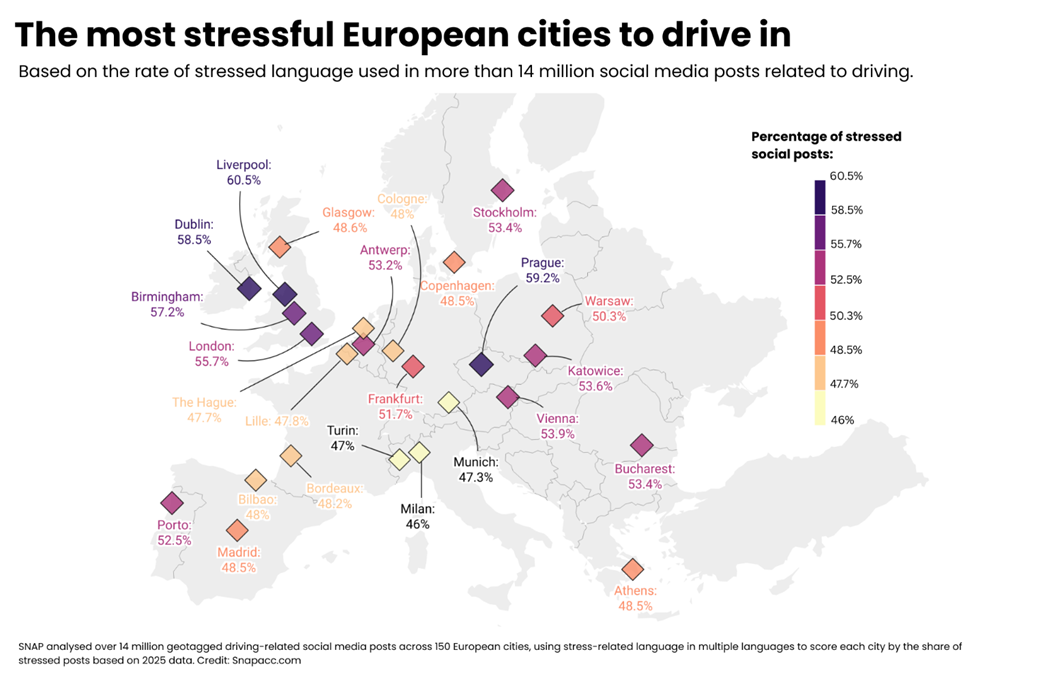
Naša raziskava je s poslušanjem družabnih omrežij in analizo milijonov geografsko označenih objav v 150 evropskih mestih opredelila kraje, ki so za voznike najbolj stresni. Na vrhu seznama je Liverpool (60,5 % objav kaže na stres, povezan z vožnjo), sledita Praga (59,2 %) in Dublin (58,5 %). Liverpool je tudi na drugem mestu med mesti, kjer je parkiranje v Združenem kraljestvu najbolj stresno. Zastoji, pomanjkanje parkirišč in zahtevne razmere na cestah so glavne bolečine, ki jih izpostavljajo vozniki po vsej Evropi.

V tej študiji so na podlagi resničnih mnenj voznikov prikazane evropske točke stresa pri težkih tovornih vozilih, ki kažejo, kako razmere v mestu vplivajo na dobro počutje. Ne gre za razvrščanje držav, temveč za jasne in uporabne vpoglede, ki vodjem voznih parkov in logistike omogočajo podporo voznikom, načrtovanje pametnejših poti in zmanjšanje obremenitev, ki jih povzroča vožnja v mestih.

Poslušanje izkušenj voznikov

V naši raziskavi smo analizirali več kot 14 milijonov geografsko označenih objav v družabnih medijih iz 150 evropskih mest, ki so zajemale teme, povezane z vožnjo, kot so parkiranje, promet in razmere na cestah. Objave smo ocenili glede stresa s spremljanjem ključnih besed in besednih zvez, povezanih z negativnimi čustvi v angleščini in lokalnih jezikih. Vsako mesto je bilo ocenjeno glede na odstotek objav, ki izražajo stres, kar je omogočilo jasno sliko pritiska na voznike po vsej Evropi. Podatki so bili zbrani na glavni platformi družbenih medijev X (nekdanji Twitter) v letu 2025.

"Stres" zajema pritiske, s katerimi se vozniki voznega parka soočajo na cesti, vključno s prometom, parkiranjem, razmerami na cesti, splošno vožnjo in konflikti z drugimi vozniki. Razumevanje teh dejavnikov pomaga upravljavcem voznega parka podpirati dobro počutje in učinkovitost voznikov.

"Poznavanje mest, ki so za voznike tovornih vozil najbolj stresna, omogoča podjetju SNAP, da se usmeri v rešitve, ki izboljšujejo varnost in učinkovitost. "

MATTHEW BELLAMY, IZVRŠNI DIREKTOR, SNAP

Stresna mesta v EU: Ključne ugotovitve

Od leta 2025 za najbolj stresna mesta za vožnjo:

  1. Liverpool, Združeno kraljestvo. 60,5 % stresnih objav na družabnih omrežjih o parkiranju - največji delež stresnih objav o vožnji v Evropi.
  2. Praga, Češka. 59,2 % stresnih objav na družbenih omrežjih o parkiranju, ki so verjetno posledica gostega prometa, zgodovinske zasnove ulic in omejenega prostora za navigacijo večjih vozil po mestu.
  3. Dublin, Irska. 58,5 % stresnih objav na družbenih omrežjih o parkiranju - Stres voznikov je tesno povezan z zamudami zaradi zastojev, pomanjkanjem parkirnih mest in prometnimi potmi, ki vplivajo na vsakodnevne vozne razmere.

Tri mesta v Združenem kraljestvu, v katerih bo parkiranje leta 2025 najbolj stresno:

  1. Newcastle upon Tyne. V tem mestu, ki se nahaja v okrožju Tyne and Wear, je kar 65,3 % stresnih objav na družbenih omrežjih povezanih s parkiranjem, kar pomeni, da je to mesto v Združenem kraljestvu leta 2025 najbolj stresno za parkiranje.
  2. Liverpool. V mestu Merseyside 64,4 % družabnih objav o parkiranju v Liverpoolu izraža stres.
  3. Middlesbrough. V tem mestu v Severnem Yorkshiru je 63,9 % družabnih objav o parkiranju stresnih.

Tudi na Škotskem se je povečal stres zaradi parkiranja, saj sta Edinburgh (61,6 % socialnih objav o parkiranju) in Glasgow (61,4 % socialnih objav o parkiranju) uvrščena med mesta v Združenem kraljestvu, v katerih je parkiranje najbolj težavno. Poleg tega je London na 17. mestu najbolj stresnih mest za parkiranje (57,9 stresnih družabnih objav o parkiranju. K temu lahko prispevajo ozke ulice, goste mestne ureditve, veliko povpraševanje po omejenem parkirnem prostoru in omejitve v mestnem središču, ki lahko povečajo pritisk na voznike.

Stresne točke za evropske voznike

Na podlagi več milijonov geografsko označenih objav v družabnih medijih smo vsako mesto ocenili po deležu objav, povezanih s stresom, in tako razkrili najbolj problematične točke za vožnjo in parkiranje v Evropi ter izpostavili mestne razmere, ki so za voznike največji izziv.

Na našem infografskem zemljevidu so prikazana mesta, ki so najbolj obremenjena z vožnjo in parkiranjem, ter ključne vroče točke v mestih in izzivi, s katerimi se soočajo vozniki na posameznem trgu.
Najbolj stresna mesta za vožnjo

Mesta lahko zaradi zastojev, ozkih ulic in zapletenih cestnih ureditev povečajo stres voznikov.
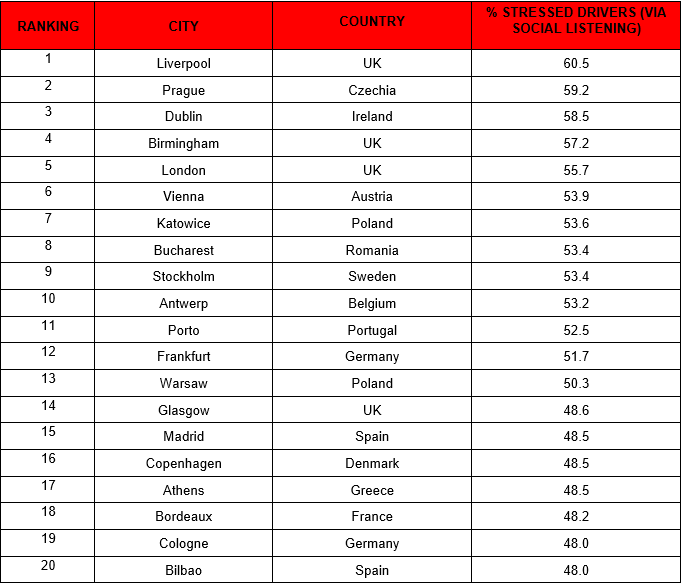
Liverpool (1. mesto), Birmingham (4. mesto) in London (5. mesto) se uvrščajo med najbolj stresna mesta za vožnjo v Angliji, kjer je stopnja stresa med 55,7 % in 60,5 %. K tej povišani stopnji stresa največ prispevajo prometni zastoji in ozka grla, kot so Liverpoolski predori Mersey in zelo obremenjene ceste, kot je Londonska orbitalna avtocesta (M25) .

Dublin je na tretjem mestu in je eno najbolj obremenjenih evropskih mest, saj vozniki zaradi gostega prometa v povprečju zamujajo 81 ur na leto, kar kaže na stalne zastoje na mestnih cestah.

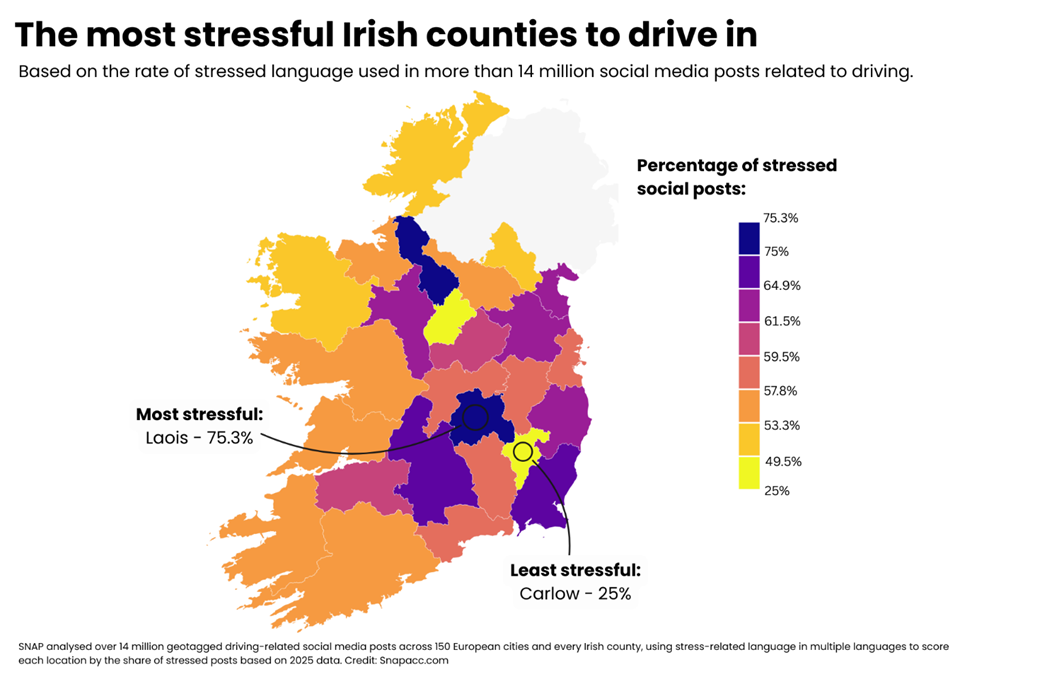
Nadaljnje družbeno poslušanje, osredotočeno posebej na irske voznike, je pokazalo, da sta okrožji Laois in Leitrim zabeležili izrazito visoke stopnje stresa zaradi parkiranja, saj so se ocene gibale med 75 % in 75,3 %. Te visoke številke kažejo na stalne težave voznikov na teh območjih, ki jih v veliki meri povzroča velika odvisnost od avtomobila - [73 % potnikov v Laoisu se na delo vozi z osebnim avtom] po uradnih statistikah (stran 118). Poleg tega v Leitrimu poročajo o redki cestni infrastrukturi in konfliktih glede dostave in parkiranja v mestih, kot je Drumshanbo, kar prispeva k stresu voznikov v tej irski grofiji.
Katowice, Poljska (7. mesto) - čeprav na splošno niso med najbolj obremenjenimi poljskimi mesti, se v Katovicah še vedno pojavljajo zamude in prometni pritiski, saj vozniki veliko časa preživijo v prometu, na glavnih cestah, kot sta S86 in A4, pa je dnevno veliko prometa, kar lahko prispeva k 53,6-odstotni stopnji stresa. Podobno je v Varšavi na Poljskem (13. mesto), kjer vozniki preživijo približno 70 ur na leto v prometu, kar leta 2025 prispeva k 50,3-odstotni stopnji stresa.

Bukarešta v Romuniji (8. mesto) se kot eno najbolj prometnih mest v Evropi sooča z znanimi zastoji, saj vozniki preživijo precej več časa v zastojih in zaradi počasnega prometa izgubijo do 12 delovnih dni na leto.

Glavno mesto Španije, Madrid (15. mesto), je zelo obremenjeno z zastoji, saj 10-kilometrska pot traja približno 24 minut. Zaradi ozkih ulic in vztrajnega prometa, zlasti na območjih, kot je Puente de Vallecas, je vsakodnevna vožnja počasna in stresna. Podobno poročila o nesrečah in gostem prometu v Bilbau v Španiji (20. mesto) na ključnih cestah, kot sta A-8 in BI-30, povzročajo daljše kolone in počasno premikanje, kar prispeva k stresnim voznim razmeram.

Najbolj stresna mesta za parkiranje

K stresu voznikov in upravljanja voznega parka prispevajo tudi parkirišča, saj omejena razpoložljivost, veliko povpraševanje in omejevalni predpisi v evropskih mestih lahko povzročijo zamude pri vožnji, povečajo nezadovoljstvo in otežijo načrtovanje poti.

Poleg tega smo s poslušanjem družabnih omrežij zbrali podatke o mestih, kjer vozniki doživljajo največji stres pri parkiranju v Evropi, zlasti v Romuniji, na Poljskem, v Španiji in Združenem kraljestvu. Pozornost na ta območja je pomembna za upravljavce voznih parkov, saj lahko omejena razpoložljivost parkirišč, veliko povpraševanje in zastoji v mestih motijo urnike, povečajo zamude in vplivajo na dobro počutje voznikov.

Naša raziskava je pokazala, da je največja obremenitev s parkiranjem v Evropi na Poljskem, kjer se Podlaška (83,3 %) in Olsztyn (80 %) soočata s težavami, kot sta omejenost mestnih parkirišč in velika gostota vozil.

Podobno so v Združenem kraljestvu mesta, kjer so vozniki najbolj obremenjeni s parkiranjem, Newcastle upon Tyne (65,3 %), Liverpool (64,4 %) in Middlesbrough (63,9 %). Ta mesta se spopadajo z omejenimi prostori v središču mesta, pristojbine na ulici, zastoji in strogi parkirni predpisi prispevajo k nezadovoljstvu voznikov.

Romunski mesti Sibiu in Cluj-Napoca ter španski mesti Malaga in Bilbao so v svojih državah zabeležili najvišjo stopnjo stresa zaradi parkiranja. Vendar so v primerjavi z Združenim kraljestvom in Poljsko njihove ocene stresa nižje - od 55,6 % do 52,4 % - kar kaže na bolj obvladljive pogoje parkiranja, manj ozkih grl in relativno manjši pritisk na voznike v teh mestnih območjih.

*"Naš cilj v podjetju SNAP je preprost: zmanjšati stres, povezan s parkiranjem, pri prevoznikih. Z informacijami v realnem času in pametnejšimi možnostmi poti voznikom pomagamo poiskati varno in dostopno parkirišče, zaradi česar so njihova potovanja manj stresna in bolj učinkovita." *

MATTHEW BELLAMY, IZVRŠNI DIREKTOR, SNAP

Zakaj so vozniki tovornih vozil v teh mestih najbolj obremenjeni?

Vozniki težkih tovornih vozil se soočajo z drugačnimi pritiski kot običajni vozniki avtomobilov. Zaradi omejenega števila parkirišč za velika vozila, vožnje po ozkih ali preobremenjenih ulicah in gostega prometa je vožnja v mestu lahko bolj zahtevna in stresna, zaradi česar se rutinske vožnje spremenijo v časovni pritisk in veliko stresa.

Poglobimo se v dejavnike, ki povzročajo stres pri voznikih tovornih vozil:

  • Limited parking for large vehicles. Scarce lorry bays and high demand make it hard to find safe places to stop, especially in urban centres. The RHA’s Roadside Facilities campaign reports an estimated shortage of 11,000 lorry parking spaces in the UK, creating significant stress for HGV drivers who struggle to find safe and legal places to park., creating significant stress for HGV drivers who struggle to find safe and legal places to park.
  • Narrow streets and complex urban layouts. Tight roads and historic city centres require careful navigation, increasing stress and risk of delays in cities like Prague, Dublin, and Liverpool.
  • High traffic volumes and congestion. Heavy commuter and freight traffic slows journeys, increases travel times, and heightens frustration particularly in busier cities like London, Birmingham, Bucharest, and Madrid.
  • Low-emission or Clean Air Zones. Restrictions on vehicle access, extra charges, and rerouting requirements can complicate planning and add pressure. For example, low emission zones in Spain require some HGVs to seek alternate routes.
  • Route restrictions and delivery schedule. Height and weight limits, prohibited turns, and time-specific delivery windows force drivers onto longer or less convenient routes.
  • Isolation and limited facilities. Long urban journeys without access to rest areas, fuelling, or amenities can increase fatigue and mental strain for HGV drivers.

Kaj pomenijo stresna mesta za voznike tovornih vozil?

Stresna mesta predstavljajo izziv za voznike tovornih vozil. Zaradi zastojev, omejenega števila parkirišč in zapletene mestne ureditve lahko pride do izgube časa, zamud pri dostavi, večje utrujenosti in večjega tveganja manjših trčenj ali skorajšnjih trčenj.

Vozniki lahko stres obvladujejo tako, da skrbno načrtujejo poti, si vzamejo načrtovane odmore in uporabljajo tehnologijo za predvidevanje zamud ali pomoč pri [načrtovanju proračuna] (https://snapacc.com/newsroom/a-truck-drivers-guide-to-budgeting/). SNAP podpira voznike z orodji, kot je aplikacija intruck, ki jim pomaga poiskati razpoložljiva parkirišča, načrtovati učinkovite poti in biti obveščeni o zastojih, kar zmanjšuje stres in omogoča, da so vožnje s težkimi tovornimi vozili varnejše in lažje obvladljive.

Kaj pomenijo mesta, v katerih vlada stres, za upravljavce voznega parka tovornih vozil?

Stresna mesta ne vplivajo le na voznike, temveč tudi na učinkovitost voznega parka. Zaradi zastojev in omejenega števila parkirišč lahko pride do zamud pri dostavah, višjih stroškov goriva in obratovalnih stroškov, slabšega počutja voznikov ter večjega tveganja za globe ali kazni. Ti pritiski lahko zmanjšajo marže in otežijo načrtovanje, zadržanje ali pomanjkanje voznikov in zadovoljstvo strank.

Upravljavci voznega parka lahko te izzive premagajo s sprejetjem pametnejših strategij in podpornih sistemov: z uporabo informacij o prometu in parkiranju v realnem času, oblikovanjem prilagodljivih urnikov ter dajanjem prednosti počitku in dobremu počutju voznikov.

Rešitev SNAP za plačevanje voznih parkov, ki je na voljo pri več kot 850 storitvenih partnerjih po vsej Evropi, se za plačevanje storitev tovornjakov brez gotovine ali kartice uporablja vsakih 12 sekund po vsej celini.

Da bi bila evropska mesta manj stresna za voznike tovornih vozil

Razumevanje voznih in parkirnih obremenitev v Evropi pomaga voznim parkom pri varnejšem in učinkovitejšem delovanju. Z uporabo teh spoznanj pri načrtovanju poti, usposabljanju voznikov, uvajanju tehnologij in zmanjševanju tveganja lahko upravljavci zmanjšajo zamude, izboljšajo počutje in zaščitijo svoje voznike. SNAP podpira to poslanstvo voznih parkov, saj ponuja varno parkiranje, brezhibna plačila in orodja, s katerimi je vsakodnevno delovanje mirnejše in varnejše.
PRIJAVITE SE NA SNAP ŠE DANES

Delite z

Tudi drugi berejo...

Header Image

četrtek 08 januar 2026 • Novice in posodobitve

SUTTERTON TRUCK STOP: DVIG STANDARDA ZA UDOBJE IN VARNOST VOZNIKOV

Susie Jones

Situated on the A17 and a short drive from Boston is , a haven for truck drivers transporting goods along this stretch of road. The location provides not only a truck stop with the usual amenities one would expect clean showers, toilets, shop, and refuelling options but it also presents drivers with the choice to dine at the Roadside Diner, providing visitors with an American-themed restaurant with a variety of meals. We sat down with Director James Townsend to discuss improvements to the site, driver welfare, site security, and their long-standing relationship with SNAP. explains James. The site has undergone a major refurbishment, prioritising the needs of truck drivers. Nestled inside the truck stop is the new roadside diner. James and the team have recently taken back ownership of this and refurbished it. James says. He goes on to explain that it was more than upgrading existing facilities, but providing drivers with the right facilities to make the site a home away from home. SNAP asked truck drivers parking at Sutterton what they thought of the new facilities on offer. One driver commented:When it came to the design of the truck park, the site worked closely with SNAP to maximise the site’s potential:Driver welfare still remains a huge priority for those working in the industry, with investment into truck parking lacking, something James is all too aware of after working with the DFT. he explains. While investment is valuable, directing it into the right facilities for truck drivers is also imperative. James states. James and the rest of the team work closely with SNAP’s UK Network Team as well as , providing them with a single, clear point of contact should any issues arise. explains James. Having the support in place for complaints and technical issues is a major advantage for a truck stop like Sutterton, which often manages competing demands. Working with SNAP has delivered additional benefits as well, as James goes on to say:To ensure truck drivers get a good night’s rest, ensuring the site is as safe and secure as possible was vital for Sutterton Truck Stop. Working with SNAP Access & Security from the outset has allowed James and the team to do exactly that. says James. The site is a firm believer in training its staff to deal with incidents if they occur. Inspired by what you’ve just read? Catch the full interview with

Header Image

petek 19 december 2025 • Novice in posodobitve

JE VAŠA FLOTA TARČA? PREDNOSTNA OBRAVNAVA VARNOSTI V TEHNOLOŠKO SPRETNEM SVETU

Guest

Cybersecurity readiness must be a top priority for fleet owners and managers in the United Kingdom. The rapid digital transformation in the transportation and logistics industry has made fleets attractive targets for hackers. Learn about the cybersecurity trends fleet operators must be aware of and strategies you should adopt to lower your susceptibility to attacks.The advent of connected vehicles, push for fleet electrification, integration of Internet of Things (IoT) devices and reliance on automation have expanded the attack surface opportunistic cybercriminals can exploit to infiltrate your network.Vulnerable telematics back-end systems, insecure over-the-air firmware updates and buggy APIs are common entry points for phishers, data thieves, business saboteurs and ransomware attackers. Threat actors are also increasingly leveraging artificial intelligence to launch more believable scams.Falling victim to a cyberattack can cause more than extended, unscheduled downtime. A high-profile security incident can inflict severe reputational damage on your organisation and harm your business in the long term.Although your cyber insurance coverage may compensate you millions for losses, the financial impact can lead to insolvency — as happened to KNP Logistics in June 2025. An Akira ransomware attack exacerbated this major logistics group’s preexisting financial struggles, and let go of 730 employees.Every business is at risk from cyberattacks, but these strategies can help make your fleet management software and vehicles less vulnerable.A robust threat intelligence platform strengthens cybersecurity, as it allows you to proactively defend your assets from malicious actors and minimise your losses if they target you. Here are the primary ways to use threat intel to improve your security posture:Contextualisation enables your team to identify the perpetrators behind specific attacks, understand their motives and capabilities, determine what they want from your organisation, and comprehend their methods. Context transforms raw threat data into actionable intelligence, enabling you to inform your decision-making.Attackers evolve, so learning how they operated in the past is not enough to accurately anticipate their future actions. A threat intelligence platform can help you keep pace with known malicious actors and familiarise your team with relatively unknown ones. Some organisations use deception technologies to lure cybercriminals and watch them in action in a controlled environment.A software solution that can integrate into your company’s existing tools breaks down silos and allows threat intelligence to flow freely across teams. Cross-departmental collaboration is the key to implementing an organisation-wide cybersecurity strategy effectively.A threat intelligence platform can monitor your network activity and sense attack patterns early enough to notify your Security Operations Centre or IT professionals immediately. Early detection is vital to count threats before they infiltrate deeply into your system and cause more harm.Responding to urgent incidents involves less manual work with a threat intelligence platform. This software solution can orchestrate essential tasks to mitigate breaches, enabling your in-house cybersecurity professionals to focus on activities where human input is more impactful.Regulatory frameworks and data privacy standards are becoming more stringent over time. A threat intelligence platform aids compliance by ensuring that your team handles sensitive data responsibly and generates detailed reports to document your best practices.Zero trust minimises the likelihood of unauthorised access to fleet management systems by continuously verifying every user and device and enforcing identity-centric access control.This approach acknowledges that threats can come from within the organisation. Assuming that each request may come from a malicious actor reflects the level of vigilance you must exercise to protect your operation from sophisticated attacks and help your team adapt to complex, dynamic environments involving remote users, IoT devices and cloud services.After verification, zero trust gives users and devices just enough access to perform specific tasks. The principle of least privilege enables effective threat containment if a cybercriminal gets in.According to Cybersecurity Insiders’ 2024 Insider Threat Report, insider threat attacks have spiked. In October 2024, 51% of the 413 respondents in IT and cybersecurity reportedly over the past year. 29% reported spending over $1 million on remediation.The adoption of new technologies is a primary driver behind the rise in these cyberattacks. Investing in employee training is crucial for preventing team members from becoming insider threats.Provide target users with sufficient resources to familiarise themselves with the technologies. Highlight the ways they may inadvertently leak sensitive information or compromise the system. Tell them the red flags to watch out for to identify malicious schemes and teach them safe, responsible ways to deal with cybercriminals.Tight physical security can safeguard your assets from digital hijackers. Effective physical protection often involves a layered approach, which includes perimeter fencing, strategic placement of surveillance equipment and tamper-evident vehicle electronics casings. Additionally, limiting visibility with opaque doors , thereby adding an extra layer of protection to your physical security. Blending physical safeguards with digital solutions can restrict what hackers can do, even if they manage to gain control over fleet vehicles. In 2022, a group of hacktivists attacked the Russian ride-hailing service Yandex Taxi and directed in the same place in western Moscow. The incident should serve as a wake-up call to embrace measures to immobilise your assets if criminals remotely take control of the driver’s seat.Your company is only as strong as the weakest link in your supply chain. The positive impact of impregnable internal cybersecurity diminishes when third-party vendors make it easy for lawbreakers to steal your data from elsewhere. For instance, temporarily could jeopardise your cybersecurity if your lessor has outdated software.Working with supply chain partners that are as particular about cybersecurity reduces your risk exposure. Integrating your suppliers’ systems into your threat intelligence platform ensures better coordination during data breaches. Close collaboration with critical external parties promotes cybersecurity readiness and helps everyone prepare for potential attacks.Contending with online threat actors is inevitable in modern fleet management. Prioritise proactive strategies to stay ahead of hackers. By implementing a multi-layered defence that combines technology, employee training and strategic partnerships, you can build a resilient operation. This stance protects your current assets and secures your company’s future in an increasingly connected world.Discover more from

Header Image

ponedeljek 08 december 2025 • Novice in posodobitve

TRENDI NA PODROČJU TOVORNJAKOV: NAPOVEDI ZA LETO 2026

Guest

Major changes are coming for the mobility sector.The next 12 months will bring some of the most significant regulatory and technological shifts European transport has seen in years. New emissions rules, driver-monitoring systems, hydrogen trials and autonomous pilots will reshape how fleets operate across the UK and EU.For operators and professional drivers, understanding these changes now will make the difference between adapting confidently and struggling to keep up. come into force in 2026, introducing new requirements for fleets. Nitrogen oxide and carbon monoxide limits will tighten further, with the permitted particle size dropping from 23 nanometres to 10. In addition, for the first time.Every new truck sold will need to comply with Euro VII. While vehicle pricing is likely to be affected, the bigger impact will fall on procurement timelines, fleet renewal cycles and long-term decarbonisation.. These monitor eye and head movement to identify early signs of fatigue or inattention, enabling safer interventions and supporting accident-reduction goals across Europe. By 2029, new cab designs must minimise blind spots through improved glass visibility rather than camera reliance. This will particularly influence urban operations, vulnerable road user safety and future vehicle specification.. After years of exemption, this change effectively brings smaller commercial vehicles under full drivers’ hours enforcement.For operators with mixed fleets, this means introducing:● new driver cards● regular data downloads● updated monitoring processes● revised routing and rest-time planningThousands of vehicles that previously operated freely will need compliance systems in place almost immediately. requires companies with more than 250 employees or €40 million revenue to collect and report verified CO₂ emissions – including Scope 3 transport activity.This will cascade through supply chains. Smaller hauliers without reliable emissions reporting risk losing access to larger contracts, accelerating the push toward better data systems and standardised reporting.Electric HGV production will rise rapidly in 2026. are all expanding manufacturing capacity.To support this, electric charging is also expanding. , as part of HyHAUL's M4 corridor project. Three refuelling stations, each supplying up to two tonnes of hydrogen daily, support the pilot. If successful, the project aims for 30 trucks on the road by the end of 2026 and 300 by 2030. Alongside this, . Five more will follow by 2027.Vehicle manufacturers are taking different approaches to developing hydrogen-fuelled trucks: ● and DAF are planning similar systems. ● will introduce its next-generation hydrogen fuel cell stack in 2026 with improved durability and lower operating costs.Hydrotreated Vegetable Oil (HVO) is emerging as a notable transitional fuel for haulage in 2026, thanks to two factors: stricter biofuel mandates in north-western Europe and its compatibility with existing diesel engines. Reports by confirm that HVO is a “drop-in” fuel: it can be used in many existing heavy-duty vehicles without engine or infrastructure changes, which gives operators a practical pathway to immediate CO₂ reductions. Meanwhile, forecast that HVO consumption could reach record highs in 2026. Germany alone may need an additional 1.5 million tonnes – almost four times 2025 levels – to meet demand. Although uptake remains modest when compared with battery-electric or hydrogen alternatives, the current regulatory push and infrastructure compatibility mean HVO is likely to gain traction in 2026.From spring 2026, in controlled zones – a full year ahead of plans. Enabled by the , this transition supports an industry expected to contribute £42 billion to the UK economy by 2035 and create an estimated 38,000 jobs. Germany is close behind. , supported by €20 million in seed funding. Across northern Europe, autonomous freight along the 1,200-km Rotterdam-Oslo corridor. The programme runs until March 2026 and examines how autonomous vehicles perform across borders, terrain types and logistics hubs.In Sweden, already move goods between warehouses, processing five million data points per second. Their controlled deployments demonstrate the potential for automation in predictable, repeatable routes.Despite this progress, humans will continue to play a central role. . So while automation will support specific functions, such as port operations, depot shuttles and fixed urban routes, long-haul and complex international transport will remain human-led.The scale and speed of change arriving in 2026 is unlike any previous year for European road transport. Multiple regulatory, technological and sustainability shifts will land simultaneously, reshaping how fleets operate across borders."The operators who succeed in 2026 won't be those who resist change but those who prepare for it systematically," says Nick Long, European Strategic Partnership and Development Manager at SNAP. "We're working with fleets across Europe to build the infrastructure that tomorrow's industry needs. Secure parking. Integrated payments for new toll structures. The building blocks of success are available now for those ready to use them."SNAP helps fleets prepare for the future with integrated solutions for parking, payments and fleet management across Europe. Visit snapacc.com to discover how we can support your transition to 2026 and beyond.