
Josh Cousens
Wiadomości i aktualizacje • 3 min read

Strategiczne partnerstwo: Podejście SNAP i Extra do parkowania ciężarówek

Utworzony: 01.08.2024

Aktualizacja: 13.08.2024

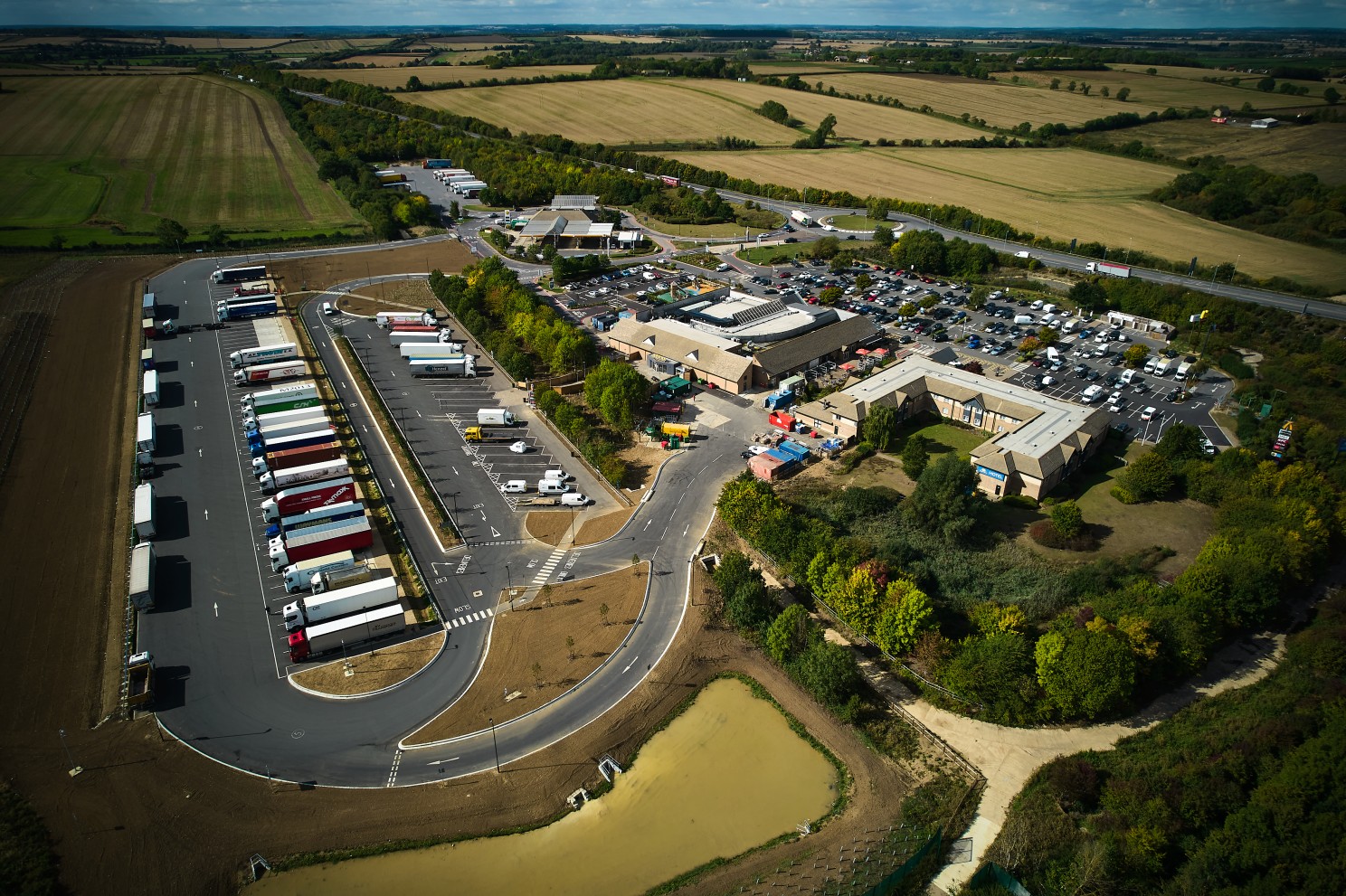
Dyrektor Ross Mendenhall wyjaśnia, w jaki sposób SNAP pomógł Extra Motorway Service Area (MSA) zwiększyć wzrost przychodów w całej sieci nawet o 8% rocznie od momentu rozpoczęcia współpracy w 2011 roku.

"Kluczową korzyścią dla nas jest to, że baza klientów SNAP stale się powiększa, co pozwala nam dotrzeć do dodatkowych 30 000 potencjalnych klientów rocznie" - mówi Ross Mendenhall, który korzysta z SNAP, aby zmaksymalizować działalność Extra w zakresie parkowania ciężarówek.

Ross wyjaśnia swoją rolę w Extra: "Nadzoruję naszą sieć ośmiu MSA w całej Anglii, zapewniając najlepsze środowisko pracy i procesy, co pozwala nam zapewnić maksymalną satysfakcję klientów, a także współpracując z naszym dyrektorem generalnym, aby zapewnić, że skupiamy się na naszych ambicjach wzrostu.

"Ściśle współpracuję również z naszymi dostawcami i markami najemców, aby zapewnić jak najlepsze wrażenia wszystkim, którzy odwiedzają nasze MSA".

Dodatkowe obszary obsługi autostrad

Po otwarciu pierwszej placówki w Cambridge w 2000 roku, Extra jest obecnie jednym z największych operatorów usług autostradowych w Wielkiej Brytanii. W najnowszej ankiecie przeprowadzonej przez Transport Focus Motorway Service Users, Extra została uznana za operatora numer jeden pod względem zadowolenia klientów w Wielkiej Brytanii.

Ross mówi: "Centralnym elementem naszego etosu jako firmy jest nasze zaangażowanie w "dokładanie wszelkich starań", aby zapewnić wspaniałe wrażenia wszystkim naszym gościom.

"W szczególności jesteśmy dumni z oferowania szerokiej gamy ulubionych marek żywności i napojów w Wielkiej Brytanii, malowniczych przestrzeni na świeżym powietrzu wraz z terenami do spacerów z psami i placami zabaw dla dzieci, a także bezpiecznych, czystych i wysokiej jakości udogodnień dla wszystkich".

W 2023 r. w dodatkowych obszarach obsługi autostrad odbyło się 260 066 sesji parkingowych SNAP.
Enter SNAP

Po rozpoczęciu współpracy z SNAP w 2011 roku, Ross wyjaśnia, w jaki sposób partnerstwo pomogło Extra rozwinąć usługę parkowania ciężarówek. "SNAP pomaga nam komunikować nasze kluczowe usługi kierowcom samochodów ciężarowych i flotom, zapewniając widoczność naszych możliwości w zakresie parkowania, paliwa i mycia.

"Zależy nam na zwiększeniu poziomu zadowolenia kierowców samochodów ciężarowych, którzy się u nas zatrzymują, a przynależność do sieci SNAP pozwala nam to osiągnąć. Dzięki aplikacji możemy rozwijać nasze partnerstwa i sprzedaż organiczną, dając klientom skuteczne narzędzie, aby dowiedzieć się więcej o naszych obiektach, w tym o tym, jak możemy sprawić, by ich pobyt był przyjemny, relaksujący i bezpieczny".

Jak wyglądał proces konfiguracji?

Chcieliśmy dowiedzieć się, czy wystąpiły jakiekolwiek komplikacje na wczesnych etapach związku.

Ross mówi: "To było bardzo proste. Zespół SNAP był pod ręką, aby odpowiedzieć na wszelkie nasze pytania, a nawet po zakończeniu konfiguracji chętnie wysłuchał naszych opinii na temat tego, jak system można jeszcze ulepszyć, aby lepiej spełniał nasze potrzeby ".

Wzrost przychodów

Zapytaliśmy Rossa, czy SNAP pomógł Extra zwiększyć przychody:

"Nasze partnerstwo z SNAP pomogło nam stale zwiększać wzrost przychodów, który wzrósł rok do roku o 8%, przy wzroście transakcji o 2%.

"Nasze usługi w Cambridge i Peterborough odnotowały największą poprawę rok do roku o 11% i 12%. Co więcej, nasze usługi w Peterborough, Leeds i Cambridge mają obecnie ponad 100% obłożenia".

Dostęp i bezpieczeństwo SNAP

Po kilku latach udanej współpracy, w 2018 r. firma Extra zwróciła się do nas z pytaniem, czy moglibyśmy pomóc w ulepszeniu ich obiektów bezpieczeństwa.

"Przez lata pogłębialiśmy naszą współpracę z SNAP, inwestując w technologię CCTV i ANPR, aby zapewnić maksymalne bezpieczeństwo.

"Instalacja technologii bezpieczeństwa we wszystkich ośmiu naszych lokalizacjach pomogła nam chronić nasze przychody, zapewniając, że każdy pojazd płaci za właściwy czas pobytu.

"Wpływ współpracy z SNAP Access & Security był niemal natychmiastowy - od momentu uruchomienia odnotowano wzrost przychodów generowanych z parkowania o około 20%.

"Ponadto, ponieważ bezpieczeństwo jest jednym z priorytetów dla kierowców ciężarówek podczas długich postojów, cieszymy się, że możemy pomóc im uprzyjemnić pobyt, zapewniając ich, że mamy kompleksowe środki, które pomogą zminimalizować ryzyko kradzieży.

"Dostęp do pulpitów analityki biznesowej SNAP oznacza również, że możemy monitorować dane w czasie rzeczywistym, co pozwala nam zapewnić najlepszą możliwą obsługę użytkownika", mówi Ross.

Najlepszy kawałek

Na zakończenie wywiadu chcieliśmy zapytać Rossa, co uważa za najlepsze w pracy ze SNAP:

"Kluczowym sukcesem jest dla nas wpływ na wydajność pracowników. Wprowadzenie systemu ANPR w połączeniu z terminalami płatniczymi daje kierowcom możliwość samoobsługi, co oznacza, że pracownicy mogą skupić się na innych kluczowych zadaniach, takich jak sprzątanie, konserwacja i obsługa klienta.

"Elastyczność oferowana przez terminale płatnicze jest również dużą zaletą: kierowcy mogą korzystać z terminali płatniczych w 15 językach, poprawiając obsługę klienta i zmniejszając problemy związane z barierą językową".

Aby dowiedzieć się więcej o dodatkowych partnerach serwisowych w sieci SNAP, odwiedź Mapę SNAP już dziś. Jeśli oferujesz parkingi dla ciężarówek i chcesz dołączyć do sieci SNAP, dowiedz się więcej tutaj.
Udostępnij

Inni również czytają...

Header Image

czwartek 08 stycznia 2026 • Wiadomości i aktualizacje

SUTTERTON TRUCK STOP: PODNOSZENIE STANDARDÓW KOMFORTU I BEZPIECZEŃSTWA KIEROWCY

Susie Jones

Situated on the A17 and a short drive from Boston is , a haven for truck drivers transporting goods along this stretch of road. The location provides not only a truck stop with the usual amenities one would expect clean showers, toilets, shop, and refuelling options but it also presents drivers with the choice to dine at the Roadside Diner, providing visitors with an American-themed restaurant with a variety of meals. We sat down with Director James Townsend to discuss improvements to the site, driver welfare, site security, and their long-standing relationship with SNAP. explains James. The site has undergone a major refurbishment, prioritising the needs of truck drivers. Nestled inside the truck stop is the new roadside diner. James and the team have recently taken back ownership of this and refurbished it. James says. He goes on to explain that it was more than upgrading existing facilities, but providing drivers with the right facilities to make the site a home away from home. SNAP asked truck drivers parking at Sutterton what they thought of the new facilities on offer. One driver commented:When it came to the design of the truck park, the site worked closely with SNAP to maximise the site’s potential:Driver welfare still remains a huge priority for those working in the industry, with investment into truck parking lacking, something James is all too aware of after working with the DFT. he explains. While investment is valuable, directing it into the right facilities for truck drivers is also imperative. James states. James and the rest of the team work closely with SNAP’s UK Network Team as well as , providing them with a single, clear point of contact should any issues arise. explains James. Having the support in place for complaints and technical issues is a major advantage for a truck stop like Sutterton, which often manages competing demands. Working with SNAP has delivered additional benefits as well, as James goes on to say:To ensure truck drivers get a good night’s rest, ensuring the site is as safe and secure as possible was vital for Sutterton Truck Stop. Working with SNAP Access & Security from the outset has allowed James and the team to do exactly that. says James. The site is a firm believer in training its staff to deal with incidents if they occur. Inspired by what you’ve just read? Catch the full interview with

Header Image

piątek 19 grudnia 2025 • Wiadomości i aktualizacje

CZY TWOJA FLOTA JEST CELEM? PRIORYTETY BEZPIECZEŃSTWA W ŚWIECIE TECHNOLOGII

Guest

Cybersecurity readiness must be a top priority for fleet owners and managers in the United Kingdom. The rapid digital transformation in the transportation and logistics industry has made fleets attractive targets for hackers. Learn about the cybersecurity trends fleet operators must be aware of and strategies you should adopt to lower your susceptibility to attacks.The advent of connected vehicles, push for fleet electrification, integration of Internet of Things (IoT) devices and reliance on automation have expanded the attack surface opportunistic cybercriminals can exploit to infiltrate your network.Vulnerable telematics back-end systems, insecure over-the-air firmware updates and buggy APIs are common entry points for phishers, data thieves, business saboteurs and ransomware attackers. Threat actors are also increasingly leveraging artificial intelligence to launch more believable scams.Falling victim to a cyberattack can cause more than extended, unscheduled downtime. A high-profile security incident can inflict severe reputational damage on your organisation and harm your business in the long term.Although your cyber insurance coverage may compensate you millions for losses, the financial impact can lead to insolvency — as happened to KNP Logistics in June 2025. An Akira ransomware attack exacerbated this major logistics group’s preexisting financial struggles, and let go of 730 employees.Every business is at risk from cyberattacks, but these strategies can help make your fleet management software and vehicles less vulnerable.A robust threat intelligence platform strengthens cybersecurity, as it allows you to proactively defend your assets from malicious actors and minimise your losses if they target you. Here are the primary ways to use threat intel to improve your security posture:Contextualisation enables your team to identify the perpetrators behind specific attacks, understand their motives and capabilities, determine what they want from your organisation, and comprehend their methods. Context transforms raw threat data into actionable intelligence, enabling you to inform your decision-making.Attackers evolve, so learning how they operated in the past is not enough to accurately anticipate their future actions. A threat intelligence platform can help you keep pace with known malicious actors and familiarise your team with relatively unknown ones. Some organisations use deception technologies to lure cybercriminals and watch them in action in a controlled environment.A software solution that can integrate into your company’s existing tools breaks down silos and allows threat intelligence to flow freely across teams. Cross-departmental collaboration is the key to implementing an organisation-wide cybersecurity strategy effectively.A threat intelligence platform can monitor your network activity and sense attack patterns early enough to notify your Security Operations Centre or IT professionals immediately. Early detection is vital to count threats before they infiltrate deeply into your system and cause more harm.Responding to urgent incidents involves less manual work with a threat intelligence platform. This software solution can orchestrate essential tasks to mitigate breaches, enabling your in-house cybersecurity professionals to focus on activities where human input is more impactful.Regulatory frameworks and data privacy standards are becoming more stringent over time. A threat intelligence platform aids compliance by ensuring that your team handles sensitive data responsibly and generates detailed reports to document your best practices.Zero trust minimises the likelihood of unauthorised access to fleet management systems by continuously verifying every user and device and enforcing identity-centric access control.This approach acknowledges that threats can come from within the organisation. Assuming that each request may come from a malicious actor reflects the level of vigilance you must exercise to protect your operation from sophisticated attacks and help your team adapt to complex, dynamic environments involving remote users, IoT devices and cloud services.After verification, zero trust gives users and devices just enough access to perform specific tasks. The principle of least privilege enables effective threat containment if a cybercriminal gets in.According to Cybersecurity Insiders’ 2024 Insider Threat Report, insider threat attacks have spiked. In October 2024, 51% of the 413 respondents in IT and cybersecurity reportedly over the past year. 29% reported spending over $1 million on remediation.The adoption of new technologies is a primary driver behind the rise in these cyberattacks. Investing in employee training is crucial for preventing team members from becoming insider threats.Provide target users with sufficient resources to familiarise themselves with the technologies. Highlight the ways they may inadvertently leak sensitive information or compromise the system. Tell them the red flags to watch out for to identify malicious schemes and teach them safe, responsible ways to deal with cybercriminals.Tight physical security can safeguard your assets from digital hijackers. Effective physical protection often involves a layered approach, which includes perimeter fencing, strategic placement of surveillance equipment and tamper-evident vehicle electronics casings. Additionally, limiting visibility with opaque doors , thereby adding an extra layer of protection to your physical security. Blending physical safeguards with digital solutions can restrict what hackers can do, even if they manage to gain control over fleet vehicles. In 2022, a group of hacktivists attacked the Russian ride-hailing service Yandex Taxi and directed in the same place in western Moscow. The incident should serve as a wake-up call to embrace measures to immobilise your assets if criminals remotely take control of the driver’s seat.Your company is only as strong as the weakest link in your supply chain. The positive impact of impregnable internal cybersecurity diminishes when third-party vendors make it easy for lawbreakers to steal your data from elsewhere. For instance, temporarily could jeopardise your cybersecurity if your lessor has outdated software.Working with supply chain partners that are as particular about cybersecurity reduces your risk exposure. Integrating your suppliers’ systems into your threat intelligence platform ensures better coordination during data breaches. Close collaboration with critical external parties promotes cybersecurity readiness and helps everyone prepare for potential attacks.Contending with online threat actors is inevitable in modern fleet management. Prioritise proactive strategies to stay ahead of hackers. By implementing a multi-layered defence that combines technology, employee training and strategic partnerships, you can build a resilient operation. This stance protects your current assets and secures your company’s future in an increasingly connected world.Discover more from

Header Image

poniedziałek 08 grudnia 2025 • Wiadomości i aktualizacje

TRENDY W CIĘŻARÓWKACH: PROGNOZY NA 2026 ROK

Guest

Major changes are coming for the mobility sector.The next 12 months will bring some of the most significant regulatory and technological shifts European transport has seen in years. New emissions rules, driver-monitoring systems, hydrogen trials and autonomous pilots will reshape how fleets operate across the UK and EU.For operators and professional drivers, understanding these changes now will make the difference between adapting confidently and struggling to keep up. come into force in 2026, introducing new requirements for fleets. Nitrogen oxide and carbon monoxide limits will tighten further, with the permitted particle size dropping from 23 nanometres to 10. In addition, for the first time.Every new truck sold will need to comply with Euro VII. While vehicle pricing is likely to be affected, the bigger impact will fall on procurement timelines, fleet renewal cycles and long-term decarbonisation.. These monitor eye and head movement to identify early signs of fatigue or inattention, enabling safer interventions and supporting accident-reduction goals across Europe. By 2029, new cab designs must minimise blind spots through improved glass visibility rather than camera reliance. This will particularly influence urban operations, vulnerable road user safety and future vehicle specification.. After years of exemption, this change effectively brings smaller commercial vehicles under full drivers’ hours enforcement.For operators with mixed fleets, this means introducing:● new driver cards● regular data downloads● updated monitoring processes● revised routing and rest-time planningThousands of vehicles that previously operated freely will need compliance systems in place almost immediately. requires companies with more than 250 employees or €40 million revenue to collect and report verified CO₂ emissions – including Scope 3 transport activity.This will cascade through supply chains. Smaller hauliers without reliable emissions reporting risk losing access to larger contracts, accelerating the push toward better data systems and standardised reporting.Electric HGV production will rise rapidly in 2026. are all expanding manufacturing capacity.To support this, electric charging is also expanding. , as part of HyHAUL's M4 corridor project. Three refuelling stations, each supplying up to two tonnes of hydrogen daily, support the pilot. If successful, the project aims for 30 trucks on the road by the end of 2026 and 300 by 2030. Alongside this, . Five more will follow by 2027.Vehicle manufacturers are taking different approaches to developing hydrogen-fuelled trucks: ● and DAF are planning similar systems. ● will introduce its next-generation hydrogen fuel cell stack in 2026 with improved durability and lower operating costs.Hydrotreated Vegetable Oil (HVO) is emerging as a notable transitional fuel for haulage in 2026, thanks to two factors: stricter biofuel mandates in north-western Europe and its compatibility with existing diesel engines. Reports by confirm that HVO is a “drop-in” fuel: it can be used in many existing heavy-duty vehicles without engine or infrastructure changes, which gives operators a practical pathway to immediate CO₂ reductions. Meanwhile, forecast that HVO consumption could reach record highs in 2026. Germany alone may need an additional 1.5 million tonnes – almost four times 2025 levels – to meet demand. Although uptake remains modest when compared with battery-electric or hydrogen alternatives, the current regulatory push and infrastructure compatibility mean HVO is likely to gain traction in 2026.From spring 2026, in controlled zones – a full year ahead of plans. Enabled by the , this transition supports an industry expected to contribute £42 billion to the UK economy by 2035 and create an estimated 38,000 jobs. Germany is close behind. , supported by €20 million in seed funding. Across northern Europe, autonomous freight along the 1,200-km Rotterdam-Oslo corridor. The programme runs until March 2026 and examines how autonomous vehicles perform across borders, terrain types and logistics hubs.In Sweden, already move goods between warehouses, processing five million data points per second. Their controlled deployments demonstrate the potential for automation in predictable, repeatable routes.Despite this progress, humans will continue to play a central role. . So while automation will support specific functions, such as port operations, depot shuttles and fixed urban routes, long-haul and complex international transport will remain human-led.The scale and speed of change arriving in 2026 is unlike any previous year for European road transport. Multiple regulatory, technological and sustainability shifts will land simultaneously, reshaping how fleets operate across borders."The operators who succeed in 2026 won't be those who resist change but those who prepare for it systematically," says Nick Long, European Strategic Partnership and Development Manager at SNAP. "We're working with fleets across Europe to build the infrastructure that tomorrow's industry needs. Secure parking. Integrated payments for new toll structures. The building blocks of success are available now for those ready to use them."SNAP helps fleets prepare for the future with integrated solutions for parking, payments and fleet management across Europe. Visit snapacc.com to discover how we can support your transition to 2026 and beyond.