Covered HGV Parking: How It Protects Trucks and Cargo Year-Round

Your fleet yard holds millions of pounds in heavy commercial tractor units, vulnerable freight and strict delivery commitments. For decades, you may have treated depot parking as simple open tarmac staging, but unpredictable British weather and rising cargo theft incidents now demand a more robust physical infrastructure. Leaving your fleet exposed accelerates costly vehicle wear and invites opportunistic interference. Upgrading from conventional open bays to engineered covered parking can provide your operation with an essential physical shield, safeguarding valuable capital assets against unnecessary degradation.
Mitigating Costly Asset Wear and Tear
Leaving your fleet exposed to the elements year-round subjects your heavy vehicles to relentless physical wear. In the winter depths, subzero downpours and persistent freeze-thaw cycles create heavy ice slabs on trailer roofs, freeze up mechanical fifth-wheel linkages, seize pneumatic braking lines and rapidly drain starting batteries. Damage from curtain tracks and trailer door gaskets tearing when forced open due to trapped frozen standing moisture is another common hazard.
Come summer, intense solar radiation degrades PVC curtainside fabrics, bakes cab interiors and dries out expensive tyre sidewalls, which triggers premature compound cracking. Shielding commercial assets from prolonged exposure to the elements, especially water, is essential to prevent premature seal failures and material degradation.
By sheltering your vehicles in covered parking bays, you eliminate these aggressive seasonal cycles, prolong component lifespans and reduce unscheduled workshop visits. This proactive protection ensures your diesel fleet complies reliably with strict preventive maintenance schedules throughout the operational year.
Engineering Solutions and Structural Strategies for Modern Yards
To effectively shield your vehicles without restricting apron movements, depot canopies require specialised industrial engineering. Lightweight temporary shade fixtures, such as portable offset umbrellas with about 3 metre shade spans and ballast bases, are unsuitable for commercial environments subject to severe winds and heavy vehicle traffic. High-traffic commercial and industrial yards will likely require engineered systems with wind load ratings and clear shade spans exceeding 6 metres, keeping your central manoeuvring zones entirely free of intrusive support posts.
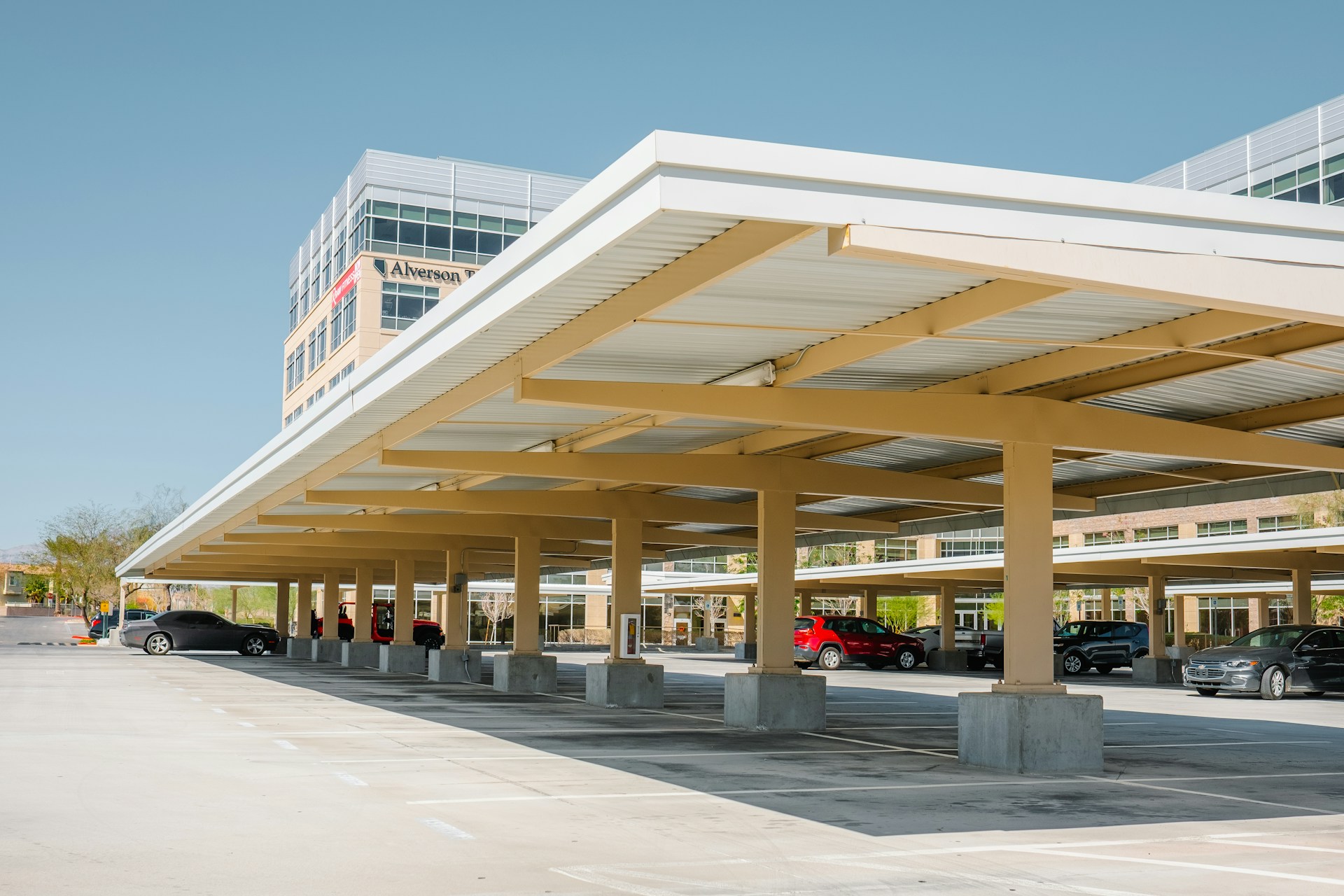
Retrofitting existing depot real estate requires strategic engineering to avoid compromising vital apron space or risking costly vehicle strikes. These engineered cantilever structures anchor structural steel columns into deep perimeter concrete footings, leaving covered bays completely unobstructed by support posts while complying with local wind-load codes. By replacing bulky multi-post carports with these heavy-duty perimeter cantilever canopies, a depot can protect a line of large construction vehicles while keeping internal apron lanes 100% unobstructed for other heavy articulation.
High-clearance tensioned-fabric canopies and modular structural-steel bays provide similar unobstructed swept paths for complex vehicle turns. If your yard faces strict spatial or tenancy constraints that prevent building on-site canopies, you can still protect valuable assets by securing dedicated bays at certified external facilities and leveraging prebooked HGV parking across UK locations.
Protecting Cargo Integrity and Mitigating Freight Crime
Beyond safeguarding equipment against severe weather, secure HGV parking with overhead canopies also serves as a vital line of defence against rising cargo theft statistics in the UK. Staged trailers sitting overnight in gloomy, open depots remain soft targets for organised criminals looking to exploit physical blind spots.
Freight thieves operate best in unlit, uncovered yards and by slitting tarpaulins under the cover of darkness. In contrast, covered truck parking bays equipped with column-mounted infrared cameras and targeted bay lighting eliminate blind spots and prevent tampering from above. By taking your security strategy beyond mere boundary fencing, you can transform individual bays into fortified checkpoints. Enclosed parking areas beneath robust canopy frameworks allow you to mount high-definition optical surveillance, directional motion sensors and glare-free downlighting directly over every trailer roof and loading door.
This multi-layered approach to secure HGV parking aligns directly with official transport safety regulations, which mandate comprehensive driver and operator protocols to verify cargo integrity. Implementing overhead physical infrastructure neutralises shadowy staging zones, prevents roof slitting and protects your high-value consignments before your vehicles even enter the strategic road network.
Operational Efficiency, Winter Compliance, and Working at Height
Every winter morning, uncanopied fleet yards face a severe operational bottleneck as staff clear dangerous accumulations of snow and ice from the vehicle roofs. Forcing drivers or yard employees onto high ladders in subzero conditions introduces severe working-at-height hazards. It may place your business under intense scrutiny from the Health and Safety Executive regarding workplace falls. Regulations stipulate that work at heights be avoided wherever possible.
Consider parking your vehicles under covered bays rather than requiring your yard personnel to climb gantry ladders with scrapers during a subzero 5 a.m. freeze to remove 5 cm of ice from a 4-metre-high trailer. You will improve safety, and by housing your fleet beneath covered parking bays, you will also eliminate rooftop ice and snow buildup at the source.
Drivers can complete their mandatory walkaround inspections quickly from ground level, ensuring full compliance with official roadworthiness standards while keeping morning dispatches on schedule throughout the winter calendar.
Why Most Fleet Yards Lack Covered Parking
While there are many protective advantages, you can face many practical roadblocks that keep your depot open-air. The most immediate obstacle is capital expenditure. Erecting heavy industrial canopies alongside essential groundworks requires significant up-front capital, competing with vehicle acquisition and daily operational expenses.
Site geometry is an equally demanding physical hurdle. Accommodating several articulated combinations requires expansive swept-path clearance, which means poorly positioned canopy columns can drastically increase collision risks during low-speed shunting while reducing overall bay density. For example, a transport manager leasing a tight two-acre Midlands industrial plot calculates that installing conventional four-post canopy bays could eliminate six articulated turning bays and introduce constant structural-strike hazards from reversing tractor units.
Your operating model might also limit permanent construction altogether. If you operate under short- or medium-term commercial leases, landlords will often prohibit substantial ground alterations. Even on an owner-occupied site, securing UK planning permission introduces complex negotiations with local planning authorities over boundary heights, surface water run-off, and visual amenity impacts, leading many operators to leave their staging areas uncanopied.
Building Long-Term Fleet Resilience Under Cover
Investing in covered HGV parking transforms your yard from a vulnerable tarmac staging area into an operationally resilient asset. While initial capital expenditure and spatial planning pose legitimate challenges, strategic bay partnership options are available. The sustained return on investment is unmistakable as you start curbing opportunistic cargo theft, preventing weather-induced mechanical wear and safeguarding staff members against potential accidents at height.