Guest
Truck trends: Predictions for 2026
Created: 08/12/2025
•
Updated: 15/12/2025
Major changes are coming for the mobility sector.
The next 12 months will bring some of the most significant regulatory and technological shifts European transport has seen in years. New emissions rules, driver-monitoring systems, hydrogen trials and autonomous pilots will reshape how fleets operate across the UK and EU.
For operators and professional drivers, understanding these changes now will make the difference between adapting confidently and struggling to keep up.
The regulatory revolution
Euro VII emissions standards come into force in 2026, introducing new requirements for fleets. Nitrogen oxide and carbon monoxide limits will tighten further, with the permitted particle size dropping from 23 nanometres to 10. In addition, regulations will cover emissions from tyres and brakes for the first time.
Every new truck sold will need to comply with Euro VII. While vehicle pricing is likely to be affected, the bigger impact will fall on procurement timelines, fleet renewal cycles and long-term decarbonisation.
The General Safety Regulation (GSR)
By July 2026, all new trucks must include distraction-recognition systems. These monitor eye and head movement to identify early signs of fatigue or inattention, enabling safer interventions and supporting accident-reduction goals across Europe
Direct Vision Standards
Direct Vision Standards (DVS) began their roll-out in 2025. By 2029, new cab designs must minimise blind spots through improved glass visibility rather than camera reliance. This will particularly influence urban operations, vulnerable road user safety and future vehicle specification.
Tachograph changes
From 1 July 2026, vans between 2.5 and 3.5 tonnes conducting international transport must fit smart tachographs. After years of exemption, this change effectively brings smaller commercial vehicles under full drivers’ hours enforcement.
For operators with mixed fleets, this means introducing:
● new driver cards
● regular data downloads
● updated monitoring processes
● revised routing and rest-time planning
Thousands of vehicles that previously operated freely will need compliance systems in place almost immediately.
CSRD data demands
The Corporate Sustainability Reporting Directive requires companies with more than 250 employees or €40 million revenue to collect and report verified CO₂ emissions – including Scope 3 transport activity.
This will cascade through supply chains. Smaller hauliers without reliable emissions reporting risk losing access to larger contracts, accelerating the push toward better data systems and standardised reporting.
The fuel transition accelerates
Electric trucks scale up
Electric HGV production will rise rapidly in 2026. DAF, Mercedes, Scania and MAN are all expanding manufacturing capacity.
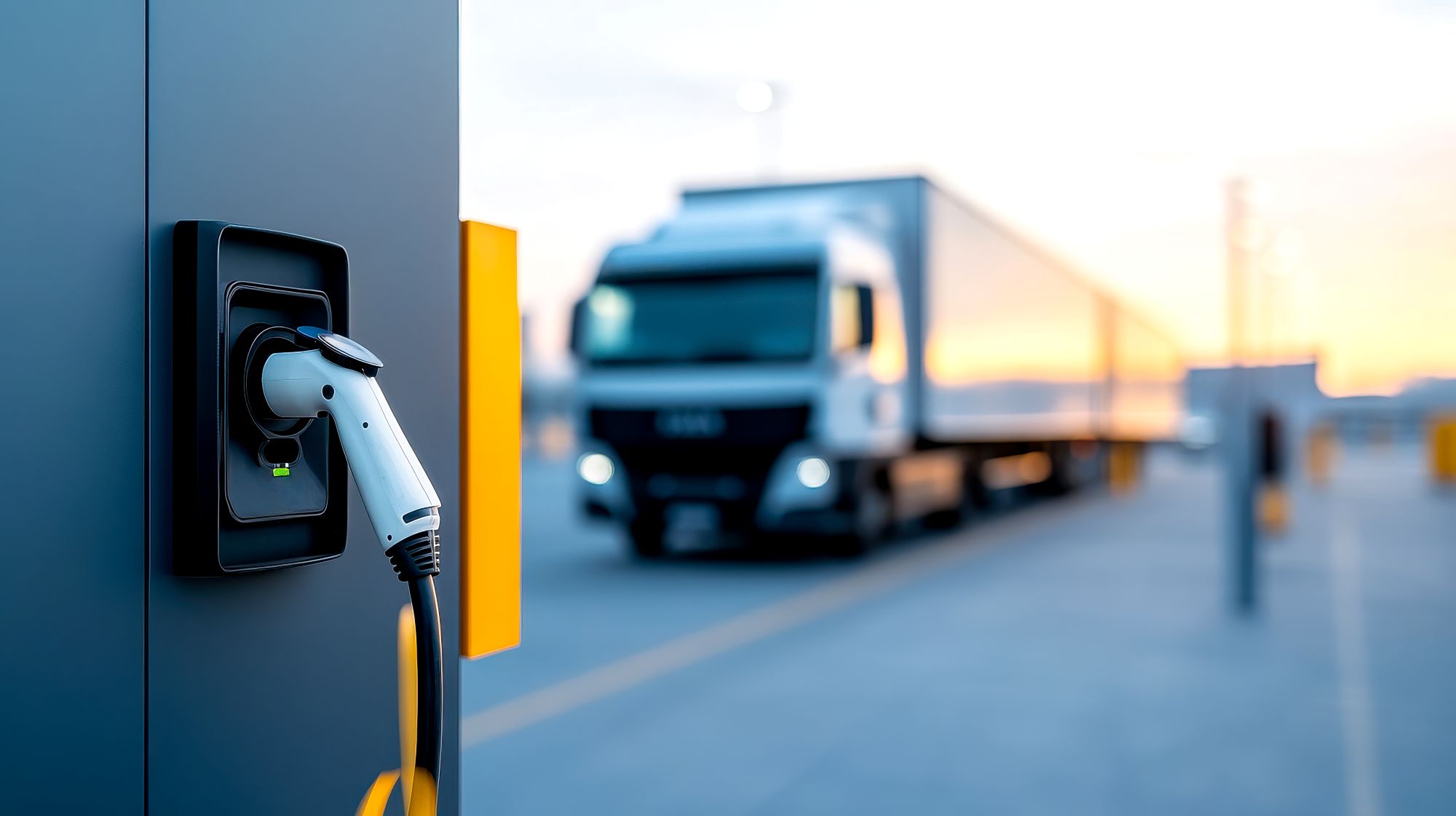
To support this, electric charging is also expanding. BP Pulse plans megawatt HGV chargers across Europe, with installations from 2026, while Poland is investing heavily in new heavy truck charging points along the TEN-T network.
Hydrogen deployment gathers pace
The UK's first Scania hydrogen fuel cell truck enters service in Q1 2026, as part of HyHAUL's M4 corridor project. Three refuelling stations, each supplying up to two tonnes of hydrogen daily, support the pilot. If successful, the project aims for 30 trucks on the road by the end of 2026 and 300 by 2030.
Alongside this, the construction of Aegis Energy's first station offering hydrogen in the UK will begin in early 2026. Five more will follow by 2027.
Vehicle manufacturers are taking different approaches to developing hydrogen-fuelled trucks:
● Volvo will kick off hydrogen combustion engine trials in 2026. MAN and DAF are planning similar systems.
● Toyota will introduce its next-generation hydrogen fuel cell stack in 2026 with improved durability and lower operating costs.
HVO growth
Hydrotreated Vegetable Oil (HVO) is emerging as a notable transitional fuel for haulage in 2026, thanks to two factors: stricter biofuel mandates in north-western Europe and its compatibility with existing diesel engines.
Reports by Zemo Partnership confirm that HVO is a “drop-in” fuel: it can be used in many existing heavy-duty vehicles without engine or infrastructure changes, which gives operators a practical pathway to immediate CO₂ reductions.
Meanwhile, analysts at Argus Media forecast that HVO consumption could reach record highs in 2026. Germany alone may need an additional 1.5 million tonnes – almost four times 2025 levels – to meet demand.
Although uptake remains modest when compared with battery-electric or hydrogen alternatives, the current regulatory push and infrastructure compatibility mean HVO is likely to gain traction in 2026.
Autonomous technology arrives
From spring 2026, the UK will allow self-driving vehicle pilots without safety drivers in controlled zones – a full year ahead of plans. Enabled by the UK's Automated Vehicles Act, this transition supports an industry expected to contribute £42 billion to the UK economy by 2035 and create an estimated 38,000 jobs.
Germany is close behind. Motor Ai aims to deploy driverless vehicles on roads by 2026, supported by €20 million in seed funding.
Across northern Europe, MODI is continuing to test autonomous freight along the 1,200-km Rotterdam-Oslo corridor. The programme runs until March 2026 and examines how autonomous vehicles perform across borders, terrain types and logistics hubs.
In Sweden, Einride autonomous electric trucks already move goods between warehouses, processing five million data points per second. Their controlled deployments demonstrate the potential for automation in predictable, repeatable routes.
Despite this progress, humans will continue to play a central role. Europe still needs to recruit 745,000 additional drivers by 2028. So while automation will support specific functions, such as port operations, depot shuttles and fixed urban routes, long-haul and complex international transport will remain human-led.
2026 is coming
The scale and speed of change arriving in 2026 is unlike any previous year for European road transport. Multiple regulatory, technological and sustainability shifts will land simultaneously, reshaping how fleets operate across borders.
"The operators who succeed in 2026 won't be those who resist change but those who prepare for it systematically," says Nick Long, European Strategic Partnership and Development Manager at SNAP. "We're working with fleets across Europe to build the infrastructure that tomorrow's industry needs. Secure parking. Integrated payments for new toll structures. The building blocks of success are available now for those ready to use them."
SNAP helps fleets prepare for the future with integrated solutions for parking, payments and fleet management across Europe. Visit snapacc.com to discover how we can support your transition to 2026 and beyond.