Guest
Notícias e actualizações • 3 min ler

Tendências dos camiões: Previsões para 2026

Criado: 08/12/2025

Atualizado: 15/12/2025

O sector da mobilidade está a sofrer grandes alterações.

Os próximos 12 meses trarão algumas das mudanças regulamentares e tecnológicas mais significativas a que os transportes europeus assistiram nos últimos anos. Novas regras em matéria de emissões, sistemas de monitorização dos condutores, ensaios com hidrogénio e projectos-piloto de veículos autónomos irão alterar a forma como as frotas funcionam no Reino Unido e na UE.

Para os operadores e condutores profissionais, compreender agora estas alterações fará a diferença entre adaptar-se com confiança e ter dificuldades em acompanhar o ritmo.

A revolução regulamentar

As normas de emissões Euro VII entram em vigor em 2026, introduzindo novos requisitos para as frotas. Os limites de óxido de azoto e monóxido de carbono serão ainda mais rigorosos, com o tamanho de partícula permitido a descer de 23 nanómetros para 10. Além disso, [os regulamentos abrangerão pela primeira vez as emissões dos pneus e dos travões] (https://en.wikipedia.org/wiki/Europeanemissionstandards).

Todos os novos camiões vendidos terão de cumprir a norma Euro VII. Embora seja provável que o preço dos veículos seja afetado, o maior impacto recairá sobre os prazos de aquisição, os ciclos de renovação da frota e a descarbonização a longo prazo.

O Regulamento Geral de Segurança (GSR)

Até julho de 2026, todos os novos camiões devem incluir sistemas de reconhecimento de distracções. Estes sistemas monitorizam o movimento dos olhos e da cabeça para identificar sinais precoces de fadiga ou desatenção, permitindo intervenções mais seguras e apoiando os objectivos de redução de acidentes em toda a Europa

Normas de Visão Direta

[As Normas de Visão Direta (DVS) começaram a ser implementadas em 2025] (https://www.volvotrucks.com/en-en/news-stories/insights/articles/2022/may/the-eus-updated-general-safety-regulations.html). Até 2029, os novos modelos de cabinas devem minimizar os ângulos mortos através de uma melhor visibilidade do vidro, em vez de dependerem de câmaras. Isto influenciará particularmente as operações urbanas, a segurança dos utentes vulneráveis da estrada e as futuras especificações dos veículos.

Alterações ao tacógrafo

A partir de 1 de julho de 2026, as carrinhas entre 2,5 e 3,5 toneladas que efectuam transportes internacionais devem estar equipadas com tacógrafos inteligentes. Após anos de isenção, esta alteração coloca efetivamente os veículos comerciais mais pequenos sob a alçada da aplicação integral das horas de condução.

Para os operadores com frotas mistas, isto significa introduzir:

● novos cartões de condutor

● descarregamentos regulares de dados

● processos de monitorização actualizados

Planeamento revisto do itinerário e do tempo de repouso

Milhares de veículos que anteriormente funcionavam livremente terão de instalar sistemas de conformidade quase imediatamente.

Exigências de dados CSRD

A Diretiva relativa aos relatórios de sustentabilidade empresarial exige que as empresas com mais de 250 trabalhadores ou 40 milhões de euros de receitas recolham e comuniquem as emissões de CO₂ verificadas - incluindo a atividade de transporte de âmbito 3.

Esta situação repercutir-se-á nas cadeias de abastecimento. Os transportadores mais pequenos que não apresentem relatórios fiáveis sobre as emissões correm o risco de perder o acesso a contratos maiores, o que acelera a procura de melhores sistemas de dados e de relatórios normalizados.
A transição do combustível está a acelerar

Aumento da produção de camiões eléctricos

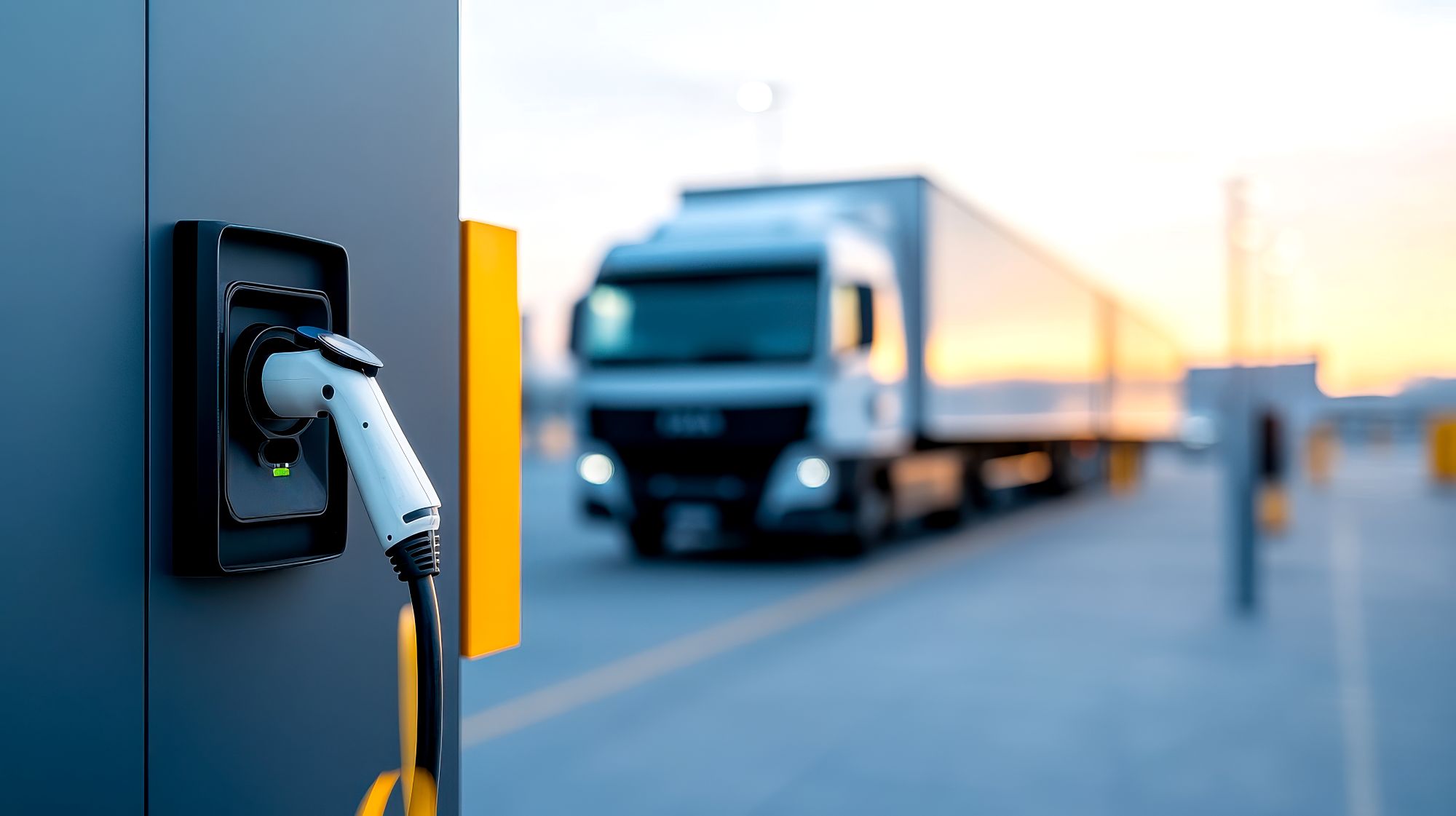
A produção de veículos pesados de mercadorias eléctricos aumentará rapidamente em 2026. [A DAF, a Mercedes, a Scania e a MAN] (https://think.ing.com/articles/europes-market-for-e-trucks-set-to-accelerate-in-2025/) estão a expandir a sua capacidade de produção.

Para apoiar este processo, o carregamento elétrico está também a expandir-se. A BP Pulse planeia carregadores de megawatts para veículos pesados em toda a Europa, com instalações a partir de 2026, enquanto a Polónia está a investir fortemente em novos pontos de carregamento para camiões pesados ao longo da rede RTE-T.

A implantação do hidrogénio ganha ritmo

O primeiro camião Scania a célula de combustível de hidrogénio do Reino Unido entra em serviço no primeiro trimestre de 2026, como parte do projeto do corredor M4 da HyHAUL. Três estações de reabastecimento, cada uma fornecendo até duas toneladas de hidrogénio por dia, apoiam o piloto. Se for bem sucedido, o projeto visa ter 30 camiões na estrada até ao final de 2026 e 300 até 2030.

Paralelamente, [a construção da primeira estação de abastecimento de hidrogénio da Aegis Energy no Reino Unido terá início no princípio de 2026] (https://hydrogen-central.com/hydrogen-vehicles-receive-huge-100-million-boost-amid-plans-to-develop-uk-wide-refuelling-network/). Seguir-se-ão mais cinco até 2027.

Os fabricantes de veículos estão a adotar diferentes abordagens para o desenvolvimento de camiões a hidrogénio:

A Volvo vai iniciar os ensaios de motores de combustão a hidrogénio em 2026 (https://www.volvotrucks.com/en-en/news-stories/press-releases/2024/may/Volvo-to-launch-hydrogen-powered-trucks.html), a MAN (https://www.truckpages.co.uk/news/fuel-type/hydrogen/hydrogen-powered-trucks-explained/) e a DAF estão a planear sistemas semelhantes.

● A [Toyota] (https://newsroom.toyota.eu/toyota-hydrogen-factory-scaling-up-its-european-activities/) apresentará a sua pilha de células de combustível de hidrogénio da próxima geração em 2026, com maior durabilidade e custos operacionais mais baixos.

Crescimento do HVO

O óleo vegetal tratado com hidrogénio (HVO) está a emergir como um combustível de transição notável para o transporte em 2026, graças a dois factores: mandatos de biocombustíveis mais rigorosos no noroeste da Europa e a sua compatibilidade com os motores a diesel existentes.

Os relatórios da [Zemo Partnership] (https://www.zemo.org.uk/assets/reports/DecarbonisingHeavyDutyVehiclesandMachineryZemo_Nov2022.pdf) confirmam que o HVO é um combustível "drop-in": pode ser utilizado em muitos veículos pesados existentes sem alterações no motor ou na infraestrutura, o que proporciona aos operadores uma via prática para reduções imediatas de CO₂.

Entretanto, [analistas da Argus Media] (https://www.argusmedia.com/ja/news-and-insights/latest-market-news/2706126-hvo-demand-may-hit-record-as-eu-rules-tighten) prevêem que o consumo de HVO possa atingir máximos históricos em 2026. Só a Alemanha poderá precisar de mais 1,5 milhões de toneladas - quase quatro vezes os níveis de 2025 - para satisfazer a procura.

Embora a aceitação continue a ser modesta quando comparada com as alternativas de baterias eléctricas ou de hidrogénio, o atual impulso regulamentar e a compatibilidade das infra-estruturas significam que é provável que a HVO ganhe força em 2026.

Chega a tecnologia autónoma

A partir da primavera de 2026, o Reino Unido permitirá a condução de veículos autónomos sem condutores de segurança em zonas controladas - um ano antes do previsto. Possibilitada pela Lei dos Veículos Autónomos do Reino Unido, esta transição apoia uma indústria que deverá contribuir com 42 mil milhões de libras para a economia do Reino Unido até 2035 e criar cerca de 38.000 postos de trabalho.

A Alemanha vem logo a seguir. [A Motor Ai tem como objetivo instalar veículos sem condutor nas estradas até 2026] (https://www.iotworldtoday.com/transportation-logistics/driverless-cars-planned-for-european-roads-in-2026), apoiada por 20 milhões de euros de financiamento inicial.

No norte da Europa, o MODI continua a testar o transporte autónomo de mercadorias ao longo dos 1.200 km do corredor Roterdão-Oslo. O programa decorre até março de 2026 e examina o desempenho dos veículos autónomos ao longo das fronteiras, tipos de terreno e centros de logística.

Na Suécia, os [camiões eléctricos autónomos Einride] (https://projects.research-and-innovation.ec.europa.eu/en/horizon-magazine/self-driving-trucks-en-route-transform-europes-freight-sector) já transportam mercadorias entre armazéns, processando cinco milhões de pontos de dados por segundo. As suas implementações controladas demonstram o potencial de automatização em rotas previsíveis e repetíveis.

Apesar destes progressos, os seres humanos continuarão a desempenhar um papel central. [A Europa ainda precisa de recrutar mais 745 000 condutores até 2028] (https://www.innovationnewsnetwork.com/self-driving-trucks-en-route-to-transform-europes-freight-sector/58466/). Assim, embora a automatização venha a apoiar funções específicas, como as operações portuárias, os vaivéns de armazém e as rotas urbanas fixas, o transporte internacional de longo curso e complexo continuará a ser efectuado por pessoas.

2026 está a chegar

A escala e a velocidade da mudança que está a chegar em 2026 é diferente de qualquer ano anterior para o transporte rodoviário europeu. Múltiplas mudanças regulamentares, tecnológicas e de sustentabilidade irão ocorrer em simultâneo, remodelando a forma como as frotas operam além-fronteiras.

"Os operadores que terão sucesso em 2026 não serão os que resistem à mudança, mas os que se preparam para ela de forma sistemática", afirma Nick Long, Diretor Europeu de Parcerias Estratégicas e Desenvolvimento da SNAP. "Estamos a trabalhar com frotas em toda a Europa para construir a infraestrutura de que a indústria do futuro necessita. Estacionamento seguro. Pagamentos integrados para novas estruturas de portagem. Os blocos de construção do sucesso estão agora disponíveis para quem estiver pronto para os utilizar."

A SNAP ajuda as frotas a prepararem-se para o futuro com soluções integradas de estacionamento, pagamentos e gestão de frotas em toda a Europa. Visite snapacc.com para descobrir como podemos apoiar a sua transição para 2026 e mais além.

Partilhar para

Outros também lêem...

Header Image

sexta-feira 19 dezembro 2025 • Notícias e actualizações

A SUA FROTA É UM ALVO? DAR PRIORIDADE À SEGURANÇA NUM MUNDO TECNOLÓGICO

Guest

Cybersecurity readiness must be a top priority for fleet owners and managers in the United Kingdom. The rapid digital transformation in the transportation and logistics industry has made fleets attractive targets for hackers. Learn about the cybersecurity trends fleet operators must be aware of and strategies you should adopt to lower your susceptibility to attacks.The advent of connected vehicles, push for fleet electrification, integration of Internet of Things (IoT) devices and reliance on automation have expanded the attack surface opportunistic cybercriminals can exploit to infiltrate your network.Vulnerable telematics back-end systems, insecure over-the-air firmware updates and buggy APIs are common entry points for phishers, data thieves, business saboteurs and ransomware attackers. Threat actors are also increasingly leveraging artificial intelligence to launch more believable scams.Falling victim to a cyberattack can cause more than extended, unscheduled downtime. A high-profile security incident can inflict severe reputational damage on your organisation and harm your business in the long term.Although your cyber insurance coverage may compensate you millions for losses, the financial impact can lead to insolvency — as happened to KNP Logistics in June 2025. An Akira ransomware attack exacerbated this major logistics group’s preexisting financial struggles, and let go of 730 employees.Every business is at risk from cyberattacks, but these strategies can help make your fleet management software and vehicles less vulnerable.A robust threat intelligence platform strengthens cybersecurity, as it allows you to proactively defend your assets from malicious actors and minimise your losses if they target you. Here are the primary ways to use threat intel to improve your security posture:Contextualisation enables your team to identify the perpetrators behind specific attacks, understand their motives and capabilities, determine what they want from your organisation, and comprehend their methods. Context transforms raw threat data into actionable intelligence, enabling you to inform your decision-making.Attackers evolve, so learning how they operated in the past is not enough to accurately anticipate their future actions. A threat intelligence platform can help you keep pace with known malicious actors and familiarise your team with relatively unknown ones. Some organisations use deception technologies to lure cybercriminals and watch them in action in a controlled environment.A software solution that can integrate into your company’s existing tools breaks down silos and allows threat intelligence to flow freely across teams. Cross-departmental collaboration is the key to implementing an organisation-wide cybersecurity strategy effectively.A threat intelligence platform can monitor your network activity and sense attack patterns early enough to notify your Security Operations Centre or IT professionals immediately. Early detection is vital to count threats before they infiltrate deeply into your system and cause more harm.Responding to urgent incidents involves less manual work with a threat intelligence platform. This software solution can orchestrate essential tasks to mitigate breaches, enabling your in-house cybersecurity professionals to focus on activities where human input is more impactful.Regulatory frameworks and data privacy standards are becoming more stringent over time. A threat intelligence platform aids compliance by ensuring that your team handles sensitive data responsibly and generates detailed reports to document your best practices.Zero trust minimises the likelihood of unauthorised access to fleet management systems by continuously verifying every user and device and enforcing identity-centric access control.This approach acknowledges that threats can come from within the organisation. Assuming that each request may come from a malicious actor reflects the level of vigilance you must exercise to protect your operation from sophisticated attacks and help your team adapt to complex, dynamic environments involving remote users, IoT devices and cloud services.After verification, zero trust gives users and devices just enough access to perform specific tasks. The principle of least privilege enables effective threat containment if a cybercriminal gets in.According to Cybersecurity Insiders’ 2024 Insider Threat Report, insider threat attacks have spiked. In October 2024, 51% of the 413 respondents in IT and cybersecurity reportedly over the past year. 29% reported spending over $1 million on remediation.The adoption of new technologies is a primary driver behind the rise in these cyberattacks. Investing in employee training is crucial for preventing team members from becoming insider threats.Provide target users with sufficient resources to familiarise themselves with the technologies. Highlight the ways they may inadvertently leak sensitive information or compromise the system. Tell them the red flags to watch out for to identify malicious schemes and teach them safe, responsible ways to deal with cybercriminals.Tight physical security can safeguard your assets from digital hijackers. Effective physical protection often involves a layered approach, which includes perimeter fencing, strategic placement of surveillance equipment and tamper-evident vehicle electronics casings. Additionally, limiting visibility with opaque doors , thereby adding an extra layer of protection to your physical security. Blending physical safeguards with digital solutions can restrict what hackers can do, even if they manage to gain control over fleet vehicles. In 2022, a group of hacktivists attacked the Russian ride-hailing service Yandex Taxi and directed in the same place in western Moscow. The incident should serve as a wake-up call to embrace measures to immobilise your assets if criminals remotely take control of the driver’s seat.Your company is only as strong as the weakest link in your supply chain. The positive impact of impregnable internal cybersecurity diminishes when third-party vendors make it easy for lawbreakers to steal your data from elsewhere. For instance, temporarily could jeopardise your cybersecurity if your lessor has outdated software.Working with supply chain partners that are as particular about cybersecurity reduces your risk exposure. Integrating your suppliers’ systems into your threat intelligence platform ensures better coordination during data breaches. Close collaboration with critical external parties promotes cybersecurity readiness and helps everyone prepare for potential attacks.Contending with online threat actors is inevitable in modern fleet management. Prioritise proactive strategies to stay ahead of hackers. By implementing a multi-layered defence that combines technology, employee training and strategic partnerships, you can build a resilient operation. This stance protects your current assets and secures your company’s future in an increasingly connected world.Discover more from

Header Image

quinta-feira 04 dezembro 2025 • Notícias e actualizações

MANTENHA A SUA FROTA A FUNCIONAR SEM PROBLEMAS DURANTE A ÉPOCA FESTIVA

Guest

As the holiday season approaches, you are likely preparing for a surge in delivery demand and more complex operating conditions. This seasonal pressure overlaps with winter weather challenges, creating a unique risk environment for fleets across the UK. The festive period brings extra stress to your vehicles and operations. From consumer-driven surges in mileage to the impact of cold weather on vehicle performance, several seasonal factors converge at once. Understanding these pressures up-front helps you prepare proactively and minimise disruptions across your fleet.Consumer activity , which increases delivery volumes, compresses schedules and raises service expectations. This surge means that even minor disruptions can escalate quickly, as fleets have less flexibility to absorb delays. With more journeys scheduled and tighter handover times, vehicle downtime becomes more costly. A missed inspection or delayed repair can have a much larger operational impact than during other parts of the year.When peak consumer activity overlaps with hazardous weather, fleets experience amplified risk. Traffic congestion increases, road conditions deteriorate and minor mechanical problems can escalate into serious incidents more easily. To combat these issues, you must strengthen preventive maintenance, adjust schedules, and improve real-time monitoring to prevent avoidable breakdowns or delays.Cold temperatures, icy surfaces and reduced daylight all increase mechanical and on-road risks for commercial vehicles, raising the likelihood of weakened batteries, reduced tyre traction and visibility issues. UK roadworthiness standards emphasise the importance of more robust winter maintenance for brakes, lighting, fluids and tyres as conditions deteriorate, reinforcing why winter readiness is essential for uninterrupted fleet operations. Even mild cold , making proactive winter maintenance crucial.Beyond vehicle strain, the holiday season and winter conditions also place pressure on drivers and operational workflows. Increased traffic, unpredictable weather and tighter delivery windows can lead to fatigue, stress and an increased risk of accidents. Careful scheduling, clear communication and proactive support for drivers are essential to maintain safety and ensure that your fleet continues to operate efficiently under these seasonal pressures.Maintaining steady operations during the festive rush requires more than reactive problem-solving. It necessitates deliberate planning across vehicle maintenance, driver readiness, technology utilisation and operational coordination. These streamlined strategies will help you stay ahead of winter season disruptions and maintain consistent fleet performance throughout the holidays.Seasonal demand often requires vehicles to operate in harsher conditions for longer hours, so front-loading maintenance is one of the most effective ways to prevent in-season breakdowns. In construction, downtime can cost , highlighting the importance of proactive upkeep. Focus on winter-critical systems such as batteries, brakes, heating and defrosting systems, tyres, and fluid levels. Addressing minor issues before the holiday rush ensures your vehicles start the season in top condition and reduces the risk of unscheduled downtime when capacity is at its tightest.Drivers face greater pressure during the festive period, from congested roads to unpredictable weather. Preparing them early helps reduce risk and maintain service reliability. Share updated winter driving protocols, reinforce fatigue management best practices and ensure every vehicle carries essential cold-weather equipment. A well-prepared driver can adapt more effectively to seasonal hazards and keep journeys running safely.Access to parts and repair support becomes more challenging during the holidays due to demand spikes and supplier slowdowns. Securing key components in advance and confirming the availability of a repair shop ensures you can respond quickly to mid-season issues. These steps reduce the likelihood of lengthy delays and keep more of your vehicles on the road during peak workloads.Accurate, real-time insights become even more valuable when weather and traffic conditions can change quickly. Telematics systems, identify emerging vehicle issues and adapt routes proactively. Using data to make same-day decisions — whether rerouting, rescheduling or escalating maintenance — helps your fleet stay responsive throughout the holiday period.Seasonal peaks require tighter alignment across dispatchers, drivers, maintenance teams and customers. Clear communication reduces uncertainty and makes it easier to adjust schedules when conditions shift. Share regular updates about weather alerts, route changes, delivery windows and vehicle availability so everyone stays coordinated and able to respond quickly.Even with strong preparation, winter introduces variables that no fleet can fully control. Creating contingency plans provides your team with a structured response in the event of incidents. Establish backup routes, identify alternative suppliers and workshops, and maintain a reserve vehicle strategy where possible. Planning for disruption ensures that unexpected issues don’t halt operations entirely.Use this checklist to make sure your team, vehicles and workflows are ready for the busiest stretch of the year:● Review historical traffic data and expected holiday congestion to build more efficient routing. Tools that monitor and report real-time conditions help reduce delays and fuel waste.● Check batteries, fluids, tyres, wipers and heating systems to prevent cold-weather breakdowns and improve driver safety.● Conduct brief refresher sessions on winter driving techniques, fatigue management and emergency protocols. This supports both safety and productivity.● Holiday mileage and cold temps can accelerate wear. A tighter maintenance schedule helps catch issues before they result in downtime.● Ensure that asset trackers and sensors are fully functional for accurate location and condition data during peak demand.● Many suppliers operate on reduced hours during the holidays. Secure parts and consumables in advance to avoid repair delays.Holiday and winter conditions amplify every small inefficiency. Preparing early helps prevent avoidable downtime, strengthens driver safety and keeps your operations moving through the toughest time of the year. With precise planning, reliable tools and a proactive maintenance rhythm, fleets can turn seasonal challenges into opportunities for better performance and customer satisfaction.Discover more from

Header Image

terça-feira 25 novembro 2025 • Notícias e actualizações

A POLÓNIA ACELERA A TRANSIÇÃO PARA O TRANSPORTE COM EMISSÕES ZERO

Guest

Poland’s transportation sector is undergoing a major transformation. In recent months, the government has introduced a series of high-value funding programmes aimed at decarbonising the country’s road network and logistics operations. Much of this activity focuses on infrastructure related to heavy-duty vehicles – a sign that the transition to cleaner freight is being embraced across Europe.The scale of investment – and the speed at which it's happening – will be important for operators, managers and infrastructure planners right across Europe. To understand why, it helps to look at both the wider European context and the specific funding available in Poland.The move towards lowand zero-emission transport has been gathering pace across Europe for several years. The EU’s package and to cut emissions from heavy-duty vehicles by 45% by 2030 and by 90% by 2040. The (AFIR) also states that there must be high-power charging points for heavy vehicles every 60 kilometres along the Trans-European Transport Network (TEN-T) – a system of European roads, railways, ports and airports that forms the backbone of continental freight – by 2030. Hydrogen refuelling stations must be available every 200 kilometres.The UK is following a similar path. Z are being used to test electric and hydrogen HGVs on long-haul routes, while funding is being allocated to depot charging and refuelling infrastructure.Against this backdrop, Poland’s programme shows that Central and Eastern Europe are ready to take a leading role in building cleaner, better-connected transportation.In March 2025, Poland’s (NFOŚiGW) launched two major funding calls worth a combined PLN 2 billion. The first will cover the construction and expansion of power grids that supply high-capacity charging stations, especially those on the TEN-T. It covers both grid expansion and the installation of new connections. This will mean that the network can deliver the energy needed for rapid truck charging. Energy and grid operators can apply for grants if their projects meet minimum power thresholds. The second funding call supports the construction of heavy-vehicle charging stations themselves. The aim is to create 550 publicly accessible points across the country, serving both electric and hydrogen trucks. A final programme, which launched in Q2 2025, gives grants and loans to businesses so they can buy or lease zero-emission trucks in categories N2 and N3. Category N2 covers vehicles with a gross weight between 3.5 and 12 tonnes, while N3 applies to trucks over 12 tonnes. Funding levels range from 30 to 60 per cent, depending on company size. Upper limits of PLN 400,000 apply to N2 vehicles and PLN 750,000 to N3 models. Applications will be , so operators can plan their transition to zero-emission vehicles. These investments sit alongside Poland’s existing programme, which subsidises electric car purchases for individuals and companies, further extending the country’s sustainable transport strategy beyond passenger vehicles.According to the , Poland transports more goods by road than any other EU country. It is a natural gateway between Western Europe and the Baltic States, Ukraine and the Balkans, which means a reliable zero-emission infrastructure in Poland will have a Europe-wide impact.By setting clear power requirements and aligning projects with the TEN-T corridors, the government is ensuring a coordinated approach rather than isolated projects. The goal is a dependable network where electric and hydrogen trucks can move freely along key trade routes. The Deputy Minister for Climate and Environment described the programme as a way to strengthen “the competitiveness of Polish freight operators” while cutting emissions from one of the country’s largest economic sectors.Poland’s domestic network is also part of the wider . A total of nine EU countries – including Poland – committed in September 2025 to accelerate charging infrastructure deployment along key freight routes, such as the North Sea-Baltic and Scandinavian-Mediterranean corridors of the TEN-T.For fleets that operate across Europe, the initiative means charging infrastructure will become more standardised and predictable between countries. This will help drivers plan cross-border routes with greater confidence while supporting the shift towards zero-emission freight.For fleet operators, the timing is encouraging. Zero-emission trucks are rapidly , with sales of nearly 2,000 zero-emission heavy-duty electric trucks registered in the first half of 2025 across the EU. There are challenges, however. Adding high-power charging capacity will mean that grid operators, local authorities and logistics centres have to cooperate. It will also take time to hire technicians with the skills to install and maintain high-voltage equipment.In addition, vehicle costs and operational factors could also slow progress. Even with generous subsidies, businesses must weigh the cost of electric vehicle ownership, route patterns and depot readiness.For the road transport community, Poland’s programme is a significant milestone. Once complete, its charging and refuelling network will connect eastern and western Europe, supporting cleaner and more efficient freight movement.“This is a turning point for heavy transport,” says Nick Renton, Head of European Strategy and Business Development at SNAP. “Poland’s actions show that zero-emission freight is becoming part of daily life, rather than a long-term vision. As charging and refuelling points multiply, operators will be able to schedule cleaner journeys with confidence.”As the situation develops, we will continue to support fleets across Europe with technology, insight and practical tools for drivers. Our helps identify and book rest stops, refuelling points and secure parking, with more zero-emission facilities being added as new sites open. For operators looking to stay ahead of infrastructure changes, it provides a clear view of how the road network is evolving – and where new opportunities are emerging.