Toll Tags in France: A Complete Guide for Truck Drivers and Fleets

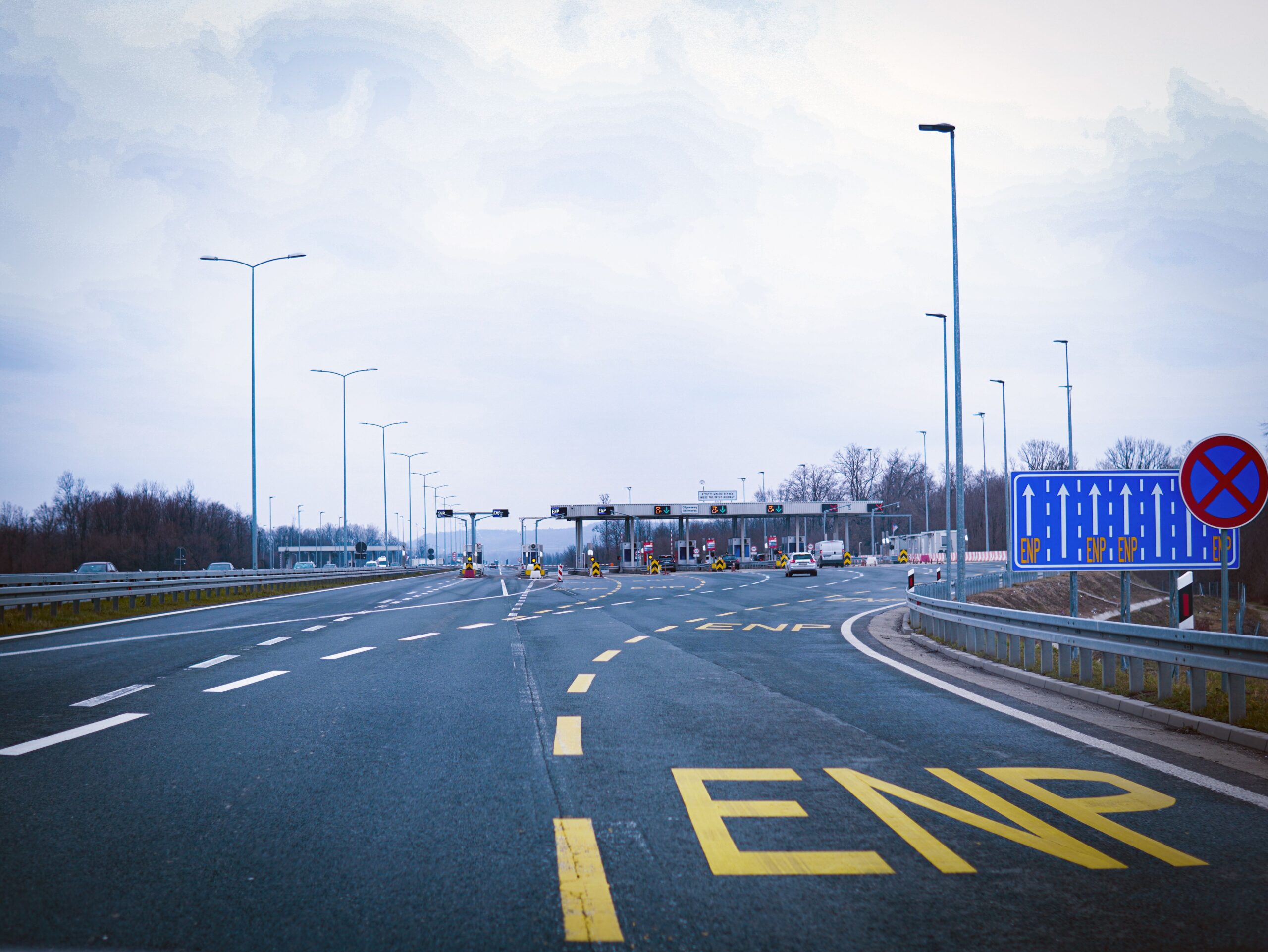
France has an extensive network of toll motorways, making toll payments an important consideration for truck drivers and fleet operators travelling across Europe.
Whether you’re transporting goods from Calais to Paris or travelling through France towards Spain, understanding how motorway tolls work can help you avoid unexpected costs and payment issues.
Electronic toll tags offer a convenient way to pay motorway charges without making individual payments at every toll booth. For businesses regularly travelling through France, understanding European toll payments can also help simplify journey planning and transport administration.
This guide explains how toll tags work in France, how much truck tolls cost, the different payment methods available and what drivers need to know about free-flow toll roads.
What is a toll tag in France?
A toll tag is a small electronic device installed inside a vehicle that allows motorway toll charges to be collected automatically.
When a vehicle passes through a compatible electronic toll lane, the device communicates with the toll collection system and registers the transaction.
For HGVs, France uses an electronic toll collection system called TIS-PL (Télépéage Inter-Sociétés Poids Lourds), designed for heavy vehicles in French toll classes 3 and 4.
Using a compatible toll tag offers several benefits:
-
Faster journeys: Reduce the need to stop and complete manual payments at toll booths.
-
Simpler payments: Avoid paying separately at every toll collection point.
-
Easier administration: Keep electronic records of motorway toll expenditure.
-
International convenience: Some devices can be used across multiple European toll networks.
For fleet managers operating several vehicles across Europe, electronic toll payments can make managing transport expenses more straightforward.
Do HGVs need a toll tag in France?
No, toll tags are not generally compulsory for HGVs travelling through France. However, drivers must pay the applicable charges when using toll motorways.
On traditional toll roads, drivers can usually choose between paying by card, cash or a compatible electronic toll tag.
France has different electronic toll systems depending on vehicle type:
-
Liber-t: Primarily intended for cars and lighter vehicles.
-
TIS-PL: Designed for HGVs and other qualifying heavy vehicles in toll classes 3 and 4.
For fleets regularly travelling through France, a compatible TIS-PL device can be a convenient alternative to manual payments.
How much are HGV tolls in France?

French motorway toll charges depend on the distance travelled, motorway operator and vehicle classification.
As a general planning guide, French Class 3 HGV tolls can cost approximately €0.20–€0.30 per kilometre, while French Class 4 vehicles may pay around €0.28–€0.42 per kilometre on tolled sections. Actual charges vary significantly between routes.
Example HGV toll costs in France (2026)
The following examples show estimated one-way motorway toll costs for a French Class 4 HGV (three or more axles).
| Route | Estimated toll cost |
|---|---|
| Calais to Paris | €93.50 |
| Calais to Lyon | €261.50 |
| Calais to Reims | €93.13 |
| Calais to Bordeaux | €279.51 |
| Calais to Lille | €0 on the calculated route |
Source: Transportial French HGV toll calculator. These are 2026 route estimates, not guaranteed tariffs. Some sections are estimated rather than priced directly from official toll schedules.
For example, an articulated HGV travelling from Calais to Lyon could face approximately €249 in motorway toll charges for a single journey.
For fleets regularly making international deliveries, these costs can quickly add up.
French motorway toll classes for HGVs
Vehicles are divided into five toll classes, with most HGVs falling into classes 3 or 4.
| Toll class | Vehicle type |
|---|---|
| Class 3 | HGVs and coaches with two axles, meeting the relevant height or weight criteria |
| Class 4 | HGVs and vehicle combinations with three or more axles, meeting the relevant height or weight criteria |
For example, a two-axle rigid HGV and a five-axle articulated lorry may pay different amounts for the same motorway journey.
The French motorway association ASFA provides further information about vehicle classifications.
How to calculate French motorway toll costs
Before setting off, fleet operators should check the expected charges for their planned route.
The Sanef toll calculator and VINCI Autoroutes toll information can help drivers and operators estimate costs on relevant motorway networks.
When calculating the overall cost of a journey, consider:
-
The vehicle’s toll classification.
-
The motorways and distance travelled.
-
Fuel consumption and journey time.
-
Drivers’ hours and rest requirements.
-
Any applicable toll discounts or payment arrangements.
For businesses managing international HGV fleets, factoring motorway tolls into route planning can help improve cost visibility and avoid unexpected expenses.
Avoiding toll motorways might reduce direct toll expenditure, but longer journeys can increase fuel costs and driving time.
How to pay motorway tolls in France
There are three main ways to pay at traditional French motorway toll booths.
1. Electronic toll tags
A compatible toll tag allows charges to be recorded automatically when passing through designated electronic toll lanes.
Drivers should ensure the device is installed correctly and that the relevant motorway network is supported.
2. Debit or credit card
Many French toll booths accept major payment cards, including Visa and Mastercard.
Card acceptance can vary, so drivers should check the available payment methods before travelling.
3. Cash
Cash payments are available at certain toll collection points, although not every lane accepts cash.
Drivers should look for the appropriate payment symbols when approaching a toll plaza.
Some motorways use a ticket system where drivers collect a ticket when entering and pay when leaving. Others charge at a single collection point.
French toll road signs: What HGV drivers need to know
Drivers travelling through France will encounter several French terms and symbols when approaching motorway tolls.
Understanding these signs can help drivers select the correct lane and avoid unnecessary delays.
| French sign or term | Meaning |
|---|---|
| Péage | Toll payment point |
| Télépéage | Electronic toll payment |
| Orange ‘t’ symbol | Electronic toll lane |
| Poids lourds | Heavy goods vehicles |
| Flux libre | Free-flow tolling |
| Toutes classes | All vehicle classes, subject to lane restrictions |
| Sortie | Exit |
| Sans péage | Without tolls |
Can HGVs use the orange ‘t’ toll lanes?
The orange ‘t’ symbol identifies lanes intended for electronic toll collection.
However, not every electronic toll lane is suitable for HGVs.
Some lanes have height restrictions or are intended for specific vehicle categories. Drivers must follow the signs displayed above each lane and choose one compatible with their vehicle and toll device.
What is a 30 km/h toll lane?
Some French electronic toll lanes allow vehicles to pass through at speeds of up to 30 km/h without stopping.
These lanes are clearly signed and require a compatible electronic toll device.
Drivers should only use them where their vehicle is permitted and must follow the posted speed limit.
What are free-flow toll roads in France?
France is introducing more free-flow toll roads, known as péage en flux libre.
Unlike traditional toll roads, free-flow systems do not require vehicles to stop at a barrier.
Instead, overhead gantries identify passing vehicles and record the relevant toll charges.
Examples include:
-
A79: Between the Montmarault and Digoin areas.
-
A13 and A14: The motorway corridor connecting Paris and Normandy.
-
A4: The Boulay exit at junction 36.
How do you pay free-flow tolls in France?
If your vehicle has a compatible and correctly installed electronic toll tag, the charge can be processed automatically.
Without an eligible automatic payment arrangement, drivers generally have 72 hours to pay after using the free-flow toll road.
Payment options include:
-
The relevant motorway operator’s official website.
-
Authorised payment points within the Nirio network.
-
An eligible electronic toll payment arrangement.
Drivers who fail to pay within the required period may receive additional charges.
According to the French government’s guidance on free-flow tolling, an unpaid toll can result in a €90 fixed charge, reduced to €10 when settled within the specified early-payment period. Further penalties may apply if payment remains outstanding.
For international fleets, checking free-flow toll coverage before travelling is particularly important.
Can you use the same toll tag in France and other European countries?
Some electronic toll devices support multiple European toll networks, allowing international fleet operators to manage payments across different countries.
For example, a fleet travelling from the UK through France and into Spain may benefit from a device that supports both French and Spanish motorway tolls.
However, compatibility varies depending on the provider and device.
Before travelling, check:
-
Which countries and motorway networks are covered.
-
Whether additional services need activating.
-
Whether the device is compatible with the vehicle’s classification.
-
How toll transactions are recorded and invoiced.
Using a multi-country toll solution can reduce the number of separate payment arrangements required for international journeys.
Can you avoid toll roads in France?

Yes. Drivers can use alternative routes to avoid some French motorway tolls.
However, avoiding toll roads is not always the most cost-effective option for HGV fleets.
Alternative routes may involve longer journey times, additional fuel consumption and more complicated route planning.
Certain local roads may also have restrictions affecting heavy goods vehicles.
Fleet managers should compare the total journey cost rather than focusing on toll charges alone.
Drivers taking alternative routes should also consider rest requirements and finding suitable truck parking along their journey.
Six tips for HGV drivers using French toll roads
1. Check toll costs before travelling. Use official motorway information to estimate the charges for your planned route.
2. Confirm your vehicle classification. Make sure the vehicle’s weight, height and axle information is accurate.
3. Use the correct toll lane. Follow electronic toll signs and check for any HGV restrictions.
4. Understand free-flow payments. If you’re not using an eligible toll tag, make sure payment is completed within 72 hours.
5. Check your toll tag coverage. For international journeys, confirm that the device supports all the required countries and motorway networks.
6. Plan your essential stops. Alongside motorway tolls, consider where you’ll need to stop for truck parking across Europe.
Frequently asked questions about toll tags in France
Are toll tags compulsory in France?
No. Toll tags are generally optional, but drivers must pay applicable motorway toll charges using an accepted payment method.
Can UK HGVs use French toll tags?
Yes. UK-registered HGVs can use compatible French electronic toll devices,