What is the difference between a truck and a lorry?


The terms “truck” and “lorry” are often used interchangeably, but they can have distinct meanings depending on the context and the region in which they are used. Understanding these differences can provide clarity, especially for those involved in industries such as logistics, transportation, or automotive sales. Let us delve into the nuances between trucks and lorries, explore their definitions, regional usage, types, and roles in various industries.
Definitions and regional usage
In the United States and Canada, the term “truck” is the standard terminology used to describe a motor vehicle designed to transport cargo. Trucks come in various sizes and configurations, ranging from small pickups to large commercial vehicles. The term encompasses a wide range of vehicles, including pickup trucks, medium-duty trucks like box trucks or delivery vans, and heavy-duty trucks such as semis or tractor-trailers.
In contrast, in the United Kingdom and many other Commonwealth countries, “lorry” is the term used to describe vehicles designed for transporting goods. Like “truck,” it covers a broad spectrum of vehicles, from light commercial vehicles to heavy goods vehicles (HGV’s). The term “lorry” is synonymous with “truck” but is more commonly used in British English. Types of lorries include light lorries similar to vans or small trucks used for local deliveries and smaller loads, as well as heavy lorries, equivalent to the American semis or tractor-trailers, used for long-haul transportation and large shipments.
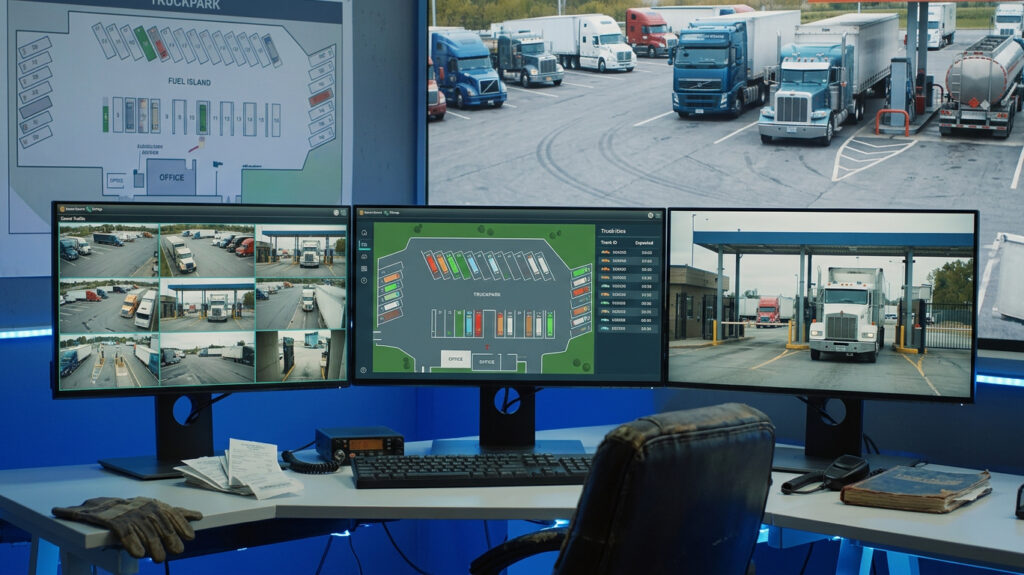
See the map of truck parks, lorry washing stations and accommodations in various regions covered on the SNAP network.

Types and classifications
Both trucks and lorries can be classified into various categories based on their size and purpose. Light goods vehicles (LGV’s) are designed for transporting smaller loads, and these include vans often used for deliveries within cities and towns, providing a balance between cargo space and manoeuvrability, and pickup trucks widely used for both personal and business purposes, offering flexibility and ease of use for transporting goods.
As we move up the scale, heavy goods vehicles (HGV’s) come into play. These vehicles are essential for transporting larger quantities of goods and materials over longer distances. Examples include box trucks, which are enclosed and used primarily for urban deliveries, capable of carrying a substantial amount of cargo, and flatbed trucks with an open bed, used for transporting oversized or heavy items that do not fit within an enclosed space. The largest category consists of tractor-trailers or semis, designed for long-distance hauling of large quantities of goods, typically consisting of a tractor unit and one or more trailers.
Usage in different regions
In North America, the term “truck” is universally used across various industries. From the construction sector, where heavy-duty trucks transport building materials, to the retail industry, where delivery trucks ensure goods reach their destinations, trucks play a critical role. The automotive market also reflects this terminology, with vehicles classified and marketed as trucks based on their capacity and purpose.
In the UK and other Commonwealth countries, “lorry” is the preferred term, especially in professional and regulatory contexts. The transportation industry relies heavily on lorries for logistics and supply chain management. Regulations often refer to vehicles as lorries when specifying guidelines for weight limits, safety standards, and operational practices.

Industry implications
Understanding the difference between trucks and lorries is crucial in logistics and transportation. This knowledge ensures clear communication, particularly in international trade where misinterpretations can lead to logistical challenges. Companies operating across different regions must be aware of these terminological differences to maintain efficiency and compliance with local regulations.
In the automotive industry, marketing strategies often tailor terminology to the target audience. For instance, a vehicle marketed in the US as a “truck” might be advertised as a “lorry” in the UK. This regional adaptation helps in resonating with the local consumer base, ensuring that the product appeals to the intended market segment.
Regulatory bodies in different regions use specific terms to define vehicle categories and set compliance standards. In Europe, regulations for lorries might differ from those in the US for trucks, particularly concerning weight restrictions, emission standards, and safety requirements. Companies involved in manufacturing and operating these vehicles must adhere to these regional regulations to ensure legality and operational efficiency.
Read more on the special programme for fleet operators offered by SNAP.