Evelyn Long
Советы водителям • 4 мин. чтения

Безопасные процедуры погрузки и разгрузки для предотвращения травм опорно-двигательного аппарата

Создано: 26.05.2026

Обновлено: 26.05.2026

Травмы опорно-двигательного аппарата - одна из самых постоянных проблем, с которыми сталкивается сегодня автопарк. Водители и сотрудники складов постоянно сталкиваются с физическими нагрузками во время погрузочно-разгрузочных работ.

Внедрение надлежащих процедур защитит ваших сотрудников от хронических болей и травм, которые могут привести к краху карьеры, а также сохранит эффективность, которая позволит вашему бизнесу оставаться конкурентоспособным на требовательных рынках.

Высокая стоимость травм опорно-двигательного аппарата

Травмы опорно-двигательного аппарата негативно сказываются на отдельных работниках, а также истощают ресурсы предприятия за счет снижения производительности труда и увеличения страховых взносов.

Влияние на деятельность и финансы предприятия

Когда сотрудник получает травму, финансовые последствия выходят за рамки непосредственных медицинских расходов. Руководители автопарков должны учитывать расходы на больничные листы, временных работников и потенциальные иски о компенсации.

В 2023-2024 годах общие затраты на охрану здоровья и травмы на рабочем месте [достигнут 22,9 млрд фунтов стерлингов в Великобритании] (https://www.hse.gov.uk/statistics/cost.htm), причем на травмы придется 28%, или 6,5 млрд фунтов стерлингов. Эти цифры показывают, как травмы превращаются в экономическое бремя, влияющее на прибыль.

Потеря производительности труда усугубляет эти прямые затраты. Когда опытные водители или сотрудники склада уходят в длительный отпуск, работа замедляется, а на оставшихся членов команды ложится повышенная нагрузка. Это сказывается на всех аспектах работы автопарка - от задержки поставок до напряженных отношений с клиентами.

Последствия для профессиональных водителей

Водители, у которых развиваются заболевания опорно-двигательного аппарата, сталкиваются с непростой реальностью. Хронические боли в спине, травмы плеч и повторяющиеся нагрузки могут сделать выполнение основных рабочих функций мучительным. Многие водители отмечают, что постоянная боль влияет на их способность концентрироваться во время длительных маршрутов, что создает дополнительные проблемы с безопасностью.

Болезни опорно-двигательного аппарата входят в число [ведущих причин плохого самочувствия, связанного с работой] (https://www.hse.gov.uk/statistics/causdis/index.htm) в Великобритании. Эти заболевания вынуждают опытных профессионалов покидать отрасль, в которой они работали годами.

Правила техники безопасности и оценка рисков в Великобритании

Законодательство Великобритании требует от работодателей принятия конкретных мер по предотвращению травм, связанных с ручной обработкой грузов. Оценка рисков является основой для соблюдения требований и служит первой линией защиты от перенапряжения на рабочем месте.

Основные правила работы с ручным оборудованием

Работодатели должны следовать Положению о ручных погрузочно-разгрузочных работах, разработанному Управлением здравоохранения и безопасности, которое устанавливает четкую иерархию.

Во-первых, [избегайте опасных операций по ручному обращению] (https://www.hse.gov.uk/msd/) там, где это практически возможно. Во-вторых, оцените все опасные операции, которых нельзя избежать. В-третьих, снизьте риск получения травмы при выполнении этих операций до минимально возможного уровня.

Эти рамки подталкивают предприятия к полному исключению рисков, связанных с ручным перемещением грузов. Для перемещения грузов по возможности должно использоваться механическое оборудование. Любое неизбежное ручное перемещение требует надлежащей оценки и обязательных мер контроля.

Процесс оценки рисков

При адекватной и достаточной оценке рисков рассматриваются четыре ключевых фактора логистических операций:

  1. задача: Имеет значение сама задача, в том числе то, связана ли она с поворотами, наклонами или повторяющимися движениями.
  2. нагрузка: Характеристики груза, такие как вес, размер и устойчивость, играют определенную роль.
  3. окружающая среда: Условия окружающей среды, включая ограниченность пространства, поверхность пола и перепады температур, влияют на безопасность.
  4. личность: Индивидуальные возможности работников различны, они привносят различные сильные стороны и физические ограничения в каждую работу.

Эффективная оценка рисков, связанных с безопасностью в логистике должна привести к конкретным улучшениям. Задокументируйте свои выводы и поделитесь ими с командой.

Безопасные методы ручного перемещения

Когда ручная работа становится неизбежной, правильная техника может снизить риск травм. Обучение персонала правильным методам подъема защищает его во время ежедневных операций.

Индивидуальные методы подъема и переноски

Ноги должны находиться на расстоянии [на ширине плеч для устойчивости] (https://www.hse.gov.uk/msd/manual-handling/good-handling-technique.htm), располагаясь близко к грузу. Сгибая ноги в коленях и сохраняя прямую спину, вы можете крепко ухватиться за груз обеими руками. Мышцы ног должны обеспечивать плавный подъем. Держите груз близко к телу на протяжении всего движения, чтобы избежать напряжения, а также избегайте любых скручивающих движений во время подъема или переноса.

Если для перемещения предмета необходимо напрячься или сделать рывок, значит, требуется механическая помощь или групповой подъем. Никогда не торопитесь с подъемом, чтобы сэкономить время. Несколько лишних секунд, потраченных на правильное положение, предотвратят травмы, которые могут вывести вас из строя на несколько недель.

Скоординированные процедуры командного подъема

Командные подъемы требуют четкой коммуникации и планирования до того, как кто-то прикоснется к грузу. Назначьте одного человека координатором подъема, который будет раздавать указания. Все члены команды должны понимать план подъема, включая точки захвата, траекторию движения и место размещения груза.

Координатор должен вести обратный отсчет до начала подъема, чтобы все двигались одновременно. Члены команды должны поддерживать связь на протяжении всего времени, подавая сигналы, если им нужно сделать паузу или внести коррективы.
Технологии и оборудование для предотвращения травм

Технологии предлагают мощные инструменты для снижения или устранения рисков ручного управления в автопарке, а инвестиции в оборудование защищают работников, зачастую повышая эффективность и производительность.

Механические подъемные приспособления

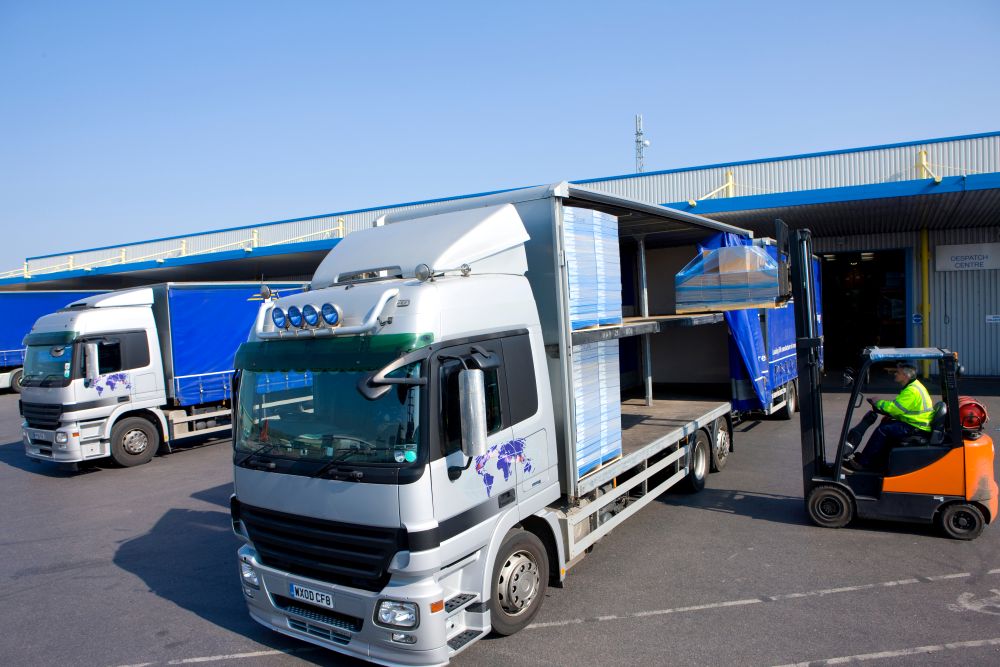
Механическое оборудование, такое как паллетные домкраты, вилочные погрузчики и конвейеры, позволяет избежать многих травм, связанных с ручным перемещением грузов. Спины и суставы работников больше не испытывают физического напряжения, когда с грузом справляются машины.

Уменьшая усилия, необходимые для перемещения тяжелых грузов, аккумуляторные домкраты для поддонов [снижают утомляемость оператора и риск травм] (https://www.chicagoindustrial.com/blog/forklifts/). Эти машины могут выдерживать значительно больший вес, чем ручные, и при этом требуют минимальных физических усилий от оператора.

Вилочные погрузчики отлично справляются с транспортировкой и подъемом материалов на складах и погрузочных площадках. Операторы управляют тяжелыми грузами из защищенного положения, исключая нагрузку на спину и травмы от повторяющихся движений, связанные с ручным управлением.

Предиктивная аналитика

Составление расписания на основе данных с помощью систем прогнозирования позволяет выявить закономерности в спросе на доставку и потенциальные точки задержки на маршрутах. Менеджеры автопарка могут использовать эти данные для корректировки расписания, выделения дополнительных ресурсов в пиковые периоды и предоставления водителям реалистичных временных рамок.

Когда водители чувствуют, что их торопят, они с большей вероятностью будут нарушать правила безопасности. Правильное составление графика устраняет это давление. У работников есть время для правильного использования механического оборудования, проведения командных подъемов, когда это необходимо, и соблюдения правильной техники ручного перемещения.

Носимые технологии

Появляющиеся носимые устройства отслеживают движения и осанку работников в течение всей смены. Эти устройства используют AI-powered wearables for workplace safety для анализа техники подъема и предоставления обратной связи в режиме реального времени, когда работники принимают небезопасные позы.

Аналогичная технология используется в приложениях для обеспечения безопасности водителей. Программа телематических приложений помогла [снизить аварийность на 42 %] (https://hrnews.co.uk/appy-fleet-trak-global-group-set-revolutionise-worlds-businesses-manage-driver-safety/) среди молодых водителей благодаря обратной связи в режиме реального времени. Тот же принцип применим и к физическому труду, где немедленное оповещение о неправильной форме подъема может предотвратить травмы от кумулятивного растяжения.

Профилактика через проектирование в работе автопарка

При планировании работы автопарка можно использовать профилактику через проектирование (PtD) для устранения опасностей. Спецификации транспортных средств, минимизирующие требования к ручному управлению, планировка складов, способствующая безопасному передвижению, и решения о закупках, в которых приоритет отдается эргономике, - все это относится к данному проактивному подходу.

Выбор конструкции автомобиля напрямую влияет на ежедневный риск травматизма. Меньшая высота грузового отсека уменьшает расстояние, на которое работникам приходится поднимать тяжелые предметы, а конфигурации с боковой загрузкой снижают нагрузку на спины работников по сравнению с конструкциями с задней загрузкой. Планировка склада также имеет значение: достаточное пространство вокруг погрузочных доков позволяет работникам правильно расположиться и использовать оборудование без неудобных маневров.

Само по себе наличие оборудования не гарантирует безопасность. Исследования показывают, что, хотя 62,2 % строителей могут работать на высоте, требующей защиты, только 31 % постоянно используют имеющееся защитное оборудование. Этот разрыв подчеркивает, почему ПТД имеет значение. Когда вы разрабатываете операции таким образом, чтобы безопасный метод был одновременно и самым простым, соблюдение требований становится естественным.

Долгосрочное обязательство по обеспечению безопасности

Предотвращение травм опорно-двигательного аппарата требует постоянного внимания. Инвестиции в надлежащее оборудование, обучение и операционную систему защищают вашу рабочую силу, укрепляя репутацию и перспективы вашего бизнеса.

Узнайте больше от Renovated Magazine.

Поделиться с

Другие тоже читают...

Header Image

четверг 03 апреля 2025 • Советы водителям

ПРАВИЛА ПАРКОВКИ ГРУЗОВЫХ АВТОМОБИЛЕЙ В ВЕЛИКОБРИТАНИИ: ЧТО ДОЛЖЕН ЗНАТЬ КАЖДЫЙ ВОДИТЕЛЬ

Susie Jones

For many truck drivers, it can be challenging trying to navigate the number of regulations surrounding overnight truck parking in the UK. After a long day behind the wheel, they must adhere to several rules before they can even think about parking up for the night. We'll delve into these regulations and provide you with everything you need to know. Before we look at parking regulations, it's vital to understand UK and EU laws regarding rest periods. We've collated all you need to know about . However, in a nutshell, if your vehicle exceeds three and a half tonnes, you must have a tachograph fitted. A tachograph will record the number of breaks a driver takes. Truck drivers must adhere to the following:• Drivers must take 11 continuous hours of rest. This can be reduced to nine. • Truck drivers are required to take at least 45 hours of rest. • Driving time can be no longer than four-and-a-half hours before a break. A break must be at least 45 minutes.To comply with parking laws and ensure safety, truck drivers must follow strict regulations regarding where and when they can park overnight:• Many local authorities do not allow truck drivers to park in residential areas doing so may result in a fine or penalty.• If the maximum loaded weight of the vehicle is more than 7.5 tonnes (including any trailer), you must not park on a verge, pavement, or any land between carriageways unless there is police permission. • Truck drivers can use these for overnight parking. However, they provide less security and no amenities. Parking overnight in a lay-by is often the most straightforward and economical option but can pose a greater security risk.Failure to follow HGV parking regulations can result in fines, vehicle clamping, or impounding. These penalties are in place to encourage drivers to comply with the law and ensure road safety.Suitable parking locations include: Specifically designed for HGVs and include facilities such as fuel, food, showers, toilets, and security options. Many motorway service areas (MSAs) will provide areas for HGV parking. Most offer similar facilities as truck stops. SNAP provides drivers with a network of over across Europe. • Downloading a truck parking app can help drivers find locations near them to park up for the night. enables truck drivers to find parking & washing spots across Europe, allowing drivers to book SNAP sites through the app.• Search for a spot that offers essential amenities like food, toilets, and showers for a more comfortable stay. • Most truck stops and MSAs will have security features. Using the or, drivers can check a site's security features, including fencing, CCTV, night watchmen, and TAPA accreditations. Truck drivers can park on verges or pavements if the parking is for essential loading and unloading. There are a few exceptions they must consider before loading and unloading:• Drivers must not park where yellow markings are on the curb, and upright signs advise restrictions. • The vehicle must not be left unattended.• On red routes, drivers should look out for specially marked and signposted bays showing when and where loading and unloading is permitted. • Councils and private estates may have different regulations. Truck drivers are restricted to using lanes one and two. On a four-lane motorway, drivers can use lane three. However, HGVs are not permitted to use the furthest right lane.A road may be marked unsuitable for heavy goods vehicles for the following reasons: These pose a challenge for many HGVs, especially long or articulated trucks. Ascending a steep incline for an HGV is a difficult task due to its heavy load, leading to reduced traction and wheel spin. Roads with limited width can feature sharp bends or walls on either side and are unsuitable for trucks. Due to their turning radius of HGVs, they require more space to maneuver. Roads with walls on either side leave little room for error and increase the risk of an HGV becoming stuck or causing damage.

Header Image

понедельник 02 декабря 2024 • Советы водителям

ВСЕ, ЧТО ВАМ НУЖНО ЗНАТЬ ОБ ИЗМЕНЕНИЯХ В СИСТЕМЕ CPC ДЛЯ ВОДИТЕЛЕЙ

Susie Jones

On the 3rd of December 2024, changes to the Driver Certificate of Professional Competence (CPC) will come into full effect. The new CPC aims to offer better flexibility to drivers returning to the profession and those undertaking mandatory training. We delve into the upcoming changes and how they will impact drivers. Introduced in 2007, the CPC is a mandatory qualification for professional drivers in the UK and EU wanting to drive a range of heavy vehicles, such as HGVs, LGVs, buses, and coaches. Drivers must pass four tests: • Theory• Case study• Practical• Vehicle safety demonstration. Once passed, the CPC lasts for five years and must be renewed by taking 35 hours of periodic training within the five years.The UK government wanted to understand the effectiveness of the Driver CPC. They did this by asking drivers, trainers, and other parties to take a poll. The government focused on two main areas: improving driver choice and attracting more drivers into the industry for example, making it easier for drivers with foreign qualifications to obtain a licence in the UK. The changes to the Driver CPC are categorised into the following:The international Driver CPC is the new name for how the previous Driver CPC worked. The following applies:• Drivers must take 35 hours of CPC training every five years.• The courses must be at least seven hours long. • If splitting a course over a day, a driver must complete it on two consecutive days.• Drivers are allowed to do a total of 12 hours of e-learning.The National Driver CPC provides more flexibility for those wanting to drive in the UK. Drivers can take either:• 35 hours of training every five years.• A combination of 35 hours of National Driver CPC and International Driver CPC training every five years.The flexibility means that:• Training must be at least 3 hours 30 minutes long training providers can offer longer courses. • It does not need to be completed on two consecutive days if it's a split course course providers can set their time limits.• Training can be e-learning.• Drivers can do 12 hours of e-learning towards their overall 35 hours.From the 3rd of December, 2024, drivers will be able to stay qualified by choosing either:1. International Driver CPC National Driver CPCDrivers wanting to return to the profession must take 35 hours of training before returning. However, this will change from the 1st of February, 2025.Drivers with an expired CPC will have new pathways to make returning to driving easier.Drivers have four options:• Undertake 35 hours of International Driver CPC training.• Regain qualification to drive in the UK and EU.• Complete 35 hours of National Driver CPC training.• Regain qualification to drive in the UK only.• Take a seven-hour "return to driving" module.• Regain UK driving qualification instantly.• To drive in the EU, complete 28 additional hours of training within 12 months.• As part of the National Driver CPC training, complete a seven-hour "return to driving" module.• Regain UK driving qualification instantly.• Take 28 additional hours of training (National or International Driver CPC) within 12 months.Drivers must take 35 hours of training (International or National).The rules surrounding Driver CPC cards remain the same drivers must carry their cards when operating vehicles professionally. However, the type of card differs based on qualification:• Identical to the current design.• The design will include "Domestic UK use only."If a driver is qualified for both categories, they may hold two cards.Fleet managers can prepare for the changes by ensuring the following:• Find out whether their drivers need an International or National CPC.• Training deadlines aren't missed to avoid fines.You are exempt from needing a Driver CPC if you're using the vehicle for:• Non-commercial carriage• Carrying materials you use for your job driving must be less than 30% of your rolling monthly work.• Driving for someone you work for or your own agriculture, horticulture, forestry, farming, or fisheries business driving must be less than 30% of your rolling monthly work. • Driving within 62 miles of your base driving a HGV, bus, or coach must not be your main job.• Driving to or from pre-booked appointments to test centres.• Lessons for anyone wanting to get a driving licence or a Driver CPC.• Maintain public order.Full guidance is on the website.Drivers with grandfather rights don't need to hold the actual qualification as part of their licence. However, they must complete 35 hours of training every five years.

Header Image

среда 18 сентября 2024 • Советы водителям

ЯСНОЕ ЗРЕНИЕ ВПЕРЕДИ: ВАЖНОСТЬ УХОДА ЗА ГЛАЗАМИ ДЛЯ ВОДИТЕЛЕЙ ГРУЗОВИКОВ

Susie Jones

takes place from the 23rd to the 29th of September, and as a truck driver, maintaining good vision is crucial to your job. Optical Express reported that road crashes involving drivers with poor vision accounted for roughly yearly casualties.Truck driving is a physically demanding role, but it is just as demanding visually requiring constant vigilance and the ability to quickly identify or react to changing road conditions. Poor vision can affect a driver's ability to judge distances, read signs, and detect other vehicles, reducing safety for the driver and other road users.Drivers must complete a t when applying for an HGV licence this occurs every five years after 45 and every year after the age of 65. As part of the medical, truck drivers must have a vision examination by a doctor, optician, or optometrist.To pass the examination, drivers require visual acuity of at least 0.8 (6/7.5) on the Snellen scale in their best eye and at least 0.1 (6/60) in the other.Group 2 HGV drivers need a horizontal visual field of at least 160 degrees with an extension of at least 70 degrees left and right and 30 degrees up and down. No defects should be present within a radius of the central 30 degrees.After 45 years old, drivers must complete their D4 Medical Assessment every five years and every year after 65. However, opticians recommend that every road user has an eye test at least every two years.If a driver experiences the following, they should get their eyes tested immediately:• Headaches• Eyestrain• Pressure behind the eyes• Double vision• Difficulty seeing during the night• Halos around lights.Under the law, employers must ensure their employees are fit to drive this could cover several things, but eyesight is one of them. Employers should test their driver's eyesight every six months by carrying out a number plate sight check 20 metres away.If an HGV driver requires glasses or contact lenses to reach the minimum vision requirement, they can't have a spectacle power greater than eightdioptres. For contact lenses, there is no restriction on contact lens power.The recommends the following to maintain good eye health:• Eat a well-balanced diet with foods that help your vision.• Exercise regularly to prevent diabetes and other conditions that can lead to vision problems.• Inform an optician if you notice any changes.• Wash your hands before putting them near your eyes or if you're handling contact lenses.• Protect your eyes when performing tasks that could damage them.• Wear sunglasses that block 99% or 100% of UVA and UVB radiation.• Follow the 20-20-20 rule every 20 minutes, look 20 feet away for 20 seconds.• Try not to smoke smoking is just as harmful to your eyes as it is to your body.The visual standards HGV drivers must meet are higher than those of other road users. In the UK, drivers must have a visual acuity of at least 0.5 (6/12) on the Snellen scale. In addition, drivers must be able to read a car number plate made after the 1st of September 2001 from 20 metres.The UK law on vision and driving falls below many European countries.By a number plate self-test from 20 metres. A visual acuity/visual field test is mandatory in other European countries.A driving test examiner performs the test in the UK, Cyprus, The Netherlands, and Norway. Several European countries require an Optometrist/Ophthalmologist/Doctor to carry out the test.• The UK, Austria, Belgium, Czech Republic, France, Germany, and Sweden require no further visual tests.• Algeria, Estonia, Hungary, Italy, Latvia, Spain, and Turkey require a visual assessment every ten years.• Algeria, Estonia, Finland, Greece, Hungary, Italy, Latvia, Portugal, Serbia, Spain, and Turkey require visual tests from 65 or younger.It's vital to inform the DVLA if you have any of the following eye conditions:• Blepharospasm• Cataracts• Diabetic retinopathy• Glaucoma• Eye loss• Macular degeneration• Monocular vision• Nyctalopia• Retinitis pigmentosa• Visual field defect.Drivers need to meet the following standards:• Can read a number plate 20 metres away• No double vision• Have a regular field of vision in at least one eye.If a driver is unsure whether they meet the visual standards for driving, they must get advice from a GP, optician, or eye specialist. of the information a driver receives comes from vision with most maneuvers made based on a sense of sight. Vision cannot be substituted or supplemented and is the most important physical factor behind the wheel.