Evelyn Long
Consigli per i conducenti • 4 leggere

Procedure di carico e scarico sicure per prevenire lesioni muscolo-scheletriche.

Creato: 26/05/2026

Aggiornato: 26/05/2026

Le lesioni muscoloscheletriche sono una delle sfide più persistenti che il settore delle flotte deve affrontare oggi. Gli autisti e il personale di magazzino devono affrontare costanti sollecitazioni fisiche durante le operazioni di carico e scarico.

L'implementazione di procedure corrette protegge la vostra forza lavoro da dolori cronici e infortuni che ne compromettono la carriera, mantenendo al contempo l'efficienza che consente alla vostra azienda di essere competitiva in mercati esigenti.

Il costo elevato delle lesioni muscoloscheletriche

Gli infortuni muscoloscheletrici colpiscono i singoli lavoratori e allo stesso tempo assorbono le risorse aziendali attraverso la perdita di produttività e l'aumento dei premi assicurativi.

Impatto sulle operazioni e sulle finanze aziendali

Quando un dipendente subisce un infortunio, le conseguenze finanziarie vanno oltre le spese mediche immediate. I gestori delle flotte devono tenere conto dei costi dei congedi per malattia, delle spese per i lavoratori temporanei e delle potenziali richieste di risarcimento.

Nel periodo 2023-2024, i costi totali delle malattie e degli infortuni sul lavoro hanno raggiunto i 22,9 miliardi di sterline nel Regno Unito, con gli infortuni che rappresentano il 28%, ovvero 6,5 miliardi di sterline. Queste cifre dimostrano come gli infortuni si traducano in oneri economici che incidono sui margini di profitto.

La perdita di produttività si aggiunge a questi costi diretti. Quando autisti esperti o personale di magazzino si assentano per un periodo prolungato, le operazioni rallentano e i membri rimanenti del team si trovano ad affrontare carichi di lavoro maggiori. Gli effetti a catena toccano ogni aspetto delle operazioni della flotta, dai ritardi nelle consegne alle tensioni nei rapporti con i clienti.

Conseguenze per i conducenti professionisti

Gli autisti che sviluppano disturbi muscoloscheletrici devono affrontare una realtà difficile. Mal di schiena cronico, lesioni alle spalle e sforzi ripetitivi possono rendere strazianti le funzioni lavorative di base. Molti autisti riferiscono che il dolore persistente influisce sulla loro capacità di concentrazione durante i lunghi percorsi, creando ulteriori problemi di sicurezza.

I disturbi muscoloscheletrici sono tra le principali cause di malattia legate al lavoro in Gran Bretagna. Queste condizioni costringono professionisti esperti ad abbandonare un settore in cui hanno maturato anni di esperienza.

Norme di sicurezza e valutazioni del rischio nel Regno Unito

La legge britannica impone ai datori di lavoro di adottare misure specifiche per prevenire gli infortuni da movimentazione manuale. La valutazione dei rischi costituisce la base della conformità e serve come prima linea di difesa contro le sollecitazioni sul posto di lavoro.

Regolamenti chiave sulle operazioni di movimentazione manuale

I datori di lavoro devono attenersi ai regolamenti sulle operazioni di movimentazione manuale dell'Health and Safety Executive, che stabiliscono una chiara gerarchia.

In primo luogo, evitare le operazioni di movimentazione manuale pericolose ogniqualvolta sia ragionevolmente possibile. In secondo luogo, valutare tutte le operazioni pericolose che non possono essere evitate. In terzo luogo, ridurre il rischio di lesioni derivanti da tali operazioni al livello più basso ragionevolmente praticabile.

Questo quadro normativo spinge le aziende a eliminare completamente i rischi legati alla movimentazione manuale. Per la movimentazione dei carichi devono essere utilizzate, ove possibile, attrezzature meccaniche. Qualsiasi movimentazione manuale inevitabile richiede una valutazione adeguata e misure di controllo obbligatorie.

Il processo di valutazione del rischio

Una valutazione dei rischi adeguata e sufficiente esamina quattro fattori chiave nelle operazioni logistiche:

  1. Compito: Il compito in sé è importante, anche se comporta torsioni, chinamenti o movimenti ripetitivi.
  2. Carico: Le caratteristiche del carico, come il peso, le dimensioni e la stabilità, svolgono un ruolo importante.
  3. Ambiente: Le condizioni ambientali, compresi i vincoli di spazio, le superfici del pavimento e le temperature estreme, influiscono sui risultati in termini di sicurezza.
  4. Individuo: Le capacità individuali variano tra i lavoratori, che apportano forze e limitazioni fisiche diverse a ciascun lavoro.

Una valutazione dei rischi in materia di sicurezza nella logistica efficace dovrebbe portare a miglioramenti concreti. Documentate i risultati e condivideteli con il vostro team.

Tecniche di movimentazione manuale sicure

Quando la movimentazione manuale diventa inevitabile, una tecnica corretta può ridurre il rischio di lesioni. La formazione dei lavoratori sui metodi di sollevamento corretti li protegge durante le operazioni quotidiane.

Metodi di sollevamento e trasporto individuali

I piedi devono essere alla larghezza delle spalle per garantire la stabilità, posizionati vicino al carico. Piegare le ginocchia mantenendo la schiena dritta consente di afferrare saldamente il carico con entrambe le mani. I muscoli delle gambe devono sostenere il sollevamento mentre ci si alza dolcemente. Mantenere il carico vicino al corpo per tutta la durata del movimento evita di sforzarlo, così come evita qualsiasi movimento di torsione durante il sollevamento o il trasporto.

Se per spostare un oggetto è necessario sforzarsi o fare scatti, è necessario ricorrere all'assistenza meccanica o al sollevamento in squadra. Non affrettate mai un sollevamento per risparmiare tempo. Dedicare qualche secondo in più per posizionarsi correttamente evita lesioni che potrebbero costringervi a settimane di stop.

Procedure coordinate di sollevamento a squadre

I sollevamenti di squadra richiedono una comunicazione e una pianificazione chiare prima che qualcuno tocchi il carico. Designare una persona come coordinatore del sollevamento, che darà istruzioni. Tutti i membri della squadra devono comprendere il piano di sollevamento, compresi i punti di presa, il percorso di movimento e la posizione del carico.

Il coordinatore deve fare il conto alla rovescia prima dell'inizio del sollevamento, in modo che tutti si muovano contemporaneamente. I membri del team devono mantenere la comunicazione durante tutto il tempo, chiamando se hanno bisogno di una pausa o di una correzione.
Tecnologia e attrezzature per la prevenzione degli infortuni

La tecnologia offre strumenti potenti per ridurre o eliminare i rischi di movimentazione manuale nelle operazioni di flotta, mentre gli investimenti in attrezzature proteggono i lavoratori, spesso migliorando l'efficienza e la produttività.

Ausili meccanici per il sollevamento

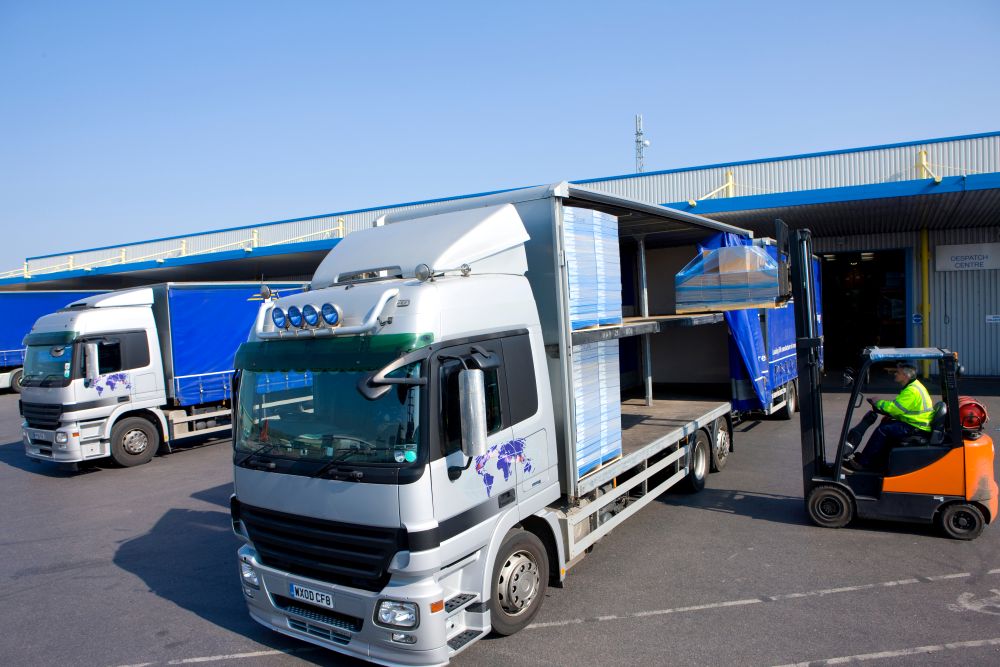
Le attrezzature meccaniche, come i transpallet, i carrelli elevatori e i trasportatori, eliminano molti infortuni da movimentazione manuale. La schiena e le articolazioni dei lavoratori non sopportano più lo sforzo fisico quando le macchine gestiscono il carico.

Motorizzando lo sforzo necessario per spostare carichi pesanti, i transpallet elettrici a batteria riducono l'affaticamento dell'operatore e il rischio di lesioni. Queste macchine sono in grado di gestire un peso significativamente maggiore rispetto alle versioni manuali, pur richiedendo uno sforzo fisico minimo agli operatori.

I carrelli elevatori eccellono nel trasporto e nel sollevamento di materiali in ambienti di magazzino e banchine di carico. Gli operatori controllano i carichi pesanti da una posizione protetta, eliminando la tensione dorsale e le lesioni da movimento ripetitivo associate alla movimentazione manuale.

Analisi predittiva

La programmazione guidata dai dati attraverso sistemi predittivi può identificare modelli di domanda di consegna e potenziali punti di ritardo lungo i vostri percorsi. I gestori della flotta possono utilizzare queste informazioni per adeguare i programmi, assegnare risorse aggiuntive nei periodi di punta e fornire agli autisti tempi realistici.

Quando gli autisti si sentono in difficoltà, sono più propensi a ridurre le procedure di sicurezza. Una corretta programmazione elimina questa pressione. I lavoratori hanno il tempo di utilizzare correttamente le attrezzature meccaniche, di effettuare sollevamenti di squadra quando necessario e di seguire le corrette tecniche di movimentazione manuale.

Tecnologia indossabile

I dispositivi indossabili emergenti monitorano i movimenti e la postura dei lavoratori durante il loro turno di lavoro. Questi dispositivi usano AI-powered wearables for workplace safety per analizzare le tecniche di sollevamento e fornire un feedback in tempo reale quando i lavoratori adottano posture non sicure.

Una tecnologia simile è presente nelle applicazioni per la sicurezza dei conducenti. Un programma di app telematiche ha contribuito a ridurre gli incidenti del 42% tra i giovani conducenti fornendo un feedback in tempo reale. Lo stesso principio si applica al lavoro fisico, dove gli avvisi immediati sulla forma di sollevamento scorretta possono prevenire le lesioni da sforzo cumulativo.

Prevenzione attraverso la progettazione nelle operazioni di flotta

Le flotte possono utilizzare la prevenzione attraverso la progettazione (PtD) per eliminare i pericoli durante la pianificazione. Le specifiche dei veicoli che riducono al minimo i requisiti di movimentazione manuale, la disposizione dei magazzini che facilita gli spostamenti in sicurezza e le decisioni di approvvigionamento che danno priorità all'ergonomia rientrano in questo approccio proattivo.

Le scelte progettuali dei veicoli hanno un impatto diretto sul rischio di infortuni quotidiani. L'altezza ridotta del pianale di carico riduce la distanza percorsa dai lavoratori per sollevare oggetti pesanti, mentre le configurazioni a carico laterale alleggeriscono la schiena dei lavoratori rispetto a quelle a carico posteriore. Anche la disposizione dei magazzini è importante: uno spazio adeguato intorno alle banchine di carico consente ai lavoratori di posizionarsi correttamente e di utilizzare le attrezzature senza manovre scomode.

La sola dotazione di attrezzature non garantisce la sicurezza. Le ricerche dimostrano che, mentre il 62,2% dei lavoratori edili può lavorare ad altezze che richiedono protezione, solo il 31% utilizza costantemente le attrezzature di sicurezza disponibili. Questo divario evidenzia perché la PtD è importante. Quando si progettano le operazioni in modo che il metodo sicuro sia anche il più semplice, la conformità diventa naturale.

Un impegno a lungo termine per la sicurezza

La prevenzione delle lesioni muscoloscheletriche richiede un'attenzione costante. Investire in attrezzature, formazione e progettazione operativa adeguate protegge la vostra forza lavoro e rafforza la reputazione e le prospettive future della vostra azienda.

Scopri di più da Renovated Magazine.
Condividi con

Anche altri leggono...

Header Image

giovedì 03 aprile 2025 • Consigli per i conducenti

NORME PER IL PARCHEGGIO DEI VEICOLI COMMERCIALI PESANTI NEL REGNO UNITO: COSA DEVE SAPERE OGNI AUTISTA

Susie Jones

For many truck drivers, it can be challenging trying to navigate the number of regulations surrounding overnight truck parking in the UK. After a long day behind the wheel, they must adhere to several rules before they can even think about parking up for the night. We'll delve into these regulations and provide you with everything you need to know. Before we look at parking regulations, it's vital to understand UK and EU laws regarding rest periods. We've collated all you need to know about . However, in a nutshell, if your vehicle exceeds three and a half tonnes, you must have a tachograph fitted. A tachograph will record the number of breaks a driver takes. Truck drivers must adhere to the following:• Drivers must take 11 continuous hours of rest. This can be reduced to nine. • Truck drivers are required to take at least 45 hours of rest. • Driving time can be no longer than four-and-a-half hours before a break. A break must be at least 45 minutes.To comply with parking laws and ensure safety, truck drivers must follow strict regulations regarding where and when they can park overnight:• Many local authorities do not allow truck drivers to park in residential areas doing so may result in a fine or penalty.• If the maximum loaded weight of the vehicle is more than 7.5 tonnes (including any trailer), you must not park on a verge, pavement, or any land between carriageways unless there is police permission. • Truck drivers can use these for overnight parking. However, they provide less security and no amenities. Parking overnight in a lay-by is often the most straightforward and economical option but can pose a greater security risk.Failure to follow HGV parking regulations can result in fines, vehicle clamping, or impounding. These penalties are in place to encourage drivers to comply with the law and ensure road safety.Suitable parking locations include: Specifically designed for HGVs and include facilities such as fuel, food, showers, toilets, and security options. Many motorway service areas (MSAs) will provide areas for HGV parking. Most offer similar facilities as truck stops. SNAP provides drivers with a network of over across Europe. • Downloading a truck parking app can help drivers find locations near them to park up for the night. enables truck drivers to find parking & washing spots across Europe, allowing drivers to book SNAP sites through the app.• Search for a spot that offers essential amenities like food, toilets, and showers for a more comfortable stay. • Most truck stops and MSAs will have security features. Using the or, drivers can check a site's security features, including fencing, CCTV, night watchmen, and TAPA accreditations. Truck drivers can park on verges or pavements if the parking is for essential loading and unloading. There are a few exceptions they must consider before loading and unloading:• Drivers must not park where yellow markings are on the curb, and upright signs advise restrictions. • The vehicle must not be left unattended.• On red routes, drivers should look out for specially marked and signposted bays showing when and where loading and unloading is permitted. • Councils and private estates may have different regulations. Truck drivers are restricted to using lanes one and two. On a four-lane motorway, drivers can use lane three. However, HGVs are not permitted to use the furthest right lane.A road may be marked unsuitable for heavy goods vehicles for the following reasons: These pose a challenge for many HGVs, especially long or articulated trucks. Ascending a steep incline for an HGV is a difficult task due to its heavy load, leading to reduced traction and wheel spin. Roads with limited width can feature sharp bends or walls on either side and are unsuitable for trucks. Due to their turning radius of HGVs, they require more space to maneuver. Roads with walls on either side leave little room for error and increase the risk of an HGV becoming stuck or causing damage.

Header Image

lunedì 02 dicembre 2024 • Consigli per i conducenti

TUTTO QUELLO CHE C'È DA SAPERE SULLE MODIFICHE AL CPC DEI CONDUCENTI

Susie Jones

On the 3rd of December 2024, changes to the Driver Certificate of Professional Competence (CPC) will come into full effect. The new CPC aims to offer better flexibility to drivers returning to the profession and those undertaking mandatory training. We delve into the upcoming changes and how they will impact drivers. Introduced in 2007, the CPC is a mandatory qualification for professional drivers in the UK and EU wanting to drive a range of heavy vehicles, such as HGVs, LGVs, buses, and coaches. Drivers must pass four tests: • Theory• Case study• Practical• Vehicle safety demonstration. Once passed, the CPC lasts for five years and must be renewed by taking 35 hours of periodic training within the five years.The UK government wanted to understand the effectiveness of the Driver CPC. They did this by asking drivers, trainers, and other parties to take a poll. The government focused on two main areas: improving driver choice and attracting more drivers into the industry for example, making it easier for drivers with foreign qualifications to obtain a licence in the UK. The changes to the Driver CPC are categorised into the following:The international Driver CPC is the new name for how the previous Driver CPC worked. The following applies:• Drivers must take 35 hours of CPC training every five years.• The courses must be at least seven hours long. • If splitting a course over a day, a driver must complete it on two consecutive days.• Drivers are allowed to do a total of 12 hours of e-learning.The National Driver CPC provides more flexibility for those wanting to drive in the UK. Drivers can take either:• 35 hours of training every five years.• A combination of 35 hours of National Driver CPC and International Driver CPC training every five years.The flexibility means that:• Training must be at least 3 hours 30 minutes long training providers can offer longer courses. • It does not need to be completed on two consecutive days if it's a split course course providers can set their time limits.• Training can be e-learning.• Drivers can do 12 hours of e-learning towards their overall 35 hours.From the 3rd of December, 2024, drivers will be able to stay qualified by choosing either:1. International Driver CPC National Driver CPCDrivers wanting to return to the profession must take 35 hours of training before returning. However, this will change from the 1st of February, 2025.Drivers with an expired CPC will have new pathways to make returning to driving easier.Drivers have four options:• Undertake 35 hours of International Driver CPC training.• Regain qualification to drive in the UK and EU.• Complete 35 hours of National Driver CPC training.• Regain qualification to drive in the UK only.• Take a seven-hour "return to driving" module.• Regain UK driving qualification instantly.• To drive in the EU, complete 28 additional hours of training within 12 months.• As part of the National Driver CPC training, complete a seven-hour "return to driving" module.• Regain UK driving qualification instantly.• Take 28 additional hours of training (National or International Driver CPC) within 12 months.Drivers must take 35 hours of training (International or National).The rules surrounding Driver CPC cards remain the same drivers must carry their cards when operating vehicles professionally. However, the type of card differs based on qualification:• Identical to the current design.• The design will include "Domestic UK use only."If a driver is qualified for both categories, they may hold two cards.Fleet managers can prepare for the changes by ensuring the following:• Find out whether their drivers need an International or National CPC.• Training deadlines aren't missed to avoid fines.You are exempt from needing a Driver CPC if you're using the vehicle for:• Non-commercial carriage• Carrying materials you use for your job driving must be less than 30% of your rolling monthly work.• Driving for someone you work for or your own agriculture, horticulture, forestry, farming, or fisheries business driving must be less than 30% of your rolling monthly work. • Driving within 62 miles of your base driving a HGV, bus, or coach must not be your main job.• Driving to or from pre-booked appointments to test centres.• Lessons for anyone wanting to get a driving licence or a Driver CPC.• Maintain public order.Full guidance is on the website.Drivers with grandfather rights don't need to hold the actual qualification as part of their licence. However, they must complete 35 hours of training every five years.

Header Image

mercoledì 18 settembre 2024 • Consigli per i conducenti

VISIONE CHIARA: L'IMPORTANZA DELLA CURA DEGLI OCCHI PER GLI AUTISTI DI CAMION

Susie Jones

takes place from the 23rd to the 29th of September, and as a truck driver, maintaining good vision is crucial to your job. Optical Express reported that road crashes involving drivers with poor vision accounted for roughly yearly casualties.Truck driving is a physically demanding role, but it is just as demanding visually requiring constant vigilance and the ability to quickly identify or react to changing road conditions. Poor vision can affect a driver's ability to judge distances, read signs, and detect other vehicles, reducing safety for the driver and other road users.Drivers must complete a t when applying for an HGV licence this occurs every five years after 45 and every year after the age of 65. As part of the medical, truck drivers must have a vision examination by a doctor, optician, or optometrist.To pass the examination, drivers require visual acuity of at least 0.8 (6/7.5) on the Snellen scale in their best eye and at least 0.1 (6/60) in the other.Group 2 HGV drivers need a horizontal visual field of at least 160 degrees with an extension of at least 70 degrees left and right and 30 degrees up and down. No defects should be present within a radius of the central 30 degrees.After 45 years old, drivers must complete their D4 Medical Assessment every five years and every year after 65. However, opticians recommend that every road user has an eye test at least every two years.If a driver experiences the following, they should get their eyes tested immediately:• Headaches• Eyestrain• Pressure behind the eyes• Double vision• Difficulty seeing during the night• Halos around lights.Under the law, employers must ensure their employees are fit to drive this could cover several things, but eyesight is one of them. Employers should test their driver's eyesight every six months by carrying out a number plate sight check 20 metres away.If an HGV driver requires glasses or contact lenses to reach the minimum vision requirement, they can't have a spectacle power greater than eightdioptres. For contact lenses, there is no restriction on contact lens power.The recommends the following to maintain good eye health:• Eat a well-balanced diet with foods that help your vision.• Exercise regularly to prevent diabetes and other conditions that can lead to vision problems.• Inform an optician if you notice any changes.• Wash your hands before putting them near your eyes or if you're handling contact lenses.• Protect your eyes when performing tasks that could damage them.• Wear sunglasses that block 99% or 100% of UVA and UVB radiation.• Follow the 20-20-20 rule every 20 minutes, look 20 feet away for 20 seconds.• Try not to smoke smoking is just as harmful to your eyes as it is to your body.The visual standards HGV drivers must meet are higher than those of other road users. In the UK, drivers must have a visual acuity of at least 0.5 (6/12) on the Snellen scale. In addition, drivers must be able to read a car number plate made after the 1st of September 2001 from 20 metres.The UK law on vision and driving falls below many European countries.By a number plate self-test from 20 metres. A visual acuity/visual field test is mandatory in other European countries.A driving test examiner performs the test in the UK, Cyprus, The Netherlands, and Norway. Several European countries require an Optometrist/Ophthalmologist/Doctor to carry out the test.• The UK, Austria, Belgium, Czech Republic, France, Germany, and Sweden require no further visual tests.• Algeria, Estonia, Hungary, Italy, Latvia, Spain, and Turkey require a visual assessment every ten years.• Algeria, Estonia, Finland, Greece, Hungary, Italy, Latvia, Portugal, Serbia, Spain, and Turkey require visual tests from 65 or younger.It's vital to inform the DVLA if you have any of the following eye conditions:• Blepharospasm• Cataracts• Diabetic retinopathy• Glaucoma• Eye loss• Macular degeneration• Monocular vision• Nyctalopia• Retinitis pigmentosa• Visual field defect.Drivers need to meet the following standards:• Can read a number plate 20 metres away• No double vision• Have a regular field of vision in at least one eye.If a driver is unsure whether they meet the visual standards for driving, they must get advice from a GP, optician, or eye specialist. of the information a driver receives comes from vision with most maneuvers made based on a sense of sight. Vision cannot be substituted or supplemented and is the most important physical factor behind the wheel.