Evelyn Long
Поради водіям • 4 хв читання

Безпечні вантажно-розвантажувальні роботи для запобігання травмам опорно-рухового апарату

Створено: 26.05.2026

Оновлено: 26.05.2026

Травми опорно-рухового апарату - одна з найпоширеніших проблем, з якою сьогодні стикається автотранспортна галузь. Водії та складський персонал постійно стикаються з фізичними навантаженнями під час вантажно-розвантажувальних робіт.

Впровадження належних процедур захищає ваш персонал від хронічного болю та травм, що можуть призвести до завершення кар'єри, зберігаючи при цьому ефективність, яка забезпечує конкурентоспроможність вашого бізнесу на вимогливих ринках.

Висока вартість травм опорно-рухового апарату

Травми опорно-рухового апарату впливають на окремих працівників, одночасно виснажуючи ресурси бізнесу через зниження продуктивності та збільшення страхових внесків.

Вплив на бізнес-операції та фінанси

Коли працівник отримує травму, фінансові наслідки виходять за рамки безпосередніх медичних витрат. Керівники автопарків повинні враховувати витрати на лікарняні, витрати на тимчасових працівників і потенційні вимоги про компенсацію.

У 2023-2024 роках загальні витрати на охорону здоров'я і травматизм на робочому місці [досягли 22,9 млрд фунтів стерлінгів у Великій Британії] (https://www.hse.gov.uk/statistics/cost.htm), причому на травматизм припадає 28%, або 6,5 млрд фунтів стерлінгів. Ці цифри демонструють, як травматизм перетворюється на економічний тягар, що впливає на норму прибутку.

До цих прямих витрат додається втрата продуктивності. Коли досвідчені водії або працівники складу йдуть у тривалу відпустку, робота сповільнюється, а на решту членів команди лягає додаткове навантаження. Хвилеподібні ефекти впливають на всі аспекти роботи автопарку - від затримок поставок до напружених відносин з клієнтами.

Наслідки для професійних водіїв

Водії, у яких розвиваються захворювання опорно-рухового апарату, стикаються з важкою реальністю. Хронічний біль у спині, травми плечей і постійні перенапруження можуть зробити виконання основних робочих функцій нестерпним. Багато водіїв повідомляють, що постійний біль впливає на їхню здатність зосередитися під час тривалих поїздок, створюючи додаткові проблеми з безпекою.

Розлади опорно-рухового апарату є однією з [основних причин професійних захворювань] (https://www.hse.gov.uk/statistics/causdis/index.htm) у Великій Британії. Такі умови змушують досвідчених професіоналів залишати галузь, де вони напрацювали багаторічний досвід.

Правила безпеки у Великобританії та оцінка ризиків

Законодавство Великої Британії вимагає від роботодавців вживати конкретних заходів для запобігання травматизму, пов'язаного з ручною роботою. Оцінка ризиків є основою дотримання вимог і слугує першою лінією захисту від перенапруження на робочому місці.

Основні правила проведення ручних робіт

Роботодавці повинні дотримуватися Правил ручних вантажно-розвантажувальних робіт, розроблених Виконавчим комітетом з охорони здоров'я та безпеки, які встановлюють чітку ієрархію.

По-перше, [уникайте небезпечних ручних операцій] (https://www.hse.gov.uk/msd/), де це можливо. По-друге, оцінити всі небезпечні операції, яких неможливо уникнути. По-третє, знизити ризик травмування від цих операцій до найнижчого можливого рівня.

Ця система підштовхує бізнес до повного усунення ризиків ручного переміщення. Для переміщення вантажів необхідно використовувати механічне обладнання, коли це можливо. Будь-яке неминуче ручне переміщення вимагає належної оцінки та обов'язкових заходів контролю.

Процес оцінки ризиків

Належна та достатня оцінка ризиків розглядає чотири ключові фактори в логістичних операціях:

  1. завдання: Має значення саме завдання, в тому числі те, чи передбачає воно скручування, нахили або повторювані рухи. 2) Навантаження: Характеристики навантаження, такі як вага, розмір і стабільність, відіграють важливу роль. 3) Навколишнє середовище: Умови навколишнього середовища, включаючи обмеження простору, поверхню підлоги та перепади температур, впливають на безпеку.
  2. індивідуальний: Індивідуальні здібності працівників різняться між собою, і кожна робота має свої сильні сторони та фізичні обмеження.

Ефективна [оцінка ризиків, пов'язаних з безпекою в логістиці] (https://www.hse.gov.uk/logistics/) має призвести до конкретних покращень. Задокументуйте свої висновки та поділіться ними зі своєю командою.

Безпечні техніки ручної обробки

Коли ручне переміщення стає неминучим, правильна техніка може зменшити ризик травмування. Навчання працівників правильним методам підйому вантажу захищає їх під час щоденних операцій.

Індивідуальні методи підйому та перенесення

Ноги повинні бути на ширині плечей для стійкості, розташовані близько до вантажу. Згинання в колінах при збереженні прямої спини дозволяє міцно обхопити вантаж обома руками. М'язи ніг повинні підтримувати підйом, коли ви плавно піднімаєтеся. Утримання вантажу близько до тіла протягом усього руху запобігає перенапруженню, так само як і уникнення будь-яких скручувальних рухів під час підйому або перенесення.

Якщо для переміщення об'єкта потрібно напружуватися або ривком піднімати його, це потребує механічної допомоги або командного підйому. Ніколи не поспішайте з підйомом, щоб заощадити час. Кілька додаткових секунд, витрачених на те, щоб правильно розташуватися, запобігають травмам, які можуть вивести вас з ладу на кілька тижнів.

Координовані процедури командного підйому

Колективні підйоми вимагають чіткої комунікації та планування до того, як хтось торкнеться вантажу. Призначте одну особу координатором підйому, яка буде давати вказівки. Всі члени команди повинні розуміти план підйому, включаючи точки захвату, шлях переміщення і місце розміщення вантажу.

Перед початком підйому координатор повинен почати зворотний відлік, щоб усі рушили одночасно. Члени команди повинні підтримувати зв'язок протягом усього часу, вигукуючи, якщо їм потрібно зробити паузу або підлаштуватися.
Технології та обладнання для запобігання травматизму

Технології пропонують потужні інструменти для зменшення або усунення ризиків ручної обробки в операціях автопарку, тоді як інвестиції в обладнання захищають працівників, часто підвищуючи ефективність і пропускну спроможність.

Механічні підйомні пристрої

Механічне обладнання, таке як палетні домкрати, навантажувачі та конвеєри, усуває багато травм, пов'язаних з ручним переміщенням вантажів. Спина та суглоби працівників більше не зазнають фізичного навантаження, коли машини переміщують вантажі.

Моторизуючи зусилля, необхідні для переміщення важких вантажів, акумуляторні електричні палетні домкрати [зменшують втому оператора та ризик травмування] (https://www.chicagoindustrial.com/blog/forklifts/). Ці машини можуть витримувати значно більшу вагу, ніж ручні версії, вимагаючи при цьому мінімальних фізичних зусиль від операторів.

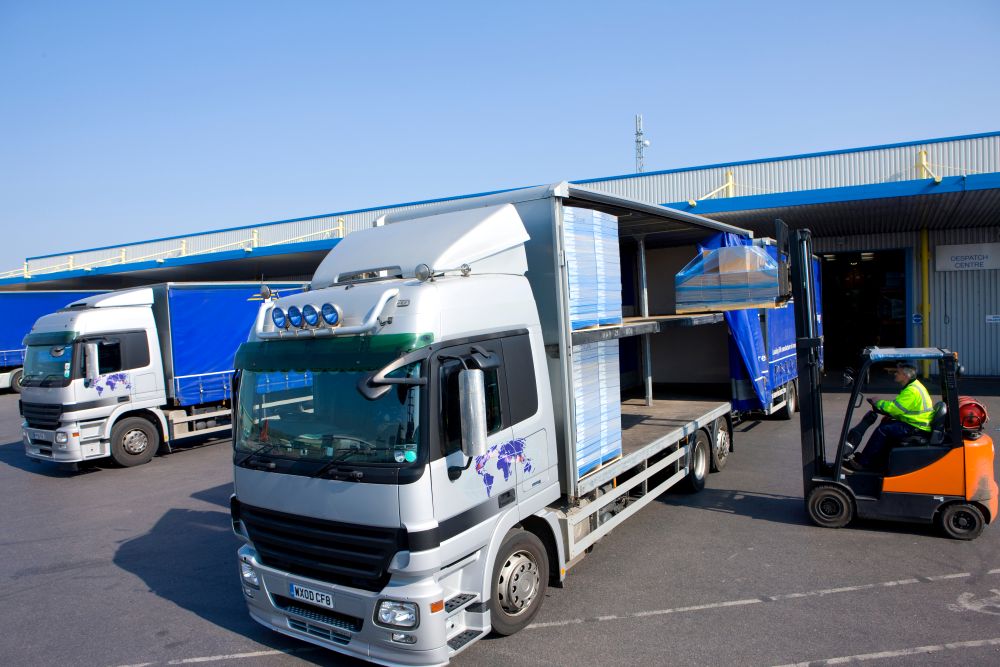
Вилочні навантажувачі ідеально підходять для транспортування та підйому матеріалів на складах і вантажних майданчиках. Оператори керують важкими вантажами із захищеного положення, що дозволяє уникнути перенапруження спини і травм, пов'язаних з повторюваними рухами, які притаманні ручному переміщенню.

Прогнозна аналітика

Планування на основі даних за допомогою систем прогнозування може виявити закономірності в попиті на доставку і потенційні точки затримки на ваших маршрутах. Менеджери автопарку можуть використовувати цю інформацію для коригування розкладів, виділення додаткових ресурсів у пікові періоди та надання водіям реалістичних часових рамок.

Коли водії відчувають поспіх, вони, швидше за все, не дотримуються правил безпеки. Правильне планування усуває цей тиск. Працівники мають час, щоб правильно використовувати механічне обладнання, здійснювати командні підйоми, коли це необхідно, і дотримуватися правильної техніки ручного переміщення.

Переносні технології

Нові пристрої, що носяться, відстежують рухи та позу працівників протягом зміни. Ці пристрої використовують [Носимі пристрої на основі штучного інтелекту для безпеки на робочому місці] (https://www.britsafe.org/safety-management/2025/ai-powered-wearables-transforming-workplace-health-and-safety) для аналізу техніки підйому і надають зворотний зв'язок у реальному часі, коли працівники приймають небезпечні пози.

Подібна технологія з'являється і в додатках для безпеки водіїв. Програма телематичного додатку допомогла зменшити аварійність на 42% серед молодих водіїв, надаючи зворотній зв'язок у реальному часі. Той самий принцип застосовується до фізичної роботи, де негайне сповіщення про неправильну форму підйому може запобігти кумулятивним травмам від перенапруження.

Профілактика через проектування в операціях флоту

Для усунення небезпек під час планування автопарку можна використовувати запобігання через проектування (PtD). Специфікації транспортних засобів, які мінімізують потребу в ручному обслуговуванні, планування складів, які сприяють безпечному переміщенню, та рішення щодо закупівель, які надають пріоритет ергономіці, - все це підпадає під цей проактивний підхід.

Вибір конструкції транспортного засобу безпосередньо впливає на щоденний ризик травмування. Менша висота кузова зменшує відстань, на яку працівникам доводиться піднімати важкі предмети, а бокове завантаження зменшує навантаження на спину порівняно з конструкціями із заднім завантаженням. Рішення щодо планування складу також мають значення: достатній простір навколо навантажувальних платформ дозволяє працівникам правильно розташуватися і використовувати обладнання без незручного маневрування.

Забезпечення обладнанням саме по собі не гарантує безпеки. Дослідження показують, що хоча 62,2% будівельників можуть працювати на висоті, яка потребує захисту, лише 31% постійно використовують наявне захисне обладнання. Цей розрив підкреслює, чому PtD має значення. Коли ви розробляєте операції таким чином, щоб найбезпечніший метод був також найпростішим, дотримання вимог стає природним.

Довгострокова прихильність до безпеки

Запобігання травмам опорно-рухового апарату потребує постійної уваги. Інвестиції в належне обладнання, навчання та експлуатаційне проектування захищають вашу робочу силу, одночасно зміцнюючи репутацію вашого бізнесу та перспективи на майбутнє.

Дізнайтеся більше з [Журнал "Реновація"] (https://renovated.com/).
Поділіться на

Читайте також...

Header Image

пʼятниця 29 травня 2026 • Поради водіям

ВІД БОРОТЬБИ ДО СИЛИ: ЯК ДАРРЕН РАЙТ ДОПОМАГАЄ ВЕТЕРАНАМ ВІДНОВИТИ ЖИТТЯ ЗА ДОПОМОГОЮ ЛОГІСТИКИ

Ellie Aldous

For many veterans, leaving the armed forces can mean losing far more than a career. It can mean losing structure, identity, purpose and community.For Darren Wright, founder of Veterans into Logistics, that transition was deeply personal.After serving nearly six years in the British Army, including a tour of Afghanistan as an air defence gunner, Darren struggled following his own transition into civilian life. He experienced homelessness, mental health challenges, the breakdown of his marriage and eventually served a custodial sentence.Rather than defining him, those experiences became the driving force behind a mission that is now changing lives across the UK.“I rebuilt my life through HGV driving,” Darren explains. “And I realised that if it could help me rebuild my life, it could help other veterans rebuild theirs too.”Founded in 2020, Veterans Into Logistics supports ex-service personnel into sustainable careers within the logistics industry by helping them gain HGV licences, training and employment opportunities.The organisation was inspired in part by the loss of Darren’s friend Jamie Doyle, a former Royal Artillery soldier who tragically died less than six months after leaving the military.“Jamie had served 22 years and was heavily decorated,” Darren says. “But like many veterans, he struggled with the transition. Losing that structure, purpose and identity can hit people incredibly hard.” That loss became the catalyst for action.Creating Opportunities Through LogisticsDarren recognised that logistics offered something many veterans desperately needed: a fast, accessible route into stable employment. “In six weeks, someone can go from having a car licence to becoming an HGV driver earning a strong salary,” he explains. “For many people, especially those who aren’t academic, that can completely change their future.” Veterans Into Logistics now works with veterans, ex-offenders and people from disadvantaged backgrounds to help them access training, employment and long-term career opportunities. The programme focuses not only on skills training, but also on restoring confidence and hope.“When someone comes to us at rock bottom, the first thing we do is give them hope,” Darren says. “Booking that first medical appointment may seem small, but it gives someone belief that something is finally changing.” The results have been transformative.Darren shared the story of one veteran he met sleeping rough in Manchester. After engaging with Veterans Into Logistics, the veteran gained his HGV licence, secured employment and later proudly returned to show Darren the car he had been able to buy through his hard work.Another veteran who had repeatedly cycled in and out of prison after leaving the military was supported into training and employment. He has since rebuilt his life and has not reoffended. “These are people who simply needed the right tools and the right opportunity,” Darren says. “I always say I’d rather give someone a fishing rod than a fish.”Challenging Perceptions of the IndustryDarren is also passionate about changing perceptions around logistics careers.“There’s this misconception that every driving role means being away Monday to Friday sleeping in a truck,” he says. “That’s not true. There are so many different types of driving jobs — local council work, airport operations, supermarket deliveries, highways maintenance, Formula One logistics and more.”Through his growing online platform, Manc on a Mission, Darren is using social media to educate people about the opportunities available in the logistics sector.His TikTok videos, which showcase real drivers and real careers, quickly gained millions of views and have inspired many people outside the military community to explore careers in transport and logistics. “I want to show young people and people from deprived areas that this is a real career path,” Darren explains. “You can build a stable life through this industry.” Driving Change Nationally Darren’s work has also led to national policy change. After discovering that military resettlement funding could not be used for HGV driver training because it was classified below Level 3 education, Darren challenged the rules directly with government ministers.Following his campaign, the policy was changed, allowing service leavers to use Enhanced Learning Credits for HGV driver training.“It was about making sure less academic service leavers weren’t excluded from opportunities,” Darren says.What’s next for Veterans into LogisticsToday, Veterans into Logistics continues to expand its impact through partnerships with logistics companies, prisons, colleges and employers across the UK. Looking ahead, Darren hopes to continue opening doors for veterans and others who may otherwise struggle to access meaningful employment. “If we keep changing lives, that’s success,” he says.If this story resonates with you or someone you know within the industry please reach out to Darren at the Team at Veterans for Logistics.‍Watch the full Interview:

Header Image

пʼятниця 29 травня 2026 • Поради водіям

ГОВОРИТИ ДО ТОГО, ЯК БАК СПОРОЖНІЄ - ПОДОЛАННЯ СТИГМАТИЗАЦІЇ ТА МОВЧАННЯ В ГАЛУЗІ ВАНТАЖОПЕРЕВЕЗЕНЬ.

Ellie Aldous

Extended periods away from home, long driving hours and tight delivery schedules are all part of a life in the logistics and haulage industry. But behind the movement of goods that keeps the world moving, there is a growing conversation about something far less visible, the mental health of drivers.With limited to no social interaction during their working week, isolation has become one of the biggest challenges among drivers. This is compounded by pressures on the road, such as finding secure parking for their cargo, managing delivery deadlines, navigating traffic, and maintaining concentration while dealing with mental fatigue.For some, the stresses continue past the steering wheel with some struggling with financial worries, physical wellbeing and difficulty maintaining relationships given they are spending a vast amount of time away from loved ones. What makes the issue even more concerning is that 98% of drivers are male, a group that is often less likely to speak openly about mental health. A UK survey by Priory found that 40% of men have never spoken to anyone about their mental health, with many citing embarrassment, stigma, or fear of appearing weak. Experts say this silence can leave drivers feeling even more disconnected and therefore the cycle continues. So, the big question is how can fleet managers help break the cycle? We have provided some top tips from mental health advocates!Regular check in calls with your drivers Recognise and Reward good work Support healthy rest breaks Offering a confidential support services such as wellbeing apps & counselling services Monthly team catch ups. Here are the top 5 tips to give to your driversMove when you can! A 10-minute walk & stretch can boost energy and improve circulation. Stay Hydrated. Dehydration can lead to fatigue! Keep in touch with others – Regular calls and facetime with family and friends can help you feel more connected Eat Balanced Meals – Choosing a healthy alternative helps maintain your energy. Listen to something positive – Pick a podcast or audio book, something interesting to support the long journey.At SNAP, were more than just a payment solution, we’re committed to driving meaningful, positive change across the industry by supporting not only our service partners, but also the hardworking drivers that keep the world moving.Sources: Men's Mental Health: Why 40% of men won't talk about it Priory Office for National Statistics https://www.nomisweb.co.uk/datasets/aps218/reports/employment-by-occupation?compare=K02000001

Header Image

четвер 03 квітня 2025 • Поради водіям

ПРАВИЛА ПАРКУВАННЯ ТРАНСПОРТНИХ ЗАСОБІВ У ВЕЛИКОБРИТАНІЇ: ЩО ПОВИНЕН ЗНАТИ КОЖЕН ВОДІЙ

Susie Jones

For many truck drivers, it can be challenging trying to navigate the number of regulations surrounding overnight truck parking in the UK. After a long day behind the wheel, they must adhere to several rules before they can even think about parking up for the night. We'll delve into these regulations and provide you with everything you need to know. Before we look at parking regulations, it's vital to understand UK and EU laws regarding rest periods. We've collated all you need to know about . However, in a nutshell, if your vehicle exceeds three and a half tonnes, you must have a tachograph fitted. A tachograph will record the number of breaks a driver takes. Truck drivers must adhere to the following:• Drivers must take 11 continuous hours of rest. This can be reduced to nine. • Truck drivers are required to take at least 45 hours of rest. • Driving time can be no longer than four-and-a-half hours before a break. A break must be at least 45 minutes.To comply with parking laws and ensure safety, truck drivers must follow strict regulations regarding where and when they can park overnight:• Many local authorities do not allow truck drivers to park in residential areas doing so may result in a fine or penalty.• If the maximum loaded weight of the vehicle is more than 7.5 tonnes (including any trailer), you must not park on a verge, pavement, or any land between carriageways unless there is police permission. • Truck drivers can use these for overnight parking. However, they provide less security and no amenities. Parking overnight in a lay-by is often the most straightforward and economical option but can pose a greater security risk.Failure to follow HGV parking regulations can result in fines, vehicle clamping, or impounding. These penalties are in place to encourage drivers to comply with the law and ensure road safety.Suitable parking locations include: Specifically designed for HGVs and include facilities such as fuel, food, showers, toilets, and security options. Many motorway service areas (MSAs) will provide areas for HGV parking. Most offer similar facilities as truck stops. SNAP provides drivers with a network of over across Europe. • Downloading a truck parking app can help drivers find locations near them to park up for the night. enables truck drivers to find parking & washing spots across Europe, allowing drivers to book SNAP sites through the app.• Search for a spot that offers essential amenities like food, toilets, and showers for a more comfortable stay. • Most truck stops and MSAs will have security features. Using the or, drivers can check a site's security features, including fencing, CCTV, night watchmen, and TAPA accreditations. Truck drivers can park on verges or pavements if the parking is for essential loading and unloading. There are a few exceptions they must consider before loading and unloading:• Drivers must not park where yellow markings are on the curb, and upright signs advise restrictions. • The vehicle must not be left unattended.• On red routes, drivers should look out for specially marked and signposted bays showing when and where loading and unloading is permitted. • Councils and private estates may have different regulations. Truck drivers are restricted to using lanes one and two. On a four-lane motorway, drivers can use lane three. However, HGVs are not permitted to use the furthest right lane.A road may be marked unsuitable for heavy goods vehicles for the following reasons: These pose a challenge for many HGVs, especially long or articulated trucks. Ascending a steep incline for an HGV is a difficult task due to its heavy load, leading to reduced traction and wheel spin. Roads with limited width can feature sharp bends or walls on either side and are unsuitable for trucks. Due to their turning radius of HGVs, they require more space to maneuver. Roads with walls on either side leave little room for error and increase the risk of an HGV becoming stuck or causing damage.