DVSA checks for HGVs explained


During your career as a truck driver, you may be stopped by the Driver and Vehicle Standards Agency (DVSA). For truck drivers new to the industry, it can be a daunting process. However, understanding the essential aspects of DVSA truck checks can make the process less stressful.
Who is the DVSA?
According to Gov.uk, the DVSA is responsible for “carrying out roadside checks on commercial drivers and vehicles to make sure they follow safety rules and keep their vehicle safe to drive.”
The DVSA can perform spot checks on your truck and issue prohibitions. Prohibitions prevent a truck driver from driving until the issue with their vehicle is resolved.
Police also have the authority to stop a truck driver and perform similar checks.
What do DVSA examiners look like?
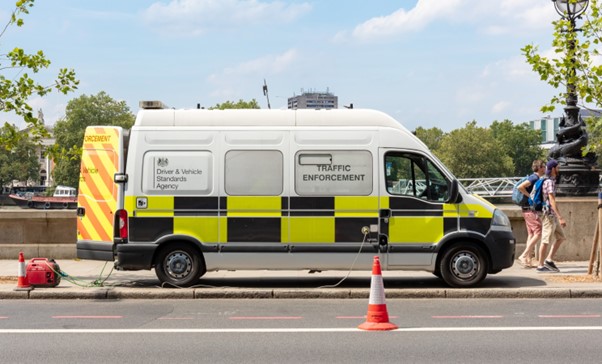
There are a few ways to identify a DVSA examiner. They will wear yellow visibility jackets with the DVSA logo and always have a warrant card. Their vehicles have a black and yellow print with the DVSA logo on the bonnet.
What happens if you get pulled over?
Not stopping when asked to by a DVSA examiner is an offence. If an examiner motions for you to pull over, they will do the check at the roadside or a dedicated testing site. The primary purpose of these stops is to keep unsafe vehicles off the road.
An examiner will perform the following mandatory checks:
• Checking authorised load weight and the type of load
• Checking for mechanical faults and roadworthiness
• Ensuring your tachograph records are correct
• Make sure you have a valid driving licence.
How long does a DVSA walkaround check take?
On average, a DVSA walkaround check will take 15 minutes. However, for instances where the truck doesn’t meet the safety requirements, it may take longer. The examiner needs to carry out the necessary checks, regardless of time.
How to make sure your vehicle is roadworthy
It is the driver’s responsibility to ensure their truck is roadworthy. Carrying out a walkaround check is recommended before every journey.
Check the following items:
• Lights
• Indicators
• Fuel and oil
• Tyres
• Wheel fixings
• Bodywork
• Trailer coupling
• Load and other equipment
• In-cab vehicle checks (e.g. seatbelts, horn, wipers, washers, steering, and height indicator).
Additionally, it is the truck driver’s responsibility to report any defects in writing to their organisation. These should include the following:
• Vehicle registration or identification mark
• Date of inspection
• Details of the defects
• Name of the person reporting the defects.
Operator responsibilities
Vehicle operators are responsible for ensuring their vehicles are safe and must carry out the following:
• The operator must ensure regular safety inspections are in place for all commercial vehicles
• They need to ensure their drivers understand what checks need to occur.
Roadside prohibitions
If your truck is not roadworthy, the DVSA can issue you two different prohibition notices – immediate or delayed.
Immediate prohibition notice:
• It can come into effect immediately
• In most cases, it will result in the immobilisation of the vehicle
• Immediate prohibitions can result in a prosecution.
Delayed prohibition notice:
• The operator has up to 10 days to resolve the issues
• After ten days, officers will reinspect the vehicle
• Prohibitions must be removed before the truck can be driven.
Roadworthiness prohibitions
If the truck has mechanical issues or the bodywork and equipment are of poor standard, then a roadworthiness prohibition is given. For vehicles outside of the UK, the driver will receive an immediate prohibition. For UK operators, the type of prohibition will depend on how severe the defect is.
Minor defects:
• Minor defects can result in a delayed prohibition
• The operator will have up to ten days to resolve any defects
• A re-inspection will occur after ten days.
Severe defects:
• The driver will receive an ‘S’ marked prohibition for a severe defect
• An ‘S’ marked prohibition occurs when there is a maintenance issue
• If the examiner decides there is no immediate risk, then prohibitions can be delayed
• The vehicle will be immobilised, and you could face prosecution.
An ‘S’ marked prohibition will not occur for the following:
• If a problem occurred during the journey
• The problem could not be detected (e.g. an underside defect).

Overloading prohibitions
If the vehicle is overloaded, a DVSA examiner can immobilise it. Alternatively, the examiner can direct the truck to a location nearby where the load can be redistributed or removed. The operator of the vehicle will receive a notice.
Driver hours prohibitions
Drivers who have not followed the rules for tachograph and driver’s hours will receive a prohibition. Doing so can result in a fine, a prosecution, or the vehicle can be immobilised.
Read more about tachograph rules and regulations
Although DVSA examinations can be a daunting prospect for truck drivers, it’s undeniably a positive force for road safety. Ensuring you have the correct checks and following essential rules and regulations will result in a smooth sailing DVSA examination.
How long do you have to keep truck defect sheets?
Implementing a nil defect reporting system can be your first line of defence when demonstrating that your vehicles are in a roadworthy condition. Rectification work for defects should be reported and retained for up to 15 months. Where there are no defects, records should be kept by the company to ensure drivers are carrying out their checks.
How often do you need a medical to keep your licence?
To gain and hold an HGV licence, it is mandatory to take an HGV medical – without this, you will not be issued a licence.
For drivers under 45, your medical will last until your 45th birthday. However, after this age, you will be required to pass the medical test every five years until 65 years old. Drivers 65 and over are required to pass the medical assessment every year.