Guest
Industrie-Nachrichten • 9 min lesen

Kraftstoff gegen Ladung: Ist der Umstieg auf Strom billiger oder nur grüner?

Erstellt: 28.07.2025

Aktualisiert: 19.09.2025

Die Zunahme von Elektroladestationen für Lkw in ganz Europa hat zu einer Übergangszeit auf den ausgedehnten Straßennetzen des Kontinents geführt. Für viele Fuhrparkbetreiber und Fahrer sind klassische dieselbetriebene Lkw immer noch das Transportmittel der Wahl. Die Umstellung auf elektrische Lkw zeichnet sich jedoch ab, da sich die Branche ständig weiterentwickelt.

Um die Durchführbarkeit des Umstiegs von Diesel auf Elektroantrieb für Flottenbetreiber zu bewerten, hat SNAP eine Studie über die Kosten des Aufladens von Lkw im Vergleich zum Betanken auf verschiedenen europäischen Frachtrouten erstellt. Wir haben die Einsparungen durch Strom gegenüber Diesel in Euro pro 100 km in 35 europäischen Ländern berechnet.

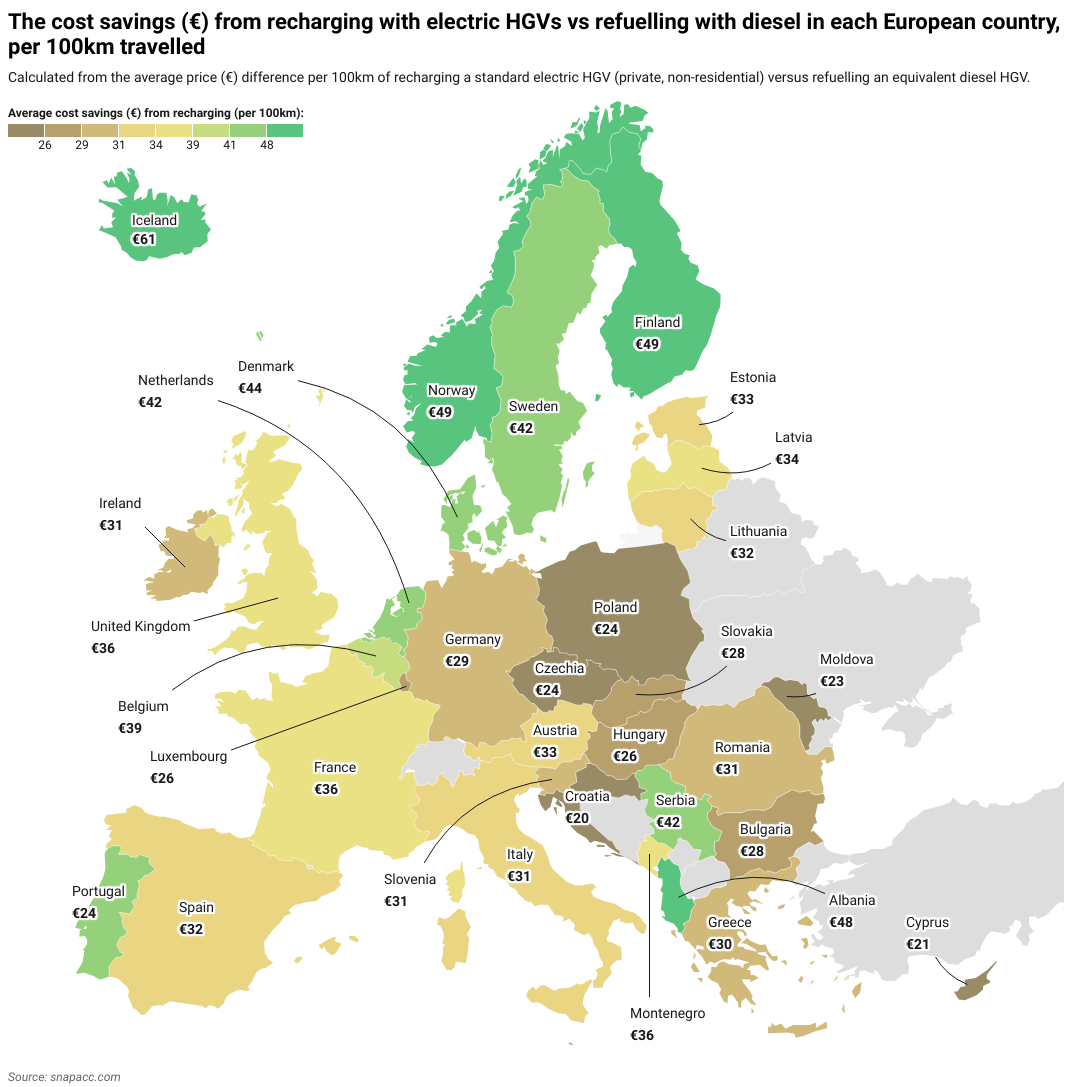
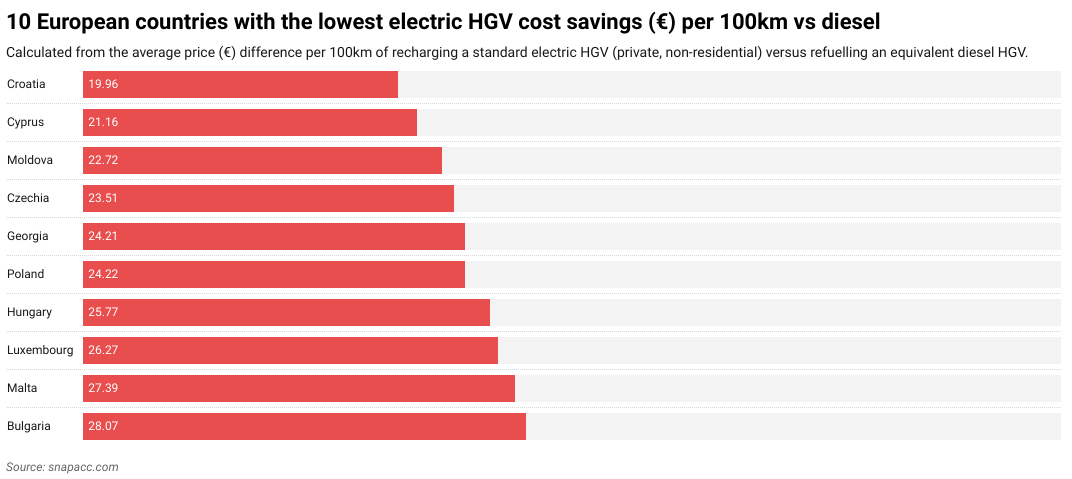
Dabei stellte sich heraus, dass Island mit einer durchschnittlichen Kosteneinsparung von 61,03 € pro 100 km an der Spitze lag, während die nordischen Länder Norwegen und Finnland die zweit- bzw. dritthöchsten Kosteneinsparungen aufwiesen. Am anderen Ende der Skala bot Kroatien mit 19,96 € pro 100 km die geringsten Kosteneinsparungen, gefolgt von Zypern und Moldawien.

In diesem Artikel decken wir die Kosteneinsparungen pro europäischem Land auf und analysieren einige der Kosteneinsparungen pro europäischem Land und analysieren einige der externen Faktoren, die diese Einsparungen beeinflussen könnten. Wir gehen auch darauf ein, wie die Zukunft von eHGVs in Europa aussehen könnte und wie eHGVs Flottenbetreibern und Fahrern helfen können, Geld zu sparen, insbesondere mit [Fahrer-Budgets] (https://snapacc.com/newsroom/a-truck-drivers-guide-to-budgeting/).

Wie sich die Kosten von Elektro-LKW und Diesel in der EU unterscheiden

Unsere Untersuchung ergab, dass in allen untersuchten europäischen Ländern der Einsatz eines Elektro-LKWs mit elektrischer Aufladung im Vergleich zum Einsatz eines herkömmlichen LKWs mit Kraftstoff Kosten spart. Der Hauptunterschied bestand darin, wie stark die Kosteneinsparungen ausfielen. So ist beispielsweise der Strompreis im teuersten Land, Island, 206 % höher (41 Euro mehr) als im günstigsten Land, Kroatien.

Wir haben herausgefunden, dass ein Fahrer mit einem Elektro-LKW im Durchschnitt 30,59 € pro 100 km im Vergleich zu einem Diesel-LKW-Fahrer spart. Dies entspricht einer geschätzten Durchschnittsersparnis von 37.200 € pro Jahr für Fahrer von Elektro-LKW im Fernverkehr und 24.800 € für Fahrer im Inland.

Um unsere Daten zusammenzustellen, haben wir 35 europäische Länder untersucht und die Energie- oder Kraftstoffkosten pro 100 km für zwei Arten von Lastkraftwagen (Lkw) verglichen. Dabei handelte es sich um einen Standard-Diesel-Lkw mit einem Kraftstoffverbrauch von 35 Litern pro 100 km zum durchschnittlichen Dieselpreis des jeweiligen Landes und um einen Elektro-Lkw mit einem Stromverbrauch von 108 kWh pro 100 km auf der Grundlage des durchschnittlichen Stromtarifs für Nichthaushalte. Die Mehrwertsteuer und erstattungsfähige Steuern wurden bei diesen Berechnungen nicht berücksichtigt. Der Vergleich spiegelt nur die direkten Kosten "an der Zapfsäule" oder "an der Steckdose" wider, ohne Faktoren wie Flottengröße, ausgehandelte Energieverträge oder künftige Änderungen der Kraftstoff- und Strompreise zu berücksichtigen.

Bei der Recherche der Preise für Diesel und Elektrizität wurde auf eine Reihe von Quellen zurückgegriffen, darunter Eurostat, CEIC, GlobalPetrolPrices, Webfleet und Gov.uk. Es ist erwähnenswert, dass sich einige dieser Quellen auf "Großbritannien" beziehen, andere wiederum auf das "Vereinigte Königreich". Für die Zwecke dieser Untersuchung wurden beide Begriffe als austauschbar betrachtet.

Länder mit den höchsten Einsparungen durch die Umstellung auf Elektro-LKWs

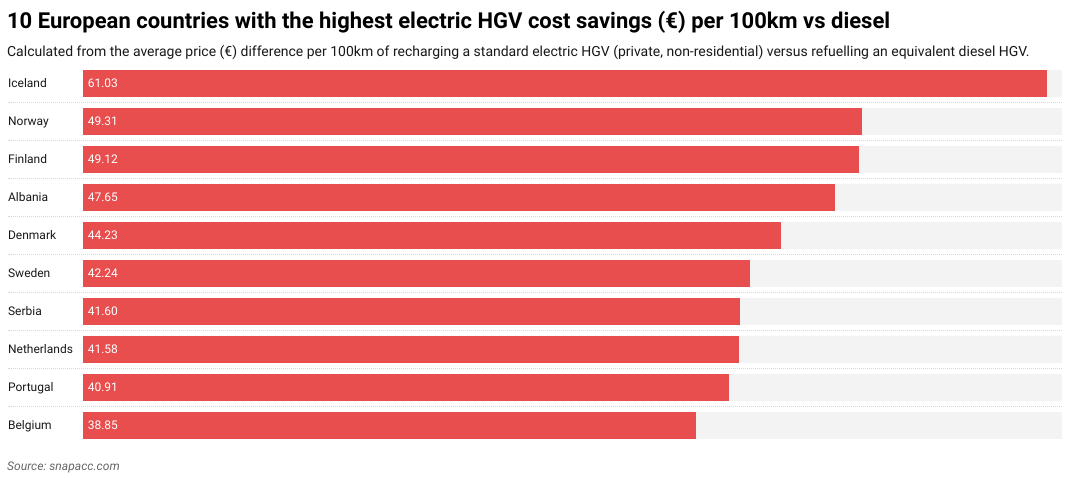
Island (61,03 €), Norwegen (49,31 €) und Finnland (49,12 €) sind derzeit die Länder, in denen sich durch die Umrüstung auf einen elektrischen Lkw am meisten einsparen lässt.

Dies ist vor allem darauf zurückzuführen, dass diese Länder zu den teuersten in Europa für Diesel gehören. Island ist das teuerste Land in Europa für Diesel (2,07 € pro Liter). Diese hohen Kosten sind vor allem auf die geografische Isolation des Landes im Vergleich zum übrigen Europa zurückzuführen, wodurch die Kosten für den Import von Diesel viel höher sind als in anderen europäischen Ländern. Wie Norwegen und Finnland ist auch Island für seinen hohen Steuersatz bekannt, der ebenfalls zu den hohen Kraftstoffkosten beiträgt.

Norwegen (32 %) und Island (18 %) sind auch die beiden Länder mit dem höchsten Anteil von Elektroautos am Pkw-Verkehr weltweit. Infolgedessen haben beide Länder erheblich in die Ladeinfrastruktur für Elektroautos investiert.

Die geringe Größe Islands und die Hauptumgehungsstraße machen es außerdem einfacher, in regelmäßigen Abständen Elektroladestationen für elektrische Lkw-Fahrer zu installieren. Die gleiche Argumentation lässt sich teilweise auch auf andere Länder mit kleineren Netzen anwenden, die eine hohe Kosteneinsparungsrate aufweisen, darunter Albanien, Serbien und Belgien - wobei anzumerken ist, dass alle drei Länder auch einige der teuersten Dieselpreise in Europa haben, was zu dem Unterschied bei den Kosteneinsparungen beiträgt.

Die nachstehende Tabelle zeigt die 10 Länder mit den größten Kosteneinsparungen beim Einsatz eines elektrischen Lkw:
*"Fahrer in ganz Europa sparen bereits, indem sie auf elektrische Lkw umsteigen. Die Umstellung auf das Laden von Elektro-LKW ist die Zukunft der Branche, und SNAP ist bereit, Fahrern und Flottenbetreibern bei der Umstellung zu helfen".

Matthew Bellamy - Geschäftsführer bei SNAP

Die Länder mit den geringsten Einsparungen durch die Umstellung auf elektrische Lkws

Kroatien (19,96 €), Zypern (21,16 €) und Moldawien (22,72 €) sind derzeit die drei Länder mit den geringsten Kosteneinsparungen in Europa.

Kroatien hat nach Polen die [zweitschlechteste EV-Einführungsrate] (https://www.smf.co.uk/wp-content/uploads/2025/03/Decreasing-transport-poverty-in-Europe-through-public-EV-chargepoints-March2025.pdf) in der EU. Dies liegt zum Teil an der schlechten Ladeinfrastruktur in Kroatien, wie z. B. Ladestationen, die einen Anruf beim Kundendienst erfordern oder mehrere verschiedene Apps verwenden, um den Ladevorgang zu starten, schlechte Wegbeschreibungen zu Ladestationen außerhalb der großen Autobahnen und potenziell lange Wartezeiten während der touristischen Hauptsaison. Außerdem fehlt es in Kroatien an Ultra-Hochgeschwindigkeits-Ladestationen (180 kW und mehr), was für Elektro-LKWs, die mehr Leistung als ein durchschnittliches EV benötigen, ein Problem darstellen kann.

Sowohl Zypern als auch Moldawien haben interne geopolitische Probleme, die die Infrastrukturplanung für das Laden von Elektrofahrzeugen (wie auch die nationale Planung im Allgemeinen) erschweren. Auf Zypern ist die nördliche Hälfte der Insel - einschließlich der Hälfte der Hauptstadt Nikosia - seit 1974 von der türkisch unterstützten Türkischen Republik Nordzypern besetzt. Für die Republik Moldau ist die östliche Provinz Transnistrien ein De-facto-Staat mit einer eigenen Regierung. Das bedeutet, dass beide Länder nicht in der Lage sind, die EV-Infrastruktur in dem Gebiet, das sie als ihr eigenes betrachten, einheitlich umzusetzen.

Die Probleme in Zypern werden auch durch hohe Stromkosten verschärft, während Moldawien die fünftgünstigsten Dieselpreise in Europa hat. Moldawien ist außerdem das [zweitärmste Land in Europa] (https://worldpopulationreview.com/country-rankings/poorest-countries-in-europe), was Investitionen in die EV-Infrastruktur zu einer Herausforderung macht. All diese Faktoren tragen dazu bei, dass die Kostenersparnis für Elektro-LKWs insgesamt gering ist.

Polen liegt mit einer Kostenersparnis von 24,22 € ebenfalls am unteren Ende der Liste. Trotz des beeindruckenden Wirtschaftswachstums und der zunehmenden Investitionen in die Ladeinfrastruktur ist die Netzabdeckung in bestimmten Regionen des Landes immer noch ein Problem - obwohl sich dies in Zukunft ändern dürfte (https://alternative-fuels-observatory.ec.europa.eu/general-information/news/poland-launches-major-funding-programs-zero-emission-transport).

Länder wie Spanien (32,20 €), Rumänien (30,62 €) und Irland (30,54 €) liegen im Mittelfeld, wenn es um Kosteneinsparungen für Elektro-LKW geht. Dies ist wahrscheinlich darauf zurückzuführen, dass diese Länder über eine wachsende Ladeinfrastruktur für Elektrofahrzeuge verfügen und die Kosten für Strom und Diesel im mittleren Bereich liegen.

Die nachstehende Tabelle zeigt die 10 Länder mit den geringsten Kosteneinsparungen beim Einsatz eines elektrischen Lkw:
UK's electric HGV cost savings

Mit einer Kostenersparnis von 36,23 €** liegt das Vereinigte Königreich bei den Kosteneinsparungen durch das Aufladen pro 100 km auf Platz 11 der Länder mit elektrischen Lkw. Dies ist größtenteils auf die hohen Kraftstoffpreise im Vereinigten Königreich zurückzuführen, das mit Dieselpreisen das drittteuerste Land in Europa ist. Obwohl die Einsparungen durch die hohen Dieselkosten sicherlich zu den hohen eHGV-Kosteneinsparungen des Vereinigten Königreichs beitragen, wären sie wahrscheinlich noch viel höher, wenn der Strom im Vereinigten Königreich nicht auch zu den [teuersten] (https://reports.electricinsights.co.uk/q4-2024/why-are-britains-power-prices-the-highest-in-the-world/) in Europa gehören würde.

Das Vereinigte Königreich erwartet ebenfalls eine Verbesserung der Ladeinfrastruktur für Elektrofahrzeuge. Die britische Autobahngesellschaft Moto plant aktiv den Bau von [15 "Superhubs" bis 2027] (https://www.fleetnews.co.uk/news/electric-hgv-charging-superhubs-planned-for-motorway-services). Diese Superhubs können E-Fahrzeuge effizienter aufladen als ein Standard-Ladegerät für E-Fahrzeuge. Derzeit gibt es weniger als fünf Ladepunkte für E-Fahrzeuge auf britischen Straßen. Da [andere Unternehmen] (https://www.fleetnews.co.uk/news/electric-hgv-charging-superhubs-planned-for-motorway-services) wie BP Pulse und Aegis Energy ebenfalls investieren wollen, ist es wahrscheinlich, dass das Vereinigte Königreich in naher Zukunft über ein deutlich verbessertes Lkw-Ladenetz verfügen wird.

Was beeinträchtigt die Elektrifizierung von Lkw?

Die Elektrifizierung von Lkw wird derzeit durch mehrere Faktoren beeinträchtigt: fehlende Ladeinfrastruktur, lange Ladezeiten, die hohen Anfangskosten für die Umrüstung von E-Lkw und ihre begrenzte Reichweite. Darüber hinaus machen die vergleichsweise niedrigen Kosten und die Zugänglichkeit von Dieselkraftstoff und -fahrzeugen herkömmliche Lkw zu einer attraktiven Option für [Flottenbetreiber].(https://snapacc.com/fleet-operators/)

All diese Auswirkungen können jedoch je nach Einsatzland variieren. Wenn Ihr Fuhrpark beispielsweise nur in einem Land wie Norwegen oder Island betrieben wird, ist er wahrscheinlich weniger betroffen als ein Fuhrpark, der in ganz Europa oder in Regionen mit einer schlechteren eHGV-Infrastruktur, wie z. B. auf dem Balkan, eingesetzt wird.

Unzureichende Ladeinfrastruktur

Das Haupthindernis für die Elektrifizierung von Lkw ist die unzureichende Ladeinfrastruktur für E-Fahrzeuge. Dies liegt daran, dass eHGVs eine Ladung im Megawattbereich benötigen, die von den meisten bestehenden Ladestationen für Personenfahrzeuge (normale Elektroautos und -transporter) nicht unterstützt wird.

Es gibt viele Länder in Europa, in denen es an einer solchen Infrastruktur mangelt, vor allem an den großen Güterverkehrsachsen und an Lkw-Haltestellen. Dabei handelt es sich meist um ärmere Staaten in Süd- und Osteuropa wie Moldawien, Georgien und Bulgarien. Es ist kein Zufall, dass diese Staaten zu den 10 Schlusslichtern bei den Kosteneinsparungen im eHGV zählen.

Es kann auch vorkommen, dass es zwar Ladestationen für Elektroautos gibt, diese sich aber in Gebieten befinden, die aufgrund eines schwachen lokalen Stromnetzes nicht in der Lage sind, mehrere Elektroautos über Nacht aufzuladen. Dies ist häufig ein Problem in ländlicheren und abgelegeneren Teilen Europas.

Obwohl viele europäische Länder eine Verbesserung der eHGV-Infrastruktur planen, ist dies immer noch ein zeit- und kostenaufwändiger Prozess, bei dem zahlreiche bürokratische, logistische und technische Hindernisse zu überwinden sind - ganz zu schweigen von den damit verbundenen Infrastrukturverbesserungen, wie z. B. den lokalen Netzanschlüssen, die ebenfalls erforderlich sind.

Lange Ladezeiten

Elektro-LKWs brauchen viel länger zum Aufladen als Standard-EVs. Dies bedeutet, dass das Aufladen oft über Nacht erfolgen muss. Selbst wenn Schnellladegeräte für E-LKW angeschafft werden können, dauert der Vorgang immer noch [mindestens zwei Stunden] (https://dhl-freight-connections.com/en/solutions/charging-times-for-electric-trucks-the-goal-is-less-than-30-minutes/) und nicht nur ein paar Minuten wie bei Benzinfahrzeugen.

Diese lange Ladezeit kann sich für Flottenbetreiber in Form von Durchlaufzeiten auswirken. In einer Branche mit engen Lieferplänen und -fristen kann sich dies potenziell nachteilig auf die Unternehmensleistung auswirken.

Begrenzte Reichweite von eHGVs

Elektrische Lkw sind auch durch ihre relativ begrenzte Reichweite im Vergleich zu den Kilometern, die herkömmliche Lkw zurücklegen können, eingeschränkt. Nach Angaben von Safety Shield hat ein typischer Elektro-LKW mit einer einzigen Ladung eine Reichweite von etwa 300 Meilen (das entspricht etwa der Strecke von London nach Rotterdam). Ein typischer dieselbetriebener Lkw hingegen kann mit einer einzigen Tankfüllung bis zu 1.000 Meilen zurücklegen (was in etwa der Entfernung von London nach Warschau entspricht).

Die Kilometerleistung von Elektro-LKW kann auch durch externe Faktoren wie Ladung, [kaltes Wetter] (https://snapacc.com/newsroom/a-truck-drivers-guide-to-winter-in-europe/) und Gelände beeinflusst werden. Dies kann bei den Fahrern zu Reichweitenangst führen, so dass sie häufiger aufladen müssen, um sicherzustellen, dass sie genug Energie haben, um ihr Ziel zu erreichen. Dies wiederum kann zu Lieferverzögerungen führen, insbesondere bei Fahrten durch Länder mit schlechter eHGV-Ladeinfrastruktur.

All dies macht sie [die Routenoptimierung] (https://snapacc.com/newsroom/route-optimisation-with-fleet-management-software-snap-account/) für Flottenbetreiber, die Fahrten für ihre E-Gefährte planen, unerlässlich. Es sei darauf hingewiesen, dass sich die Batterietechnologie ständig weiterentwickelt und die Kapazität - und damit die Kilometerleistung - in naher Zukunft weiter steigen wird.

Hohe eHGV-Kosten

Die Anschaffungskosten eines eHGV sind hoch (typischerweise zwischen £160.000-£200.000, verglichen mit £80.000-£100.000 für einen Diesel-LKW), was unabhängige Fahrer und kleinere Flottenbetreiber möglicherweise davon abhält, einen eHGV zu besitzen. Dies ist vor allem auf die Kosten der Batterietechnologie zurückzuführen. Dies bedeutet, dass die Anschaffung eines neuen Elektro-LKW kostspielig sein wird, da die darin enthaltene Technologie teurer ist als die eines Diesel-LKWs.

Die hohen Anschaffungskosten für E-Fahrzeuge bedeuten auch, dass Flottenbetreiber in Ländern mit günstigeren Stromtarifen für das Laden von E-Fahrzeugen wie Norwegen, Schweden oder Finnland eher umrüsten, da sich ihre Investition schneller amortisiert als in Ländern mit teurem Strom, wie Irland und Kroatien.

Die Strompreise können auch im Zusammenhang mit verschiedenen Ereignissen schwanken. So schwankten die Strompreise in den letzten fünf Jahren als Reaktion auf die Öffnung der Volkswirtschaften nach der COVID-19-Pandemie und den Einmarsch Russlands in die Ukraine im Jahr 2022 (vor allem letzterer hatte erhebliche Auswirkungen auf die europäische Energieversorgung). Infolgedessen stiegen die Strompreise in der Zeit nach der Invasion um fast 30 % von [20,5 c€/kWh auf 26,5 c€/kWh] (https://www.euronews.com/business/2025/02/24/three-years-on-how-russias-invasion-reshaped-energy-prices-across-europe) für die durchschnittliche EU-Hauptstadt. Da der EU-Durchschnitt jetzt jedoch [niedriger ist als im Jahr 2022] (https://ec.europa.eu/eurostat/databrowser/view/nrgpc205_custom16953972/default/table?lang=en), scheint es, dass das elektrische Laden von Lkw weiterhin auf dem Vormarsch ist.

Europaweit kostet der Betrieb eines Elektro-Lkw über 100 km im Durchschnitt 20,51 € - deutlich weniger als die 51,10 €, die ein Diesel-Lkw über dieselbe Strecke kostet.

In dem Maße, in dem sich die Effizienz verbessert und die Batterietechnologie weiter verbreitet und kostengünstiger wird, wird auch die Anschaffung von E-Fahrzeugen erschwinglicher werden.

Billigkeit und Zugänglichkeit von Dieselkraftstoff

Dieselkraftstoff spielt in der Lkw-Branche immer noch eine dominierende Rolle. Dies liegt daran, dass die Infrastruktur für Dieselkraftstoff in Europa seit Jahrzehnten gut etabliert ist, insbesondere im Vergleich zu elektrischen Ladestationen für Lkw. Auch die Kompatibilität mit [Tankkarten] (https://snapacc.com/newsroom/fuel-cards-in-transportation-how-snap-simplifies-fleet-life/) und die relativ günstige Verfügbarkeit von Dieselkraftstoff sorgen dafür, dass er bei Lkw-Flottenmanagern beliebt bleibt.

Wie bei der Elektrizität schwankt jedoch auch der Wert des Dieselkraftstoffs innerhalb des Kontinents. Aus diesem Grund kann es in Ländern wie Moldawien, Georgien und Malta, wo Diesel nach wie vor billig ist, vorteilhafter sein, bei Diesel-LKW zu bleiben. In Ländern wie Island und den Niederlanden, in denen Diesel relativ teuer ist, besteht dagegen ein größerer Anreiz, auf einen elektrischen Lkw umzusteigen.

Ein Land, in dem Treibstoff billig ist, könnte auch zögern, stark in die eHGV-Infrastruktur zu investieren, weil es befürchtet, die traditionellen LKW-Flotten zu verprellen, die dann alternative Routen wählen könnten.
Die Zukunft des elektrischen LKWs in Europa

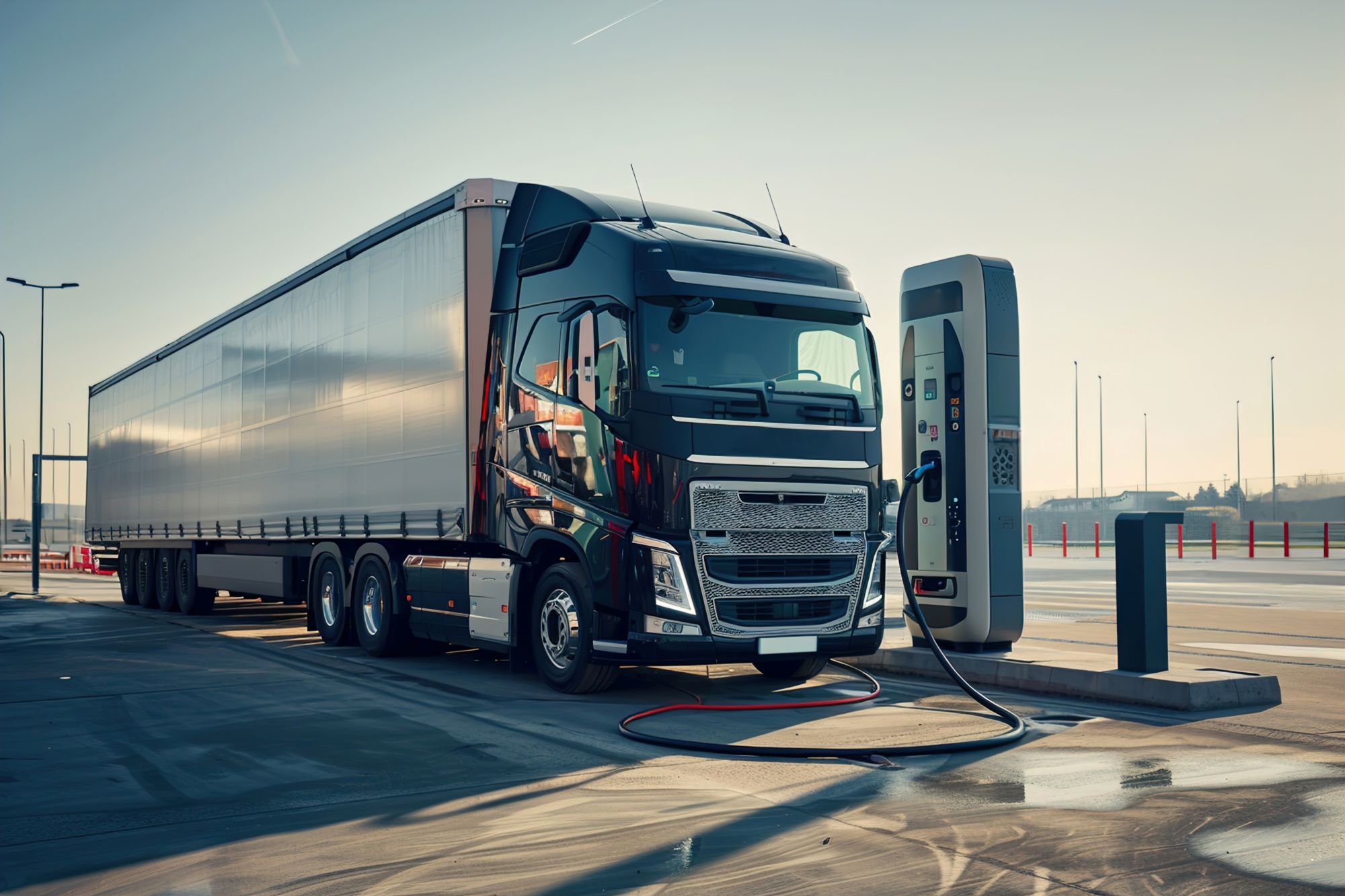
Elektrische Lkw sind die langfristige Zukunft des Straßengüterverkehrs. Sie sind nicht nur im Laufe der Zeit billiger zu betreiben, sondern werden mit den hohen Investitionen in neue Infrastrukturen auch finanziell und strategisch viel rentabler.

Abgesehen von den wirtschaftlichen Vorteilen sind Elektro-LKWs auch wegen ihres Beitrags zu Umweltzielen wie Net Zero wichtig. Da herkömmliche Lkw große Umweltverschmutzer sind, werden sich die [eingesparten] (https://snapacc.com/newsroom/the-road-to-sustainability-the-european-emissions-challenge-within-the-transport-sector/) Emissionen von Elektro-Lkw in saubererer Luft in ganz Europa bemerkbar machen.

Die [folgenden Trends] (https://snapacc.com/newsroom/the-road-ahead-for-2025-truck-industry-trends-to-expect/) dürften sich in Zukunft auf elektrische Lkw auswirken:

  • Smart truck parks: Truck parks in the future will evolve to better accommodate eHGVs alongside other smart technological advancements. These truck parks may include up-to-date ultra-fast charging stations, diagnostic machines, battery swap stations, and automated cleaning services, among other features.
  • Increased EU regulations: Low Emission Zones (LEZs) already exist in a number of cities (e.g. Paris, Berlin, and Milan) with more European cities likely to follow suit with more stringent EU transport regulations. Fleet operators may opt for eHGVs to meet EU regulations or retrofit their HGVs with cleaner technologies, like smart tachographs.
  • AI implementation: AI technology has already had a profound sustainability impact across road haulage — with applications in route optimisation, predictive maintenance, and autonomous vehicle development. Electric vehicles will likely incorporate AI to help drive sustainability in the haulage industry over the coming decades.
  • Sustainability: The shift to eHGVs is part of a wider global push toward sustainable living. The effects of extreme weather, including heatwaves and floods across Europe, show no sign of slowing due to climate change. Moving to electric HGVs is one way the world is reducing its dependence on fossil fuels.
  • Fuel variety: During the transition to cleaner fuel sources, there will be a variety of HGV types on the road throughout the 2030s. Many will be older diesel models, some will be electric, and others will be powered by alternative fuels such as biofuel made from renewable biomass sources.

eHGV-Kosten intelligenter managen

Elektrischen Lkw gehört die Zukunft, daran gibt es kaum Zweifel. Die wirtschaftlichen und ökologischen Vorteile werden dazu führen, dass in den kommenden Jahren immer mehr Flottenbetreiber und Fahrer auf Elektro-LKW umsteigen. Wie lange diese Übergangszeit dauert, wird davon abhängen, wie schnell Europa seine Ladeinfrastruktur für Elektro-LKW ausbauen kann.

Derzeit gibt es weite Teile des Kontinents, in denen E-Güterwagen nicht rentabel sind und aufgrund ihrer geringeren Reichweite eine umfangreiche Routenoptimierung erfordern. Außerdem können die damit verbundenen Vorlaufkosten unabhängige Fahrer und kleinere Flottenbetreiber abschrecken.

Die Technologie und die Infrastruktur werden sich weiter verbessern, und es gibt bereits Dienste, die das Management von Lkw-Flotten und die damit verbundenen Kosten so einfach wie möglich machen sollen. Von der Routenoptimierung und dem Flottenmanagement bis hin zu Karten für Parkplätze und Lkw-Waschanlagen - SNAP macht das Trucking einfach.

Heute noch bei SNAP anmelden

Teilen mit

Andere lesen auch...

Header Image

Dienstag 16 Dezember 2025 • Industrie-Nachrichten

WAS SPANIENS VERPFLICHTENDE DIGITALE AUFZEICHNUNGEN FÜR IN EUROPA TÄTIGE FLOTTEN BEDEUTEN

Guest

Spain is preparing for one of the most significant transport reforms in its recent history. The Sustainable Mobility Law (Ley de Movilidad Sostenible), which received final approval in November 2025, will introduce mandatory digital records for road freight control documentation, creating a more transparent, enforceable and efficient system for domestic and international carriers. Although this is a major national change, it forms part of a wider trend. Across Europe, governments and operators are moving towards a fully digital freight environment as the EU prepares to implement the (eFTI).For fleets working in and out of Spain, this is the start of an important transition. It signals a future in which paper documentation becomes the exception rather than the rule and in which digital processes support faster checks, smoother operations and greater consistency across borders.While the Sustainable Mobility Law addresses wide-ranging transport reforms – from urban mobility to domestic flight restrictions – the provisions most relevant to international freight operators centre on digital documentation. A central section of the law introduces a mandatory digital “control document” for road freight. This includes the use of approved digital formats, such as the electronic consignment note (eCMR), which Spain has already ratified and treats as legally equivalent to the paper CMR note. The law aims to reduce administrative burdens, eliminate inconsistencies in paperwork and shorten the time required for checks and inspections. Rather than relying on handwritten notes or physical documents that can be misplaced, carriers will store, share and verify transport information digitally. For operators, this should mean fewer disputes over documentation, less ambiguity around compliance requirements and greater certainty when preparing for audits or regulatory reviews.In practice, the obligation focuses first on the digital control document used for roadside and regulatory checks, but it is expected to accelerate wider use of eCMR and other digital freight documents across the supply chain.The timeline for implementation will begin once the law is published in Spain's Official State Gazette. Carriers should expect the digital control document obligation to take effect roughly ten months after publication, making 2026 the likely year when full compliance will be required.The Mobility Law applies to road transport operations that fall under Spanish control rules on Spanish territory, not just Spanish-registered companies. Carriers will need to ensure their systems can produce and transmit digital records in compliant formats. Any delay in adopting digital documentation could slow down inspections or disrupt customer schedules.This means that foreign operators running international loads into, out of or through Spain should plan on being able to provide the required control document in digital form when requested by Spanish authorities.The Spanish reforms align closely with the EU’s eFTI Regulation, which will require Member States to accept digital freight documentation once the technical and certification rules are in place (from mid-2027). eFTI sets a unified framework for how information is structured, transmitted and verified. While it obliges authorities to accept digital records, it does not require operators to use them. Spain’s Mobility Law therefore goes further, making digital control documents mandatory for road freight.Under eFTI, carriers will be able to provide freight information electronically through certified platforms. Enforcement authorities will receive that information through secure digital channels. This should reduce administrative friction across the EU’s busiest freight routes.Spain is not alone in taking early steps. Several EU countries have already moved towards paperless freight systems and their experience demonstrates what a fully digital environment could look like.● The Netherlands has been one of the earliest adopters of eCMR and has trialled end-to-end digital workflows across different modes of transport. ● France also moved early, supporting digital documentation and faster roadside checks following its ratification of the eCMR protocol. ● In the Benelux region, Belgium, Luxembourg and the Netherlands are running a joint eCMR pilot and digital logistics corridor, illustrating how interoperable documentation can work across national boundaries.● Denmark and Sweden have operated national e-freight trials designed to simplify the sharing of transport information. Taken together, these examples show that Spain’s Mobility Law is part of a broader European transition. Rather than standing apart, Spain is moving in step with a continental shift towards digital documentation that aims to make road freight faster, more transparent and more consistent across borders.The move to digital records brings several practical advantages. Digital documents reduce the time drivers and enforcement officers spend handling paperwork and shorten inspections during roadside checks. This mirrors the benefits seen with the introduction of , which have reduced unnecessary stops for compliant drivers and improved the consistency of enforcement across Europe.Digital documentation also removes the errors that can arise from handwritten notes or damaged paper notes. Fleet managers can instantly retrieve records, resolve errors more easily and maintain clearer oversight of documentation across multiple routes. For operators managing complex schedules, this increased predictability supports better planning and stronger customer service.Drivers are likely to benefit too. A shift to digital records reduces administrative pressure and helps avoid disagreement at delivery points. With all documents stored digitally, drivers have a single source of truth that is accepted across the supply chain.Fleets may need to invest in updated transport management systems or integrate new tools that support digital documentation. Operators may require additional support and training to shift from paper-based processes to new digital workflows.There will also be a period of adjustment in which paper and digital systems may operate side by side. As eFTI becomes established across Europe, some countries will move faster than others. Operators travelling across different borders may encounter varying expectations, particularly in the early years.Throughout this transition, driver welfare should remain a priority. The administrative load associated with new processes often falls on drivers. Clear training and straightforward systems will be essential.Spain’s Mobility Law marks an important moment in the evolution of European freight. It reflects a sector that is modernising at speed and preparing for a future built on digital workflows rather than manual paperwork. Operators that begin preparing now will be in a strong position as Spain’s digital control document requirements take effect and eFTI comes into force across Europe.At SNAP, we support fleets across Spain and the wider continent with tools that make daily operations simpler and more predictable. The intruck app helps drivers locate and book secure parking along their route, which is particularly valuable as compliance processes evolve. If your fleet is preparing for Spain’s new requirements or the broader digital transition across Europe, SNAP is here to support every step of the journey.

Header Image

Mittwoch 10 Dezember 2025 • Industrie-Nachrichten

DER BRITISCHE HAUSHALT 2025: WAS ER FÜR DAS TRANSPORTGEWERBE BEDEUTET

Guest

The arrives at a difficult moment for the road transport sector. Operators are working against rising wages and operating costs, tight margins, ageing infrastructure and ongoing pressures around recruitment. At the same time, the shift towards cleaner mobility is accelerating, creating new expectations and increasing the need for long-term investment.The following article outlines what the Budget means for infrastructure, investment, workforce costs and the wider operating environment for haulage.For many years, fleets have been affected by deteriorating roads, weight restrictions on ageing bridges and the growing unpredictability of journey times. Government and industry data makes this clear. More than one in every ten miles of network in England and Wales is likely to require maintenance within the next year, according to reporting, and the backlogs for resurfacing work continue to rise. These issues lead to vehicle damage, driver fatigue, higher insurance costs and disrupted schedules. They also place additional pressure on operators already dealing with narrow margins.The new Budget acknowledges these concerns. One positive step is the substantial funding for strategic national projects, including almost £900 million allocated to the , which should reduce congestion, provide more reliable journey times and a safer driving environment for HGVs.Local authorities will also receive a share of and address the growing number of potholes. This could make a noticeable difference for fleets. Local roads carry the majority of domestic freight and serve as the first and last mile of nearly every delivery. Improving them should reduce wear and tear on vehicles as well as operational strain. These commitments will not fix decades of underinvestment immediately, but they represent an important shift towards a road network that is more resilient and better suited to the realities of modern logistics.The Budget also places more focus on skills. for under-25s working in small and medium-sized businesses could help attract new entrants into a profession that urgently needs them. The driver shortage is well documented. The UK must recruit around in order to stabilise supply chains, and across Europe the average age of professional drivers continues to climb. Only a small proportion of drivers are under 25, and training costs have been a barrier for many younger candidates.Providing funded apprenticeships makes logistics more accessible at a critical time. It also supports smaller operators, who often struggle to invest in training despite needing to expand their teams. The Budget introduces further support for investment, particularly around fleet renewal. Operators installing charging infrastructure can take advantage of a 100% first-year allowance until March 2027. This will help offset the upfront cost of electric HGVs and depot charging equipment.From January 2026, a new 40% first-year allowance will be available on many main-rate assets, including trucks – particularly useful where full expensing or the Annual Investment Allowance don’t apply, such as some leased fleets and unincorporated operators.While the Autumn Budget contains several positive measures, operators will also need to plan for increasing costs. Fuel duty will rise in stages between the end of August 2026 and March 2027. Fuel is already one of the largest expenses for operators, and the planned rises are likely to increase the emphasis on fuel efficiency, telematics, consolidated routing and fleet renewal.Vehicle Excise Duty (Road Tax) will be uprated in line with inflation from April 2026, including for HGVs. From April 2028, a new Electric Vehicle Excise Duty (eVED) will also apply a mileage-based charge to battery-electric and plug-in hybrid cars, on top of existing VED. Although eVED initially excludes electric vans and trucks, it signals a longer-term shift toward distance-based taxation that fleets will need to factor into future planning.The HGV Levy will also return to rising with inflation. Vehicles over twelve tonnes must pay the levy before using A roads or motorways, and the revised rate will add another cost that fleets must factor into forward planning.Larger, higher‑value properties are also likely to feel more pressure from business rates changes. The Budget confirms permanently lower business rates for retail, hospitality and leisure, funded in part by higher charges on the most expensive commercial premises. These include big warehouses and distribution centres, so operators with large sites can expect proportionately higher bills over time than smaller depots or high‑street locations.In addition, the Budget introduces several measures that directly affect the financial landscape for operators and the people who run or work within haulage businesses. Labour already represents one of the sector’s highest costs, and these changes will shape payroll planning, staff retention and the personal finances of many owner-operators.Minimum wage increases mean that employers will face higher staffing costs across warehousing, last-mile logistics and support roles. Many operators have already tackled wage rises in recent years, and this further uplift will add pressure at a time when margins remain narrow. For fleets that rely on overtime, night work or seasonal peaks, the impact will be even more noticeable.The Budget continues the government’s move toward greater digitalisation of tax and reporting. Compliance expectations will grow over the coming years, with stricter penalties for late VAT and Self Assessment returns and an expanded Making Tax Digital framework from 2027. Mandatory electronic invoicing will follow in 2029. Parcel carriers and mixed load operators will also be affected by changes to customs duty for low-value imports, which will apply to items worth less than £135 by March 2029 at the latest. While the aim is to even the playing field for UK manufacturers, it is likely to increase administrative pressure on haulage firms. These changes may eventually improve efficiency, but they will require investment in systems and staff training. Smaller fleets without dedicated administrative teams are likely to feel the adjustment most sharply.Although operators will face higher costs and increased administrative complexity, the 2025 Budget also provides some of the most significant commitments to the road network and skills pipeline seen in recent years. Taken together, these measures signal a Budget that attempts to balance fiscal constraints with long-term needs. The road ahead will still require careful planning and strategic investment, but there are genuine opportunities to strengthen the sector’s foundations and support a more resilient future for haulage.SNAP gives fleets practical tools to manage this shifting landscape, from parking access to data that supports compliance and operational decision-making. to discover how SNAP can help strengthen your fleet’s resilience in the months ahead.

Header Image

Montag 03 November 2025 • Industrie-Nachrichten

9 WEGE, WIE KI-ERKENNUNG DIE FLOTTENINDUSTRIE VERÄNDERT

Guest

Artificial intelligence (AI) has redefined how fleet professionals approach daily operations. Modern technologies let managers measurably improve maintenance, safety and compliance across their vehicles. As regulatory pressures rise, AI-driven insights will be more critical in gaining a decisive edge. Here are nine ways AI detection is transforming the fleet industry. Advanced telematics and machine learning (ML) algorithms help AI detection in fleets by monitoring driver behaviour. These devices analyse real-time patterns and flag risky driving behaviours like speeding and harsh braking. ML models instantly process data from in-vehicle sensors and identify deviations from safe driving norms and company policies.Drivers receive immediate feedback in the vehicle, while fleet managers get detailed reports on trends. The wealth of information helps supervisors personalise coaching sessions and find specific improvement areas. Telematics solutions have been critical to fleets nationwide because through improved behaviour and training programmes. AI algorithms are essential to analysing real-time traffic data, like road closures and weather conditions. Congestion can be significant, especially if your routes pass through London. A 2024 Inrix report said drivers when driving in the capital city. ML models can quickly identify bottlenecks and adverse weather to meet critical delivery times. Fleet managers benefit because their drivers can improve on-time performance. Route optimisation means deliveries are more likely to arrive during scheduled windows. It also enhances driver behaviours by idling less and covering fewer miles. Modern AI technologies rapidly detect roadway closures and unexpected weather changes to minimise disruptions. Accident reporting used to include manual logs and documentation. However, AI can reduce labour needs by automatically detecting and submitting incident reports. From collisions to near misses, these technologies can recognise potential incidents. Sensors gather relevant information at the event’s timing to provide more context. Unusual circumstances like airbag deployment can also be part of the automatic reporting. Once AI detection is complete, the system compiles information into a standardised report. Manual logs can create time-consuming tasks, so AI can automate these processes and free up staff. Fleet managers and insurers receive the report, thus ensuring compliance and accurate communication. Advanced technologies capture relevant data and use consistent formatting, so all parties get the critical details. Unexpected vehicle breakdowns can disrupt schedules and delay deliveries. AI helps fleet managers detect these problems before they become significant issues. From engine temperature to oil pressure, characteristics are monitored in real time. Advanced algorithms identify subtle anomalies and alert operators when a component is nearing failure. While fixed service intervals can be beneficial, AI lets you be more proactive and schedule maintenance precisely. Tire pressure sensors are an excellent example, especially for construction and utility companies. Experts say air compressors than equipment needs to maintain best practises. These sensors continually monitor output and detect gradual drops, flagging early signs of leaks.AI detection in fleets goes beyond studying driver behaviour. Telematics and sensors analyse speed and acceleration patterns to better understand fuel consumption. The systems monitor your vehicles for excessive idling and inefficient routing that increases petrol or diesel usage. AI can tailor recommendations to drivers by offering optimised speed ranges or maintenance needs.Fleet managers benefit by getting aggregated data on fuel consumption and spending. This information helps them make more informed vehicle procurement and route planning decisions. If older vehicles show inefficiencies, it may be time to upgrade the lot. Logistics professionals should compare individual vehicles against industry standards to see outliers. The U.K.’s environmental goals by 2050. Therefore, fleet managers must be more aware of tightening standards and the risk of fines. AI detection helps vehicles through sensors and onboard diagnostics systems, which collect data during operations. ML algorithms identify patterns and anomalies within the information and notify of excessive emissions. AI can alert fleet managers and enable proactive maintenance if a vehicle exceeds emissions thresholds. While humans take measures to reduce greenhouse gases, AI detection is rising to help the transportation industry. A 2025 study said by adapting eco-driving capabilities. The U.S. researchers said implementing it in 10% of vehicles would reduce carbon emissions up to 50%. Another way fleet managers can reduce emissions is through electric vehicle (EV) conversion. EV ownership is rising nationally through private drivers and fleet owners, as a 2025 report from 2023. AI can assist logistics professionals in the transition by recommending when, where and how to electrify their fleets. First-time EV owners may need help with charging windows and infrastructure needs. AI-powered systems detect when and where electric cars could naturally align with charging windows. For example, it could recommend the best times to charge to reduce schedule disruptions. Some may be pondering the switch to EVs, so logistics managers can leverage AI to compare cost data between electric and petrol cars. While AI investment can be a barrier, it may be financially beneficial in the long run. These software options that slows daily operations. Early detection of issues can lead to a more well-maintained fleet, which creates more uptime and revenue. Fleet managers can also save money through enhanced route optimisation and fuel management. AI detection in fleets is essential for streamlining administrative processes. These technologies can automatically perform compliance checks and incident documentation, thus reducing the need for manual paperwork. Your operators can focus more on the bigger picture and less on administrative overhead. If monitoring helps your drivers, it could reduce the cost of vehicle repairs and legal claims. Vehicle and cargo theft ., though they remain significant concerns. AI detection offers additional security layers by reducing the window of opportunity for thieves. Asset tracking features combine GPS and telematics capabilities to monitor real-time location, essential for companies transporting high-value assets. Fleet managers benefit from geofencing features, allowing them to set virtual boundaries. If a truck or van exits these zones, AI-powered systems automatically flag the event and notify logistics professionals. The algorithm is intelligent enough to understand anomalies and security protocols. Abnormalities can trigger security measures like remote disabling. AI is a practical, game-changing tool for fleet managers. Advanced analytics and real-time monitoring empower logistics professionals to drive measurable safety and performance improvements. While technologies are developing, the future is here. Your business should be willing to invest in AI-driven solutions to reduce costs and minimise risks. Discover more from .