Guest
Pramonės naujienos • 9 min perskaityti

Kuro ir įkrovos santykis: Ar pereiti prie elektros yra pigiau, ar tiesiog ekologiškiau?

Sukurta: 28-07-2025

Atnaujinta: 19-09-2025

Europoje daugėjant sunkiasvorių krovininių transporto priemonių elektrinių įkrovimo stotelių, didžiuliame žemyno kelių tinkle prasidėjo pereinamasis laikotarpis. Daugelis transporto priemonių parkų operatorių ir vairuotojų vis dar renkasi klasikines dyzelinu varomas sunkiasvores krovinines transporto priemones. Tačiau, toliau vystantis pramonei, artėja perėjimas prie elektrinių sunkiasvorių sunkvežimių.

Siekdama įvertinti, ar transporto priemonių parko operatoriai galėtų pereiti nuo dyzelinių prie elektrinių transporto priemonių, SNAP parengė tyrimą, kurio tikslas - nustatyti sunkiasvorių sunkvežimių įkrovimo ir degalų papildymo išlaidas įvairiuose Europos krovinių vežimo maršrutuose. Apskaičiavome, kiek sutaupoma elektros energijos, palyginti su dyzelinu, eurais už 100 km 35 Europos šalyse.

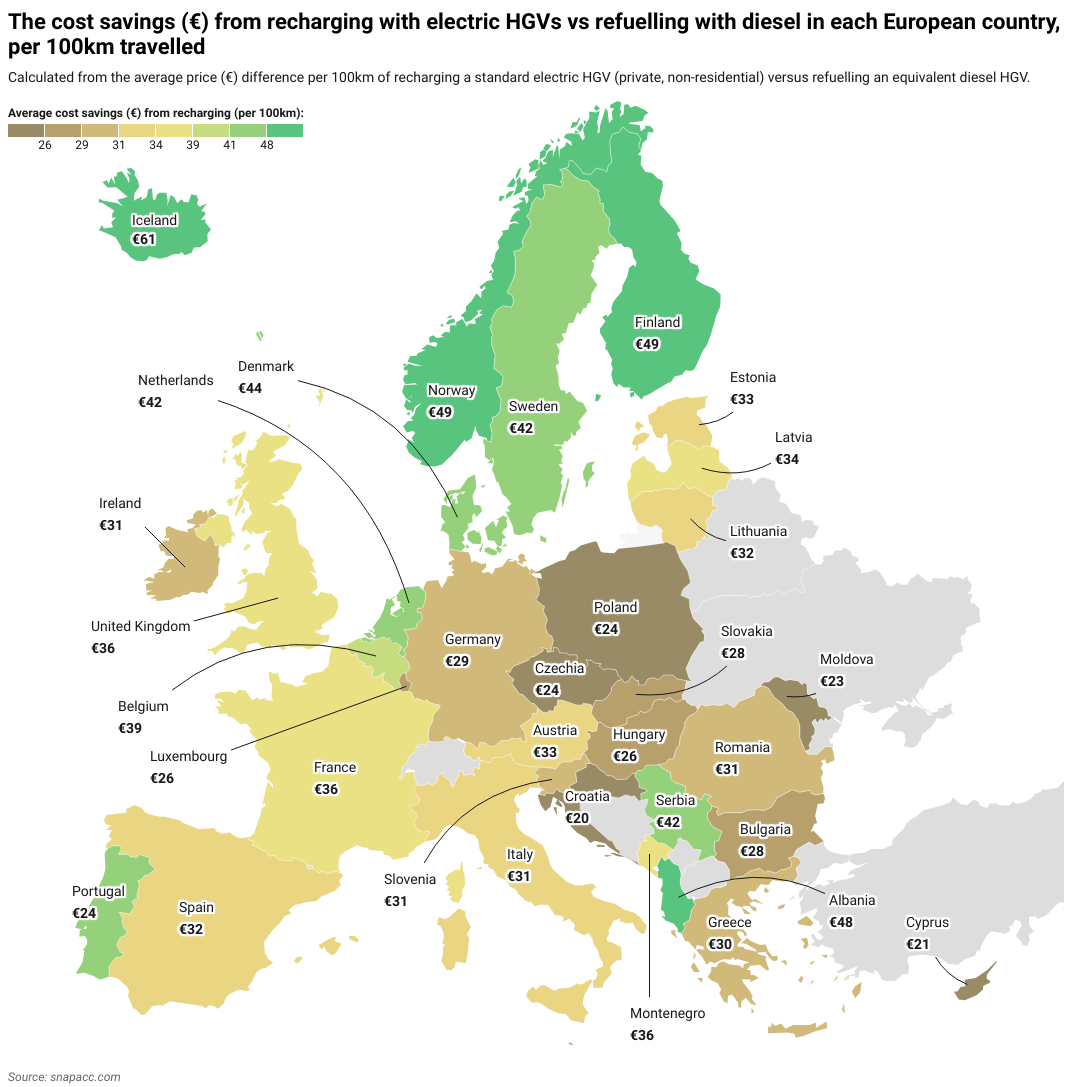
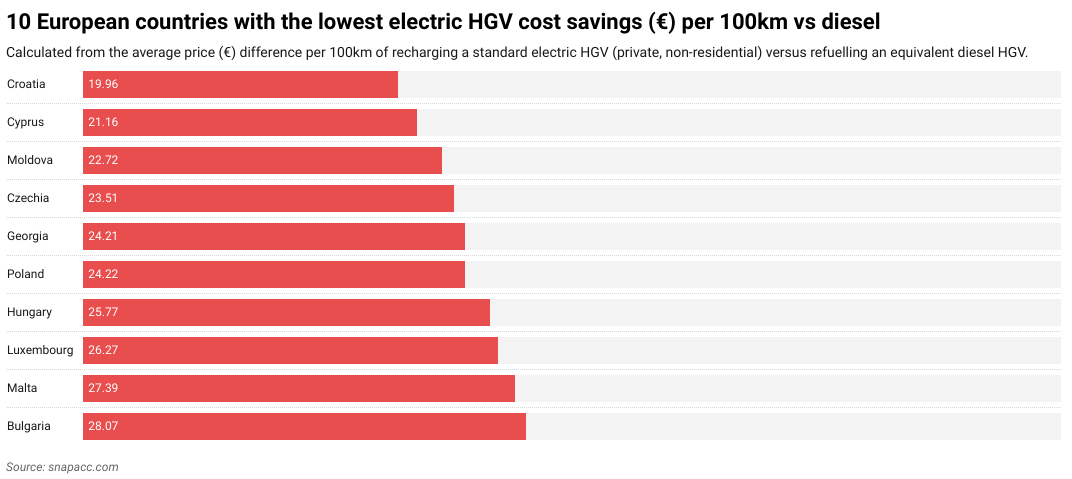
Nustatėme, kad pirmauja Islandija, kurios vidutinės sutaupytos sąnaudos siekia 61,03 EUR už 100 km, o antroje ir trečioje vietoje pagal sutaupytas sąnaudas yra Šiaurės šalys Norvegija ir Suomija. Kitoje skalės pusėje Kroatija sutaupė mažiausiai lėšų - 19,96 EUR už 100 km, po jos rikiuojasi Kipras ir Moldova.

Šiame straipsnyje atskleidžiame, kiek lėšų sutaupoma kiekvienoje Europos šalyje, analizuojame kai kurias sutaupytas lėšas kiekvienoje Europos šalyje ir analizuojame kai kuriuos išorinius veiksnius, kurie gali turėti įtakos sutaupytoms lėšoms. Taip pat gilinamės į tai, kokia gali būti eHGV ateitis Europoje, ir kaip eHGV gali padėti automobilių parkų operatoriams ir vairuotojams sutaupyti pinigų, ypač vairuotojų biudžetų.

Kaip eHGV ir dyzelino sąnaudos visoje ES

Mūsų tyrimas parodė, kad kiekvienoje tirtoje Europos šalyje naudojant eHGV su elektros įkrovimo funkcija sutaupoma pinigų, palyginti su tradicinėmis sunkiasvorėmis krovininėmis transporto priemonėmis su degalais. Didžiausias skirtumas buvo tas, kiek skyrėsi sutaupytos išlaidos. Pavyzdžiui, brangiausioje šalyje, Islandijoje, elektros energijos kaina yra 206 proc. didesnė (41 euru didesnė) nei pigiausioje šalyje, Kroatijoje.

Nustatėme, kad elektra varomos sunkiasvorės krovininės transporto priemonės vairuotojas, palyginti su dyzelinu varomos sunkiasvorės krovininės transporto priemonės vairuotoju, vidutiniškai sutaupys 30,59 EUR už 100 km. Apskaičiuota, kad tolimųjų reisų elektrinių sunkiasvorių sunkvežimių vairuotojai per metus vidutiniškai sutaupo 37 200 eurų, o vietinių reisų vairuotojai - 24 800 eurų.

Norėdami surinkti duomenis, apžvelgėme 35 Europos šalis ir palyginome dviejų tipų sunkiasvorių krovininių transporto priemonių (Sunkvežimiai) energijos arba degalų sąnaudas 100 km. Tai buvo standartinė dyzelinė sunkiasvorė sunkvežimio transporto priemonė, kai 100 km sunaudojama 35 litrai degalų pagal kiekvienos šalies vidutinę mažmeninę dyzelino kainą, ir elektrinė sunkiasvorė sunkvežimio transporto priemonė, kai 100 km sunaudojama 108 kWh elektros energijos pagal vidutinį elektros energijos tarifą ne namų ūkiuose. Į šiuos skaičiavimus nebuvo įtrauktas PVM ir susigrąžintini mokesčiai. Palyginimas atspindi tik tiesiogines "prie siurblio" arba "prie kištuko" išlaidas, neatsižvelgiant į tokius veiksnius, kaip automobilių parko dydis, sudarytos energijos tiekimo sutartys ar būsimi degalų ir elektros kainų pokyčiai.

Tiriant dyzelino ir elektros energijos kainas buvo remtasi keliais šaltiniais, įskaitant Eurostat, CEIC, GlobalPetrolPrices, Webfleet ir Gov.uk. Verta pažymėti, kad kai kuriuose iš šių šaltinių kalbama apie "Didžiąją Britaniją", o kituose - apie "Jungtinę Karalystę". Šiame tyrime abu terminai buvo traktuojami kaip pakaitiniai.

Šalys, kurios sutaupo daugiausiai pereidamos prie elektrinių sunkiasvorių sunkvežimių

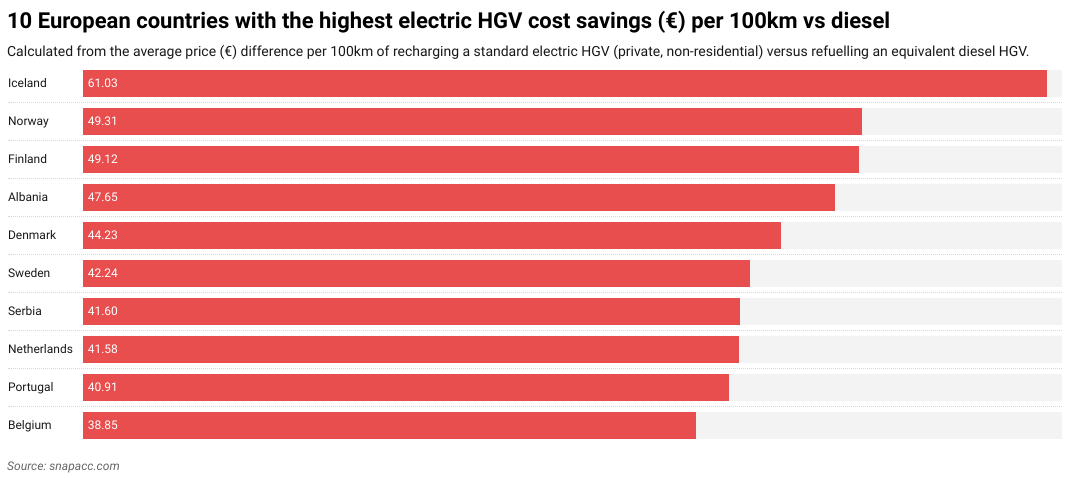
Islandija (61,03 EUR), Norvegija (49,31 EUR) ir Suomija (49,12 EUR) šiuo metu yra šalys, kuriose galima sutaupyti daugiausiai pereinant prie elektrinių sunkiasvorių sunkvežimių.

Taip yra daugiausia dėl to, kad šiose šalyse dyzelinas yra vienas brangiausių Europoje. Islandija yra brangiausia Europos šalis, kurioje dyzelinas kainuoja brangiausiai (2,07 euro už litrą). Tokią didelę kainą daugiausia lemia Islandijos geografinė izoliacija nuo likusios Europos dalies, todėl dyzelino importo išlaidos yra daug didesnės nei kitose Europos šalyse. Islandija, kaip ir Norvegija bei Suomija, taip pat garsėja dideliu mokesčių tarifu, kuris taip pat prisideda prie didelių degalų kainų.

Norvegija (32 %) ir Islandija (18 %) taip pat užima dvi pirmąsias vietas pasaulyje pagal elektra varomų lengvųjų automobilių dalį keliuose. Todėl abi šalys daug investavo į elektromobilių įkrovimo infrastruktūrą.

Dėl nedidelio Islandijos ploto ir pagrindinio aplinkkelio taip pat lengviau reguliariai įrengti elektros įkrovimo stoteles elektra varomų sunkiasvorių sunkvežimių vairuotojams. Tą patį galima iš dalies pritaikyti ir kitoms mažesnius tinklus turinčioms šalims, kuriose sutaupoma daug lėšų, įskaitant Albaniją, Serbiją ir Belgiją, nors reikėtų pažymėti, kad visose trijose šalyse dyzelino kainos taip pat yra vienos brangiausių Europoje, o tai prisideda prie sutaupytų lėšų skirtumo.

Toliau pateiktoje diagramoje parodyta 10 šalių, kuriose naudojant elektrines sunkiasvores transporto priemones sutaupoma daugiausiai lėšų:
"Vairuotojai visoje Europoje jau taupo, nes pereina prie elektra varomų sunkiasvorių sunkvežimių. Perėjimas prie eHGV įkrovimo yra pramonės ateitis, o SNAP yra pasirengusi padėti vairuotojams ir transporto parkų operatoriams pereiti prie šio modelio. ".

Matthew Bellamy - Valdantysis SNAP direktorius

Šalys, kurios sutaupo mažiausiai pereidamos prie elektrinių sunkiasvorių sunkvežimių

Kroatija (19,96 EUR), Kipras (21,16 EUR) ir Moldova (22,72 EUR) šiuo metu yra trys šalys Europoje, kuriose sutaupoma mažiausiai.

Kroatijoje antrasis lėčiausias elektromobilių diegimo rodiklis ES po Lenkijos. Iš dalies taip yra dėl prastos Kroatijos elektromobilių įkrovimo infrastruktūros, pavyzdžiui, dėl įkrovimo stotelių, į kurias reikia skambinti klientų aptarnavimo tarnybai arba naudotis keliomis skirtingomis programėlėmis, kad būtų pradėtas įkrovimo procesas, dėl prastų nuorodų į įkrovimo stoteles prie pagrindinių greitkelių ir dėl galimo ilgo laukimo turizmo sezono metu. Be to, Kroatijoje trūksta itin spartaus įkrovimo stotelių (180 kW ir daugiau), o tai gali būti problema elektra varomoms sunkiasvorėms transporto priemonėms, kurioms reikia daugiau galios nei vidutiniam elektromobiliui.

Tiek Kipras, tiek Moldova turi vidinių geopolitinių problemų, kurios apsunkina elektromobilių įkrovimo infrastruktūros planavimą (ir apskritai nacionalinį planavimą). Kipro atveju šiaurinė salos dalis, įskaitant pusę sostinės Nikosijos, nuo 1974 m. yra okupuota Turkijos remiamos Šiaurės Kipro Turkijos Respublikos. Moldovoje rytinė Padniestrės provincija veikia kaip de facto valstybė, turinti savo vyriausybę. Tai reiškia, kad abi šalys negali nuosekliai įgyvendinti EV infrastruktūros visoje teritorijoje, kurią laiko savo nuosavybe.

Kipro problemas taip pat apsunkina didelės elektros energijos kainos, o Moldovoje dyzelino kainos yra penktos pigiausios Europoje. Moldova taip pat yra antra pagal skurdą šalis Europoje, todėl investicijos į elektromobilių infrastruktūrą tampa iššūkiu. Visi šie veiksniai lemia, kad elektra varomų sunkiasvorių sunkvežimių sąnaudos apskritai yra mažos.

Lenkija taip pat užima žemą vietą sąraše - jos sutaupytos lėšos sudaro 24,22 EUR. Nepaisant įspūdingo ekonomikos augimo ir didėjančių investicijų į elektromobilių įkrovimo infrastruktūrą, didelis šalies plotas reiškia, kad tam tikrose šalies vietovėse vis dar yra problemų dėl aprėpties, nors panašu, kad ateityje tai gali pasikeisti.

Tokios šalys kaip Ispanija (32,20 EUR), Rumunija (30,62 EUR) ir Airija (30,54 EUR) yra per vidurį, kai kalbama apie elektrinių sunkiasvorių sunkvežimių sąnaudų taupymą. Taip yra dėl to, kad šiose šalyse plėtojama elektromobilių įkrovimo infrastruktūra ir vidutinės elektros energijos ir dyzelino kainos.

Toliau pateiktoje diagramoje parodyta 10 šalių, kuriose naudojant elektrines sunkiasvores transporto priemones sutaupoma mažiausiai lėšų:
JK elektra varomų sunkiasvorių sunkvežimių sutaupytos lėšos

Jungtinė Karalystė sutaupo 36,23 EUR, o tai reiškia, kad ji užima 11 vietą pagal sutaupytas 100 km įkrovimo sąnaudas. Tai daugiausia lemia brangios Jungtinės Karalystės degalų kainos, nes dyzelino kainos yra trečios brangiausios Europoje. Nors dėl didelių dyzelino kainų sutaupytos lėšos neabejotinai prisideda prie didelio JK eHGV išlaidų sutaupymo, jos greičiausiai būtų kur kas didesnės, jei elektros energija JK taip pat nebūtų tarp brangiausių Europoje.

Jungtinė Karalystė taip pat tikisi patobulinti savo elektromobilių įkrovimo infrastruktūrą. Jungtinės Karalystės greitkelių paslaugų bendrovė "Moto" aktyviai planuoja iki 2027 m. pastatyti 15 "superhubų". Šie "superhubai" gali efektyviau nei standartinis elektromobilių įkrovimo įrenginys pritaikyti elektromobilių įkrovimui eHGV. Šiuo metu Jungtinės Karalystės keliuose yra mažiau nei penkios eHGV skirtos įkrovimo vietos. Kadangi kitos įmonės, pavyzdžiui, "BP Pulse" ir "Aegis Energy", taip pat ketina investuoti, tikėtina, kad netolimoje ateityje JK bus gerokai patobulintas sunkiasvorių krovininių transporto priemonių įkrovimo tinklas.

Kas daro įtaką sunkiasvorių krovininių transporto priemonių elektrifikavimui?

Šiuo metu sunkiasvorių krovininių transporto priemonių elektrifikavimą stabdo keletas veiksnių, įskaitant įkrovimo infrastruktūros trūkumą, ilgą įkrovimo trukmę, dideles pradines eHGV pertvarkymo sąnaudas ir ribotą jų ridą. Be to, dėl palyginti nedidelės dyzelinių degalų ir transporto priemonių kainos ir prieinamumo tradicinės sunkiasvorės krovininės transporto priemonės yra patrauklus pasirinkimas [transporto priemonių parkų operatoriams] (https://snapacc.com/fleet-operators/).

Tačiau visas šis poveikis gali skirtis priklausomai nuo šalies, kurioje vykdoma veikla. Pavyzdžiui, jei jūsų transporto priemonių parkas veikia tik šalies viduje, pavyzdžiui, Norvegijoje ar Islandijoje, tikėtina, kad jis bus mažiau paveiktas nei visoje Europoje ar regionuose, kuriuose eHGV infrastruktūra prastesnė, pavyzdžiui, Balkanuose.

Nepakankama įkrovimo infrastruktūra

Pagrindinė sunkiasvorių krovininių transporto priemonių elektrifikavimo kliūtis yra nepakankama eHGV įkrovimo infrastruktūra. Taip yra todėl, kad eHGV reikia megavatų galios įkrovimo, kurio dauguma esamų keleivinių transporto priemonių (standartinių elektromobilių ir furgonų) įkrovimo punktų nepalaiko.

Daugelyje Europos šalių labai trūksta tokios infrastruktūros, ypač pagrindiniuose krovinių vežimo keliuose ir sunkvežimių sustojimo vietose. Tai dažniausiai skurdesnės Pietų ir Rytų Europos valstybės, pavyzdžiui, Moldova, Gruzija ir Bulgarija. Neatsitiktinai šios valstybės yra dešimtuke valstybių, kuriose sutaupoma mažiausiai eHGV išlaidų.

Taip pat gali būti, kad eHGV įkrovimo stotelių yra, bet jos yra vietovėse, kuriose dėl silpno vietinio elektros tinklo paprasčiausiai negalima įrengti kelių eHGV įkrovimo stotelių per naktį. Tai dažnai būna problema labiau kaimiškose ir atokiose Europos dalyse.

Nors daugelis Europos šalių planuoja tobulinti eHGV infrastruktūrą, tai vis dar yra daug laiko ir lėšų reikalaujantis procesas, kuriame reikia įveikti daugybę biurokratinių, logistinių ir techninių kliūčių, jau nekalbant apie aplinkinės infrastruktūros atnaujinimą, pvz., vietinių tinklų prijungimą.

Ilgas įkrovimo laikas

Elektrinės sunkiasvorės krovininės transporto priemonės įkraunamos kur kas ilgiau nei standartiniai elektromobiliai. Tai reiškia, kad įkrovimas dažnai turi vykti per naktį. Net jei pavyksta įsigyti greitųjų eHGV įkroviklių, procesas vis tiek užtrunka ne kelias minutes, kaip benzininių transporto priemonių atveju, o mažiausiai dvi valandas.

Toks ilgas įkrovimo laikas gali turėti neigiamą poveikį transporto priemonių parko operatoriams, nes gali sutrumpėti apyvartos laikas. Pramonėje, kurioje laikomasi griežtų pristatymo grafikų ir terminų, tai gali pakenkti verslo rezultatams.

Ribotas eHGV asortimentas

Elektrinių sunkiasvorių krovininių transporto priemonių ridą taip pat riboja palyginti nedidelis jų nuvažiuojamas atstumas, palyginti su tradicinių sunkiasvorių krovininių transporto priemonių nuvažiuojamu atstumu. Pasak "Safety Shield", tipinės elektrinės sunkiasvorės krovininės transporto priemonės vieno įkrovimo metu nuvažiuoja apie 300 mylių (apytiksliai atstumas nuo Londono iki Roterdamo). Tuo tarpu tipinė dyzelinu varoma sunkiasvorė krovininė transporto priemonė vienu degalų baku gali nuvažiuoti iki 1 000 mylių (maždaug tiek, kiek galima nuvažiuoti iš Londono į Varšuvą).

Elektrinių sunkiasvorių sunkvežimių rida taip pat gali būti labiau veikiama išorinių veiksnių, pavyzdžiui, apkrovos, šalto oro ir reljefo. Dėl to vairuotojai gali nerimauti dėl ridos, todėl gali dažniau įkrauti elektrą, kad įsitikintų, jog turi pakankamai energijos pasiekti kelionės tikslą. Dėl to, savo ruožtu, gali vėluoti pristatymas, ypač važiuojant per šalis, kuriose eHGV įkrovimo infrastruktūra prasta.

Visa tai lemia, kad maršruto optimizavimas yra gyvybiškai svarbus transporto priemonių parko operatoriams, planuojantiems savo eHGV keliones. Reikėtų pažymėti, kad akumuliatorių technologijos nuolat tobulėja, todėl artimiausioje ateityje jų talpa, taigi ir rida, toliau didės.

Didelės eHGV sąnaudos

Pradinė eHGV kaina yra didelė (paprastai [160 000-200 000 svarų sterlingų] (https://electriccarguide.co.uk/the-electric-hgv-guide/), palyginti su 80 000-100 000 svarų sterlingų už dyzelinę sunkiasvorę transporto priemonę), o tai gali atbaidyti nepriklausomus vairuotojus ir mažesnius transporto priemonių parko operatorius nuo tokios transporto priemonės įsigijimo. Tai daugiausia susiję su akumuliatorių technologijos išlaidomis. Tai reiškia, kad įsigyti naują elektrinę sunkiasvorę krovininę transporto priemonę bus brangu, nes joje esanti technologija yra brangesnė nei dyzelinėje sunkiasvorėje krovininėje transporto priemonėje.

Didelės pradinės eHGV pirkimo sąnaudos taip pat reiškia, kad automobilių parkų operatoriai šalyse, kuriose eHGV įkrovimui taikomi pigesni elektros energijos tarifai, pavyzdžiui, Norvegijoje, Švedijoje ar Suomijoje, yra labiau linkę pereiti prie eHGV, nes jų investicijos atsipirks greičiau nei šalyse, kuriose elektra brangi, pavyzdžiui, Airijoje ir Kroatijoje.

Elektros kainos taip pat gali svyruoti dėl įvairių įvykių. Pavyzdžiui, per pastaruosius penkerius metus elektros energijos kainos svyravo dėl ekonomikos atsivėrimo po COVID-19 pandemijos ir Rusijos invazijos į Ukrainą 2022 m. (pastaroji ypač stipriai paveikė Europos energijos tiekimą). Dėl to laikotarpiu po invazijos vidutinėje ES sostinėje elektros energijos kainos šoktelėjo beveik 30 % - nuo 20,5 c€/kWh iki 26,5 c€/kWh. Tačiau dabar ES vidurkis yra mažesnis nei 2022 m., todėl panašu, kad sunkvežimių įkrovimas elektra ir toliau kils.

Visoje Europoje vidutinė elektrinės sunkiasvorės krovininės transporto priemonės eksploatacijos kaina 100 km atstumu yra 20,51 euro - gerokai mažesnė nei 51,10 euro, kai tą patį atstumą nuvažiuoja dyzelinė sunkiasvorė krovininė transporto priemonė.

Didėjant efektyvumui, plintant akumuliatorių technologijoms ir mažėjant jų gamybos sąnaudoms, eHGV taip pat taps prieinamesnės.

Dyzelino pigumas ir prieinamumas

Dyzeliniai degalai vis dar atlieka dominuojantį vaidmenį sunkiasvorių krovininių transporto priemonių pramonėje. Taip yra todėl, kad dyzelino infrastruktūra Europoje jau dešimtmečius yra gerai išplėtota, ypač palyginti su sunkiasvorėms krovininėms transporto priemonėms skirtais elektriniais įkrovikliais. Dyzelino suderinamumas su degalų kortelėmis ir jo santykinė kaina taip pat palaiko jo populiarumą tarp sunkvežimių parkų valdytojų.

Tačiau, kaip ir elektros energijos, dyzelino vertė visame žemyne svyruoja. Todėl tokiose šalyse kaip Moldova, Gruzija ir Malta, kur dyzelinas išlieka pigus, gali būti naudingiau naudoti dyzelinius sunkiasvorius sunkvežimius. Priešingai, tokiose šalyse kaip Islandija ir Nyderlandai, kur dyzelinas yra palyginti brangus, yra daugiau paskatų pereiti prie elektrinių sunkiasvorių sunkvežimių.

Šalyje, kurioje degalai yra pigūs, taip pat gali būti vangiau investuoti į eHGV infrastruktūrą, nes baiminamasi, kad bus atstumti tradiciniai sunkiasvorių sunkvežimių parkai, kurie dėl to gali rinktis alternatyvius maršrutus.
Elektrinių sunkiasvorių sunkvežimių ateitis Europoje

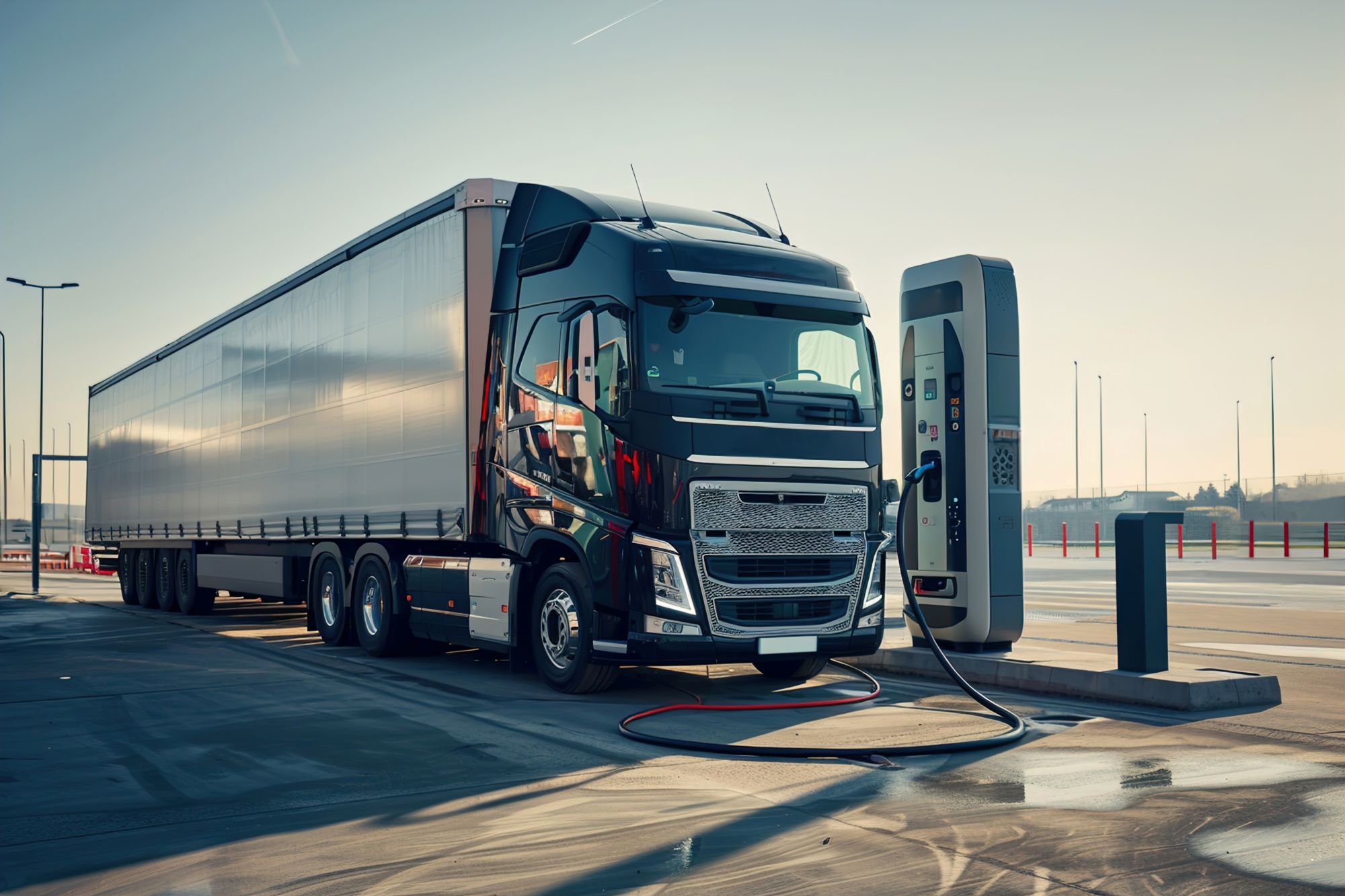
Elektrinės sunkiasvorės krovininės transporto priemonės yra ilgalaikė krovinių vežimo keliais ateitis. Laikui bėgant jų eksploatacija ne tik pigesnė, bet ir dėl to, kad į naują infrastruktūrą investuojama ir ji kuriama sparčiai, jos taps daug labiau finansiškai ir strategiškai perspektyvios.

Be ekonominės naudos, elektra varomos sunkiasvorės krovininės transporto priemonės taip pat svarbios dėl jų indėlio siekiant aplinkosaugos tikslų, pavyzdžiui, "Net Zero". Tradicinės sunkiasvorės krovininės transporto priemonės yra didelės teršėjos, todėl eHGV sutaupytas išmetamųjų teršalų kiekis bus jaučiamas švaresniame ore visoje Europoje.

Panašu, kad šios tendencijos ateityje turės įtakos elektra varomoms sunkiasvorėms krovininėms transporto priemonėms:

  • Smart truck parks: Truck parks in the future will evolve to better accommodate eHGVs alongside other smart technological advancements. These truck parks may include up-to-date ultra-fast charging stations, diagnostic machines, battery swap stations, and automated cleaning services, among other features.
  • Increased EU regulations: Low Emission Zones (LEZs) already exist in a number of cities (e.g. Paris, Berlin, and Milan) with more European cities likely to follow suit with more stringent EU transport regulations. Fleet operators may opt for eHGVs to meet EU regulations or retrofit their HGVs with cleaner technologies, like smart tachographs.
  • AI implementation: AI technology has already had a profound sustainability impact across road haulage — with applications in route optimisation, predictive maintenance, and autonomous vehicle development. Electric vehicles will likely incorporate AI to help drive sustainability in the haulage industry over the coming decades.
  • Sustainability: The shift to eHGVs is part of a wider global push toward sustainable living. The effects of extreme weather, including heatwaves and floods across Europe, show no sign of slowing due to climate change. Moving to electric HGVs is one way the world is reducing its dependence on fossil fuels.
  • Fuel variety: During the transition to cleaner fuel sources, there will be a variety of HGV types on the road throughout the 2030s. Many will be older diesel models, some will be electric, and others will be powered by alternative fuels such as biofuel made from renewable biomass sources.

Išmanesnis eHGV išlaidų valdymas

Elektrinės sunkiasvorės krovininės transporto priemonės yra ateitis, tuo mažai kas abejoja. Dėl ekonominės ir aplinkosauginės naudos artimiausiais metais vis daugiau automobilių parkų operatorių ir vairuotojų pereis prie eHGV. Kiek ilgai truks šis pereinamasis laikotarpis, priklausys nuo to, kaip greitai Europa sugebės sukurti eHGV įkrovimo infrastruktūrą.

Šiuo metu žemyne yra didelės teritorijos, kuriose eHGV nėra perspektyvūs ir kur dėl mažesnio nuotolio reikia intensyviai optimizuoti maršrutus. Be to, pradinės išlaidos gali atbaidyti nepriklausomus vairuotojus ir mažesnių transporto priemonių parkų operatorius.

Technologijos ir infrastruktūra ir toliau tobulės, be to, jau dabar teikiamos paslaugos, skirtos kuo paprasčiau valdyti eHGV transporto priemonių parkus ir su jais susijusias išlaidas. Nuo maršrutų optimizavimo ir transporto priemonių parko valdymo iki automobilių stovėjimo aikštelių ir sunkvežimių plovyklų žemėlapių - SNAP supaprastina sunkvežimių vežimą.

Pasirašykite SNAP šiandien.

Dalytis su

Kiti taip pat skaito...

Header Image

antradienis 16 gruodžio 2025 • Pramonės naujienos

KĄ ISPANIJOS PRIVALOMI SKAITMENINIAI ĮRAŠAI REIŠKIA EUROPOJE VEIKIANTIEMS LAIVYNAMS

Guest

Spain is preparing for one of the most significant transport reforms in its recent history. The Sustainable Mobility Law (Ley de Movilidad Sostenible), which received final approval in November 2025, will introduce mandatory digital records for road freight control documentation, creating a more transparent, enforceable and efficient system for domestic and international carriers. Although this is a major national change, it forms part of a wider trend. Across Europe, governments and operators are moving towards a fully digital freight environment as the EU prepares to implement the (eFTI).For fleets working in and out of Spain, this is the start of an important transition. It signals a future in which paper documentation becomes the exception rather than the rule and in which digital processes support faster checks, smoother operations and greater consistency across borders.While the Sustainable Mobility Law addresses wide-ranging transport reforms – from urban mobility to domestic flight restrictions – the provisions most relevant to international freight operators centre on digital documentation. A central section of the law introduces a mandatory digital “control document” for road freight. This includes the use of approved digital formats, such as the electronic consignment note (eCMR), which Spain has already ratified and treats as legally equivalent to the paper CMR note. The law aims to reduce administrative burdens, eliminate inconsistencies in paperwork and shorten the time required for checks and inspections. Rather than relying on handwritten notes or physical documents that can be misplaced, carriers will store, share and verify transport information digitally. For operators, this should mean fewer disputes over documentation, less ambiguity around compliance requirements and greater certainty when preparing for audits or regulatory reviews.In practice, the obligation focuses first on the digital control document used for roadside and regulatory checks, but it is expected to accelerate wider use of eCMR and other digital freight documents across the supply chain.The timeline for implementation will begin once the law is published in Spain's Official State Gazette. Carriers should expect the digital control document obligation to take effect roughly ten months after publication, making 2026 the likely year when full compliance will be required.The Mobility Law applies to road transport operations that fall under Spanish control rules on Spanish territory, not just Spanish-registered companies. Carriers will need to ensure their systems can produce and transmit digital records in compliant formats. Any delay in adopting digital documentation could slow down inspections or disrupt customer schedules.This means that foreign operators running international loads into, out of or through Spain should plan on being able to provide the required control document in digital form when requested by Spanish authorities.The Spanish reforms align closely with the EU’s eFTI Regulation, which will require Member States to accept digital freight documentation once the technical and certification rules are in place (from mid-2027). eFTI sets a unified framework for how information is structured, transmitted and verified. While it obliges authorities to accept digital records, it does not require operators to use them. Spain’s Mobility Law therefore goes further, making digital control documents mandatory for road freight.Under eFTI, carriers will be able to provide freight information electronically through certified platforms. Enforcement authorities will receive that information through secure digital channels. This should reduce administrative friction across the EU’s busiest freight routes.Spain is not alone in taking early steps. Several EU countries have already moved towards paperless freight systems and their experience demonstrates what a fully digital environment could look like.● The Netherlands has been one of the earliest adopters of eCMR and has trialled end-to-end digital workflows across different modes of transport. ● France also moved early, supporting digital documentation and faster roadside checks following its ratification of the eCMR protocol. ● In the Benelux region, Belgium, Luxembourg and the Netherlands are running a joint eCMR pilot and digital logistics corridor, illustrating how interoperable documentation can work across national boundaries.● Denmark and Sweden have operated national e-freight trials designed to simplify the sharing of transport information. Taken together, these examples show that Spain’s Mobility Law is part of a broader European transition. Rather than standing apart, Spain is moving in step with a continental shift towards digital documentation that aims to make road freight faster, more transparent and more consistent across borders.The move to digital records brings several practical advantages. Digital documents reduce the time drivers and enforcement officers spend handling paperwork and shorten inspections during roadside checks. This mirrors the benefits seen with the introduction of , which have reduced unnecessary stops for compliant drivers and improved the consistency of enforcement across Europe.Digital documentation also removes the errors that can arise from handwritten notes or damaged paper notes. Fleet managers can instantly retrieve records, resolve errors more easily and maintain clearer oversight of documentation across multiple routes. For operators managing complex schedules, this increased predictability supports better planning and stronger customer service.Drivers are likely to benefit too. A shift to digital records reduces administrative pressure and helps avoid disagreement at delivery points. With all documents stored digitally, drivers have a single source of truth that is accepted across the supply chain.Fleets may need to invest in updated transport management systems or integrate new tools that support digital documentation. Operators may require additional support and training to shift from paper-based processes to new digital workflows.There will also be a period of adjustment in which paper and digital systems may operate side by side. As eFTI becomes established across Europe, some countries will move faster than others. Operators travelling across different borders may encounter varying expectations, particularly in the early years.Throughout this transition, driver welfare should remain a priority. The administrative load associated with new processes often falls on drivers. Clear training and straightforward systems will be essential.Spain’s Mobility Law marks an important moment in the evolution of European freight. It reflects a sector that is modernising at speed and preparing for a future built on digital workflows rather than manual paperwork. Operators that begin preparing now will be in a strong position as Spain’s digital control document requirements take effect and eFTI comes into force across Europe.At SNAP, we support fleets across Spain and the wider continent with tools that make daily operations simpler and more predictable. The intruck app helps drivers locate and book secure parking along their route, which is particularly valuable as compliance processes evolve. If your fleet is preparing for Spain’s new requirements or the broader digital transition across Europe, SNAP is here to support every step of the journey.

Header Image

trečiadienis 10 gruodžio 2025 • Pramonės naujienos

2025 M. JK BIUDŽETAS: KĄ TAI REIŠKIA KROVINIŲ VEŽIMUI

Guest

The arrives at a difficult moment for the road transport sector. Operators are working against rising wages and operating costs, tight margins, ageing infrastructure and ongoing pressures around recruitment. At the same time, the shift towards cleaner mobility is accelerating, creating new expectations and increasing the need for long-term investment.The following article outlines what the Budget means for infrastructure, investment, workforce costs and the wider operating environment for haulage.For many years, fleets have been affected by deteriorating roads, weight restrictions on ageing bridges and the growing unpredictability of journey times. Government and industry data makes this clear. More than one in every ten miles of network in England and Wales is likely to require maintenance within the next year, according to reporting, and the backlogs for resurfacing work continue to rise. These issues lead to vehicle damage, driver fatigue, higher insurance costs and disrupted schedules. They also place additional pressure on operators already dealing with narrow margins.The new Budget acknowledges these concerns. One positive step is the substantial funding for strategic national projects, including almost £900 million allocated to the , which should reduce congestion, provide more reliable journey times and a safer driving environment for HGVs.Local authorities will also receive a share of and address the growing number of potholes. This could make a noticeable difference for fleets. Local roads carry the majority of domestic freight and serve as the first and last mile of nearly every delivery. Improving them should reduce wear and tear on vehicles as well as operational strain. These commitments will not fix decades of underinvestment immediately, but they represent an important shift towards a road network that is more resilient and better suited to the realities of modern logistics.The Budget also places more focus on skills. for under-25s working in small and medium-sized businesses could help attract new entrants into a profession that urgently needs them. The driver shortage is well documented. The UK must recruit around in order to stabilise supply chains, and across Europe the average age of professional drivers continues to climb. Only a small proportion of drivers are under 25, and training costs have been a barrier for many younger candidates.Providing funded apprenticeships makes logistics more accessible at a critical time. It also supports smaller operators, who often struggle to invest in training despite needing to expand their teams. The Budget introduces further support for investment, particularly around fleet renewal. Operators installing charging infrastructure can take advantage of a 100% first-year allowance until March 2027. This will help offset the upfront cost of electric HGVs and depot charging equipment.From January 2026, a new 40% first-year allowance will be available on many main-rate assets, including trucks – particularly useful where full expensing or the Annual Investment Allowance don’t apply, such as some leased fleets and unincorporated operators.While the Autumn Budget contains several positive measures, operators will also need to plan for increasing costs. Fuel duty will rise in stages between the end of August 2026 and March 2027. Fuel is already one of the largest expenses for operators, and the planned rises are likely to increase the emphasis on fuel efficiency, telematics, consolidated routing and fleet renewal.Vehicle Excise Duty (Road Tax) will be uprated in line with inflation from April 2026, including for HGVs. From April 2028, a new Electric Vehicle Excise Duty (eVED) will also apply a mileage-based charge to battery-electric and plug-in hybrid cars, on top of existing VED. Although eVED initially excludes electric vans and trucks, it signals a longer-term shift toward distance-based taxation that fleets will need to factor into future planning.The HGV Levy will also return to rising with inflation. Vehicles over twelve tonnes must pay the levy before using A roads or motorways, and the revised rate will add another cost that fleets must factor into forward planning.Larger, higher‑value properties are also likely to feel more pressure from business rates changes. The Budget confirms permanently lower business rates for retail, hospitality and leisure, funded in part by higher charges on the most expensive commercial premises. These include big warehouses and distribution centres, so operators with large sites can expect proportionately higher bills over time than smaller depots or high‑street locations.In addition, the Budget introduces several measures that directly affect the financial landscape for operators and the people who run or work within haulage businesses. Labour already represents one of the sector’s highest costs, and these changes will shape payroll planning, staff retention and the personal finances of many owner-operators.Minimum wage increases mean that employers will face higher staffing costs across warehousing, last-mile logistics and support roles. Many operators have already tackled wage rises in recent years, and this further uplift will add pressure at a time when margins remain narrow. For fleets that rely on overtime, night work or seasonal peaks, the impact will be even more noticeable.The Budget continues the government’s move toward greater digitalisation of tax and reporting. Compliance expectations will grow over the coming years, with stricter penalties for late VAT and Self Assessment returns and an expanded Making Tax Digital framework from 2027. Mandatory electronic invoicing will follow in 2029. Parcel carriers and mixed load operators will also be affected by changes to customs duty for low-value imports, which will apply to items worth less than £135 by March 2029 at the latest. While the aim is to even the playing field for UK manufacturers, it is likely to increase administrative pressure on haulage firms. These changes may eventually improve efficiency, but they will require investment in systems and staff training. Smaller fleets without dedicated administrative teams are likely to feel the adjustment most sharply.Although operators will face higher costs and increased administrative complexity, the 2025 Budget also provides some of the most significant commitments to the road network and skills pipeline seen in recent years. Taken together, these measures signal a Budget that attempts to balance fiscal constraints with long-term needs. The road ahead will still require careful planning and strategic investment, but there are genuine opportunities to strengthen the sector’s foundations and support a more resilient future for haulage.SNAP gives fleets practical tools to manage this shifting landscape, from parking access to data that supports compliance and operational decision-making. to discover how SNAP can help strengthen your fleet’s resilience in the months ahead.

Header Image

pirmadienis 03 lapkričio 2025 • Pramonės naujienos

9 BŪDAI, KAIP AI APTIKIMAS KEIČIA AUTOMOBILIŲ PARKO PRAMONĘ

Guest

Artificial intelligence (AI) has redefined how fleet professionals approach daily operations. Modern technologies let managers measurably improve maintenance, safety and compliance across their vehicles. As regulatory pressures rise, AI-driven insights will be more critical in gaining a decisive edge. Here are nine ways AI detection is transforming the fleet industry. Advanced telematics and machine learning (ML) algorithms help AI detection in fleets by monitoring driver behaviour. These devices analyse real-time patterns and flag risky driving behaviours like speeding and harsh braking. ML models instantly process data from in-vehicle sensors and identify deviations from safe driving norms and company policies.Drivers receive immediate feedback in the vehicle, while fleet managers get detailed reports on trends. The wealth of information helps supervisors personalise coaching sessions and find specific improvement areas. Telematics solutions have been critical to fleets nationwide because through improved behaviour and training programmes. AI algorithms are essential to analysing real-time traffic data, like road closures and weather conditions. Congestion can be significant, especially if your routes pass through London. A 2024 Inrix report said drivers when driving in the capital city. ML models can quickly identify bottlenecks and adverse weather to meet critical delivery times. Fleet managers benefit because their drivers can improve on-time performance. Route optimisation means deliveries are more likely to arrive during scheduled windows. It also enhances driver behaviours by idling less and covering fewer miles. Modern AI technologies rapidly detect roadway closures and unexpected weather changes to minimise disruptions. Accident reporting used to include manual logs and documentation. However, AI can reduce labour needs by automatically detecting and submitting incident reports. From collisions to near misses, these technologies can recognise potential incidents. Sensors gather relevant information at the event’s timing to provide more context. Unusual circumstances like airbag deployment can also be part of the automatic reporting. Once AI detection is complete, the system compiles information into a standardised report. Manual logs can create time-consuming tasks, so AI can automate these processes and free up staff. Fleet managers and insurers receive the report, thus ensuring compliance and accurate communication. Advanced technologies capture relevant data and use consistent formatting, so all parties get the critical details. Unexpected vehicle breakdowns can disrupt schedules and delay deliveries. AI helps fleet managers detect these problems before they become significant issues. From engine temperature to oil pressure, characteristics are monitored in real time. Advanced algorithms identify subtle anomalies and alert operators when a component is nearing failure. While fixed service intervals can be beneficial, AI lets you be more proactive and schedule maintenance precisely. Tire pressure sensors are an excellent example, especially for construction and utility companies. Experts say air compressors than equipment needs to maintain best practises. These sensors continually monitor output and detect gradual drops, flagging early signs of leaks.AI detection in fleets goes beyond studying driver behaviour. Telematics and sensors analyse speed and acceleration patterns to better understand fuel consumption. The systems monitor your vehicles for excessive idling and inefficient routing that increases petrol or diesel usage. AI can tailor recommendations to drivers by offering optimised speed ranges or maintenance needs.Fleet managers benefit by getting aggregated data on fuel consumption and spending. This information helps them make more informed vehicle procurement and route planning decisions. If older vehicles show inefficiencies, it may be time to upgrade the lot. Logistics professionals should compare individual vehicles against industry standards to see outliers. The U.K.’s environmental goals by 2050. Therefore, fleet managers must be more aware of tightening standards and the risk of fines. AI detection helps vehicles through sensors and onboard diagnostics systems, which collect data during operations. ML algorithms identify patterns and anomalies within the information and notify of excessive emissions. AI can alert fleet managers and enable proactive maintenance if a vehicle exceeds emissions thresholds. While humans take measures to reduce greenhouse gases, AI detection is rising to help the transportation industry. A 2025 study said by adapting eco-driving capabilities. The U.S. researchers said implementing it in 10% of vehicles would reduce carbon emissions up to 50%. Another way fleet managers can reduce emissions is through electric vehicle (EV) conversion. EV ownership is rising nationally through private drivers and fleet owners, as a 2025 report from 2023. AI can assist logistics professionals in the transition by recommending when, where and how to electrify their fleets. First-time EV owners may need help with charging windows and infrastructure needs. AI-powered systems detect when and where electric cars could naturally align with charging windows. For example, it could recommend the best times to charge to reduce schedule disruptions. Some may be pondering the switch to EVs, so logistics managers can leverage AI to compare cost data between electric and petrol cars. While AI investment can be a barrier, it may be financially beneficial in the long run. These software options that slows daily operations. Early detection of issues can lead to a more well-maintained fleet, which creates more uptime and revenue. Fleet managers can also save money through enhanced route optimisation and fuel management. AI detection in fleets is essential for streamlining administrative processes. These technologies can automatically perform compliance checks and incident documentation, thus reducing the need for manual paperwork. Your operators can focus more on the bigger picture and less on administrative overhead. If monitoring helps your drivers, it could reduce the cost of vehicle repairs and legal claims. Vehicle and cargo theft ., though they remain significant concerns. AI detection offers additional security layers by reducing the window of opportunity for thieves. Asset tracking features combine GPS and telematics capabilities to monitor real-time location, essential for companies transporting high-value assets. Fleet managers benefit from geofencing features, allowing them to set virtual boundaries. If a truck or van exits these zones, AI-powered systems automatically flag the event and notify logistics professionals. The algorithm is intelligent enough to understand anomalies and security protocols. Abnormalities can trigger security measures like remote disabling. AI is a practical, game-changing tool for fleet managers. Advanced analytics and real-time monitoring empower logistics professionals to drive measurable safety and performance improvements. While technologies are developing, the future is here. Your business should be willing to invest in AI-driven solutions to reduce costs and minimise risks. Discover more from .